
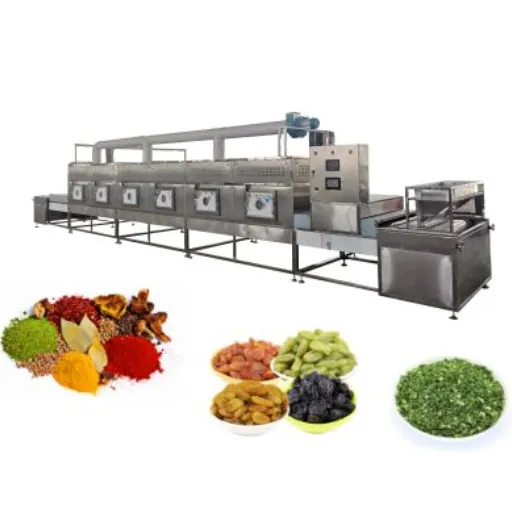
Esterilizador de Microondas Industrial: Una Guía Completa para Procesadores de Alimentos
¿Qué harías si te dijera que hay una manera de reducir los costos de energía en un treinta y cinco por ciento mientras se previene la pérdida de aceites volátiles que suelen ser la principal razón del aumento de costos de las especias? Esta pregunta es más que un pensamiento abstracto para las fábricas de alimentos que buscan reducir costos de energía mientras mantienen la calidad de sus productos. Es el único argumento lógico que explica por qué muchos procesadores han decidido convertir de un esterilizador de autoclave al uso de un equipo de esterilización por microondas industrial.
Es obvio que si se toman medidas de seguridad en general, estos límites serán más estrictos y amplios en todo el mundo. No se puede ver margen de compromiso en higiene con las crecientes demandas de las autoridades regulatorias, minoristas y consumidores finales por igual. La respuesta contundente sería no, ya que la mayoría de los productos se cocinan en exceso bajo tecnologías de retorta y retardadas, y esto se extiende más allá de noventa minutos, consumiendo así mucha agua y tiempo. Debería haber otra perspectiva sobre esto.
En resumen, sabrás todo sobre los procesos de esterilización por microondas, cuándo son mejores que los autoclaves y cómo elegir una máquina de esterilización por microondas para una línea de producción. También se analizarán casos reales, requisitos de la actividad de envasado y los beneficios económicos de mantener dicha maquinaria para el proceso de toma de decisiones.
Aquí está lo que cubriremos:
- Cómo funcionan los esterilizadores de microondas industriales a nivel técnico
- Esterilización por microondas vs autoclave: una comparación lado a lado
- Los beneficios clave que impulsan la adopción en el procesamiento de alimentos
- Principales aplicaciones desde especias hasta alimentos para mascotas y comidas listas para comer
- Cómo elegir el sistema adecuado para tu operación
- Compatibilidad de envasado y prevención de puntos fríos
- Mantenimiento y costo total de propiedad
¿Qué es un esterilizador de microondas industrial?
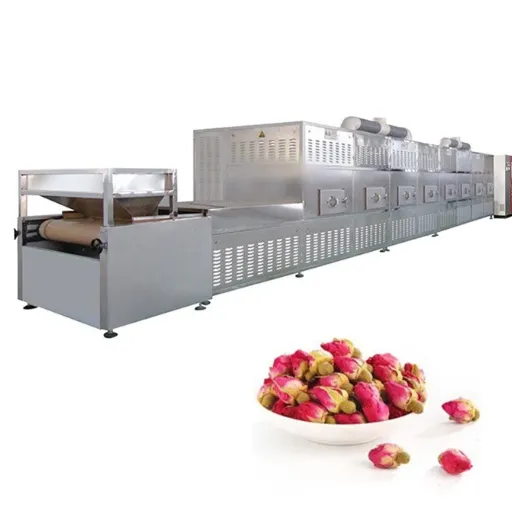
La máquina de esterilización por microondas es también un sistema de esterilización y pasteurización de alimentos por microondas de producción masiva que se basa en ondas electromagnéticas para matar los microbios dentro de los alimentos. Mientras que los sistemas de retorta tradicionales funcionan calentando el producto desde el exterior hacia adentro, los sistemas de microondas son capaces de calentar el producto internamente. Este factor básico altera toda la definición de eficiencia, velocidad y calidad de los productos finales.
Cómo funciona la esterilización por microondas
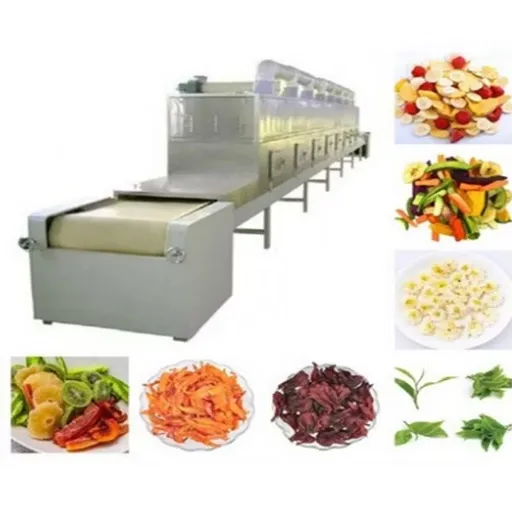
En el corazón del sistema hay un magnetrón que emite energía de microondas, generalmente a 2.45 GHz para aplicaciones alimentarias estándar o 915 MHz para líneas industriales pesadas. Las ondas viajan a través de una guía de ondas hacia un túnel o cámara donde el producto pasa sobre una cinta transportadora.
La energía penetra en los alimentos y excita las moléculas de agua, creando fricción interna rápida. Esa fricción eleva la temperatura de manera rápida y uniforme. Dos efectos se combinan para matar bacterias, mohos y levaduras:
- Efecto térmico: Las altas temperaturas desnaturalizan las proteínas en las células microbianas.
- Efecto biológico: El campo electromagnético interrumpe la permeabilidad de la membrana celular y puede dañar el ADN microbiano, impidiendo la reproducción.
¿Quieres ver cómo se integra esta tecnología en una línea de producción completa? Explora nuestros sistemas de microondas industriales para comparar configuraciones de secado y esterilización.
Esterilizadores de microondas por lotes vs túnel
Hay dos clases de máquinas de esterilización por microondas, que están disponibles para las industrias de procesamiento de alimentos.
La esterilización por microondas por lotes es como un horno convencional voluminoso. La máquina se carga con bandejas de producción, se cierra la puerta y se ejecuta un programa operado. Las mismas máquinas son más adecuadas para menos producción, especialmente para fines de I+D, o para operaciones que tienen muchos SKU. Esto permite ahorrar el área de producción y limitar las máquinas, sin embargo, esa es la gran desventaja de las máquinas de procesamiento: el rendimiento limitado.
Los esterilizadores de microondas de túnel, por otro lado, están diseñados para operaciones de matriz de formulación. Un esterilizador tubular largo se alimenta en ambos extremos con el producto sobre una cinta transportadora, donde es penetrado por microondas y sale esterilizado por el extremo opuesto. La velocidad mínima de la cinta transportadora puede establecerse de 0 m/min a 6 m/min. Esto se refiere a los múltiples edificios de estudio porque la longitud de la cinta transportadora se suma a un esterilizador de microondas de túnel que procesa materiales a una tasa de varios cientos, si no un par de miles de kilogramos por hora y, por lo tanto, es aplicable para aquellas fábricas de especias, a saber, fábricas de alimentos para bocadillos y mascotas que operan líneas de alto volumen.
Componentes clave del sistema
Una máquina de esterilización por microondas completa incluye más que solo el magnetrón. Los componentes críticos son:
- Magnetrón / generador de RF: Produce la energía de microondas.
- Guía de ondas: Canaliza la energía hacia la zona de tratamiento.
- Túnel o cámara: El recinto de acero inoxidable donde ocurre la esterilización.
- Cinta transportadora: Mueve el producto continuamente a través del campo.
- Sistema de control PLC: Gestiona los niveles de potencia, la velocidad de la cinta, el monitoreo de temperatura y el registro de datos.
- Sistema de enfriamiento: Mantiene los magnetrones y la electrónica dentro de temperaturas de operación seguras.
La mayoría de las unidades industriales están construidas de acero inoxidable seguro para alimentos (SUS 304 o 316) y llevan certificaciones CE o FDA dependiendo del mercado.
Esterilización por microondas vs autoclave: ¿Cuál es el adecuado para ti?
Una pieza importante de equipo en las industrias de procesamiento de alimentos es elegir entre un autoclave, es decir, retorta, o una máquina de esterilización por microondas. Una decisión incorrecta puede a veces llevar a pérdidas financieras o dificultades de control interno o problemas de calidad en los productos.
Ahora comparemos en lo que realmente importa para cualquier gerente de producción.
Velocidad y rendimiento
Los esterilizadores de microondas son un método mucho más expedito para lograr la esterilidad comercial en comparación con la penetración de calor. La esterilización activa no toma más de diez minutos, mientras que el procedimiento de preparación y la finalización del ciclo es de menos de treinta minutos, a veces incluso menos de cuarenta y cinco minutos. El proceso se acelera debido al calentamiento velocéntrico; el producto se calienta esencialmente en su totalidad al mismo tiempo.
En cambio, estos autoclaves dependen del vapor cuyo efecto comienza desde la superficie exterior y trabaja hacia adentro. En casos donde están involucrados productos de gran tamaño encerrados en grandes recintos, se consume una cantidad considerable de tiempo. Por ejemplo, un ciclo de retorta normalmente toma una o dos horas si se incluye el tiempo para calentar y enfriar también.
Es evidente que si la operación se centra en la rapidez y el compromiso continuo, el microondas es la opción obvia.
Consumo de energía y agua
La energía eléctrica en los microondas se transfiere a los alimentos para su conversión en calor. Por esta razón, el desperdicio es muy poco. La investigación realizada en diferentes instalaciones muestra que el consumo de energía de la máquina de esterilización por microondas es aproximadamente un 60-75% menor que el de los esterilizadores de agua a vapor y incluso esta pequeña cantidad de energía no implica mucho agua.
Un autoclave típicamente utiliza entre veinte y cincuenta galones de agua durante el transcurso de un solo ciclo para la producción de vapor y enfriamiento por agua. Sin embargo, un sistema de microondas similar puede en casos respectivos requerir alrededor de 800 ml por ciclo. Esto es importante para aquellos que tienen procesadores en regiones donde el costo del uso de agua es alto o donde se fomentan mucho los ahorros de recursos.
Calidad del producto y retención de nutrientes
Aquí es donde las ventajas de la tecnología de microondas se pronuncian bien. Los productos no sufren la ebullición que se observa en las latas debido a la corta exposición al calor y al interior.
Las especias no pierden sus aceites aromáticos y colores vibrantes. La textura y el sabor de los alimentos listos para comer se preservan. Las vitaminas sensibles al calor se retienen dentro de las frutas y verduras. El crocante en los alimentos para mascotas mantiene su densidad y no se vuelve blando por fuera debido al procesamiento extremo por vapor.
Los autoclaves proporcionan condiciones estériles; sin embargo, resulta en la deterioración del sabor y el contenido nutritivo.
Eficacia de esterilización y aceptación regulatoria
Los autoclaves se consideran el método más efectivo en términos de destruir esporas, particularmente del patógeno bacteriano Clostridium botulinum. En consecuencia, la retorta de productos enlatados de baja acidez sigue siendo un requisito esencial, ya que incluso una autoridad no tan incompetente lo tendría, ¿por qué? No hay duda sobre los protocolos de validación de un autoclave por parte de los reguladores de cualquier país, especialmente los desarrollados.
De hecho, hay algunos alimentos que se esterilizan utilizando un proceso basado en microondas ya que logra la esterilidad comercial. Desafortunadamente, sin embargo, estos informes de esterilización por microondas están muy influenciados por el contenido de humedad del producto, la densidad y la distribución uniforme de energía. El procedimiento de validación incluirá el perfilado de temperatura para ilustrar que no hubo parte del producto que permaneciera fría. Hay un riesgo de botulismo, por lo tanto, algunos procesadores emplean sistemas híbridos que combinan la facilidad y eficiencia de los microondas con la garantía de vapor presurizado adecuado para el procesamiento de alimentos sin el estante congelado.
Marco de decisión
Utiliza este marco simple para guiar tu elección:
| Elige un autoclave si… | Elige un esterilizador de microondas si… |
|---|---|
| Procesas alimentos enlatados de baja acidez | Procesas especias, hierbas o condimentos |
| Usas envases de metal | Usas envases de plástico, vidrio o bolsas flexibles |
| La destrucción absoluta de esporas es innegociable | La velocidad y el ahorro de energía son prioridades |
| Tus lotes son grandes y densos | Operas líneas de alto volumen de manera continua |
| La simplicidad regulatoria es lo que más importa | La preservación de la calidad del producto es crítica |
¿Necesitas ayuda para emparejar la tecnología de esterilización con tu producto específico? Nuestros ingenieros diseñan líneas de producción de alimentos con soluciones integradas de esterilización, secado y envasado.
Beneficios clave de la esterilización por microondas en el procesamiento de alimentos
Se estima que el tamaño del mercado global de equipos de esterilización será de aproximadamente $27.6 mil millones en 2031, expandiéndose a una tasa de crecimiento anual compuesta de aproximadamente 7.3%. Entre quienes más necesitan el equipo se encuentra el sector de tecnología de microondas, ya que las ventajas no pueden pasarse por alto.
Procesamiento Dramáticamente Más Rápido
Si se compara con los métodos de autoclave, el proceso de esterilización por microondas puede reducir la duración total del proceso en casi tres cuartas partes, manteniendo la misma destrucción de microorganismos o el mismo valor de Finfinity, según sea el caso. Esto significa un aumento en el rendimiento, una disminución en los tiempos de ejecución de producción y un tiempo más corto para cumplir con las demandas de los clientes entrantes.
Calidad Superior del Producto
La exposición corta al calor minimiza la sobrecocción. Para productos sensibles a la calidad, esto es transformador.
- Las especias mantienen su aroma, color y contenido de aceite.
- Las comidas listas para comer evitan la textura empapada que aleja a los consumidores.
- Los polvos nutricionales preservan las vitaminas y compuestos bioactivos sensibles al calor.
- La comida para mascotas mantiene una densidad y palatabilidad consistentes.
Ahorros Significativos de Energía y Costos
Los esterilizadores industriales de microondas para la esterilización de múltiples artículos requieren alrededor de un 30-40% menos de potencia de procesamiento que los autoclaves. Además, la explotación del agua, el ahorro de mano de obra y la facilitación del manejo por lotes en instalaciones más pequeñas aumentan el control sobre el costo de propiedad, lo que incrementa el uso de la esterilización por microondas a lo largo de los años.
Flexibilidad en el Empaque
Las microondas transmiten a través de diferentes tipos de plásticos y también algunos materiales de vidrio. Esto permite que la superficie se esterilice incluso con el producto dentro del recipiente enfriado; después de que se completa el proceso de procesamiento, el recipiente no se abre, lo que significa que no hay contaminación secundaria.
Incluye paquetes hechos de polipropileno (PP), tereftalato de polietileno (PET), policarbonato (PC), ABS, nylon, etc. El beneficio del paquete sellado se aplica a la mayoría de las comidas listas para comer, bocadillos y suplementos de salud en polvo pulverizados.
Procesamiento Limpio y Sin Químicos
A diferencia del óxido de etileno o el tratamiento químico, no utiliza residuos dañinos (microondas). Esto satisface las necesidades de etiqueta limpia, ya que los consumidores y compradores están presionando más por esto en tiempos recientes. Además, ayuda a reducir los problemas de tratamiento de aguas residuales y asegura que no haya productos químicos peligrosos al final del empaque.
Principales Aplicaciones para Esterilizadores Industriales de Microondas
No todas las categorías de alimentos se benefician por igual de la esterilización por microondas. La tecnología sobresale en aplicaciones específicas donde la velocidad, la preservación de la calidad y el procesamiento continuo son lo más importante.
Especias y Condimentos
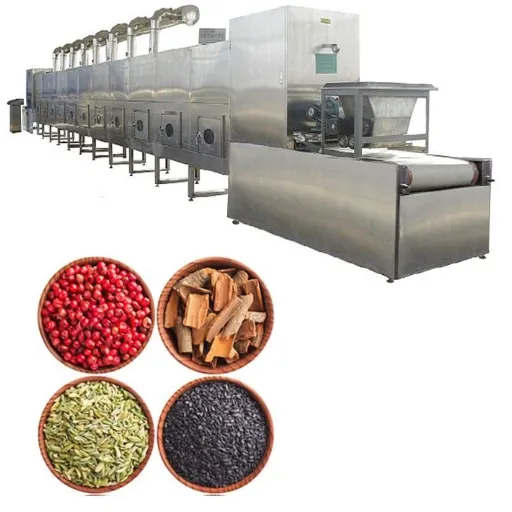
Es la mayor aplicación de . Máquina de Esterilización por Microondas . o Microondas en el procesamiento de alimentos. En la producción de alimentos, algunas especias como el pimentón, el comino, la pimienta, el chile en polvo y las hierbas deshidratadas necesitan eliminar patógenos mientras evitan la eliminación de aceites esenciales volátiles que hacen que estas especias sean caras.
Por ejemplo, al aplicar vapor para hacer la esterilización, se produce la evaporación de contenidos volátiles, lo que resulta en una desviación del color visual, etc. Tales versiones de aplicación de tratamiento térmico por irradiación proporcionan la misma eficacia en la erradicación de E. coli y Salmonella, mientras soportan cambios sensoriales que buscan justificar tales grandes diferencias de precio.
Por ejemplo, en el año 2023, Chen tuvo que considerar reconstruir su creación culinaria de Sichuan y, en lugar de usar el esterilizador de vapor, mejoró su línea con un túnel de microondas de 60 kilovatios. Un tiempo de ciclo de cuatro horas se redujo a veinticinco minutos. Después de seis meses, la prueba realizada en su laboratorio de exportación indicó que la cantidad de aceite aromático en su producto era alta, mientras que las compras de dos clientes de Europa aumentaron en un 30% debido al color y olor de acuerdo con sus necesidades.
Comidas Listas para Comer (RTE)
La Máquina de Esterilización por Microondas es un dispositivo totalmente automático capaz de cocinar alimentos más rápidamente al utilizar la alta fuerza G generada por la rotación de una centrífuga colocada sobre los alimentos.
Comida para Mascotas y Alimento Acuático
El kibble seco, los bocadillos y el alimento para peces se benefician de una esterilización suave y uniforme. Los dueños de mascotas exigen cada vez más nutrición de alta calidad, lo que significa que los procesadores deben eliminar patógenos sin degradar proteínas, grasas o palatabilidad.
Una máquina de esterilización por microondas integrada aguas abajo de un extrusor puede proporcionar el paso final de seguridad mientras mantiene el perfil nutricional preciso que requieren las marcas premium. Si está ampliando la capacidad de comida para mascotas, consulte nuestras soluciones de línea de producción de comida para mascotas.
Granos, Nueces y Productos Secos
La harina de soja, las batatas secas, las hojas de té, las nueces y las frutas secas enfrentan riesgos de moho y deterioro. La esterilización por microondas extiende la vida útil sin conservantes, abriendo una posición de etiqueta limpia en mercados conscientes de la salud.
Polvos Alimentarios y Nutracéuticos
Los polvos de alimentos para bebés, suplementos de proteínas y mezclas nutricionales requieren un tratamiento térmico suave y uniforme. Los sistemas de microondas por lotes son particularmente populares aquí porque permiten un control preciso sobre pequeñas producciones de alto valor con mínima pérdida de producto.
Cómo Elegir la Máquina de Esterilización por Microondas Adecuada
Seleccionar el óptimo esterilizador industrial de microondas requiere hacer coincidir la tecnología con su producto, rendimiento y objetivos operativos. Aquí hay un marco práctico.
Determine Su Modo de Producción
Los sistemas por lotes funcionan mejor para:
- Producción de bajo volumen o estacional
- Alta variedad de SKU
- I+D y pruebas de recetas
- Nutracéuticos y polvos de alto valor
Los sistemas de túnel funcionan mejor para:
- Líneas continuas de alto volumen
- Especias, bocadillos y comidas RTE
- Operaciones con flujo de producto consistente
- Instalaciones que buscan minimizar la mano de obra por kilogramo
Seleccione la Frecuencia Correcta
La mayoría de los esterilizadores de microondas de grado alimenticio operan en una de dos frecuencias:
- 2450 MHz: La frecuencia estándar para la mayoría de las aplicaciones alimentarias. Funciona bien para productos más pequeños y líneas de rendimiento moderado.
- 915 MHz: Ofrece una penetración más profunda y mayor capacidad de potencia. Es la mejor opción para túneles industriales muy grandes, productos densos o operaciones que buscan el máximo rendimiento.
Si está procesando productos de carne gruesa o masas de granos densos, 915 MHz puede ofrecer resultados más uniformes. Para especias y polvos, 2450 MHz suele ser suficiente.
Ajuste la Potencia y Capacidad al Rendimiento
Las unidades industriales varían desde sistemas compactos de 30 kW hasta túneles masivos de más de 200 kW. Para dimensionar correctamente, considere:
- Kilogramos objetivo por hora
- Densidad del producto y contenido de humedad
- Valor de letalidad requerido (F₀)
- Ancho de la correa y longitud del túnel
- Velocidad de transmisión ajustable (típicamente 0–6 m/min)
Un proveedor de buena reputación realizará lotes de prueba y calculará la potencia exacta y el tiempo de permanencia que su producto requiere.
Evalúe las Características de Control y Automatización
Las modernas máquinas de esterilización por microondas deben incluir:
- Control PLC con una interfaz de pantalla táctil HD
- Salida de potencia ajustable por zona
- Monitoreo y retroalimentación de temperatura en tiempo real
- Registro de datos para validación y trazabilidad
- Control automático de velocidad de la correa
- Sistemas de alarma para sobrecalentamiento o falla del magnetrón
Estas características reducen el error del operador, simplifican las auditorías y apoyan la integración de la Industria 4.0.
Verifique el Cumplimiento y Certificación
Verifique que el equipo cumpla con los estándares de sus mercados objetivo:
- Marcado CE para Europa
- Consideraciones de la FDA y USDA para América del Norte
- Acero inoxidable apto para alimentos construcción (SUS 304 o 316)
- Diseño sanitario con superficies de fácil limpieza y mínimas hendiduras
¿Listo para encontrar un sistema de esterilización construido para su producto exacto? Contacte a nuestro equipo para una evaluación personalizada y un cronograma de pruebas.
Consideraciones sobre Empaque y Puntos Fríos
Incluso el mejor esterilizador industrial de microondas funcionará por debajo de su capacidad si el empaque o la geometría del producto bloquean la distribución uniforme de energía. Aquí está lo que necesita saber.
Materiales de Empaque Compatibles
Las microondas penetran muchos materiales de empaque comunes, que es una de las mayores ventajas de la tecnología. Las opciones seguras incluyen:
- Polipropileno (PP)
- Tereftalato de polietileno (PET)
- Policarbonato (PC)
- ABS
- Nylon
- Ciertos tipos de vidrio (verifique la resistencia al choque térmico)
Materiales a evitar:
- Polietileno (PE) — se ablanda y deforma fácilmente bajo calentamiento por microondas
- Vidrio ordinario o templado — riesgo de choque térmico y ruptura
- Contenedores metálicos o papel de aluminio — refleja microondas y puede causar arcos eléctricos
Prevención de Puntos Fríos y Calentamiento Desigual
Los puntos fríos son el enemigo de la esterilización efectiva. Si una esquina de un producto no alcanza la temperatura letal, todo el lote se ve comprometido.
Los sistemas avanzados mitigan este riesgo a través de:
- Alimentación de microondas de múltiples fuentes: Múltiples magnetrones posicionados alrededor del túnel crean campos de energía superpuestos.
- Bandejas rotativas o lechos agitados: Para polvos y productos granulares, la agitación asegura que todas las partículas pasen por la zona caliente.
- Mapeo de temperatura en tiempo real: Sensores infrarrojos y bucles de retroalimentación ajustan la entrega de potencia dinámicamente.
- Control de grosor de capa de producto: Capas delgadas y uniformes en la cinta transportadora se calientan de manera más uniforme que montones gruesos.
Los protocolos de validación deben incluir el mapeo de termopares a lo largo de todo el ancho y longitud de la cinta para demostrar letalidad consistente antes de que comience la producción.
Sistemas Híbridos para Productos Complejos
Para productos densos, viscosos o en capas que resisten el calentamiento uniforme por microondas, los sistemas híbridos ofrecen una solución elegante. Estas unidades combinan energía de microondas con vapor a presión o cámaras de vacío. La microonda proporciona un calentamiento inicial rápido, mientras que el vapor presurizado asegura una penetración profunda y garantía de esterilidad.
Las configuraciones híbridas son particularmente útiles para:
- Productos de carne gruesa en salsa
- Comidas densas a base de granos
- Productos donde el escrutinio regulatorio es especialmente alto
Mantenimiento y Costo Total de Propiedad
El precio de compra de una máquina de esterilización por microondas es solo una parte de la imagen financiera. Veamos el costo total de propiedad.
Requisitos de Mantenimiento de Rutina
Los sistemas de microondas bien mantenidos son relativamente sencillos de reparar. Un programa típico se ve así:
Diario:
- Limpiar las cintas transportadoras y las superficies de la cámara
- Eliminar residuos de producto de las aberturas de la guía de onda
- Verificar el flujo de agua o aire de enfriamiento
Semanal:
- Inspeccionar las guías de onda en busca de daños o contaminación
- Verificar el rendimiento del sistema de enfriamiento del magnetrón
- Comprobar los sellos de las puertas y los interbloqueos de seguridad
Mensual:
- Inspeccionar la alineación y tensión de la correa
- Revisar las conexiones eléctricas y la puesta a tierra
- Calibrar los sensores de temperatura
Anualmente:
- Inspección profesional de magnetrones y generadores de RF
- Reemplazo de correas, sellos y rodamientos desgastados
- Ejecutar una validación con mapeo de termopares
Vida útil del magnetrón
Los magnetrones son el componente de desgaste más crítico. En uso industrial típico, duran 5,000 a 8,000 horas antes de ser reemplazados. Con un enfriamiento adecuado y condiciones de operación limpias, la vida útil puede extenderse hacia el extremo superior de ese rango.
Ahorros de energía y mano de obra
La economía operativa favorece fuertemente a los microondas sobre el autoclave en aplicaciones adecuadas:
- Energía: 30–40% menos en facturas de electricidad
- Agua: Casi eliminación de los costos de vapor y agua de enfriamiento
- Mano de obra: Los sistemas de túnel continuos requieren menos atención del operador por kilogramo que los autoclaves por lotes
- Huella: Los sistemas de túnel a menudo ocupan menos espacio en el suelo que las instalaciones de retorta equivalentes
Cuando estos ahorros se proyectan durante una vida útil del equipo de diez a quince años, el costo total de propiedad frecuentemente favorece la esterilización por microondas incluso cuando el costo de capital inicial es más alto.
Errores comunes al invertir en esterilización por microondas
Incluso los gerentes de operaciones experimentados pueden tropezar al especificar un nuevo esterilizador industrial de microondas. Evite estas trampas comunes.
Subestimar los requisitos de validación
Los reguladores y los clientes quieren pruebas de que cada producto que llega al mercado es seguro. No asuma que ejecutar un ciclo a una configuración de potencia dada es suficiente. Necesita mapeo de temperatura documentado, cálculos de letalidad y protocolos repetibles.
Elegir la frecuencia incorrecta para la densidad del producto
Un sistema de 2450 MHz puede tener dificultades con productos muy densos, mientras que un sistema de 915 MHz podría ser excesivo para especias ligeras. Alinee la frecuencia con la física del producto, no solo con el presupuesto.
Pasar por alto la compatibilidad del embalaje
No todos los plásticos se comportan igual bajo la energía de microondas. Pruebe sus materiales de embalaje exactos bajo condiciones de producción antes de comprometerse a una línea completa.
Ignorar el soporte postventa y las piezas de repuesto
Los esterilizadores de microondas son máquinas sofisticadas. Asegúrese de que su proveedor ofrezca soporte técnico receptivo, disponibilidad rápida de piezas de repuesto y capacitación en el lugar. El tiempo de inactividad en una línea de esterilización crítica es costoso.
No calcular el costo total de propiedad
El precio de compra más bajo no siempre es la mejor oferta. Tenga en cuenta la energía, el agua, la mano de obra, el mantenimiento y la vida útil esperada del equipo al comparar cotizaciones.
No planificar la integración de la línea
Su esterilizador no opera en aislamiento. Considere cómo se conecta aguas arriba a mezcladores, extrusoras o equipos de embalaje y aguas abajo a enfriamiento, etiquetado y paletizado. Un diseño modular facilita mucho la expansión futura.
Conclusión
Un esterilizador industrial de microondas no es un reemplazo universal para cada autoclave en el mercado. Pero para las aplicaciones adecuadas—especias, comidas listas para comer, alimentos para mascotas, productos secos y nutracéuticos—ofrece una combinación convincente de velocidad, preservación de calidad y eficiencia energética.
Aquí están los puntos clave a recordar:
- La esterilización por microondas calienta desde el interior hacia afuera, reduciendo los tiempos de ciclo hasta en un 72% en comparación con el procesamiento en retorta.
- Los ahorros de energía del 30–40% y la reducción dramática del agua hacen que la tecnología sea atractiva desde una perspectiva de sostenibilidad y costo.
- Las mejoras en la calidad del producto son significativas: mejor color, sabor, textura y retención de nutrientes.
- Los sistemas de túnel sobresalen en producción continua de alto volumen, mientras que los sistemas por lotes son adecuados para I+D y producciones de bajo volumen.
- La validación, la compatibilidad del embalaje y la prevención de puntos fríos son factores críticos de éxito.
- El costo total de propiedad a menudo favorece la esterilización por microondas en un horizonte de diez a quince años.
Si está evaluando una nueva línea de esterilización o buscando actualizarse de un procesamiento basado en vapor, el siguiente paso es claro. Hable con un especialista en equipos que entienda su producto, sus objetivos de rendimiento y sus requisitos de calidad.
Solicitar una evaluación personalizada de esterilización por microondas →
En Shandong Loyal Industrial Co., Ltd., diseñamos sistemas de secado y esterilización por microondas adaptados a sus necesidades de producción exactas. Desde pruebas piloto hasta instalaciones de túnel a gran escala, nuestro equipo le ayuda a lograr la seguridad, eficiencia y calidad que sus clientes exigen.
¿Necesita pegar en Word en lugar de descargar? Pruebe Copiar para Word en Markdown a HTML.