

Understanding Liquor Cocoa: The Industrial Core of All Chocolate Production

Liquor cocoa, often called chocolate liquor or cocoa mass, is the pure, unsweetened liquid produced by grinding roasted cocoa nibs. Despite the name, it contains no alcohol; rather, the term refers to the fluid state of the cocoa butter and solids once they are released through mechanical heat and pressure. This substance serves as the fundamental building block for all chocolate products, containing roughly equal parts cocoa butter and dry cocoa solids.
Why is it called “liquor” if it’s non-alcoholic?
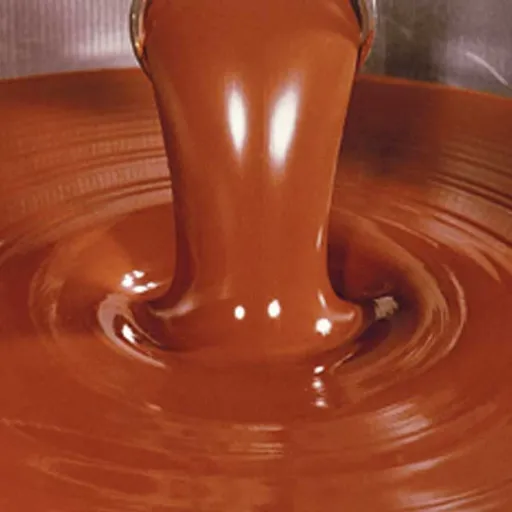
In the specialized world of confectionery processing, the term “liquor” has nothing to do with spirits or fermentation. It is an old-world industry designation for a substance that has been reduced to a liquid state through grinding. When cocoa nibs—the roasted, de-shelled “meats” of the bean—are crushed, the cellular structure collapses. This mechanical destruction releases the fat trapped within the microscopic cells.
Since cocoa beans contain roughly 51% to 54% fat, the friction from the mill generates enough heat to melt this cocoa butter instantly. What was once a solid, crunchy nib transforms into a dark, flowing paste. Industry observations from European and North American plants show that while some regions call this “cocoa mass” or “cocoa paste,” the technical term “chocolate liquor” remains the standard in regulatory labeling. It is a 100% plant-based, zero-proof foundation. Essentially, you are looking at the “mother” ingredient: a pure, unsweetened suspension of cocoa solids in their own natural fat.
The Initial Breakdown: From Nibs to Paste

The transition from a solid, brittle cocoa nib to a flowing liquid isn’t a chemical change, but a violent physical one. To produce liquor cocoa, you have to break the bean down to a microscopic level. It’s a process of micronization where the goal is to reduce solid particles until they are virtually undetectable to the human palate.
If the grind is too coarse, the fat remains trapped, and the “liquor” stays a dry, crumbly powder. In a high-volume factory setting, this conversion happens in seconds, but the precision required is immense. Manufacturers often monitor the temperature during this phase with extreme care; if the friction-induced heat spikes too high, the delicate aromatic precursors in the cocoa may scorch, resulting in a bitter, burnt aftertaste that ruins the entire batch.
Mechanical Shearing and Cell Rupture
At the heart of the mill, whether it’s a traditional stone melangeur or a modern vertical ball mill, the nibs are subjected to intense mechanical shear. Think of the cocoa nib as a collection of tiny, fat-filled fortified rooms. To get the liquid out, you have to tear the walls down.
As the nibs pass through progressively tighter gaps—often measured in increments of only a few dozen microns—the cellular membranes literally burst. Industry observations suggest that the efficiency of this “rupture” determines the final viscosity. A practical example: if your grinder isn’t calibrated correctly, the particle size might hover around 45 microns, leaving the mass feeling gritty and “thick” because the fat hasn’t been fully liberated to lubricate the solids.
The 53% Cocoa Butter Release
Once the cells break, the “free fat” (cocoa butter) floods the mixture. While the exact fat content fluctuates based on the bean’s origin and crop year, it usually hovers around the 53.4% mark.
This release is the turning point. The dry cocoa solids, which make up the remaining percentage, are now suspended in a continuous phase of liquid fat. The friction from the grinding provides the heat—typically maintaining the mass at about 55°C—ensuring the butter stays in a fluid state. Without this high ratio of natural fat, the machinery would seize under the sheer resistance of the dry cocoa particles. It is this specific ratio of fat-to-fiber that allows the liquor to be pumped through heated pipes like heavy syrup.
3 Essential Quality Markers for Premium Cocoa Mass

Identifying a high-grade liquor cocoa requires looking beyond the dark color; it is a matter of precision in the physical and chemical profile. In a realistic production scenario, a batch might look perfect to the eye but fail a laboratory “fineness” test, rendering it useless for high-end confectionery.
First, consider the micron count. Industry observations suggest that premium cocoa mass must consistently fall below the 18 to 22-micron threshold. If the particles are larger, the human tongue perceives a subtle “sandiness” that no amount of sugar or milk can mask. This isn’t just about mouthfeel; smaller particles provide a larger surface area for cocoa butter to coat, which directly influences the fluid dynamics of the chocolate.
Next is the moisture content, a critical metric that often dictates shelf life and stability. High-quality mass typically maintains a moisture level below 1.4%. If this number creeps toward 2% or 3%, the liquor tends to “seize,” losing its glossy flow and becoming a thick, unworkable paste that clogs industrial pumps.
Finally, the volatile acid profile serves as the primary aromatic marker. During the grinding process, the heat allows residual acetic acids—left over from the fermentation of the raw beans—to evaporate. A superior mass will have a clean, deep chocolate aroma. If you detect a sharp, vinegary “sting” upon opening a container, the beans were likely over-fermented or the grinding stage was rushed, preventing the necessary “gas-off” of these harsh volatiles.
The Refining Cycle: Achieving Sub-20 Micron Smoothness
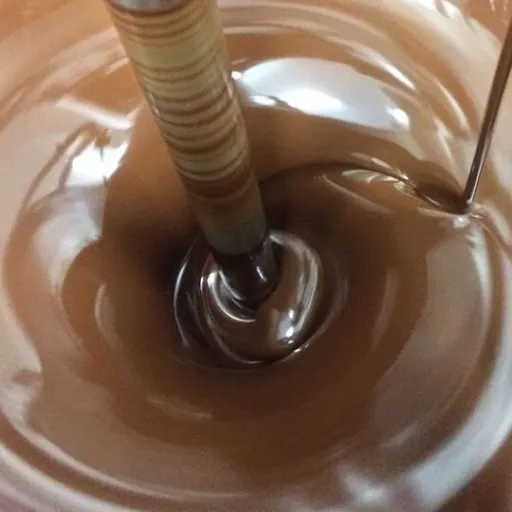
Raw cocoa mass, while liquid, is often deceptively gritty. To the untrained eye, a flowing stream of liquor looks finished, but the human tongue is an incredibly sensitive instrument, capable of detecting particles larger than 25 microns. If the refining cycle fails to push the boundaries of fineness, the resulting chocolate will feel “sandy.” Achieving sub-20 micron smoothness is less about simple grinding and more about the physics of continuous impact and attrition.
In a high-capacity production environment, this transition happens through a recirculating system. The liquor doesn’t just pass through a machine once; it often cycles through a dedicated refining circuit until a digital micrometer confirms the target consistency. Industry observations suggest that maintaining a steady temperature during this high-energy phase is the greatest challenge, as the mechanical work required to shatter cocoa solids generates significant heat that may degrade the more delicate flavor precursors.
The Role of Vertical Ball Mills
Vertical ball mills have largely become the workhorse of modern cocoa refining due to their sheer efficiency. Inside the stainless steel cylinder, thousands of hardened chrome steel or ceramic beads—usually around 3.2mm to 4.8mm in diameter—are agitated by a central shaft.
As the liquor cocoa is pumped upward through this “bed” of agitated media, the solids are crushed between the colliding beads. This is a practical example of attrition at work. Unlike traditional roller refiners, a ball mill allows for a very narrow particle size distribution. This means you don’t just get some small particles; you get an entire batch where almost every fragment of cocoa fiber is uniform, ensuring a predictable viscosity for downstream tempering or molding.
Managing Volatile Acid Reduction
Refining is a dual-purpose stage; while the beads are busy pulverizing solids, the process is also “cleaning” the flavor profile. Raw cocoa beans undergo fermentation, a necessary step that unfortunately leaves behind a trail of volatile acetic and lactic acids.
During the agitation in the mill, the surface area of the liquor increases exponentially. This exposure, combined with the heat of the process—often held cautiously between 55°C and 68°C—encourages these harsh, vinegary volatiles to evaporate. A realistic scenario in the quality control lab involves smelling the vent exhaust of the refiner; early in the cycle, it may sting the nostrils, but as the refining nears completion, the aroma shifts toward a deep, mellow nuttiness. This reduction in acidity is what transforms a sharp, aggressive mass into a sophisticated cocoa liquor ready for premium confectionery.
Is liquor cocoa the same as unsweetened baking chocolate?
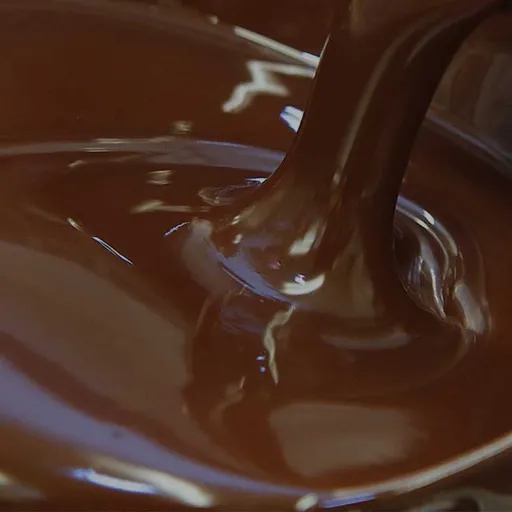
Technically, yes—but context matters. If you were to walk into a large-scale chocolate factory, you would see liquor cocoa as a hot, flowing liquid or massive, industrial-sized blocks. In contrast, unsweetened baking chocolate is simply that same 100% cocoa mass tempered and molded into consumer-friendly bars for the grocery shelf. They share the same DNA: no added sugar, no dairy, and a natural fat content usually hovering around 52.8%.
However, a subtle distinction often exists in the degree of refinement.
Industry observations suggest that raw cocoa liquor intended for further processing (like being pressed into cocoa powder) might not undergo the same extensive conching or fine-milling as a bar destined for a pastry chef’s kitchen. A realistic scenario involves a home baker attempting to substitute professional-grade liquor for a standard baking bar. While the flavor profile remains identical, the industrial liquor may, in some cases, have a slightly more “rustic” particle size or a sharper acidic edge because it hasn’t been aired out through a secondary conching cycle. For most culinary applications, though, they are functional twins.
Industrial Flow: Managing the Temperature of Liquid Cocoa
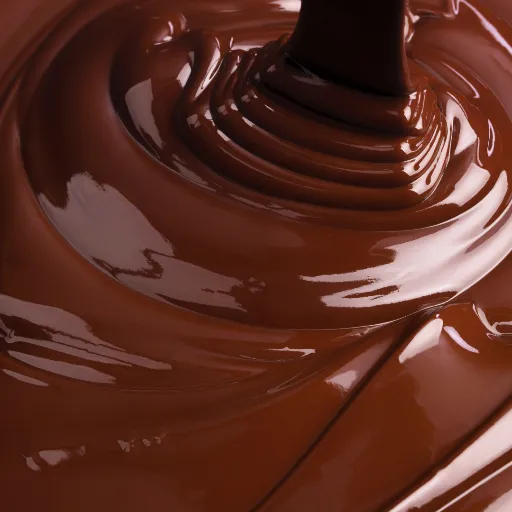
Transporting liquor cocoa through a production line is less like plumbing and more like managing a living, sensitive current. Because the mass is a suspension of solids in fat, the temperature dictates everything from pump pressure to final quality. If the thermal balance shifts, the entire “flow” of the factory can grind to a halt. In professional facilities, this isn’t left to chance; the entire pipeline is typically jacketed—a double-walled pipe system where hot water or oil circulates to maintain a precise environment.
Industry observation suggests that the ideal “moving” temperature for cocoa mass falls between 45°C and 55°C. At this range, the cocoa butter is fully liquid, acting as a low-friction carrier for the nib particles. However, managing this heat requires a delicate touch. A realistic scenario in a high-capacity plant involves a sudden power dip; if the heating jackets fail even for twenty minutes, the residual cocoa mass begins to set, creating a “cold plug” that can burst seals once pressure is reapplied.
Preventing Solidification in Pipes
Solidification is the ultimate nightmare for a plant manager. Cocoa butter begins to crystallize around 28°C to 32°C. Once it hits this transition point, the viscosity spikes exponentially. To prevent this, sensors are placed at critical elbows and junctions in the line. A practical example of preventive maintenance is the use of “trace heating” alongside the jacketing, ensuring that even during a scheduled shutdown, the liquor remains at a cautious 42.5°C—just enough to keep the fat in a fluid state without wasting excessive energy.
The Impact of Overheating on Flavor Profiles
While cold causes blockages, excessive heat destroys the product’s soul. Cocoa liquor is rich in delicate polyphenols and aromatic esters that are highly heat-sensitive. If the mass is held at temperatures exceeding 65°C to 70°C for prolonged periods, the flavor profile tends to flatten, losing its bright, fruity notes in favor of a muddy, “cooked” taste. In extreme cases, the proteins and sugars in the cocoa can undergo a premature Maillard reaction, introducing a bitter, scorched note that is impossible to remove during the later conching or tempering stages.
Viscosity Control via Lecithin Addition
Sometimes heat alone isn’t enough to achieve the desired flow, especially when the cocoa solids are exceptionally fine. This is where lecithin comes in. By adding a tiny fraction—often around 0.3% to 0.5% of the total weight—manufacturers can dramatically reduce the internal friction of the liquor.
Lecithin acts as an emulsifier, wrapping around the dry cocoa particles to help them slide past each other in the fat phase. This allows the liquor to move through narrower pipes or more complex valves without requiring a dangerous increase in temperature.
5 Frequent Failures in Small-Batch Liquor Grinding
Scaling down industrial cocoa processing for small-batch production often reveals how unforgiving the physics of cocoa butter can be. One of the most persistent setbacks is inadequate pre-heating of the grinding stones or steel burrs. If the equipment is cold, the cocoa butter—which makes up roughly 53% of the nib—seizes upon contact, turning into a cement-like paste that stalls the motor before the “liquor” state is ever reached.
Industry observation suggests that over-loading the hopper is a secondary pitfall. In a realistic scenario, a maker might add 5kg of nibs to a small melangeur too quickly, causing the friction temperature to spike unevenly. This leads to a “gumming” effect where the solids move faster than the liberated fats can lubricate them.
Other common technical oversights include:
- Moisture Contamination: Even a few milliliters of water from poorly dried equipment can cause the liquor to undergo “bloom” or permanent thickening.
- High Humidity: Processing in an environment with over 62% humidity often introduces ambient moisture that prevents a smooth, glossy finish.
- Dull Grinding Media: Using worn stones or blades results in a gritty particle size, typically hovering above 35 microns, which the human tongue perceives as unrefined and sandy.
FAQ Section
Q: What is the difference between cocoa liquor and cocoa mass?
In the chocolate industry, these terms are essentially synonyms. “Cocoa liquor” is the preferred regulatory term in the United States, while “cocoa mass” is more common in Europe. Both describe the same 100% pure, unsweetened paste created by grinding roasted cocoa nibs. Neither contains alcohol; the “liquor” designation simply refers to the fluid state of the cocoa butter when heated by the friction of the milling process.
Q: Is there dairy or sugar added to pure liquor cocoa?
No. Pure liquor cocoa is a single-ingredient product consisting exclusively of ground cocoa nibs. It contains no dairy, sugar, or emulsifiers. Because it is composed of roughly 53% natural cocoa butter and 47% cocoa solids, it remains naturally vegan and gluten-free. Sugar and milk are only introduced later in the manufacturing process when the liquor is transformed into eating chocolate or confectionery coatings.
Q: How do industrial manufacturers prevent the liquor from becoming gritty?
Texture is controlled through high-energy refining, typically using vertical ball mills or five-roll refiners. These machines pulverize the cocoa solids until the particle size drops below 20 microns. Since the human tongue cannot easily detect particles smaller than 25 microns, this intensive micronization ensures the liquor feels perfectly smooth. Maintaining a consistent temperature during refining also prevents the cocoa butter from crystallizing prematurely, which would otherwise cause a “thick,” sandy mouthfeel.
Q: Can you use cocoa liquor directly in recipes as a substitute for cocoa powder?
You can, but it requires careful recipe adjustment. Cocoa powder has had most of its fat removed, whereas cocoa liquor is over 50% cocoa butter. If you swap them 1:1, your baked goods will likely turn out oily or collapse. To use liquor as a substitute, you must reduce the other fats (like butter or oil) in your recipe to account for the heavy natural fat content present in the liquor cocoa.
Q: Why does the color of cocoa liquor vary between light brown and deep black?
Several variables dictate the final hue, primarily the roasting profile and the pH level of the beans. A light roast results in a reddish-brown liquor, while a longer, darker roast produces a deep chocolate brown. Additionally, if the liquor has been “Dutched” (alkalized), the chemical reaction darkens the solids significantly, sometimes resulting in a near-black appearance common in dark cocoa cookies or heavy syrups.