
High-Density Aquafeed Technology
Industrial Sinking Fish & Shrimp Feed Production Line
Specialized Twin-Screw Extrusion for Shrimp (Vannamei/Tiger), Crab & Sturgeon. Produces high-density pellets (>1.1 g/cm³) with >4 Hours Water Stability to minimize waste.
The Science of Sinking:
Density & Compaction
Shrimp and crabs are slow bottom feeders. If feed disintegrates quickly, nutrients leach into the water, wasting money and causing ammonia spikes.
Loyal's Sinking Feed Line uses Zero-Expansion Technology. Unlike floating feed, we control the extruder temperature and screw shear to "cook" the material without puffing it.
The result is a highly compacted pellet with a density of >1.1 g/cm³. It sinks fast and stays intact underwater for over 4 hours, ensuring complete consumption.
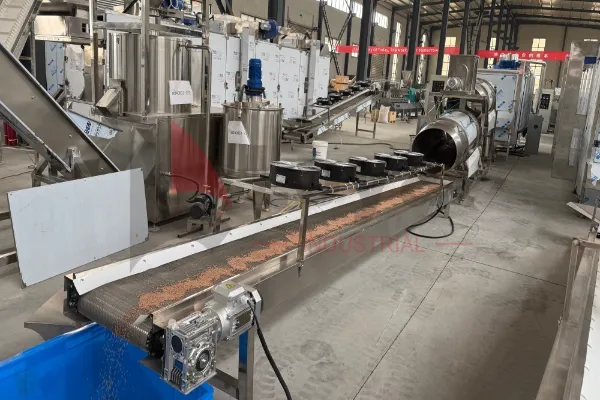
High Density Compaction
Through precise pressure control, pellets are compressed to reach a density higher than water. They sink immediately to the bottom where shrimp and crabs feed.
>4 Hours Stability
Enhanced gelatinization binds the starch tightly. The pellets maintain their shape in water for >4 Hours, preventing waste and keeping the pond bottom clean.
Nutrient Lock
Low-temperature extrusion (compared to floating feed) preserves heat-sensitive vitamins and enzymes. The smooth surface locks in fats, preventing oil leaching.
Process Flow Chart
Shrimp and crab feed require finer grinding and longer conditioning than floating feed. Our process ensures maximum digestibility and density.
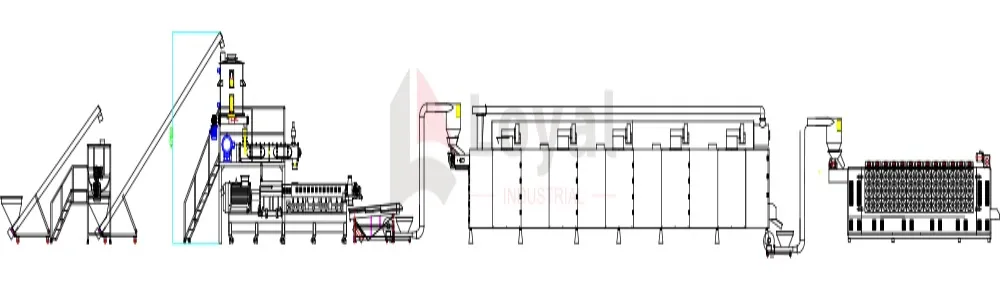
01
Superfine Pulverizing
Raw materials are ground to 80-120 mesh using a micro-pulverizer. This ultra-fine powder allows shrimp (with short digestive tracts) to absorb nutrients efficiently.
02
Uniform Mixing
High-protein ingredients (fish meal, squid paste, vitamins) are mixed thoroughly. Uniformity is key to ensuring every small pellet contains complete nutrition.
03
Steam Conditioning
Material is cooked with steam for 60-180 seconds in a multi-shaft conditioner. This "pre-cooking" gelatinizes starch to act as a natural binder for water stability.
04
Sinking Extrusion
Low-shear screw configuration compresses the material into dense pellets (Density >1.1) without puffing. This ensures the feed sinks immediately.
05
Gentle Drying
Moisture is reduced to <10% in a mesh belt dryer. Gentle heat is used to prevent cracks on the pellet surface, which could reduce water stability.
06
Cooling & Packing
Pellets are cooled to harden the surface, screened to remove dust, and packed. A hard, smooth surface further improves water resistance.
Specialized Machinery for Shrimp
Producing sinking feed requires different physics than floating feed. We prioritize high compression, long conditioning times, and ultra-fine grinding.
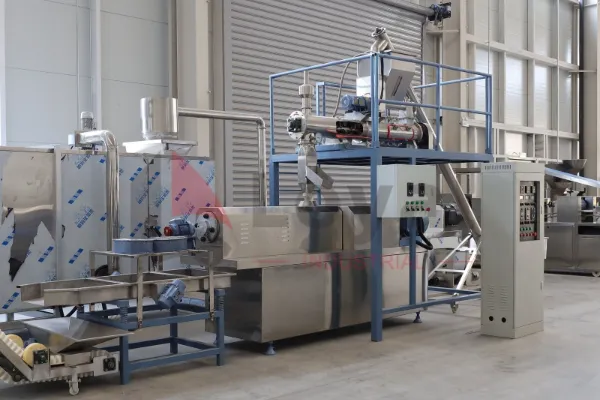
Density Engine
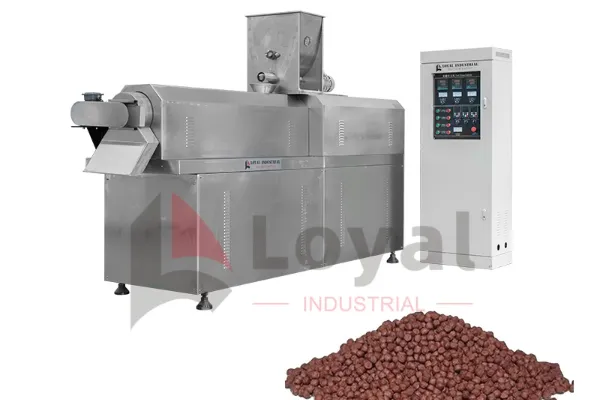
Sinking-Config Twin Screw Extruder
Unlike the floating version, this extruder uses a Low-Shear Screw Configuration and precise temperature control to prevent puffing. It compresses the material to a density >1.1 g/cm³, ensuring it sinks immediately while maintaining a smooth surface.
Low Shear Screw Profile
High Compression Ratio
PID Temperature Control
Water Cooling Barrel
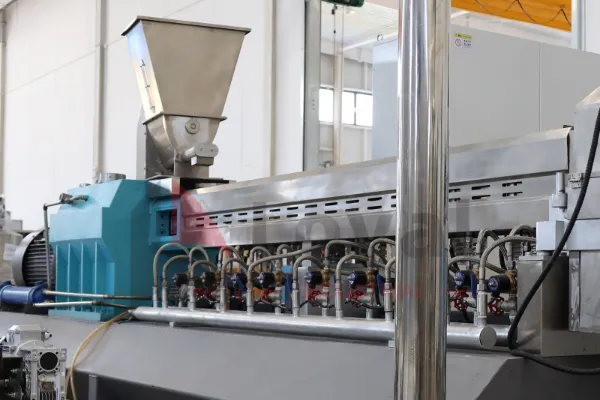
The Secret to Water Stability
Triple-Shaft Conditioner
Water stability comes from cooking, not just pressing. Our multi-shaft conditioner extends the retention time to 120-180 seconds. This allows the starch to fully gelatinize into a natural binder, keeping the pellet intact underwater for hours.
Retention Time >120s
Triple Mixing Shafts
Full Stainless Steel
Steam & Water Injection
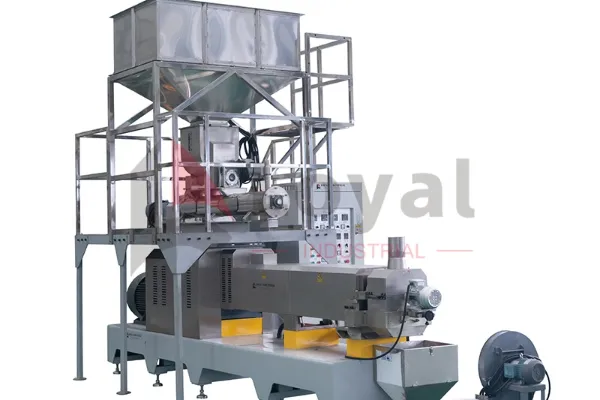
Digestibility Guarantee
Superfine Pulverizer
Shrimp cannot digest coarse particles. Our superfine grinder ensures 98% of raw materials pass through an 80-120 mesh screen. This ultra-fine powder is essential for producing small diameter pellets (1.0mm) with a smooth surface.
Fineness: 80-120 Mesh
No Screen Design
Low Temperature Grinding
Automatic Dedusting
Target Species & Feed Types
From micro-pellets for shrimp larvae to hard pellets for adult crabs. Our sinking line handles high-protein recipes with precision.
Core Application

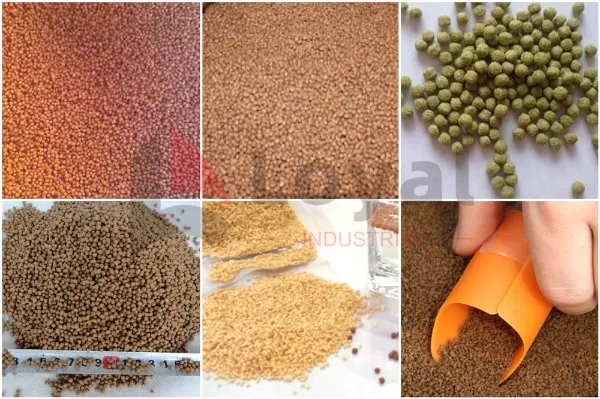
Shrimp & Prawn
Small diameter (0.8-2.0mm) with a smooth surface. Requires high water stability to prevent nutrient leaching before the shrimp feeds.
Stability
> 4 Hours
High Hardness
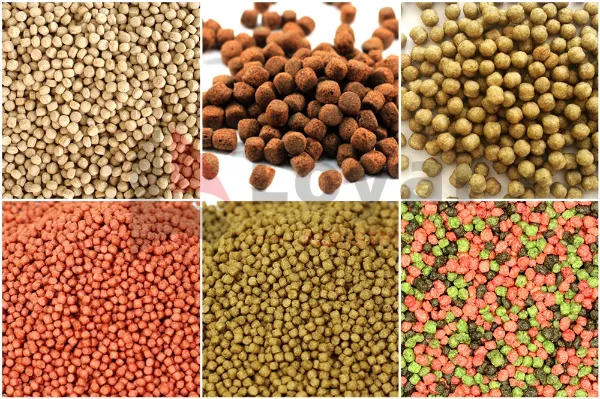
Crab Feed
Crabs are slow eaters that "nibble" their food. The pellets must be hard and dense to withstand manipulation by crab claws without crumbling.
Hardness
High Impact
High Oil
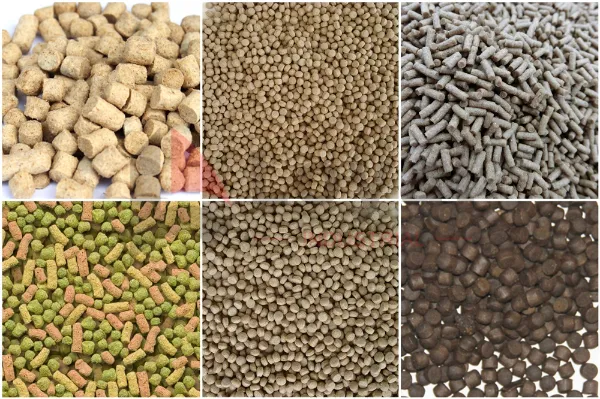
Sturgeon Feed
Bottom-feeding fish that require high fat/oil content. Our vacuum coating option ensures oil is absorbed deep into the pellet core.
Oil Content
Up to 20%
The Water Stability Test
For shrimp farmers, water quality is everything. Loyal sinking feed is tested to remain intact underwater for hours, reducing organic load.
- 100% Sinking Rate (Density >1.1 g/cm³)
- 2-4 Hours Stability (No disintegration)
- Smooth Surface (Reduces dust)
- High Nutrient Retention (Less leaching)
Technical Specifications
Sinking feed production requires higher compression. Our S-Series models are optimized for density control and continuous operation.
| Model | Capacity (Sinking) | Main Power | Conditioner Type | Dimensions (L*W*H) |
|---|---|---|---|---|
| LY-65-S | 100 - 140 kg/h | 22 kW | Single Shaft | 14 x 1.2 x 2.2 m |
| LY-70-S | 180 - 240 kg/h | 30 kW | Double Shaft | 18 x 1.5 x 2.2 m |
| LY-85-S | 350 - 450 kg/h | 55 kW | Double Shaft (Steam) | 22 x 1.5 x 2.5 m |
| DSE-95-S | 800 - 1200 kg/h | 90 kW | Triple Shaft (Steam) | 30 x 2.5 x 3.5 m |
| DSE-120-S | 2.5 - 4.0 Ton/h | 200 kW | Triple Shaft (Steam) | 40 x 3.0 x 4.5 m |
* Note: Sinking capacity is slightly lower than floating feed due to higher compression. Steam boiler is required for LY-85-S and larger models.
Sinking vs. Floating: Which Line?
The choice depends on the feeding habits of your aquatic species. Shrimp and crabs are bottom dwellers, while Tilapia are surface feeders.
This Machine
Sinking Feed Line
Designed for bottom dwellers. Focuses on high density, high protein, and zero waste.
Protein Requirement
High (>35%)
Pellet Density
High (>1.1 g/cm³)
Water Stability
Critical (>4 Hours)
Best For Species:
✓ Shrimp (Vannamei/Tiger)
✓ Crab / Lobster
✓ Sturgeon
✓ Halibut / Sea Bass
✓ Crab / Lobster
✓ Sturgeon
✓ Halibut / Sea Bass
Alternative Option
Floating Feed Line
Designed for surface feeders. Focuses on low density, puffing, and easy observation.
Starch Requirement
High (For Expansion)
Pellet Density
Low (<0.9 g/cm³)
Water Stability
Standard (>12 Hours)
Best For Species:
✓ Tilapia
✓ Catfish
✓ Carp / Koi
✓ Trout (Surface type)
✓ Catfish
✓ Carp / Koi
✓ Trout (Surface type)
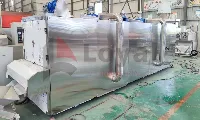
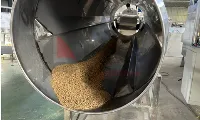
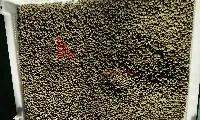
Live Manufacturing Gallery
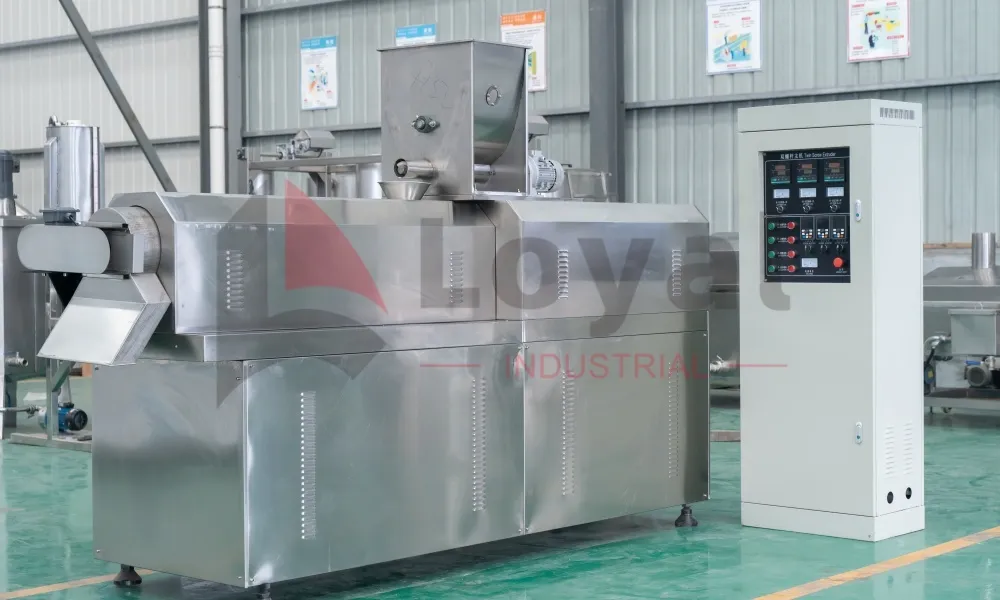
Industrial Sinking Fish & Shrimp Feed Lines in operation.

Trusted by Aquafeed Producers
From technical consultation to production efficiency, hear what our clients say about Loyal machines.
“
The new machine has exceeded expectations in both production efficiency and packaging quality. From its secure delivery and smooth commissioning by Technical Manager, Manager Dong, to practical application, its performance confirms a significant efficiency boost and packaging results that are far better than manual operations.
“
Your explanation was more complete than all the companies, even Fava and Pawan.
Why Choose Loyal?
Shrimp and crab feed production is demanding. From corrosion resistance to nutrient preservation, our engineering is specifically adapted for high-value aquatic feed.
Anti-Corrosion Design
Shrimp feed ingredients (squid paste, salts) are corrosive. We use SUS304 Stainless Steel for all contact parts and special alloy screws to prevent rust and extend machine life.
Ultra-Fine Grinding
We guarantee raw materials are ground to 80-120 mesh. Finer powder means better digestion for shrimp larvae and a smoother pellet surface that resists water disintegration.
Stability Guarantee
Our triple-shaft conditioner ensures starch gelatinization >90%. We promise the pellets will remain intact in water for over 4 hours, reducing feed waste and pond pollution.
Nutrient Protection
High-value feed is rich in heat-sensitive vitamins. Our Low-Temperature Extrusion process cooks the starch without destroying the bio-activity of proteins and additives.
Frequently Asked Questions
Answers about water stability, machine differences, and formulation.
Why choose an Extruder over a common Pellet Mill?
While pellet mills are cheaper, they only press the feed physically. An Extruder "cooks" the feed. This leads to higher starch gelatinization (>90% vs <40%), making the feed much easier for shrimp to digest (lower FCR). Also, extruded feed has significantly better water stability (>4 hours) compared to pellet mill feed which dissolves quickly.
Can I produce floating feed with this sinking line?
Yes, absolutely. The Twin-Screw Extruder is flexible. To make floating feed, you simply adjust the screw configuration (increase shear), raise the barrel temperature, and change the cutter speed. One machine can serve both shrimp (sinking) and tilapia (floating) farms.
Do I need to add chemical binders for water stability?
Generally, no. Our machine relies on the natural binding properties of starch (corn/wheat flour) through high-pressure cooking. If your formula has very low starch (<15%), we can recommend natural binders like wheat gluten, but our conditioning process usually makes this unnecessary.
What is the smallest pellet size for shrimp larvae?
We can produce pellets as small as 0.8mm to 1.0mm. This requires our specialized "Superfine Pulverizer" to ensure raw materials are ground to 80-100 mesh, preventing blockage in the small die holes.
How much oil/fat can I add to the feed?
You can add up to 20% fat. However, high fat content can make pellets soft. We recommend adding 3-5% during mixing and using our Vacuum Coating System (optional) to add the remaining fat after extrusion. This ensures the oil penetrates deep into the pellet without affecting water stability.
Need a Specialized Shrimp Feed Recipe?
Our nutritionists can help optimize your formula for sinking rate and growth.
Consult Engineer