
High-Capacity Lamination Line
Industrial Hard Biscuit & Soda Cracker Production Line
Engineered for mass production of crispy Marie Biscuits and layered Soda Crackers. Features advanced Dough Laminators and multi-stage Gauge Rolls for uniform sheet thickness and perfect texture.
Engineered for Crispness &
Defined Layers
Producing Hard Biscuits (like Marie) and Crackers (like Soda) requires mastering the elasticity of fermented dough. If the dough stress isn’t managed, the biscuits will shrink and deform in the oven.
Loyal’s Hard Biscuit Line features a robust Lamination System and multi-stage Gauge Rolls. We gradually reduce the dough sheet thickness from 20mm down to 0.8mm without destroying the gluten network, ensuring a crispy texture and uniform shape.
Capable of producing up to 1,500 kg/h with fully automated scrap recycling.
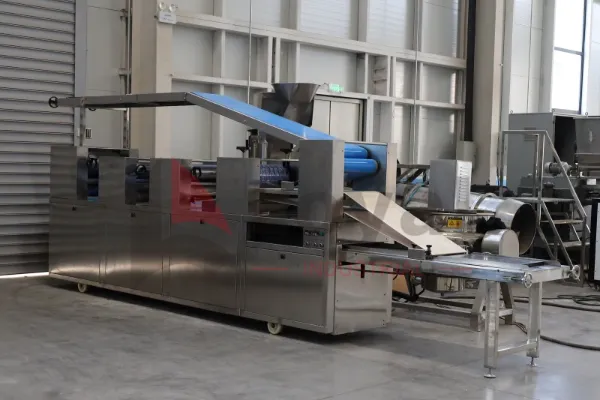
Smart Lamination
Essential for Soda Crackers. Our servo-driven Cut-Sheet Laminator folds the dough sheet into 4 to 12 layers. This creates the signature internal structure that makes crackers light and flaky after baking.
Stress-Free Sheeting
To prevent shrinkage, the dough passes through 3 or 4 sets of Gauge Rolls. Each set reduces thickness by a calculated ratio (e.g., 2:1), gently stretching the gluten network rather than tearing it.
Auto Scrap Recycling
Rotary cutting generates ~30% web scrap. Our system automatically lifts the scrap lattice and returns it to the hopper via a Side or Overhead Conveyor, ensuring zero waste and consistent dough mix.
The Art of Lamination & Sheeting
Hard biscuits require a continuous, stress-free dough sheet. Our line automates the complex journey from mixing to multi-stage thickness reduction.
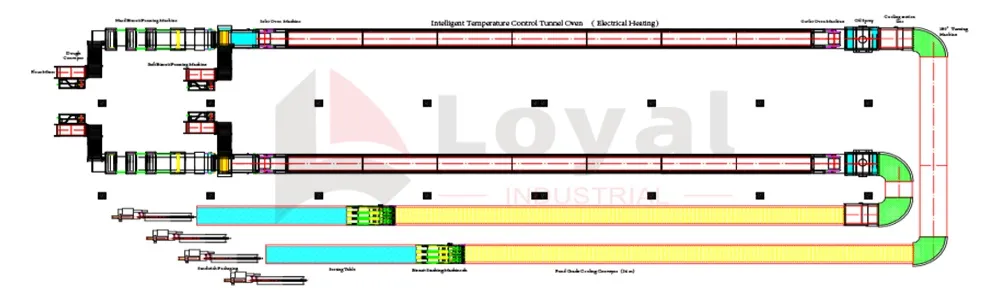
Hard Biscuit Process Flow
01
Dough Mixing
Uses Vertical or High-Speed Horizontal mixers to fully develop the gluten network and allow fermentation (essential for Soda Crackers).
02
Sheet Formation
The dough chunks are fed into a sheeter to form a primary continuous dough belt with a consistent width.
03
Laminating
The Cut-Sheet Laminator stacks the dough into 4-12 layers. This creates the internal structure for a crispy, flaky cracker.
04
Gauge Rolling
3 or 4 sets of alloy rollers gradually reduce sheet thickness (e.g., 10mm -> 5mm -> 1mm) to prevent shrinkage and tearing.
05
Rotary Cutting
A dual-roll system cuts the biscuit shape and stamps the “docking holes” (pinholes) to release steam during baking.
06
Scrap Return
The leftover dough web (mesh) is automatically lifted and transported back to the hopper for re-sheeting. Zero waste.
07
Tunnel Baking
Biscuits travel through a long Hybrid Oven (Direct Gas Fired + Convection) to achieve volume expansion and golden color.
08
Cooling & Stacking
Long cooling conveyors stabilize the texture before the “Penny Stacker” organizes them into rows for packaging.
Heavy-Duty Sheeting Technology
The key to a perfect hard biscuit lies in managing dough elasticity and thickness. Loyal’s line employs a powerful lamination and multi-stage rolling system to ensure uniformity.
Structure Creation
Servo Cut-Sheet Laminator
The secret behind the flaky texture of Soda Crackers. This machine takes the primary dough sheet, cuts it, and stacks it overlappingly to create 4 to 12 layers. This process builds the internal structure required for the biscuit to “puff” evenly during baking without heavy chemical leavening.
Servo Synchronization
Adjustable Layers (4-12)
Non-Stop Operation
Anti-Stick Conveyors
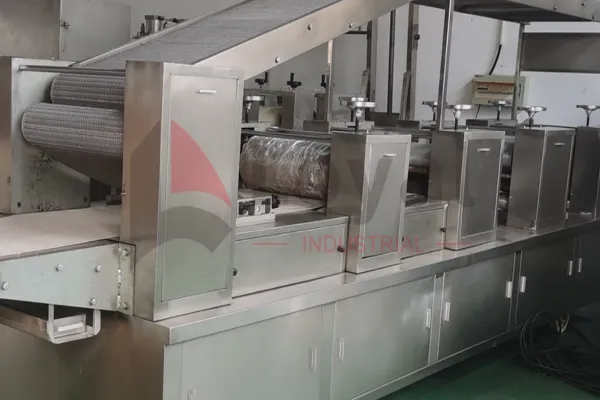
Thickness Reduction
Multi-Stage Gauge Roll Group
Fermented dough is elastic and tough. We use a series of 3 or 4 Gauge Roll Units to gradually reduce the sheet thickness from 20mm to 1mm. Chilled alloy steel rollers prevent dough overheating, ensuring the gluten network stretches without tearing or shrinking back.
Chilled Cast Iron Rolls
Digital Thickness Display
Independent Speed Control
Heavy Duty Frame
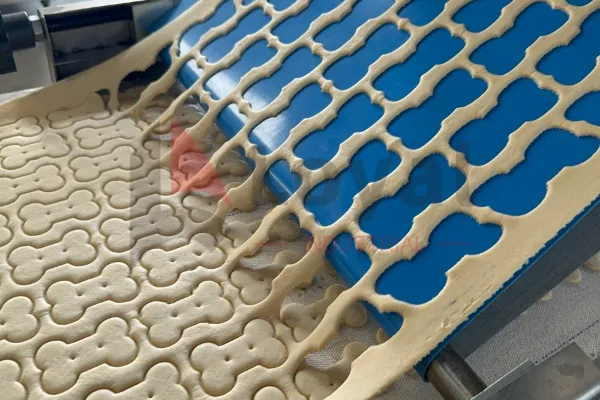
Shaping & Docking
Hard Biscuit Forming Machine
Precision shaping at high speed. The unit features two rolls: one for printing/cutting the outline, and one for creating pinholes (docking) which release steam to prevent surface blistering. An integrated scrap lifting conveyor separates the waste dough mesh for immediate recycling.
Quick Change Moulds
Pneumatic Pressure
Auto Scrap Separation
Precise Docking
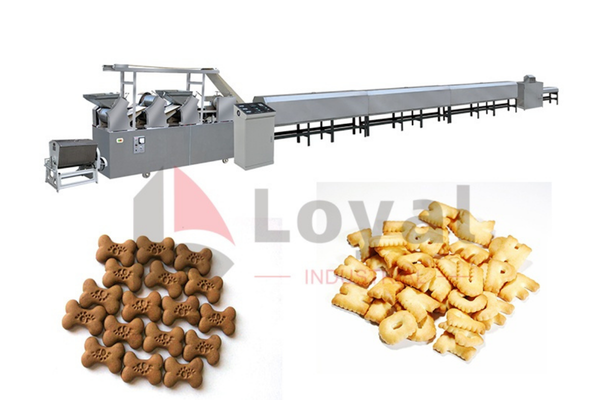
Baking Profile
Hybrid Tunnel Oven (DGF + Convection)
For high-quality crackers, we recommend a Hybrid configuration. The first zone uses Direct Gas Fire (DGF) to provide intense radiant heat for rapid “oven spring” (volume expansion). The subsequent zones use Forced Air Convection to efficiently dry the moisture, ensuring a uniform golden color and long shelf life.
Zone 1: Direct Fire
Zone 2-3: Convection
PID Temp Control
Moisture Extraction
Precision Shaping & Filling
From complex multi-layer assemblies to classic embossed patterns. Our production lines ensure perfect alignment for sandwiches and high-definition details for sweet biscuits.
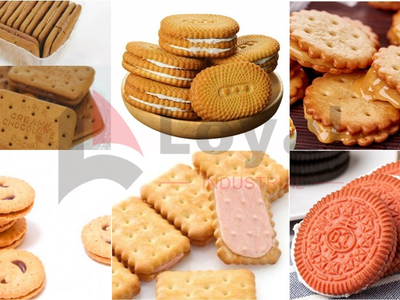
Sandwich Biscuit
Dual-layer precision. Our automated capping system ensures the cream filling is perfectly centered between two crisp biscuit shells.
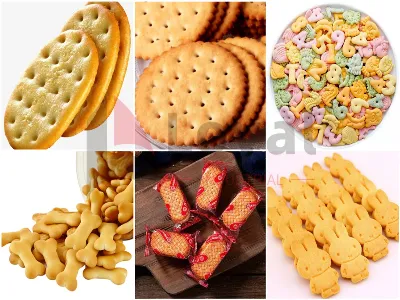
Marie Biscuit
Smooth surface with printed text and pinholes. Requires precise sheeting to ensure uniform thickness and a satisfying snap.
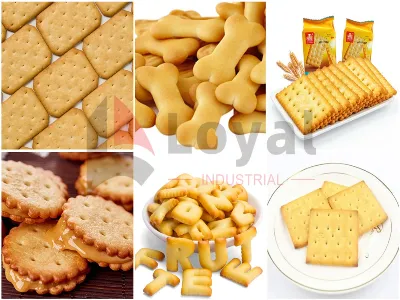
Petit Beurre
Classic rectangular butter biscuit with scalloped edges. The rotary cutter must be perfectly synchronized to maintain the shape.
Technical Specifications
Hard biscuit lines are designed for volume. Our models range from standard production to high-speed industrial capacities. Line length can be customized (Linear, U-shape, or Z-shape) to fit your factory.
| Model | Working Width | Capacity (Output) | Line Length (Approx) | Lamination | Energy Source |
|---|---|---|---|---|---|
| LY-H600 | 600 mm | 150 – 250 kg/h | 60 – 70 m | Servo / 4-8 Layers | Gas / Elec |
| LY-H1000 Standard | 1000 mm | 450 – 600 kg/h | 80 – 100 m | Servo / 4-12 Layers | Gas / Elec |
| LY-H1200 High Cap | 1200 mm | 800 – 1200 kg/h | 100 – 120 m | Servo / 4-12 Layers | Gas (Recommended) |
| LY-H1500 | 1500 mm | 1500 – 2000 kg/h | 120 – 150 m | Servo / 4-16 Layers | Gas (Recommended) |
Limited Factory Length? Hard biscuit lines are long due to the Gauge Rolls and Oven.
We can design a U-Shape Layout or Double-Deck Cooling to fit the line into smaller spaces.
ROI Strategy: Scale vs. Variety
Choosing the right line depends on your business model. Hard Biscuit Lines are built for massive volume and staple food markets, whereas Soft Biscuit Lines target higher-margin, treat-based segments.
High Volume / Staple
Hard Biscuit Line
Ideal for Soda Crackers, Marie, and Petit Beurre. Designed for continuous 24/7 production of staple snacks.
Production Capacity
Massive (High Speed)
Initial Investment
High (Complex Line)
Factory Space
Very Large (>80m)
Extreme production efficiency
Stable, long-term market demand
Requires large factory footprint
Variety / Premium
Soft Biscuit Line
Designed for Cookies and Shortbread. Simpler process (no laminator) means lower startup cost but lower volume.
Production Capacity
Medium
Initial Investment
Lower (Simpler)
Factory Space
Medium (30-60m)
Lower entry barrier
Higher profit per unit (Cookies)
Lower total tonnage output
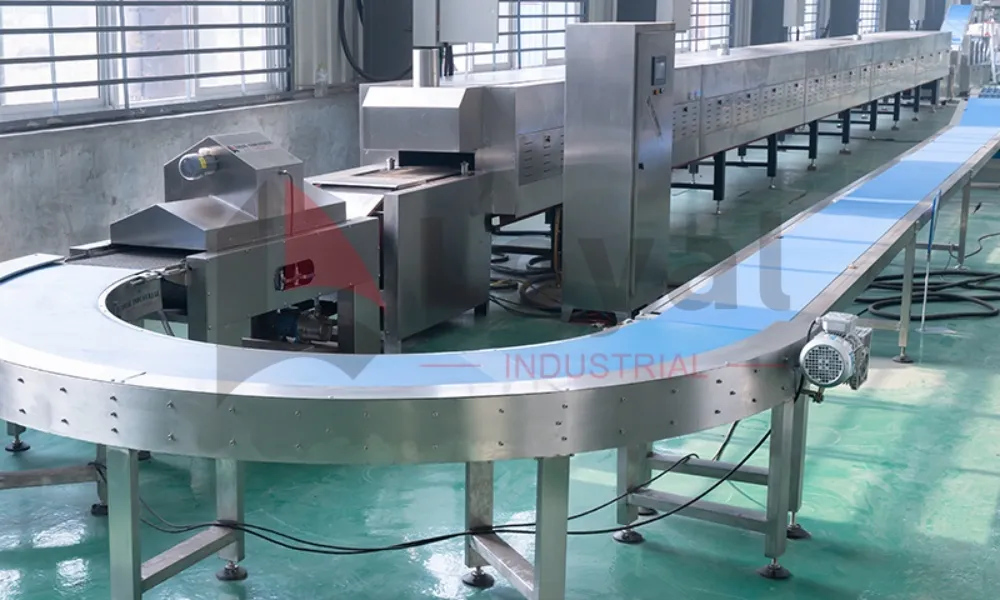
Live Factory Operation
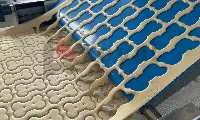
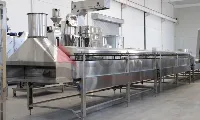
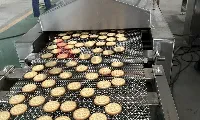
See our high-capacity Hard Biscuit Production Line in action at client facilities worldwide.
Client Success Stories
From factory visits to final product precision, see what our partners say.
“
Bonjour, Je voudrais remercier comlete equipe de LOYAL… J’ai visité l’unité de production de machine de biscuits et de macaroni. Et je voudrais les commander aussi. Merci bien.
“
Almost the same size as my calculations, it was nice working with you.
Heavy-Duty Engineering
Hard biscuit lines operate under high pressure and speed. We build our machines with reinforced frames and smart automation to handle 24/7 continuous production.
Solid Alloy Rolls
Consistency relies on roll stability. We use Chilled Alloy Cast Iron for our gauge rolls, ensuring high hardness and zero deformation even under extreme dough pressure.
Zero Waste System
Rotary cutting creates ~30% scrap mesh. Our Auto Scrap Return System (Side or Overhead type) gently returns this dough to the hopper, maintaining production costs at a minimum.
Hybrid Oven Profile
Crackers need “lift” then “dry”. We combine Direct Gas Fire (DGF) entry zones for rapid structure expansion with Convection zones for uniform moisture removal and coloring.
Factory Planning
Hard biscuit lines are long (80m+). Limited space? We provide U-Shape, Z-Shape, or Double-Deck layout designs to fit high-capacity lines into your existing facility.
Frequently Asked Questions
Expert answers about Hard Biscuit & Cracker manufacturing.
What is the difference between Rotary Cutter and Rotary Moulder?
Rotary Cutter (for Hard Biscuits/Crackers) cuts shapes out of a continuous dough sheet, leaving a scrap web mesh that must be recycled.
Rotary Moulder (for Soft Biscuits) presses dough into mold cavities, producing no scrap web.
This line uses a Rotary Cutter, but a Moulder can be added to make it a “Universal Line”.
Why is the Hard Biscuit line so long?
Hard biscuits require extensive upstream processing (Lamination + 3-4 Gauge Roll Units) to gradually reduce dough thickness without stress. Additionally, crackers need longer baking times (3-5 mins) to dry out moisture completely. A typical high-capacity line can be 80m to 120m long.
Can I produce Soft Biscuits on this line?
Yes, if we install a Rotary Moulder machine in parallel or bypass the gauge rolls. This creates an “All-in-One” or “Universal” Biscuit Line, allowing you to produce Soda Crackers, Marie Biscuits, AND Shortbread Cookies on the same oven and packaging system.
Is the scrap dough waste?
No. The scrap web is actually essential for the cost-efficiency of hard biscuits. Our system automatically lifts the scrap mesh and returns it to the sheeter hopper. It is re-mixed with fresh dough, ensuring 100% material usage and zero waste.
What oven is best for Soda Crackers?
We strongly recommend a Direct Gas Fired (DGF) oven for the first section. Soda Crackers need intense, immediate heat to create “Oven Spring” (rapid expansion/puffing). Electric ovens often lack the power density to achieve the proper cracker lift and flaky texture.
Limited factory space?
We can design U-Shape or Double-Deck layouts to fit a 100m line into a smaller footprint.
Get Custom Layout