
Twin-Screw TVP Extrusion System
Soya Chunks & TVP Production Line
Transform defatted soy flour into high-protein Vegetarian Meat. Our extruder creates a fibrous, meat-like texture with a high expansion ratio for maximum profitability.
From Powder to Fiber:
The Art of Texturization
The core value of this production line is transforming Low-Temperature Defatted Soy Flour (a powder) into a solid, fibrous structure that mimics muscle meat.
Inside the twin-screw extruder, proteins are subjected to high shear and heat. This process denatures the protein molecules, realigning them into linear fibers. This physical change is called Texturization.
The result is a dry, stable product (TVP) that can be stored for over a year and rehydrated within minutes to become a juicy meat substitute.

Meat-Like Texture
Fibrous & Chewy.
Our specialized screw configuration ensures the protein fibers are aligned perfectly, giving the chunks a natural “chew” similar to chicken or beef.
High Expansion Ratio
1kg Dry = 3kg Wet.
The high expansion rate allows the chunks to absorb 3 times their weight in water. This significantly increases the final selling weight for end-users.
50%+ Protein Content
Pure Plant Power.
Defatted soy flour is naturally high in protein. Our gentle extrusion process preserves the amino acid profile, creating a nutritious meat alternative.
Process Flow Chart
A continuous industrial process converting soya flour into textured protein. Designed for hygiene and high capacity.

01
Raw Material Mixing
Low-Temperature Defatted Soy Flour is mixed with water (and optional additives like gluten or starch) to achieve the correct moisture balance.
02
Extrusion Cooking
Under high temperature and pressure, the protein molecules align into a fibrous network. This texturization creates the “meaty” bite.
03
Shaping & Cutting
As the product exits the die, a high-speed rotary cutter slices it into chunks, nuggets, or granules. Die molds determine the shape.
04
Drying
Moisture is reduced from ~25% to below 10% in a multi-layer belt dryer. This extends shelf life and creates the sponge-like porosity.
05
Cooling
The dried chunks are cooled to room temperature to prevent condensation inside the packaging, which could cause mold.
06
Packaging
Finished Soya Chunks are weighed and packed into bags or boxes. They are now ready for distribution and cooking.
Engineered for High-Protein Texture
Our equipment is specifically calibrated to handle the high viscosity and shear requirements of soya protein texturization.
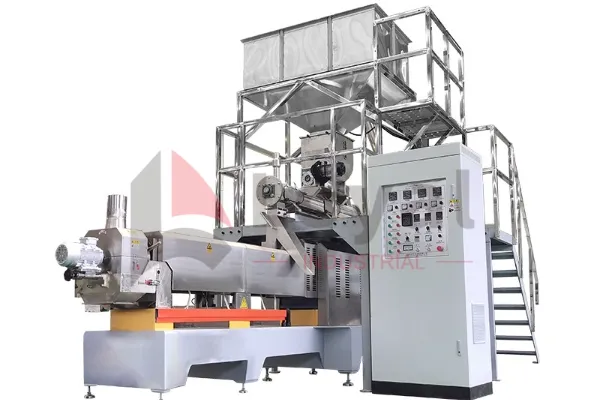
The Powerhouse
High-Torque TVP Extruder
Creating fibrous meat analogs requires precise pressure control. Our extruder features a Modular Screw Design with specialized kneading blocks that align protein molecules without burning them.
Wear-Resistant Alloy Screw
PID Temperature Control
High Shear Capability
Self-Cleaning Barrel

Precision Shaping
High-Speed Rotary Cutter
Attached directly to the die face, this cutter determines the length and uniformity of your soya chunks. The Variable Frequency Motor allows you to switch between producing small granules (mince) and large nuggets instantly.
Adjustable Cutting Speed
Clean Cut Surface
Quick Blade Change
Safety Cover Protection

Moisture Control
Multi-Layer Mesh Belt Dryer
Soya chunks are porous and light. Our dryer uses a Hot Air Circulation System that penetrates the core of the chunks, ensuring uniform drying to <10% moisture content while preventing surface scorching.
Energy Recirculation
Food Grade Stainless Steel
Adjustable Belt Speed
Gas/Electric/Steam Options
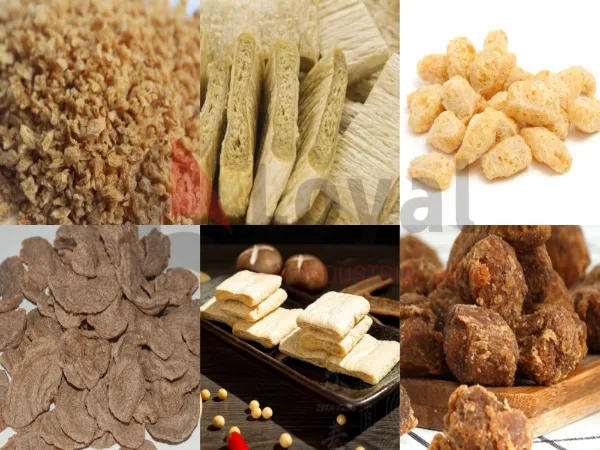
Diverse TVP Shapes
From nuggets to granules. Change the die mold to produce a wide variety of textured protein products for different culinary uses.
Most Popular

Soya Nuggets
The classic round or irregular ball shape. Ideal for curries and stews due to its sponge-like absorption.
Minced Meat

Soya Granules
Fine, minced texture similar to ground meat (Keema). Perfect for fillings in dumplings, burgers, or tacos.
Meat Slices
Soya Slices
Flat, steak-like shapes with visible fiber orientation. Used for stir-fry dishes or vegetarian jerky.
Square Cut

Soya Cubes
Precisely cut square or rectangular blocks. Often used in catering for uniform portion control.
Structure View

Internal Fiber
A close-up view showing the layered, muscle-like fibers achieved through our high-shear extrusion process.
Rehydrated
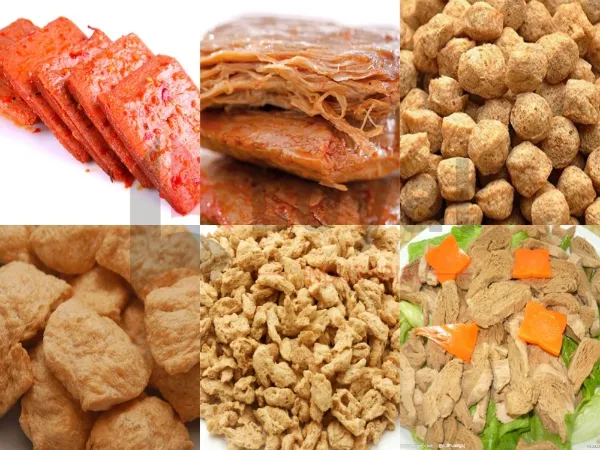
Rehydrated State
Shows the product after absorbing water. It retains its shape and chewiness without disintegrating.
Technical Specifications
High-torque twin screw systems designed for continuous texturization of defatted soy flour.
| Model | Output Capacity | Main Motor Power | Total Power (Elec) | Line Dimensions (L*W*H) |
|---|---|---|---|---|
| LY-65 | 200 – 260 kg/h | 45 kW | 90 kW | 22 x 1.5 x 2.2 m |
| LY-70 | 400 – 500 kg/h | 75 kW | 140 kW | 26 x 1.5 x 2.5 m |
| LY-85 | 800 – 1000 kg/h | 132 kW | 220 kW | 32 x 2.0 x 3.0 m |
* Note: The total power listed implies electric drying. Gas or diesel burner options are available to significantly reduce electricity load.
Siemens/ABB Motors
Delta/Omron PLC Control
Food Grade SS304
Not sure which capacity fits your market? We can help you calculate the ROI based on your local electricity and raw material costs.
Get ROI AnalysisFrom Commodity to Premium Product
The business case for Soya Chunks is simple: Transform low-cost defatted soy flour into high-value textured protein. The profit margin lies in the processing.
Raw Material
Defatted Soy Flour
- Market Status: Commodity
- Usage: Animal Feed / Filler
- Profit Margin: < 5%
- Shelf Appeal: None
→
Finished Product
Textured Soya Protein
- Market Status: Meat Substitute
- Usage: Human Consumption
- Profit Margin: High (30% – 50%)
- Shelf Appeal: Premium Branded
1:3 Expansion Ratio
The consumer buys 1kg of dry chunks but gets 3kg of food after soaking. This high perceived value ensures steady market demand.
Long Shelf Life
Dried to under 10% moisture, the product can be stored for 12+ months without refrigeration, reducing logistics and spoilage costs.
Growing Vegan Market
As meat prices rise and plant-based trends grow, TVP offers the most affordable source of protein for the mass market.
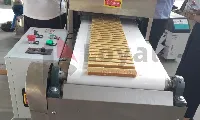
Live Factory Gallery
See the texturization process in action. High-speed cutting and large-capacity drying lines.




Customer Success Stories
From smooth commissioning to professional installation, see what our partners say about Loyal’s service.
“
The new machine has exceeded expectations in both production efficiency and packaging quality. From its secure delivery and smooth commissioning by Technical Manager, its performance confirms a significant efficiency boost and results that are far better than manual operations.
“
대박, 엔지니어는 너무 전문적이고 곧 기계를 설치했어요, 이제 우리는 이미 제품을 생산할 수 있어요, 미래에 대해 자신감이 넘칩니다, 감사해요. (Daebak! The engineer is very professional and installed the machine quickly. We are confident about the future.)
Why Choose Loyal?
Producing high-quality TVP requires precise pressure control. We solve the common issues of low expansion rates, fast screw wear, and beany off-flavors.
1:3 Expansion Ratio
Profitability depends on water absorption. Our optimized barrel pressure ensures the chunks expand fully, achieving a 1:3 Rehydration Ratio (1kg dry = 3kg wet).
Meat-Like Texture
No more “doughy” taste. Our specialized kneading blocks realign protein molecules into distinct Linear Fibers, creating a chewy, muscle-like texture.
Wear-Resistant Screw
Soy flour is abrasive. We use Bimetallic Alloy Screws (hardness HRC≥60) to resist wear and tear, extending the lifespan of key components by 2x.
No Beany Smell
Our extrusion process effectively deactivates urease and removes the raw “beany” flavor, making the final product Taste Neutral and ready for any seasoning.
Frequently Asked Questions
Expert answers on raw materials, energy consumption, and product quality.
Can I use regular full-fat soya flour?
No. You must use Low-Temperature Defatted Soy Flour (Oil content < 1%). Fat acts as a lubricant inside the extruder, which prevents the high pressure and shear force needed to create the fibrous structure and expansion.
How can I make different shapes like nuggets or mince?
By changing the Die Mold at the extruder exit. We provide various molds for round nuggets, irregular chunks, chops, wings, and small granules (mince). The rotary cutter speed also determines the length of the product.
Does the product taste like real meat?
The Texture is very similar to meat (fibrous and chewy). However, the Taste is neutral. Soya chunks are like sponges; they absorb the flavor of the spices, curry, or soup they are cooked in, making them a versatile meat substitute.
Is the drying process expensive?
Drying is the main energy consumer. To reduce costs, we highly recommend using Gas or Diesel Burners for the dryer if your local electricity rates are high. Our multi-layer dryer recycles hot air to maximize thermal efficiency.
What is the shelf life of the finished Soya Chunks?
When dried to a moisture content below 10% and packed in moisture-proof bags, Soya Chunks have a shelf life of 12 to 18 months at room temperature.
Need a Cost-Benefit Analysis?
We can help you calculate the profit margin based on your local soya flour price and energy costs.
Get ROI Calculation