

The Ultimate Biscuit Cookie Recipe for Crisp, Golden Edges

A reliable biscuit cookie recipe relies on a precise balance of butter, sugar, and flour to deliver a signature bakery-quality snap. Instead of dealing with dough that spreads unpredictably across the pan, this foolproof method focuses on strict temperature control and simple mixing techniques. Whether you are stamping out basic rounds for afternoon tea or preparing intricate holiday shapes, mastering this foundational dough guarantees a crisp, golden edge and a tender crumb every single time.
Why balancing your butter and flour ratio is the secret to perfect snap

If a cookie bends before it breaks, the underlying structure has failed. Achieving that clean, satisfying fracture—the hallmark of a proper biscuit—is almost entirely dictated by how the fat interacts with the starch.
Butter contains both water and fat. When you mix it into flour, the fat coats the proteins, actively blocking them from forming long, chewy gluten strands. This is exactly what you want for a tender crumb. However, if you push the butter ratio too high, the dough loses its structural scaffolding. The fat melts rapidly in the oven, causing the intricate shapes you just cut out to puddle into flat, greasy blobs long before the flour has time to set.
Conversely, skimping on the butter leaves too much exposed flour. The resulting dough tends to be incredibly stiff to roll and bakes into a dense, dry disk that shatters into dust rather than snapping cleanly.
Commercial biscuit manufacturers often formulate their dough to maintain a strict fat-to-flour ratio, sometimes hovering right around 45 to 50 percent depending on the desired texture. That precise equilibrium is what allows the dough to hold a sharp stamped edge while still delivering a delicate bite.
Measuring by weight instead of volume
Because that ratio is so delicate, relying on traditional measuring cups is the fastest way to accidentally ruin a batch. A cup of heavily scooped all-purpose flour can easily weigh 145 grams, while a lightly spooned cup might only hit 118 grams. That is a massive 22% swing in your dry ingredients based entirely on how aggressively you scooped.
When you measure by weight using a digital kitchen scale, you eliminate that variable completely. It guarantees the structural foundation of your dough is exactly the same every single time you bake, mimicking the strict consistency controls used in large-scale food production facilities.
Essential ingredients
A classic biscuit requires surprisingly few components, but each serves a strict structural purpose. The foundation is plain all-purpose flour with a moderate protein content—usually around 10.5 to 11.2 percent. Using heavy bread flour tends to create a tough chew rather than a clean snap.
Unsalted butter acts as the primary tenderizer. It actively blocks gluten formation, though European butters with higher fat percentages often yield a noticeably richer crumb.
Granulated sugar does more than sweeten. As it melts and recrystallizes during the bake, it physically locks the surrounding starches in place to provide that signature rigid crunch. Finally, a tiny splash of cold milk is sometimes needed just to bind the dry mixture together, depending entirely on the ambient humidity in your kitchen on baking day.
What happens if you overwork the dough?
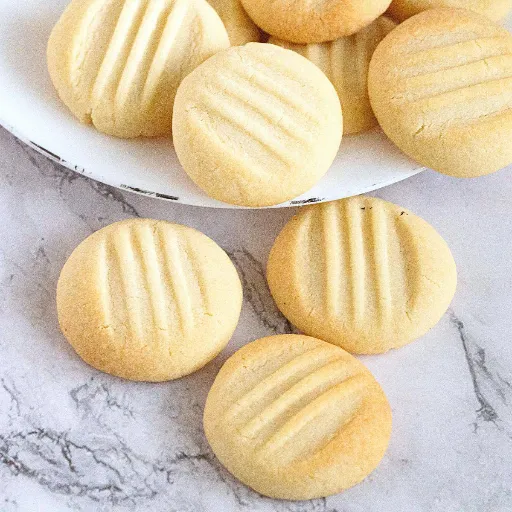
The moment liquid touches flour, gluten proteins begin linking together. In bread, you want these long, elastic chains. In a crisp biscuit cookie, they are your biggest enemy.
Every time you knead, fold, or aggressively squeeze the dough, you actively strengthen that elastic network. Overworked dough shrinks drastically in the oven and develops a tough, leathery chew instead of a delicate snap. This is exactly why the third or fourth time you gather and re-roll leftover scraps, the resulting shapes look warped and taste noticeably denser than your very first batch.
In commercial food processing, industrial mixers are strictly calibrated to avoid this structural flaw. They often run for just 45 to 60 seconds after the final liquid is introduced, specifically to distribute hydration without triggering unwanted elasticity.
Stop mixing the second the dough holds its shape when gently pressed. It tends to look slightly shaggy in the bowl, but the flour will finish hydrating safely while it rests in the fridge.
4 steps to rolling and cutting dough like a professional bakery

Taking a raw mound of dough and turning it into perfectly uniform biscuits is exactly where most home bakers stumble. It looks simple enough in a quick recipe video, but the physical mechanics of pressing a metal cutter into a butter-heavy mixture require strict environmental control.
If your kitchen is too warm, the cutter drags the edges down rather than slicing cleanly. That friction seals the sides shut, preventing the cookie from achieving its signature crisp texture. If your rolling pin pressure is even slightly off-kilter, the thinner pieces on the tray will scorch a full 3 to 4 minutes before the thicker centers even begin to set.
To replicate the razor-sharp, flawless edges of a high-end bakery case, you have to treat the dough less like elastic bread and much more like delicate pastry. The primary objective is to move fast. You need to keep the internal fat completely solid while ensuring the starch remains completely relaxed. Achieving this level of structural consistency breaks down into four specific, temperature-sensitive techniques.
Chilling the master block
Before a rolling pin ever touches the dough, it needs to rest in the refrigerator. Form the freshly mixed dough into a flat, rectangular block rather than a bulky sphere. A round ball takes drastically longer to chill to the core, and when you finally try to roll it out, the brittle edges will crack under the pressure. Wrapping a flat 1.5-inch thick block in plastic wrap and chilling it for at least 45 minutes allows the warm butter to re-solidify while the flour fully hydrates.
Maintaining an even thickness
Inconsistent thickness ruins more batches than bad ovens do. You can easily bypass this human error by buying a rolling pin fitted with removable silicone thickness rings. If you don’t have one, a practical alternative is placing two wooden dowels—usually 1/4-inch thick—on either side of your dough block. As you roll, the pin will eventually rest on the wooden guides, making it physically impossible to flatten the dough any further. This guarantees every single biscuit bakes at the exact same rate.
The flour dusting technique
Raw flour is often treated as a safety net against sticking, but using too much actively dries out the surface of your cookies. Instead of throwing handfuls onto your counter, use a fine-mesh shaker. You want to lay down a microscopic, nearly translucent layer of flour on the work surface. Always lightly dust the rolling pin and the cutter edge, but be sure to brush away any visible white streaks from the raw dough before baking.
Commercial sheeting versus home rolling
If you have ever wondered why store-bought biscuits are so impossibly flat and uniform, it comes down to heavy machinery. Large-scale food processing facilities never use traditional rolling pins. Instead, they run the raw dough through automated commercial sheeters.
These massive machines use a series of synchronized steel rollers to gradually compress the dough down to a precise millimeter thickness on a continuous conveyor belt. This gentle, incremental reduction creates zero friction and entirely prevents the gluten from springing back. While you obviously can’t fit a 12-foot sheeter in a home kitchen, working in small, manageable batches and frequently rotating your dough 90 degrees by hand effectively mimics this even, low-stress industrial compression.
Baking and cooling mechanics
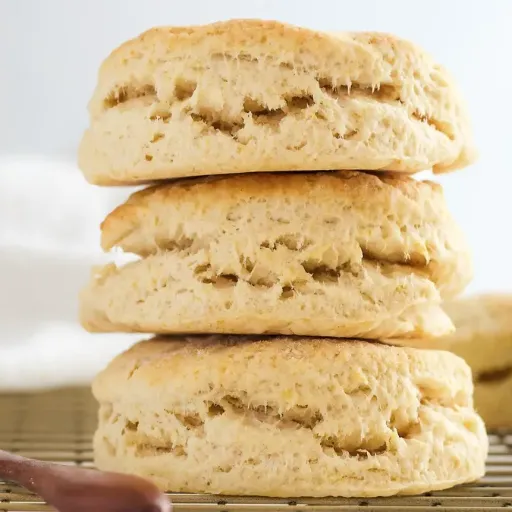
The physical transformation of raw dough into a rigid biscuit relies on a rapid burst of heat followed by immediate structural stabilization. Once the butter melts, the flour matrix must quickly set before the cookie loses its shape entirely.
If you pull the pan out at exactly 12 minutes, the residual heat locked inside the metal tray continues to bake the bottoms for another two to three minutes. This phenomenon, known as carryover cooking, ruins countless batches of perfectly timed pastries. You might think you tracked the bake flawlessly, only to find the edges scorched after leaving them on the hot pan to cool. In large-scale bakery operations, commercial cooling tunnels immediately drop the ambient temperature around the freshly baked products to halt this exact thermal process instantly.
Managing oven hot spots
No residential oven heats perfectly evenly. You will almost always find a pocket of intense heat near the back right corner or right against the glass door. If you leave a tray completely stationary for the entire bake, half the biscuits may turn deep brown while the others remain pale and doughy. Rotating your baking sheet exactly halfway through the recommended cooking time—usually around the 6-minute mark—helps neutralize these temperature inconsistencies and guarantees a uniform golden color across the entire batch.
The importance of a wire rack
A cooling biscuit expels a massive amount of trapped steam. Leaving the baked dough sitting flat against a solid countertop or a warm baking sheet traps that evaporating moisture directly underneath the cookie. The bottom crust simply reabsorbs the steam, resulting in a soggy, bendable texture rather than a sharp snap. Transferring them to a raised wire rack allows air to circulate 360 degrees, venting the moisture away and locking in that crucial brittle structure.
FAQ Section
Q: How long does homemade biscuit cookie dough last in the fridge?
A: A tightly wrapped block of raw dough will comfortably last for three to five days in the refrigerator. This resting period actually allows the flour to hydrate fully, which can subtly improve the final texture. Just make sure it is sealed perfectly in plastic wrap or a heavy-duty container so the butter doesn’t absorb lingering savory odors from your fridge. If you need more flexibility, the dough freezes beautifully for up to three months.
Q: Why did my cookies spread flat and lose their shape during baking?
A: Excessive spreading usually means the butter got too warm before baking. If the dough softens on the counter, the fat melts in the oven before the flour can set its shape. Placing chilled cutouts onto a baking sheet that is still hot from a previous batch will cause the exact same problem. Always ensure your shapes are cold and your pans are completely at room temperature before they go in.
Q: Do large-scale biscuit factories use a different type of flour than home bakers?
A: Commercial manufacturers frequently use specialized soft wheat flours with much lower protein content than standard all-purpose grocery store brands. This specific milling process deliberately inhibits gluten development, allowing massive industrial sheeters to roll out thousands of cookies without the dough snapping back or becoming tough. At home, you can achieve a very similar tender crumb by briefly mixing a few tablespoons of cornstarch into your regular flour.
Q: Can I use royal icing or a glaze on this specific recipe?
A: Absolutely. Because this dough is specifically formulated to bake flat and retain a sharp, rigid edge, it serves as an excellent canvas for heavy royal icing or a simple water-based glaze. The sturdy, crisp texture of the baked biscuit easily supports the added weight and moisture of decorative toppings without turning soggy. Just ensure the cookies have rested on a wire rack until they are entirely cool to the touch before you begin decorating.
Q: Is it possible to make this dough completely dairy-free?
A: You can swap the traditional butter for a high-quality, plant-based alternative, but you must use the firm stick variety rather than a soft spread from a tub. Tub margarines contain a much higher percentage of water and will drastically alter the bake, causing the dough to spread and lose its snap. A solid, vegan block butter mimics the fat-to-water ratio of dairy butter much more closely, keeping the underlying structural mechanics intact.