
Sticky Science: Uncovering the Raw Materials and Engineering Behind Modern Adhesives
At its core, glue is a complex blend of polymers, solvents, and stabilizers designed to create molecular attraction between surfaces. While historically derived from animal proteins, today’s industrial adhesives primarily utilize synthetic resins like polyvinyl acetate (PVA) or cyanoacrylate. These base materials are combined with plasticizers to manage flexibility and curing speeds, ensuring the adhesive transitions from a workable liquid to a high-strength solid bond through evaporation or chemical reaction.
The Molecular Bond
Stickiness is essentially an illusion of physics. At a granular level, “what is glue made of” matters less than how close it can get to the substrate. We are talking about achieving proximity within a fraction of a nanometer—specifically around 0.5 to 0.9 nm—to allow Van der Waals forces to trigger. If the molecular attraction between the adhesive and the surface is weaker than the internal attraction of the glue molecules, the bond fails before it starts.
Consider the realistic scenario of trying to repair an oily automotive component; the glue simply beads up. Industry observation suggests that roughly 70% of bond failures aren’t actually due to poor glue chemistry, but rather a lack of molecular “wetting.” The adhesive must behave like a magnet at an atomic scale, pulling the two surfaces into a singular, cohesive unit.
How polymers create surface tension and mechanical interlocking
Polymers are the long-chain heavy lifters in this process. While chemical attraction does the invisible work, mechanical interlocking provides the physical “grip.” Think of a liquid PVA flowing into the microscopic pores of timber—hardwoods often contain over 2,000 tracheid cells per square millimeter. As the water evaporates, the polymer chains harden into solid “roots” that physically hook into the material.
This is precisely why sanding a surface often improves a bond; it creates more “anchors” for the polymer to grab. Simultaneously, the glue’s surface tension must be low enough to allow it to seep into these voids rather than sitting on top like a bead of mercury. It’s a delicate balance of flow and solidification.
From Bone Scraps to Petroleum: The Historical Evolution of Industrial Adhesive Bases
For thousands of years, the answer to “what is glue made of” was found in the butcher’s shop or the forest. Ancient artisans relied on collagen extracted from boiled animal hides or albumin from eggs. It was effective, yet notoriously fickle. If a workshop became too humid, the protein-based bond would often soften and fail—a realistic scenario for any 18th-century cabinet maker whose fine joinery might literally drift apart during a damp summer.
Industry observation suggests the real pivot arrived in the mid-20th century with the explosion of polymer science. We traded biological “soups” for petroleum-derived synthetics. Today, arguably 80% to 90% of industrial adhesives are synthetic resins. These modern bases offer a level of predictability nature simply cannot match. Whether a technician is mixing a batch in a frigid northern plant or a tropical facility, the chemical properties of a petroleum-based polymer remain constant. While starch and casein still hold niche roles in food labeling, the sheer speed of modern assembly lines demands the high-performance stability that only synthetic chemistry provides.
What are the primary chemical building blocks of synthetic glue?
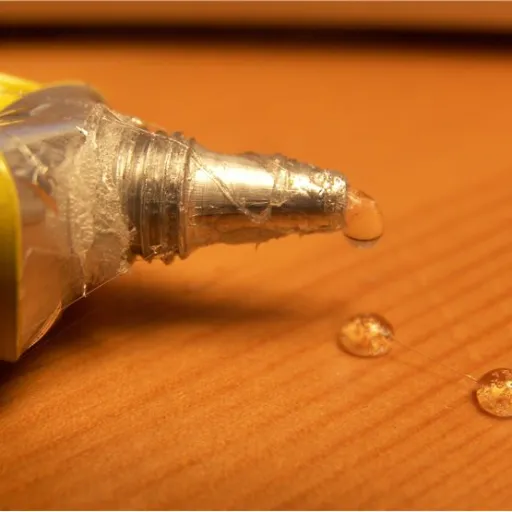
Modern adhesion is a byproduct of high-polymer chemistry. While we often think of glue as a single substance, it is actually a cocktail of resins designed to behave predictably under specific environmental stressors. The primary building blocks are synthetic monomers that, when triggered, link together to form incredibly long, resilient chains. Industry observation suggests that the shift from solvent-based to water-borne synthetics has revolutionized safety in the workplace, yet the core resins remain the dominant force in “what is glue made of” today.
Polyvinyl Acetate (PVA): The standard for white wood glue
PVA is likely the most recognizable synthetic polymer in the world. It is a rubbery, aliphatic synthetic resin that stays suspended in a water-based emulsion until the liquid evaporates. In a practical example, when you apply “white glue” to two porous pieces of timber, the water carries the PVA molecules deep into the wood fibers. As the water leaves, these molecules “nest” and harden. This creates a bond that is frequently stronger than the wood itself, though it may creep or soften if exposed to temperatures consistently above 71°C.
Cyanoacrylates and the mechanics of instant bonding
Unlike PVA, which relies on evaporation, cyanoacrylates—commonly known as super glues—utilize an anionic polymerization reaction. The trigger isn’t heat or air; it is moisture. Because almost every surface on Earth has a microscopic layer of water vapor (hydroxyl ions) attached to it, the glue begins to polymerize the nanosecond it is applied. This reaction is nearly instantaneous. In a realistic scenario, if you’ve ever accidentally bonded your fingers together, you have experienced this rapid-fire molecular chain reaction firsthand. It is incredibly effective for non-porous materials like plastics or metals where there is no “soak-in” potential.
The role of Epoxies in heavy-duty structural engineering
Epoxies operate on a different logic: the two-part system. One part is the resin (often Bisphenol A), and the other is a hardener or “catalyst.” When mixed, they undergo a cross-linking reaction that creates a rigid, three-dimensional lattice. This isn’t just a surface stick; it is a structural transformation. In heavy-duty engineering, epoxies are favored because they shrink very little during the curing process—typically less than 2%—ensuring that the dimensions of the joined parts remain precise under massive mechanical loads.
Polyurethane resins and moisture-activated adhesion
Polyurethanes are the chameleons of the adhesive world. They are unique because they actually “hunt” for moisture to complete their chemical set. This makes them indispensable for outdoor construction or bonding damp masonry. As the resin reacts with water, it often foams slightly, expanding into nooks and crannies that other adhesives would simply bridge over. This expansion can be a double-edged sword; if a technician doesn’t account for the 3x to 4x volume increase in certain formulations, the pressure can actually push the substrates apart before the bond has reached full structural integrity.
4 Stages of the Industrial Glue Mixing Process

Manufacturing an adhesive is a study in controlled volatility. It isn’t just a matter of stirring resins in a vat; it is a high-precision sequence where temperature, pressure, and the order of addition dictate whether the batch becomes a high-performance bond or a solid block of wasted plastic. In a professional facility, the goal is to transform raw monomers into a shelf-stable liquid that only “activates” when the end-user demands it.
Monomer Polymerization and Solvent Management
Everything starts with the reactor. In the polymerization stage, low-molecular-weight monomers are subjected to heat and catalysts to force them into the long, tangled chains that provide cohesive strength. If you are producing a solvent-based contact cement, the management of the carrier fluid is a critical safety and quality hurdle. Industry observation suggests that even a 1.5% deviation in solvent concentration can radically alter the flash point and drying time of the product.
Consider a realistic scenario: a technician monitors a batch of neoprene adhesive. The solvent must dissolve the rubber completely without evaporating too quickly during the mix. If the reactor’s cooling jacket fails to offset the exothermic heat of polymerization, the solvent can reach a boiling state, creating dangerous pressure spikes. It’s a delicate dance of maintaining enough fluidity for the “wetting” process while ensuring the solid content—the actual glue—remains high enough to provide a structural bite once the solvent eventually leaves the joint.
Additive Stabilization and Viscosity Control
Once the base polymer is stable, the “fine-tuning” begins. Raw resin is often too brittle or too thick to be useful on a production line. This is where plasticizers and tackifiers come into play. A practical example is the manufacturing of pressure-sensitive adhesives (the kind on the back of a shipping label). Without the addition of specific oils or resins to keep the polymer “forever wet,” the label would simply fall off.
Viscosity control is the final gatekeeper. Using high-shear mixers, engineers adjust the flow characteristics—often measured in centipoise (cP). A wood glue might need a viscosity of 3,200 cP to prevent it from running out of a vertical joint, whereas a sprayable adhesive needs to be thin enough to atomize through a 1.8 mm nozzle without clogging. Stabilizers are also introduced at this stage to prevent the mixture from separating in the bottle. Without these, the heavier solids would settle to the bottom, leaving the user with nothing but a useless, clear liquid at the top of the container.
Organic Adhesives
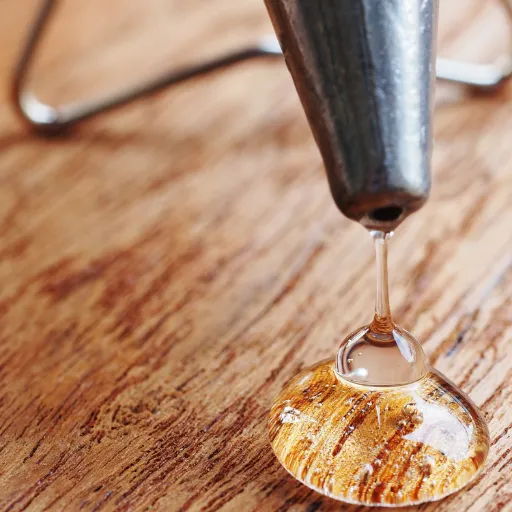
While the industrial world is largely fueled by petroleum, the answer to “what is glue made of” still frequently involves the plant and animal kingdoms. Organic adhesives remain the gold standard for specific applications where synthetic rigidity is actually a disadvantage. Industry observation suggests that starch-based adhesives, derived from maize or tapioca, still command a massive share of the corrugated cardboard market. Their ability to form a fiber-tearing bond while maintaining biodegradability is a feat that complex polymers struggle to replicate at scale.
Consider a realistic scenario in high-end musical instrument repair. A luthier will almost exclusively use hide glue—a protein-based collagen extract. Because this organic bond is reversible with heat and moisture, a violin built in 1920 can be disassembled for maintenance without splintering the wood. In the food labeling sector, casein (a milk protein) is often the go-to choice for glass beer bottles. It provides the necessary “wet tack” to survive a 4°C chilling tunnel but dissolves easily in a caustic wash at the recycling plant. These biological glues aren’t relics; they are specialized tools for circular economies.
Why additives like plasticizers and solvents are essential for performance and shelf life
If you examined a raw, unadulterated adhesive polymer, you would likely find a substance too brittle to use or too thick to pump through an industrial nozzle. Additives turn a base resin into a functional product. Plasticizers, for instance, act as internal lubricants. They wedge themselves between the rigid polymer chains, allowing them to slide past one another. Without them, a cured bond might shatter like glass under the slightest vibration. Industry observation suggests that even a minor adjustment in plasticizer concentration can shift a glue from “rigid structural” to “flexible vibration-dampening” status.
Solvents and shelf-life stabilizers play an equally vital role in the container. Consider a realistic scenario where a 200-liter drum of adhesive is stored in a warehouse for six months. Without specific “free radical scavengers” or antioxidants, the glue might begin to cross-link and solidify inside the drum before it ever sees a production line.
A practical example is the use of toluene or acetone in contact cements. These solvents keep the rubber solids in a liquid state, but they must evaporate at a predictable rate. If they leave the mixture too slowly, the bond remains “mushy”; too fast, and the surface skins over before the two substrates can be joined. Most commercial formulations target a solids-to-solvent ratio of approximately 22% to 34% to balance cost with reliable performance. These chemicals are the invisible managers of the glue’s “open time” and structural longevity.
Hot Melt Adhesives

Hot melts represent a departure from the “wet” chemistry of traditional glues. There are no solvents to evaporate and no water to dry; instead, the process is entirely governed by phase changes. Industry observation suggests these adhesives are the backbone of the global packaging market precisely because they offer nearly instantaneous bond strength. Within a realistic scenario on a high-speed bottling line, a dot of hot melt must secure a cardboard flap in less than 0.8 seconds before the box moves to the next station. If the adhesive stays molten for even a fraction of a second too long, the package simply pops open.
The composition usually centers on a base polymer—typically Ethylene Vinyl Acetate (EVA) or a polyolefin—blended with tackifying resins and paraffin waxes. The wax isn’t just a filler; it controls the “open time,” or how long the glue remains tacky before it solidifies. Because these materials are 100% solids, they are exceptionally stable for storage and transport, provided they are kept away from extreme heat sources that might trigger premature softening.
Thermoplastic polymers and the cooling-crystallization cycle
At the molecular level, hot melts function through a repeatable physical loop. When heated to their application temperature—frequently ranging between 175°C and 192°C—the thermoplastic polymers lose their rigid structure and become a flowable liquid. This allows the long molecular chains to slide past each other and “wet” the surface of the substrate.
As heat dissipates into the material, the cooling-crystallization cycle begins. The polymer chains lose their kinetic energy and begin to re-align into a semi-crystalline or amorphous solid state. This transition happens rapidly. A practical example is seen in bookbinding, where the “spine” glue must remain flexible enough to allow the book to open but crystalline enough to hold 400 pages of paper in a permanent grip. Because this is a physical rather than chemical change, many hot melts can technically be re-melted, though repeated heat cycles often lead to thermal degradation and a loss of initial “bite.”
FAQ Section
Q: Is modern glue still made from animal hides or hooves?
While the vast majority of consumer and industrial adhesives are now synthetic polymers, traditional “hide glue” remains essential in specialized fields. Luthiers and antique restorers value it because the bond is reversible with heat, allowing instruments to be repaired without damage. However, for 95% of modern applications—from school supplies to construction—the answer to “what is glue made of” is petroleum-derived resins like PVA or polyurethane, which offer superior shelf stability and moisture resistance compared to biological proteins.
Q: What makes “super glue” bond almost instantly to skin and surfaces?
Cyanoacrylate, the active ingredient in super glue, relies on a process called anionic polymerization. Unlike water-based glues that need to dry, this chemical reacts instantly when it encounters hydroxyl ions. Because a microscopic layer of moisture exists on almost every surface—especially human skin—the liquid transformed into a rigid plastic mesh in seconds. This exothermic reaction creates a tight molecular chain that hooks into surface imperfections, explaining why it bonds to fingertips more aggressively than to dry, inert materials.
Q: Are the solvents used in industrial adhesives toxic to the environment?
The industry has seen a massive shift toward water-borne systems, yet certain high-performance contact cements still require organic solvents like toluene or acetone. These Volatile Organic Compounds (VOCs) can contribute to air pollution if not managed correctly. Modern manufacturing often utilizes closed-loop “solvent recovery” systems to capture vapors before they escape. Furthermore, many regions now enforce strict “Low-VOC” regulations, pushing chemists to develop bio-based solvents derived from citrus or soy to reduce the ecological footprint.
Q: Why does some glue stay flexible while others become brittle after curing?
The difference lies in the internal “plasticizer” content and the degree of cross-linking within the polymer chains. Brittle glues, such as epoxies or cyanoacrylates, create a dense, rigid 3D lattice that resists movement but can shatter under impact. In contrast, flexible adhesives like silicone or polyurethane contain “long-chain” molecules that act like microscopic springs. These allow the bond to stretch and absorb vibrations without breaking, which is critical in industries like aerospace or automotive assembly where materials constantly expand and contract.
Q: How is the shelf life of liquid adhesive maintained in airtight packaging?
Manufacturers integrate chemical stabilizers and “free radical scavengers” into the formula to prevent the glue from curing inside the bottle. For moisture-cure adhesives, the packaging is often flushed with dry nitrogen to remove any trace of humidity before sealing. In a practical scenario, once you open a container, ambient moisture enters the “headspace,” which is why many industrial glues have a concrete expiration date once the factory seal is broken. Proper storage in cool, dark environments further slows these unwanted chemical reactions.
Q: What is the difference between a physical setting glue and a chemical reaction glue?
Physical setting glues, like school glue or hot melts, change state without changing their fundamental molecular structure—they simply lose a solvent (water) or lose heat. They can often be “undone” by reapplying that solvent or heat. Chemical reaction glues, such as two-part epoxies or super glues, undergo a permanent transformation. They create new covalent bonds at the atomic level, turning two separate liquids into a single solid plastic. Once this “cure” happens, the process is usually irreversible.