

Precision Nutrition: Engineering a Truly Healthy Dog Biscuit Recipe

A truly healthy dog biscuit recipe prioritizes nutrient bioavailability over mere calorie counting. Engineering a balanced treat involves aligning functional fibers with lean protein binders to support digestive health while ensuring the final product remains shelf-stable through controlled dehydration. By focusing on the Maillard reaction’s impact on palatability and nutrient density, you can move from basic baking to professional-grade formulation that meets specific canine dietary requirements.
The Bioavailability Factor in Canine Treats

Bioavailability serves as the true metric of success for any healthy dog biscuit recipe. It isn’t just about what appears on the ingredient list; it’s about what survives the oven and enters the dog’s bloodstream. Many commercial processes rely on high-heat extrusion that can denature proteins, rendering them less effective for muscle repair. Industry observation suggests that when temperatures exceed 180°C, critical amino acids like lysine become significantly less available.
Low-temperature dehydration, by contrast, tends to preserve the enzymatic integrity of the ingredients. A recipe might look perfect on paper, but if the thermal processing is too aggressive, the animal is essentially consuming high-fiber filler with minimal metabolic reward. The objective is to keep nutrients “locked in” until they reach the small intestine. Achieving this requires a precise balance of temperature and time, ensuring the biscuit provides the necessary dental friction without becoming biologically inert during the bake.
Why “Grain-Free” isn’t always the gold standard

The market trend toward grain-free formulations often overlooks the role of complex carbohydrates in providing sustained energy. While some dogs have genuine gluten sensitivities, replacing oats or brown rice with high-density pea protein or lentils isn’t a guaranteed nutritional upgrade. Cautious phrasing is necessary here, as some veterinary studies link diets overly reliant on legumes to dilated cardiomyopathy (DCM). Ancient grains like quinoa or sorghum often provide a more stable glycemic index than processed starches. A healthy dog biscuit recipe should prioritize digestibility over marketing buzzwords. If the grain substitute causes digestive distress, the label serves the owner’s perception more than the dog’s health.
Identifying high-impact functional inclusions
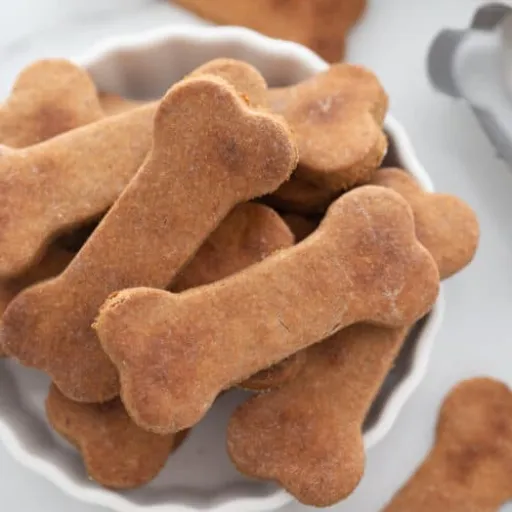
Functional inclusions transform a simple snack into a targeted health tool. Incorporating 2% to 4% ground flaxseed or salmon oil, for example, introduces essential Omega-3 fatty acids vital for joint lubrication and skin health. A practical example involves using pureed pumpkin to provide soluble fiber, which helps regulate digestion in senior dogs.
However, these additions must exist in concentrations that actually trigger a biological response. Simply adding a pinch of turmeric for color provides none of the anti-inflammatory benefits of curcumin; it must be paired with a lipid source to be absorbed properly. The design of the recipe should focus on ingredients that fulfill dual roles—serving as both a nutritional powerhouse and a structural binder that maintains its integrity during the extrusion process.
4 Formulation Pillars for Digestive Longevity
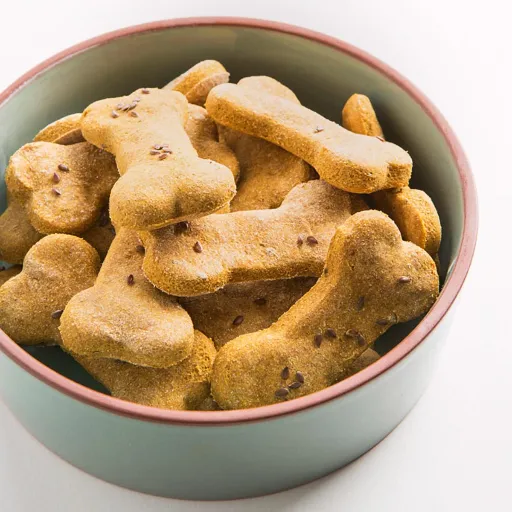
Designing a healthy dog biscuit recipe is less about following a culinary trend and more about managing the metabolic load on a canine’s system. Long-term digestive health depends on how ingredients interact during the transit from the stomach to the colon. One primary pillar is glycemic control; using complex carbohydrates helps prevent the rapid insulin spikes often seen with “filler-heavy” commercial treats. Another critical factor is the inclusion of prebiotics, such as chicory root or inulin, which feed beneficial gut bacteria.
Industry observation suggests that the structural density of the biscuit also plays a role in enzymatic breakdown. If a biscuit is too porous, it may dissolve too quickly, bypassing the mechanical “pre-digestion” that occurs through chewing. Conversely, a third pillar focuses on pH balance within the gut, where certain minerals can act as buffers. Finally, the thermal impact on micronutrients must be considered. Over-baking can lead to the formation of acrylamides, which may stress the liver over time. A successful formulation respects these four biological boundaries to ensure the treat supports, rather than taxes, the dog’s internal organs.
Balancing insoluble fiber with lean protein binders
Think of insoluble fiber as the scaffolding of the dough and lean protein as the mortar. In a healthy dog biscuit recipe, these two components must exist in a delicate equilibrium to achieve both nutritional value and structural integrity. Using something like oat bran provides the “bulk” necessary for healthy peristalsis, but without a strong binder like egg whites or lean turkey mince, the biscuit will likely crumble into dust during the packaging phase.
A practical example is the use of cellulose or beet pulp at a concentration of roughly 3% to 5%. This specific range tends to offer enough “grip” for the protein binders to latch onto without making the final product too hard for a senior dog to crack. It’s about creating a matrix that holds together during high-volume extrusion while remaining easy for the dog to process.
The role of moisture content in shelf-stable preservation
In the world of pet food manufacturing, moisture is the primary variable in the fight against spoilage. A biscuit might feel dry to the touch, but if the internal moisture content sits at a dangerous 14%, mold spores will likely colonize the center within days. To achieve true shelf stability without resorting to synthetic preservatives, the moisture levels must be driven down to a precise window of 8% to 10%.
A realistic scenario: a batch that isn’t dehydrated for long enough may look perfect on the cooling rack, but as the remaining water migrates toward the surface in a sealed bag, it creates a micro-environment for bacterial growth. Reducing the water activity is the only way to ensure the recipe stays safe for months in a standard pantry.
Essential Equipment: Moving from Kitchen Trays to Industrial Dehydration

Transitioning from a hobbyist oven to professional-grade hardware fundamentally changes the chemistry of the bake. Standard kitchen convection ovens often suffer from “hot spots”—uneven air circulation that leaves some biscuits scorched while others remain dangerously moist in the center. In a realistic scenario, a home baker scaling up might see a 12% product loss simply due to inconsistent rack positioning. This isn’t just a waste of ingredients; it is a risk to shelf stability.
Industrial dehydration tunnels or multi-tray rotary ovens offer a level of precision home appliances cannot match. Industry observation suggests that “low and slow” is the mandatory path for functional treats. We aren’t just looking for “doneness.” We are managing the water activity level. Professional dehydrators allow you to lock in a specific temperature—for example, 62.5°C—which is high enough to eliminate pathogens like Salmonella but low enough to prevent the thermal degradation of heat-sensitive vitamins like B1 or fragile Omega-3 fatty acids.
Moving to a multi-tray trolley system can increase output from a meager 4kg to over 85kg per cycle. This shift drastically reduces the labor cost per unit and transforms a healthy dog biscuit recipe from a manual weekend project into a repeatable, scalable commercial operation.
How does the Maillard reaction affect palatability vs. nutrient degradation?
The Maillard reaction is the chemical “handshake” between amino acids and reducing sugars that gives a healthy dog biscuit recipe its characteristic aroma and golden hue. For a canine, the resulting melanoidins—the brown pigments produced—are powerful olfactory triggers. Industry observation shows that biscuits lacking this reaction often suffer from low palatability scores in feeding trials. Dogs simply find the “toasted” scent more enticing than the smell of raw, dried dough. However, this browning comes at a cost.
Once temperatures exceed 140°C (284°F), the reaction accelerates, potentially compromising the very nutrients you’ve carefully selected. A practical example is the loss of reactive lysine; as it binds with sugars to create that savory crust, it becomes biologically unavailable. Consider a realistic scenario: a batch left in the oven slightly too long might look “perfectly toasted” to a human eye, but it has actually lost roughly 15% of its digestible protein content.
It is a delicate trade-off. Over-processing may lead to the formation of advanced glycation end products (AGEs), which tends to be linked to systemic inflammation. The goal isn’t to eliminate browning, but to control it. Achieving an internal temperature of roughly 100°C (212°F) while keeping the surface below the scorching point ensures the biscuit remains enticing without becoming a nutritional deficit.
Processing the Dough
Industrial dough processing for a healthy dog biscuit recipe is a battle of rheology. You are moving a viscous mass through a mechanical system that expects consistency, yet organic ingredients are inherently erratic. Industry observation notes that the biggest bottleneck isn’t usually the bake time—it’s the dwell time in the mixer. If the dough sits for even 12 minutes too long, the fibers hydrate differently, turning a pliable sheet into a brittle mess that clogs the cutters.
Achieving a homogenous distribution of functional inclusions like flax or blueberries requires high-torque mixing that doesn’t over-shear the ingredients. This is where the physics of the “cold-press” vs. “hot-extrusion” comes into play. Maintaining a dough temperature below 35°C during the forming process prevents the natural fats from separating, which ensures every biscuit carries the same nutritional profile.
Managing gluten-free elasticity in high-volume extruders
Standard extruders rely on gluten’s “rubber band” quality to push dough through a die. When you swap wheat for chickpeas or sweet potatoes, that elasticity vanishes. You’re left with a “short” dough that tends to crumble under pressure. To fix this, manufacturers often use natural hydrocolloids like xanthan gum or pectin at levels around 0.8% to 1.4% by weight.
This provides the “slip” needed for high-volume output without gumming up the internal hardware. In a realistic scenario, a lack of these binders leads to “die swell,” where the biscuit expands unevenly after exiting the machine. This inconsistency ruins the uniform weight required for accurate caloric labeling on the final packaging.
Optimal thickness for jaw-specific dental friction
Thickness is the primary driver of dental efficacy. A biscuit that is 4.5mm thick might be perfect for a Pug, but a Great Dane will likely swallow it whole, losing all mechanical cleaning benefits. For medium to large breeds, an optimal thickness of 10mm to 14mm is generally the industry target.
This specific depth forces the tooth to sink into the matrix before the biscuit actually fractures, effectively scraping away plaque. If the biscuit is too dense, it risks tooth fracture; if it’s too light, it shatters instantly. Precision during the cutting stage ensures the treat fulfills its functional promise to the consumer.
3 Critical Cooling Mistakes That Lead to Pathogen Growth
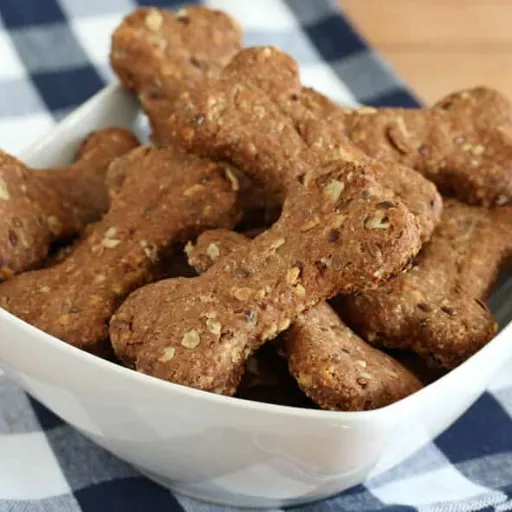
The transition from a 160°C oven to a room-temperature packaging line is the most vulnerable window in the entire production cycle. If this phase is rushed, the thermal energy trapped inside the biscuit becomes a liability rather than a sign of freshness. Industry observation reveals that most “shelf-stable” failures actually occur because of micro-climates created during improper cooling, which effectively restart the clock on bacterial colonization.
One frequent error is stacking warm biscuits too early. In a realistic scenario, a technician might pile 45kg of product into a deep plastic bin to save floor space. The heat trapped in the center of the pile creates a “sweat zone,” where the internal temperature remains between 30°C and 45°C—the ideal incubation range for Staphylococcus aureus.
Another significant risk is ignoring the dew point of the packaging room. If you bag a biscuit that is even 5°C warmer than the ambient air, condensation will form inside the plastic. This “free water” spikes the water activity (aw) locally, allowing mold to bloom even in a recipe that was technically over-dried. Finally, using solid cooling surfaces instead of wire mesh prevents airflow to the biscuit’s underside. This traps a thin layer of moisture against the bottom, creating a soft, damp spot that tends to be the first point of failure for pathogenic growth.
Establishing a Scalable Quality Control Protocol
Scalability is the moment where “baking” becomes “manufacturing.” Without a rigorous protocol, a minor deviation in the moisture of a pumpkin puree shipment can cascade into a 500-unit batch of moldy product. Industry observation indicates that the most successful artisanal-to-commercial transitions rely on a “check-stop” system rather than a single end-of-line inspection. You need to verify the integrity of the healthy dog biscuit recipe at three distinct stages: raw material intake, post-extrusion weight, and final water activity.
A realistic scenario involves a sudden shift in ambient humidity—perhaps a rainy Tuesday in a facility without climate control. This might increase your dough’s hydration by 2.3%, enough to cause the biscuits to stick to the conveyor. To counter this, a practical example of quality control is the “snap test.” By measuring the force required to break a cooled biscuit using a texture analyzer, you can quantify “crunch” as a numerical value. If the resistance falls below a specific Newton threshold, the batch likely retains too much internal moisture and must return to the dehydrator. Consistently logging these metrics ensures that the “healthy” promise on the label is backed by verifiable data, not just a visual guess.
FAQ Section
Q: Are certain “human” superfoods toxic to dogs in concentrated biscuit forms?
While many superfoods provide antioxidants, concentration matters. Grapes, raisins, and certain nuts like macadamias are strictly toxic. However, common “safe” items like garlic or nutmeg can become dangerous when dehydrated into a potent powder for a healthy dog biscuit recipe. In high doses, these can cause oxidative damage to red blood cells or neurological distress. Always verify the specific dosage thresholds for botanicals before moving from a kitchen pinch to a commercial-scale formulation.
Q: How can I replace eggs as a binder for dogs with specific allergies?
For dogs with poultry sensitivities, gelatin or “flax eggs” serve as excellent structural substitutes. To create a flax binder, mix one tablespoon of ground flaxseed with three tablespoons of water; let it sit until it reaches a viscous, glue-like consistency. This provides the necessary “grip” for the dough while adding a boost of Omega-3 fatty acids. Pureed pumpkin or unsweetened applesauce also work, though they require longer dehydration times to offset the additional moisture they introduce.
Q: Does baking at high temperatures destroy the Omega-3 content in the recipe?
Yes, polyunsaturated fats are highly sensitive to thermal degradation. If your baking temperature exceeds 180°C, the molecular structure of fish oil or flax oil begins to break down through lipid oxidation. This doesn’t just neutralize the health benefits; it can actually create free radicals that cause cellular inflammation. To preserve these fragile nutrients, it is better to bake at lower temperatures for longer periods or add the oil-rich components to the dough just before the final low-heat dehydration phase.
Q: What is the natural shelf life of a preservative-free dog biscuit?
Without synthetic mold inhibitors, shelf life is entirely dependent on water activity (aw). If you successfully reduce the moisture content to below 10%, a biscuit can remain stable in an airtight container for roughly 4 to 6 months. However, any exposure to humidity will drastically shorten this window. For commercial batches, using natural tocopherols (Vitamin E) or rosemary extract can help prevent the fats from turning rancid, extending the sensory quality without compromising the “clean label” status of the recipe.
Q: Can I use coconut flour instead of whole wheat for better structural integrity?
Coconut flour actually presents a structural challenge because it lacks gluten and absorbs up to four times more liquid than grain-based flours. This often results in a “sponge-like” texture that crumbles easily once dried. While it is excellent for grain-free diets, it should be used at a lower ratio or paired with a high-protein binder like egg whites to prevent the biscuits from shattering during shipping. It provides great fiber but requires a completely different hydration strategy to maintain a clean “snap.”
Q: Why do some homemade biscuits turn soft after 48 hours?
Softening is almost always caused by “moisture migration.” Even if the exterior feels crunchy, residual water trapped in the center of a thick biscuit will eventually move toward the surface to reach equilibrium. This is common in recipes using honey or molasses, which are humectants that naturally pull moisture from the air. To ensure a permanent crunch, use a professional dehydration cycle at approximately 60°C for several hours after the initial bake to pull every last percentage of water from the core.