

What Is a Food Extruder? Complete Guide to Industrial Extrusion Technology
Introduction
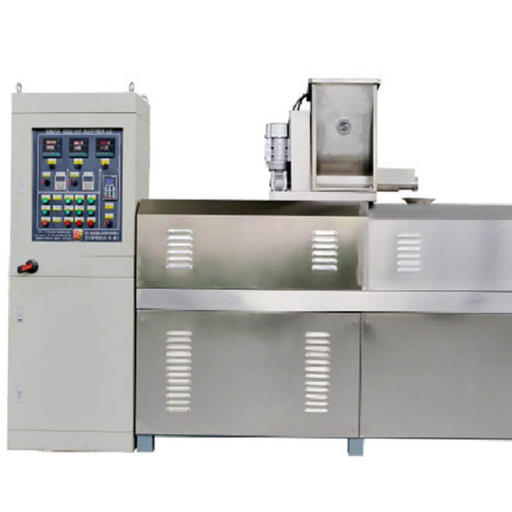
The production manager recognizes that during the last year, the quality of its product changed by 15% alone within the different batches. The main cause of these quality issues was the batch cooker, an outdated piece of equipment that was not serving efficiently.
On the day that the new technology of steering wheel extruder was implemented on his plant to improve quality, a 3% decrease in output variance was recognized, along with doubling of the production capacity without having to look for any additional storage.
Researching industrial food processing equipment, chances are you may encounter the term “food extruder.” It needs to be specified for its functions and relevance to your business chain. Several food processors seemingly find it difficult to differentiate between this piece of technology and the conventional means of cooking, questioning if this technology considerably serves their manufacturing goals.
To adequately understand the food extruders’ key constituents, topics discussed will display specifics on design and mechanism, various types of extruders, and how extruders work. A conventional presentation should help one comprehend the production of extrusion from the differing points of actual machine operations and production perfection. There will, however, be ample time to acquire the principle of extrusion technology while working some food extrusion process examples, henceforth: improvement of productivity and quality of products.
Want to explore how extrusion technology applies to your specific product? Browse our extrusion solutions to see real production line configurations →
What Is a Food Extruder?
The food extrusion equipment is so well developed that it has become the industrial machine that uses a variety of mechanical shear, thermal energy, and pressure to convert raw food materials into finished food products suitable for human consumption. This extruder is much more than a bioreactor, as it performs all beneficial operations of mixing, cooking, kneading, shaping, and forming through its fully automated system.
The food extrusion system performs all processes through the combination of mixing, heating, and shaping by running the aforementioned processes in a controlled barrel. It is supplied by raw material and powered by an automated cutter system from the other end, which produces product of a specific dimension.
The principle of the extrusion machine is gravity, where a rotating screw pushes the hot chamber’s material forward compressing it. As it approaches the die – the new opening at the end – the material one launched is rather high pressure. This is when cut with the die, the product takes on whatever final desired form it should have; and then follows this die path to pressurize the difference that is subjected to instant vaporization of water vapor causing the typical cellular aspect observed in extruded food.
Hence, the extensive use of this kind of technology, which translates into the food extrusion market, will see its global value expand to over $70 billion by 2024, growing at 5.8% until 2030. World wants more processed food and ready-to-eat cereals and snack products and pet foods. It is these industries that drive development.
How Does a Food Extruder Work? The Extrusion Process Explained
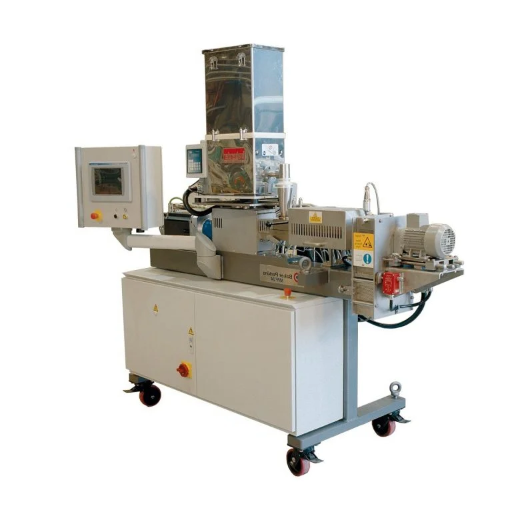
The operation of food extruders requires an examination of each phase in their extrusion process. The basic operational procedure of food extruders remains constant across all equipment types and product specifications but different machines show different design configurations.
Stage 1: Feeding and Preconditioning
The feeder system closely meters deregulated raw material in the form of cereals with flours and starches along with proteins and moisture. The initial extrusion process commences with preconditioning lying ahead of the main extrusion barrel in which steam and water are introduced to commence hydration and heating.
The material now has a moisture content ranging between 10% and 25% depending on the product targeted. Extruded snack products require a moisture of between 12% and 18%, while high-meat pet foods function around levels of 20% to 28%.
Stage 2: Conveying and Compression
To push the material through the barrel system, rotating screws move the material forward in the barrel. The material is subject to compression as the screw channels get shallower and shorter pitch changes the screw first. The process of compaction produces mechanical heat as the material moves towards the die by the aid of friction and shear forces.
Screw configuration is crucial to this process. By using modular screw designs, manufacturers can adjust:
Feeding zones for material intake
Compression zones for building pressure
Mixing zones for ingredient homogenization
Shear zones for texture development
Stage 3: Cooking and Transformation
Many important changes happen to a material when it goes through heated barrel sections (usually in the range of either 100°C-200°C):
Starch Gelatinization: During gelatinization, starch granules swell and take up water while moisture molecules help in breaking down the crystalline structure. This phenomenon occurs only when enough moisture is present and some mechanical shear co-exists within a temperature range of 60°C-80°C.
Changes in Protein Structure: Nothing but a readjustment in the configurations of proteins is necessary for a binding in product form and physical characteristics of a protein with emphasis on synthetic protein foods (by-products from textured vegetable protein or TVP) and protein-rich animal-food products.
Enzyme Inactivation: These enzymes are normally attendant in some raw ingredient and are efficiently destroyed. This will help in enhancing the storage stability of a product by inactivating undesirable reactions.
Reduction of pathogens: By employing a combination of heat, pressure, and time, we successfully decrease the loading of microorganisms, thus enhancing food safety.
Step 4: Extrusion and Expansion
The die is the location of the most extreme changes. The moment it passes out of the shaped orifices, material heated and pressurized closes upon atmospheric pressure. This kind of precipitation brings about an immediate boiling of any water remaining in the material: in boiling, water changes instantaneously to steam, resulting instantaneous expansion of product from about 2 to 10 times its initial density.
This immediate expansion fabricates a cellular structure, which is responsible for the crispness and crunchiness of breakfast cereals, snack foods, and most pet foods. Die formation will dictate the final form, density, shore hardness, and surface characteristics of the product.
Stage 5: Cutting and Post-Processing
The extrudate, which is continuous, is cut to of uniform pieces by a rapidly rotating cutter at the die face. The product length highly depends on the cut speed and blade configuration. Following this are:
Drying or toasting to reduce moisture content
Seasoning or flavoring
Cooling for stabilization before packaging
Curious about how specific parameters affect your product quality? Download our extrusion process optimization guide for detailed technical specifications →
Types of Food Extruders: Single-Screw vs. Twin-Screw
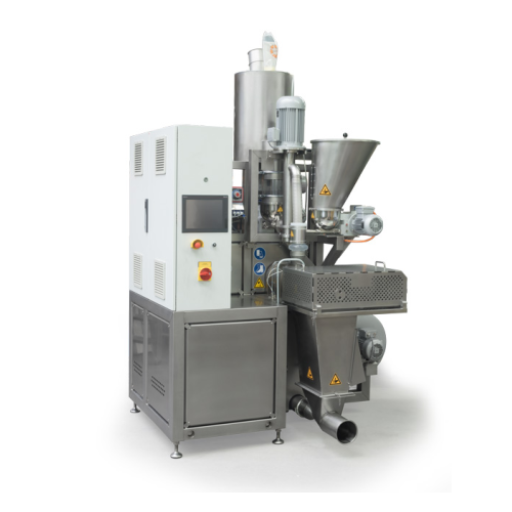
Not all those food extruder machines are equal. The choise is determined on single- or twin-screw conveyances by the demands of your product, complexity of ingredients, and production goals.
Single-Screw Food Extruders
How They Work: In a hot cylinder, a single rotating screw helps in moving the material forward with a tight clearance between the screw flights and the cylinder wall to create compression.
Best Applications:
Breakfast cereal and cornflakes
Basic snack pellet for frying or baking
Dry pet foods for simple formulations
Pasta and noodle items
Cost-sensitive operations
Advantages:
Lower capital investment
Simpler operation and maintenance
Lower energy consumption for basic products
Proven reliability for standard applications
Limitations:
Poor mixing in complex formulations
Highly specific to ingredient variabilities
Limited capability for high-fat or high-moisture products
Less control over shear and temperature
Twin-Screw Food Extruders
The Technology: Twin-screw extruders involve two screws that rotate in opposite directions while interacting within a figure-eight-shaped barrel. These can rotate in the same direction (co-rotating) or counter to each other (counter-rotating); food applications are generally the former.
Most Appropriate Applications:
High-meat pet food and pet treats
Textured vegetable protein (TVP) and meat analogs
Complex snack formulas with several ingredients
Products which need precise texture control
Aquatic Feeds with floating demand
Advantages:
Outstanding mixing and homogenization
Better handling of sticky, oily, or high-fiber ingredients
Self-wiping design helps to reduce cleanup time
More accurate control over residence time and shear
Higher capacity for less easy processing materials
Key Technical Differences:
| Parameter | Single-Screw | Twin-Screw |
|---|---|---|
| Mixing Efficiency | Moderate | High |
| Heat Generation | Primarily barrel heating | Shear + barrel heating |
| Ingredient Flexibility | Limited | Broad |
| Energy Efficiency | Good for simple products | Better for complex products |
| Capital Cost | Lower | Higher |
| Maintenance | Simpler | More complex |
When Loyal Machinery engineers work with clients on pet food production lines, twin-screw extruders are typically recommended for formulations exceeding 20% meat content or requiring precise texture control. Single-screw systems often suffice for standard cereal or pellet applications.
Industrial Applications of Food Extrusion Technology

The dominance of food extrusion technology is explained by its versatility in many food manufacturing sectors. Here are the main industrial applications where extruders deliver a special kind of value:
Snack Food Manufacturing
Among the largest applications, extruded snacks are notable. They include various products:
Direct-expanded snacks: These include cheese puffs, corn curls, and ball-shaped snacks created through the high-pressure process of extrusion with instant expansion.
Pellets for frying: Semi-finished products that expand while being fried, offering a light, crispy texture.
3D shaped snacks: Highly complex designs made possible through the use of dedicated die designs.
The potential to control the expansion ratio, density, and texture with the aid of the screw speed, temperature, and die design has made extrusion more efficient for the development of differentiated snack products.
Breakfast Cereals
From corn flaking to puffed rice rings, extrusion is a ruling operational factor in the manufacture of cereal in the current standard:
Flaking: Flat cereals are made through flaking rolls of the extruded pellets.
Gun Puffing: Whole grains are pressured heated then allowed to expand to form puffy cereals.
Direct Expansion: Various shapes of cereals can be made in a single cycle through continuous extrusion.
Pet Food and Aquatic Feed
The feed for pets is orthogonally advantageous vis-a-vis some limited extrusion:
Meaty- and extrusion-processed feed: Mostly for pre-digestion and taste, heavily extruded
Low-level lubricated semi-moist treats: Painfully repressed extrusion for very soft, mouthwatering products
Floating and sinking fish feed: Floating for surface feeders and sinking meant for bottom feeders by adjustment of viscosity control for extrusion parameters.
Operating Director Maria Chen disclosed first-person experiences concerning a twin screw extrusion to focus on. “It was a 2023 shift as earlier systems simply could not maintain consistent density for shrimp feed. Should it be twin-screw extrusion, precision control granted facilities to be operated on by natural sinking density of 1.15 grams per cubic cm. We’ve seen a 12% increase in feed conversion rate and a significant decrease in mortality,” he said.
Textured Vegetable Protein (TVP)
For different market segments, extrusion is being quite effectively utilized to create meat-like textures from plant proteins:
High moisture (>40% moisture) extrusion creates fibrous-textured substances mimicking meat.
Low-moisture extrusion creates granular TVP for use as meat extenders
The chewiness and mouthfeel attributes of the protein are due to specifics of shear and temperature control.
Pasta and Noodle Production
Cold extrusion shapes pasta (under the gelatinization temperature) without fully cooking:
Before the appropriate bronze or Teflon dies, the short goods (macaroni, penne, shells) may be produced.
Spaghetti and fettuccine are part of the long goods stretched out and cut.
Higher temperature extrusion carried out for instant noodles is generally deep steamed. These are the basic extruders with one homogeneous paste of dough; subsequently all instant noodles are typically fried or cooked by admixing with hot air.
Modified Starches and Ingredients
Food industry utilizes extrusion for unique ingredient development:
Gelatinized starches: Quick-swell agents for soups and sauces
Wet process cereals and snacks: Very few swelling substances for snackery
Encapsulated flavors and nutrients: Controlled release of protected actives carried from generation to the product end.
Key Benefits of Food Extrusion in Manufacturing

A full assessment of what extruders do concerns looking at the motivations behind why manufacturers choose this technology over other options, the advantages of which straddle operational, economic, and product quality dimensions:
Continuous Production Efficiency
Extruders run on a continuous process, they do not batch cooking systems. Material goes in at one end, finished product comes out from the other. This has further advantages like:
Increased throughput per floor area
Low-manning requirements due to automation
Constant product quality without being altered batch to batch
Reduced energy per unit of product mass
Usually an industrial extruder can handle around 500 kg per-h at the lower end and up to 5000 kg per-h at the upper end, depending on configuration and product type.
Precise Process Control
Present-day extruders guarantee extra-ordinary supervision over product traits:
Screw speed: Usually 100 to 600 RPM, affecting shearing recurrences and time spent in the barrel
Temperature zones: 3 to 10 independently controlled heating and cooling zones in the barrel
Moisture injection: Water or steam can be added at accurate defined points for specified types of product formation
Die configuration: The Die configuration (shape, number of holes, and land length) affects the final product
Accordingly, they allow for immediate changes in formulations types and replication from one success to the other.
Enhanced Food Safety
The high-temperature, short-time nature of extrusion cooking ensures significant pathogen reduction to:
Temperatures spanning 120°C to 180°C to get rid of dangerous bacteria
Continued process steps mean that no possible contamination will ever arise through the use of full batch production
The protein-breakdown that occurs during this technology sterilizes enzymes and prevents or restricts further quality diminution over time.
Product Innovation Capability
Extrusion technology enables product forms impossible with traditional methods:
Complicated 3D shapes by die design
Layered or filled products by co-extrusion
Controlled densities from dense pellets to highly expanded puffs
Creation of unique and textural aspects by exploiting shear and temperature profiles.
Ingredient Versatility
These days, numerous modern twin-screw extruders accommodate the extraordinary twinning of formulas that includes:
Tropical starches, including corn, wheat, rice, oats
Pulses and legumes
Protein flours such as soya, peas, fish, and meat flours
Fats and oils(generally up to 25% in certain configurations)
Fiber sources
Special factors such as vitamins, minerals, and other additives.
Critical Process Parameters for Optimal Extrusion
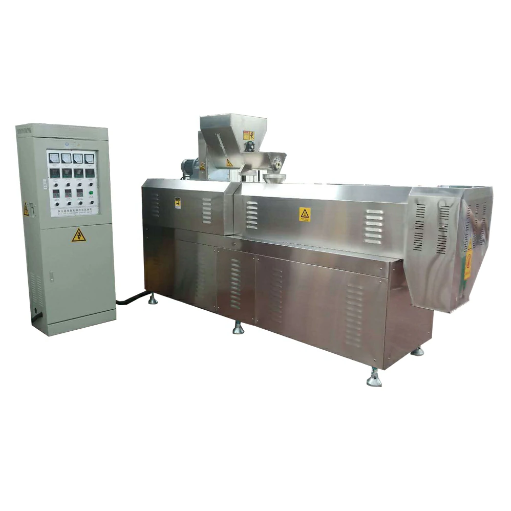
Industrial food extruders can run most foodstuffs such as rice, maize, wheat flour, and many others.
Moisture Content
One of the most important factors in moisture is that it:
Starch Gelatinization Degree
Product Expansion and Density
Motor Load and Energy Consumption
Product Accessories and Mouthfeel
For each product, there is quite a wide range of values; from 12 to 18% for snacks, 20-28% for pet foods, and 25-35% for textured vegetable protein (TVP)streams.
Screw Speed (RPM)
Tip speed determines:
Shear stress and mechanical energy input
Dwell time residence in the barrel
The efficiency of mixing
Heat generation due to friction
Higher speeds imply increased shear and temperature but a decrease in dwell time. It is important to identify the optimal balance for good quality products.
Temperature Profile
In the case of temperatures, typically, the main barrel sections are zoned as follows:
From the feed zone (intake of material): 40-60°C
To each compression zone: increasing progressively to 100-140°C
For every cooking zone: 140-180°C
Controlled at die zone for the eventual expansion that may be desired
Die Design
Die attributes directly impact product factors:
Die Orifice: Smaller orifices lead to higher back-pressure and shear.
Land Length: More land results in higher back-pressure and better surface finish.
Number of Orifices: These determine yield rate and finished product size.
Die Material: Hardened steel-die is sufficient for standard applications. The case is different for abrasive constituents.
Specific Mechanical Energy (SME)
SME reads the amount of mechanical energy input per kilogram of product, and hence, controls one of the most formidable quality control parameters:
Higher SME = more shear, hence exceptionally huge expansion
Lower SME=lower SME would indicate lower shear and less expansion.
SME could be adjusted by way of screw speed, feed rate, and moisture levels.
Choosing the Right Food Extruder for Your Operation

When evaluating food extruder machines for your facility, consider these decision factors:
Product Requirements
Simple cereal products: Single-screw extruders are often suitable.
Complex formulations, those involving many ingredients: Leading system mixers are twin-screw.
Products with high-fat or high moisture content: Twin-screws with specially customized screws.
Texture control for products: Twin-screws offering individual temperature control zones.
Production Scale
Pilot/Laboratory : 5-50 kg/h for recipe development
Small commercial : 100-300 kg/h, for specialty production
Industrial : 500-5000 kg/hr or more, for commodity products
Ingredient Flexibility Needs
If your operation requires frequent recipe changes or uses diverse ingredient sources, twin-screw extruders offer superior flexibility. Single-screw systems are more sensitive to ingredient variations.
Integration Requirements
Think about the extruder fit into the entire production line:
Upstream: Feeding LINES, Preconditioners, and Ingredient Handling
Downstream: Dryers, Coating Lines, and PACKAGING
Controlling Systems: PLC Integration with the Existing Factory Automation
Conclusion
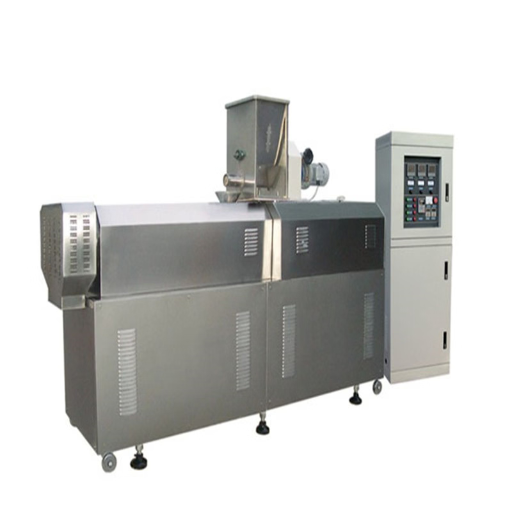
A food extruder is much more than just a cooking machine. It is a precision processing system that can convert raw products into value-added food through a controlled application of heat, pressure, and mechanical shear. Understanding what food extruders are and how they actually work enables producers to make more informed decisions concerning their equipment investment and process optimization.
Capabilities to combine into a continuous, automatic process a few unit operations guarantee massive commercial advantages and benefits through: Improved product consistency, great food safety, enhanced production efficiency, and the ability to develop new products responsive to the changing expectations of consumers.
Extrusion technology provides a way to elevate established companies in the realm of competitive differentiation, with a view to low costs and high-quality products, be it breakfast cereals, pet food, or plant-based proteins. The key is to pair the correct extruder configuration-whether single-screw or twin-screw extrusion, with specific screw and die designs or control systems-that matches your exact product in its requirements and production goals.
Having grasped its concept is vital for manufacturers looking to integrate extrusion technologies into their production system, the true partners are manufacturers having all the inherent understanding and technology resources for new challenges in the particular industry. Since the collaboration may define the difference between only buying an equipment and implementing a complete process solution into a production that will retain a sustainable competitive advantage.
Key Takeaways
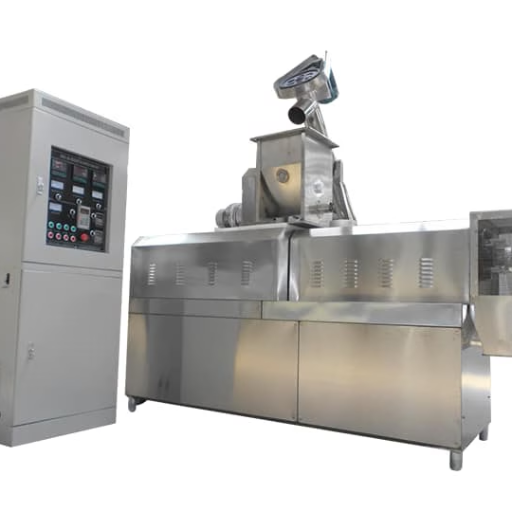
Food extruders, combining mixing, cooking and forming, operate throughout a continuous automated process and essentially gain great efficiency benefits over batch systems.
Twin-screw extruders yield super mixing and flexibility options for complex formulations. Single-screw extruders, on the other hand, serve as economical alternatives for the simpler items.
The characteristic extrusion product textures are created at the flash expansion in the die tooling. Density, shape, and mouthfeel are all very significant.
The output characteristics are mostly determined by moisture content, screw speed, temperature profile, and die design.
Extrusion technology presents a wide array of applications, from snack foods and cereals to pet foods and plant-based meat analogues.
To enhance food safety significantly, modern extrusion systems are designed to work at high-temperature processing and continuous operation.
Explore how Shandong Loyal Industrial Co. can engineer a complete extrusion solution for your specific product requirements. Contact our technical team to start your project consultation →
FAQ About Food Extruders
Hot or cold extrusion: What actually defines the principles of extrusion in regard to them?
In terms of working temperature, hot extrusion, set above 100°C, is about cooking products by means of heat, pressure, and shear. It is an extrusion method applied to snack foods, pet foods, and breakfast cereals. However cold extrusion – cold forming near gelatinization temperature – is about shaping products without cooking. This is typical of fresh pasta, cookie dough, and certain meat products.
How much does a food extruder cost?
Industrial food extruder prices can vary from very low to exceedingly high depending on the capacity and the configuration. The price range for single-screw systems usually varies between $50,000 and $200,000. For twin-screw extruders, the range is even broader, such as between $150,000 to $800,000 for high-capacity systems and up. Total production lines with the sub-section and peripheral equipment represent larger investments.
What maintenance does a food extruder require?
Regular maintenance in the extrusion mill includes regularly cleaning and inspecting the die and cutter on a daily basis; lubricating bearings and gearboxes every week; checking for barrel and screw wear per annum; and ultimately replacing worn parts once a year. Regular maintenance helps to have a life expectancy of more than 20 years.
Does an extruder produce several products in a single go?
That is correct, thanks to the extreme versatility of modern extruders. When appropriate, the machine’s design allows for the production of several different products provided that different screw configurations, dies, and process parameters are used. Note that in the event that the products are very diverse and consist of materials with great density differences (e.g., from low-density snacks to high-density pet food), substantial equipment adjustment is necessary.
What is the average working life of a food extruder?
An industrial-scale food extruder, with proper maintenance, should keep running for 20-30 years. The wear of major spare parts, such as screws and barrels, would necessitate occasional replacement, but the mechanical parts are supposed to be good for many years of continuous operation.