

Mastering the Gastronomy of Air: A Deep Dive into Aeration Cooking

Aeration cooking is the technical process of incorporating gas—typically air, carbon dioxide, or nitrous oxide—into a food matrix to alter its density, mouthfeel, and flavor delivery. Whether achieved through high-shear mechanical whipping, biological fermentation, or siphon-driven pressure changes, successful aeration relies on stabilizing these bubbles within a protein or lipid structure. Mastering this equilibrium is essential for creating everything from light, structural sponges to delicate, modernist foams and mousses.
Mechanical vs. Chemical Displacement
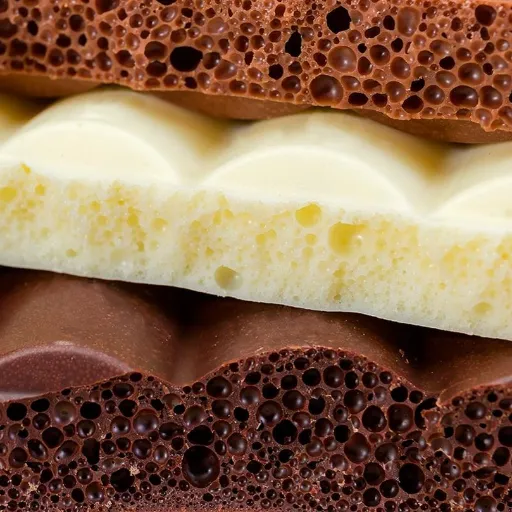
At its core, aeration cooking is a battle against density. Most culinary structures begin as heavy liquids or solids; transforming them requires a displacement strategy. Mechanical aeration relies on physical force—whisking, sifting, or pumping—to fold atmospheric air into a base. This creates a temporary suspension that requires a stabilizing agent, like fat or protein, to prevent immediate collapse.
Chemical displacement operates differently. Instead of capturing outside air, it generates gas from within through a reaction. When an acid meets a base, such as lemon juice hitting baking soda, $CO_2$ is liberated. Industry observation suggests that chemical methods are often more reliable for dense batters where mechanical shearing might overwork the gluten. In a realistic scenario, a chef might use a combination: whisking a sponge for initial volume, then relying on chemical leavening to maintain that “lift” as the proteins set in the heat of the oven.
The Physics of Protein Denaturation in Egg Foams
The structural integrity of a meringue or souffle depends on unfolding proteins. When you whisk egg whites, the mechanical stress physically pulls the tightly coiled globulin and albumin proteins apart. This process, known as denaturation, exposes hydrophobic and hydrophilic ends.
As these proteins realign, they form a protective film around the air bubbles you’ve introduced. A practical example of this physics in action is the addition of cream of tartar. By lowering the pH, the acid prevents the protein bonds from becoming too tight. Without this cautious adjustment, the foam often “over-coagulates,” squeezing out water and leaving you with a grainy, collapsed mess instead of a glossy peak.
Gas Expansion via Biological Leavening Agents
Biological aeration is a slower, metabolic game. Yeast (Saccharomyces cerevisiae) consumes fermentable sugars and exhales carbon dioxide as a byproduct. Unlike the rapid-fire burst of chemical leavening, biological expansion occurs over hours.
This slow gas release allows for complex flavor development and a specific crumb structure. During the bake, the gas trapped in the dough’s elastic matrix expands significantly—often by 1.8 to 2 times the original volume. Because the expansion is tied to the yeast’s life cycle, temperature control is paramount. If the environment exceeds 58°C, the biological engine dies, and the aeration process halts instantly.
High-Shear Fluid Dynamics
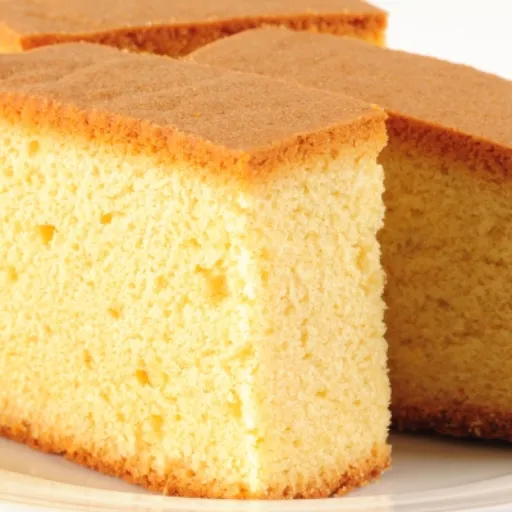
In industrial aeration cooking, achieving a uniform micro-bubble structure requires more than a standard whisk; it demands high-shear force. This process involves a rotor-stator system spinning at high velocities—often exceeding 3,500 RPM—to create intense turbulence within the liquid base.
Industry observation suggests that the secret to a silk-like mousse lies in the “tip speed” of the blade. As the liquid is forced through narrow gaps in the stator, the sheer stress physically tears larger air pockets into millions of microscopic ones. A realistic scenario: an operator increasing the pressure to 4.2 bar to ensure that a viscous chocolate ganache maintains its loft without separating. This mechanical energy must be managed carefully, as the friction tends to raise the product temperature, potentially melting the very fat globules needed to hold the air in place.
Why Does Altitude Alter the Stability of Your Culinary Aeration?

Aeration is essentially an equilibrium between internal gas pressure and external atmospheric weight. As you move to higher elevations, the air becomes thinner, meaning there is less atmospheric pressure pushing back against the bubbles you’ve worked so hard to incorporate. In aeration cooking, this lack of resistance causes gas pockets to expand more aggressively and far earlier than they would at sea level.
Industry observation suggests that recipes optimized for coastal cities often fail catastrophically at altitudes above 3,500 feet. The internal pressure of the CO2 or air simply overpowers the delicate protein walls of the batter before they have a chance to coagulate and set. This results in a spectacular rise followed by a demoralizing structural collapse, leaving the center of the dish dense and gummy.
Vapor Pressure and the Bubble Collapse Threshold
The physics of altitude also dictates that water boils at lower temperatures. This shift significantly impacts vapor pressure. In a realistic scenario, the steam generated inside a cake or souffle at 5,000 feet enters the gas phase at roughly 95°C instead of 100°C.
Because this transition happens sooner, the bubbles hit their “collapse threshold” before the starches have gelatinized or the egg proteins have denatured enough to provide support. Cautious temperature management is the only fix; by increasing the oven heat by about 10–15°C, you can force the structure to set more rapidly, catching the bubbles before they expand to the point of rupture.
Adjusting Tensile Strength in Low-Pressure Environments
To survive the thin air, your culinary foams need higher tensile strength—essentially, they need to be “tougher.” A practical example is increasing the protein-to-liquid ratio in a mousse or adding an extra egg white to a sponge.
By reinforcing the bubble walls, you allow the matrix to stretch further without tearing. Cautious reductions in leavening agents—sometimes cutting baking powder by as much as 20%—also prevent the internal pressure from becoming unmanageable. It’s a delicate recalibration of the “skin” of the bubble, ensuring it can withstand the low-pressure environment without losing its airy, ethereal quality.
5 Industrial Methods for Aerating Large-Scale Confectionery Batches
In a high-output production environment, traditional whisking is physically incapable of achieving the necessary cellular consistency. Scaling aeration cooking requires specialized equipment that can manage gas injection while simultaneously controlling temperature and viscosity.
- Continuous Pressure Aeration: This is the gold standard for marshmallow and whipped fillings. The liquid base is pumped into a pressurized mixing head where filtered air or nitrogen is injected through thousands of tiny pins. Industry observation suggests that maintaining a backpressure of 3.8 to 5.2 bar is often the sweet spot for creating a micro-porous structure that doesn’t collapse during the cooling phase.
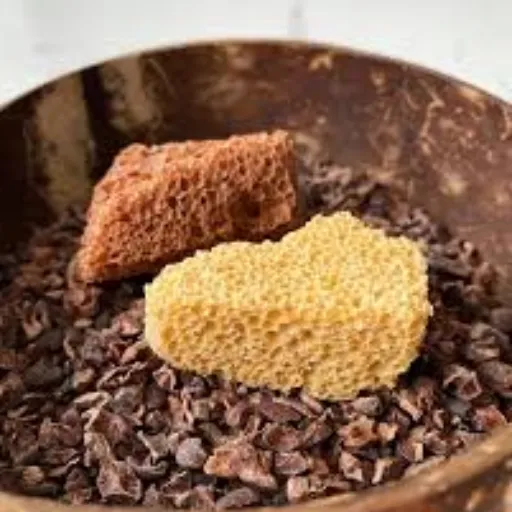
- Vacuum Expansion: Unlike forcing air in, this method uses a vacuum chamber to expand the gas already present in a warm, viscous mass. A realistic scenario involves aerated chocolate bars; the molten chocolate is subjected to a vacuum, causing the tiny bubbles to swell. Once the chocolate snaps into a solid state, the vacuum is released, leaving behind a characteristic honeycomb interior.
- High-Shear Rotor-Stator Mixing: For heavy batters or nougats, high-shear mixers utilize mechanical force to “tear” air into the matrix. A practical example is a vertical aerator spinning at 4,000 RPM, which provides the intense energy needed to overcome the surface tension of high-fat confectionery fats.
- Nozzle-Atomization: Used primarily for light coatings, this involves forcing the product through an atomizing nozzle. The sudden pressure drop at the nozzle tip causes the liquid to expand into a fine, aerated mist before it hits the conveyor belt.
- Ultrasonic Cavitation: A more modern approach involves high-frequency sound waves. These waves create microscopic vacuum bubbles (cavitation) that collapse and disperse gas with extreme precision. This tends to produce the most stable foams, as the bubbles are significantly smaller than those created by mechanical means.
Surface Tension Management
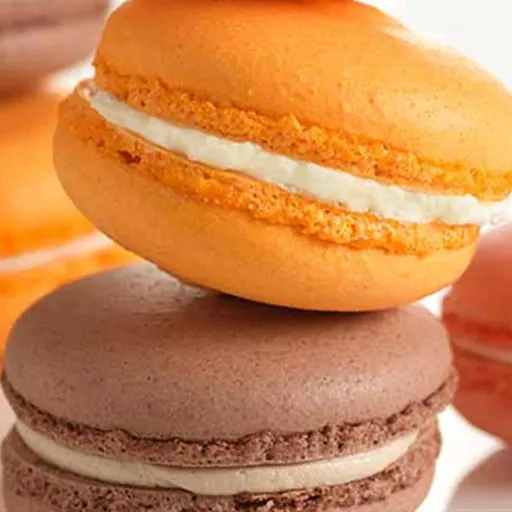
Successful aeration cooking is a delicate negotiation with surface tension. Pure water, for instance, has a high surface tension that makes it nearly impossible to trap air into a stable foam; the bubbles simply coalesce and vanish as the liquid pulls itself together. To create a lasting mousse or sponge, you must lower this tension, making the liquid “stretchy” enough to wrap around gas pockets without snapping.
Industry observation suggests that the stability of a foam is directly proportional to how efficiently the surface tension has been reduced. If the tension remains too high, the internal pressure of the bubbles will inevitably cause them to burst. Achieving that perfect, airy loft requires introducing molecules that congregate at the interface between the air and the liquid, creating a flexible, protective skin.
The Role of Lecithin and Lipid Emulsifiers
Lecithin is a powerhouse in the world of emulsifiers. As a phospholipid, it possesses a dual nature: one end is attracted to water (hydrophilic), while the other is attracted to fats and air (lipophilic).
When added to a mixture, lecithin aligns itself at the boundary of air bubbles. This creates a stabilizing bridge that prevents the bubbles from merging. A practical example is the use of soy or sunflower lecithin in chocolate manufacturing; it allows for the incorporation of air into a dense fat matrix, resulting in aerated bars that maintain their cellular structure even after the tempering process is complete.
Surfactants: Bridging the Gap Between Air and Liquid
Surfactants are the structural architects of any culinary foam. By sitting at the air-liquid interface, these surface-active agents decrease the energy required to create new surface area.
In a realistic scenario, a chef might use a surfactant like sucrose esters to turn a thin vegetable juice into a dense, stable foam. These molecules reduce the interfacial tension so effectively that bubbles as small as 15 to 25 micrometers can be sustained. This microscopic uniformity is what gives modernist foams their characteristic “dry” and ethereal texture, allowing them to sit atop a dish for several minutes without weeping or collapsing into a puddle.
Temperature Sensitivity in Whipped Fat Matrices
Fats are highly temperamental when it comes to aeration. In a whipped cream or buttercream, the air is actually trapped by a network of partially crystalline fat globules. If the temperature rises by even a few degrees—approaching 28°C to 31°C—these crystals begin to melt.
Once the fat turns liquid, it can no longer support the weight of the air, and the entire matrix fails. Cautious temperature control is paramount; industry pros often chill their mixing bowls and beaters to roughly 4°C. This ensures the fat remains in a solid, plastic state, allowing it to “clamber” over the air bubbles and lock them into a rigid, aerated structure that holds its shape.
Siphon Technology and Nitrous Oxide Integration
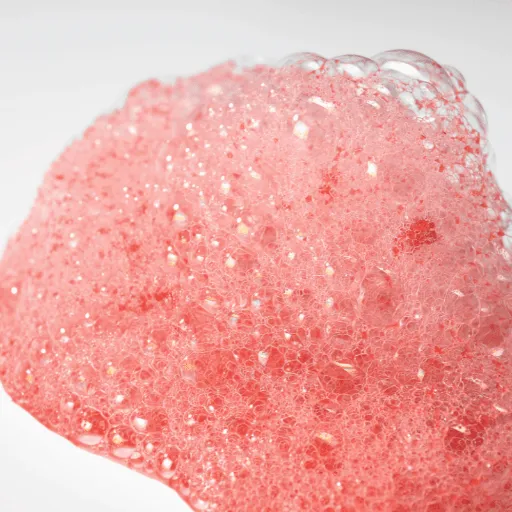
Siphon-based aeration cooking represents a shift from atmospheric mixing to high-pressure saturation. In this system, a liquid is sealed in a canister and charged with nitrous oxide (N2O) at pressures often reaching 8 bar. Unlike air, N2O dissolves readily into fats and liquids under these conditions. When the trigger is pulled, the sudden drop to atmospheric pressure causes the dissolved gas to expand instantly, inflating the mixture from the inside out.
Industry observation suggests that N2O is preferred over carbon dioxide for creamy textures because it lacks the “fizzy” carbonic acid bite. A realistic scenario: a chef creates an instant hollandaise by charging a warm butter-and-yolk base. The result is a stable, aerated sauce that is significantly lighter than a hand-whisked version. However, one must be cautious with temperature; if the liquid inside exceeds 62°C, the proteins may over-coagulate before they ever leave the nozzle, resulting in a clogged valve and a wasted batch.
Beyond the Whisk: Modern Ultrasonics in Aeration Cooking

Traditional aeration often feels like a blunt instrument when compared to the precision of ultrasonic technology. While whisks and siphons rely on macro-scale displacement, ultrasonic systems utilize high-frequency sound waves—typically vibrating at 20 kHz to 40 kHz—to manipulate fluids at a molecular level. This isn’t just about blowing bubbles; it is about energy transfer.
Industry observation suggests that sonication can stabilize emulsions that would otherwise break within minutes. By vibrating a probe (or “sonotrode”) directly in a liquid base, the chef can create a suspension so fine it alters the liquid’s viscosity without changing its temperature significantly. This method is particularly effective for heat-sensitive infusions where maintaining a raw flavor profile is non-negotiable.
Cavitation and the Formation of Micro-Bubbles
The “magic” of ultrasonics lies in acoustic cavitation. As sound waves pass through a liquid, they create alternating high-pressure and low-pressure cycles. During the low-pressure phase, millions of microscopic vacuum bubbles form, only to collapse violently during the high-pressure phase.
This collapse generates intense localized heat and shear force. In a practical example, this energy disperses gas so thoroughly that it creates “micro-bubbles” far smaller than any mechanical blade could produce. Because these bubbles are so tiny, they are less influenced by buoyancy, allowing them to remain suspended in a liquid for hours. This results in a mouthfeel that is often described as “creamless cream”—a rich, velvet texture achieved entirely through physics.
Texture Modification without Chemical Additives
One of the most compelling reasons to adopt ultrasonics in aeration cooking is the “clean label” advantage. In a realistic scenario, a developer trying to create a vegan chocolate mousse might struggle with the off-flavors of chemical emulsifiers like polysorbate 60.
Ultrasonics bypass this need. The intense shear force of cavitation physically forces fat and water to bond, while simultaneously trapping air in a stable matrix. By achieving a particle size reduction down to roughly 0.5 to 2 microns, the machine creates a self-stabilizing foam. You get the structural “lift” and the fatty richness associated with traditional dairy, but the ingredient list remains purely focused on the primary flavor components. It is a win for both transparency and sensory quality.
Troubleshooting Cellular Collapse in Delicate Mousses
Cellular collapse in a mousse is rarely a single-event failure; it is usually a slow-motion structural surrender. The most common culprit is drainage, where the liquid phase seeps through the bubble network, weakening the base until the weight of the air becomes unsustainable.
Industry observation suggests that a “weeping” mousse often suffers from insufficient protein coagulation. If the temperature of your base—perhaps a fruit purée or a custard—is even 4°C too high when you fold in the aerated foam, the heat can partially melt the protein “skin” of the bubbles.
A realistic scenario: a kitchen running at 28°C causes the lipid matrix in a chocolate mousse to transition from a solid to a liquid state too rapidly. Without that rigid fat lattice to anchor the air, the structure simply “slumps.”
A practical example of a fix involves adjusting the “overrun”—the volume of air added relative to the liquid. If your overrun exceeds 115%, the bubble walls become dangerously thin. Cautious reduction in air volume or the subtle addition of a stabilizer like agar (at a concentration of roughly 0.2%) can provide the tensile strength needed to hold that ethereal loft without a catastrophic mid-service collapse.
FAQ Section
Q: What is the difference between mechanical aeration and biological leavening?
Mechanical aeration involves physically forcing air into a mixture using whisks, blades, or high-pressure injectors to create a foam or suspension. In contrast, biological leavening relies on living organisms, specifically yeast, to ferment sugars and produce carbon dioxide as a metabolic byproduct. While mechanical methods are nearly instantaneous, biological processes require specific temperature windows and time to develop. The choice depends on whether you need the structural “snap” of a whisked sponge or the complex, fermented crumb of a traditional bread.
Q: Can you over-aerate a liquid-based foam?
Yes, particularly with protein-heavy bases like egg whites or heavy cream. Over-aeration occurs when the protein bonds become too tight or the fat globules begin to clump together into butter. When this happens, the “skin” of the bubbles becomes brittle and loses its elasticity. Instead of a smooth, voluminous mousse, the structure begins to leak liquid—a process known as syneresis—eventually leading to a complete grainy collapse of the culinary foam.
Q: How does sugar concentration affect the stability of an aerated meringue?
Sugar acts as a stabilizer by increasing the viscosity of the liquid phase surrounding the air bubbles. This thickness slows down the rate at which water drains away from the bubble walls, preventing premature collapse. In a realistic scenario, a high sugar-to-protein ratio creates a denser, more “plastic” foam that can withstand heat better than a low-sugar alternative. However, adding sugar too early can inhibit the initial denaturation of proteins, so cautious timing is required to achieve maximum volume.
Q: Why do fats often inhibit the formation of stable egg white foams?
Fats are surface-active molecules that compete with proteins for a spot at the air-liquid interface. Because lipid molecules do not form the same strong, cross-linked elastic networks that proteins do, they weaken the bubble walls. Even a trace amount of egg yolk or oil interferes with the proteins’ ability to “clasp” the air. This prevents the formation of a rigid lattice, causing the air to escape before a stable foam can ever materialize.
Q: What equipment is necessary for professional-grade nitrogen aeration?
Professional nitrogen aeration typically requires a high-pressure culinary siphon or a continuous aeration mixing head. Unlike standard air, nitrogen (N2) or nitrous oxide (N2O) chargers are used to saturate a liquid under roughly 8 bar of pressure. For large-scale production, industry pros utilize specialized injection systems that monitor gas flow and backpressure in real-time. This ensures that the gas is evenly dispersed into micro-bubbles, providing a velvet-like texture that mechanical whisks simply cannot replicate.
Q: How does aeration change the flavor perception of a dish?
Aeration significantly increases the surface area of a food item as it hits the tongue, which accelerates the release of volatile aromatic compounds. This makes flavors feel more intense yet “cleaner.” Furthermore, the increased volume reduces the density of fats, preventing them from coating the palate too heavily. This allows subtler notes—like the acidity in a fruit foam or the delicate spice in a mousse—to reach the taste buds more efficiently than they would in a dense, un-aerated version.
Q: Is it possible to aerate vegan alternatives like aquafaba using the same methods?
Absolutely. Aquafaba—the viscous liquid from cooked chickpeas—contains saponins and proteins that mimic the functional properties of egg whites. It responds well to mechanical whisking and high-shear mixing, though it often requires a stabilizer like cream of tartar or xanthan gum to maintain long-term loft. Because its tensile strength is slightly lower than avian proteins, cautious temperature management is vital to ensure the foam doesn’t “weep” during the folding or baking phases.