
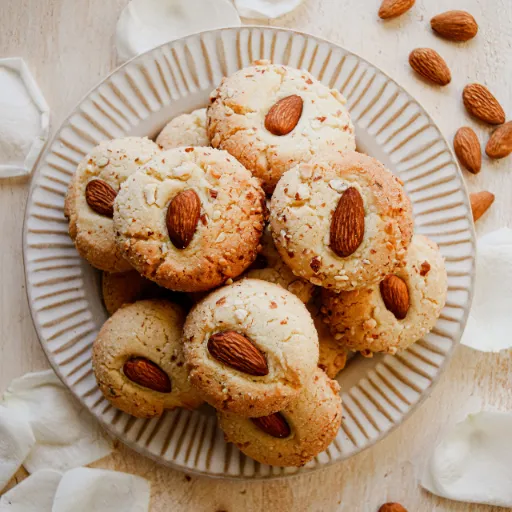
The Technical Foundation of a Professional Almond Biscuit Recipe

Mastering a professional almond biscuit recipe requires a technical focus on lipid migration and protein binding rather than just ingredient ratios. Unlike wheat-based cookies, these biscuits rely on the fine particle size of almond flour and the emulsifying properties of egg whites to create a stable, airy crumb. Achieving the perfect “snap” depends on managing the high fat content of the nuts while controlling oven humidity to ensure even moisture evaporation.
Flourless vs. Flour-Based: Decoding the Structural Matrix
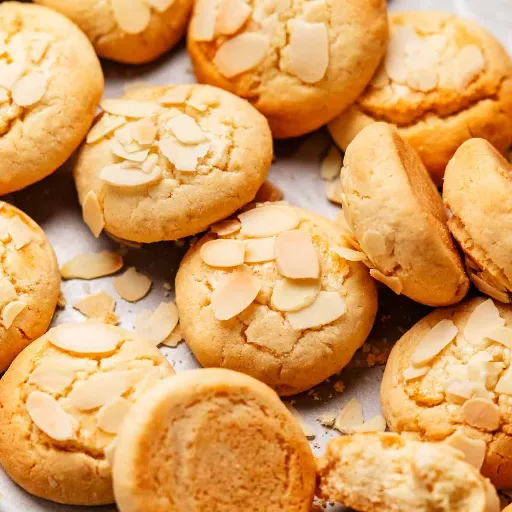
Choosing between a traditional wheat-reinforced dough and a pure nut-base defines the entire mechanical behavior of an almond biscuit recipe. In flour-based versions, gluten provides the skeletal strength, allowing the biscuit to hold its shape during the expansion of gases in the oven. Without that wheat protein, you are relying entirely on the “stiction” of sugars and the coagulation of egg proteins. Industry observation suggests that flourless matrices are significantly more sensitive to lipid interference; even a minor over-mix can cause the fats to separate, leading to a greasy, collapsed disc rather than a structured biscuit.
The Role of Amygdalin and Natural Oils in Dough Elasticity
Almond oil comprises approximately 50% of the nut’s weight, acting as a natural shortening that coats other ingredients. This lubrication is why almond doughs often feel “short” or crumbly. Amygdalin, the compound responsible for the characteristic bitter aroma, subtly influences the sensory perception of density.
A practical example of oil management is the use of blanched vs. unblanched meal. Unblanched meal contains skin tannins which may slightly restrict oil migration, providing a marginally more stable structure. In a realistic scenario, if your dough feels overly elastic or “rubbery,” it likely isn’t the nut oil at work, but rather an over-development of added binders or an excess of moisture that has turned the almond flour into a heavy paste.
Balancing Albumin: Why Egg White Aeration Dictates the Final Crumb
Egg whites are the primary structural substitute for gluten in many nut-based confections. The albumin proteins uncoil during whisking, trapping air bubbles that provide the necessary lift. However, the volume of aeration must be precisely calibrated. If you over-whip to stiff peaks, the air bubbles may expand too rapidly at 170°C, causing the biscuit to shatter upon cooling.
Aiming for a “soft-peak” consistency—roughly 3.5 to 4 minutes of mechanical whisking for a standard batch—tends to produce the most resilient crumb. This level of aeration allows the albumin to wrap around the almond particles, creating a honeycomb internal structure that remains crisp without being hollow.
The Chemistry of Grinding: Meal vs. Flour vs. Paste

The particle size of your almonds isn’t just a matter of mouthfeel; it dictates the hydration capacity of the entire almond biscuit recipe. When you break down a whole nut, you are increasing the surface area available to bond with fats and sugars. Almond meal, typically stone-ground with the skins intact, offers a coarse, heterogeneous texture. This larger particle size (often exceeding 1.2mm) creates a “thirstier” dough that resists spreading because the large fragments act as physical barriers to flow.
Industry observation suggests that switching to a super-fine almond flour—where particles are often reduced to less than 500 microns—fundamentally changes the biscuit’s density. These smaller particles hydrate almost instantly, creating a smoother, more aerodynamic batter. However, there is a technical “danger zone” during the grinding process.
A realistic scenario: you’re processing almonds in a high-speed mill and the blade friction generates heat. Once the temperature of the nut mass climbs, the cellular walls rupture, releasing internal oils. This transforms your dry flour into a heavy, semi-liquid paste. While almond paste is excellent for dense fillings, using it as a base for a biscuit results in a heavy, leaden structure. For a professional snap, you need the discrete particle integrity of flour, not the homogenized emulsion of a paste. A practical example of precision is “pulse-grinding” with frozen nuts; this prevents the lipids from liquefying, ensuring the flour remains a dry, free-flowing structural agent.
4 Critical Variables Affecting Thermal Conductivity During Baking
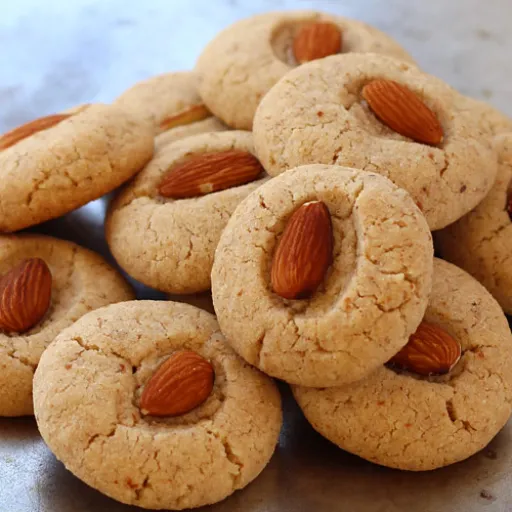
Baking an almond biscuit recipe is less about timing and more about managing how heat moves through a high-fat solid. Almonds possess a different thermal conductivity than wheat flour; their high oil content causes them to absorb and hold latent heat rapidly. This means the transition from dough to set biscuit happens in a narrow window. If your oven floor is too hot, the bottom of the biscuit reaches the “snap” point while the center remains a raw, hydrated paste.
Industry observation highlights that tray material is a silent dealbreaker. A heavy-gauge perforated aluminum sheet, for instance, allows for 360-degree airflow, preventing the dreaded “oil-pooling” that occurs on solid steel pans. You aren’t just heating the dough; you are managing a phase change where moisture must exit before the fats begin to break down the protein structure.
Managing the Maillard Reaction in High-Fat Nut Batches
The Maillard reaction—the chemical dance between amino acids and reducing sugars—is notoriously aggressive in nut-based batters. Because almonds are protein-dense, they brown significantly faster than traditional shortbread.
A practical example of this volatility is the “sugar-burn” threshold. If your recipe uses a high proportion of honey or fructose, the browning process may begin as low as 142°C. Cautious temperature calibration is vital. To achieve a golden hue without a bitter, carbonized aftertaste, many professional bakers drop the temperature by 15 degrees during the final 6 minutes of the cycle. This “drying phase” allows the interior to solidify without over-caramelizing the exterior sugars.
Why Humidity Control Prevents “Spreading” in Almond Composites
“Spreading” is the enemy of a uniform almond biscuit. In a realistic scenario, you pipe a perfect 4cm round, only to pull a flat, amorphous puddle from the oven. This structural collapse often stems from low ambient humidity.
When the oven air is too dry, the surface of the biscuit dehydrates instantly, forming a premature “skin.” This skin traps steam inside. As that steam expands, it has nowhere to go but out, forcing the dough to blow sideways. By introducing a small amount of steam—or simply using a tray of water in the base of the oven—you keep the surface pliable. This allows the biscuit to rise vertically during the first 4 to 7 minutes of baking, resulting in the signature domed profile and a clean, sharp edge.
Precision Mixing
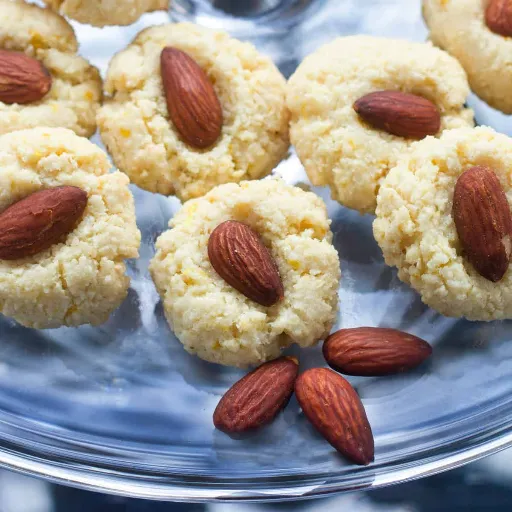
Mixing an almond biscuit recipe is a race against mechanical friction. Unlike wheat dough, where you seek to develop strength, nut-based mixing is about maintaining suspension without triggering oil separation. If your mixer speed exceeds 115 RPM, the shear force tends to rupture the delicate almond cells, turning a light batter into a heavy, oily sludge.
Industry observation suggests that a “folding” action is superior to high-speed beating. A realistic scenario: you notice the batter losing its matte finish and becoming shiny. This is the signal that the lipids have begun to leak. A practical example of control is adding the dry almond flour in three distinct stages, allowing the egg white proteins to fully coat the particles before the next addition. This staggered approach keeps the density at roughly 0.85g/cm³, ensuring the biscuits remain airy and crisp after the final bake.
How Does Particle Size Influence Moisture Retention in the Finished Biscuit?

The shelf life of an almond biscuit recipe is essentially a battle against staling, which in nut-based baking is governed by capillary action. Larger particles, like those found in a coarse meal, create internal “voids” that allow steam to escape rapidly during the bake. This results in a dry, crunchy biscuit. Conversely, ultra-fine flour packs tightly, trapping microscopic pockets of moisture within the protein-sugar matrix.
Industry observation suggests that a variance of just 200 microns in grind size can shift a biscuit from “chewy” to “brittle.” If the particles are too fine, the dough may feel gummy because the moisture has nowhere to go. A realistic scenario involves a batch that remains soft in the center despite an extra five minutes in the oven; this is often the result of an over-milled flour holding onto water too tenaciously.
Calculating the Ideal Surface-to-Volume Ratio for Extruded Shapes
When using an extruder, the geometry of the biscuit dictates its final hydration. A high surface-to-volume ratio—think thin, fluted edges—promotes rapid evaporation and a consistent snap. For a standard 45g biscuit, increasing the surface area by just 12% through decorative ribbing can reduce the internal moisture content by nearly 2% without increasing bake time. This mechanical adjustment is often more effective than simply raising the temperature, which risks scorching the delicate nut oils.
Impact of Almond Skin Tannins on Color Stabilization
Using unblanched almonds introduces tannins into the dough, which act as natural antioxidants. These compounds do more than add a rustic flecked appearance; they help stabilize the pigments during the Maillard reaction. In a practical example, biscuits made with skin-on meal often maintain a deep, ocher hue without fading into a grayish-brown. This tannin-driven stabilization tends to prevent the “oxidized” look that can plague blanched almond biscuits stored in clear packaging.
Evaluating Synthetic vs. Natural Bitter Almond Extracts
The aromatic profile of an almond biscuit often relies on benzaldehyde, the primary component of “bitter almond” flavor. Natural extracts, derived from Prunus amygdalus var. amara, contain complex trace compounds that offer a rounded, floral finish. Synthetic versions, however, are pure benzaldehyde. While cheaper, the synthetic route lacks the “flavor bridge” that connects the sweet sugar notes to the earthy nut base.
Cautious dosing is required for both. Because the flavor is so concentrated—often 35 times stronger than standard vanilla—an extra 2ml can render a 5kg batch inedible. Professional formulators often prefer a “split-base,” using 70% natural extract for depth and 30% synthetic for top-note punch, ensuring the biscuit smells like a bakery rather than a laboratory.
Essential Industrial Equipment for Uniform Heat Distribution

In high-volume confectionery, the oven isn’t just a heat source; it’s a precision instrument for moisture management. An almond biscuit recipe behaves differently under stagnant heat compared to forced convection. Industry observation suggests that static deck ovens often lead to “hot spots” where the high fat content in the nuts can flash-fry the bottom of the biscuit before the center hydrates. To solve this, tunnel ovens with independent top and bottom zone controls are standard. These allow a baker to apply a gentle 155°C to the surface while maintaining a crisp 178°C at the base, ensuring the structural “snap” is uniform across the entire batch.
A realistic scenario: you’re using a standard convection rack and notice the biscuits on the windward side are aerated and dry, while the leeward side remains tacky. This inconsistency usually stems from poor airflow velocity. High-end rotary rack ovens mitigate this by spinning the entire trolley at roughly 2.8 to 3.2 RPM. This constant rotation, paired with a specialized steam injection system, ensures that every single biscuit encounters the same thermal energy. A practical example of this in action is the production of Italian amaretti; without the balanced air movement of a rotary rack, the signature cracked surface would be wildly inconsistent, with some pieces appearing smooth and others shattered.
3 Ways to Enhance Shelf-Stability Without Artificial Preservatives
Extending the life of a professional almond biscuit recipe requires managing lipid oxidation and water activity (aw) through clean-label mechanics. Since nut-rich doughs are prone to rancidity, the first method involves the strategic use of humectants like honey or invert sugar. These sugars bind free water molecules, effectively lowering the aw below the 0.62 threshold where most microbial spoilage begins.
Secondly, industry observation points toward the “thermal seal” technique. By finishing the bake with a flash-heat at 195°C for 90 seconds, you create a microscopic caramelized exterior that acts as a moisture barrier. Finally, substituting a portion of granulated sugar with atomized glucose can prevent the “weeping” effect in humid climates, keeping the biscuit crisp for up to 14 days longer than standard formulations.
Antioxidant Properties of Vitamin E in Nut Oils
Almonds are naturally fortified with alpha-tocopherol, a form of Vitamin E that serves as a built-in defense against spoilage. This fat-soluble antioxidant scavenges free radicals that would otherwise break down the double bonds in almond oil, leading to off-flavors.
A practical example of leveraging this is using “virgin” cold-pressed almond meal, which retains approximately 24mg of Vitamin E per 100g. In a realistic scenario, refined flours often lose this protective layer during processing, causing the biscuits to develop a “cardboard” taste within a week. Cautious storage in opaque, nitrogen-flushed packaging further supports these natural tocopherols, as UV light tends to accelerate their depletion, even in the most stable nut-based composites.
Troubleshooting Centered Cracking and Uneven Rise
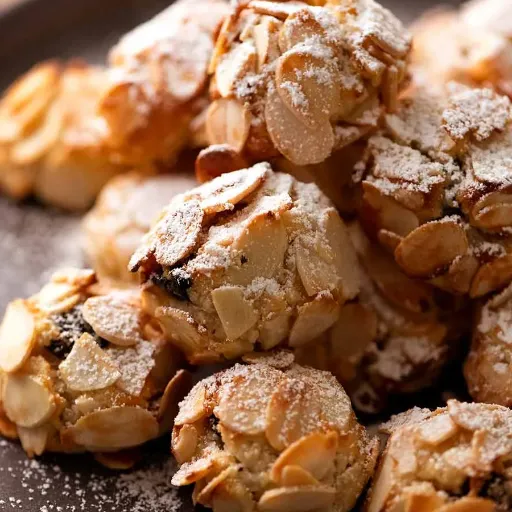
A perfectly executed almond biscuit recipe should exhibit a uniform, fine-pored surface, yet many bakers face the frustration of deep, structural fissures or a “lopsided” expansion. Centered cracking is rarely a mixing error; it is almost exclusively a symptom of thermal shock. When the exterior of the biscuit sets too rapidly—a common issue if the oven temperature spikes above 182°C—the still-hydrated core continues to produce steam. This internal pressure eventually ruptures the crust, creating a volcano-like split that ruins the aesthetic of the confection.
Industry observation suggests that uneven rise is often tied to the “memory” of the dough. If you are using a depositor or an extruder, the direction of the stroke can align the nut fibers and proteins in a specific orientation. A practical example of this is seen in mass-produced almond rounds that consistently lean to the left; this usually indicates a nozzle misalignment or a belt speed that is 5% too fast, causing the dough to “drag” before it hits the baking chamber.
In a realistic scenario, you might notice your biscuits rising perfectly on the edges but remaining sunken in the middle. This “cratering” tends to happen when the leavening agent—likely ammonium bicarbonate—activates prematurely. If the dough temperature exceeds 24°C before it even enters the oven, the gases escape early, leaving the structural matrix without the support it needs to stay aloft. Keeping the workroom at a steady 19°C often solves these buoyancy issues, ensuring the rise is vertical rather than erratic.
FAQ Section
Q: What is the difference between almond meal and almond flour in a biscuit recipe?
The distinction lies in the processing and particle size. Almond flour is typically made from blanched nuts with the skins removed, resulting in a powdery, uniform consistency ideal for delicate, airy biscuits. Almond meal is coarser and often contains the ground skins, which adds a rustic texture and slightly more moisture. If you swap flour for meal, your biscuits will likely be denser and may have a darker, flecked appearance due to the skin tannins.
Q: Why do almond-based biscuits often feel greasy or oily after baking?
This usually happens when the nuts are over-processed or the dough is over-mixed. High-speed mixing can rupture the almond’s cellular walls, forcing natural oils to leak out of the suspension. Once these lipids separate from the protein matrix, they cannot be reabsorbed, leading to a “greasy” mouthfeel. To avoid this, pulse your ingredients and keep the dough temperature below 22°C to ensure the fats remain trapped within the nut particles.
Q: Can I substitute marzipan for almond paste to achieve a denser texture?
It is generally not recommended because marzipan contains significantly more sugar and stabilizers than pure almond paste. In a professional almond biscuit recipe, this extra sugar will drastically lower the melting point of the dough, causing the biscuits to spread excessively and brown too quickly in the oven. If you must use it, you would need to reduce the added sugar in the rest of the recipe by at least 30% to maintain a balanced structural integrity.
Q: What is the ideal oven temperature for preventing the bottom of the biscuit from scorching?
Aim for a range between 155°C and 165°C, especially if using a convection oven. Because almond fats are highly conductive, they absorb heat faster than wheat flour, making the base of the biscuit prone to carbonization. Using a perforated silicone mat or a double-layered baking sheet can create a necessary thermal buffer. This allows the top to develop a golden Maillard reaction without the bottom reaching the burning point before the center is fully baked.
Q: How does the sugar-to-protein ratio affect the “snap” of the almond biscuit?
Sugar acts as a tenderizer by interfering with protein bonding, but it also creates the “snap” once it cools and hardens into a glass-like state. A higher sugar-to-protein ratio results in a crispier, more brittle biscuit. Conversely, increasing the protein—usually via extra egg whites or almond solids—builds a stronger, chewier internal network. Finding the equilibrium is key; too much sugar leads to a hard, tooth-shattering texture, while too little results in a soft, cake-like consistency.
Q: Why is a resting period mandatory before baking high-fat nut doughs?
Resting allows for “cold hydration.” During this time, the dry almond particles absorb moisture from the eggs and extracts, which firms up the dough and prevents spreading. Furthermore, it gives the fats time to re-solidify after the friction of mixing. If you bake immediately, the unstable fats will liquefy the moment they hit the oven heat, causing the biscuits to lose their defined shape and melt into a flat puddle on the tray.