
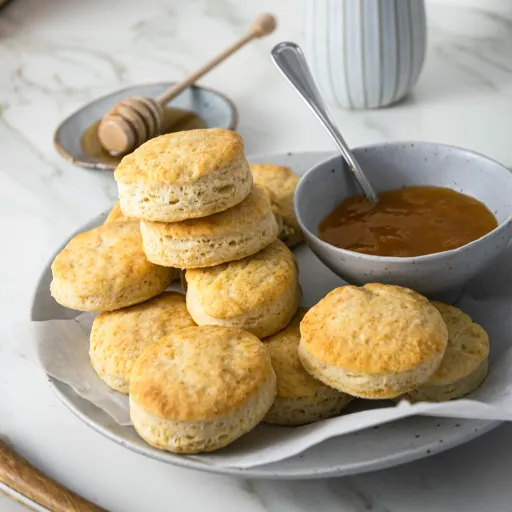
Master the Science of the Biscuit Recipe: No Butter, No Problem

A biscuit recipe with no butter relies on alternative fats to achieve that classic tender crumb and high rise. Whether you are avoiding dairy or simply out of stock, using liquid oils or heavy cream changes the dough’s chemistry, requiring a specific mixing technique to prevent toughness. By understanding how to replace the moisture and structure typically provided by solid fat, you can produce biscuits that are just as flaky and flavorful as the traditional version.
The Role of Fat in Biscuit Architecture
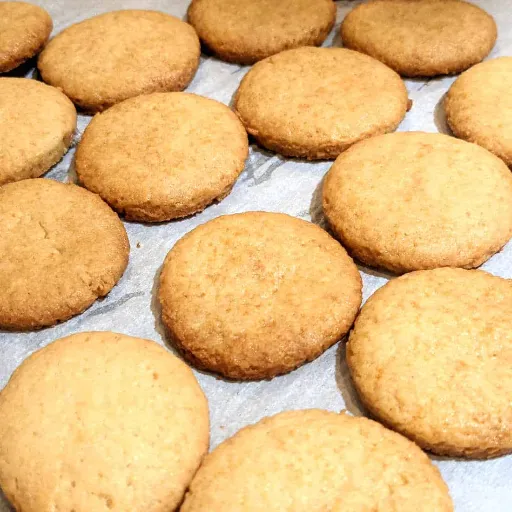
Fat is more than a flavor enhancer; it is the structural lubricant that dictates whether a biscuit is a light, airy masterpiece or a dense puck. In a standard dough, fat coats the flour particles, physically hindering the gluten proteins from bonding too tightly. This “shortening” of the protein strands is what creates a tender crumb. When you remove butter, you are effectively removing the primary barrier against toughness.
Without a solid fat to create physical gaps, the dough often becomes vulnerable to over-hydration. Industry observations suggest that the melting point of your substitute fat—usually around 24°C for many vegetable oils—drastically changes the “lift” in the oven. While butter provides steam as its water content evaporates, a biscuit recipe with no butter must rely almost entirely on chemical leavening and precise aeration to prevent the structure from collapsing into a flat, bready disk. It is a game of managing elasticity versus tenderness.
3 High-Performance Substitutes for Traditional Butter
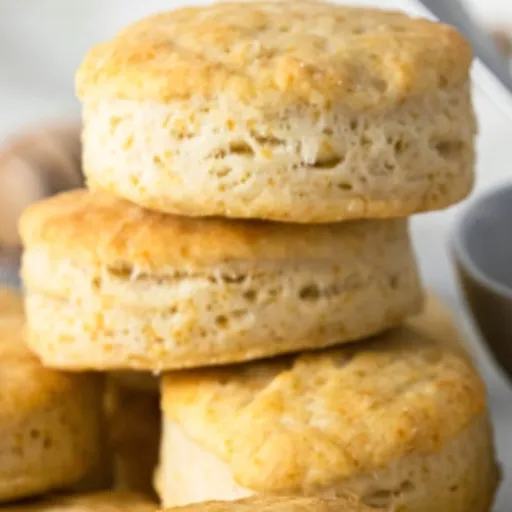
Swapping out butter requires more than a simple volume exchange; it’s a recalibration of fat-to-moisture ratios. Butter is roughly 80% to 82% fat, with the remainder being water and milk solids. When you move toward a biscuit recipe with no butter, your choice of substitute determines whether the dough will be flaky, crumbly, or soft. Modern baking science suggests that liquid and solid alternatives behave differently under the intense 218°C heat of a commercial oven. Selecting the right one depends on whether you value a neutral flavor or a rich, dairy-forward mouthfeel.
Cold-Pressed Vegetable Oils
Liquid oils, such as grapeseed or light olive oil, provide the most convenient path to a dairy-free biscuit. Unlike solid fats, oil coats the flour proteins instantly and thoroughly. This rapid coating is highly effective at preventing gluten development, often resulting in an incredibly tender, melt-in-your-mouth crumb.
However, because oil doesn’t “clump” like cold butter, you won’t get those large, distinct steam pockets. A practical example: replace one cup of butter with roughly 3/4 cup of oil and increase your baking powder by about 10% to compensate for the lost mechanical lift.
Heavy Cream and Full-Fat Yogurt
If your goal is to maintain a rich flavor without reaching for the butter dish, heavy cream is a formidable contender. Cream is essentially an emulsion of butterfat in milk. Industry observations indicate that using a cream with at least 36% fat content provides enough lubrication to keep the biscuit from turning into a dry cracker.
Yogurt, particularly the Greek variety, adds a pleasant tang. It tends to produce a “taller” biscuit because the acidity reacts vigorously with baking soda, creating an aggressive initial rise that offsets the lack of solid fat layers.
Plant-Based Shortening Techniques
Shortening remains the closest functional match to butter in terms of structural performance. Because it has a higher melting point—often staying solid up to 47°C—it survives the mixing process without melting into the flour. This creates the “laminated” effect necessary for flakiness.
In a realistic scenario where you want that classic “peel-apart” texture, freezing your shortening and then grating it into the dry ingredients mimics the butter-cutting technique perfectly. This method ensures the fat stays in discrete chunks until it hits the oven’s heat, where it finally melts and leaves behind airy voids.
Achieving Lift: Why Chemical Leaveners Matter More Without Butter
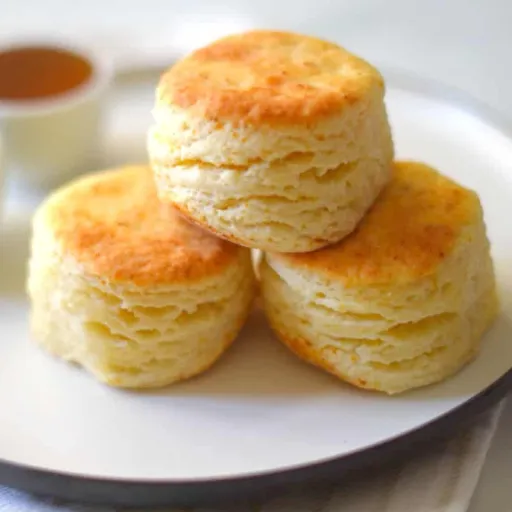
In a traditional biscuit, the “lift” is a mechanical byproduct of cold butter chunks hitting a hot oven. The water in the butter flashes into steam, physically prying the dough layers apart. However, when you use a biscuit recipe with no butter—particularly one utilizing liquid oil—that mechanical expansion is largely absent. The responsibility for vertical growth shifts entirely to your chemical leaveners.
Industry observation suggests that recipes lacking solid fats may require a 15% to 20% increase in baking powder to achieve a comparable height. Without those steam-driven voids, the carbon dioxide bubbles produced by the reaction between moisture and leavening agents must do all the heavy lifting.
Consider a realistic scenario: if your baking powder is even slightly past its prime, a butterless dough will fail to rise, resulting in a dense, flat cracker. To ensure success, many bakers opt for a “double-acting” powder. This provides an initial burst of aeration during mixing and a second, more critical expansion at roughly 60°C. This dual-stage reaction is the only way to prevent the heavier, oil-coated flour particles from settling into a leaden mass before the crust sets.
The Step-by-Step Mixing Protocol for Dairy-Free Textures
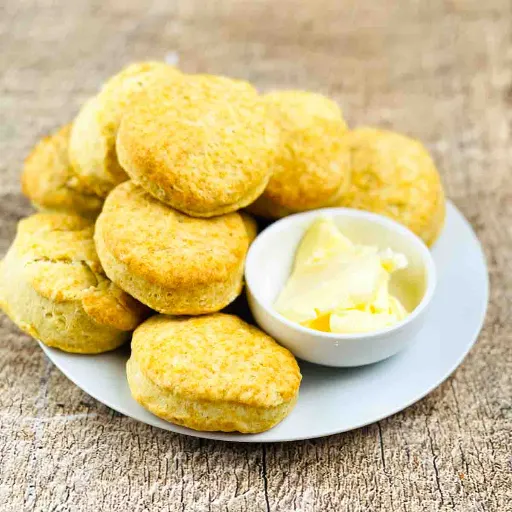
Standard biscuit logic tells you to “cut in” cold fat until it resembles peas. When you move to a biscuit recipe with no butter, specifically when using liquid oils or soft alternatives, that advice becomes obsolete. You aren’t managing solid chunks; you are managing surface tension and protein hydration. The goal shifts from creating fat pockets to precisely controlling how much liquid touches the flour.
A practical example of where things go wrong: adding oil and milk simultaneously to the dry mix. This often creates a localized “sludge” that requires excessive stirring to incorporate, which inevitably leads to a rubbery biscuit. Instead, the sequence of entry for your fats and liquids must be staggered to protect the flour’s delicate starch structure.
The “Reverse Creaming” Method for Oil-Based Dough
In professional bakery settings, using oil often necessitates a technique known as reverse creaming. Instead of whisking your oil into the wet ingredients, you pulse it directly into the flour and leavening agents first. This creates a “sand” where every grain of flour is lightly waterproofed by a thin film of oil.
Industry observation suggests that this fat-first approach limits the flour’s ability to absorb water once the milk or water is added. By keeping the hydration level around 62% to 65% and ensuring the oil is distributed before the liquid arrives, you effectively “shorten” the dough without needing a single pat of butter. The result is a crumb that stays tender even after it cools.
Folding and Laminating for Flaky Layers
You might assume that flakiness is impossible without butter chunks to separate the dough. That is a common misconception. Even with oil-based or cream-based doughs, you can create physical layers through a series of “letter folds.”
Once your dough just barely comes together, pat it into a rough rectangle. Fold it into thirds like a piece of mail, turn it 90 degrees, and repeat this three or four times. In a realistic scenario, this process creates micro-layers of dough stacked on top of each other. Even without the steam from melting butter, these structural layers will puff upward during the initial oven spring, providing that coveted “peel-off” top. Cautious handling is vital here—each fold should be decisive and quick to avoid warming the dough with your hands, which can cause the fat to emulsify too deeply and ruin the lift.
How Does Oven Temperature Affect Biscuits Without Solid Fats?
Heat is the final architect of a biscuit’s structure. When you execute a biscuit recipe with no butter, the oven’s temperature must compensate for the lack of internal steam pressure. Traditional recipes often call for a standard 177°C, but for oil-based or cream-based doughs, this is frequently too low. Industry observation suggests that a higher initial “blast” of heat—typically around 218°C to 232°C—is necessary to set the exterior walls of the biscuit before the chemical leaveners exhaust their CO2 production.
A realistic scenario: if the oven is too cool, the oil-coated flour particles simply slump. Instead of rising, the fats seep out of the dough and pool on the baking sheet, leaving you with a greasy, heavy base and a pale, gummy center.
Conversely, a hot oven triggers an immediate “oven spring.” The air trapped during your folding process expands rapidly, while the high heat caramelizes the proteins in the flour and milk. This creates a crisp, structural shell that locks in the height. To get that iconic golden finish without a butter wash, many bakers rely on this high-heat Maillard reaction, sometimes brushing the tops with a thin layer of heavy cream or even just a splash of salted water to encourage browning.
Common Texture Pitfalls: Why Some Butterless Biscuits Turn Out Like Rocks
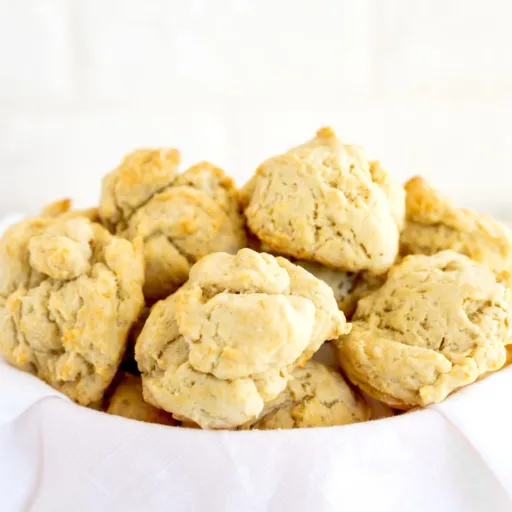
Eliminating butter removes the “forgiveness” factor from your dough. In a traditional recipe, cold fat chunks provide a physical barrier that prevents total saturation of the flour, but in a biscuit recipe with no butter—especially one using oil—the margins for error shrink significantly. A common industry observation is that butterless doughs are prone to “slumping,” where the lack of structural fat causes the biscuit to spread outward rather than upward, resulting in a tough, disk-like consistency.
If your biscuits feel like they could be used as paperweights, the issue is almost always a failure of protein management. When fat is liquid or soft, it doesn’t create the same microscopic “air pockets” that chilled butter provides. Consequently, any mistake in handling or measurement is amplified, leading to a finished product that is structurally sound but biologically inedible.
The Overworking Danger
Gluten is the enemy of a tender biscuit. In a realistic scenario, a baker might keep kneading the dough until it feels “smooth,” but that smoothness is actually a sign of developed gluten strands. Without butter to physically interrupt these bonds, the dough becomes elastic and tough. You should only work the dough until the dry streaks just barely disappear. Every additional fold beyond what is strictly necessary contributes to a harder, more bread-like texture that resists the “snap” of a proper biscuit.
Incorrect Liquid-to-Dry Ratios
Precision is non-negotiable here. A practical example: if your dough is too wet—perhaps exceeding a 68% hydration level—the chemical leaveners will struggle to lift the heavy, saturated mass. Conversely, a dough that is too dry will fail to produce the internal steam needed for expansion. Cautious measurement of liquids is vital because oils do not hydrate flour the same way water-containing butter does. Small deviations, even just 15 to 20 grams of extra milk, can turn a tender crumb into a gummy, rock-hard mess.
FAQ Section
Q: Is it possible to get flaky layers in a biscuit recipe with no butter?
A: Absolutely. While butter provides steam-driven lift, you can replicate flakiness through a process called lamination. By folding your dough into thirds several times—much like a letter—you create physical layers of flour and fat. When these layers hit the high heat of the oven, they expand and separate. Using a solid substitute like frozen shortening or even heavy cream can enhance this effect, but the folding technique itself is the real secret to a peel-apart texture.
Q: Which oil is best for a neutral-tasting biscuit?
A: If you want the flavor of your jam or gravy to shine, stick with highly refined oils. Grapeseed, sunflower, or light vegetable oils are ideal because they lack the aggressive floral or nutty notes found in extra virgin olive oil or coconut oil. These neutral fats ensure the biscuit tastes like toasted flour and buttermilk rather than the oil used to bake it. They also have higher smoke points, which is a practical advantage for high-heat baking.
Q: Can I use applesauce as a 1:1 butter replacement in biscuits?
A: This is a common pitfall. Applesauce adds moisture and sugar but lacks the fat necessary to “shorten” the gluten strands. Replacing butter 1:1 with applesauce will likely result in a rubbery, bread-like texture rather than a tender biscuit. If you are looking to reduce fat, industry observations suggest replacing only half the fat with applesauce and increasing your leavening agent slightly to prevent the dough from becoming too dense and heavy.
Q: Do biscuits without butter go stale faster?
A: Generally, yes. Butter contains milk solids that help retain moisture over time. Biscuits made with liquid oils tend to have a crisper exterior initially but can become dry or “crumbly” within 24 hours. To prevent this, store butterless biscuits in an airtight container once they have cooled completely. A quick 15-second reheat in the microwave or a few minutes in a toaster oven can often restore the soft interior and revive the texture for next-day eating.
Q: Should the oil be chilled before mixing into the flour?
A: Unlike butter, chilling most vegetable oils won’t make them solid, so it doesn’t offer much structural benefit. However, using cold oil can help keep the overall dough temperature down, which is a smart move if you are using a recipe that includes a little dairy or cream. If you are using coconut oil or shortening, however, chilling is mandatory. You want those fats to remain in discrete, solid pieces until they reach the oven to ensure proper aeration and lift.
Q: How do I get a golden-brown top without a butter wash?
A: You can achieve a beautiful mahogany finish by brushing the tops of your dough with heavy cream, whole milk, or even a simple egg wash. The proteins and natural sugars in these liquids trigger the Maillard reaction at high temperatures. For a vegan alternative, a thin coat of almond milk mixed with a tiny pinch of agave nectar works wonders. This creates the necessary surface sugars to caramelize without the need for traditional dairy fats.