
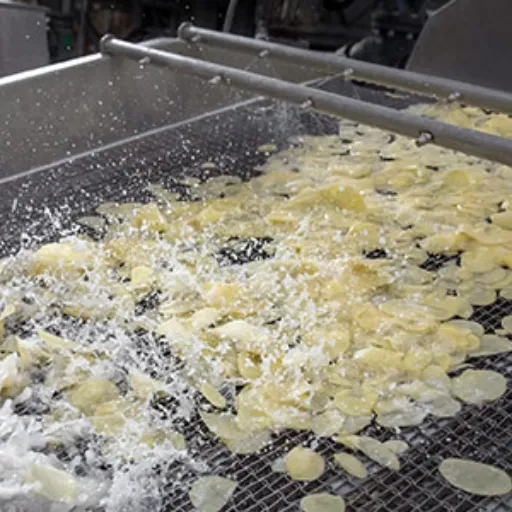
Understanding the Blanching of Potatoes: Chemistry, Methods, and Quality Control

The blanching of potatoes is a critical thermal step that dictates the final texture, color, and shelf life of processed potato products. By briefly exposing raw cuts to controlled hot water or steam, this process immediately deactivates the enzymes responsible for enzymatic browning. Beyond preserving color, blanching gelatinizes surface starches to create a protective seal, limiting oil absorption during frying and ensuring the structural integrity necessary for commercial freezing.
The Core Objective
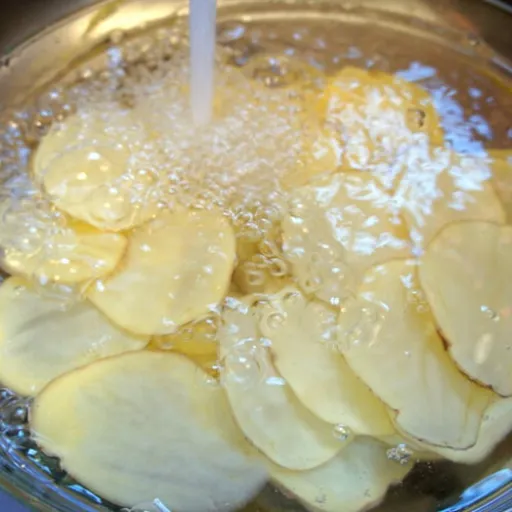
The main goal here isn’t cooking the potato. That happens later in the fryer or the oven. Instead, thermal treatment acts as an abrupt pause button on the raw vegetable’s active biology.
When you slice a Russet, you rupture its cell walls, releasing enzymes that immediately begin reacting with oxygen. Without rapid intervention, this oxidation tends to result in unappealing gray or black discoloration within minutes. The primary objective of blanching is to quickly elevate the internal temperature of those newly cut pieces—usually bringing the water between 165°F and 185°F—just long enough to permanently deactivate those browning enzymes.
It also serves a highly specific structural purpose.
The brief heat exposure gelatinizes the starches on the very outer edge of the cut. This creates a microscopic seal. During a commercial frying run, that thin gelatinized barrier prevents the potato from soaking up excessive oil, ensuring the interior steams to a fluffy texture rather than turning hollow and greasy.
Why Do Raw Potatoes Turn Black Without Proper Thermal Treatment Before Freezing?
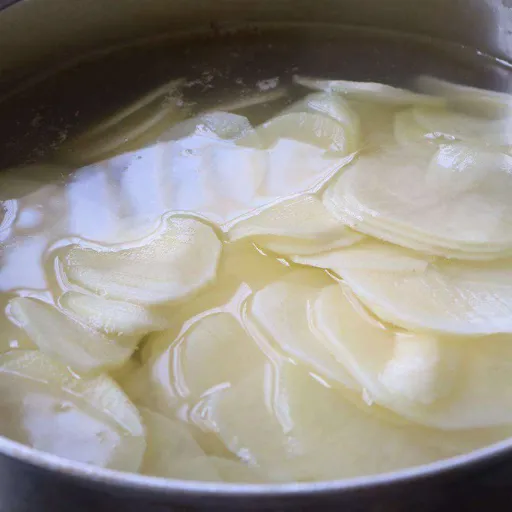
There’s a common misconception that dropping raw, cut potatoes directly into a commercial freezer preserves them perfectly. It doesn’t. While extreme cold halts bacterial growth, it does remarkably little to stop active chemical reactions.
The main culprit here is polyphenol oxidase (PPO), a naturally occurring enzyme inside the tuber. The moment a mechanical slicer tears through the potato’s cell walls, PPO mixes with oxygen and phenolic compounds. This triggers rapid oxidation, producing melanin—the exact same dark pigment that causes bruised apples to turn brown.
Freezing an untreated fry at -10°F simply puts those enzymes into temporary hibernation.
If a processing facility skips the thermal treatment stage, the frozen product might actually look perfectly white leaving the plant. But the moment those untreated wedges hit hot frying oil in a restaurant kitchen, or even slightly thaw during delayed transit, the dormant enzymes rapidly reactivate. The potato flesh oxidizes almost instantly, developing unappetizing grayish-black streaks. In severe cases, the entire fry turns incredibly dark, which tends to result in immediate product rejection from wholesale buyers.
Heat serves as the only permanent kill switch for PPO.
The enzyme will permanently denature and lose its function when subjected to core temperatures exceeding 160°F. Without utilizing the blanching of potatoes to achieve this precise thermal intervention prior to the freezing stage, manufacturers aren’t actually preserving the vegetable. They are merely delaying an inevitable and costly chemical degradation.
4 Essential Steps in the Industrial Potato Blanching Process

Transforming a raw, soil-covered tuber into a perfectly uniform, shelf-stable product requires a tightly controlled thermal sequence. The blanching of potatoes is rarely a single, static action on a commercial line. It is a multi-stage operation where a failure in step one compounds into ruined product by step four. Facility managers often treat this sequence as the operational bottleneck of the entire plant. If the timing or temperature slips here, everything downstream—from the fryer oil degradation rate to the final frozen yield—suffers the direct consequences.
Preparation and Cut Consistency
Thermal transfer in a commercial setting relies entirely on mathematical predictability. If a continuous blancher is calibrated to penetrate a standard 3/8-inch shoestring fry, introducing irregular, jagged, or overly thick wedges throws off the entire thermal equation. The thinner pieces tend to overcook and disintegrate, dumping starch into the water system, while the thicker ones remain raw and enzymatically active at their core.
Before heat is ever applied, slicing equipment must achieve near-perfect uniformity. Facilities typically use hydro-cutting systems that propel whole potatoes through stationary water-jet blade blocks at high velocities. Even microscopic blade wear can cause a rough, feathered surface texture on the cut potato. That microscopic roughage traps excess water and fundamentally alters how the potato absorbs heat in the next stage. Slicing isn’t just prep; it sets the physical baseline for the entire thermal phase.
Submersion and Temperature Regulation
Once cut, the potatoes move into the active thermal zone. In a water-based system, the product travels through a heated bath driven by an internal auger. Processors generally target a very tight temperature window, often hovering right around 172°F to 176°F.
Drop that temperature by just a few degrees, and the browning enzymes survive the trip. Spike it too high, and you stop blanching and start cooking, breaking down the potato’s cell walls prematurely.
Maintaining this consistency across thousands of gallons of water is physically demanding. When three tons of cold, raw potatoes enter a heated flume every hour, they act as an enormous heat sink. The system must instantly inject steam or heated water to offset that sudden thermal drop. Automated sensors work continuously to ensure the water surrounding a potato wedge at minute one is the exact same temperature at minute five. It requires aggressive, real-time energy management to prevent dangerous cold spots from forming inside the drum.
Timing Variables for Different Potato Varieties
No two potato harvests behave exactly the same under heat. A high-starch Russet Burbank requires a completely different residence time inside the blancher compared to a waxy yellow or red potato.
Even within the exact same breed, biological variables fluctuate. Potatoes pulled from long-term storage in late spring will have converted more of their natural starches into sugars than those processed straight out of the field in early autumn. Higher sugar content usually means processors need to extend the blanching time slightly to leach out those excess sugars. This prevents the fries from caramelizing and burning too quickly in the deep fryer later on.
Because of this variance, blanching isn’t a “set it and forget it” operation. Operators frequently run sample batches at the start of a shift. A standard french fry might spend anywhere from 3 to 8 minutes submerged, depending entirely on the specific gravity, sugar content, and seasonal age of that exact truckload of potatoes.
The Critical Shock Cooling Phase
Exiting the hot water isn’t the end of the process. If a 175°F potato piece simply drops onto a conveyor belt, residual heat will continue to cook it from the inside out. The flesh will turn soft, mushy, and impossible to handle through the freezing line.
To arrest this residual cooking, the potatoes must be immediately shock-cooled. They are usually dropped straight into a chilled water flume or blasted with high-velocity cold air.
This rapid temperature drop serves a dual purpose. First, it instantly halts the thermal breakdown of the cellular structure. Second, the sudden chill forces the newly gelatinized surface starches to firm up. This retrogradation process creates a rigid, microscopic shell around the exterior of the fry—a critical structural feature that ensures the fry will hold its shape and maintain a crisp bite after its final trip through the fryer.
Water vs. Steam Systems
Processors generally have to choose between two distinct thermal environments for their lines: a hot water bath or a pressurized steam tunnel.
Immersion blanching is exactly what it sounds like. Sliced potatoes travel continuously through thousands of gallons of heated water. It’s a highly interactive environment that aggressively alters the vegetable’s surface chemistry.
Steam blanching relies entirely on vapor to penetrate the potato. Instead of soaking the product, a conveyor moves the cuts through a sealed chamber where high-temperature steam envelops them. This creates a fundamentally different thermodynamic reaction. The system isn’t washing the potato; it is rapidly steaming the outer cell walls. The choice between these two methods rarely comes down to equipment cost alone, as the decision physically dictates how the potato will behave later in the fryer.
Which method retains more structural integrity and overall yield?
If a plant manager looks purely at total product weight exiting the line, steam systems almost always win.
Water is a highly effective solvent. When you submerge raw potato sticks in a 174.5°F flume for several minutes, that water physically strips away soluble solids. Natural starches, minerals, and water-soluble vitamins simply wash away into the processing water. Depending on the cut size, this leaching can easily result in a 2.5% to 4% loss in total product yield. Steam entirely avoids this aggressive leaching phase. The potato retains its internal solids, keeping the physical cellular structure significantly denser and heavier.
Yet, the bulk of the global french fry industry still heavily relies on water immersion.
That specific leaching effect is often exactly what plant operators need to happen. As whole potatoes sit in climate-controlled storage silos through the late winter and spring, their starches naturally convert into reducing sugars. If you fry a potato wedge with an elevated sugar content, those sugars caramelize instantly, leaving you with a dark, bitter-tasting fry. Water blanching actively washes those excess sugars out of the exposed cellular matrix. So while steam preserves the raw yield beautifully for diced or mashed potato applications, water systems provide the necessary chemical correction required to achieve a consistent, golden-blonde fry.
Managing Enzyme Inactivation and Starch Gelatinization to Achieve the Perfect French Fry Texture
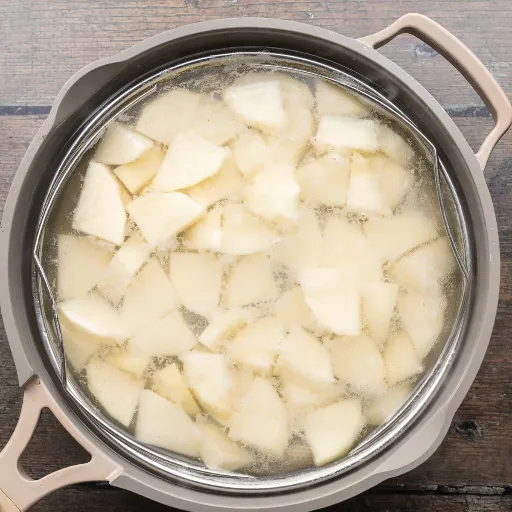
Achieving the ideal french fry—crispy on the outside, fluffy and fully cooked on the inside—is entirely an exercise in thermal engineering. The blanching of potatoes sets the architectural foundation for that texture long before the product ever sees a drop of cooking oil.
Most conventional explanations focus heavily on applying extreme heat to kill off browning enzymes. Yet, industrial processors often leverage a completely different enzyme to actually build internal structure.
There is an enzyme naturally present inside the tuber called pectin methylesterase (PME). Instead of destroying it immediately, plant operators sometimes use a highly calibrated two-stage blanching process to wake it up. If you hold the cut potatoes in warm water—usually around 130°F to 145°F—for just a few minutes, PME actively cross-links the pectin within the plant’s cell walls. This specific biochemical reaction physically firms up the potato tissue. It creates a robust internal scaffolding that prevents the fry from turning to mush when exposed to the violent, boiling environment of a commercial fryer later on.
Once that internal firmness is locked in, the water temperature is pushed higher to trigger surface gelatinization.
As the heat approaches 170°F, the microscopic starch granules packed along the raw, cut surfaces of the potato begin absorbing the surrounding moisture. They swell rapidly and eventually burst, releasing amylose. This creates a sticky, continuous gel network wrapping around the entire exterior of the potato wedge.
That microscopic gel layer is the only thing standing between a premium fry and a greasy disaster.
Consider what happens in a restaurant kitchen when a wire basket hits 350°F oil. If that gelatinized barrier doesn’t exist, the porous raw potato acts like a literal sponge, soaking up massive amounts of heavy frying oil deep into its core. The result tends to be a limp, calorically dense product that goes cold and soggy within minutes. But if the surface starch was properly gelatinized during the blanching phase, that outer seal instantly dehydrates and hardens into a rigid, crispy shell. The oil stays out, while the sudden heat flash-boils the trapped natural moisture, gently steaming the interior into a classic, fluffy texture.
Common Production Bottlenecks
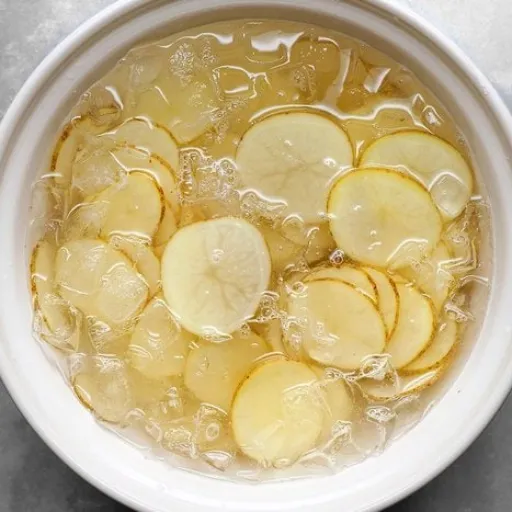
Managing a continuous thermal line is notoriously difficult because raw agriculture is inherently unpredictable. The blanching of potatoes often creates the biggest choke point in a processing facility. Operators are constantly fighting a tug-of-war between time, temperature, and the specific biology of the incoming tubers. If a batch sits in the water slightly too long, or if the chemical makeup of the raw material shifts unexpectedly mid-shift, the entire downstream workflow gets disrupted. Plant managers usually monitor this specific zone aggressively, knowing that small calibration errors here easily compound into massive waste at the packaging stage.
Leaching of Excess Sugars
Extracting reducing sugars from the potato is necessary to prevent premature caramelization in the fryer, but it’s a delicate balancing act that frequently slows down production.
Consider processing potatoes pulled from climate-controlled storage in late April. They often carry a much higher sugar load than freshly harvested fall crops. To prevent dark, bitter-tasting fries, operators have to extend the blanch time to allow the hot water to pull those sugars out of the cellular matrix. But extending that dwell time immediately reduces the total throughput of the line. A facility might drop from processing 15 tons an hour down to 12.5 tons simply because the potatoes need an extra two minutes in the bath. If the water itself isn’t refreshed at the right frequency, the sugar concentration in the flume spikes, the leaching effect stops, and the line has to be halted for emergency recalibration.
Structural Risks of Over-blanching
There is a strict physical limit to how much heat a potato cell wall can endure before it simply gives up. When operators try to force excess sugar leaching by keeping the product submerged for too long, they run right into structural failure. The pectin holding the plant cells together dissolves.
Instead of a firm, distinct wedge, you get a fragile, waterlogged stick.
This creates immediate mechanical nightmares. Over-blanched potatoes tend to break apart and clump together on the drying belts before they even reach the oil. In severe cases, the gelatinized starch sloughs off into the equipment, gumming up the conveyors and forcing a complete mid-shift sanitation shutdown. Even if those fragile pieces manage to survive the trip to the freezer, they shatter easily during automated bagging. The result is a shipment full of broken fragments instead of premium, intact fries, severely cutting into the manufacturer’s profit margin.
FAQ Section
How long should potatoes be blanched before commercial freezing?
The exact duration depends heavily on the cut size and the specific gravity of the potato variety. A standard 3/8-inch french fry typically requires anywhere from 3 to 8 minutes in water heated between 170°F and 180°F. Thicker wedges or whole baby potatoes might need up to 10 minutes or more. Processors constantly adjust these times based on the seasonal sugar content of the crop to ensure enzymes are fully deactivated without turning the flesh to mush.
Does the blanching process actively remove starch from potatoes?
Yes, particularly when using a hot water immersion system. As the cut potatoes travel through the heated bath, the water physically washes away free starches and excess surface sugars released during the slicing phase. Removing this loose starch is actually a major benefit. If left on the exterior, it would cause the fries to clump together on the conveyor belts and burn rapidly once they hit the deep fryer.
What happens to the cellular structure if you skip rapid cooling?
If you don’t immediately shock the potatoes with cold water or high-velocity chilled air after heating, the residual internal heat continues to break down the plant tissue. The pectin holding the cell walls together dissolves completely. This leaves the potato structurally weak and waterlogged. During subsequent freezing or packaging steps, these overly soft pieces will easily shatter, resulting in unacceptable product fragmentation and massive yield loss.
Is calcium addition necessary in the blanching water for firmness?
It isn’t strictly mandatory for every batch, but it is a highly common industry practice, especially when processing older potatoes pulled from long-term storage. Adding a mild calcium chloride solution to the warm water bath helps cross-link the pectin within the potato’s cell walls. This chemical reaction reinforces the cellular structure, ensuring the final fry maintains a rigid, crispy exterior rather than absorbing too much oil and collapsing.
How does blanching affect the final frying time of french fries?
Thermal treatment drastically reduces the amount of time a fry needs to spend in boiling oil. Because the interior flesh is already partially cooked and the surface starches are fully gelatinized, the fryer only needs to drive off the remaining surface moisture to create a crispy shell. A raw potato might take 8 to 10 minutes to fry completely, whereas a pre-blanched, commercially frozen fry usually finishes in under 3 minutes.