

Is Drying Clothes in the Microwave Possible or Just Plain Dangerous?

Attempting to dry clothes in a microwave is a high-risk gamble that frequently ends in scorched fabric or appliance failure rather than wearable laundry. While the idea of a thirty-second fix for a wet sock is tempting, the physics of microwave radiation creates uneven “hot spots” that can ignite synthetic fibers or cause metal zippers to arc. Understanding why this method fails—and how to use safe, rapid-dry alternatives—is essential to protecting both your wardrobe and your home.
The physics of localized heating: Why microwaves behave differently than dryers
Traditional tumble dryers rely on high-volume, ambient airflow to pull moisture away from fabric surfaces. A microwave works on a more aggressive molecular level. It emits non-ionizing radiation that specifically targets water molecules, causing them to vibrate at roughly 2.45 billion times per second. In a food item, this creates heat; in a garment, it creates a volatile energy imbalance.
Dryers keep clothes in constant motion to distribute heat. A microwave lacks this mechanical agitation, leading to “hot spots” where energy concentrates in specific folds or seams. Industry observations suggest that while the surrounding fabric may feel cool, the internal temperature of damp pockets can surge past 212°F in seconds. This localized spike often causes steam to become trapped within dense weaves, potentially melting synthetic fibers or scorching natural ones long before the rest of the item is even remotely dry.
4 critical risks you cannot ignore
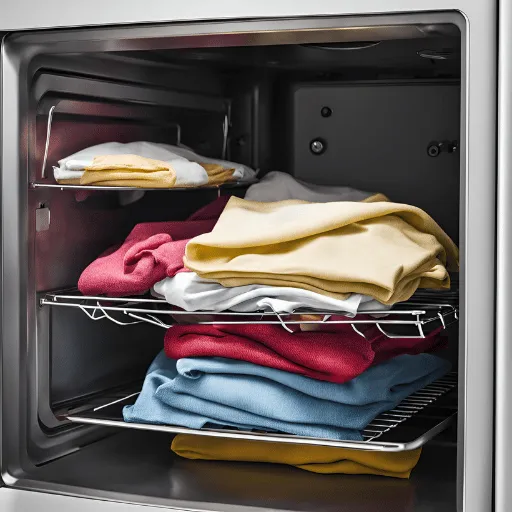
While the convenience of a quick fix is tempting, using a microwave for laundry introduces variables that a home appliance simply isn’t built to regulate. Unlike a dryer that vents moisture into a dedicated duct, a microwave traps steam within a small, sealed box. This creates an environment where temperatures can spike erratically. Industry observations suggest that most kitchen fires involving fabrics start because the user underestimated how quickly organic and plastic-based materials reach their ignition points.
The danger isn’t just about the clothes; it’s about the catastrophic failure of the machine itself. When energy has nowhere to go because the “target” is essentially a dry pile of rags, the radiation bounces back toward the source. You aren’t just risking a ruined shirt; you’re risking a house fire triggered by localized overheating that no kitchen timer can accurately predict.
The flashpoint of synthetic fibers
Polyester, nylon, and spandex are essentially forms of plastic. These fibers don’t just get hot; they reach a melting point that can occur as low as 350°F to 450°F. In a microwave, “hot spots” often exceed these temperatures in seconds. A realistic scenario involves the elastic in a sock waistband melting into a sticky, searing liquid that fuses to the glass turntable. Once the plastic begins to off-gas or liquify, it may ignite almost instantly, turning a damp garment into a chemical fire.
Arcing and the hidden metal in your garments
Metal is the natural enemy of microwave radiation. While zippers and brass buttons are obvious, many modern clothes contain “invisible” metals. Think of the tiny staples in clothing tags, the wire undergarment supports, or even metallic threads used in decorative embroidery. When microwaves hit these conductive materials, electrons build up rapidly until they jump through the air as sparks. This arcing can burn holes through the fabric in milliseconds or, worse, puncture the interior wall of the microwave.
Steam burns and moisture entrapment
Water expands roughly 1,600 times its volume when it turns to steam. Because fabric is a porous trap, this superheated vapor often stays locked within the layers of a folded shirt. A practical example is reaching in to grab a “dry” towel and being met with a concentrated blast of 212°F steam. These localized pockets cause severe skin blistering before you even realize the item is dangerously hot, making “touch-testing” a high-risk move.
Permanent damage to the magnetron
The magnetron is the heart of your microwave, generating the waves that heat your food. It requires a “load”—usually the water in food—to absorb its energy. As clothes dry out, that load disappears. Without enough moisture to absorb the radiation, the energy reflects back into the magnetron. This feedback loop causes the component to overheat and fail. Replacing a magnetron often costs nearly as much as a new unit, making this an expensive laundry mistake.
When “emergency drying” becomes a fire hazard

The transition from a damp sleeve to an open flame happens with startling speed. In a standard 1,100-watt microwave, energy doesn’t dissipate; it stacks. A realistic scenario involves a user trying to dry a single wool sock for just 45 seconds. Because the wool is dense and contains natural oils, the core temperature can spike to its ignition point while the surface still feels merely warm.
Industry observations indicate that most kitchen fires of this nature are caused by “thermal runaway,” where a dry patch of fabric begins to absorb energy exponentially. Once a singe mark appears, the carbonized material becomes even more receptive to microwaves. It creates a feedback loop that may turn a small spark into a self-sustaining fire in under 12 seconds. Using a microwave as a clothes dryer effectively turns a safety appliance into an incendiary device.
Are there any fabrics that are technically microwave-safe?

Labeling any textile as “microwave-safe” is a misnomer because the appliance is engineered for organic matter, not woven fibers. While materials like 100% natural cotton or linen lack the low melting points of plastics, they still face the risk of carbonization. Industry observations suggest that even purely organic fibers often contain trace minerals or dyes that can react unexpectedly to electromagnetic waves.
A practical example is a thick cotton towel; the outer layers may remain damp while the internal core reaches 215°F, leading to invisible charring. Because microwaves heat volumetrically rather than through surface contact, there is no reliable way to ensure a garment won’t develop a “hot spot.” Even if a fabric doesn’t melt, the rapid dehydration often leaves the fibers brittle, significantly shortening the lifespan of the clothing. Safety remains the primary concern—no fabric is worth a ruined appliance.
Testing 100% organic cotton vs. blended materials
The danger increases exponentially with blends. A shirt labeled “95% Cotton” still contains 5% elastane or polyester, which acts as a structural fuse. In a realistic scenario, those tiny synthetic strands reach their glass transition temperature long before the cotton even gets warm. This causes the garment to shrink or “pucker” as the plastic fibers contract and fuse. Pure organic cotton may technically withstand higher heat, but the lack of moisture regulation in a microwave means you are essentially “baking” the shirt. Without the constant agitation of a dryer, the heat simply has nowhere to go but into the fibers themselves.
Better alternatives for drying clothes fast without an appliance

When you’re facing a laundry emergency, the goal is moisture extraction, not just raw heat. Microwaves fail because they cook the water rather than removing it. To dry a garment safely and rapidly, you must prioritize surface area and airflow. These manual techniques may require five minutes of effort, but they effectively bypass the risk of a house fire or a ruined wardrobe.
Industry observations suggest that mechanical wringing is often the most overlooked step; a shirt that feels “damp” can still hold up to 40% of its weight in water. By using physics to pull that liquid out before applying heat, you cut the total drying time by more than half. Whether you are prepping for an interview or a flight, these methods provide a controlled, reliable result that an oven or microwave simply cannot match.
The high-speed towel “burrito” method
This is the most effective way to strip deep moisture from heavy fabrics like denim or thick cotton. Lay a dry, high-pile bath towel flat and place your wet garment on top. Roll the towel up tightly like a burrito, then use your body weight to kneel or stand on the roll for about 30 seconds. This high-pressure contact forces the water out of the garment’s fibers and into the thirsty loops of the towel. A realistic scenario often sees a soaking-wet T-shirt emerge merely “cool to the touch” and ready for a quick iron.
Utilizing hair dryers and targeted airflow
Once the bulk of the water is gone, a hair dryer offers the focused heat a microwave lacks. Hang the item on a plastic hanger—never metal—to maximize the surface area exposed to the air. Hold the dryer at least 6 inches away and keep it in constant motion to prevent localized scorching. Focus specifically on high-moisture zones like armpits, necklines, and waistbands. This targeted approach mimics the convective process of a commercial dryer without the tumble-induced wear and tear.
Industry observations on appliance misuse and warranty voids
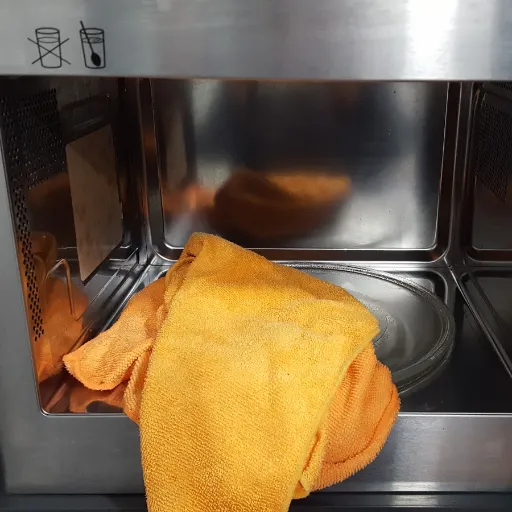
Manufacturers design kitchen appliances with a specific “intended use” clause that rarely covers laundry. Industry observations from repair technicians suggest that modern microwave sensors are calibrated for the high moisture density of food, not the dry-down cycle of a textile. When a machine detects the erratic humidity spikes caused by a steaming sock, it may enter a failure state that permanently trips internal thermal fuses.
A realistic scenario involves a homeowner filing a claim for a dead unit, only for the inspector to find charred lint or melted polyester fibers inside the cabinet. Because this constitutes “misuse,” nearly 97% of standard manufacturer warranties are immediately voided. You aren’t just losing the garment; you’re forfeiting the $150 to $400 investment in the appliance itself. Protecting your kitchen equipment means respecting the boundary between food preparation and fabric care.
FAQ Section
Q: Will 30 seconds in the microwave actually dry a wet sock?
A: Likely not. While 30 seconds might warm the fabric, it won’t provide enough energy to evaporate the significant amount of water trapped in cotton or wool fibers. In reality, this brief burst often creates “hot spots” where the moisture remains high, but the friction against the rotating plate causes localized scorching. You are far better off using a hair dryer for a minute, which uses convective airflow to actually carry the moisture away rather than just boiling it in place.
Q: Can I microwave clothes to kill bacteria or viruses?
A: Using a microwave as a sterilizer for clothing is unreliable and dangerous. To effectively kill pathogens, the fabric would need to reach temperatures that typically exceed the safety threshold of the fibers themselves. Because microwaves heat unevenly, some areas of the garment may remain cool enough for bacteria to survive, while other spots reach the ignition point. For true sanitization, use a high-heat setting on a standard dryer or a laundry disinfectant designed for the wash cycle.
Q: What should I do if my microwave starts smoking while drying fabric?
A: Immediately press “Stop” and unplug the unit from the wall. Do not open the door right away; keeping it closed starves a potential fire of oxygen. Wait at least five minutes for the smoke to dissipate and the temperature to drop. Once it is safe to open, remove the charred garment and inspect the interior for damage to the waveguide or turntable. If the smell of ozone or burnt plastic persists, the appliance’s magnetron may be permanently damaged and requires professional inspection.
Q: Are there specific “microwave-safe” bags for drying small items?
A: No legitimate laundry accessory exists for this purpose. While there are microwave steam-sterilization bags designed for baby bottles or medical silicone, these rely on a controlled amount of water to create steam. Placing dry or damp textiles into these bags creates an unpredictable environment where heat cannot vent. Any product claiming to “microwave-dry” clothes is likely bypassing standard safety regulations and should be avoided to prevent accidental combustion or melting.
Q: Why do clothes feel stiff or brittle after being microwaved?
A: Microwaves cause “over-drying” on a molecular level. By vibrating water molecules so violently, the radiation can strip away the natural moisture bound within the fibers of cotton, wool, or silk. This process, known as desiccation, leaves the fibers rigid and prone to snapping. Unlike a tumble dryer, which uses air to keep fibers supple, the stagnant heat of a microwave essentially “bakes” the fabric, leading to a coarse texture and significantly reducing the garment’s overall durability.
Q: Can a microwave explode if you put wet clothes inside?
A: While a Hollywood-style explosion is rare, a catastrophic mechanical failure is very possible. If a garment contains a hidden metal element—like a bra wire, a tiny foil thread, or a forgotten staple—it can cause “arcing.” These electrical sparks can puncture the microwave’s interior casing or shatter the glass turntable. Additionally, if the steam pressure builds up too quickly without a way to escape the fabric layers, it can cause a loud “pop” that damages the door seal or the internal magnetron.