
Emulsification Explained: The Science of Binding Oil and Water

Emulsification is the physical and chemical process of forcing two naturally repelling liquids—typically oil and water—into a stable, unified mixture. Because these fluids naturally separate to reduce surface tension, creating a lasting suspension requires intense mechanical shear to microscopically break down the droplets. An emulsifying agent is then introduced to coat these droplets and prevent them from coalescing, forming the structural foundation for countless commercial sauces, cosmetics, and dairy products.
The core chemistry
At its most basic level, water and oil naturally repel each other. If you pour olive oil into a beaker of water, the two liquids immediately separate, driven by thermodynamics to minimize their surface contact. Water molecules are polar, meaning they act like tiny magnets that eagerly bind to one another. Oil molecules are completely nonpolar and largely indifferent to water’s magnetic pull.
To force these two opposing substances to coexist inside a creamy salad dressing or a commercial vat of mayonnaise, you have to fundamentally alter their boundary layers. This is exactly where chemical emulsifiers step in. They act as molecular diplomats. By physically bridging the gap between polar and nonpolar liquids, emulsifying agents drastically lower the interfacial tension that naturally pushes them apart, allowing the ingredients to blend into a newly unified structure.
Hydrophilic and lipophilic interactions
The success of any emulsifier relies heavily on its split personality. These molecules are uniquely built with two distinct ends: a hydrophilic (water-loving) head and a lipophilic (oil-loving) tail.
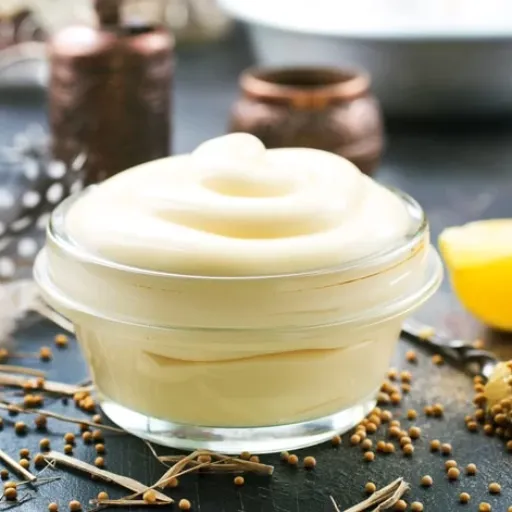
When introduced into an agitated mixture, they immediately migrate to the boundary line where the oil and water meet. The lipophilic tails embed themselves deep into the suspended oil droplets, while the hydrophilic heads face outward, gripping tightly onto the surrounding water. This orientation creates a protective physical barrier around each individual micro-droplet. In a classic scratch-made mayonnaise, the natural lecithin found in egg yolks performs this exact structural role, coating the oil droplets so effectively that they repel one another instead of merging back into a greasy puddle.
Understanding the continuous versus dispersed phase
Every emulsion is physically constructed from two distinct fluid components: the dispersed phase and the continuous phase. The dispersed phase consists of the isolated droplets—like the millions of tiny pockets of oil suspended inside a jar of salad dressing. The continuous phase is the surrounding liquid that encapsulates them.
Flipping this ratio completely changes a product’s physical identity. Butter, for instance, is a classic water-in-oil emulsion. The water droplets act as the dispersed phase, remaining permanently trapped within a dense, continuous matrix of solid milk fat.
The crucial role of kinetic stability
It is a somewhat harsh reality of food science that no emulsion is permanently stable. Thermodynamics dictate that the mixture will eventually fail and separate back into distinct layers. However, a properly formulated emulsion achieves what chemists call kinetic stability. This simply means the inevitable separation process is slowed down so drastically that the product remains mixed for its usable lifespan.
In commercial food processing, securing a reliable 18-to-24-month retail shelf life often requires pushing the internal droplet size down to a mere 0.5 to 2.0 microns. At that microscopic scale, the chaotic thermal movement of the surrounding liquid is actually strong enough to counter the natural pull of gravity, keeping the fat uniformly suspended.
3 physical forces required to force repelling liquids together
You cannot simply stir oil and water into submission. Gentle agitation might temporarily break up an oil slick, but the droplets will merge back together the second the spoon stops moving. Permanently altering the physical structure of these liquids requires intense mechanical energy, typically delivered through a combination of three distinct forces.
The most immediate is shear. Imagine trapping a drop of oil between two fast-moving metal plates. The opposing velocity literally tears the droplet apart. In a commercial setting, this happens when a rapidly spinning rotor forces liquid through the stationary slots of a stator head, shredding the dispersed phase into millions of smaller beads.
Shear alone often isn’t enough for long-term stability. This is where cavitation comes into play. When liquid is forced through a tight space at extreme velocities, the sudden drop in pressure causes microscopic vapor bubbles to form. As these bubbles instantly collapse, they generate violent localized shockwaves. These microscopic implosions shatter the surrounding oil droplets down to a sub-micron scale. Manufacturers tend to rely heavily on this specific force when processing dairy, as it efficiently prevents the lighter milk fat from rising to the top of the jug.
Finally, the system needs massive turbulence. Shattered droplets desperately want to fuse back together. Injecting chaotic, multi-directional flow scrambles the fragments throughout the vat. This violent scattering buys the chemical emulsifiers the crucial milliseconds they need to coat the newly exposed surface areas before the oil can coalesce.
How do industrial manufacturers scale up delicate laboratory emulsions for mass market?
Formulating a perfectly stable vinaigrette or cosmetic lotion in a 500-milliliter lab beaker is relatively straightforward. Scaling that exact chemical ratio up to a 5,000-liter stainless steel mixing tank usually ends in disaster if the mechanical approach doesn’t change.
When you multiply the volume, you drastically alter the fluid dynamics. The simple vortex generated by a standard stirring blade cannot push enough kinetic energy out to the edges of a massive commercial tank. The oil at the center might emulsify, while the liquid near the cold steel walls remains completely stagnant.
To bridge this gap, industrial food processors abandon standard mixing impellers entirely. Instead, they rely on specialized equipment designed to manipulate the fluid at a microscopic level, forcing the entire batch through intense mechanical choke points. This approach guarantees that every single drop of the continuous and dispersed phases experiences the exact same level of violent physical stress. It is the only way to ensure the 10,000th bottle poured from the assembly line possesses the identical viscosity and shelf stability as the very first.
The physics of high-shear rotor-stator mixing
A rotor-stator mixer looks somewhat like a metal cage submerged in the liquid. Inside this stationary cage (the stator) sits a spinning blade (the rotor) that often runs at brutal speeds, easily exceeding 3,000 to 10,000 RPM depending on the scale.
As the rotor spins, it creates a powerful vacuum that pulls the raw oil and water upward into the center of the mixing head. The liquid is then violently expelled outward through the narrow slots of the stator. The physical gap between the spinning blade and the stationary cage is incredibly tight—sometimes just a fraction of a millimeter. When the fluid is forced through this microscopic clearance at high velocity, the resulting mechanical shear literally rips the oil droplets apart. This specific technology tends to be the preferred choice for heavy, viscous products like commercial mayonnaise, where the sheer density of the product makes traditional stirring impossible.
High-pressure homogenization in dairy production
Raw milk naturally separates, with the lighter milk fat slowly floating to the surface to form a thick layer of cream. To permanently halt this separation, commercial dairies rely on high-pressure homogenizers rather than rotational mixers.
These massive machines use heavy-duty piston pumps to force the raw milk through a tiny, spring-loaded valve at extreme pressures—often hovering right around 2,500 to 3,000 psi. As the liquid squeezes through this impossibly tight gap, the sudden, massive drop in pressure triggers intense cavitation. The fat globules are instantly shattered into fragments a fraction of their original size. Because these newly pulverized fat particles lack the necessary buoyancy to rise through the surrounding water, the milk remains permanently smooth and unified inside the jug.
Common destabilization failures
No matter how perfectly a commercial sauce is blended, thermodynamics eventually wins. Emulsions are inherently unstable constructs. The exact second they leave the high-shear mixer, they begin a slow, invisible march back toward separation.
Often, this breakdown is aggressively accelerated by environmental stress during shipping and storage. Imagine a pallet of premium salad dressing left sitting on a loading dock in 92°F heat. The elevated temperature thins out the continuous water phase, drastically dropping the overall viscosity of the liquid. As that surrounding fluid becomes less dense, the suspended oil droplets suddenly gain the freedom to move, bounce, and collide with one another. You might not see a thick oil slick form at the top of the bottle right away, but the microscopic architecture inside the dressing is already failing.
If the initial emulsifier ratio was even slightly miscalculated during production, those moving droplets will eventually find a weak spot in their chemical armor.
Identifying flocculation and coalescence
When those vulnerable oil droplets inevitably collide, the breakdown usually follows a specific sequence. The first stage tends to be flocculation. The droplets stick together in tight clumps—much like a cluster of grapes—but they actually retain their individual protective boundaries. Because the droplets haven’t merged yet, vigorous shaking can sometimes temporarily rescue a product trapped in this phase.
If the environmental stress continues, flocculation triggers coalescence. The fragile boundary walls rupture entirely, causing the clustered micro-droplets to permanently fuse into larger masses of oil. Once this happens, the damage is completely irreversible. The fat rapidly rises to the surface, breaking the emulsion and ruining the product’s texture entirely.
Measuring long-term shelf life
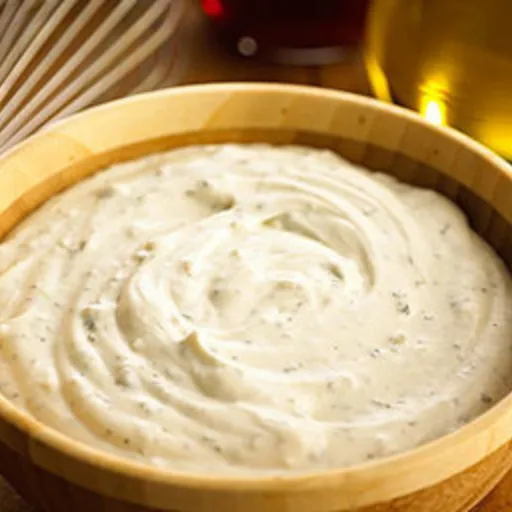
Commercial food manufacturers cannot simply leave a new salad dressing on a desk for 18 months to see if the oil separates. That wait time is commercially impossible. Instead, food scientists rely on accelerated stress testing to aggressively simulate the future.
By loading formulation samples into a laboratory centrifuge spinning at 4,500 RPM, technicians can often replicate a year’s worth of natural gravitational pull in a single afternoon. If the microscopic droplets resist coalescing under that intense artificial gravity, the chemical bonds are likely sound.
Thermal cycling provides another crucial metric. A batch might bounce repeatedly between 35°F and 115°F to mimic the harsh realities of cross-country freight transit. If an emulsion survives two weeks of this sheer temperature whiplash without breaking, it tends to be ready for the grocery aisle.
FAQ Section
Q: What is the difference between an oil-in-water and water-in-oil emulsion?
A: In an oil-in-water emulsion like milk or mayonnaise, tiny droplets of oil are dispersed throughout a larger volume of water. This makes the final product feel lighter and wash away easily. Conversely, a water-in-oil emulsion features water droplets trapped within a continuous matrix of fat. Butter and heavy skin creams are classic examples of this reversed structure, giving them a much denser, greasier texture that actively repels external moisture.
Q: Why is mustard powder often used as a natural emulsifier in vinaigrettes?
A: Mustard seed contains a complex carbohydrate called mucilage, alongside naturally occurring proteins, which naturally coat oil droplets when whisked into vinegar. Instead of relying on heavy chemical binders, adding just a pinch of dried mustard powder provides enough molecular friction to keep the oil and vinegar from instantly separating. It acts as a temporary mechanical barrier, holding your dressing together long enough to serve while adding a sharp flavor kick.
Q: How does mechanical homogenization prevent raw milk from separating?
A: Left alone, lighter milk fat naturally floats to the surface to form a cream layer. To prevent this, dairies pump raw milk through microscopic valves under extreme pressure. This violent process shatters the large fat globules into microscopic fragments. Because these pulverized particles are incredibly small, they lose their natural buoyancy and remain permanently suspended within the liquid.
Q: Can you chemically or physically fix a broken emulsion once it has separated?
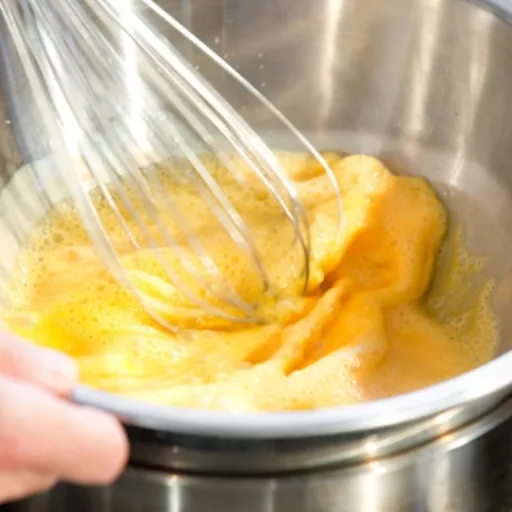
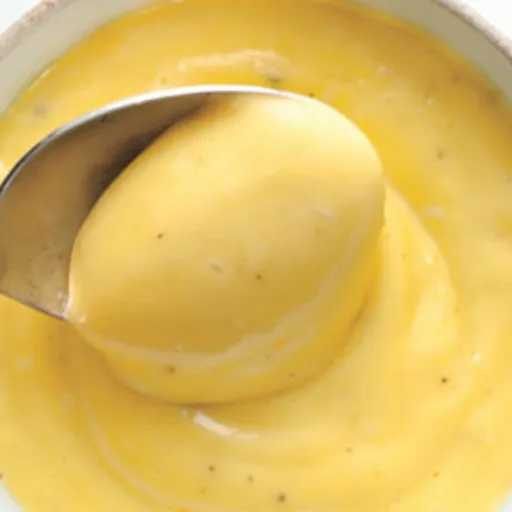
A: Yes, but you cannot simply stir the separated ingredients back together. You essentially have to start the physical process over. For a broken sauce like mayonnaise or hollandaise, the most reliable rescue method involves vigorously whisking the oily, broken mixture drop-by-drop into a fresh base—like a newly beaten egg yolk or a splash of warm water. This provides a fresh continuous phase to effectively re-suspend the fat droplets.
Q: What role does ambient temperature play when formulating commercial mayonnaise?
A: Temperature dictates the viscosity of the raw ingredients, which directly impacts long-term stability. If the manufacturing environment is too warm, the oil becomes incredibly thin and fluid, making it much harder for the egg yolks to grip and trap the droplets. Most commercial facilities maintain strict, cooler temperature controls during the high-shear mixing phase to ensure the continuous phase remains thick enough to physically lock the fat into place.
Q: Are synthetic emulsifiers like polysorbates safe for everyday consumption?
A: Yes, food-grade synthetic emulsifiers undergo rigorous safety testing by global health organizations, including the FDA, before they are approved for mass market use. Ingredients like polysorbates are utilized in incredibly tiny, strictly regulated concentrations—often making up less than half a percent of a total recipe. While many modern consumers lean toward natural alternatives like sunflower lecithin for a cleaner ingredient label, these synthetic versions are perfectly safe to consume at their legally approved dietary levels.