

The Technical Reality: Understanding How to Make Cocoa Butter With Cocoa Powder

Extracting cocoa butter from cocoa powder is technically a process of lipid recovery, as most fat has already been removed during industrial pressing. While you cannot simply “squeeze” the powder to produce butter, you can isolate the remaining 10% to 22% of fat using heat-assisted suspension or food-grade solvent extraction. Understanding the concentration of residual solids is essential to determining whether home-scale extraction is yield-efficient or purely a chemical experiment.
Is it actually possible to extract fat from processed powder?
The short answer is yes, but it is a process of diminishing returns. To understand how to make cocoa butter with cocoa powder, you first have to acknowledge that you are working with a byproduct. In industrial chocolate production, hydraulic presses exert up to 540 bars of pressure to strip the fat away from the bean, leaving behind the “press cake” that eventually becomes your powder.
Most commercial powders are not entirely fat-free; they typically retain between 10.2% and 12.4% residual cocoa butter. Because this fat is trapped within the fibrous structure of the pulverized solids, it won’t just leak out with heat. You are essentially attempting a “reverse engineering” of a highly efficient industrial separation.
In a realistic scenario, a home cook trying to boil a slurry of powder and water to skim off the fat will likely be disappointed. The lipids often form an emulsion with the fine particles rather than separating into a clean layer. Success usually requires a chemical or mechanical intervention—such as using a food-grade solvent or a high-speed centrifuge—to force those last remaining fat molecules to let go of the cocoa fiber. It is technically possible, but the yield is notoriously low compared to the volume of powder consumed.
The Compositional Hurdle: Why Cocoa Powder is “Defatted”
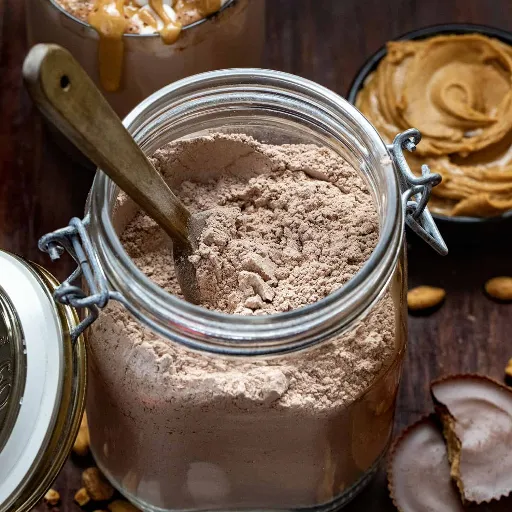
Understanding how to make cocoa butter with cocoa powder requires a shift in perspective. You aren’t “making” a fat so much as you are attempting to salvage what the factory left behind. In the primary chocolate supply chain, cocoa powder is not the starting point; it is the dry remains.
Industry observation shows that cocoa mass is essentially a suspension of solids in a sea of fat. When that mass enters a commercial press, the goal is to squeeze out as much liquid gold as possible. The powder that eventually reaches your kitchen has been intentionally stripped of its structural lipids to make it shelf-stable and easy to dissolve in liquids. Attempting to reverse this process means fighting against the very efficiency of industrial engineering.
Industrial Pressing vs. Home Extraction
A professional hydraulic press uses sheer force—often exceeding 5,400 psi—to separate lipids from fiber. At home, you lack the mechanical leverage to replicate this physical displacement. A realistic scenario involves a hobbyist trying to use heat or manual pressure to wring out the butter, only to find the powder absorbs any moisture present and turns into a stubborn paste. Without the high-temperature friction and massive tonnage of a factory setting, the bond between the microscopic cocoa particles and the remaining fat molecules remains largely unbroken.
Residual Fat Percentages in Common Powders
Not all powders are created equal. If you examine a standard tin of “Dutch-processed” cocoa, the fat content may hover around 11.4%. Premium “high-fat” powders, often used in professional pastry work, might reach 21% or 23.5% fat.
This discrepancy is vital. If you start with a low-fat powder, your potential yield is so negligible that the effort of extraction often outweighs the value of the recovered butter. You are essentially mining for a resource that has already been 90% depleted.
3 Challenges When Reversing the Chocolate Manufacturing Process
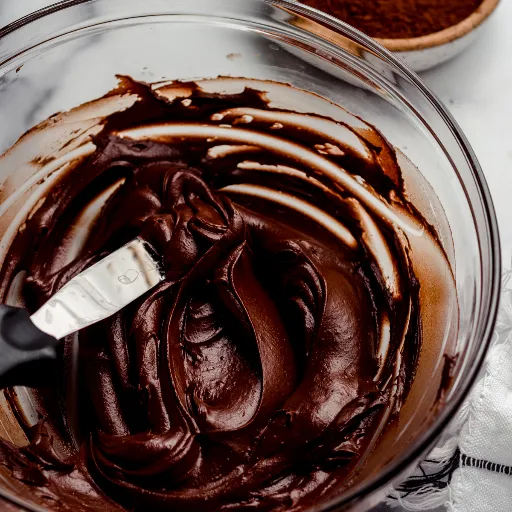
Attempting to recover lipids from a substance that has already been optimized for dryness is, fundamentally, an uphill battle against industrial physics. In a standard factory flow, the separation of butter and solids is a one-way street. When you try to figure out how to make cocoa butter with cocoa powder, you are essentially trying to “un-ring” a bell that was struck by a 50-ton hydraulic press.
The first hurdle is the microscopic surface area. Because cocoa powder is pulverized into particles often measuring between 15 and 25 microns, the remaining fat is bound to the fiber with incredible tenacity. A practical example of this is the “paste” problem; as soon as you introduce a medium to help extract the fat, the powder absorbs it, creating a thick sludge that refuses to release its grip on the lipids.
Then comes the issue of thermal degradation. To get the fat moving, you need heat. However, industry observation suggests that sustained temperatures above 60°C may begin to alter the delicate polymorphic structure of the cocoa butter. If you overheat the powder during extraction, you risk damaging the very fat you’re trying to save, leading to a finished product that feels tacky or fails to snap at room temperature.
Finally, there is the yield-to-effort ratio. In a realistic scenario, you might start with 500 grams of high-quality powder only to recover a measly 48 grams of usable butter. When you factor in the energy costs and the time spent filtering fine particulates, the “reverse” process often feels less like manufacturing and more like a labor-intensive salvage mission.
The Solvent-Based Method: A Step-by-Step Technical Extraction Approach
When mechanical pressing is no longer an option, industrial lipid recovery often pivots toward solvent extraction. This isn’t about “squeezing” the powder; it’s about using a chemical carrier to dissolve the cocoa butter out of the fibrous cocoa matrix. At a small scale, this requires a rigorous understanding of vapor pressure and solubility. You are essentially creating a concentrated “miscella”—a mixture of solvent and oil—that must then be separated to leave behind the pure fat.
Industry observation suggests that temperature control during this phase is critical. If the mixture exceeds 45°C during the initial soaking, you may inadvertently extract bitter alkaloids along with the lipids, tainting the final butter. It is a slow, methodical process that prioritizes chemical affinity over physical force.
Selecting the Correct Food-Grade Solvent
For anyone looking into how to make cocoa butter with cocoa powder, the solvent choice is the most significant safety hurdle. While industrial plants might use hexane, food-grade high-proof ethanol (at least 95% or 190 proof) is the standard for smaller, specialized extractions. Ethanol is polar enough to pull the fats but requires the powder to be bone-dry. A practical example of failure here is using standard 70% rubbing alcohol; the water content in lower-grade alcohols will turn your cocoa powder into an unworkable sludge, trapping the butter forever.
The Filtration and Evaporation Cycle
Once the ethanol has saturated with cocoa lipids, you must separate the liquid from the spent powder. A realistic scenario involves using a vacuum-assisted Buchner funnel with a 5-micron filter paper. Standard coffee filters are usually too porous, allowing fine cocoa dust to migrate into your butter. After filtration, the solvent must be evaporated. This is best done in a wide, shallow vessel under a steady stream of air or in a rotovap. Since ethanol evaporates at roughly 78°C, keeping the solution in a warm water bath accelerates the process without scorching the delicate fats.
Purifying the Resulting Lipid
The substance left behind after evaporation is often dark and carries a heavy scent of roasted cocoa. To reach that pale yellow, brittle state typical of commercial cocoa butter, a final “washing” or winterization may be necessary. By chilling the extract to exactly 4°C, you can force the pure saturated fats to solidify while keeping any remaining impurities in a liquid state for easy removal. This final refinement ensures the butter has the characteristic “snap” and melting point (34.1°C) required for high-end confectionery or cosmetic applications.
Why many DIY cocoa butter extractions fail to solidify

The most common frustration in learning how to make cocoa butter with cocoa powder is ending up with a jar of brown sludge that stays liquid at room temperature. This isn’t usually a failure of the baker, but a failure of chemistry. Pure cocoa butter is prized for its polymorphism—the ability to form stable, crystalline structures that snap when broken.
In a realistic scenario, a home extraction often inadvertently pulls out more than just the triglycerides. If you use a heat-heavy method, you likely extracted a high concentration of cocoa solids and unsaponifiable matter. These “impurities” act as a mechanical interference, physically blocking the fat molecules from interlocking into a solid grid.
Industry observation suggests that even a 1.8% contamination of moisture or non-fat solids can permanently lower the melting point of the lipid. Furthermore, the triglycerides in cocoa powder have often already been “heat-stressed” during the original industrial roasting and pressing. By the time you attempt a second extraction, the fat may have lost the enzymatic integrity required to temper correctly. Without a secondary purification step to remove the microscopic fiber and starch, the resulting “butter” tends to remain a soft, oily paste rather than a brittle block.
Practical Equipment Requirements for Small-Scale Lipid Recovery
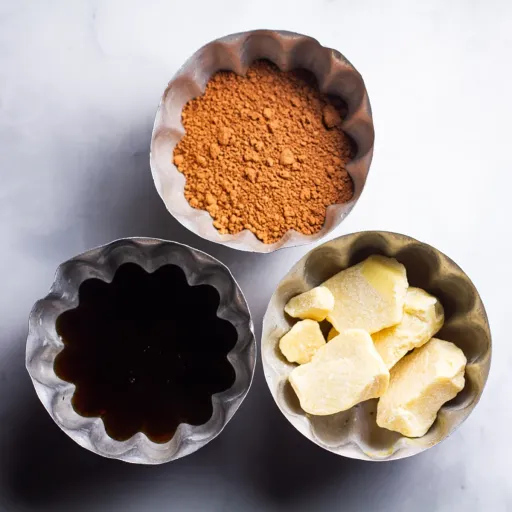
To move beyond kitchen-scale experiments and into viable lipid recovery, the equipment must shift from culinary tools to laboratory-grade hardware. Standard filtration methods, like using a fine-mesh sieve or cheesecloth, are almost universally ineffective here. Because cocoa powder is milled to a staggering degree of fineness—often between 18 and 22 microns—the particles are small enough to pass through most household filters, leaving your extracted butter gritty and dark.
Industry observation suggests that a vacuum-assisted filtration system is the baseline for success. You need a setup that can pull liquid through a dense filter bed without the powder “blinding” the pores. This usually involves a Buchner funnel and a vacuum pump capable of sustaining consistent pressure. Without this mechanical advantage, the thick cocoa slurry tends to simply sit stagnant, trapping the lipids within the damp solids.
Temperature-Controlled Centrifuges
If you want to achieve professional results, a centrifuge is the most decisive tool in your arsenal. This machine uses centrifugal force to separate substances based on density, effectively forcing the heavy cocoa solids to the bottom of a vial while the lighter cocoa butter floats to the top.
A realistic scenario: you’ve heated your solvent-cocoa mixture to 42°C to liquefy the fats, but the suspension won’t settle. A centrifuge spinning at 3,450 RPM can achieve in five minutes what gravity might fail to do in forty-eight hours. Using a temperature-controlled model is vital; if the drum cools down during the spin, the cocoa butter may begin to crystallize prematurely, trapping particulates in the fat and ruining the purity of the extraction.
Refining and Deodorizing Your Homemade Cocoa Fat
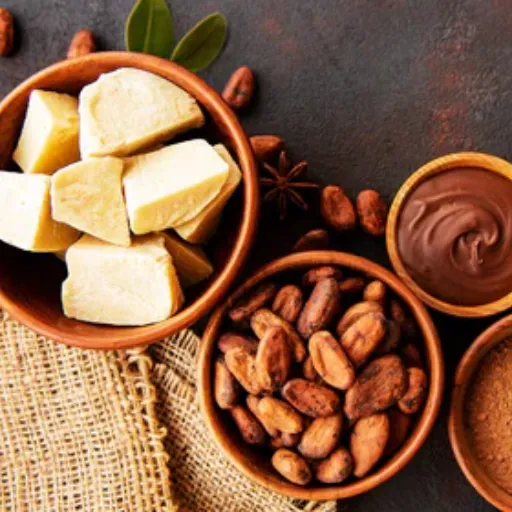
Freshly extracted lipid from a “how to make cocoa butter with cocoa powder” project rarely looks like the ivory-colored wafers sold in shops. It often emerges as a murky, dark amber liquid with an overwhelming, almost burnt chocolate aroma. This is because your solvent or heat method likely pulled out volatile aromatic compounds along with the fat. To make this usable for skin care or delicate confectionery, you must strip away these impurities.
Industry observation suggests that steam deodorization is the most effective path. By bubbling steam through the fat under a slight vacuum at temperatures near 104°C, you can lift away the strongest scent molecules. In a realistic scenario at a smaller scale, some makers use “bentonite clay” or activated charcoal as a filtering agent. A practical example involves stirring 2.4% by weight of food-grade clay into the melted fat, letting it bind to the pigments, and then performing a final, painstaking filtration. This results in a neutralized, stable fat that won’t overpower the other ingredients in your formulation.
FAQ Section
Q: Can I use a simple cheesecloth to squeeze cocoa butter out of powder?
Unfortunately, no. Because cocoa powder is processed into microscopic particles, a cheesecloth is far too porous to provide the necessary resistance. If you attempt to squeeze the powder, the solids will simply pass through the mesh along with any liquid. Industrial extraction requires tons of hydraulic pressure or chemical solvents to break the bond between the fat and the fiber; manual squeezing through fabric generally results in a messy paste rather than clear butter.
Q: Why is my homemade cocoa butter dark instead of pale yellow?
Dark coloration is usually a sign of suspended cocoa solids or overheating. When extracting at home, it is incredibly difficult to filter out 100% of the fine cocoa dust, which tints the fat brown. Additionally, if the temperature exceeded 60°C during your process, you may have scorched the residual sugars and proteins. Commercial cocoa butter is often “deodorized” and clay-filtered to achieve that signature ivory hue and neutral scent, a step often skipped in DIY setups.
Q: Is it cheaper to make cocoa butter from powder than to buy it?
Almost never. When you consider that cocoa powder only contains about 10% to 12% residual fat, you would need to process nearly a kilogram of powder just to yield 100 grams of butter. When you factor in the cost of high-quality powder, the electricity for heating, and the price of filtration materials or solvents, the “cost per ounce” significantly exceeds the market price of pre-made, food-grade cocoa butter. It is best viewed as a technical experiment rather than a cost-saving measure.
Q: What is the difference between cold-pressed and heat-extracted cocoa butter?
Cold-pressing involves mechanical force at temperatures below 49°C, which preserves the natural antioxidants and a “raw” chocolate aroma. Heat extraction, or solvent-assisted recovery, uses higher temperatures to increase the yield of the fats. While heat makes the process faster and more efficient, it can sometimes degrade the polymorphic stability of the butter, making it harder to temper. Cold-pressed versions are typically preferred for high-end skincare and raw artisanal chocolates due to their superior nutrient profile.
Q: Can I use regular vegetable oil to help pull the fat out of the powder?
While adding a carrier oil like sunflower or grapeseed oil will help “wash” the fat out of the powder, the result will not be pure cocoa butter. You will end up with a diluted infusion that remains liquid or semi-solid at room temperature. Because you cannot easily separate the vegetable oil back out of the cocoa lipids once they are mixed, this method is only useful if you are making a chocolate-scented body oil or a flavored cooking base.
Q: How do I store homemade cocoa butter to prevent it from going rancid?
Stability depends on purity. Because homemade extractions often contain trace amounts of moisture or cocoa solids, they are more prone to oxidation than commercial versions. Store your butter in an airtight, opaque glass jar in a cool, dark place—ideally around 18°C. If you notice any “off” or sour smells, it has likely gone rancid. For long-term preservation, keeping it in the refrigerator can extend its shelf life, provided the container is moisture-proof to prevent condensation.