
The Science and Craft of Jam Making: From Pectin Activation to Preservation
Jam making is a thermal concentration process that transforms fresh fruit into a shelf-stable pectin gel. Success depends on the precise activation of fruit polymers through a balanced ratio of acid and sugar. From initial maceration to high-heat boiling and final jar sterilization, each phase is designed to remove moisture while locking in vibrant color and flavor. Mastering these technical checkpoints—specifically the “setting point”—is vital for achieving a consistent texture and commercial-grade stability.
What defines the “Setting Point” in fruit preservation?

In professional jam making, the setting point is the precise moment when a boiling liquid mixture transforms into a stable, semi-solid gel. It is a high-stakes balancing act of thermodynamics and chemistry. While home cooks might rely on the “wrinkle test” on a cold plate, industrial production demands far more measurable metrics. Usually, this physical transition occurs when the mixture reaches a temperature of approximately 104.4°C, but temperature alone can be deceptive.
Industry observation suggests that high-output facilities prioritize soluble solids content over heat. Reaching a Brix level between 65% and 68% is the true finish line. If the process stops too early, the result is a runny syrup; linger too long, and the pectin chains may break down, creating a rubbery, over-concentrated texture. It is a narrow window that determines whether a batch becomes a premium preserve or a manufacturing loss.
The Role of Acid and Sugar in Pectin Gelation
Pectin gelation is essentially a forced chemical marriage. Naturally, pectin molecules carry a negative charge, causing them to repel one another like identical magnetic poles. Acid is the mediator here. By lowering the pH—typically to a range between 3.0 and 3.3—the acid neutralizes these charges, allowing the pectin fibers to finally move close enough to bond.
A practical example is working with low-acid fruits like ripe strawberries or peaches. Without an additive like citric juice to adjust the acidity, the jam tends to stay liquid regardless of the boil time. Sugar completes the process by acting as a dehydrating agent. It attracts water molecules, “starving” the pectin of moisture and forcing the fibers to knit together into a mesh that traps the fruit and juice.
Ingredient Selection
Quality in jam making begins with a ruthless audit of the fruit bin. It is a common industry observation that the most flavorful, over-ripe berries are often the worst candidates for a structural set; they simply lack the necessary protopectin. Savvy producers often blend 75% ripe fruit for aroma with 25% slightly under-ripe fruit to harvest natural gelling power.
Sugar isn’t just a sweetener; it’s a preservative and a texture agent. While traditional recipes might lean toward a 1:1 ratio, commercial formulations may adjust this to roughly 62% total sugar to ensure the water activity (aw) stays safely below 0.85. A practical example involves citrus. If the fruit’s natural pH sits above 3.5, the batch will likely fail to “knit” regardless of boiling time. Adding standardized citric acid isn’t an additive for flavor—it’s the chemical “glue” that allows the pectin to bond.
4 Essential Phases of the Commercial Jam Making Process
Industrial jam production is an exercise in moisture management. Unlike the artisan method of “cooking until it looks right,” commercial lines rely on a linear progression of physical and chemical transformations. Each phase is a gatekeeper for the next; a failure in preparation cannot be “fixed” by longer boiling.
Fruit Preparation and Maceration
The process starts with mechanical washing and stone removal. Once the fruit is cleaned and sliced, maceration begins. This isn’t just mixing; it’s a pre-extraction phase where sugar is introduced to the raw fruit. This creates an osmotic pressure that draws juice out of the plant cells. In a realistic scenario, a producer might leave high-pectin fruits like currants to macerate for several hours to soften the skins naturally. This step ensures that when the heat is finally applied, the sugar is already partially dissolved within the fruit’s own moisture, preventing localized burning or “hot spots” in the kettle.
Concentration via Atmospheric or Vacuum Boiling
Here, the batch enters the thermal heart of the facility. Traditional atmospheric boiling happens in open kettles at roughly 104.4°C, but this often leads to a “cooked” flavor and darkened color. Many modern plants are pivoting toward vacuum boiling. By lowering the internal pressure of the vessel, the mixture boils at a significantly lower temperature—frequently around 60°C to 65.5°C.
Industry observation suggests that vacuum technology is the only way to maintain the vibrant “electric” red of a raspberry jam. At these lower temperatures, the aromatic compounds of the fruit don’t vaporize and disappear into the exhaust; they stay trapped in the syrup, resulting in a product that tastes much closer to fresh fruit than a caramelized preserve.
Reaching the Final Soluble Solids Content (Brix)
As water evaporates, the concentration of sugars and minerals—the soluble solids—increases. This is measured in degrees Brix. For a jam to be legally defined as such in many regions, it must reach a concrete threshold, typically 65% Brix.
A practical example involves the use of an in-line digital refractometer. Sensors inside the cooking vessel provide real-time data to the control board. If the batch is pulled at 62%, it may suffer from syneresis—the “weeping” of liquid over time. Conversely, hitting 70% Brix creates a thick, pasty texture that resists spreading. The goal is a narrow, 2% margin of error to ensure every jar across the production run has the same mouthfeel and shelf stability.
Container Filling and Thermal Shock Management
The final stage is the “hot fill.” Jam is usually pumped into glass jars at temperatures between 82°C and 85°C. This temperature is high enough to sterilize the container and the underside of the lid upon inversion. However, glass is sensitive.
If a 85°C jam hits a jar stored in a 15°C warehouse, the thermal shock can cause immediate fracturing. To prevent this, jars often pass through a pre-heating tunnel. Once filled, the jars are gradually cooled using a water spray system. This controlled descent in temperature prevents the sugar from over-crystallizing and ensures a vacuum seal forms as the headspace air cools and contracts.
Why the Vacuum Cooking Method is Dominating Modern Production
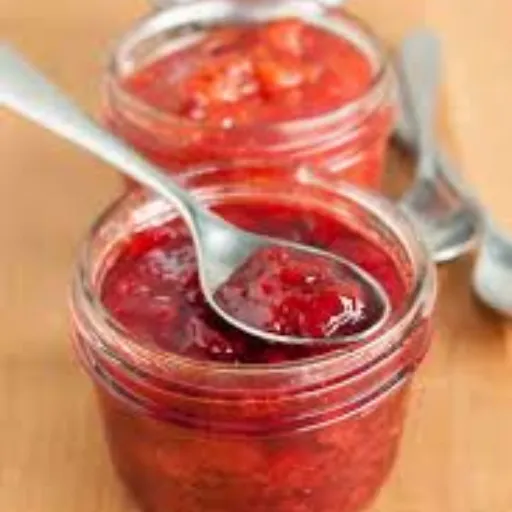
Traditional atmospheric boiling is a brute-force approach to evaporation. By heating fruit to 104°C or higher in open kettles, you inevitably trade off quality for concentration. The high heat triggers the Maillard reaction, turning bright strawberry reds into a dull, brownish brick color and “muting” the volatile aromatic compounds that give fruit its soul. Modern jam making facilities are moving away from this oxidative stress by utilizing vacuum technology.
The logic is simple physics: lower the pressure, lower the boiling point. Inside a vacuum-sealed vessel, a fruit mixture can reach a vigorous boil at just 62.8°C to 68°C. This lower thermal load acts as a preservative for the fruit’s natural integrity. Industry observation suggests that vacuum-cooked jams retain significantly higher levels of Vitamin C and anthocyanins compared to their open-kettle counterparts.
Consider a realistic scenario involving a premium raspberry preserve. In an open kettle, the delicate seeds and pulp are subjected to prolonged high-heat agitation, often resulting in a “burnt sugar” undertone. Under vacuum, the water flashes off quickly and gently. The result is a vibrant, translucent gel that tastes remarkably like the fresh harvest. For the manufacturer, the benefits aren’t just sensory; the reduced temperature also prevents the “burn-on” effect on the vessel walls, drastically cutting down on the time required for cleaning-in-place (CIP) cycles between batches.
Why do some jams fail to set correctly?

Failure in jam making is rarely a matter of bad luck; it is almost always a failure of chemistry at the molecular level. When a batch remains a thin, weeping syrup despite following a recipe, the culprit is usually an imbalance in the “golden triangle” of pectin, acid, and sugar. Industry observation suggests that even a minor deviation in pH—moving from a stable 3.2 to a seemingly harmless 3.6—can completely inhibit the formation of the pectin network.
Without that acidic “bridge,” the pectin molecules simply refuse to bond. Furthermore, moisture remains the enemy of the set. If the final soluble solids do not reach that concrete 65% Brix threshold, the sugar cannot effectively dehydrate the pectin chains. This results in a weak physical structure that lacks the internal tension required to hold the fruit in suspension, leading to “floating fruit” or a total lack of gelation.
Understanding Under-boiling vs. Pectin Degradation
There is a deceptive tipping point in the boiling process. Under-boiling is a straightforward mechanical error; you simply haven’t evaporated enough water to concentrate the sugars. However, over-boiling is far more insidious.
A practical example is the “long-boil” method often seen in traditional open kettles. If the mixture is held at high temperatures for too long, the long-chain pectin molecules begin to snap into shorter fragments. This is known as thermal degradation. Once these chains are broken, no amount of additional cooling or acid can fix the set; the jam loses its “memory” of how to hold its shape. Cautious monitoring of the boil time—often keeping the high-heat phase to under 10 or 15 minutes—tends to be the safety limit for preserving those vital long-chain polymers.
The Impact of Fruit Maturity on Gel Strength
The physiological age of the fruit dictates the raw material’s gelling potential. As fruit ripens, enzymes like pectinase naturally break down the firm protopectin into softer, water-soluble pectin and eventually into pectic acid, which has zero gelling power.
Consider a realistic scenario: a producer uses a batch of 100% “perfectly ripe” late-season blackberries. While the flavor is peak, the natural pectin has already degraded significantly. This is why many professional formulations integrate roughly 20% to 25% slightly under-ripe fruit. This “green” fruit acts as a natural pectin booster, providing the structural backbone that the sweeter, riper fruit lacks. Relying solely on over-ripe fruit often results in a jam that looks beautiful in the jar but collapses the moment it hits the toast.
Thermal Sterilization and Post-Fill Cooling Cycles
The final defense against spoilage in jam making isn’t just the sugar content; it is the biological “kill step” occurring after the jars are capped. Most industrial lines utilize a hot-fill-hold method. By maintaining the jam at a concrete temperature—typically between 82.5°C and 88°C—during the filling process, the product itself sterilizes the inner surface of the glass.
Industry observation suggests that simply filling the jar isn’t enough. A realistic scenario involves the use of a “headspace sterilizer” or a brief inversion of the jar. This ensures the hot liquid contacts the underside of the lid, neutralizing any lingering yeast or mold spores. If the temperature dips even slightly below the 82°C threshold during a slow filling run, the vacuum seal might form, but the internal environment may not be truly commercially sterile.
Post-fill cooling is equally critical but often overlooked by beginners. You cannot simply let a pallet of hot jam sit in a warehouse; the center of the stack will stay hot for days, leading to “stack burn” which destroys the color and degrades the pectin. Instead, jars pass through a cooling tunnel where they are subjected to a graduated water spray.
A practical example of this thermal management is a three-stage cooling cycle: starting with warm water at 60°C to prevent the glass from shattering (thermal shock), moving to 40°C, and finishing near 25°C. This rapid yet careful descent locks in the bright fruit hues and ensures the internal vacuum is strong enough to pull the safety button down on the lid, providing that satisfying “pop” when the consumer finally opens it.
3 Equipment Configurations Optimized for Small to Mid-Scale Production
Choosing a setup for jam making isn’t just about volume; it’s about how much thermal abuse your fruit can withstand before the quality plateaus. For operations moving beyond the stovetop, the transition to industrial hardware usually follows three distinct architectural paths based on your target “Brix” and color retention needs.
1. The Steam-Jacketed Tilting Kettle
This is the workhorse for artisanal brands moving into local retail. Unlike direct flame, a steam jacket provides uniform heat across the vessel’s surface area, which significantly reduces the risk of scorching the sugars. A practical example is a 150-liter tilting kettle with a high-speed emulsifier attachment. This configuration allows for rapid atmospheric boiling and easy “pouring” into a secondary filler, though it requires a skilled operator to manually monitor the setting point.
2. The Integrated Vacuum Concentration System
If you are processing delicate fruits like strawberries or apricots, heat is your enemy. Industry observation suggests that the “cooked” brown tint found in many grocery store jams is almost entirely avoidable with a vacuum setup. By pulling a vacuum, the boiling point drops to roughly 62°C. A mid-scale 300-liter vacuum reactor allows you to evaporate water rapidly without caramelizing the natural fructose, keeping the fruit’s “bright” acidity intact.
3. The Modular Semi-Automatic Line
For those hitting concrete production numbers—perhaps 850 to 1,200 jars per shift—a modular line is the logical leap. This setup uncouples the cooking from the packaging. It typically consists of a jacketed buffer tank that feeds a piston filler via positive displacement pumps. This ensures the jam stays at the critical 82.4°C “hot-fill” temperature throughout the entire bottling run, preventing premature gelation in the hoppers.
FAQ Section
Q: How long does it typically take for jam to reach a full set?
The “set” begins the moment the mixture hits its finishing temperature—typically 104.4°C—but the physical gel matrix requires cooling to fully stabilize. While a small test batch might look firm in minutes, commercial-scale jars often need 24 to 48 hours of undisturbed rest at room temperature to reach their final, spreadable equilibrium. Moving or agitating the jars during this critical cooling window can rupture the developing pectin bonds, resulting in a permanently runny consistency.
Q: What is the ideal pH level for consistent jam gelation?
Precision acidity is the secret to a reliable set. For high-methoxyl pectin to form a bond, the mixture must fall within a narrow pH range of 3.0 to 3.3. If the environment is too alkaline (above 3.5), the pectin molecules repel each other and stay liquid. Conversely, dropping below 3.0 may cause the jam to set too rapidly or “weep” liquid over time. Using a digital pH meter is far more reliable than relying on the variable acidity of fresh lemon juice.
Q: Can you make high-quality jam without adding commercial pectin?
It is entirely possible, provided you select fruits naturally rich in protopectin, such as tart apples, citrus, or currants. This “long-boil” method relies on extended evaporation to concentrate the fruit’s internal gelling agents. However, industry observation suggests that adding standardized pectin is often preferred for consistency. It allows for shorter boiling times, which preserves the fresh fruit flavor and prevents the darkening of the sugars that typically occurs during prolonged heat exposure.
Q: What is the difference between jam, jelly, and preserves in a manufacturing context?
The distinction is primarily about the fruit’s physical form. Jelly is made strictly from filtered fruit juice, resulting in a clear, firm gel with no solids. Jam utilizes crushed or finely chopped fruit pulp, creating a thicker, opaque texture. Preserves contain large chunks or even whole fruits suspended in a lighter syrup or soft gel. Each requires different filtration and filling equipment to handle the varying particle sizes without clogging the production line.
Q: Why is a vacuum pan preferred over an open kettle for color retention?
Oxidation and high heat are the primary enemies of vibrant fruit hues. In an open kettle, the mixture must reach 104°C to evaporate water, which often scorches the pigments. A vacuum pan lowers the atmospheric pressure, allowing the jam to boil vigorously at just 60°C to 65°C. This lower thermal load prevents the “browned” look of over-cooked fruit, keeping strawberries bright red and peaches golden, while also trapping delicate aromatic vapors that would otherwise escape.
Q: How does the sugar-to-fruit ratio affect the shelf life of the final product?
Sugar serves as a powerful humectant that “binds” water, making it unavailable for microbial growth. For a shelf-stable product, the final soluble solids (Brix) should reach roughly 65%. If you reduce the sugar-to-fruit ratio significantly without adding preservatives, the water activity ($a_w$) rises, allowing mold and yeast to thrive. High-sugar jams can remain stable for up to two years, whereas low-sugar versions often require refrigeration and have a much shorter consumption window.
Q: Is it possible to use frozen fruit for professional-grade jam making?
Many commercial producers actually prefer frozen fruit because it is harvested and “flash-frozen” at the absolute peak of ripeness. Freezing also breaks down the fruit’s cellular walls, which can actually make juice extraction and maceration more efficient during the initial heating phase. As long as the fruit is processed immediately after thawing to prevent fermentation, the resulting jam is indistinguishable from batches made with fresh-market produce, allowing for year-round production regardless of the harvest season.