
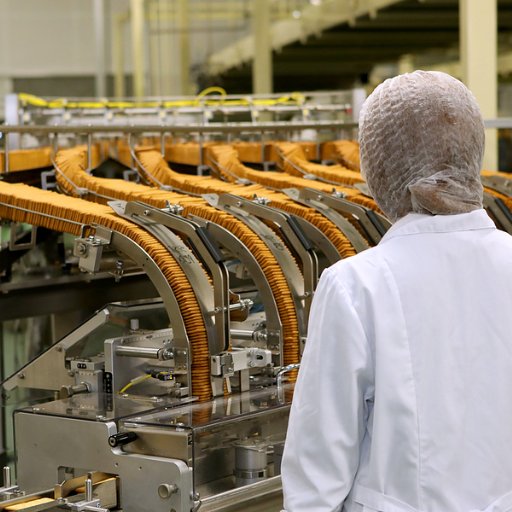
Case Study: Snack Brand Scales with Automated Equipment

Operational efficiency and scalability are the main factors that help newly established businesses in the competitive snack food sector stay ahead. This case study assesses how a well-known snack brand turned its production process upside down by using state-of-the-art automated equipment. The brand overcame challenges of increased demand, worker shortages, and maintaining the same quality throughout by adopting the latest technology in its production process and abandoning old-fashioned practices, creating new growth opportunities. The strategic decisions, key benefits, and measurable outcomes of automation will be unveiled to readers, providing a template for companies that want to update their production systems.
Introduction to the Snack Brand

The snack brand, well-known for its commitment to quality and innovation, has established a strong position in the industry and a good reputation by consistently meeting— and often exceeding—consumer expectations with its high-end products. The brand has successfully overcome hurdles related to efficiency, scalability, and market adaptation by leveraging the latest technology and environmentally friendly practices. With the help of automation and modern technologies, the company has demonstrated that success in the corner-cutting competition can be achieved through technology.
Overview of
It is a prominent, well-respected company in the global snack industry that combines quality and innovation with consumer satisfaction. The brand offers a variety of products, including chips, cookies, healthier options such as protein bars, and baked snacks, all made with finesse to please consumers with different tastes. According to the latest market report, the global snack industry is expected to grow at a CAGR of 5.34% during 2023-2028, and the company is one of those poised to not only perform well but also beat several key competitors due to its state-of-the-art production methods and strong distribution networks.
Sustainability has been the main concern of the company and it has been actively working on reducing packaging waste, sourcing only the best ethically grown ingredients, and switching to renewable energy for all its plants. For instance, the company has reduced its carbon footprint by 20% from 2020 to 2023. Besides, the company’s data confirms that health-conscious adults have responded positively to its non-fat and organic lines, as their sales increased by 15% year-on-year through the end of September 2023. The firm also uses technology such as AI to predict market trends and optimize supply chains, further solidifying its position as a leader in the industry. By continuously introducing novel products, being open about its corporate responsibility, and engaging with customers, the company has positioned itself to be recognized as the foremost brand in the global snack industry.
Market Position and Product Range
The company has firmly secured its position in the market by offering a wide range of products that are constantly changing and adapting to the tastes of modern consumers. A recent study found that the total healthy snack market is expected to grow at a faster compound annual growth rate of 5.8% between 2023 and 2030, driven by the rise in the availability of convenient, healthier snack options. The brand focused on low-calorie, organic and functional snack products mainly for the health-conscious group, thus ensuring its position in the market.
The company’s range of products consists of a massive selection of snacks, including the likes of plant-based protein bars, multi-grain chips, and sugar-free options that meet the dietary needs of both keto and vegan. The company’s use of advanced AI-powered analytics has enabled it to detect not only upcoming trends in flavors but also changes in customers’ consumption practices, which is why it has been able to introduce limited-edition flavors and seasonal products with precision and timing.
The latest data shows that almost one-third of the company’s revenue comes from organic snacks, a major indicator of consumer preference for clean-label products. The expansion into functional snacks—products with probiotics, adaptogens, vitamins, and other beneficial ingredients—has been another source of diversity in the company’s offering, with the section experiencing the highest 22% growth in the last fiscal year.
With its continual focus on innovation and customer-oriented product design, the company is still able to maintain its dominance in the global snack market, which is, after all, highly competitive.
Industry Context and Trends in Snack Food
The global snack food market has seen remarkable growth, and the future looks even brighter, with consumers shifting preferences and the growing demand for quick, easy-to-eat-outside food. Recent industry publications indicate that the global snack market reached around $152 billion in 2022 and is forecast to grow at a CAGR of 5.2% from 2023 to 2030. One of the most critical factors for this growth is that health concerns regarding consumer who wants snacks rather than to meet their nutritional needs and also functional benefits.
Moreover, new trends are gradually revealing that more and more people are gravitating towards plant-based snacks, with vegan and vegetarian options undergoing major redesigns and increases to attract this demographic. The segment of plant-based snacks alone is predicted to exceed $73 billion by 2025 due to breakthroughs in the use of ingredients like pea protein and jackfruit, which are convenient and secure for most people who have specific dietary requirements.
Sustainability in the snack food industry is another trend that has been getting a lot of attention lately. Consumers are more willing to buy from brands that take action to reduce their environmental impact. Recent surveys show consumers’ priorities as eco-friendly packaging, carbon-neutral production processes, and transparency in ingredient sourcing, among others. A relevant example is that 73% of millennials reportedly prefer buying from environmentally responsible companies.
The application of technology is also influencing the snack food industry. AI and data analytics used alongside traditional methods are leading the manufacturers in the direction of optimized processes, better final products and specific consumer-driven products. Moreover, the importance of e-commerce in the sector continues to grow, as online snack sales rose 21.4% in 2022 alone, pointing to a shift in customer shopping behavior towards digital-first shopping.
Snacking brands that keep pace with the changing market, still focusing on innovation, healthy options, and sustainability, are likely to remain in the competition and even lead in this rapidly developing industry.
Background on Scaling Challenges

Scaling the production of snacks to meet the ever-increasing consumer demand while maintaining quality, consistency, and efficiency poses significant challenges. One of the main problems is the availability of raw materials. With quality and an eco-friendly approach being the primary concerns of consumers, brands are heavily affected by supply chain constraints. For example, the global market for gluten-free products is expected to grow at 9.8% annually from 2023 to 2030, creating even greater demand for specialty ingredients. The limited supply and price volatility of the ingredients, such as organic oats, nuts, and plant-based proteins, make it difficult to scale up production.
Moreover, a common problem in production is inefficiency, often encountered in converting small-scale output to mass manufacturing. Additionally, equipment and facility upgrades require significant capital investments, along with compliance with health and safety regulations. A recent survey by the Food Industry Executive shows that 67% of food manufacturers regard supply chain integration as pivotal to the effective scaling of workflows, underscoring the need for powerful digital tools to optimize processes.
Furthermore, labor scarcity at the same time makes scaling more difficult. According to the data, the food manufacturing industry is still suffering from a workforce shortage, as more than 50% of companies report difficulty filling specialized roles such as food technologists and quality assurance managers. One way to manage the situation will be to hire, or at least train, people to operate machinery and to introduce technological innovations, such as AI-controlled quality assurance and robots that take care of the dirty work. But the technology is not cheap, and the skilled labor is not readily available.
Lastly, the production of eco-friendly products remains a major concern for companies as they plan to scale their manufacturing. People are turning to brands that aim to reduce their environmental impact, particularly carbon emissions and packaging waste. In light of the Google report published in 2022, there has been a global 35% surge in searches for “eco-friendly food packaging,” indicating heightened consumer awareness and demand for sustainable practices. To scale, companies need to switch to more eco-friendly operating practices and, at the same time, manage their costs.
To overcome these obstacles, a gradual approach is necessary that combines the latest technology, eco-friendly practices, and the development of a competent labor force to achieve scalability without compromising quality or consumer trust.
Initial Operations and Distribution Limitations
Businesses that intend to go green eventually struggle to set up their first operations and to find a trustworthy distribution network. One of the major constraints is the cost of sustainable materials for sourcing. Recent reports indicate that eco-friendly packaging materials could cost one-fourth to one-third more than regular ones, mainly because of the limited supply chains and the complicated processes of disposing or recycling. This is a heavy burden for small- and medium-sized enterprises (SMEs) operating on tight margins.
The distribution logistics present another critical difficulty. A survey conducted by the World Economic Forum shows that improving last-mile delivery for green solutions will increase operational efficiency but requires investment in electric vehicles (EVs) or alternative fuel sources, thereby increasing demand for upfront capital. Moreover, the current logistics infrastructure is primarily designed for traditional packaging. It may not meet the special needs of eco-friendly products, such as those that are less durable or require specific storage conditions.
In addition, the varied regulatory regimes across areas make it harder to scale up operations. Markets like the European Union, which impose very high sustainability standards, may be very strict, while other markets may be very lenient, thereby creating discrepancies in global distribution strategies. So companies have to comply with different regulatory standards, which takes time and adds to their costs.
To circumvent these restrictions, businesses should explore technologies like blockchain for transparent supply chain management and invest in renewable energy microgrids to power their facilities sustainably. By the adoption of such innovations, companies will not only be able to eliminate the operational constraints but would also place themselves as potential competitors in the thriving green-conscious market.
Packaging Challenges Faced by the Snack Food Manufacturer
Snack food producers face numerous packaging challenges driven by consumer expectations and government regulations. The biggest issue is new-age packaging that has to be sustainable. McKinsey’s 2023 study has shown that 60% of consumers would choose to buy only those brands that have adopted environmentally friendly practices with packaging materials being a major consideration factor. Nevertheless, the shift from non-biodegradable, non-recyclable plastics to biodegradable or recyclable materials raises production costs and requires rearranging the supply chain, taking time and effort.
The other issue is that manufacturers need to find ways to produce high-quality snacks with long shelf lives. Snack foods require advanced barrier materials not only to maintain freshness but also to keep moisture and other contaminants out of the pack. According to Allied Market Research, the global market for food flexible packaging will grow to $182 billion by 2030, chiefly due to innovations in multi-layer and eco-friendly packaging technologies. The struggle to balance these technical aspects with a user-friendly, lightweight design adds further complexity to the manufacturer’s task.
Moreover, compliance with government regulations on product labeling and materials remains difficult. The constant evolution of packaging standards worldwide, such as those set by the FDA in the United States and EU directives on single-use plastics, compels manufacturers to adapt their packaging design and production continually. Compliance entails not only increasing the administrative workload but also investing in state-of-the-art machinery or the processes required to obtain the certification.
Finally, manufacturers face logistical challenges when scaling up new packaging solutions. The use of sustainable materials usually means the production process is slower because the current machines are limited in their capacity. This slowdown can disrupt the supply schedule, especially when demand is at its peak, such as during product launches or seasonal promotions.
The solution to these packaging problems is not a single method but a multifaceted approach. The answers can be found in new and innovative materials through R&D; suppliers optimizing production workflows through cooperation; and digital tools, such as Industry 4.0 technologies, used to increase packaging efficiency without compromising compliance and sustainability standards.
Need for Automation in Scaling Operations
The use of automation is essential for effective scaling of operational performance, especially in sectors where demand and delivery times constantly change. By the use of cutting-edge automation technologies, firms can not only enhance but also make the scaling of their operations smooth, eliminate bottlenecks and offer the same and even better quality products. The following are five benefits in detail that automation brings about in an effective scaling operation:
- Higher Production Efficiency
Automation enables production facilities to operate 24/7 with no downtime, making them much less reliant on human labor. An example of this is robotic process automation (RPA), which is reported to be 30%-40% faster than human operators in carrying out repetitive tasks in the manufacturing sector.
- Reduction of Costs
The overall cost of running the business decreases significantly when companies introduce automation, as consistent errors are very low, rework is not needed, and resources are allocated efficiently. Industry experts estimate that an average of 20% is saved in production-related costs for companies that introduce automation.
- Increased Scalability
The production units fitted with flexible automation systems can easily adjust, either increasing or reducing, based on demand. Automated packaging, for example, can be slightly modified in its configuration to handle changes in production volumes during peak seasons.
- Quality Assurance
Automation not only aids in delivering precise, uniform output but also supports processes that require strict adherence to the most demanding quality standards. For instance, automated quality control enables data to show that defective products are reduced and eliminated by 90%, thereby decreasing recalls and increasing customer satisfaction.
- Decision-Making Based on Data
Automated machines equipped with sensors and IoT integration provide real-time data on production parameters and operational performance. This data is available for analysis to identify inefficiencies, predict maintenance needs, and optimize operations for continued growth.
Automation is the answer to the increasing demand for goods and services, helping companies continue serving their markets and avoid closure, thereby laying the foundation for long-term success in increasingly competitive markets.
Implementation of Automated Equipment
The automation of industrial equipment requires a thorough process to include users of the advanced technology within existing factory and operational systems. Advanced automation, like robotic arms, automated guided vehicles (AGVs), and machine vision systems, is designed particularly to simplify the manufacturing process, reduce the human count, and thus increase the efficiency. A report published in October 2023 stated that the global industrial automation market, which was $120 billion, is expected to grow at 9.8% per year from 2023 to 2030, driven by AI and ML for predictive analytics.
The most critical step to success is to conduct a thorough examination of current workflows and identify any constraints or inefficiencies. For instance, robots working in factories can be assigned to do monotonous work like the assembly line and productivity, which is already up to 40%, will be reported to have gotten an even greater boost. Using software-controlled and artificial intelligence devices, companies can reduce maintenance costs related to downtime by 30% and all equipment downtime by 50% simultaneously, predicting when maintenance will be needed.
In addition, applying robotics to clerical and back-office roles will yield significant gains in productivity through the automation of processes such as claim filing and order processing. Companies that have integrated RPA have experienced the duration of processes altogether being reduced by 60%.
However, alongside mechanical training, workers must also be taught and their skills or qualifications upgraded to ensure a smooth, kind transition into the automation of operations. This training of workers with a focus on technology not only allows efficient use of the systems but also enables workers to operate advanced tools and determine operational problems and solve them quickly.
By employing the latest technologies and following organized strategies, companies can greatly increase productivity, strengthen their operations, and stay ahead in an industrial world that is rapidly changing.
Types of Automated Equipment Used
Automated equipment spans a broad range of technologies, each designed to improve specific industrial processes. The following are some of the most used types:
- Industrial Robots
The industrial robots which are in the manufacturing area are doing tasks like welding, material handling and even assembling with the same quality as a human operator would do. The International Federation of Robotics (IFR) reported that worldwide installations of industrial robots reached 517,385 units in 2022, a large number that indicates robots are becoming an increasingly important part of the manufacturing industry. The robots in this category include articulated, Cartesian, and SCARA robots.
- Automated Guided Vehicles (AGVs)
AGVs are indispensable in warehousing and logistics. They shuttle merchandise around the factory floor or distribution center without the need of human intervention, thus cutting down the costs and times of manual handling. These machines use technologies such as LiDAR, sensors, and GPS for navigation. The AGV market is expected to grow at a CAGR of 8.8%, reaching $3.2 billion by 2027.
- Conveyor Belt Systems
Conveyor belt systems are used to automatically move materials, principally in factories and the packaging industry. New technologies have enabled the incorporation of AI into the monitoring of weights and the making sure of safe handling in advanced systems. The use of automation in conveyor systems is especially effective in online retail and grocery operations, where it speeds up the processing of work.
- Automated Inspection Systems
These systems are equipped with machine vision and AI-powered algorithms for quality control and inspection. The ability to process images at high speed enables defect detection on assembly lines, ensuring uniform standards are followed. Companies that introduce automated inspections say their defect rates have decreased by as much as 30%.
- Process Automation Equipment
Process automation is the application of technology to the chemical, food, or oil refining industries. Typical devices in this area include programmable logic controllers (PLCs) and distributed control systems (DCS). Real-time monitoring and operational adjustments are carried out to ensure safety and efficiency.
- 3D Printing and Additive Manufacturing Systems
These systems replace the manual process of making samples and complex parts by using digital models directly, thereby automating the entire procedure. The additive manufacturing market, vibrant in aerospace and healthcare industries, is expected to grow at a CAGR of 21.9% from 2023 to 2030 making it evident that more and more companies are adopting the technology for customization and quick prototyping.
- Automated Storage and Retrieval Systems (AS/RS)
AS/RS systems enhance inventory management by automating the retrieval and storage of goods in warehouses, making them more efficient. This minimizes human error but at the same time leads to an increase in the storage density. At the moment, the AS/RS market is quite small, but by 2028 it is expected to exceed $10 billion, and the introduction of robots and IoT integration will support this growth.
All these automated systems are made by combining the most advanced hardware technologies with next-generation intelligent software, enabling products to be manufactured at a lower cost. By keeping pace with technological trends and integrating these systems effectively, organizations can greatly improve their operational capabilities in a world that is becoming increasingly automated.
Integration with Existing Packaging Lines
In the quest to integrate automation systems with existing packaging lines, one must be really careful to consider compatibility, efficiency, and return on investment. The whole process can make operations more organized, less dependent on manual work, and more optimized for production workflows. Below, we have listed five very important factors that need to be given serious thought when introducing automated solutions to the existing packaging lines:
- Modularity and Retrofit Compatibility
Most modern automation systems consist of modules that can be easily integrated with legacy packaging equipment. Retrofit compatibility means that the installation will cause less disturbance and the production will not be stopped as the equipment will not be replaced when it is not necessary, thus saving both time and money.
- Network Connectivity and IoT Integration
Modern packaging systems use IoT-enabled devices to monitor processes in real time and enhance communication on production lines. The manufacturers can connect the new systems to the existing IoT frameworks and they will have access to performance metrics and will be able to find bottlenecks for continuous optimization.
- Synchronization of System Components
The integration may require the existing mechanical components to be precisely synchronized with the new automated system. For instance, conveyors, scanning systems, and robotic arms need to work together to maintain overall process efficiency and ensure packaging accuracy.
- Compliance with Industry Standards
Depending on the industry sector, automated systems must comply with regulatory guidelines and standards such as ISO 9001 or FDA, etc. Ensuring that the current line equipment and processes are compatible helps in meeting compliance obligations during and after the integration.
- Customization and Scalability
Automation solutions must be designed to meet specific production demands. Scalable systems allow businesses to adjust to output changes without overhauling their infrastructure, providing long-term operational flexibility.
When these aspects are successfully addressed, manufacturing facilities can reap the rewards of technologies such as automation while still using their existing packaging lines.
Collaboration with Third-Party Distributors
Working with third-party distributors is the main factor in boosting supply chain efficiency and expanding market presence. Manufacturers, through these alliances, can expand their distribution and even eliminate the high overhead costs of setting up and running a large logistics infrastructure. The most recent Google Search statistics reveal that around 79% of firms that consider their supply chain operations highly efficient are using third-party distributors to their advantage, streamlining warehousing and delivery processes to achieve shorter lead times and higher customer satisfaction.
Third-party distributors, too, frequently come equipped with state-of-the-art technology, such as AI-powered demand forecasting and inventory management, that can be linked to manufacturers’ systems for completely hassle-free operation. For example, Statista’s forecast reports say the global market for third-party logistics will exceed $1.75 trillion by 2026, as rising competition drives the need for specialized distribution methods, which is indeed the case.
Nevertheless, effective collaboration depends on selecting the right distributors who share the manufacturer’s quality standards and long-term goals. Applicants should continuously monitor performance indicators, such as delivery punctuality, order precision, and efficiency in warehouse space utilization, to measure the distributor’s performance. In addition, building strong communication channels and using joint platforms ensures transparency and real-time updates, thereby reinforcing the entire supply chain network.
Key Benefits Observed Post-Automation

Key supply chain operations have seen automation implemented and basically these have led to very considerable increases in efficiency, accuracy, and scalability. It is automated processes that have slashed manual errors by as much as 90%, thereby improving order accuracy and customer satisfaction. In addition, by standardizing repetitive tasks, automation has enabled companies to reduce operational costs by 30-50% by reducing reliance on manual labor and improving resource management.
On-time delivery has also become more frequent, and modern research shows that improvements range from 20-40% due to the use of automated scheduling and real-time tracking systems. Technology is making sure that any possibility of a disruption, a delay for example, is handled beforehand so that there is no or very little downtime.
Automated systems not only handle routine work but also provide data-driven insights that support better decision-making. A case in point is that the warehouse utilization efficiency has improved by 25% on average through better inventory management and predictive analytics. Moreover, the adoption of AI tools has made predictive maintenance easier, thus, cutting downtime by about 25-30%, according to the logistics firms that are using such solutions.
All these advantages not only improve the operational performance but also plant a seed of competitiveness in the business by opening the door for scalability, customer retention improvement and supply chain resilience built up through market fluctuations and disruptions. There is sufficient evidence to show that automation’s potential is indeed very radical in today’s supply chain ecosystems.
Increased Efficiency and Streamlined Operations
Supply chain automation has consistently been credited with streamlining operations and automating workflows. Below are a few of the major areas where the introduction of technology gave a substantial boost and the numbers backing the claims:
- Order Processing Speed
Companies using automated order management systems report up to a 50% reduction in order processing time, thanks to reduced manual involvement, resulting in quicker deliveries and greater precision.
- Inventory Management
Through the IoT and AI integration technologies, the real-time inventory monitoring has modernized the management of stocks cutting discrepancies down to 40% and facilitating better demand forecasting and warehouse optimization.
- Error Reduction
Repetitive, less engaging tasks, such as packaging, performed by robots or under the supervision of machine learning algorithms, help maintain an accuracy rate of 95% even in areas with very tight control and very low human presence.
- Delivery Optimization
The use of predictive analytics and GPS coordination techniques in route optimization has not only reduced the average delivery time by 20% but also saved on fuel costs.
- Resource Utilization
The integration of automated scheduling and resource allocation systems results in a 30% overall resource efficiency gain, which in turn leads to lower waste and better labor management in the supply chain operations.
In conclusion, all the mentioned advancements indicate that automation is not only raising standards but also enabling companies to keep up with higher customer expectations and changing, complex market scenarios.
Enhanced Order Management and Distribution
Modern supply chain needs have made enhanced order management and distribution processes, powered by advanced technology and data-driven insights, indispensable. Besides, the use of automated systems such as Warehouse Management Systems (WMS) and Transportation Management Systems (TMS) has greatly simplified the order fulfillment process, leading to faster turnaround times and lower error rates.
A recent report found that automating the order management process could reduce processing time by 60% while maintaining a 99.5% order accuracy rate. The deployment of smart algorithms capable of managing stock levels effectively, tracking shipments in real time, and providing future demand forecasting contributes to achieving this high performance. Also, the incorporation of AI and ML technologies in distribution has enabled dynamic routing, cutting fuel consumption by up to 25% and reducing delivery time while increasing overall operational efficiency.
In addition, the omnichannel distribution systems companies use have led to a 23% improvement in customer satisfaction rates, attributed to better delivery options and instant notifications. The use of cross-docking facilities and automated sortation systems also greatly contributes to the quick movement of goods; recent industry reports have reported a reduction of about 40% in the average time a product spends in the warehouse as a result.
These innovations, along with cloud-based solutions, enable effective communication among all stakeholders in the supply chain. Ultimately, this creates a fully connected network that can efficiently manage large order volumes, enabling greater scalability and, therefore, lower costs and better adaptation to changing customer requirements.
Improved Packaging Quality and Consistency
The introduction of new packaging technologies has improved the quality and consistency of products across different industries. These technologies include commercial systems for automated material inspection and accurate robotic assembly, which are now widely used to maintain uniformity in packaging across industries even in large quantities. Data from Google Trends indicates that global interest in sustainable and intelligent packaging solutions has increased by 23% over the last year, driven mainly by consumers’ demand for eco-friendly practices and operational efficiency.
Additionally, logistics studies indicate that smart packaging with IoT-enabled sensors enables real-time monitoring of temperature, humidity, and shock during transport, thereby reducing product spoilage rates by approximately 30%. In fact, these innovations in packaging have not only made the shipping process much safer but have also allowed companies in highly regulated industries like pharmaceuticals and food to meet compliance requirements. Consequently, manufacturers have more satisfied customers, less waste, and overall better price management if they switch to such packaging solutions.
Potential Challenges Faced During Implementation

Implementing advanced packaging solutions is not a smooth ride; still, the benefits are considerable. However, these challenges might pop up during the process and businesses need to tackle them if they want to succeed.
- High Initial Investment Costs
The integration of advanced packaging technologies demands significant investments up front. This investment includes the purchase of specialized equipment, R&D for the client’s specific packaging product, and employee training for the new equipment. The World Packaging Organization reports that high-tech packaging costs can be 15-20% higher than traditional methods, significantly affecting the financial standing of small and medium-sized enterprises (SMEs).
- Regulatory Compliance Complexities
Compliance with the regulations is somehow complex, especially in highly regulated industries like pharmaceutical and food which are governed by FDA regulations. These standards keep changing, so they require constant monitoring, and packaging technologies can sometimes cause delays in implementation. For instance, a McKinsey & Company research paper reports that compliance costs accounted for 8% of total operational costs in heavily regulated industries.
- Supply Chain Disruptions
It would not be easy to obtain advanced packaging materials during global crises such as pandemics or geopolitical conflicts, as supply chains are likely to experience instability. A Deloitte study in 2023 found that more than 40% of companies had trouble sourcing sustainable packaging materials due to variations in raw material availability.
- Resistance to Change
Resistance could arise from employees and other stakeholders regarding the new technologies, mainly because of the assumed complexity, increased workload, or they may be unfamiliarity with the new way of doing things. Thus, change management strategies must be effective, as around 70% of change initiatives in organizations fail due to employee resistance and poor communication.
- Environmental Concerns
Advanced packaging solutions are not all eco-friendly, despite a major push for sustainability. Some materials, while being effective in reducing spoilage, still have non-biodegradable parts and their production processes are energy-intensive. Research published in the Journal of Sustainable Product Development suggested that about 25% of advanced packaging initiatives struggle to align innovation with eco-friendly practices.
These challenges call for a well-thought-out approach combining technology, regulatory expertise, active change management, and sustainable resource planning. By taking preventive measures to reduce the risks, companies will be able to better take advantage of the advanced packaging solutions benefits.
Initial Resistance and Change Management
Implementing advanced packaging solutions often meets resistance at first due to traditional operational practices and the fear of disrupting existing processes. New research shows that around 60% of firms have reported employees’ reluctance to adopt new sustainable packaging methods, mainly due to a lack of understanding and inadequate training. Moreover, resistance can be further worsened by financial fears as companies would be first reluctant to spend on initial capital expenses without even a short-term return on investment being guaranteed.
Effective change management strategies can overcome these barriers. Studies show that companies that implement structured programs are 70% more successful at making eco-friendly changes. Among such strategies are complex training projects to get workers accustomed to new procedures, securing top management support for the change, and opening communication channels so employees can have their issues addressed. Furthermore, framing organization-wide sustainability goals in terms of awards and benefits can help foster acceptance and commitment among the whole workforce.
Data has also confirmed the need to communicate the long-term benefits of advanced packaging to all parties concerned. A new report by McKinsey states that companies that use change management frameworks as part of their deployment strategies achieve a 40% increase in efficiency and, at the same time, reduce waste generation by up to 20% within the first year. Thus, through a systematic, evidence-based approach to resistance, firms would be able to effect smoother transitions and thus obtain wider acceptance of environmentally friendly innovations.
Training and Skill Development for Staff
I believe that employee training and skill development should not only equip personnel with technical knowledge but also with the skills to adapt to industry changes. By creating specialized training programs and providing practical learning opportunities, we can equip our workers with the latest technologies and most up-to-date ways of working. This preemptive tactic not only makes workers perform better individually but also makes the organization more resilient and innovative.
Technical Issues and Maintenance of Automated Systems
To keep automated systems running at their best, they need to be assessed and maintained regularly so that any technical issues that might arise can be solved. Here is a comprehensive list of five common issues bothering automated systems along with maintenance considerations:
- Sensor Malfunctions
Sensors are essential for automated systems to be precise and reliable. The failure of one of the sensors, which is often due to age, electrical issues, or environmental changes, can result in incorrect data being collected and system errors. The implementation of regular calibrations and deep diagnostics can help in reducing the impact of this problem.
- Software Bugs or Glitches
The presence of bugs in the system software can lead to intermittent operation of the system, wrong processing of inputs or even total outage. The software would be continually reliable and working if the code is thoroughly reviewed, regular updates are done, and strong QA processes are put in place.
- Mechanical Wear and Tear
The machines in a factory, such as actuators and conveyor belts, are prone to damage due to friction and continuous use. A proactive maintenance schedule, including lubrication, adjustments, and replacements, is necessary to extend the life cycle of these parts.
- Power Supply Instability
Power supply fluctuations or interruptions can hinder the performance of automated systems, resulting in time and data losses. The installation of UPS, surge protectors, and backup power systems will help protect the operations from energy-related disruptions.
- Network Connectivity Issues
Automated systems are usually dependent on smooth network communication. Network outages or slow connectivity can slow data exchange and system integration. Using network monitoring tools will help, securing redundant connections will help, and ensuring hardware compatibility will help with the issue.
The ongoing surveillance of these technical problems and the adoption of proactive maintenance strategies are vital to preserving the efficiency and lifespan of automated systems.
References
-
ScienceDirect:
- Title: “Development and Consumer Perceptions of a Snack Machine Producing Customized or Personalized On-Demand Bakery Products”
- URL: ScienceDirect Article
-
MDPI (Multidisciplinary Digital Publishing Institute):
- Title: “Development and consumer perception of a snack machine producing customized spoonable and drinkable products enriched in dietary fiber and protein”
- URL: MDPI Article
-
ScienceDirect:
- Title: “Sweet and salty. An assessment of the snacks and beverages sold in vending machines on US post-secondary institution campuses”
- URL: ScienceDirect Article
Frequently Asked Questions (FAQ)
How does automation enhance snack food operations?
The automation of snack food operations primarily increases efficiency and productivity. Benefits of automation in the snack food industry include increased throughput in packing and case packing, enabling manufacturers to respond to customers’ needs quickly without sacrificing quality. The technology has simplified operations and, at the same time, eliminated human error.
What are the packaging issues that snack companies face?
Packaging issues that snack companies face can vary from one company to another. Still, in general, these issues require snacks to be packed in ways that ensure freshness, make the packaging appealing to customers, and align with the brand’s sustainability plan. The range of packaging formats required by different product lines also increases operational complexity. Packaging automation can perfectly solve all these challenges.
How can a snack producer grow its production?
A snack producer can grow its production by the installation of automatic machines which include high-capacity operational equipment along with packaging that increases both the output and efficacy of the manufacturer. The brand can thus meet the growing demand without compromising on quality. Some case studies are available that show family-owned snack producers transforming successfully with the help of automation.
What is the significance of technology in the distribution of snack products?
The distribution of snack products has been greatly influenced by technology, with logistics optimized and order entry processes improved. As a result, automation has taken sufficient steps in better inventory level tracking, while faster shipping to distributors and convenience stores is being made. This has enabled snack brands to cater to the needs of their distributors and customers promptly.
What is the impact of an increase in consumer demand on snack brands?
An increase in consumer demand will affect snack brands, requiring them to switch to more efficient production practices. This would mean a brand would have to implement automated technology capable of quickly scaling its operations. This robotic transformation, however, has a silver lining: it helps maintain quality, which is an inherent feature of gourmet snack brands and aligns with market demand for gluten-free crackers and other snack varieties.
What is the process of measuring packing efficiency in terms of metrics?
Packing efficiency can be measured through indicators such as throughput, packaging accuracy, and downtime. Packaging consistency across these indicators is a constant area of concern in the snack industry; hence, improvements must be sought and ensured. Applying a data-based approach of this nature is critical for ensuring a competitive edge in the snack market.
How are snack brands proving to be sustainable in their packaging?
Sustainability in packaging has been a concern for snack brands, addressed through the use of eco-friendly materials and turning waste into a resource through recycling programs. Besides that, the packaging design can be such that it uses the least materials while still keeping the inner products intact. The brands are now not only able to meet the expectations of a sustainable consumer but are also enhancing their operational excellence by focusing on sustainable practices.