

What Is Mascara Made Of? The Truth Behind Your Daily Lash Routine

Most modern mascaras rely on a simple core formula: dark pigments for color, flexible polymers to coat the lashes, and a thick base of waxes—like beeswax or carnauba—to bind the ingredients together. Whether you choose a conventional drugstore staple or a plant-based alternative, this fundamental emulsion of waxes, oils, and preservatives is what transforms raw cosmetic dyes into a stable, smudge-resistant product safe for daily wear.
The Core Base
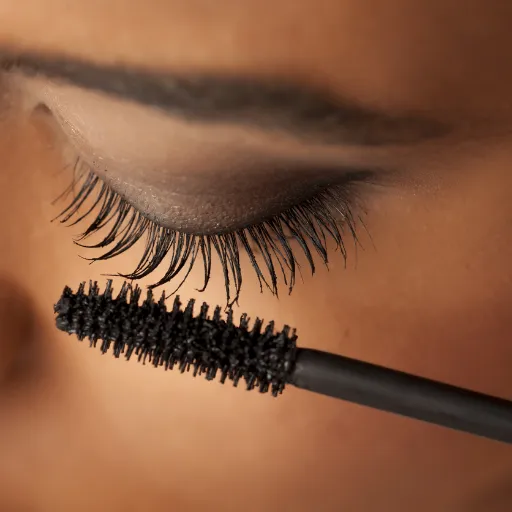
At its most fundamental level, mascara is an emulsion. Much like mayonnaise or a creamy industrial sauce, it requires blending oil and water into a stable mixture that won’t separate while sitting on a store shelf.
Water usually makes up the bulk of everyday liquid formulas, often accounting for 50 to 60 percent of the volume. This hydration prevents the product from turning into an unusable solid block inside the tube. To bind that water with heavier waxes and oils, chemists rely on potent emulsifiers.
Without a strong emulsifying agent, the dark pigments and heavy waxes would simply pool at the bottom of the container. Forcing these repelling ingredients together requires precise, high-shear mixing to whip the raw materials into microscopic droplets. It is a remarkably similar manufacturing environment to large-scale food production, where keeping a delicate liquid structurally stable at room temperature is always the primary engineering challenge.
Understanding the specific waxes, pigments, and oils that create volume and length
Building a mascara that actually clings to tiny hairs without flaking off by noon requires a delicate physical balance. Oils provide the slick glide needed to coat the lash smoothly. Waxes build the physical scaffolding that adds thickness. Pigments deliver the optical impact.
If the ratio leans too heavily on oils, the formula smudges against the brow bone within hours. Too much wax, and it dries into brittle, unusable clumps inside the tube.
In commercial manufacturing, formulating this base is notoriously finicky. A shift of just 1.2% in the wax concentration can completely alter a product’s performance, turning a lightweight lengthening formula into a dense volumizing paste. Large-scale cosmetic blending vats rely on automated heating and cooling jackets to ensure the oils and waxes melt uniformly before the dry pigments are introduced. This strict thermal control prevents the waxy base from solidifying unevenly during the high-speed filling process.
Carbon Black and Iron Oxides
True black is surprisingly difficult to formulate safely for the eye area. The cosmetics industry heavily relies on two primary colorants to achieve this: iron oxides and carbon black.
Iron oxides are inorganic compounds essentially derived from rust. They are deeply stable, safe for sensitive skin, and provide natural-looking brown and muted black tones.
For that dramatic, ultra-dark tint, manufacturers often turn to carbon black. It is an intensely dark pigment produced through the incomplete combustion of heavy petroleum products. Because it absorbs almost all visible light, it delivers a much starker contrast than iron oxides alone. To ensure consumer safety, cosmetic-grade carbon black undergoes rigorous purification processes to strip away raw impurities before it ever reaches a blending facility.
Beeswax versus Carnauba
Waxes dictate how thick the product applies and how well it stays put. Beeswax is prized across the industry for its distinct pliability. It wraps around the individual lash smoothly, preventing the dried formula from cracking when you blink or rub your eyes.
Carnauba wax, harvested from the leaves of a Brazilian palm tree, serves a completely different function. It has a significantly higher melting point than beeswax, making it incredibly firm. A formula relying heavily on carnauba tends to hold a curled lash much better in humid climates or hot weather. Most brands blend both to achieve a wearable balance of flexibility and rigid hold.
Preservatives required for shelf life
A dark, moist tube of mascara is the ideal breeding ground for bacteria. This risk is amplified because the applicator wand touches the eyelashes and goes right back into the fluid every single day.
Without robust preservatives, the liquid emulsion would spoil in a matter of days. Compounds like phenoxyethanol or potassium sorbate are introduced during the final stages of mixing. These safeguards actively inhibit microbial growth, ensuring the liquid remains safe to use near the delicate surface of the eye for its standard three- to six-month lifespan.
Are the chemicals in traditional drugstore mascara actually safe for sensitive eyes?
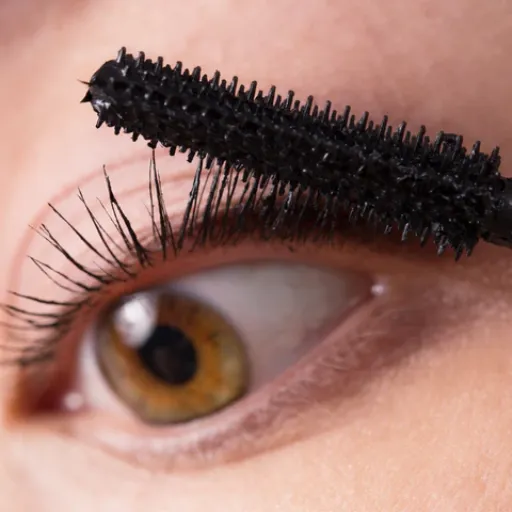
The word “chemical” often triggers alarm, especially when discussing products applied millimeters from the eyeball. But in cosmetic formulation, every ingredient is a chemical—even water. The more accurate question is whether the synthetic compounds used to stabilize and preserve drugstore formulas pose a risk to delicate ocular tissue.
For the vast majority of consumers, off-the-shelf mascaras are perfectly safe. Major manufacturers design their products to pass stringent ophthalmological testing, relying on established synthetic polymers and preservatives precisely because their behavior is highly predictable. Plant-based alternatives, while increasingly popular, can sometimes trigger unexpected allergic reactions due to their complex botanical profiles.
However, “safe” does not automatically mean “non-irritating” for everyone.
If you wear contact lenses or struggle with dry eyes, the microscopic flaking of certain synthetic film-formers may cause redness and tearing by the end of a long day. It is rarely a toxic reaction. Usually, it is simply a mechanical irritation—tiny particles of dried plastic and wax migrating into the tear film and rubbing against the surface of the eye.
Decoding Parabens and Phthalates
Parabens act as highly effective preservatives, aggressively inhibiting bacterial growth inside a dark, wet mascara tube. For decades, they were the unquestioned industry standard. While regulatory bodies like the FDA still consider them safe at low cosmetic concentrations—typically under 0.5 percent—consumer demand has largely pushed them out of modern formulations due to lingering concerns over potential endocrine disruption.
Phthalates serve a completely different mechanical purpose. They are plasticizers designed to make rigid materials flexible. In mascara, they help the dried formula bend with the natural curve of the lash instead of snapping off. Most major brands have entirely phased out the more controversial forms, like DBP, though you may still find alternative flex-agents performing the same job.
The controversial history of Thimerosal
If you dig into cosmetic history, you will eventually find warnings about mercury in eye makeup. This refers to thimerosal, a mercury-based preservative exceptionally good at killing eye-area pathogens. Decades ago, it was a common line of defense against severe bacterial infections.
Today, the FDA strictly limits the use of mercury compounds in cosmetics. It is only permitted in highly specific eye-area products where no safe and effective alternative exists, and even then, its concentration is restricted to a minuscule 65 parts per million. You will not find it in your standard everyday mascara.
4 signs it is time to switch to a clean or plant-based formula
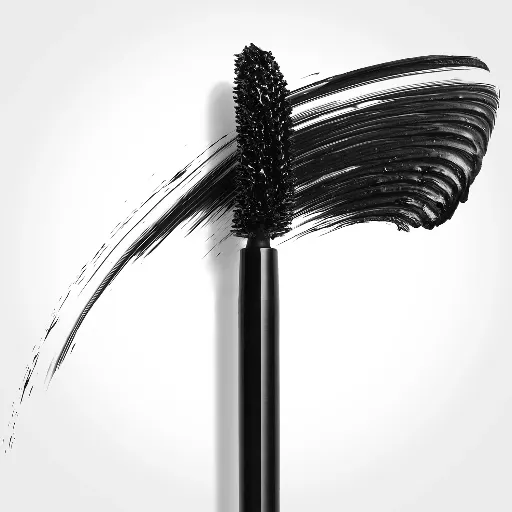
Most makeup users don’t think about switching their formula until their eyes are watering halfway through a workday. If your current tube is causing discomfort, the underlying chemistry might be the culprit.
One of the most obvious indicators is midday flaking. Traditional mascaras often rely on synthetic polymers that become brittle after a few hours of wear. If you consistently find dark specks resting on your upper cheeks by 3:00 PM, the structural integrity of your current brand is failing. Plant-based alternatives tend to use softer, more flexible botanical waxes—like sunflower seed or berry wax—which may flex more naturally with your lashes throughout an 8-hour shift.
You might also notice persistent redness or a gritty feeling, particularly if you wear contact lenses. This reaction frequently points to a mild intolerance to specific synthetic dyes or aggressive liquid preservatives.
Lash breakage during makeup removal is another clear warning. Stubborn waterproof formulas require heavy friction to break down their petroleum-derived bonds. If you are losing lashes in the sink every night, a clean formula designed to dissolve seamlessly with just warm water and a gentle oil cleanser is usually a safer long-term bet.
Pay attention to the smell of the wand, too. Commercial manufacturers sometimes mask the harsh odor of raw cosmetic chemicals with synthetic fragrances. If opening a fresh tube hits you with a sharp scent that makes your eyes sting before you even apply it, exploring simpler botanical ingredient lists is a smart next step.
Industrial Blending
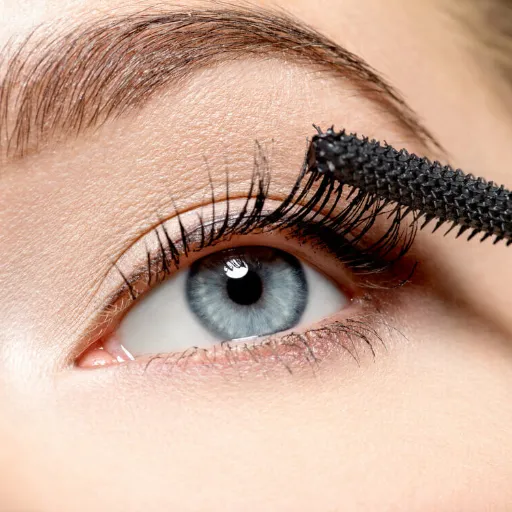
Making a single tube of mascara in a laboratory is relatively simple. Replicating that exact texture across a batch of 50,000 tubes is an entirely different engineering challenge. The underlying physics of cosmetic manufacturing heavily overlaps with commercial food production.
Whether a facility is blending industrial mayonnaise or a waterproof lash formula, the core goal is identical: forcing oil, water, and dense particulate matter to coexist permanently. Mascara relies on a highly viscous waxy base that naturally wants to separate as it cools. To prevent the pigments from sinking and the oils from pooling at the surface, manufacturers depend on heavy-duty agitation. This is not a gentle stir. It requires aggressive, sustained mechanical force to alter the physical structure of the ingredients at a microscopic level.
How high-shear mixers process thick cosmetic emulsions at scale
High-shear mixers are the backbone of this operation. Inside the massive stainless steel blending tanks, a rapidly spinning rotor forces the raw wax and water mixture through a stationary stator head. As the thick liquid is violently pushed through these narrow gaps, the shear force tears the oil droplets apart. This intense homogenization is what gives everyday mascara its incredibly smooth, glossy finish.
A standard production vat might hold 850 liters of product, requiring the mixer blades to spin at thousands of revolutions per minute. Throughout this cycle, external heating jackets usually keep the mixture hovering right around 75°C. If the temperature drops prematurely, the wax hardens mid-cycle and ruins the entire batch.
Once the carbon black or iron oxide powders are introduced, the shear forces must disperse these dry pigments perfectly to prevent gritty clumps. It is an energy-heavy process that demands absolute precision to guarantee the final emulsion stays suspended inside the tube for months.
FAQ Section
Q: Does all black mascara contain bat guano?
A: No, this is a very persistent urban legend. Bat guano is essentially feces and is strictly prohibited in cosmetics due to severe contamination risks. The confusion stems from a completely different ingredient called guanine, a crystalline material derived from crushed fish scales. Guanine is sometimes used to give shimmery makeup a pearlescent glow, but it has absolutely nothing to do with bats or their droppings.
Q: What is the difference between water-resistant and waterproof formulas?
A: The difference ultimately comes down to the solvent base used in the factory. Water-resistant mascaras still contain water as a primary ingredient but include a slightly higher ratio of firm waxes to withstand light sweat, tears, or high humidity. True waterproof formulas take a more extreme approach by removing water entirely. Instead, they rely heavily on volatile solvents like isododecane mixed with heavy silicone polymers. These synthetics create a rigid, highly hydrophobic film over the lash that completely repels moisture, which is exactly why they are so notoriously difficult to remove at night.
Q: How long does mascara last before the ingredients expire?
A: Most dermatologists recommend replacing your tube every three to six months. Pumping the wand introduces air and bacteria from your lashes into the dark, moist container. While built-in preservatives initially fight microbial growth, they eventually degrade. Continuing to use an expired formula significantly increases your risk of styes and eye infections.
Q: Can vegans use traditional drugstore mascaras?
A: Usually, no. Conventional drugstore formulas rely heavily on beeswax for structural flexibility and sometimes incorporate lanolin, which is extracted from sheep’s wool. Additionally, if the makeup has a reddish or deep burgundy tint, it might contain carmine—a pigment derived from crushed beetles. Vegans generally need to look for specific certifications on the packaging to ensure the brand uses plant-based waxes and synthetic or mineral dyes instead.
Q: Why do some clean beauty mascaras smudge more easily?
A: Clean formulas typically replace rigid synthetic polymers and silicones with natural alternatives like sunflower seed wax or shea butter. While these botanical ingredients are incredibly gentle and hydrating for the lashes, they melt at significantly lower temperatures. Your natural body heat, combined with the natural oils resting on your eyelids, can easily break down these softer plant waxes throughout the day, leading to under-eye smudging or transfer.
Q: Are the mixing processes for cosmetics similar to food manufacturing?
A: Yes, the industrial techniques are virtually identical. Both industries face the same fundamental challenge of creating stable emulsions—forcing water and oil to blend without separating. Whether a factory is producing a thick condiment like mayonnaise or a volumizing lash paste, they rely on the exact same high-shear mixing equipment, strict temperature-controlled vats, and precisely timed agitation to achieve a smooth, consistent texture at a massive scale.