
Loyal Aquatic Machinery
Advanced Aquatic Feed Production Lines
Precise Density Control for every species. Produce Floating Feed for Tilapia or Sinking Feed for Shrimp on the same twin-screw extruder. Maximize FCR with superior water stability.
0.5 – 15 mm
Pellet Range
Twin-Screw
Extrusion Tech
High FCR
Conversion Efficiency

Feeding Behavior Analysis
One Line, Two Behaviors:
One Line, Two Behaviors:
Floating for Surface, Sinking for Bottom.
Aquatic species have distinct feeding habits. Surface feeders (like Tilapia) require highly expanded pellets that float for visual monitoring. Bottom feeders (like Shrimp) need dense, sinking pellets that remain stable in water for hours.
The challenge is controlling the density. Loyal’s Twin-Screw Extruder features a Vacuum Density Control System. By adjusting the vacuum level and screw speed, you can switch from producing light, airy floating feed to heavy, compact sinking feed on the same machine.
-
Floating Feed (Expansion): High shear and temperature create a honeycomb structure filled with air bubbles, ensuring 100% floatability.
-
Sinking Feed (Compaction): Vacuum venting removes air bubbles during extrusion, creating a dense pellet that sinks immediately and stays intact.
-
Micro-Pellet Capability: Precision die cutting allows production of starter feed as small as 0.5mm for fry and fingerlings.

Density Control Valve
Switch between Floating (0.4 g/L) and Sinking (0.7 g/L) densities instantly.
> 2 Hrs
Water Stability
For shrimp feed. Does not disintegrate, keeping water clean.
0.5 mm
Min. Pellet Size
Produce high-value starter feeds for fry/fingerlings.
180 sec
Conditioning Time
Dual-layer conditioner ensures full starch gelatinization.
Low FCR
Feed Conversion
High digestibility leads to faster fish growth and lower costs.
Select Your Aquafeed Line
Different species obey different physics. Choose the specialized line that matches the feeding habits of your target species.
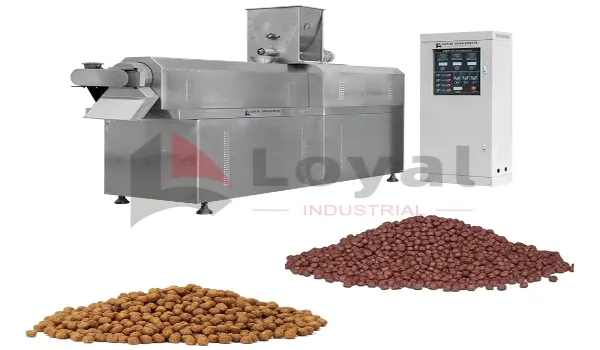 High Expansion
Floating Fish Feed Line
Designed for surface feeders like Tilapia, Catfish, and Carp. The extruder creates a honeycomb structure with air pockets, ensuring pellets float for >24 hours to reduce waste.
- Target: Surface Feeders (Tilapia/Carp)
- Tech: Steam Expansion & Fat Coating
- Benefit: Visual feeding control
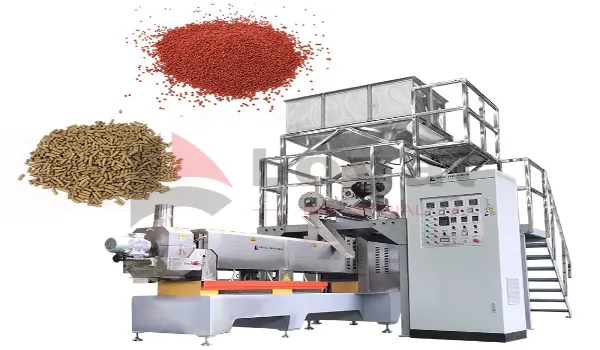 High Density
Sinking Fish/Shrimp Feed Line
Engineered for bottom feeders like Shrimp, Crab, and Sturgeon. Uses vacuum degassing to create dense, compact pellets with excellent water stability (>2 hours) to protect water quality.
- Target: Bottom Feeders (Shrimp/Crab)
- Tech: Vacuum Venting & Ultra-Fine Grind
- Benefit: High water stability
Density Control Process Flow
Precise control from 80-mesh grinding to vacuum extrusion ensures your feed meets the specific density requirements of your species.
Critical Prep
Ultra-Fine Grinding
Unlike land animal feed, aquafeed requires ultra-fine particles. Our Pulverizer grinds raw materials to 80-100 mesh (0.18mm) to ensure smooth pellets and high water stability.
80-100 Mesh Fineness
Cooking
Dual-Shaft Conditioning
Steam and water are injected in a dual-shaft conditioner. Extended retention time (>120s) ensures starch gelatinization, which is vital for pellet binding and digestibility.
Gelatinization >90%
Extrusion (Density Control)
Twin-Screw Extruder
For Floating: High temp + atmospheric venting creates expansion.
For Sinking: Vacuum system removes air bubbles, compacting the pellet for high density (0.7 g/L).
Dehydration
Conveyor Drying
Pellets pass through a multi-layer dryer. Moisture is reduced to <10% to prevent mold growth while maintaining the pellet's structural integrity.
Precise Moisture Control
Nutrient Addition
Vacuum Oil Coating
Crucial for carnivorous fish (Trout/Salmon). The vacuum coater infuses high levels of fat/oil into the pellet core without making the surface greasy.
Fat Absorption
Final Stage
Cooling & Packaging
Pellets are cooled to ambient temperature to prevent condensation. The automated bagging system handles weights from 1kg to 50kg.
Automated BaggingTechnical Specifications
High-performance extruders ranging from 150kg/h for specialized fry feed to 3.0T/h for commercial fish farms.
Series A: Floating Fish Feed Lines (Standard Twin-Screw)
| Model | Capacity (kg/hr) |
Main Power (kW) |
Pellet Diameter (Range) |
L/D Ratio (Screw) |
Line Dimensions (L x W x H meters) |
|---|---|---|---|---|---|
| LY-65A | 120 – 150 | 22 kW | 1.0mm – 10mm | 16:1 | 15 x 1.2 x 2.2 |
| LY-70A | 200 – 260 | 30 kW | 1.0mm – 10mm | 16:1 | 22 x 1.5 x 2.2 |
| LY-85A | 400 – 500 | 75 kW | 1.0mm – 12mm | 18:1 | 30 x 2.0 x 3.0 |
| LY-95A | 800 – 1000 | 90 kW | 1.0mm – 12mm | 18:1 | 38 x 3.0 x 3.5 |
Series B: Sinking Shrimp Feed Lines (With Vacuum System)
| Model | Capacity (kg/hr) |
Vacuum Pump (Power) |
Min. Pellet Size (Micro-Die) |
L/D Ratio (High Shear) |
Main Power (kW) |
|---|---|---|---|---|---|
| LY-70B | 200 – 250 | 5.5 kW | 0.5 mm | 20:1 | 37 kW |
| LY-85B | 400 – 500 | 7.5 kW | 0.8 mm | 20:1 | 90 kW |
| LY-95B | 800 – 1200 | 11 kW | 0.8 mm | 22:1 | 132 kW |
Core Aquafeed Technologies
Stability & Efficiency
From controlling the density of every pellet to ensuring ultra-fine grinding for shrimp digestion. We master the physics of underwater feeding.
Vacuum Density Control
The key to producing Sinking Feed on a twin-screw extruder. A vacuum pump attached to the barrel removes air bubbles from the dough, increasing pellet density (>700g/L) so it sinks immediately and stays compact.
Vacuum Pressure
-0.06 MPa
Density Range
400 – 800 g/L
High Gelatinization
Aquafeed requires high water stability. Our Dual-Shaft Conditioner injects steam and water, keeping material for >120s. This achieves >90% starch gelatinization, acting as a natural binder to prevent pellets from disintegrating in water.
Gelatinization
≥ 90%
Water Stability
> 2 Hours
Ultra-Fine Pulverizing
Shrimp have short digestive tracts. Raw materials must be ground to 80-100 mesh (0.15mm). Our advanced Pulverizer ensures ultra-fine particle size, resulting in smooth pellet surface and maximum nutrient absorption.
Fineness
80 – 100 Mesh
Pass Rate
99%
Vacuum Venting System for Sinking Feed
Standard extruders rely on “natural venting,” which still leaves small air pockets, causing some pellets to float partially. Loyal integrates a Negative Pressure Vacuum System directly onto the extruder barrel. This actively sucks out moisture and air, ensuring every pellet is dense, uniform, and sinks perfectly to the bottom.
See Vacuum System Specs →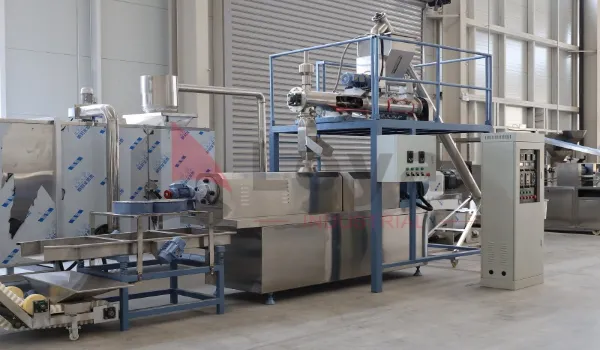
Feed Variety & Precision
From 0.5mm micro-pellets for fry to 15mm pellets for broodstock. Our lines produce stable, nutritious feed for every stage of aquaculture.
🐟 Tilapia / Carp

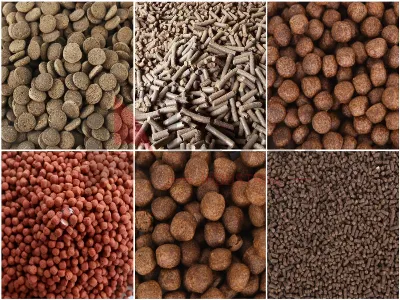
High Expansion
Floating Fish Feed
Float: >24 Hours
Size: 2mm – 8mm
Shape: Round
🦐 Shrimp / Crab
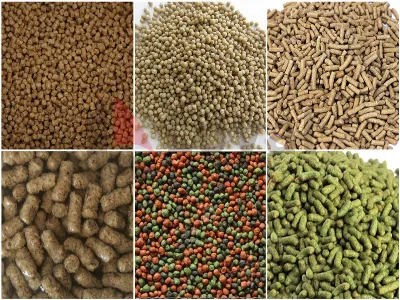
High Density (Vacuum)
Sinking Shrimp Feed
Stability: >2 Hours
Size: 1.0mm – 2.5mm
Surface: Smooth
🌱 Fry / Starter
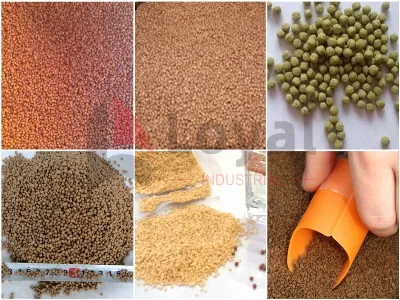
Micro-Extrusion
Fry Starter Feed
Size: 0.5mm – 1.0mm
Protein: High (>45%)
Type: Slow Sinking
🦈 Trout / Salmon

Vacuum Coated
High-Fat Feed
Oil Content: Up to 35%
Energy: High
Type: Slow Sinking
🐠 Ornamental
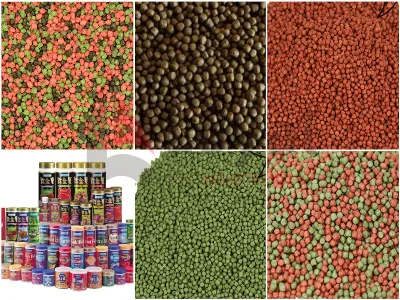
Special Formula
Color-Enhancing Feed
Additives: Carotene/Spirulina
Colors: Red/Green
Market: Aquarium
🦀 Crab / Lobster
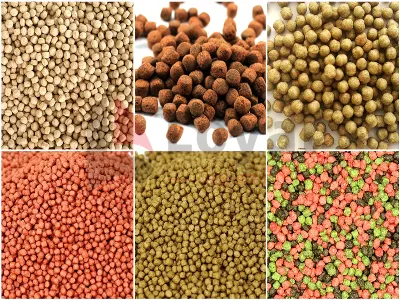
Hard Texture
Crab/Lobster Feed
Shape: Stick/Cylinder
Hardness: High
Stability: >4 Hours
Your Partner in Aquaculture Profitability
From lowering your Feed Conversion Ratio (FCR) to ensuring machine durability in humid environments. We support your success from formulation to production.
 EU Safety Compliant
 Quality Management
 Anti-Corrosion Steel
 Siemens Motors
1. FCR Optimization
We don’t just sell machines; we help you succeed. Our nutritionists assist in fine-tuning your formula to optimize starch gelatinization and lower your Feed Conversion Ratio.
2. Float/Sink Test
Before shipping, we run your specific material in our lab. We verify the “Water Stability Time” and “Floating Percentage” to match your target species.
3. Anti-Corrosion
Aquafeed plants are humid environments. We build critical components with Food Grade 304 Stainless Steel to resist rust and ensure a 10+ year service life.
4. Training
Controlling density (floating vs. sinking) is an art. Our engineers train your operators on vacuum and temperature settings to master the process.
Serving Major Aqua-Hubs
Loyal Machinery is a trusted supplier in the world’s leading aquaculture regions, including Southeast Asia (Vietnam, Indonesia) and South America (Ecuador, Brazil). We understand high-humidity operations.
30+
Countries
100+
Feed Mills

Frequently Asked Questions
Common questions about floating vs. sinking production and machine capabilities.
Can one machine produce both Floating and Sinking feed?
Yes, if you choose a Twin-Screw Extruder.
By adjusting the screw speed, temperature, and using a Vacuum System (optional), a twin-screw machine can control the pellet density to make it float or sink. Single-screw extruders are typically limited to producing only floating feed.
Why choose Twin-Screw over Single-Screw for Aquafeed?
Twin-Screw extruders offer wider adaptability. They can handle formulas with high fat content (>15%) and fine particle sizes, which are essential for premium shrimp and trout feed. Single-screw machines are cheaper but often clog with high-fat or sticky formulas.
What is the minimum pellet size I can make?
With our precision molds and high-speed cutter, we can produce micro-pellets as small as 0.5mm to 0.8mm. This allows you to serve the high-margin market for fry and fingerling starter feeds.
How long does the feed remain stable in water?
Floating Feed: Floats for over 24 hours without disintegrating.
Sinking Feed (Shrimp): Remains stable for over 2 hours. This is achieved through ultra-fine grinding (80-100 mesh) and intensive steam pre-conditioning.
Do I need a steam boiler?
Yes. For commercial production (capacity > 200kg/h), a steam boiler is necessary to power the Pre-Conditioner and Dryer. Steam is crucial for cooking the starch to ensure the pellets bind together and are digestible. For very small lines, electric heating is possible but less efficient.
Setting up a new fish farm feed mill?
Tell us your fish species and capacity. We will recommend the right extruder model.
Request Feed Mill Proposal →
Total Aquafeed Solutions
Ready to Maximize Feed Efficiency?
Whether you need high-expansion floating feed for Tilapia or dense sinking feed for Shrimp. Get a line engineered for low FCR and high water stability.