
Rotary Head Extrusion System
Kurkure, Cheetos & Nik Naks Production Line
Turn simple Corn Grits into the world’s favorite crunchy snacks. Utilizing advanced Rotary Head Extruders to create irregular corn curls with a premium fried texture.
The Art of Irregularity:
Friction Extrusion Tech
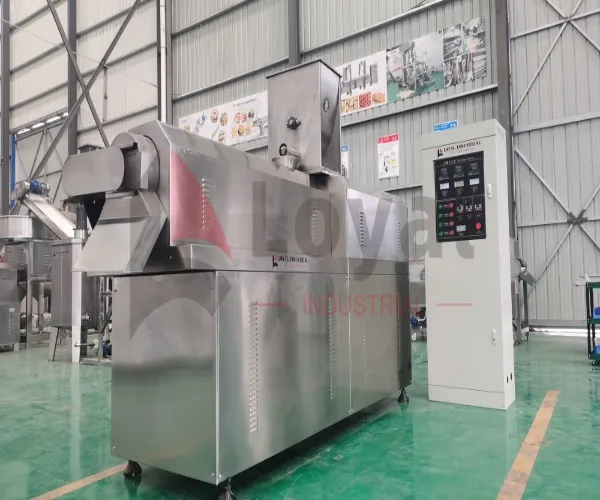
The Kurkure & Cheetos Production Line is distinct from standard puff systems. It uses a specialized Rotary Head Extruder (also known as a Friction Extruder) to process Corn Grits.
Inside the machine, a single screw spins at high speed between two brass plates. The intense friction generates enough heat to melt the corn grits instantly. The dough is then extruded and twisted into random, irregular curls before being cut.
This process creates the signature “Crunchy” texture (hard bite) that defines brands like Cheetos (Crunchy), Kurkure, and Nik Naks. The snacks are then fried and seasoned for a premium finish.
Corn Grits Material
Designed to process coarse corn grits (not fine flour). Grits are cost-effective, easy to source, and provide the essential dense structure for crunchy snacks.
Friction Heating
No external heating rings required. The machine uses the sheer mechanical energy of the high-speed screw to cook the product, saving on electrical heating costs.
Random Curls
Unlike uniform molds, the rotary head creates random, twisted shapes. This “homemade” look is highly desired in the market and holds seasoning perfectly.
Process Flow Chart
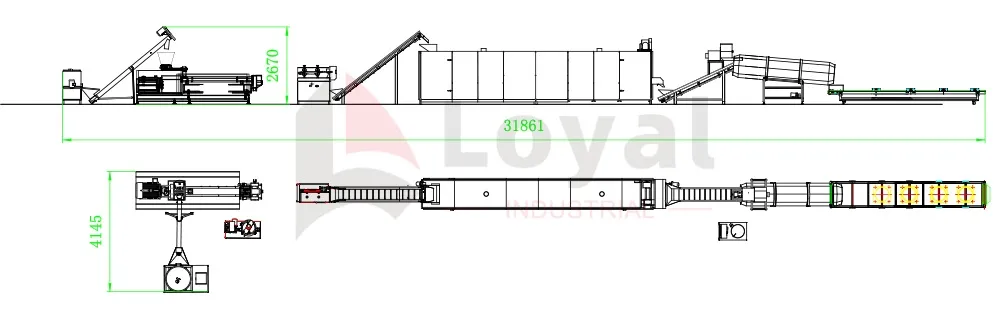
A specialized line designed for coarse corn grits. The process relies on mechanical friction heat rather than external electric heating.
01
Grits Mixing
Corn Grits are mixed with a precise amount of water. Unlike flour dough, the grits must be evenly hydrated to ensure proper friction generation.
02
Friction Extrusion
The grits enter the Rotary Head Extruder. High-speed spinning creates friction heat, melting the grits instantly into irregular twisted curls.
03
Rotary Sifting
The raw curls pass through a sifter to remove unshaped grit particles and fines. This step is crucial to keep the frying oil clean and prevent burning.
04
Continuous Frying
Curls are fried in hot oil to reduce moisture and develop the signature “Crunchy” texture. The surface becomes porous, ready to absorb flavor.
05
Seasoning
The fried curls are tumbled with seasoning powder (e.g., Masala, Cheese). The irregular shape and porous surface hold heavy seasoning well.
06
Cooling & Packing
After a cooling conveyor brings them to room temperature, the brittle snacks are weighed and packed into nitrogen-filled bags.
Technology Breakdown
Specialized friction-based equipment designed to process corn grits into crunchy, irregular curls.
Friction Extrusion
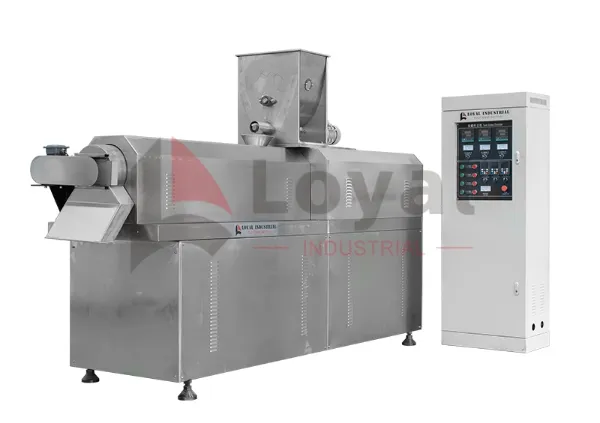
Rotary Head Extruder
Unlike twin-screw systems, this machine features a Rotary Die Plate. A single screw forces corn grits through a gap between two brass plates. The immense mechanical friction melts the grits instantly, curling them as they exit without external heaters.
Main Motor: 15-22 kW
Brass Die Plates
Adjustable Blade Speed
No External Heating
Separation
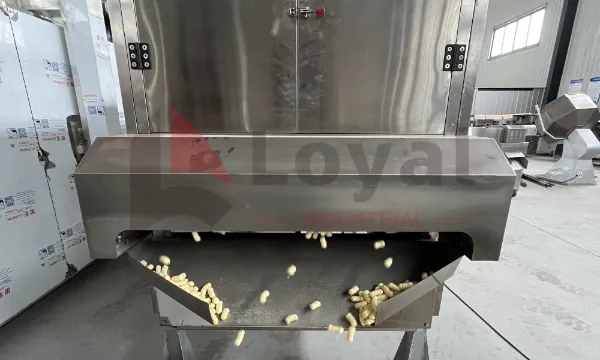
Rotary Sifter
Friction extrusion inevitably produces some small unexpanded grit particles (“fines”). This machine tumbles the curls through a mesh screen to separate these fines. Removing them ensures they don’t burn in the fryer, significantly extending your oil life.
Stainless Steel Mesh
Oil Life Extension
Waste Collection Pan
Continuous Feed
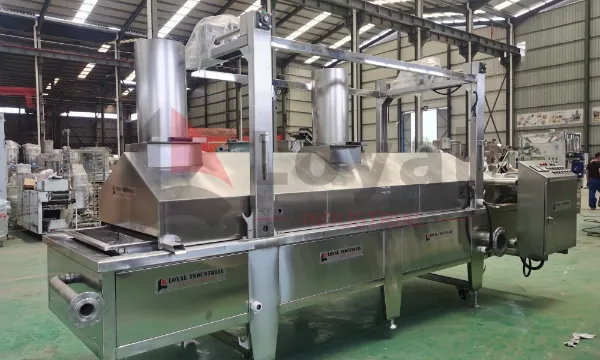
Dehydration & Crunch
Continuous Fryer
The irregular curls are fried to reduce moisture content to 2-3%. Our fryer utilizes a specialized belt system to prevent the oddly shaped products from jamming, ensuring uniform heat distribution and the perfect “Crunchy” bite.
Precise Temp Control
Oil Filtration System
Gas/Diesel/Electric
Auto-Lifting Hood
Random & Crunchy
The Rotary Head Extruder produces one specific type of product: the irregular corn curl. However, flavor and seasoning create distinct variations for different global markets.
Western Style
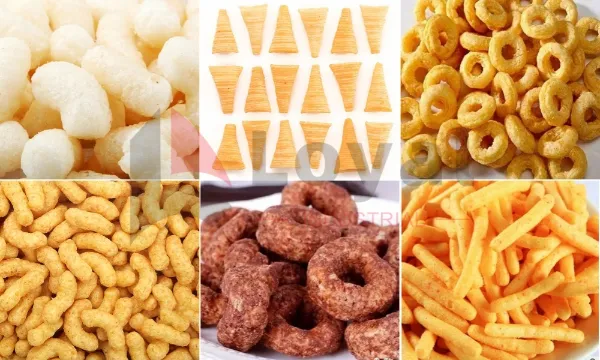
Crunchy Cheese Curls
The classic Western snack. Hard, crunchy texture coated with bright orange cheddar cheese powder. Requires precise frying to maintain the “snap”.
Asian Style
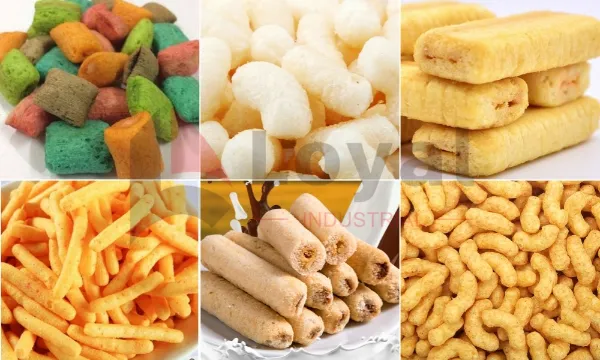
Masala Sticks (Kurkure)
Highly popular in India and South Asia. These are fried slightly longer for a deeper crunch and heavily seasoned with spicy chili and masala mixes.
Knobbly Shape
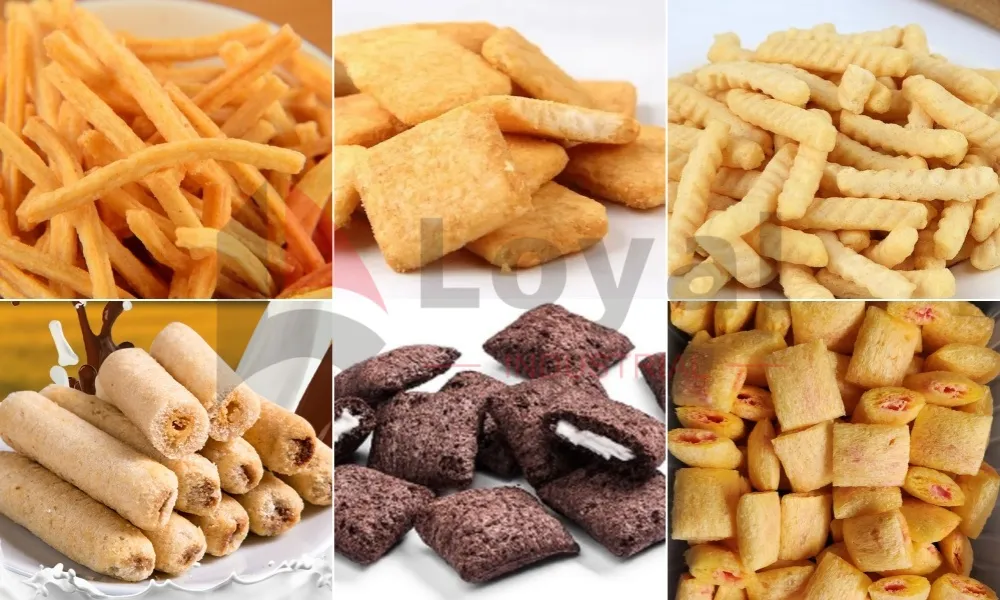
Knobbly Sticks (Nik Naks)
A variation with a distinct “knobbly” surface texture. The rotary head die can be adjusted to create rougher surfaces for holding unique tangy flavors.
Input Material
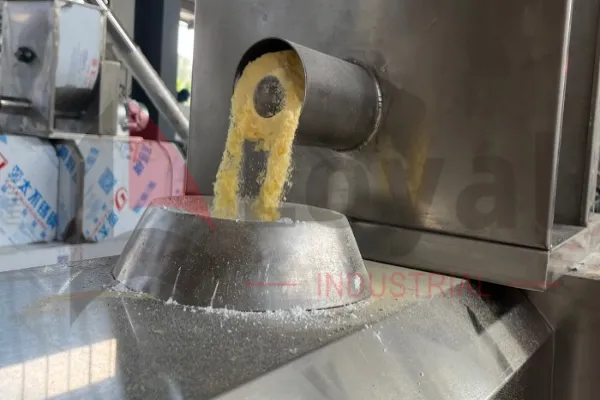
Corn Grits
The foundation of the process. Unlike flour, coarse Corn Grits are cheap and abundant. Their hardness is what allows friction heat to generate inside the extruder.
Random Shape
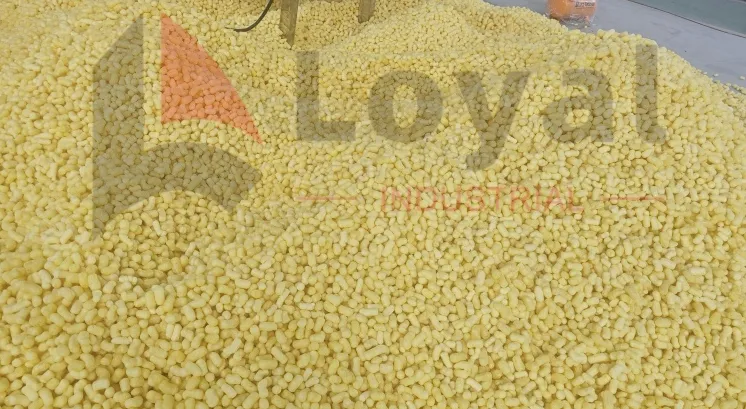
Twisted Geometry
No two chips are identical. The random twisting occurs naturally as the melted grits exit the spinning brass die plates, creating a rustic, homemade appeal.
Texture Focus
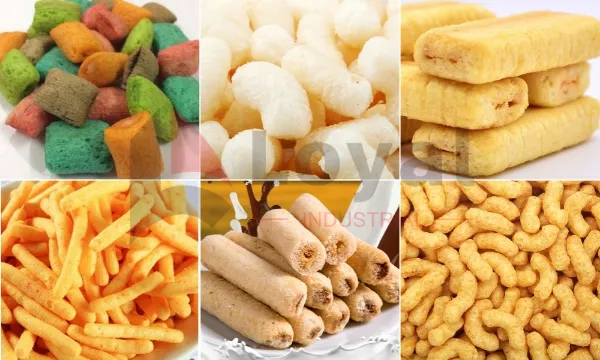
Porous Surface
The rapid expansion and frying create a micro-porous surface structure. This acts like a sponge, ensuring maximum adhesion of oil and seasoning powder.
Technical Specifications
Scalable production lines. Output capacity is increased by adding Rotary Head Extruders in parallel to feed a single frying line.
| Model | Number of Extruders | Total Capacity | Main Motor Power | Line Dimensions (L*W*H) |
|---|---|---|---|---|
| LY-76-A | 1 Unit | 125 – 150 kg/h | 15 kW | 18 x 1.2 x 2.2 m |
| LY-76-B | 2 Units | 250 – 300 kg/h | 30 kW (15*2) | 22 x 1.5 x 2.2 m |
| LY-76-C | 3 Units | 375 – 450 kg/h | 45 kW (15*3) | 24 x 1.5 x 2.5 m |
| LY-76-D | 4 Units | 500 – 600 kg/h | 60 kW (15*4) | 28 x 2.0 x 3.0 m |
Electric Saving Advantage:
The Rotary Head Extruder relies entirely on Mechanical Friction Heat to cook the corn grits. Unlike standard puff extruders, there are no electrical heating rings on the barrel. This significantly reduces the electrical load and operating costs of the extrusion section.
Unsure how many extruders you need? We can calculate the ROI for starting with 1 unit and upgrading to 2 or 3 later.
Get Scalable LayoutHigh Margin, Low Input Cost
The Kurkure line capitalizes on the price gap between raw Corn Grits and finished Fried Snacks. This “Value-Add” ratio is among the highest in the food industry.
Potato Chip Line
High Input Costs
- Expensive Raw Material: Fresh potatoes are seasonal, hard to store, and price-volatile.
- Storage Issues: Requires large climate-controlled warehousing to prevent potato spoilage.
- High Waste: Peeling and slicing potatoes generates significant organic waste and water usage.
Kurkure / Cheetos Line
Smart Raw Material Strategy
- Cheap Raw Material: Uses dried Corn Grits, which are stable, cheap, and available year-round.
- Zero Spoilage: Dried grits can be stored in silos for months without refrigeration costs.
- 100% Utilization: No peeling or slicing required. Every gram of corn grit becomes a gram of snack.
Low Energy Cost
Utilizes Friction Heat for cooking. Eliminating barrel heaters reduces the electrical consumption per kg of product.
Premium Perception
“Crunchy” texture is perceived as a premium snack category, allowing for higher retail pricing compared to standard soft puffs.
Simple Maintenance
The Rotary Head extruder has very few moving parts (1 main screw, 1 rotary die). This simplicity means lower maintenance costs and less downtime.
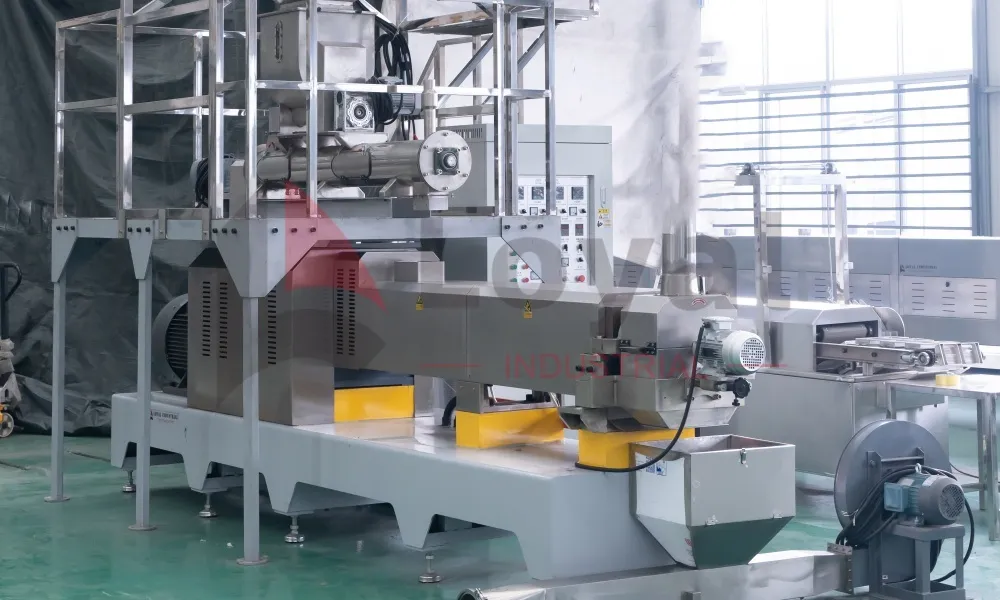
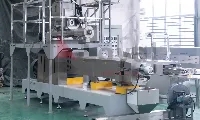
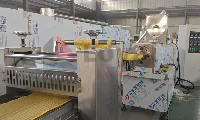
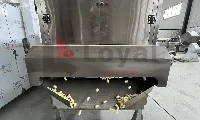
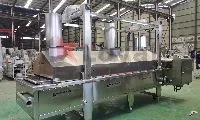
Live Factory Installations
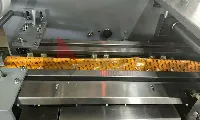
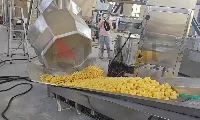
See our Rotary Head Extrusion lines in action. From parallel extruder setups to continuous frying systems.
Client Success Stories
Feedback from our global partners on project execution and technical support.
“
Almost the same size as my calculations it was nice working with you
“
Your explanation was more complete than all the companies, even Fava and Pawan.
Built for Tough Ingredients
Processing abrasive corn grits requires robust engineering. Loyal optimizes the Rotary Head Extruder for durability and oil quality management.
Durable Brass Dies
The rotary plates face immense friction. We use a proprietary Brass Alloy that withstands high heat and abrasion, lasting 40% longer than standard copper plates.
Cleaner Frying Oil
We integrate a Rotary Sifter before the fryer to remove grit fines. This prevents carbon buildup in the fryer, keeping your oil clean and your product tasting fresh.
Siemens Motors
Friction extrusion relies on torque, not heaters. We equip our lines with premium Siemens Motors to ensure consistent rotational speed and uniform puffing.
Formula Tuning
Achieving the right “Crunch” depends on moisture content. We provide proven Corn Grits Formulas for both Cheetos (US Style) and Kurkure (Indian Style) textures.
Frequently Asked Questions
Expert answers regarding Rotary Head Extrusion and Corn Grits processing.
Can I use Corn Flour instead of Corn Grits?
No. The Rotary Head Extruder is specifically designed for Corn Grits (approx. 20-40 mesh). Fine flour will not generate enough friction heat inside the barrel, resulting in a soft, unexpanded product. For corn flour, you need a standard Twin-Screw Puff Line.
Does the extruder require electrical heating rings?
No. This machine operates on Friction Heat only. The high-speed rotation of the screw against the brass plates generates sufficient heat to melt the grits. This makes the machine very energy-efficient compared to conventional extruders.
Can I produce “Baked” Cheetos instead of Fried?
Yes. While the classic Crunchy Cheetos texture is achieved by frying, we can replace the fryer with a Hot Air Oven for a healthier, lower-fat version. However, the texture will be slightly harder and drier than the fried version.
Which spare parts wear out the fastest?
Due to the intense friction, the Brass Die Plates and the cutting blades are the primary wear parts. We recommend keeping at least 2 extra sets in stock. Our plates are made from a special durable alloy to maximize lifespan.
How do you control the oil content in the final product?
Oil content is controlled by the frying time and temperature, but most importantly by the De-oiling step. Our continuous fryer is equipped with an air-knife system or a centrifugal de-oiler to remove excess surface oil before seasoning.
Need Spare Parts or Recipe Advice?
We supply high-durability Brass Die Plates and can share standard Kurkure/Cheetos formulas to get you started.
Contact Support Team