

How to Reheat Chicken in Microwave Without Drying It Out

To successfully reheat chicken in the microwave without drying it out, you need to manage moisture and regulate heat. Instead of blasting leftovers on high, slice the meat into even pieces and add a splash of water or broth to the plate. Drape a damp paper towel over the top to trap steam, then lower your microwave’s power setting to 50 percent. Heating the poultry slowly in short bursts prevents the proteins from seizing, keeping every bite tender.
The foolproof method for getting perfectly moist and tender chicken every single time
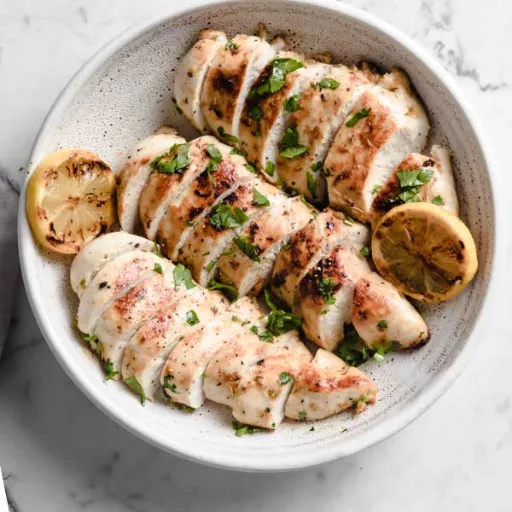
Microwaves don’t actually cook food; they excite water molecules. When you toss a leftover chicken breast into the microwave on a standard two-minute cycle, you are essentially boiling the remaining moisture right out of the meat fibers. The proteins contract violently, squeezing out whatever juices are left, leaving you with a tough, stringy piece of poultry that feels more like an eraser than dinner.
To stop this from happening, the approach has to shift from simply blasting the food with heat to carefully managing its internal environment. Industrial food processors often rely on controlled humidity and gradual temperature gradients to maintain yield and texture during precooking. We can replicate a scaled-down version of that same concept at home. By controlling the surface area, trapping existing moisture, and dampening the energy output of your appliance, you completely change how the microwave interacts with the chicken.
Cutting it down to size
Microwaves penetrate unevenly, usually only reaching about an inch to an inch and a half deep. If you try to reheat a thick, whole chicken breast, the edges will turn to leather long before the center drops its chill.
Slice the meat into uniform strips or bite-sized cubes before plating it. This simple physical change drastically reduces the required heating time and prevents the outer layers from taking the brunt of the radiation while the inside stays cold.
Trapping the steam
You need a barrier to keep the escaping moisture close to the meat. Start by adding about a tablespoon—roughly 15 milliliters—of water or chicken broth directly to the bottom of your dish.
Then, cover the plate with a damp paper towel or a microwave-safe lid slightly vented at the side. As the liquid heats up, it converts into steam. The damp towel acts as a canopy, holding that steam against the chicken and creating a localized high-humidity zone that actively prevents the muscle fibers from drying out.
Leveraging half power
Most people never touch the power level button on their microwave, which is a mistake. Dropping the power to 50% doesn’t change the temperature of the microwaves; it just pauses the magnetron intermittently.
This cycling allows the heat to equalize throughout the chicken pieces naturally, rather than forcing the exterior to aggressively overheat. Run it in 60-second intervals until warmed through. Patience here makes the difference between juicy chicken and a ruined meal.
The science of rubbery meat
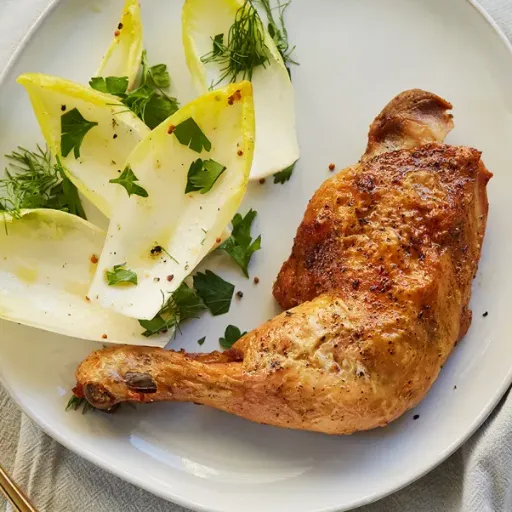
Chicken muscle fibers act a lot like bundles of microscopic, water-filled sponges. When exposed to the intense, localized energy of a microwave, those trapped water molecules vibrate fiercely.
Once the meat’s internal temperature spikes past 160°F, the proteins undergo rapid thermal contraction. They physically shrink.
Industrial food processors actually map this exact coagulation phase to prevent massive yield drops during precooking. If heat hits the meat too aggressively, the muscle fibers often wring themselves out like a violently twisted wet towel, instantly flushing the remaining juices straight onto your plate.
Without that internal lubrication, the protein strands lock together. You aren’t just chewing on dry chicken. You are actively trying to break down structurally altered, completely dehydrated protein bonds.
4 emergency moisture hacks
Sometimes, you pull leftover roast chicken from the fridge and realize it is already teetering on the edge of becoming jerky. The skin is shriveled, and the meat feels dense to the touch. Standard reheating rules simply aren’t enough here. You need active moisture injection to revive those proteins before the microwave locks them into a rubbery state permanently.
Commercial kitchens frequently use combi-ovens that inject steam at precise intervals to solve this exact problem and minimize yield loss. At home, you have to manually simulate that environment. These rapid-response tactics help force liquid back into the muscle fibers, softening the meat just enough to make it palatable again.
Applying a splash of rich chicken broth right before you hit the start button
Water creates steam, but broth brings fat and flavor.
If you are dealing with particularly lean cuts like day-old white meat, pour about a tablespoon and a half of chicken stock directly over the pieces. Do not just puddle it on the edge of the plate. Let the liquid physically coat the surface of the meat. As the microwave heats the broth, the residual fats help baste the chicken while the evaporating liquid gently steams it. This method often rescues poultry that would otherwise turn to chalk, acting as a temporary glaze that seeps directly into the dry crevices.
Utilizing a specially designed microwave dome lid to create an internal humidity chamber
A damp paper towel works in a pinch, but a rigid silicone or BPA-free plastic microwave cover performs significantly better for moisture retention.
These dome lids trap nearly 100% of the evaporating liquid, creating a miniature high-humidity chamber right on your glass turntable. The trapped steam circulates intensely around the chicken, enveloping it in a wet heat that penetrates faster than dry radiation alone. Because the thermal transfer is more efficient in a humid environment, it tends to cut the necessary heating time down by roughly 15 to 20 seconds. Plus, it entirely eliminates the annoying scenario of a wet paper towel sinking and sticking to your lunch.
What about meal prep bowls containing rice or thick sauces?
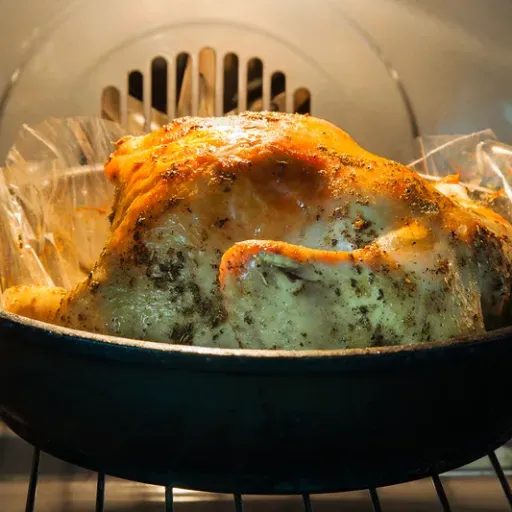
Throwing an entire meal prep container into the microwave and hitting the three-minute button is a guaranteed way to ruin lunch. You usually end up with molten lava around the edges and a block of ice in the center. Dense starches like rice and thick, sugar-heavy teriyaki sauces absorb microwave energy at completely different rates than lean poultry.
A thick sauce tends to boil rapidly, reaching temperatures well over 212°F while the chicken beneath it barely cracks 70°F. By the time the meat is actually warm, the surrounding rice has dehydrated into hard, crunchy pellets, and the sauce is permanently crusted to the side of your glass Tupperware. You have to stop treating a mixed bowl as a single thermal entity.
Component separation
Commercial kitchens rarely blast fully assembled meals to bring them up to serving temp; they manage heat transfer by processing components individually. You should do the same. Pull the chicken out of the bowl and set it aside.
Warm the rice and sauce first, adding a few drops of water to rehydrate the grains. Once the base is steaming hot, place the cold chicken back on top. The residual heat from the 180-degree rice will often gently warm the poultry from the bottom up. A quick 20-second zap at 50% power finishes the job without turning the meat to rubber.
Food safety basics
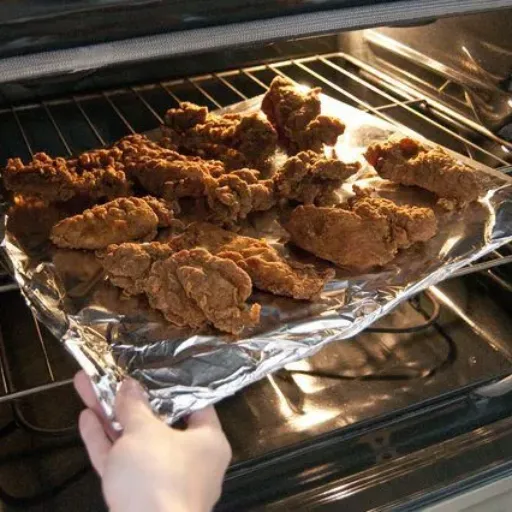
You can perfectly steam a leftover breast, but if the center remains tepid, you are inviting foodborne illness. Microwaves heat unevenly, leaving isolated cold spots where bacteria comfortably survive.
Commercial processors rely on blast chillers to aggressively drop poultry temperatures and bypass the danger zone. At home, a cooked chicken often sits on the counter for 85 minutes before making it to the fridge.
When reheating that meat, the internal temperature must cross 165°F to destroy microbial growth triggered during that slow cooldown window. Do not just touch the surface to gauge readiness. A quick check with a digital probe thermometer is the only way to verify the core is truly safe.
FAQ Section
Q: How much water should I add to the plate before heating?
A: You only need a very small amount to create enough steam. About one to two tablespoons of water or chicken broth is plenty for an average-sized portion. If you add too much liquid, the bottom of the meat will boil and turn soggy rather than gently steaming. The goal is just to provide enough ambient moisture to keep the fibers from drying out under the microwave dome or damp towel.
Q: Is it possible to keep the chicken skin crispy in the microwave?
A: Unfortunately, no. The microwave environment is built on trapping and exciting moisture, which is the exact opposite of what you need for crispy skin. Even if you don’t use a cover or a damp towel, the internal steam escaping from the meat will soften the exterior. If preserving that crunch is your priority, skip the microwave entirely and reheat the pieces in an air fryer or a toaster oven.
Q: Why does reheated chicken sometimes pop or explode while spinning?
A: That popping sound is essentially miniature steam explosions. Pockets of moisture get trapped inside the dense muscle fibers or underneath the skin. When the microwave heats that water faster than the steam can escape, pressure builds up until it forcefully ruptures the surrounding tissue. Lowering your appliance to half power allows the heat to distribute more evenly, giving the steam time to vent naturally instead of bursting.
Q: Is 50% power enough to heat poultry all the way through?
A: Yes, it absolutely is. Using half power doesn’t mean the appliance produces weaker microwaves; it means the magnetron cycles on and off. This pulsing action gives the ambient heat time to conduct outward from the hottest spots into the cooler center of the meat. It takes a little longer than running it on high, but it ensures the entire piece reaches a safe 165°F without turning the edges to leather.
Q: What is the maximum time a chicken breast should stay in the microwave?
A: There isn’t a strict universal timer because appliance wattages vary wildly. However, a standard sliced chicken breast reheated at 50% power usually only needs about 90 seconds to two minutes total. You should always heat it in short 30 to 60-second bursts, checking the temperature in between. If you leave a breast spinning for three or four continuous minutes, you will almost certainly overcook and dehydrate it.