

The Botanical Blueprint: How to Make Chamomile Oil for Home or Commercial Use

Making chamomile oil is a process of capturing the plant’s soothing phytochemicals within a stable lipid base. Whether you need a quick-heat infusion for immediate use or a traditional six-week solar maceration, the success of the oil depends entirely on managing moisture levels and selecting a carrier oil with high oxidative stability. Understanding these technical nuances ensures your final product remains potent and shelf-stable rather than succumbing to mold or rancidity.
Infusion vs. Distillation: Deciding Your Extraction Path
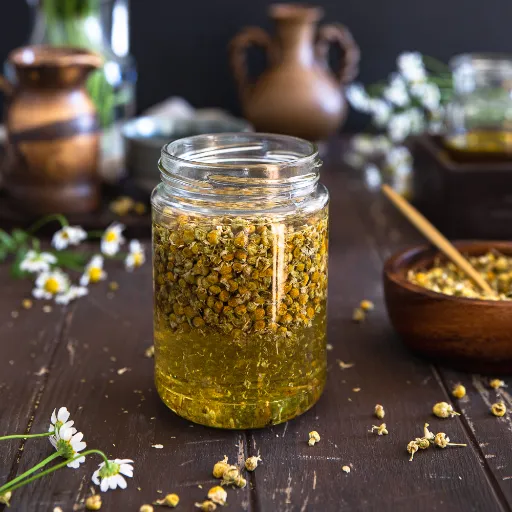
The term “chamomile oil” often creates confusion because it refers to two entirely different substances. If you want a potent, concentrated essential oil, you are looking at steam distillation—a process that captures the volatile compounds of the plant. However, most people researching how to make chamomile oil at home are actually looking for an infused oil (a maceration). This involves submerging the flowers in a carrier lipid to draw out fat-soluble components like apigenin.
While distillation requires a specialized alembic or condenser, infusion is a matter of patience and lipid saturation. The resulting infused oil is gentler, making it ideal for topical applications without the risk of skin sensitization common with undiluted essential oils.
The Maceration Method (Infused Oil)
Maceration is the preferred industry observation for creating topical skincare bases. By soaking dried chamomile in a carrier oil—such as jojoba or fractionated coconut oil—you extract the plant’s lipid-soluble resins and flavonoids. A practical example: filling a glass jar halfway with flowers and covering them with 250ml of oil. This “slow” chemistry relies on time rather than force. Because the active ingredients are suspended in a stable fat, the resulting oil is ready for direct use in salves or lotions, provided you manage the moisture levels to prevent microbial growth.
Steam Distillation for Essential Oil
For those seeking the deep blue chamazulene characteristic of German chamomile, steam distillation is the only route. This process uses high-pressure steam to rupture the plant’s glandular trichomes, carrying the volatile oils into a condenser.
In a realistic scenario, a hobbyist distiller might process 5kg of dried flowers only to yield a mere 12ml to 18ml of pure essential oil. It is an exercise in extreme concentration. Cautious monitoring of the condenser temperature is vital; if the cooling water isn’t chilled sufficiently, the precious vapor simply escapes, leaving you with nothing but fragrant water (hydrosol) and a failed batch.
Sourcing Matters: German vs. Roman Chamomile
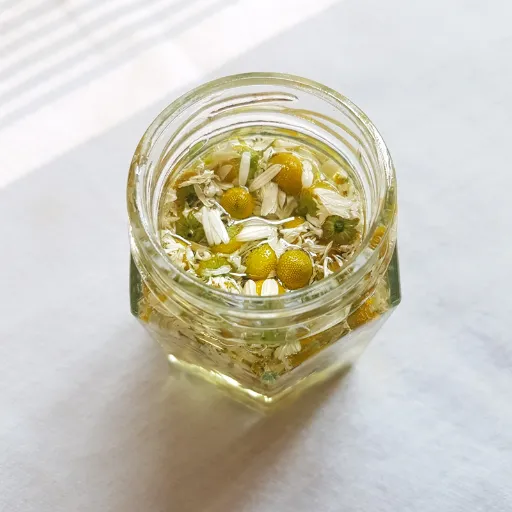
Choosing the wrong flower is the most efficient way to sabotage your results. While both plants share the name, their chemical profiles serve vastly different purposes. Industry observation suggests that most therapeutic-grade infusions prioritize German Chamomile (Matricaria chamomilla) due to its high concentration of chamazulene. This compound is what gives distilled oil its vivid blue tint and provides the potent anti-inflammatory properties many makers are after.
On the other hand, Roman Chamomile (Chamaemelum nobile) tends to be lower in chamazulene but richer in esters. This makes it the practical choice for calming aromatics or massage oils where a sweet, apple-like scent is more desirable than raw medicinal power.
A realistic scenario: you buy a generic “chamomile” bulk bag only to find your oil has a faint, grassy odor rather than the rich, herbaceous depth you expected. Cautious labeling is rare in craft stores, so looking for the Latin name is vital. If you are aiming for a concentrated skin-repair salve, the 0.2% to 0.5% essential oil yield found in quality German varieties is usually the gold standard.
The Solar Infusion Technique for Maximum Potency

Solar infusion is the traditionalist’s choice, favoring the rhythmic, low-level energy of the sun over the blunt force of a stovetop. It is a slow-motion extraction. By placing your maceration in a warm, bright spot, you create a gentle convection current within the jar that encourages the carrier oil to penetrate the chamomile’s dense flower heads.
This method is less about “cooking” and more about an extended chemical handshake. While a quick heat method might take four hours, a solar steep often lasts 30 to 45 days. Industry observation suggests that this patient approach preserves the most heat-sensitive esters, which can be easily scorched or lost during rapid boiling. It yields an oil that smells remarkably true to the living plant.
Selecting the Ideal Carrier Lipid
The lipid you choose acts as both the solvent and the preservative. For a stable chamomile oil, fractionated coconut oil (MCT) is a professional favorite because it remains liquid at room temperature and has a nearly indefinite shelf life. If you are formulating for facial application, jojoba oil is a superior practical example; its chemical structure closely mimics human sebum, allowing the chamomile’s apigenin to be absorbed more efficiently into the dermis.
Why Moisture is the Enemy of Shelf Stability
Moisture is the single most common cause of batch failure. Even if your flowers look dry, they may retain a 12.8% or 14% water content that is invisible to the eye.
In a realistic scenario, that hidden water settles at the bottom of your jar, creating a breeding ground for anaerobic bacteria. This often manifests as a cloudy layer or a sudden “cheesy” odor a few weeks into the steep. Cautious makers will often wilt their flowers for 24 hours in a dehydrator or a dry room before submerging them, ensuring that the only thing entering the oil is the botanical essence, not the water that supports mold.
4 Crucial Mistakes That Lead to Rancid Chamomile Oil
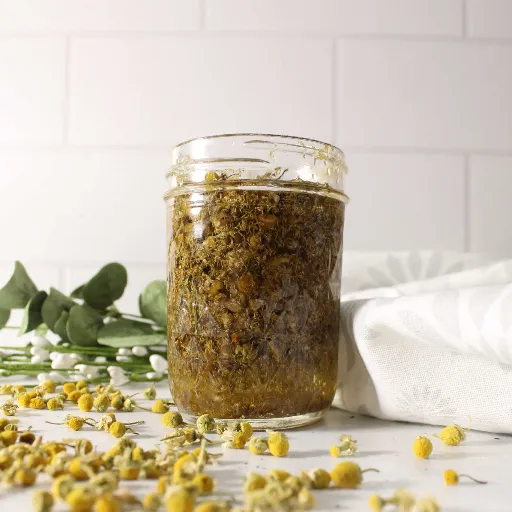
Botany is rarely forgiving when it comes to lipid stability. While the process of how to make chamomile oil seems straightforward, small oversights in environmental control can turn a therapeutic extraction into a petri dish of oxidation. Industry observation suggests that the majority of homemade batches fail not because of the recipe, but because of poor moisture management and UV exposure.
One of the most frequent errors is using “fresh” flowers that haven’t been properly wilted. A realistic scenario: you harvest a handful of chamomile on a sunny morning and immediately submerge them in oil. Because the water content in fresh petals often exceeds 75%, you are essentially creating an emulsion that invites anaerobic bacteria. Within days, the oil may develop a “cheesy” or sour odor, signaling that the batch is unsalvageable.
Neglecting the “Headspace” in the Jar
Leaving too much air at the top of your container is a silent killer. Oxygen is the primary catalyst for rancidity; even a 3.5 cm gap of air can provide enough oxygen to degrade the fragile esters in the chamomile. For best results, fill your oil to within 1 cm of the lid.
Storing in Direct Sunlight
Many hobbyists make the mistake of placing their jars on a windowsill to “catch the sun.” However, ultraviolet light breaks down the chemical bonds of the carrier oil. Cautious makers tend to prefer a dark cupboard or a brown paper bag to shield the jar from light-induced spoilage.
Using Heat Above 55°C
Speeding up the process with high heat is a practical example of a “shortcut” that ruins quality. Excessive temperatures cook the delicate plant matter rather than extracting it, leading to a scorched, bitter scent and a significantly shortened shelf life.
The “Double Boiler” Shortcut: How to Make Chamomile Oil in Under 4 Hours
When business demands or personal projects require a quick turnaround, waiting 42 days for a solar maceration isn’t feasible. The double boiler method provides a controlled environment for accelerated lipid infusion. By using indirect heat, you bypass the weeks-long steep and force the carrier oil to penetrate the chamomile flowers in a single afternoon.
In a realistic scenario, you would fill the bottom pot with just enough water to create steam without the upper vessel touching the liquid. This barrier is essential. Direct contact with a burner or a hot plate often leads to “hot spots” that can scorch the delicate petals, turning your infusion from a fragrant floral oil into something that smells distinctly like hay. Keeping the stovetop on its lowest setting is usually enough to maintain the gentle warmth required for a successful 3.5-hour extraction.
Managing Thermal Sensitivity of Chamazulene
Heat is both a tool and a risk. Industry observation suggests that the therapeutic compounds in chamomile, specifically chamazulene and bisabolol, are highly sensitive to thermal degradation. If the oil temperature climbs above 54°C, you risk denaturing these active molecules.
A practical example: use a digital probe thermometer to check the oil every 30 minutes. You are aiming for a steady range between 40°C and 48°C. This specific window is warm enough to lower the oil’s viscosity—allowing it to flow into the dried flower heads—but cool enough to keep the phytochemicals intact. Cautious heating tends to produce a brighter, more vibrant oil compared to batches that are “flash-infused” at higher temperatures.
Proper Straining and Sediment Removal
Once the heat cycle finishes, the oil is at its most fluid, making this the perfect time to filter. Standard kitchen sieves are often too porous, allowing 50-micron particles of botanical dust to remain in the batch. These fine sediments may eventually settle and ferment, shortening the shelf life of your product.
Instead, try a multi-stage approach. Pass the oil through a clean linen cloth first to remove the bulk flowers, then follow up with a high-density unbleached coffee filter. If you are scaling up, using a vacuum-assisted filtration kit can reduce this process from an hour-long drip to a few minutes, ensuring your finished oil is crystal clear and free of debris that could cause rancidity.
Beyond the Jar: Professional Equipment for Scaled Production
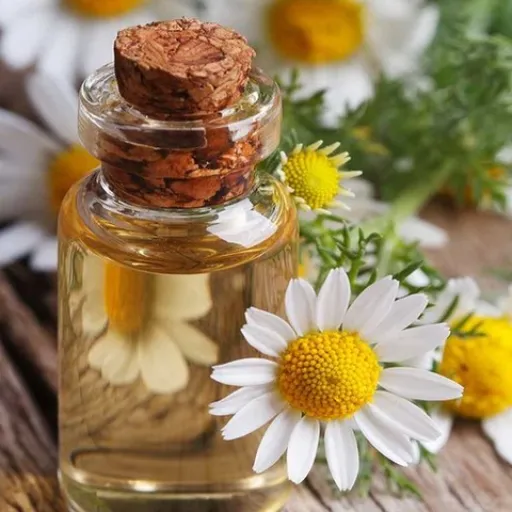
Moving from a hobbyist kitchen to a commercial-grade facility requires more than just bigger jars. When you scale the process of how to make chamomile oil, efficiency and consistency become your primary metrics. Industry observation indicates that manual straining and static maceration often result in variable potency across batches—a risk professional producers cannot afford.
To maintain the quality of a 50-liter batch, you have to look at mechanical intervention. It is no longer about “set it and forget it”; it is about maximizing the contact between the lipid solvent and the botanical surface area while strictly controlling the environment to prevent the degradation of fragile flavonoids.
Utilizing Vacuum Filtration for Clarity
In a realistic scenario, gravity-fed filtration for large batches is a bottleneck that risks oxidation. A professional setup typically utilizes vacuum-assisted filtration, often using a Buchner funnel or a motorized plate filter. By creating a pressure differential, you can pull the oil through a dense 5-micron or 10-micron filter bed in a fraction of the time.
This doesn’t just save labor; it ensures the “fines”—those microscopic chamomile particles—are completely removed. If these sediments remain, they often act as a catalyst for enzymatic spoilage. Cautious producers know that achieving that brilliant, gem-like clarity is the hallmark of a shelf-stable product.
UV-Protected Storage Solutions
Once the oil is clear, the battle against light begins. Traditional clear glass is a liability in a warehouse or retail setting. Professional operations favor Miron (violet) glass or high-quality amber containers that specifically block the 400 to 700 nanometer spectrum. These materials act as a natural preservative, maintaining the energy of the chamomile compounds for significantly longer than standard packaging.
Large-Scale Agitators and Digesters
For massive extractions, static jars are replaced by stainless steel digesters. These vessels often feature built-in agitators—mechanical paddles that rotate at low speeds, typically around 45 to 60 RPM. This constant, gentle movement ensures the flowers don’t clump at the bottom, which could lead to “cold spots” and uneven extraction.
A practical example of this in action is the heated jacketed digester. It maintains a precise 42.5°C across the entire volume, ensuring every drop of carrier oil is equally saturated with the plant’s therapeutic essence.
FAQ Section
Q: Can I use fresh chamomile flowers instead of dried ones?
You can, but it is risky. Fresh flowers contain high water content, which often leads to bacterial growth and mold within the oil. If you choose to use fresh blooms, industry observation suggests wilting them in a dark, dry spot for at least 24 hours first. This reduces the moisture levels enough to allow for a safer infusion. Cautious makers generally prefer dried flowers because they virtually eliminate the threat of spoilage and rancidity.
Q: How long does homemade chamomile oil stay shelf-stable?
Typically, your oil will last between six months and a year. The actual lifespan depends heavily on the carrier oil used; for instance, fractionated coconut oil lasts longer than sunflower oil. Storing the bottle in a cool, dark environment is essential to prevent oxidation. If the oil develops a sharp, metallic, or “old cardboard” scent, the lipids have likely gone rancid and the product should be discarded to avoid skin irritation.
Q: Is it possible to make blue chamomile oil at home?
Not through simple infusion. That iconic deep blue color comes from chamazulene, which is only released during steam distillation. When you infuse chamomile in a carrier oil at room temperature or low heat, the resulting liquid will be a golden or pale yellow. To get the blue “essential oil,” you would need a professional alembic still to process massive quantities of German chamomile flowers, as the blue compound is a byproduct of the heat-pressured distillation process.
Q: Which oil base is best for facial applications vs. body massage?
For facial use, jojoba or rosehip oils are excellent because they are non-comedogenic and absorb quickly without clogging pores. They mimic the skin’s natural sebum. For body massage, you might prefer a “heavier” oil with more glide, such as sweet almond or apricot kernel oil. These provide a smooth surface for longer work. If you need a professional, all-purpose base, fractionated coconut oil is a practical example of a stable, scentless carrier that works for both.
Q: Should I store my infusing jars in direct sunlight or a dark cupboard?
A dark cupboard is almost always better. While the “solar infusion” method is popular, direct UV rays actually degrade the carrier oil and the plant’s delicate phytochemicals over time. If you want the benefit of gentle warmth, place the jar in a brown paper bag or wrap it in a towel before putting it in a sunny window. This allows the heat to facilitate the extraction without letting the light damage the oil’s molecular integrity.
Q: Do I need to add Vitamin E as a preservative?
Vitamin E is an antioxidant, not a preservative. It won’t stop mold or bacteria if water gets into your jar, but it will slow down the oxidation of the oil. Adding about 0.5% to 1% Vitamin E by weight is a smart move if you are using oils with shorter shelf lives, like sweet almond or hemp. It helps keep the fat molecules stable, ensuring your chamomile oil stays fresh-smelling for a few extra months.
Q: How do I know if my oil has gone moldy?
Look for cloudiness, fuzzy spots, or a distinct change in odor. Mold usually appears as dark or white “clumps” floating at the bottom or clinging to the flowers. A realistic scenario of spoilage often includes a funky, sour, or “cheesy” smell that replaces the sweet, apple-like aroma of the chamomile. If you see any signs of sediment that looks like slime, the batch has been compromised by moisture and is no longer safe for topical use.