
Industrial Transformation: The Engineering Behind How Milk Powder is Made

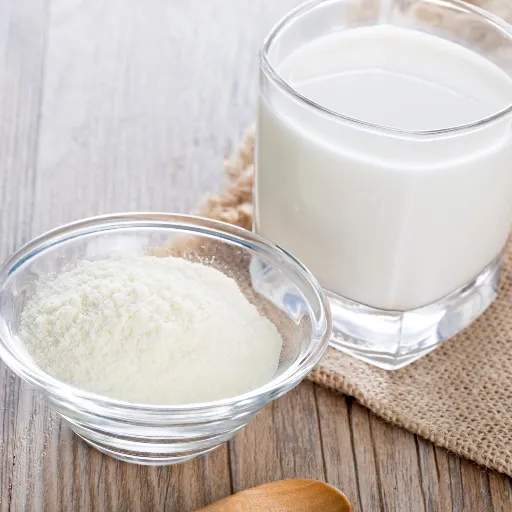
Understanding milk powder how is it made requires looking at the industrial transition from a perishable liquid to a shelf-stable solid through precise dehydration. The process centers on two primary phases: evaporation to concentrate the milk solids and spray drying to transform the liquid into a fine powder. By removing nearly 95% of the water content, manufacturers create a product that retains nutritional integrity while resisting spoilage for months at a time.
From Farm to Intake: The Raw Stabilization Phase
The journey of milk powder how is it made begins long before the first puff of steam. Once raw milk arrives at the facility—ideally at a temperature below 4°C—it undergoes immediate stabilization. This isn’t just about hygiene; it’s about protecting the molecular integrity of the milk. Industry observation suggests that even minor temperature fluctuations during intake can trigger bacterial growth that degrades the final powder’s solubility.
By filtering out impurities and chilling the liquid, processors create a stable foundation. Without this initial “pause” in the milk’s natural biological clock, the subsequent heat treatments would merely lock in existing defects rather than eliminating them.
Standardization and Fat Content Calibration
Raw milk is rarely uniform. Depending on the herd’s diet or the season, fat levels fluctuate significantly. To produce a consistent product, such as Skim Milk Powder (SMP) or Whole Milk Powder (WMP), the milk must pass through a centrifugal separator. This machine spins the milk at high speeds, using G-force to pull the lighter cream away from the heavier skimmed milk.
A practical example is the production of WMP, where the fat content is often calibrated to a precise 26% or 28% in the final dry matter. Any excess cream is siphoned off for butter production, ensuring that every bag of powder shipped meets the exact nutritional profile promised on the label.
Thermal Deactivation of Lipolytic Enzymes
Before the milk hits the evaporator, it must be pre-heated. This thermal phase serves a dual purpose: pasteurization and enzyme deactivation. Milk naturally contains lipases—enzymes that break down fats and cause rancidity.
In a realistic scenario, failing to reach the specific “kill temperature” of these enzymes would result in a powder that tastes soapy or metallic after just a few weeks on the shelf. Usually, temperatures ranging from 72°C to 120°C are applied for varying hold times. This cautious application of heat ensures the enzymes are neutralized while preserving the delicate whey proteins that give the powder its functional “cook-up” properties.
Is Evaporation Just Removing Water?
Technically, yes, but the “how” is what determines whether you end up with a premium ingredient or a scorched, insoluble mess. In the context of milk powder how is it made, evaporation is a massive energy-saving hurdle. It is far more cost-effective to boil off water in a vacuum than to blow it away in a spray dryer.
By lowering the atmospheric pressure inside the vessel, the milk boils at much lower temperatures—often around 45°C to 70°C. This protects the heat-sensitive proteins from denaturing prematurely. Industry observation suggests that most processors aim to concentrate the milk from its initial 12.5% solids up to a thick “concentrate” of approximately 48% to 52% total solids. This honey-like liquid is what eventually feeds the spray dryer, ensuring the final drying stage is efficient and the resulting particles are structurally sound.
Falling Film Technology and Triple-Effect Units
To handle the sheer volume of liquid, the industry relies on falling film evaporators. Picture a series of vertical tubes, meters high; the milk is introduced at the top and spreads into a thin, uniform film that “falls” down the inner walls. Heat is applied to the outside of these tubes, causing rapid, gentle evaporation without the risk of localized burning.
A practical example of efficiency is the use of triple-effect (or even seven-effect) units. In these systems, the hot vapor pulled from the first chamber is used to heat the milk in the second, and so on. This “cascading” thermal energy drastically cuts fuel consumption. A realistic scenario for a mid-sized dairy involves processing 25,000 liters of raw milk per hour; without multi-effect evaporation, the steam costs alone would make the operation economically unviable.
The Centrifugal Heart of the Spray Drying Chamber
The transformation from liquid concentrate to fine dust happens within the spray drying tower, a massive stainless steel silo that can reach heights of 20 to 30 meters. This is where the physics of milk powder how is it made becomes a high-speed reality. The goal is to maximize the surface area of the milk to facilitate instantaneous evaporation. If the droplets are too large, they fall to the bottom as sludge; if they are too small, they risk scorching or escaping the collection system.
Industry observation suggests that the air entering the top of this chamber must be filtered and heated to a precise range, often between 175°C and 205°C. Despite these high temperatures, the milk itself rarely exceeds 75°C because the rapid evaporation process consumes the heat energy, cooling the particle as it dries. This thermodynamic “shield” is the only reason the powder remains nutritionally viable rather than turning into a burnt byproduct.
Atomization: Turning Liquid into a Controlled Mist
At the very top of the chamber sits the atomizer—either a high-pressure nozzle or a rapidly spinning centrifugal disk. A centrifugal atomizer spins at staggering speeds, sometimes exceeding 15,000 RPM, flinging the milk concentrate outward into a fine, uniform mist.
A practical example of this precision can be seen in the resulting particle size. Engineers aim for droplets measuring between 35 and 145 microns. Controlling this diameter is vital; it dictates the final density and how the powder will eventually flow through packaging machinery. A realistic scenario involves a technician adjusting the feed pump pressure by a fraction of a bar to compensate for a slight change in the milk’s viscosity, ensuring the “mist” remains consistent throughout a 24-hour production run.
Contact Dynamics Between Hot Air and Milk Droplets
As the mist enters the chamber, it meets a spiraling vortex of hot air. This co-current flow ensures that the wettest droplets encounter the hottest air first. The moisture on the surface of the milk evaporates almost instantly, forming a hard “skin” or shell around the solids.
Cautious management of the air-to-liquid ratio is what prevents the milk from sticking to the chamber walls. If the turbulence is miscalculated, the “wall deposit” buildup can lead to charring and costly batch contamination. Within seconds, the liquid droplet becomes a hollow, dry sphere, descending toward the base of the cone as the air temperature drops toward the exit threshold of roughly 85°C.
The Cyclone Separation Mechanism
The air exiting the drying chamber still carries a significant amount of “fines”—tiny particles of milk powder that are too light to fall by gravity. To recover these, the air is channeled into a cyclone separator.
Centrifugal force flings the heavier powder particles against the walls of the cyclone, where they spiral down into a collection hopper. The “clean” air is then exhausted through high-efficiency filters. This mechanism is so efficient that modern plants often achieve a recovery rate of over 99.4%, ensuring that virtually no milk solid is wasted in the exhaust stream.
Instantization

Standard spray-dried milk powder often behaves stubbornly when reintroduced to water. Because the particles are fine and non-porous, they tend to clump, forming a waterproof outer shell that leaves a dry, sandy core. Instantization solves this by physically altering the particle structure to favor rapid rehydration.
Industry observation suggests that the “agglomeration” method is the most effective. In this stage, the fine dust from the primary dryer is slightly re-wetted—often using a fine steam mist or a dilute lecithin spray—in a fluidized bed. This causes the small particles to collide and stick together, forming “clusters” or grapes of powder.
A realistic scenario: a consumer stirs a spoonful of instant powder into cold water. Because of the clusters created during instantization, the water can penetrate the interstitial spaces between particles instantly. This increases the sinking rate and prevents the dreaded “lump” formation. For Whole Milk Powder (WMP), a practical example involves the addition of roughly 0.2% to 0.5% soy lecithin. This surfactant offsets the hydrophobic nature of the milk fat, ensuring the powder disperses evenly without requiring high-shear mixing.
Why Particle Size Distribution Matters for Solubility
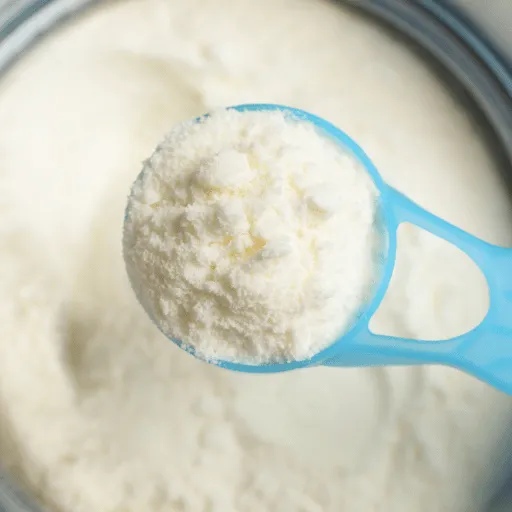
Solubility isn’t just a chemical property; it’s a physical one dictated by the geometry of the powder. In the sphere of milk powder how is it made, the variance in particle size—known as the distribution—directly influences how the product interacts with water. If the particles are too uniform and fine, they pack together tightly, creating a surface that resists water penetration. Conversely, a wide, uncontrolled distribution leads to “segregation” during shipping, where smaller “fines” settle at the bottom of the bag.
Industry observation suggests that a target mean diameter of 150 to 200 microns is often the benchmark for premium powders. A realistic scenario involves a batch with a high percentage of particles under 50 microns; when a consumer pours this into a glass, the tiny particles hydrate instantly on the surface, forming a gelatinous barrier that prevents the rest of the powder from sinking. This imbalance is why technical calibration of the atomizer is the most scrutinized step in the drying tower.
Agglomeration: Creating the Perfect Instant Dissolve
To bypass the clumping issues of fine dust, manufacturers use a process called agglomeration. This involves taking those tiny, individual spray-dried particles and encouraging them to collide and stick together. By creating “clusters” that resemble tiny bunches of grapes, the total surface area remains high, but the interstitial spaces between the particles increase significantly.
A practical example is the “re-wetting” method in a secondary fluidized bed. Here, the powder is exposed to a cautious injection of steam or a fine lecithin mist. This makes the surface slightly tacky, allowing the particles to bond into porous granules. Because these granules are heavy and “open-structured,” they break the surface tension of water almost instantly. This ensures that the powder sinks and disperses within 3 to 5 seconds of contact, rather than floating stubbornly on the surface as a dry, white island.
3 Critical Control Points for Ensuring Microbiological Safety
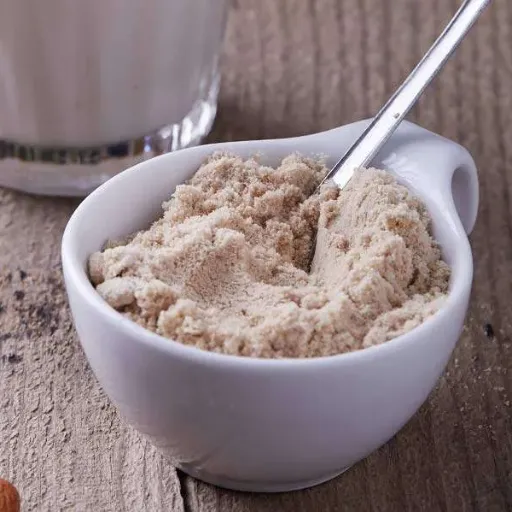
In the high-stakes environment of dairy processing, safety isn’t a final check; it is a series of strategic barriers. Because milk is a nutrient-dense medium, the transition from liquid to powder must be guarded by strict Critical Control Points (CCPs). Industry observation suggests that even a minor lapse in these zones can compromise the shelf-life of an entire production run.
- The Pasteurization Threshold: This is the primary kill step. Before entering the evaporator, the raw milk must hit a specific thermal target—typically 72.4°C for at least 15 seconds. This cautious application of heat is designed to eliminate pathogens like Coxiella burnetii without damaging the delicate whey proteins that define the powder’s quality.
- The Spray Dryer Exhaust Temperature: While the inlet air is scorching, the exit air temperature is the true safety metric. If the exhaust air falls below 82°C to 88°C, there is a realistic scenario where the powder particles retain too much moisture. Damp powder in a warm chamber is a breeding ground for Salmonella and Cronobacter. Sensors at the base of the cone monitor this value constantly to ensure the “lethality” of the drying environment remains intact.
- In-Line Magnet and Sifting Validation: Physical safety is as vital as biological purity. After cooling, the powder passes through rare-earth magnets and ultra-fine vibrating sieves. A practical example involves a 1.2mm mesh screen that catches any calcified milk “stones” or trace metal fragments. This final mechanical gate ensures that only the purest, microscopic particles make it into the final packaging.
Final Recovery and Fluidized Bed Cooling
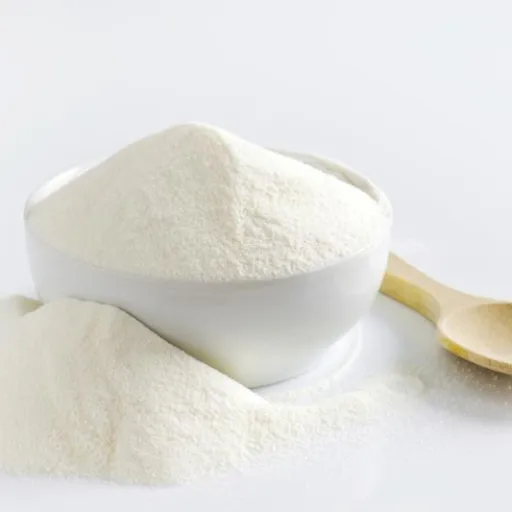
Once the milk powder exits the primary drying chamber, the process isn’t quite finished. It arrives at the base of the cone still relatively warm, and any attempt to package it immediately would lead to condensation and clumping inside the bag. To prevent this, the powder enters a vibrating fluidized bed. Here, it is suspended on a cushion of air, behaving almost like a liquid as it “flows” toward the discharge point.
Industry observation suggests that cooling must be gradual. If the temperature drops too sharply, the fat within the powder can crystallize unevenly, compromising the final texture. A practical example of this stage is the use of dehumidified, chilled air to bring the powder down from roughly 45°C to a stable 20°C. This ensures the particles remain free-flowing and ready for the final sifting phase before they reach the packing line.
Removing Interstitial Moisture for Long-Term Shelf Stability
The primary goal of the fluidized bed isn’t just cooling; it’s the final removal of interstitial moisture. This refers to the water trapped between the agglomerated clusters that the spray dryer couldn’t quite reach. In a realistic scenario, leaving even 0.5% too much moisture in the batch can reduce the shelf life from 18 months to just a few weeks.
Standard specifications usually require a final moisture content of 2.8% to 3.4%. By carefully controlling the humidity of the air in the fluid bed, manufacturers can “polish” the powder to these exact concrete numbers. This cautious dehydration ensures that the water activity (aw) remains low enough to inhibit all microbial growth, locking in the nutritional profile and flavor until the moment the consumer breaks the seal.
Packaging and Inert Gas Flushing
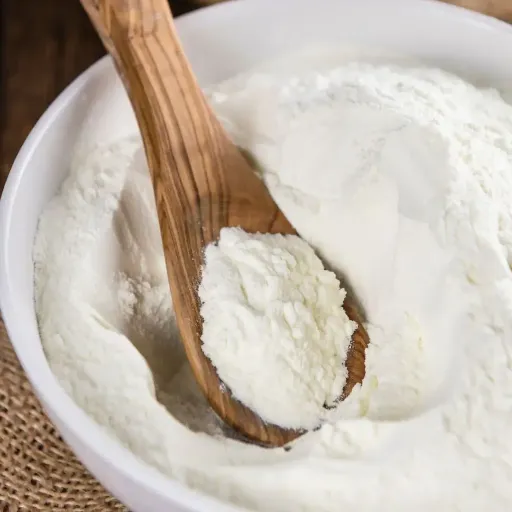
The final barrier against spoilage is the packaging line, where the powder is sealed away from its primary enemies: light, moisture, and oxygen. For Whole Milk Powder, the presence of milk fat makes it hypersensitive to oxidation. Industry observation suggests that even a residual oxygen level of 2% can lead to noticeable flavor degradation within months. To combat this, modern fillers utilize vacuum sealing followed by a precise injection of nitrogen or a nitrogen-CO2 mix.
A realistic scenario involves the “gassing” of large 25kg industrial bags. After the powder is weighed, the air is evacuated, and nitrogen is flushed through the head-space. This cautious displacement often brings internal oxygen levels down to a concrete 0.5% or lower. A practical example of this technology is the use of multi-wall kraft paper bags with an inner high-barrier plastic liner. This multi-layered defense ensures that the inert atmosphere remains locked inside, allowing the product to withstand long-distance maritime shipping without losing its fresh dairy profile.
FAQ Section
Q: Does the spray drying process destroy the nutrients in fresh milk?
Contrary to popular belief, spray drying is exceptionally gentle on nutritional content. Because the evaporation occurs almost instantaneously, the milk droplets never actually reach the scorching temperatures of the drying air. This “evaporative cooling” effect protects heat-sensitive vitamins and proteins. While trace amounts of Vitamin C may diminish, the essential calcium, protein, and minerals remain biologically available, making the powder a highly effective nutritional substitute for fresh dairy.
Q: What is the difference between roller-dried and spray-dried milk powder?
The primary distinction lies in heat exposure and solubility. Roller drying involves spreading milk over hot drums, which can cause slight caramelization and a “cooked” flavor, often resulting in lower solubility. Spray drying, the modern industry standard, uses atomization in a hot air chamber to create fine, highly soluble particles. While roller-dried powder is still used for specific chocolate confectionery, spray-dried versions are preferred for beverages due to their superior reconstitution properties.
Q: How much fresh milk is required to produce one kilogram of powder?
Since raw milk is approximately 87% water, the conversion ratio is significant. Generally, it takes about 8 to 10 liters of fresh milk to yield just one kilogram of milk powder. The exact figure depends on the total solids present in the raw intake, which varies by season and bovine diet. This high concentration of nutrients is exactly what makes milk powder such an efficient solution for large-scale food storage and international transport.
Q: Why is skim milk powder more stable than whole milk powder?
Stability is almost entirely dependent on fat content. Skim milk powder has had nearly all its cream removed, leaving behind a matrix of protein and lactose that is highly resistant to oxidation. Whole milk powder, containing roughly 26% fat, is prone to developing “off” flavors if exposed to oxygen. Without the lipids that trigger rancidity, skim versions can often be stored for up to three years, whereas whole milk powder requires specialized gas-flushed packaging to last eighteen months.
Q: How is “instant” milk powder different from regular milk powder?
The difference is found in the particle structure rather than the ingredients. Regular powder consists of fine, individual dust particles that often clump when they hit water. Instant powder undergoes an “agglomeration” process where those tiny particles are fused into larger, porous clusters. This allows water to wick into the center of the cluster immediately, ensuring the powder sinks and dissolves in seconds without the need for vigorous whisking.
Q: What role does lecithin play in the production of whole milk powder?
Lecithin serves as a vital emulsifier that overcomes the natural hydrophobicity of milk fat. When whole milk is powdered, the fat can coat the outside of the particles, causing them to repel water and float on the surface. By coating these particles in a microscopic layer of lecithin—usually derived from soy or sunflowers—manufacturers make the fat “water-friendly.” This ensures the powder disperses smoothly in cold water without leaving a greasy film.
Q: Can plant-based milks be powdered using the same industrial machinery?
Yes, though it requires specific recalibration of the drying parameters. Industrial spray dryers used for dairy can process oat, soy, or almond milks, but the differing sugar and protein profiles affect the “stickiness” of the product inside the chamber. Plant-based concentrates often require lower inlet temperatures and different atomization speeds to prevent the high starch content from scorching or adhering to the stainless steel walls during the dehydration phase.