
Food Production Quality Standards: Complete Compliance Guide for Manufacturers

The difference between SUS 304 and SUS 316 stainless steel could mean your production line making through the next audit. When, in the January of 2026, a plant manager, Chen Wei, of the Shanghai snack food plant received a notice for his BRCGS Issue 9 certification, he wasn’t really worried about his documentation or his HACCP plan; he was worried about his plant equipment.
“The auditor spent 40 minutes in our extrusion line’s welded seam,” Chen remembered. “She wanted to see mill certificates for every batch of steel, surface roughness measurements were required, and the proof was shown that our CIP system adequately sprayed each area. Here, equipment compliance has moved from checking a box to becoming the foundation of certification.”
Chen just reflects a wider shift in quality standards in food production? Increasingly stringent regulations and schemes recognised by GFSI have ratcheted up the requirements, so manufacturers no longer can consider equipment choice in isolation from compliance strategy. Understanding food production quality standards does not involve mere checks on boxes but rather the designing of production systems so that compliance is automatic.
Examining what this guide contains in terms of content:
How food-grade quality standards under regulatory purview shall continue to evolve till 2025-2026 (ISO-20002-1:2025, SQF edition 10, FSSC 22000 v6)
Design-level product specifications for food-grade quality standards inclusive of compliance at HACCP and ISO 22000
Material quality scenarios which the auditors will examine the most (SUS 304 vs 316, surface finishes, IP ratings)
Validation protocols for turnkey production lines
Documentation systems that would facilitate unannounced audits
What Are Food Production Quality Standards?
Quality standards for food production encompass all the rules, operational instructions, and technical specifications needed to maintain a safe, consistent, and legally compliant food product within a production system. The scope of these standards covers such issues as structural standards for building, equipment execution parameters, document controls, staff training, and a variety of issues surrounding such areas. The Manufacturing of Quality standards today is an integration of many frameworks:
Safety standards (HACCP, ISO 22000) to avert contamination or dangerous situations
Recipes for embracing the “excellence” and well-defined product specifications
Three-A and EHEDG equipment standards for sanitary design requirements
Material (SUS 304/316, FDA-compliant polymers) specifications for use in food contact surfaces
Documentation and traceability requirements for effectual recall incapacities
or-tools entertain from certain regulations (FDA, European Union, local authorities) and certification systems (BRCGS, SQF, FSSC 22000), as well as they are led by specific requests associate to serve the customers in addition to unpacking. Understanding this interconnected standards of production quality helps the enable to design the compliant facility and make the selection of the right equipment.
Understanding the Food Production Quality Standards Landscape

The Evolution from HACCP to Integrated Management Systems
The Hazard Analysis Critical Control Points (HACCP) has been the basis of food-production quality standards for many years. Developed with the space program run by NASA back in the 1960s, its seven principles today remain indispensable.
However, with plenty of changes that have fed into the system, food safety continues to stand in front of stand-alone ideals, a model of yesteryears. Now there is an absolute need for a comprehensive management systems approach:
Prerequisite programs (PRP)-requirements for basic hygiene and operational conditions
Operational PARPs (oPRPs)-Control measures for significant hazards
Critical control point (CCPs)-Sets of significant controls to prevent, eliminate, or decrease hazards in food to an acceptable level.
Chapters of the management system-Policy, objectives, internal audit, and controlling developments
Thus, the evolution culminated in the emergence of ISO 22000:2018 where the principles of HACCP are deeply rooted in the context of the management system for the food quality standards. Hence, when it comes to equipment manufacturers and production line designers, the equipment or line’s design must ensure compliance right from the outset-rather than be an afterthought.
2025-2026 Regulatory Updates: What Manufacturers Must Know
Three major regulatory developments are reshaping food production quality standards in 2026:
ISO 22002-1:2025 (Released July 2025)
This update to prerequisite programs for food manufacturing replaces the 2009 technical specification with stricter requirements for:
- Environmental safety and contamination prevention
- Enhanced staff hygiene protocols
- Allergen management systems
- Documentation transparency (no exclusions without proof)
SQF Edition 10 (Released Early 2026)
The Safe Quality Food Institute’s latest edition mandates:
- Documented food safety culture plans with measurable objectives
- Change management protocols for equipment modifications
- 90-day follow-up documentation for audit findings
- Enhanced supplier approval processes affecting equipment sourcing
FSSC 22000 Version 6
This GFSI-recognized scheme now requires:
- Expanded environmental monitoring programs
- Food fraud prevention plans
- Leadership accountability for safety culture
- Integration with ISO 22002-1:2025 PRP requirements
Core Food Production Quality Standards Every Line Must Address
HACCP Compliance Production Line: The Foundation of Food Safety
The basis of all food quality governing standards hinges on HACCP. Accordingly, for production line equipment, there is the presupposition that the equipment must be capable and designed to comply with an HACCP requirement:
Integration of a Critical Point of Control (CPoC) monitoring capability
The equipment ought to have monitoring and control capabilities where hazards/risks are preventable, eliminable, and/or reducible. Common CPoCs in a production line environment usually include:
| CCP | Equipment Requirement | Monitoring Method |
|---|---|---|
| Cooking/Extrusion | Temperature control ±2°C | PLC-controlled thermal profiling |
| Metal Detection | Ferrous/non-ferrous/stainless detection | Automated rejection with data logging |
| Weight Control | Precision filling verification | Checkweigher with statistical tracking |
| Packaging Integrity | Seal verification | Vision systems or pressure testing |
Documentation Accessibility
HACCP plans require records of monitoring activities, deviations, and corrective actions. Food production quality standards require that modern production lines must provide:
- Automated data logging with timestamps
- Electronic records accessible for audit review
- Integration with centralized quality management systems
ISO 22000 Food Safety: Comprehensive Management Systems
ISO 22000 food safety certification extends beyond HACCP to encompass the entire food safety management system (FSMS). For equipment manufacturers, these food production quality standards include:
Interactive Communication Support
Equipment must facilitate information flow between:
- Raw material suppliers (incoming material verification)
- Production teams (process parameters)
- Quality assurance (test results and deviations)
- Customers (product specifications and certifications)
Traceability System Integration
ISO 22000 requires organizations to identify product lots and their status through all process steps. Production lines must support:
- Lot coding at multiple process stages
- Forward and backward traceability (“one-up, one-back”)
- Mock recall capability within 4 hours
Continuous Improvement Infrastructure
Equipment should enable data collection for:
- Process capability studies
- Statistical Process Control (SPC)
- Root cause analysis of non-conformities
GFSI Certification Requirements and Benchmarked Schemes
Global Food Safety Initiative (GFSI) benchmarks the standards of food production quality to assure global equivalency. With respect to the requirements of GFSI certification, it is imperative for the manufacturers who are supplying to large retailers. Here, more than one of the GFSI-recognized schemes are still in greater control of the production line certification:
BRCGS Certification Production Line Requirements
So, under Issue 9, the BRCGS Global Standard for Food Safety mandates certain BRCGS certification production line requirements:
Equipment setting controls that are password-protected to be accessed by trained personnel alone
In-line monitoring devices (IMD) must be linked to a failure alert system as tested routinely
Process specification shall document equipment settings and thermal profiles
Unannounced audits will now be the norm with continuous readiness for compliance
Such food production quality standards suggest equipment designs for transparency in audits right from the outset.
SQF (Safe Quality Food)
- Edition 10 emphasizes food safety culture with documented performance benchmarks
- Requires quarterly follow-ups on cultural assessments
- Equipment modifications require formal change management protocols
FSSC 22000
- Combines ISO 22000 with sector-specific PRPs (ISO/TS 22002-x)
- Version 6 adds food fraud prevention and environmental monitoring
- Requires allergen management validation for production line changeovers
Critical Insight: By 2026, major retailers require 100% of suppliers to hold GFSI-recognized certification. Meeting food production quality standards with properly designed equipment becomes essential—not optional.
Food Manufacturing Equipment Standards for Compliance
Most manuals stress formal compliance, but it is the knowledge of food machinery standards that is vital to conform to food quality standards for production. These technical standards might pertain to evaluate what certification bodies evaluate.
Material Standards: SUS 304 vs SUS 316 Stainless Steel
The decision between 304 and 316 stainless steel is a significant factor in complying with the food production quality standards. It is imperative to specify the right type given the product, the environment, and the regulatory configurations.
SUS 304 Stainless Steel
Composition: 18% chromium, 8% nickel (18/8 stainless)
Applications: Basic food processing, cereal products, neutral pH products
Pros: Low cost plus good resistance to corrosion for most food applications
Cons: Extremely sensitive to chloride attack (from salt, acidic foods, or the sea)
SUS 316 Stainless Steel
Composition: 16-18% chromium, 10-14% nickel, 2-3% molybdenum
Applications: High chloride environments, acidic food, harsh cleaners
Pros: Excellent resistance to corrosion, cleans with the CIP process, stands up to exposure to salt
Cost: Making the switch from 304 to 316, you can expect a 20-35% surcharge; but this cost will turn out to be indispensable for some specific applications
When to Specify 316 over 304:
These examples include the processing of tomato products, citrus juices, vinegar, or fermented foods.
Coastal facilities with salt air exposure
Aggressive CIP cycles with strong alkalis or acids
High-temperature applications exceeding 870°C
Pharmaceutical or nutraceutical applications requiring USP Class VI compliance
Regulatory Requirements:
FDA 21 CFR 211.65: Equipment surfaces must not be reactive, additive, or absorptive; minimum 16% chromium
EU Regulation (EC) 1935/2004: Requires ≥13% chromium; sets metal release limits
GB4806.9-2016 (China): Heavy metal migration limits (lead ≤0.05 mg/L)
Our pet food production lines use SUS 304 for standard kibble processing but recommend 316 for high-meat content formulations or facilities using aggressive sanitation protocols.
Sanitary Design Requirements: 3-A and EHEDG Standards
In order to ensure that process performance and the product are respected in food industries, this very design feature of equipment-cleanability in sanitary matters is very much essential. Listed are suitable standards:
3-A Sanitary Standards (US)
Rooted in dairy; now we apply it in any food processing
Requires smooth, nonporous surfaces (Ra ≤ 0.8 μm or 32 μin)
Identification must be made for continuously welded joints, which have been ground and polished.
No threads allowed in product contact points
Specifiy self-draining designs: succession of at least 100
EHEDG (European Hygienic Engineering and Design Group)
The European equivalent with widespread international use
Gives some criteria on designing sanitary equipment
Emphasis is put on cleanability verification testing
Covers construction materials, surface finish, and joint design
Primary Sanitary Design Considerations:
Finish: Electropolished surfaces reduce bacterial adhesion
Radiused Corners: No less than 3 mm radius to eliminate crevices
We have welding quality where the surface is ground smooth, and passivation is done to restore corrosion resistance.
Seal materials include FDA-compliant elastomers (EPDM, Viton) that are resistant to heat and chemicals.
In fastener design, captive fasteners or sealed bolt holes are used to prevent the formation of contamination traps.
IP Ratings for Washdown Environments
IP (Ingress Protection) ratings determine equipment resistance to water and dust—critical requirements within food production quality standards for manufacturing environments.
| IP Rating | Protection Level | Application |
|---|---|---|
| IP65 | Dust-tight, protected against water jets | General food processing areas |
| IP66 | Dust-tight, protected against powerful water jets | Heavy washdown zones |
| IP67 | Dust-tight, protected against temporary immersion | Wet environments |
| IP69K | Dust-tight, protected against high-pressure, high-temperature washdown | CIP systems, severe washdown |
IP69K Certification Requirements:
- Withstands 80°C water jets at 80-100 bar pressure
- Essential for equipment in CIP (Clean-in-Place) zones
- Required by BRCGS Issue 9 for high-risk production areas
When specifying equipment for instant noodle production lines, IP69K-rated components ensure reliable operation through aggressive washdown cycles between product changeovers.
Surface Finish and Weld Quality Standards
Quality of surface determines cleaning and bacterial risk.
Surface Finish (RA) Requirements
For product-contact surface: Ra ≤ 0.8 µm (32 µin)
For non-product-contact surface: Ra ≤ 1.6 µm (63 µin)
Welds are ground to match the adjacent surface finish.
Weld Qualities:
ASME BPE [Bioprocessing Equipment]: provides standards for orbital welding, inspection, and acceptance.
3-A Standard: requires no laps, no gaps; continuous welding.
Methods of Inspection: Visual inspection, dye penetrant testing, x-ray testing for some critical welds.
Passivation Requirements
Stainless steel should be passivated upon completion of fabrication to restore the protective chrome-oxide layer compromised in welding and machining. Passivation essentially involves:
Cleaning, thus removing oil and other contaminants
Acid treatment in some form (either nitric or citric acid) to strengthen the oxide.
Rinsing and drying
Checking to assure cleanliness and passivity (ferroxyl test and copper sulphate test).
Production Line Validation and Certification

Installation Qualification (IQ) and Operational Qualification (OQ)
Depending on the area of focus, there are numerous types of validation utilized in confirming that equipment operates the way it is expected to with regard to standards of food production quality. The choice selection when developing and validating these protocols licensed for use with “IQ/OQ/PQ” would be the supremum. These are listed as validation categories:
Installation Qualification (IQ)
This part is almost boiling down to checking if the piece of gear was put into sound shape and located into the right spot according to all the specifics caught in a multitude of measurements owned by a certain test print-out.
Unit installed is matching purchase specifications (model, materials, capacities).
Utilities connected properly (electrical, steam, water, compressed air).
Environmental conditions meet requirements.
Documentation and equipment files turn up trunk like broken branches (card).
Operational Qualification (OQ)
Factors under the OQ category could truly be validated only in real practice and over a practical measure followed.
All modes of operation will be functionally tested, verifying that the system can operate safely and as required by SOPs.
Any alarm or safety device will be verified to that end.
The operating range being attested with trial runs include speed, temperature, and flow.
Documentation about cleaning validation (SOPs).
Performance Qualifications (PQ)
Similar to operational qualifications, performance qualifications should be acquired on practically validating known standards under statutory provisions.
Run extended tests conforming to production parameters.
Verification of delivered quality, Process capability documentation.
On turnkey systems, all relevant documentation with complete IQ/OQ packages are offered in support of validation schedules and regulatory submissions.
CIP/SIP System Integration
Clean-in-Place (CIP) and Sterilize-in-Place (SIP) systems enable automated cleaning without equipment disassembly—an essential capability for maintaining food production quality standards.
CIP System Requirements:
- Spray coverage validation: Riboflavin testing confirms complete surface contact
- Drainability: All surfaces must drain completely to prevent pooling
- Temperature control: ±2°C accuracy for effective sanitation
- Chemical concentration: Automated dosing and verification
- Cycle documentation: Electronic records of time, temperature, concentration, and flow
SIP Requirements (where applicable):
- Steam distribution validation
- Temperature mapping to ensure minimum 121°C throughout
- Hold time verification
- Cooling cycle documentation
Regulatory Alignment:
FDA’s FSMA preventive controls rule emphasizes sanitation controls, making validated CIP systems essential for food production quality standards compliance.
Contamination Detection Equipment Requirements
Different detection systems can be integrated on a modern production line line:
For detecting contaminants: Metal Detection Systems
Were programmed to detect ferrous, non-ferrous, and stainless steel contaminations
Multi-spectrum detection ensures limited false rejects
These calibrated test samples (ferrous, non-ferrous, stainless) are repeatedly used
IP69K washdown rated.
For detecting contaminants: X-Ray Inspection Systems
Capable of detecting glass, bone, stones, and dense plastics.
In Helical Scan mode, capable of detecting 2mm size glass fragments at high speeds making them effective in critical areas of the product.
Vision Inspection Systems
Consistent AI-powered cameras inspect at least 150 parts/min
Detects defects as small as 1 mm
Makes sure label is always present and is on the right position
Using IP65/ IP69K wet-rated performance
These have to be able to interface with production line controls in order to shut down production or divert product when contamination is detected, with metric tracking of these events for compliance documentation.
Documentation and Traceability Systems
Electronic Records and 21 CFR Part 11 Compliance
The motto: Good manufacturing practices/dynamic production quality standards ask for electronic records in accordance with FDA’s 21 CFR Part 11 in the facilities where the US market is served or there are pharmaceutical products.
The basic requirements are:
– Audit trails (timestamp which cannot be altered fully) for all data changes
– User authentication requires assigning of unique user IDs and secure passwords
– Electronic signature requires a binding sign-off with date/time stamps
– Data integrity issues when implementing controls to prevent data modifications beyond the authorised ones.
– Backup and archiving shall not only comply with CFR 21 Section 11.30, but ensure that hard- and software and disaster recovery protocols are secured.
Feasible implementations, on the other hand, present possibilities:
PLCs (programmable logic controllers) and SCADA (Supervisory Control and Data Acquisition) systems nowadays in full flesh can be an exceedingly dependable system with facilities for Part 11 compliance. Some of the key features are provided by modern production line automation PLCs or industrial SCADA systems already; such functions include:
1. Role access control (RBAC);
2. Populating audit trails automatically;
3. Electronic signatories; and
4. Safeguarding data storage and safeguarding transmissions.
Lot Coding and One-Up-One-Back Traceability
Traceability is all about being able to follow products at every stage and is central to almost any food-related quality standard.
This is made possible via :
Lot coding systems:
Primary packaging- date codes, lot numbers, production line identifiers
Secondary packaging- case codes linking to primary packages
Pallet level: SSCC for shipment tracking purposes
Scope of traceability:
One-back: To identify all raw materials and ingredients in a finished product lot
One-forward: To identify all finished products containing a specific ingredient lot
Mass balance: Account for 100% of inputs and outputs
Technology solutions:
Barcode or QR code scanning at each stage
RFID available for pallet-level tracking
Integration with ERP systems for real-time visibility
Cloud-based traceability platforms that can span several sites
Mock Recall Procedures
GFSI standards require having the ability to perform mock recalls within 4 hours 100% accountability-which is an integral part of any set of comprehensive food production quality standards.
The Mock Recall Process:
Select a batch number (typically an ingredient received in the past month)
Trace back all finished product(s) carrying that particular batch
Identify all customer deliveries of said finished product(s)
Calculate total product accounted for
Document lead time as well as traceability lapses, and
Take action for any issues found.
Equipment Required:
Production lines:
They should have been originally designed for quick lot traceability through:
Automated lot code marking and verification
Electronic batch records with linking to ingredient lots
Automated production input/output reconciliation
Preparing for Audits and Inspections
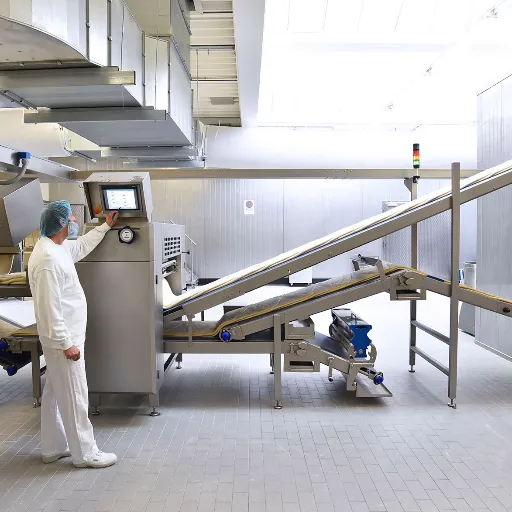
Unannounced GFSI Audit Preparation
The forced shift to un-announced audits really does pressure organizations to be in compliance with quality standards in food production. Unlike regularly scheduled audits, this kind of certification demands systems that are internal audit-ready every day.
Preparation Strategies:
- Maintain Audit-Ready Documentation
- Electronic systems with real-time data capture
- Automated compliance dashboards
- Daily verification of CCP monitoring records
- Weekly review of corrective action status
- Conduct Regular Internal Audits
- Monthly internal audits rotating through different areas
- Use the same checklists as certification bodies
- Involve production staff to build ownership
- Track and trend findings over time
- Train Staff on Audit Protocols
- Never guess or speculate during interviews
- Show, don’t tell—demonstrate procedures
- Escort auditors; don’t leave them unattended
- Notify management immediately of any auditor concerns
Equipment-Specific Audit Focus Areas:
- Calibration records for all monitoring devices
- Preventive maintenance completion
- CIP validation documentation
- Metal detector verification logs
- Temperature mapping studies
Common Non-Conformities in Production Equipment
Understanding common audit findings helps prevent non-conformities against food production quality standards:
Material Non-Conformities:
- Inability to provide mill certificates for steel batches
- Surface finishes rougher than specified
- Use of non-food-grade materials in product contact areas
- Missing or incomplete passivation records
Design Non-Conformities:
- Dead legs or non-draining areas where product can accumulate
- Threads in product contact zones
- Non-hygienic fasteners that can trap soil
- Inadequate access for cleaning and inspection
Documentation Non-Conformities:
- Missing equipment specifications in HACCP plans
- Incomplete IQ/OQ documentation
- Calibration records with gaps or out-of-tolerance conditions not addressed
- Preventive maintenance tasks not completed as scheduled
Corrective Action Preventive Action (CAPA) Systems
When audits identify issues, CAPA systems ensure problems are resolved and prevented from recurring—a critical process for maintaining food production quality standards.
CAPA Components:
- Root Cause Analysis: 5 Whys, fishbone diagrams, or fault tree analysis
- Corrective Action: Immediate fix for the specific issue
- Preventive Action: System changes to prevent recurrence
- Verification: Evidence the actions were effective
- Documentation: Complete records for auditor review
Equipment-Related CAPA Examples:
- Finding: Metal detector failed verification test
- Correction: Adjust sensitivity and re-verify
- Prevention: Implement daily verification SOP, train operators, schedule preventive maintenance
- Finding: Surface finish on new equipment doesn’t meet specification
- Correction: Re-finish surfaces or replace components
- Prevention: Update supplier specifications, add incoming inspection
Conclusion: Equipment Choice as the Foundation of Compliance

The 2026 food production quality standards agenda goes far beyond process documentation and HACCP plans—it requires equipment built starting with compliance, and placing hindsight would reveal many of the most expensive mistakes back to decisions made at equipment specification.
Main Messages for Achieving Food Production Quality Standards:
Material selection is key: Thus, 316-matching with SUS shouldn’t just be a step away in grieving: it must really have the characteristics of acid resistance, resistance to high chloride factors, and good adherence to aggressive sanitation schemes.
Sanitary design has become an absolute must-do: Equipment executives would always have to use EHEDG and 3-A standards to visualize what equipment auditors won’t just hope they could see but will require them to set their sights on pared.
Validation amplifies time-to-market: IQ/OQ finished documentation kits shrink commissioning timelines, enabling certification to splay more readily.
An end-to-end priority: For groundwork organization, traceability involves strong integration capabilities, such as, first and foremost, lot coding and an electronic placement system and further down the line, automated reconciliation.
When readiness is rewarded by surprise audits, items genuinely authored for daily compliance can spare you all the fuss of being practically liable within the paucity of scheduled audit-related activities.
Quick Reference: Equipment Compliance Checklist

Use this checklist when evaluating production line equipment for food production quality standards compliance:
Materials & Construction
- Mill certificates available for all stainless steel batches
- SUS 304 or 316 specified based on product and environment
- Surface finish Ra ≤ 0.8 μm on product contact surfaces
- Passivation records provided
- FDA/EU food contact compliance documentation
Sanitary Design
- 3-A or EHEDG compliance documentation
- Self-draining design with ≥1:100 slope
- Continuously welded joints, ground and polished
- No threads in product contact areas
- Hygienic fasteners or sealed bolt holes
Environmental Protection
- IP rating appropriate for installation zone (IP65-IP69K)
- Sealed electrical enclosures
- Corrosion-resistant exterior finish
Validation Documentation
- Installation Qualification (IQ) protocol and execution
- Operational Qualification (OQ) protocol and execution
- Calibration certificates for all instrumentation
- Preventive maintenance schedules and procedures
Integration Capabilities
- PLC integration for automated monitoring
- Data logging with timestamp capability
- Audit trail functionality (21 CFR Part 11 if applicable)
- CIP/SIP compatibility with validation support
Contamination Control
- Metal detector integration capability
- Rejection system with locked containers
- Lot coding integration
- Traceability system connectivity
Frequently Asked Questions (FAQs)
What would you say is the relevance of good product quality control practices to the business of Food Production standards compliance?
The quality control department contributes to keeping the process of control from the moment activities start to the warehouse periodically ensuring the quality of the final product by processing, inspection, and the shipment itself. With the help of quality control inspections, which of necessity must include all stages of intermediate digitalization depending on the production process, each stakeholder can build the degree of quality required for the food safety rules in place. Housekeeping standards apply to the support that promotes the use of GMP when designed to consider critical checkpoints. They also implement the program, fostering some policies related to the Food Safety Modernization Act, and support the food quality management plan for maintaining the food supply chain as desirable for safe exportation.
What is the role of a Critical Control Point in managing hazards and critical control points?
A point of control in the formal context of the production environment where some sort of operation can strike to protect against the cause or eliminate or diminish the food-safety hazard to an acceptable level; these concerns identification of CCP of HACCP and all of the food-safety system. Some other objectives that fall in the attainment of CCP would: ensure safety from any menace compiling with secure supply of foodstuffs, reduction of food-related dangers, and verification of sustained compliance throughout inspection for safety.
What is the relationship between food quality, safety, and quality assurance in manufacturing practices?
Food quality and safety standards agree in purpose, where safety standards are exercised to prevent potential hazards that may harm the health of consumers while quality standards are established to keep the same basic features and to provide for the taste, ease of use, and meeting of the expectations of consumers on the product. Hence, all procedures that involve good hygienic practices, pest control, and effective production and process controls and quality assurance embody a unified quality management system. On another note, food safety and quality management are vital for manufacturers to adequately maintain compliance, manufacture value products of good quality, and meet the standards and requirements-in this case, FDA’s.
What should a food manufacturer do to demonstrate full compliance with the regulations and international food safety standards recognized by FDA?
Any food manufacturing company should have a documented food safety management system that would meet GMP, HACCP principles, and preventive controls in their supply chain. With that matter are effective processes of hazard analysis, the establishment of preventive food controls and CCPs, compliance records, random safety inspections, training for staff in safety procedures and hygiene. This approach ascertains FDA compliance and thereby that food products are invariably safe and of high quality.
Which are some of the best practices that go into ensuring the safety and quality of food along the entire food supply chain?
Some of the key examples that might be listed in the part of best practices include: assuring good manufacturing practices; conducting a supplier verification analysis; practicing the use of statistical process control for critical process parameters; creating traceability; ongoing and alert operation with regards to pest control; promoting cleanliness. This heavily relies on continuous monitoring, careful corrective action documentation, and constantly monitored compliance audits. In this manner, the journey from raw material procurement to selling the final product is assured for its safety and quality, protecting the entire value chain from food safety hazards.