
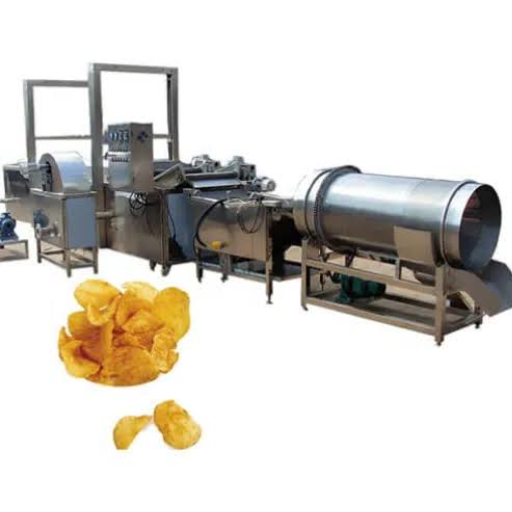
Food Machinery Manufacturer: 9-Point Buyer Checklist

Choose a food machinery manufacturer by verifying product fit, hygienic design, capacity assumptions, integration scope, testing, documentation, commissioning, and lifecycle support. Compare price only after every supplier has quoted against the same requirements and acceptance criteria.
Counterintuitively, the lowest-priced machine can create the highest project risk. A nameplate capacity may not apply to your recipe. “Stainless steel” says little about drainage or cleanability. Even a “turnkey” quotation can exclude conveyors, utilities, packaging interfaces, training, or site work.
If you are responsible for a new line, you already know that equipment selection affects more than output. It influences food safety, product consistency, labor, maintenance, expansion, and the date your plant can begin commercial production.
This guide provides a practical way to evaluate manufacturers without relying on brochure claims. You will learn nine selection criteria, the inputs required for an accurate request for quotation (RFQ), and an evidence framework for trials, factory acceptance testing (FAT), and site acceptance testing (SAT). You can use it to compare standalone equipment, industrial food equipment and complete lines, or a customized system for a specific product.
Key Takeaways
- Normalize product, capacity, utility, testing, and service scope before comparing quotations.
- Evaluate nine areas, including application experience, hygiene, integration, validation, documentation, and lifecycle support.
- Test representative raw materials and define measurable acceptance criteria before manufacturing begins.
- Separate supplier claims from documented, demonstrated, and contractually guaranteed evidence.
- Treat voluntary hygienic-design standards as useful references, not universal legal requirements.
What Does a Food Machinery Manufacturer Do?
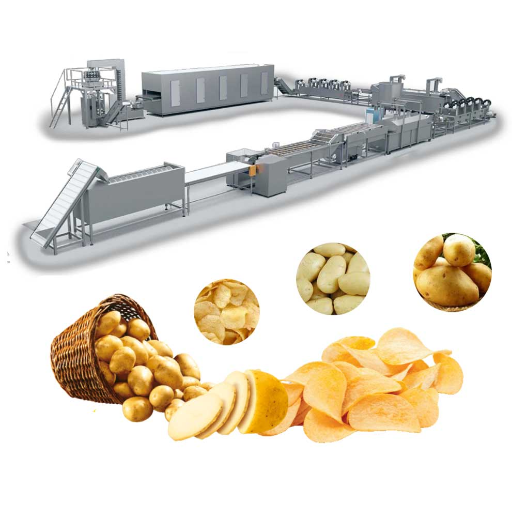
A food machinery manufacturer designs and builds equipment for industrial preparation, processing, cooking, drying, conveying, inspection, and packaging. A capable manufacturer may also help define capacity, controls, layout, testing, installation, training, documentation, spare parts, and service according to the buyer’s product and destination-market requirements.
However, not every supplier offers the same scope.
A fabricator may build equipment from drawings without developing the process. A standalone-machine supplier provides one production stage, such as mixing, extrusion, frying, or drying. An original equipment manufacturer, often called an OEM, designs and produces its own machinery.
A turnkey line integrator coordinates multiple stages and interfaces. Its scope may include process design, conveyors, controls, utilities, packaging connections, installation, commissioning, and operator training. “Turnkey” has no single universal scope, so buyers should list every inclusion and exclusion.
The right model depends on your plant. An experienced engineering team may prefer individual machines that it can integrate internally. A new facility may need one accountable supplier for the complete process. In either case, the agreement should define interfaces, responsibilities, and acceptance conditions.
Planning a new or upgraded line? Send Shandong Loyal your product, target output, facility layout, and utility information to request a tailored equipment configuration.
How to Choose a Food Machinery Manufacturer: 9 Criteria
Use the following nine-point checklist to turn general sales discussions into a structured technical evaluation.
1. Verify Relevant Product and Process Experience
A long equipment catalogue is less useful than evidence involving comparable ingredients and process conditions. Ask whether the manufacturer has worked with similar raw-material particle sizes, moisture levels, fat content, viscosity, abrasiveness, thermal sensitivity, and finished-product targets.
For extrusion, experience should cover the relationship between recipe, preconditioning, screw configuration, die design, temperature, pressure, drying, and flavoring. Review the supplier’s configurable food extrusion solutions to identify which stages it can engineer directly.
Application fit also matters within a category. Producing floating aquatic feed differs from producing dense pet kibble, even when both use extrusion. If pet food is your target, compare the proposed process with relevant pet food production line configurations.
Request drawings, trial protocols, reference contacts where disclosure is authorized, and examples of comparable technical documents. Do not accept an unrelated installation as proof that your product will perform the same way.
Illustrative procurement scenario, not a customer case: Amina is specifying an 800 kg/h cereal line for a humid coastal site. One bidder shows a high-capacity snack extruder but cannot explain how her dense, high-fiber recipe affects drying. Another proposes a raw-material trial and identifies the scale-up assumptions. The illustrative outcome is a clearer shortlist based on recipe relevance, not catalogue size.
2. Define Capacity, Scale-Up, and Performance
“Capacity” needs a unit, a product condition, and an acceptable operating window. Specify whether output means kilograms per hour at the line inlet, finished saleable product after drying, or packaged units leaving the line.
Define the variables that matter to your business:
- Required continuous output and acceptable range.
- Finished moisture, dimensions, texture, density, or cooking quality.
- Yield and permitted waste categories.
- Product changeover and cleaning conditions.
- Start-up and shutdown expectations.
- Planned future capacity or modular expansion.
- Ambient temperature, humidity, and altitude where relevant.
Motor power and theoretical throughput do not guarantee saleable output. Product formulation, operator settings, upstream feeding, downstream drying, and packaging constraints can all affect line performance.
State how each metric will be measured during trials, FAT, or SAT. Also specify sampling frequency, instruments, tolerances, test duration, and who may approve exceptions.
3. Examine Hygienic Design and Food-Contact Materials
Food-grade material selection is only one part of hygienic design. Buyers should also examine access, drainage, weld finish, surface condition, seals, joints, hollow sections, fasteners, dead zones, and the ability to inspect food-contact areas.
For projects subject to U. S. requirements, 21 CFR §117.40 addresses equipment cleanability, maintenance, corrosion-resistant food-contact surfaces, seams, monitoring instruments, and installation access. Apply the requirements relevant to your facility with qualified food-safety and engineering support.
The EHEDG guideline catalogue illustrates the depth of hygienic design across materials, welds, seals, conveyors, sensors, cleaning, clean-in-place systems, and test methods. EHEDG guidance is voluntary unless a law, contract, or customer specification incorporates it.
Do not specify 304 or 316L stainless steel by habit alone. Match materials, elastomers, and surface requirements to product chemistry, salt or acid exposure, cleaning agents, temperature, and sanitation frequency.
Ask for a cleaning-risk review. Include allergen changeovers, dry cleaning, wet washdown, clean-in-place requirements, drainage, chemical compatibility, and verification access.
4. Confirm Customization, Layout, Utilities, and Integration
A suitable machine must fit the building and the surrounding process. Provide a dimensioned floor plan, ceiling height, access routes, structural limits, drainage points, environmental conditions, and maintenance clearances.
List available electricity, voltage, frequency, steam, gas, water, compressed air, ventilation, and cooling. Ask for peak and normal utility loads, connection points, and heat rejection information. For specialized processes, such as industrial microwave drying and sterilization systems, utility planning and product validation should be reviewed together.
Identify every upstream and downstream interface. Include hopper heights, conveyor speeds, product transfer conditions, reject handling, inspection equipment, packaging feeds, and third-party control signals.
If expansion is likely, request a modular layout. Reserve space, control capacity, utility capacity, and physical connection points rather than assuming the original line can be enlarged later.
5. Review Controls, Automation, Safety, and Data
Define the required programmable logic controller (PLC), human-machine interface (HMI), recipe management, alarms, interlocks, user permissions, and language options. Confirm whether the controls must connect to supervisory, manufacturing execution, or enterprise systems.
Discuss data ownership and access. Which process values are recorded, and how are records exported? Who controls remote access?
Also define who provides software backups, passwords, licenses, updates, and cybersecurity maintenance.
Safety requirements depend on the machine, installation, and destination market. Buyers placing machinery in the European Union should review the European Commission’s machinery legislation guidance. Regulation (EU) 2023/1230 applies mandatorily from January 20, 2027, while the preceding framework generally applies until the transition.
Do not assume one control design or conformity document works globally. Have qualified specialists verify guarding, emergency stops, electrical design, control-system safety, documentation, and local inspection requirements.
6. Require Pilot Trials and Product Validation
A trial should answer a defined technical question, not simply produce an attractive sample. Agree on the raw materials, recipe, batch size, preparation method, process settings, sample handling, and evaluation criteria before testing.
Use representative ingredients wherever practical. Substitute materials can behave differently because of moisture, protein, starch, fat, fiber, particle size, or supplier variation.
Request a trial report containing:
- Material and recipe identification.
- Equipment configuration and process settings.
- Observations, samples, and test results.
- Deviations from the agreed protocol.
- Scale-up assumptions and unresolved limitations.
- Recommended next test or design decision.
A successful pilot trial supports engineering decisions, but it does not automatically prove full-scale continuous performance. The contract should state which trial results become design inputs and which performance conditions will be tested later.
Video: Hygienic Design Principles
The following overview from EHEDG Global explains core hygienic-design principles that buyers can use when reviewing food-contact equipment:
7. Define FAT, SAT, Installation, and Commissioning
FAT takes place before shipment, usually at the manufacturer’s facility. SAT occurs after installation at the buyer’s site. Commissioning prepares the equipment and operators for controlled production.
For an integrated system such as a fried snack production line, acceptance may involve feeding, extrusion or forming, frying, de-oiling, flavoring, conveying, and packaging interfaces. Testing only one machine can leave system-level constraints undiscovered.
The purchase agreement should define:
- Test location and responsible parties.
- Materials, quantities, and preparation responsibilities.
- Test duration and operating conditions.
- Throughput, quality, safety, alarm, and utility checks.
- Measurement methods and calibrated instruments.
- Permitted deviations and retest rules.
- Punch-list closure and sign-off authority.
- Installation supervision, training, and ramp-up scope.
Clarify what happens if site utilities or buyer-supplied materials are unavailable. Separate equipment defects from site-readiness problems through a documented responsibility matrix.
8. Check Documentation, Conformity, and References
Request a document index before ordering. It may include general arrangement drawings, foundation loads, utility schedules, process flow diagrams, electrical schematics, controls architecture, operating manuals, maintenance schedules, parts lists, risk documentation, and material declarations.
Ask which documents arrive before site preparation, before FAT, with shipment, and after commissioning. Define required languages, file formats, revision control, and the number of printed copies.
When a supplier displays a certification mark, verify the certificate number, issuer, legal entity, product scope, model, and validity. The 3-A Sanitary Standards resource can help buyers understand relevant sanitary standards and verification practices. However, 3-A standards are voluntary unless incorporated into another binding requirement.
References should be relevant and authorized. Ask about similar products, line scope, commissioning experience, documentation quality, and parts support. Do not rely on an unnamed testimonial as technical evidence.
9. Compare Warranty, Spare Parts, Service, and Lifecycle Cost
Review warranty coverage, start date, duration, exclusions, remedies, travel terms, consumables, and responsibilities for incorrect operation or utilities. Ask for commitments in writing rather than relying on general statements about “lifetime support.”
Request a critical-spares proposal divided into commissioning spares, start-up stock, routine consumables, and long-lead components. Record part numbers, recommended quantities, storage conditions, prices at quotation time, and replenishment lead times.
Compare the resources required to own the equipment:
- Operators and maintenance skills.
- Cleaning labor and downtime.
- Utilities under the agreed product conditions.
- Routine service tasks and special tools.
- Consumables and wear components.
- Remote and on-site support arrangements.
- Software, controls, and upgrade dependencies.
- Future expansion options.
Illustrative procurement scenario, not a customer case: Luis is comparing two pasta-line quotations for a facility opening in March. The lower initial quote excludes commissioning travel, change parts, and a critical-spares package. He asks both bidders to resubmit against one scope matrix. The illustrative outcome is a like-for-like commercial comparison with fewer unpriced assumptions.
What to Include in a Food Machinery RFQ
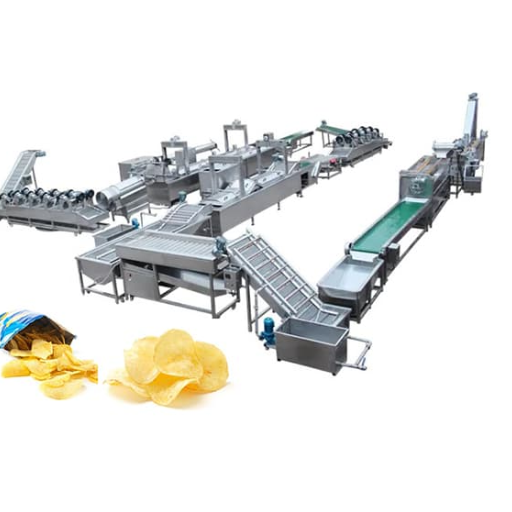
A strong RFQ gives each manufacturer the same technical baseline. It also reduces repeated questions, unsupported assumptions, and scope gaps.
| RFQ input | Why it matters |
|---|---|
| Product and raw materials | Formula behavior influences material selection, processing method, and machine configuration. |
| Finished-product specification | Dimensions, moisture, texture, density, color, and quality limits define success. |
| Process flow | Identifies required stages, recirculation, holding, inspection, and transfer conditions. |
| Required output | Establishes the capacity basis, operating schedule, and future expansion margin. |
| Facility information | Dimensions, access, environment, drainage, and structural limits affect layout. |
| Available utilities | Voltage, frequency, steam, gas, water, air, cooling, and ventilation affect design. |
| Hygiene requirements | Cleaning method, allergens, changeovers, and sanitation chemicals influence construction. |
| Automation and integration | Defines controls, recipes, alarms, data, packaging, and third-party interfaces. |
| Destination market | Determines which legal, electrical, machinery, and documentation reviews are needed. |
| Validation plan | Aligns pilot trials, FAT, SAT, measurement methods, tolerances, and sign-off. |
| Installation and training | Clarifies site work, supervision, commissioning, operator training, and maintenance training. |
| Commercial schedule | Budget framework and required production date help the supplier propose a realistic scope. |
Attach drawings, product specifications, photographs of existing equipment, and utility data where available. If information is uncertain, label it as preliminary rather than letting suppliers treat it as final.
Ask each bidder to return an assumptions and exclusions register. This document often reveals more risk than the headline quotation.
Ready to prepare a technical RFQ? Send your recipe range, target output, facility drawing, utility schedule, and preferred automation level to request a configuration and validation plan.
Evidence, FAT, and SAT Framework
Use an evidence ladder to distinguish persuasive language from decision-grade proof:
- Claimed: A brochure, proposal, or salesperson states that the equipment has a capability.
- Documented: Drawings, calculations, material records, manuals, or certificate records support the statement.
- Demonstrated: A representative trial, inspection, FAT, or SAT shows the capability under agreed conditions.
- Contractually guaranteed: The purchase agreement defines the metric, method, tolerance, remedy, and sign-off process.
Not every requirement needs the highest evidence level. However, high-risk items such as saleable throughput, food-contact materials, safety functions, critical utilities, and product quality deserve stronger proof.
| Stage | Primary purpose | Typical evidence |
|---|---|---|
| Pilot trial | Test product-process feasibility | Protocol, samples, settings, observations, and scale-up assumptions |
| Design review | Confirm engineering scope | Approved drawings, utility schedules, interfaces, and document index |
| FAT | Verify build and pre-shipment functions | Inspection record, dry tests, product tests where agreed, alarms, and punch list |
| SAT | Verify installation and site operation | Utility checks, interface tests, safety checks, and site acceptance record |
| Commissioning | Prepare controlled production | Parameter setup, training records, maintenance plan, and ramp-up actions |
Illustrative procurement scenario, not a customer case: Priya is planning a biscuit line with three formats and allergen changeovers. Before issuing the order, she assigns each critical requirement an evidence level. Die changes require a demonstrated trial, while material grades require traceable documents. The illustrative outcome is an acceptance plan tied to specific risks instead of one broad promise of performance.
Food Machinery Manufacturer Comparison Scorecard
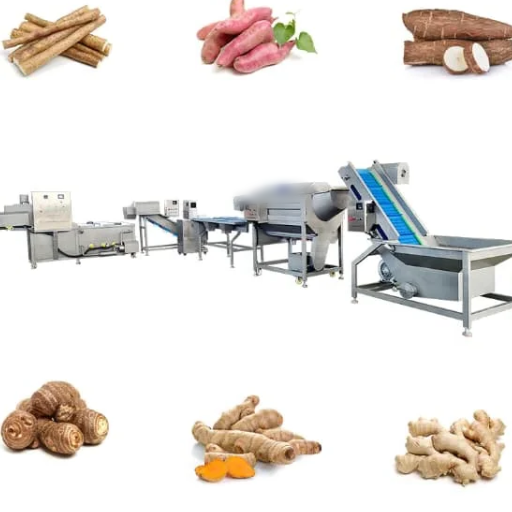
Score each shortlisted supplier against the same proposal revision. A 1-to-5 scale works well, provided the evaluation team defines what each score means and records its evidence.
| Evaluation category | Suggested weight |
|---|---|
| Product and process fit | 20% |
| Hygienic design and conformity evidence | 15% |
| Performance definition and testing | 15% |
| Layout, integration, and customization | 15% |
| FAT, SAT, installation, and commissioning | 10% |
| Service, spares, and training | 10% |
| Lifecycle cost and upgrade path | 10% |
| References and document quality | 5% |
Adjust the weights to reflect your main risks. A plant with frequent allergen changeovers may increase the hygiene weighting. A remote facility may assign more weight to spare parts and service.
Record both the score and the confidence level. A supplier may receive four points for a capability but only low confidence if the evidence is a sales statement. This prevents polished presentations from outweighing verified engineering information.
Food Machinery Manufacturer FAQs
What is the difference between a machine supplier and a turnkey line manufacturer?
A machine supplier normally provides a defined processing unit. A turnkey line manufacturer or integrator coordinates multiple machines, controls, conveyors, utilities, interfaces, installation, and commissioning. Because “turnkey” can exclude site work or third-party systems, the contract must list all scope boundaries.
How can a manufacturer prove the equipment will process my recipe?
Begin with a controlled pilot trial using representative raw materials and an agreed protocol. Review samples, process settings, observations, and scale-up assumptions. Then convert critical requirements into measurable FAT or SAT criteria. A sample alone does not prove continuous full-scale performance.
What should a food machinery quotation include?
A useful quotation should identify equipment scope, configuration, materials, capacity basis, utilities, controls, interfaces, drawings, documentation, testing, installation, training, warranty, spares, schedule, payment terms, assumptions, and exclusions. Ask suppliers to price options separately so that comparisons remain transparent.
Which certificates should I request?
Request only certificates and conformity records relevant to the equipment, application, and destination market. Verify the issuer, certificate number, legal entity, model, scope, and validity. No single certificate establishes universal compliance, and voluntary standards are not automatically legal requirements.
What are FAT and SAT for food processing equipment?
Factory acceptance testing verifies agreed construction and functions before shipment. Site acceptance testing verifies the installed equipment under site conditions. Both should use written protocols that define materials, duration, measurements, tolerances, deviations, retesting, documentation, and authorized sign-off.
Should I choose a standard machine or a custom production line?
Choose a standard machine when your product, capacity, utilities, and interfaces fit a proven configuration. Consider customization when recipe behavior, hygiene, layout, automation, packaging, or expansion requirements differ. Customization should solve documented needs, not add unnecessary complexity.
Conclusion: Select an Engineering Partner, Not a Brochure
Selecting a food machinery manufacturer requires more than comparing equipment photos, nameplate capacities, and initial quotations. Start by defining your product, finished quality, required output, cleaning regime, facility, utilities, automation, and destination market.
Next, examine application experience, hygienic design, integration, controls, pilot testing, FAT, SAT, documentation, and lifecycle support. Ask for evidence that matches each project risk. Most importantly, place accepted performance conditions, responsibilities, and remedies in the contract.
A structured process gives engineering, operations, food safety, maintenance, and procurement teams a shared basis for making the decision. It also helps qualified manufacturers prepare a more accurate proposal.
Request a Tailored Line Proposal: Send Shandong Loyal your raw materials, product specifications, target capacity, facility drawing, utility details, and production schedule. The team can review the information and propose a configuration, trial approach, and project scope for further technical evaluation.