How a Fried Snack Production Line Makes Detroit’s Famous Chips

Detroit is known for Better Made potato chips, square Detroit-style pizza, coney dogs, and Faygo soda. The ones that land on grocery shelves nationwide, the chips and the pizza, are not made by hand. They come off industrial production lines. A fried snack production line is what turns raw potatoes into the thin, golden, consistently seasoned chips the Motor City has eaten for nearly a century.
Here’s the thing most people miss. An iconic food feels like local character, but behind it is precise, repeatable engineering. Better Made has fried chips in Detroit since 1930. That’s not luck. It’s a production line built to hit the same thickness, the same oil temperature, and the same moisture level every single shift.
If you make snack food, understanding that line is the difference between a regional favorite and a product that scales.
Key Takeaways
- A fried snack production line runs through washing, peeling, slicing, frying, de-oiling, seasoning, and packaging, with oil and moisture control as the two quality levers.
- Detroit’s Better Made chips prove that consistency over decades comes from production-line precision, not recipe alone.
- There are two manufacturing routes for fried snacks: sliced whole potatoes for chips, and extruded dough for puffs and pellets.
- Detroit-style pizza is a baking-line challenge that maps closely to sheeting and tunnel-oven equipment.
- Choosing equipment means matching the line type to your product, your capacity, and your food-safety material grade.
The Foods Detroit Is Famous For (and Why They Are Manufacturing Stories)
Ask anyone what food Detroit is known for and you’ll hear the same short list. Coney dogs. Square pizza. Better Made chips. Faygo. Vernors. They’re beloved, and they’re also almost all mass-produced. That’s the interesting part for a food manufacturer.
Take the coney dog. It’s a beef frankfurter in a soft bun, topped with beanless chili, diced onion, and yellow mustard. American Coney Island and Lafayette Coney Island have argued over whose version is original for generations. A coney is assembly more than manufacture, so it sits outside the equipment world. But the chips and the pizza are different. They are made on lines, at scale, every day.
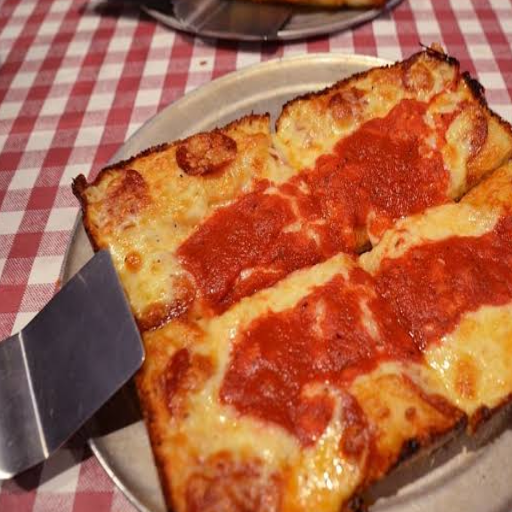
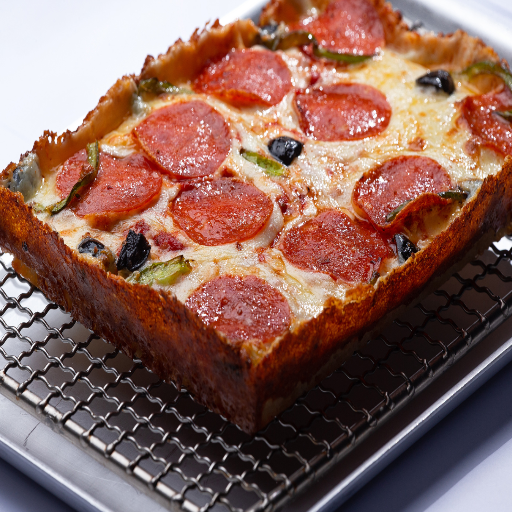
Detroit-style pizza is a thick, square pie with a light, airy crumb, crispy caramelized cheese edges, and sauce ladled on top. It was born at Buddy’s Pizza in the 1940s, baked in blue-steel pans borrowed from the auto industry. Those pans are the whole story. They’re not a gimmick. They conduct heat in a way that crisps the cheese against the edge, which is the defining texture of the style.
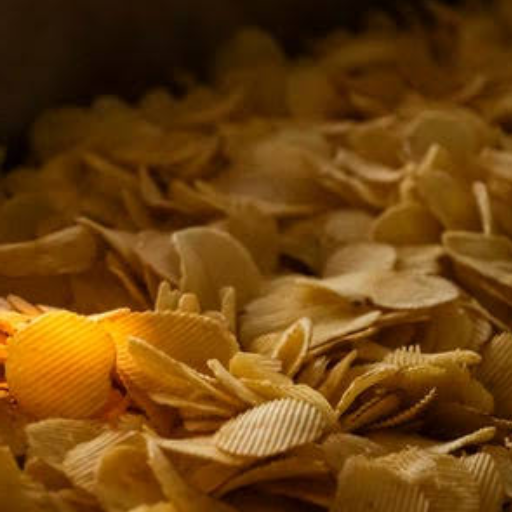
Better Made potato chips are the purest example. Fried in Detroit since 1930, Better Made is the last large-scale chip manufacturer still based in the city. The brand runs plain, krinkle-cut, sweet, hot, BBQ, Red Hot, and dill pickle flavors. Nearly a century of identical chips is only possible because the frying process is tightly controlled.
These foods are manufacturing stories wearing the clothes of local folklore. When you know how to build the line, you can reproduce that folklore anywhere.
Here’s how each iconic Detroit food maps to a manufacturing route:
| Detroit Food | Product Type | Manufacturing Route | Loyal Equipment |
|---|---|---|---|
| Better Made chips | Fried snack (sliced potato) | Slicing + continuous frying | Fried snack production line |
| Detroit-style pizza | Baked, pan-style dough | Sheeting + proofing + tunnel oven | Biscuit / baking line |
| Coney dog | Assembled sandwich | Manual assembly | Outside current scope |
| Faygo / Vernors | Beverage | Filling line | Outside current scope |
Inside a Fried Snack Production Line
This is where the machinery does the work. A fried snack production line is a sequence of stations, each one removing variability from the previous step. Here is the standard flow for a sliced potato chip, the kind Better Made makes.
Washing and peeling. Raw potatoes enter a washer that removes dirt and stones, then an abrasive peeler strips the skin. Anything left behind becomes a defect later, so this stage is about purity.
Slicing. A rotary slicer cuts each potato into chips of uniform thickness. Thickness is not cosmetic. A chip that is 10% thicker fries slower and holds more oil than its neighbors. Uniform slices mean uniform cooking.
Blanching and rinsing. The slices pass through hot water to remove surface starch and reduce sugars. This step controls color and prevents the chips from browning unevenly in the fryer.
Frying. The slices move through a continuous fryer at a fixed temperature and dwell time. This is the heart of the line. Oil temperature, oil turnover rate, and belt speed together determine crispness and moisture.
De-oiling and cooling. As chips leave the fryer, they pass over a de-oiling system that removes excess surface oil, then through a cooling section. Oil absorption is a cost and a quality issue. Less residual oil means a longer shelf life and a cleaner label.
Seasoning and packaging. A flavoring drum tumbles the chips with seasoning, and a weigher fills bags to an exact gram count. From here the chips go to case packing and palletizing.
Every one of these stages exists to make batch 10,000 taste like batch 1. That’s the point of a production line: not speed alone, but repeatability.
Ready to see how these stages are configured for your product? Explore Shandong Loyal’s fried snack production line for a full breakdown of the equipment at each step.
The 10 Stages of a Potato Chip Production Line
If you are evaluating equipment, here is the complete sequence, in order:
- Potato receiving and storage
- Washing and abrasive peeling
- Inspection and trimming
- Slicing to uniform thickness
- Rinsing and blanching
- Continuous frying
- De-oiling and cooling
- Seasoning and flavoring
- Inspection and sorting
- Weighing, packaging, and palletizing
Compare this list to any commercial potato chip line and the steps match closely. The differences between suppliers are in the detail: how the fryer controls oil temperature, how the de-oiler recovers oil, and whether the line is built from food-safe stainless steel throughout.
What Keeps Better Made’s Chips Consistent After 95 Years
Consistency is the hardest thing in snack manufacturing, and it’s also the thing customers notice first. A chip brand lives or dies on whether the bag they open this week tastes like the one they opened last month.
The answer isn’t a secret recipe. It’s process control. Oil temperature held to a narrow band. Dwell time that does not drift. A de-oiling stage that returns oil to the fryer instead of letting it accumulate on the chip. These are the parameters a well-engineered fried snack production line holds steady.
Consider a snack manufacturer we will call Priya. She launched a kettle-chip brand in 2023, frying small batches by hand and selling regionally. The chips were good, but every batch was a negotiation. One Friday she shipped a run that had absorbed too much oil because the fryer had drifted cold during a busy afternoon. Two grocery buyers sent the bags back for being greasy and breaking short of their shelf date.
Priya moved to a continuous fried snack production line with automated temperature control and a de-oiling stage. Her oil usage dropped, her shelf life stretched by several weeks, and the reject rate fell below half a percent. The difference was not a better recipe. It was removing the drift that a human batch fryer introduces. That’s what Better Made bought decades ago and what every serious snack producer eventually buys.
Detroit-Style Pizza: A Baking-Line Challenge
Fried snacks are only half the Detroit story. The other half is the square pizza, and it maps to a different kind of equipment.
Detroit-style pizza is baked, not fried, and the defining feature is the pan. The dough is pressed into a rectangular blue-steel pan, the cheese goes all the way to the edge, and the bake creates a caramelized, crispy cheese crust. Reproducing that at scale is a baking-line problem: sheet the dough to a consistent thickness, proof it, top it, and bake it in a tunnel oven that delivers the right heat to the pan base.
This is why commercial Detroit-style pizza systems, like the sheeted pizza and flatbread systems from AMF Bakery Systems, list Detroit-style among their outputs. A high-volume line can produce tens of thousands of pieces an hour. The engineering challenge is not the recipe. It is the pan handling, the cheese-to-edge placement, and the oven’s bottom-heat profile that produces that caramelized rim.
For a manufacturer already running a baking or biscuit production line, the same sheeting and tunnel-oven fundamentals transfer. Dough handling, proofing, and controlled baking are shared skills, whether the product is a biscuit, a flatbread, or a pan pizza.
Choosing Production Equipment for Regional Snack Brands
If Detroit’s history teaches anything, it is that a regional favorite can become a national one with the right line behind it. Here is how to think about the equipment decision.
Fried snack versus extrusion
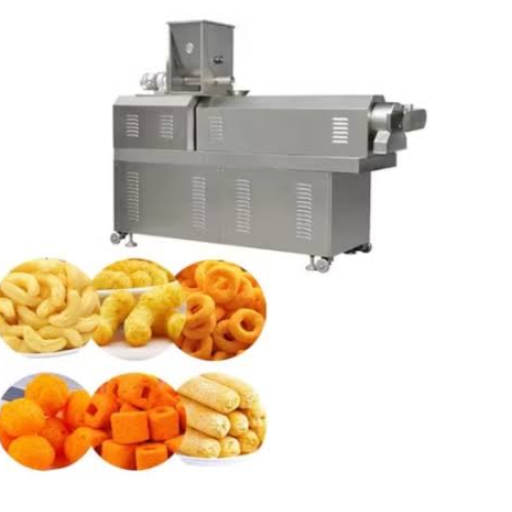
There are two ways to make a fried snack. Sliced-potato chips fry a whole, sliced vegetable. Extruded snacks start with starch and flour, run them through an extruder to shape the dough, then fry the shaped pieces. If your product is a chip from whole potatoes, you need a potato chip line. If it is a puff, a pellet, or a curl, you need food extrusion solutions paired with a fryer. The wrong choice here means buying a line that cannot make your product, so pin this down first.
Material grade and food safety
Everything that touches the food should be food-safe stainless steel. SUS 304 is the standard for most contact parts. For products with higher salt or acid, SUS 316 offers better corrosion resistance. This matters for sanitation and for the lifetime of the line. Cheaper lines cut corners here, and the cost shows up later as contamination risk and early wear.
Scaling a single product into a line
A brand often starts with one SKU and grows into a range. A modular food production line lets you add capacity or stations without replacing the whole system. That’s the difference between buying a machine and buying a platform. When you outgrow your first fryer, a modular line lets you extend the de-oiling, seasoning, or packaging stage rather than starting over.
Not sure which line fits your product? Request a custom production line analysis and our engineers will map your recipe to the right equipment.
Frequently Asked Questions
What food is Detroit known for?
Detroit is known for coney dogs, Detroit-style square pizza, Better Made potato chips, and Faygo and Vernors sodas. The chips and pizza are manufactured at scale on industrial production lines.
How are potato chips made commercially?
Commercially, potatoes are washed, peeled, and sliced, then blanched, fried in a continuous fryer, de-oiled, seasoned, and packaged. A fried snack production line automates each stage so every batch comes out consistent.
What is the difference between a potato chip line and an extruded snack line?
A potato chip line slices whole potatoes and fries the slices. An extruded snack line mixes starch and flour, extrudes the dough into a shape, and then fries it. Chips come from a vegetable; puffs and pellets come from dough.
How much does a potato chip production line cost?
Commercial potato chip lines range widely, from roughly 8,000forsmallsemi−automaticunitsto8,000forsmallsemi−automaticunitsto80,000 and up for higher-capacity automated lines. Capacity, automation level, and material grade drive the price.
Is Detroit-style pizza made on a production line?
Yes. Commercial Detroit-style pizza systems sheet, proof, top, and bake the dough in tunnel ovens, with pan handling and bottom heat set to create the caramelized cheese edge. Systems can produce tens of thousands of pieces per hour.
Conclusion
Detroit’s iconic foods are a reminder that “iconic” is an engineering outcome. Better Made chips taste the same today as they did in 1930 because a fried snack production line holds oil temperature, dwell time, and moisture in a tight, repeatable band. The square pizza is a baking-line problem solved with the right pans and the right oven. The coney dog is assembly. The lesson is that the food people love is, more often than not, the food that was built to be consistent.
If you make snack food, your version of Detroit is waiting on the other side of the right equipment. Start with the line type that matches your product, insist on food-safe stainless steel, and choose a system you can scale. That’s how a regional favorite becomes a national one.
Request a quote today and talk to our engineers about building the production line behind your next iconic product.