
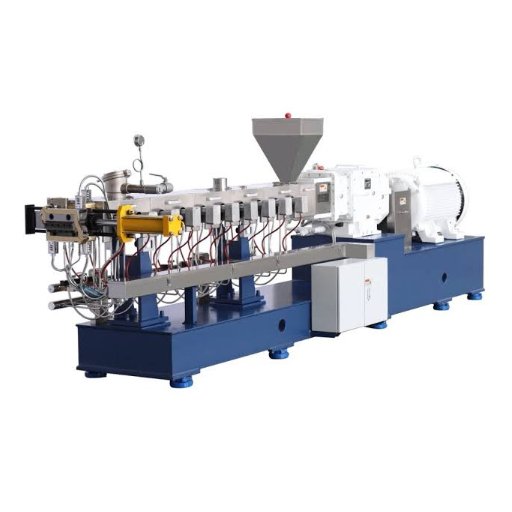
How to Choose a Twin Screw Extruder: A 6-Step Guide

Here is how to choose a twin screw extruder in six decisions: define your product and output, select the screw configuration and L/D ratio, size the machine by torque, confirm food-grade materials, check the controls, and validate the supplier with a pilot trial. Get those six right and the machine will run for a decade. Get one wrong and you will pay for it in energy, downtime, or wasted product.
David Ruiz learned that the hard way in 2024. When he opened a dry pet food plant outside Monterrey, he spec’d his first extruder from a plastics-industry guide he found online. The article told him to pick an L/D ratio of 40:1 for good mixing. So he did.
The machine ran, but it cooked his kibble too aggressively. He burned more electricity than he needed and had to run slower just to protect the product. A food extruder typically runs an L/D ratio of 12:1 to 20:1, not 40:1. David did not discover this until the equipment was already bolted to his floor.
If you are deciding between models right now, you have probably seen the same problem. Most “how to choose” advice online is written for polymer compounding, not food. This guide fixes that. You will learn the six steps to choose a twin screw extruder for snacks, pet food, cereals, or modified starch, with the exact spec ranges food buyers actually need.
Key Takeaways
- Food twin screw extruders use an L/D ratio of 12:1 to 20:1, far shorter than the 32:1 to 68:1 common in plastics. Do not copy plastics specs.
- Size by specific torque (Nm/cm³), not motor power alone. High-protein and high-fat recipes will overload a machine that only looks strong on kilowatts.
- Screw diameter drives output. Common food sizes run from 50 mm for small lines to 120 mm and up for industrial plants.
- Confirm SUS 304 or 316 stainless steel, CE or HACCP compliance, and cleanability before you fall in love with a spec sheet.
- Never buy without a pilot trial. A few hundred dollars of test time can prevent a six-figure mistake.
How Do You Choose a Twin Screw Extruder?
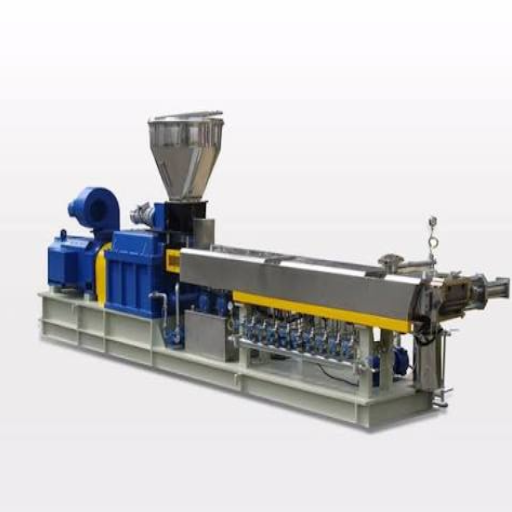
To choose a twin screw extruder, define your product, output, and recipe first. Then select the screw configuration and L/D ratio, size the machine by throughput and torque, confirm food-grade materials and compliance, and vet the supplier with a pilot trial before you buy.
That order matters. Buying an extruder is a systems decision, not a catalog decision. The best machine in a brochure will underperform if it does not match the moisture, fat, and protein in your recipe, or if it cannot connect cleanly to the mixer upstream and the dryer downstream.
Step 1: Define Your Product, Output, and Recipe Requirements
Every twin screw extruder decision starts with what you are making, how much of it, and what is inside the recipe. Skipping this step is the most common cause of oversizing and undersizing.
Product Type and Formulation
Write down the moisture, fat, and protein content of your formula. These three numbers shape everything downstream. A low-fat corn puff behaves very differently from a high-meat pet food with 25% fresh meat. High moisture and high protein require more shear control and a wider processing window.
Target Throughput and Capacity
Know your output in kilograms per hour. If you need 300 kg/h today, buy a machine sized for that, plus a little headroom. Do not buy a 1,500 kg/h machine “just in case.” Oversizing wastes energy, and undersizing creates a bottleneck the first time demand spikes.
Growth, SKU Variety, and Changeover Frequency
Think about where you will be in three years. Are you adding products or flavors? A modular screw design lets you reconfigure elements for new recipes without replacing the whole machine. If you plan to run many SKUs, prioritize changeover speed and recipe storage in the control system.
If you are not sure how a twin screw extruder fits into your full line, our guide to food extrusion solutions walks through the complete setup from raw material handling to packaging.
Ready to check your spec? Send us your recipe and target output. We will tell you the screw diameter, L/D ratio, and torque range you actually need, with no obligation. Request a consultation →
Step 2: Choose the Right Screw Configuration and L/D Ratio
Once you know your recipe, pick the screw configuration and barrel length. This is where most food buyers are led astray by plastics advice.
Co-Rotating vs Counter-Rotating Screws
Most food twin screw extruders are co-rotating, meaning both screws turn the same direction. Co-rotating designs mix well and self-clean, which suits snacks, cereals, pet food, and modified starch. Counter-rotating screws generate lower shear and stronger pumping, which suits rigid PVC and certain profiles, not food.
Unless you have a specific reason, choose co-rotating for food. For a full breakdown, see our guide to co-rotating vs counter-rotating twin screw extruders.
L/D Ratio: Food Runs Short, Plastics Run Long
The L/D ratio is the length of the screws divided by their diameter. It controls how much cooking and mixing time the material gets. Here is the key number most guides get wrong:
- Food extrusion: 12:1 to 20:1 is typical.
- Plastics compounding: 32:1 to 68:1 is common.
- Lab and R&D units: often around 40:1 for maximum flexibility.
A longer barrel adds cooking time but also adds power and residence time, which can degrade heat-sensitive ingredients. David Ruiz’s 40:1 machine overcooked his kibble for exactly this reason. Match the L/D ratio to your product, not to a compounding guide.
Modular Screw Elements
Look for a machine with modular screw elements. Segmented screws let you arrange conveying, kneading, and mixing blocks to match a specific recipe. That flexibility is what lets one extruder make corn puffs in the morning and a fortified snack in the afternoon. It also makes cleaning and maintenance faster.
Step 3: Size the Machine by Throughput, Torque, and Power
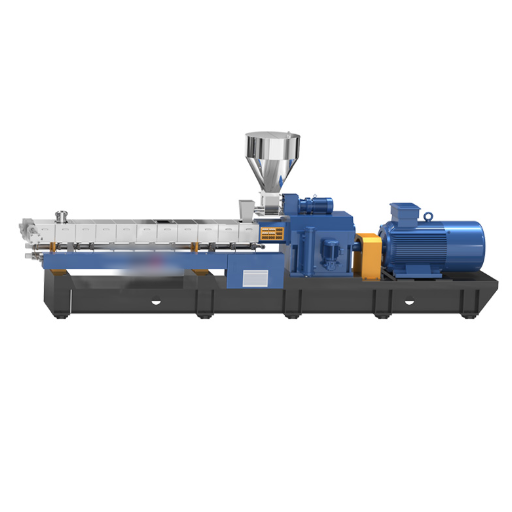
This is the step where buyers most often pay for the wrong machine. Sizing is about three linked numbers: screw diameter, specific torque, and motor power.
Screw Diameter and Output
Screw diameter largely determines output. Capacity scales roughly with the square of the diameter, so a small increase in diameter buys a large increase in throughput. Here are the common ranges for food:
| Screw diameter | Typical role | Typical output |
|---|---|---|
| 18 to 30 mm | Lab and R&D | 0.4 to 20 kg/h |
| 50 to 70 mm | Small production lines | 100 to 350 kg/h |
| 70 to 120 mm | Industrial lines | 350 to 1,500+ kg/h |
These figures come from real food extruder specifications. Manufacturers such as CHUANGBO publish similar diameter tiers, and our own twin screw extruder machine guide walks through sizing in more detail.
Specific Torque: The Number That Prevents Overload
Here is the mistake Amara Okafor made at her plant in Lagos. She bought a machine with a big motor and assumed that meant plenty of power. Her formula was high-protein, high-fat pet food. On the first production run, the drive overloaded and tripped.
The problem was torque, not kilowatts. Motor power tells you how fast the screws can turn. Specific torque, measured in newton-meters per cubic centimeter (Nm/cm³), tells you how hard they can push dense dough without stalling.
For high-viscosity or high-protein recipes, look for specific torque above 6.5 Nm/cm³. High-end food machines reach 11 to 15 Nm/cm³. Always ask for the torque rating, not just the motor size.
For reference, Coperion’s ZSK food extruders publish a specific torque of 13.6 Nm/cm³. That is the kind of number serious food machines carry.
Motor Power and Screw Speed
Motor power and screw speed set your top throughput. They are important, but they should be the last sizing check, not the first. A machine with high torque and adequate power will run your recipe reliably. A machine with big power and weak torque will stall on anything dense.
Want the sizing math done for you? Tell us your product and target kg/h. We will recommend a screw diameter and torque rating matched to your recipe. Get a spec recommendation →
Step 4: Verify Food-Grade Materials and Compliance
A machine can have perfect specs and still fail a food safety audit. Confirm the materials and certifications before you commit.
SUS 304 vs SUS 316 Stainless Steel
Product-contact surfaces should be SUS 304 or SUS 316 stainless steel. SUS 304 is the standard for most food applications. SUS 316 adds molybdenum for better resistance to salt and acid, which matters for salty snacks, acidic doughs, and aggressive cleaning chemicals. Ask which grade is used on the barrel, screws, die, and contact parts, not just the frame.
CE, HACCP, and GMP Compliance
Check for the certifications your market requires. CE marking matters for European and export markets. HACCP alignment and GMP design matter for food safety audits. A supplier that cannot produce compliance documentation now will not produce it after you have paid.
Cleanability and Quick Changeover
Look at how the machine comes apart. Can operators open the barrel and pull the screws for cleaning? Are there smooth welds and polished contact surfaces where residue could collect?
Fast cleaning and changeover directly reduce downtime. If you run allergens, confirm whether the machine can be validated for a dedicated line or a full clean between products.
Our guide to food-safe stainless steel equipment covers material selection and hygiene standards in more depth.
Step 5: Evaluate Control Systems and Automation
The control system is what turns a good mechanical machine into a repeatable production tool. Do not treat it as an afterthought.
PLC, HMI, and Recipe Storage
A modern twin screw extruder runs on a PLC with a touchscreen HMI. Look for recipe storage, so an operator can switch a corn puff recipe to a fortified snack recipe with one tap instead of re-entering twenty parameters. Recipe storage also reduces operator error across shifts.
Temperature Zones and Process Monitoring
Check how many temperature zones the barrel has and whether each is individually controlled. More zones mean tighter temperature control, which matters for heat-sensitive ingredients. Real-time monitoring of temperature, screw speed, and feed rate helps you catch a drift before it ruins a batch.
SCADA, MES, and ERP Integration
If you run a modern plant, ask whether the machine can connect to your SCADA or MES system for data logging and traceability. Even if you do not use it today, buying a machine that can integrate later protects the investment.
Step 6: Vet the Supplier and Validate Before You Buy
You can spec the perfect machine on paper and still get burned by the wrong supplier. This final step is where serious buyers separate themselves.
Pilot Trials and Recipe Development
Always run a pilot trial before you buy. Send a sample of your raw material, or run it at the supplier’s facility, and confirm the extruder hits your target texture, density, and moisture.
Nadia Almeida, a modified starch producer in São Paulo, spent one afternoon running her formulation on a pilot machine. The trial exposed a temperature profile problem that would have cost her weeks of production scrap. A few hundred dollars of test time saved her a six-figure rework.
For lab-scale validation, a laboratory twin screw extruder is the cheapest way to prove a recipe before you scale it.
After-Sales Support, Spare Parts, and Warranty
Ask hard questions. What is the warranty? How fast can you get wear parts like screws and barrel liners?
Is there local or remote support when the line goes down overnight? A cheap machine with slow spare parts is not cheap.
Factory Acceptance Testing
Before shipment, agree on a factory acceptance test (FAT). Define the throughput, product quality, and defect rate the machine must hit during the test. This locks performance into the contract instead of leaving it to good intentions.
Budget Realistically
Sizing and support both affect cost. Our twin screw extruder price guide breaks down what a machine should cost by capacity, so you can budget without overpaying or under-spec’ing.
Common Mistakes When Choosing a Twin Screw Extruder
Avoid these five errors and you are ahead of most buyers.
- Copying plastics specs. An L/D ratio built for polymer compounding will overcook food. Use 12:1 to 20:1.
- Over-sizing the machine. A machine that is too big wastes energy on every run. Size for today plus modest headroom.
- Under-sizing for growth. A machine that cannot scale forces a second capital purchase in two years.
- Ignoring torque. High-protein and high-fat recipes stall weak-torque drives, even with a big motor.
- Choosing price over total cost. A cheap machine with expensive spare parts and slow support costs more over ten years.
Frequently Asked Questions
How do I choose the right twin screw extruder?
Define your product and output first. Then pick the screw configuration and L/D ratio, size by torque and throughput, confirm food-grade materials, and validate the supplier with a pilot trial.
What L/D ratio should a food twin screw extruder have?
Most food applications use 12:1 to 20:1. Plastics compounding uses much longer barrels, so ignore that advice for food.
What screw diameter twin screw extruder do I need?
It depends on output. Roughly 50 to 70 mm for small lines at 100 to 350 kg/h, and 70 to 120 mm and up for industrial output above 350 kg/h.
Should I run a pilot trial before buying?
Yes. A pilot trial confirms texture, density, and moisture on your actual raw material and catches recipe problems before they become production scrap.
What questions should I ask a twin screw extruder supplier?
Ask about specific torque, food-grade materials, CE or HACCP compliance, pilot trial availability, spare part lead times, warranty terms, and factory acceptance testing.
Conclusion
Choosing a twin screw extruder does not have to be a gamble. If you define your product and output first, pick the right screw configuration and a food-appropriate L/D ratio, size by torque rather than kilowatts alone, confirm food-grade materials and compliance, check the controls, and validate with a pilot trial, you will buy a machine that runs reliably for years.
The key is to treat the decision as a process, not a purchase. Copying plastics specs, ignoring torque, or skipping the pilot trial is how David Ruiz, Amara Okafor, and thousands of other buyers ended up with the wrong machine.
The right twin screw extruder is out there. The only question is whether you spec it before you buy it.
Request a pilot trial or a spec check on your recipe today. Our engineers will review your product, output, and formulation and recommend a machine matched to what you actually make. Contact Shandong Loyal Industrial Co., Ltd. →