
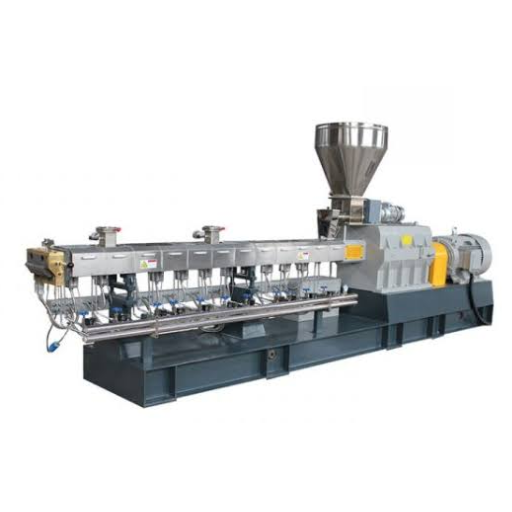
Twin Screw Extruder Maintenance: Checklist & Best Practices

Effective twin screw extruder maintenance is a schedule, not a guess: clean and lubricate daily, inspect screw and barrel wear weekly and monthly, change gearbox oil every 3,000 to 4,000 hours, and overhaul the machine annually. Skip those steps and a worn screw quietly drives up motor load and energy use until the line stops cold.
Here is what that looks like in real life. In March, a snack plant in Ohio ran its twin screw line around the clock to keep up with summer orders. The maintenance team skipped quarterly wear checks to save a few hours of downtime. By June, the screw-to-barrel gap had opened past 0.8 mm, output dropped 12%, and the main motor began pulling enough extra current to trip the overload twice a week. A 1,200bearingandscrew−elementreplacementbecamea1,200bearingandscrew−elementreplacementbecamea28,000 unplanned line shutdown.
Most extruder guides are written for plastics and compounding lines. This one is not. You already know downtime is expensive. In the next few minutes, you will learn a food-safe twin screw extruder maintenance program you can hand to your operators today, including concrete wear limits, cleaning methods, lubrication schedules, and the records auditors ask for.
Key Takeaways
- Replace the screw when edge wear exceeds 0.5 mm and the screw-to-barrel gap opens past 0.8 mm; discard any screw element with a hairline crack.
- Clean and lubricate daily, inspect wear weekly and monthly, change gearbox oil every 3,000 to 4,000 hours, and overhaul annually.
- Preventive maintenance can cut extruder energy use 8% to 15% by keeping screws and barrels inside design tolerances.
- Budget 2% to 3% of machine value per year for spare parts, and stock kneading blocks, seals, thermocouples, and heater bands.
- Log every inspection. HACCP and FSMA audits expect complete maintenance records for critical control point equipment.
What Is Twin Screw Extruder Maintenance?
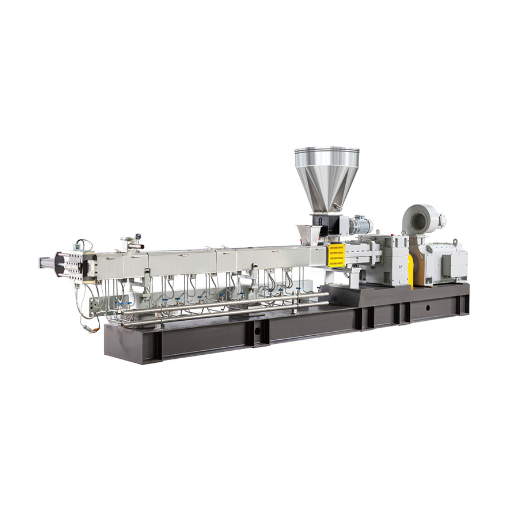
Twin screw extruder maintenance is the planned care of a twin screw extrusion machine: cleaning, lubrication, inspection, and wear-part replacement performed on daily, weekly, monthly, and annual schedules to prevent screw and barrel wear, unplanned downtime, and product contamination while extending equipment service life.
A twin screw extruder is not a single assembly. It is a modular system of shafts, screw elements, barrel sections, a gearbox, a drive motor, heating and cooling zones, a die, and a feeder. Each part wears differently. The screws and barrel take the brunt of abrasive wear, especially when you run filled or starchy formulations. The gearbox carries the torque. The heating and cooling zones control process temperature. Because the screws intermesh with tight clearances, small amounts of wear change product quality fast.
That is why discipline matters more than effort here. A few correct tasks, done on a fixed cadence, beat occasional deep cleaning.
Why Twin Screw Extruder Maintenance Matters
Food safety. A twin screw extruder touches every gram of product. Worn screws shed metal fines, and degraded seals can leak lubricant into the melt. In a food plant, maintenance is not just an uptime question. It is a contamination control question. Keeping screws and barrels within tolerance and using food-grade lubricants protects the product.
Uptime and throughput. As the screw and barrel wear, the clearance between them opens. Melt leaks backward along the screw, so less product moves forward. Throughput falls, and the operator compensates by raising screw speed, which accelerates wear further. Catching wear early keeps output where you designed it.
Energy efficiency. This one surprises people. Worn screws raise motor amperage because the drive works harder to push material against leakage. Preventive maintenance that keeps screws and barrels within design tolerances can cut extruder energy consumption by 8% to 15%, according to maintenance software provider Oxmaint. On a large line running around the clock, that is real money every month.
Equipment life and total cost of ownership. A twin screw extruder is a capital asset. Screws, barrels, and gearboxes are expensive. Small, scheduled interventions extend their life by years and protect resale value. A documented maintenance history can also raise resale value by 10% to 15%.
Want a maintenance program built around your exact line? Explore our food extrusion solutions to see how modular, food-safe design simplifies upkeep from day one.
Daily, Weekly, and Monthly Maintenance Checklist
Break twin screw extruder maintenance into three rhythms. Daily tasks keep the machine clean and safe between shifts. Weekly tasks catch alignment and lubrication problems early. Monthly tasks protect the electrical and control systems.
Daily Startup Checks
Before every shift, complete these checks:
- Confirm both screws are in the correct position. A misloaded screw backs material up at the feed port and spikes current.
- Verify thermocouples are seated and the temperature display reads correctly.
- Check cooling water is flowing and free of scale. Use distilled or purified water in the cooling tank to prevent mineral buildup.
- Confirm gearbox oil level sits between the upper and lower marks, with no emulsification or odd odor.
- Tighten head bolts and confirm the drive, water, and electrical systems are ready.
- Heat the barrel and hold at set temperature for about 10 minutes so the screw and barrel heat through evenly before you start.
Start the screws at low speed only, and never idle them for more than two minutes. Feed in a starved manner and raise speed gradually while watching the ammeter.
Daily Cleaning After Shutdown
Cleaning is the single highest-value daily task. Follow these rules:
- Cool the barrel below 50°C before cleaning to avoid deformation.
- Purge all remaining material so it does not harden and block the next startup.
- Clean the die head and cutter, unclog die holes, and dry them with compressed air to prevent rust.
- Use copper brushes and cleaning rods only. Steel tools scratch the barrel wall and screw edges.
- Grease the feed screw bearings and die-head adjustment screws each shift.
Weekly Tasks
- Check lubricating grease at bearing seats for dry wear or leakage.
- Verify coupling alignment between the drive and gearbox.
- Inspect for oil, water, and hydraulic leaks.
- In hot or humid conditions, inspect screw threads and barrel walls weekly for scratches or residue, and shorten bearing grease intervals.
Monthly Tasks
- Purge the electrical control cabinet of dust.
- Check DC motor carbon brushes and replace them if worn.
- Test motor insulation resistance.
- Confirm cooling solenoid valves open and close fully.
- Change vacuum pump oil if it looks cloudy.
| Interval | Task |
|---|---|
| Daily | Startup checks, purge and clean, lubricate feed bearings |
| Weekly | Bearing grease, coupling alignment, leak inspection |
| Monthly | Control cabinet purge, carbon brushes, cooling valves |
| Quarterly | Measure and record screw and barrel wear |
| Every 3,000-4,000 h | Change gearbox oil |
| Semi-annual | Descale cooling channels |
| Annual | Full overhaul and gearbox inspection |
Screw and Barrel Wear: Limits, Inspection, and Repair
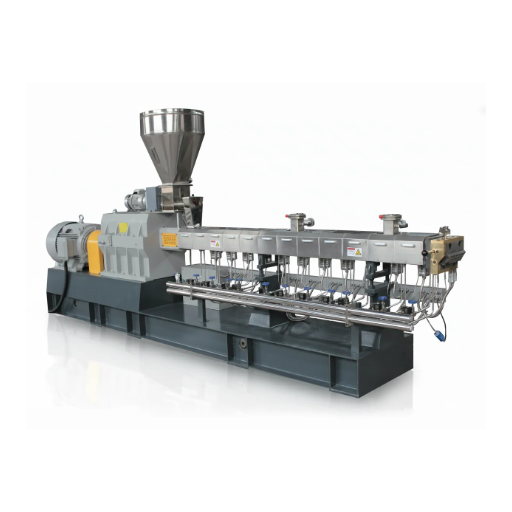
Wear is the failure mode that defines twin screw extruder maintenance. It happens because material rubs between the rotating screw and the barrel, slowly shrinking the screw and enlarging the bore. The gap grows, backflow increases, output falls, and residence time rises, which can degrade heat-sensitive food.
Some formulations wear the machine faster. Calcium carbonate, glass fiber, and abrasive starches act like sandpaper. A single metal foreign body can spike torque and twist a shaft.
Measuring Wear
Measure wear at fixed intervals and write the numbers down. Key limits used across the industry:
- Replace the screw when edge wear exceeds 0.5 mm and the screw-to-barrel gap is greater than 0.8 mm.
- Typical flight-to-barrel clearance runs 0.15 to 0.30 mm; flight-to-flight clearance 0.10 to 0.25 mm.
- Keep axial play under 0.05 mm.
- Watch bearing temperature. It should stay at or below 75°C. Above 80°C with vibration, check grease and replace the bearing if clearance is excessive.
These figures come from the barrel and screw maintenance guidance published by Wanplas.
Inspect the Kneading Blocks
Kneading blocks and mixing elements wear fastest because they do the hardest work. After cleaning, look for nicks, gouges, and hairline cracks. Smooth minor damage with a fine file. Discard any element with a hairline crack: a cracked element can twist a shaft, wreck a barrel, and destroy a gearbox.
Repair Options
When wear reaches the limit, you have choices:
- Thermal-spray a wear-resistant alloy and grind the screw back to size. This costs less than a new screw.
- Surfacing (weld) 1 to 2 mm of wear-resistant alloy onto the screw flight.
- Hard chrome plating restores surface hardness, though the chrome layer can flake under heavy load.
- Re-bore the barrel to a larger diameter and fit a matched new screw, if enough nitrided layer remains.
Consider this real example. A modified starch producer in Malaysia measured its kneading blocks every quarter. The team found wear trending upward six months in and swapped the elements during a planned changeover. The result: zero unplanned stops from screw failure that year, and motor efficiency held steady because clearances never drifted out of spec. That kind of trend data is exactly what makes maintenance predictable instead of reactive.
Running modified starch or other abrasive formulations? Our twin screw extruder for modified starch is built with wear-resistant screw and barrel materials to extend service intervals.
Cleaning, Lubrication, and Cooling System Care
Removing and Cleaning Screw Elements
Screw elements come off for cleaning and inspection. Do it while the screws are still hot, or reheat the assembly slowly for about 20 minutes. Never let elements change color, which alters their metallurgy.
- Use a copper brush or copper gauze for initial cleaning as elements come off.
- For baked-on material, use a stiff wire wheel or dry-ice blasting.
- For stuck elements, use an impact hammer with a brass tip.
- Apply a thin anti-seize compound to every shaft surface before reassembly.
The Society of Plastics Engineers publishes detailed screw removal and restaging guidance in its Extrusion Division technical article, which is worth keeping in the shop.
Food-Grade Lubrication
In a food line, lubrication has two jobs: protect the machine and protect the product. Use NSF H1 food-grade lubricants anywhere there is possible product contact. Change gearbox oil every 3,000 to 4,000 operating hours, with a first change around 500 hours on a new machine. Add high-temperature lithium-based grease to bearing seats every 2,000 hours.
Cooling Channel Descaling
Scale in cooling channels insulates the barrel and causes hot spots, which scorch product. Descale cooling channels chemically or mechanically every six months. Distilled water in the cooling loop slows scale formation between descales.
Here is a video walkthrough of screw removal and cleaning, a task every maintenance tech should do once under supervision before doing it alone:
Scheduled Overhauls and Predictive Maintenance
Scheduled work is the backbone. A full shutdown inspection every 2,000 to 3,000 operating hours lets you disassemble, measure, and replace parts at wear limits. Annual work adds a gearbox tear-down: check gears, bearings, and oil seals, and replace worn seals and consumables.
Predictive maintenance moves you from a calendar to a condition. Three tools earn their cost fast:
- Vibration analysis on the gearbox catches bearing wear weeks before failure.
- Thermal imaging on the electrical cabinet spots loose connections and failing heater bands.
- Oil analysis flags metal particles in gearbox oil before a gear fails.
Feed all of it into a CMMS so every reading is time-stamped and searchable. A plant that tracks wear trends can order parts before they are needed, which is the difference between a planned changeover and a surprise.
Food Safety and Regulatory Compliance
Twin screw extruder maintenance is a food safety activity. Auditors treat it that way, and so should you.
Link Maintenance to HACCP
Your HACCP plan already lists critical control points where temperature, time, or metal detection keep the product safe. Maintenance supports every one of them. A failing heater band can drop a cook zone below its critical limit without tripping an alarm. Tie each CCP’s equipment to its maintenance schedule so the plan stays enforceable.
Sanitize After Maintenance
After any maintenance that opens the product path, clean and sanitize before restart. Document it. Many plants treat “sanitized after maintenance” as a sign-off step on the work order, and that simple field saves them during audits.
Keep Records
FSMA and FSSC 22000 expect complete, retrievable maintenance records for food-contact equipment. Maintain a three-level log: daily readings (temperature, current, bearing temperature, cleaning), weekly checks (gear oil, cutter wear, screw clearance), and monthly summaries (failures, replacements, energy use). If you cannot produce these on demand, the audit fails no matter how clean the machine looks.
Spare Parts and Preventing Unplanned Downtime
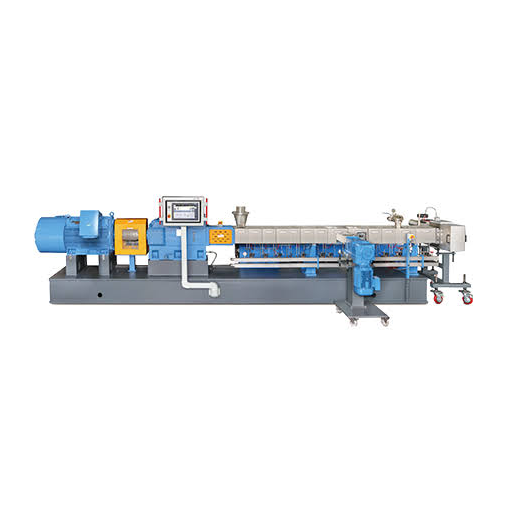
Stock critical spares before you need them: a set of kneading blocks, a rear seal kit, thermocouples, heater bands, and a PLC battery. Budget 2% to 3% of machine value per year for maintenance and spare parts.
Watch these warning thresholds and stop for inspection when any one trips:
- Screw speed fluctuates more than 5%.
- Main motor current exceeds 110% of rated value.
- Die head pressure drops more than 20% suddenly.
Each of these signals a problem you want to find before it finds you. For the symptom-by-symptom fixes, our companion guide on common twin screw extruder problems walks through diagnosis and repair.
Maria, a maintenance lead at a pet food co-manufacturer, learned the spare-parts lesson the hard way. A rear seal failed on a Friday, and the plant had no spare on the shelf. The line sat idle for nine days waiting on a shipped part, at a cost of nearly 40,000inlostproduction.A40,000inlostproduction.A600 seal would have kept it running. She now keeps a full critical-spares kit and reorders the moment one is used.
Frequently Asked Questions
How often should a twin screw extruder be serviced?
Clean and lubricate daily, inspect wear weekly and monthly, change gearbox oil every 3,000 to 4,000 hours, and perform a full overhaul annually or every 2,000 to 3,000 operating hours.
What are the wear limits for twin screw extruder screws?
Replace the screw when edge wear exceeds 0.5 mm and the screw-to-barrel gap opens past 0.8 mm. Keep flight-to-barrel clearance at 0.15 to 0.30 mm and discard any element with a hairline crack.
How do you clean twin screw extruder screw elements?
Clean while hot using copper brushes and copper gauze. Use a fluidized bath or dry-ice blasting for baked-on residue, and apply anti-seize before reassembly. Never use steel tools.
What lubricants should I use on a food extruder?
Use NSF H1 food-grade lubricants anywhere product contact is possible. Change gearbox oil every 3,000 to 4,000 hours and grease bearing seats with high-temperature lithium-based grease every 2,000 hours.
How does maintenance support HACCP compliance?
Maintenance keeps critical control point equipment inside its limits and provides the documented, sanitized records auditors expect. Every maintenance task that touches the product path should end with a sanitization and sign-off step.
Conclusion
Twin screw extruder maintenance is not complicated, but it is relentless. Clean and lubricate daily. Measure screw and barrel wear on a fixed schedule, and act when the gap hits 0.8 mm or the screw edge wears past 0.5 mm. Change gearbox oil on the clock, not by feel. And write everything down.
Here is the payoff. A cereal manufacturer in the Midwest adopted this exact program after a series of frustrating breakdowns. In the first year, unplanned downtime fell by roughly 40%, energy use on the line dropped, and the plant passed its annual food safety audit without a single missing record. The maintenance team stopped fighting fires and started planning work.
A disciplined twin screw extruder maintenance program buys three things: product safety, predictable output, and a machine that holds its value. Start with the daily checklist, add the wear measurements, and let the records prove the rest.
Ready to build a line that is easier to maintain from day one? Contact our team for a maintenance plan and spare parts program tailored to your production, or request a quote for food-safe extrusion equipment built for long service life.