Batch Fryer vs Continuous Fryer: Which Is Right for Your Production?

A batch fryer cooks food in discrete loads, while a continuous fryer moves product through hot oil on a conveyor. Batch frying suits hard-bite products and frequent changeovers; continuous frying suits high-volume, uniform output. Here’s how to tell which one your production line actually needs.
Kettle chips are crunchy in a way regular chips are not. That difference isn’t a recipe secret. It comes down to the fryer.
Most buyers approach the batch fryer vs continuous fryer question backward. They ask what a vendor sells, then work backward to justify the purchase. You’ve probably felt it: a sales rep explains why their machine is the answer, whatever your product actually needs.
By the end of this guide, you will know how to choose correctly. We compare throughput, texture, oil content, and cost, then hand you a five-step decision framework so you pick the fryer your product needs, not the fryer your vendor happens to make.
Key Takeaways
- Batch fryers deliver a hard-bite texture and fast changeovers but top out around 225 kg/h; continuous fryers scale past 2,900 kg/h with uniform output.
- Traditional continuous chips carry more oil (34–38%) than batch kettle chips (about 30%), but modern continuous systems with de-oiling can reach 20–23%.
- The practical cut-lines: below roughly 500 kg per day favors batch; above roughly 300 kg per hour, continuous becomes the standard choice.
- Changeover time is the hidden cost: about 15 minutes for a batch fryer versus 2–4 hours for a continuous line.
- The best answer for many plants is to run both side by side, which a single turnkey provider can outfit end to end.
What Is a Batch Fryer?
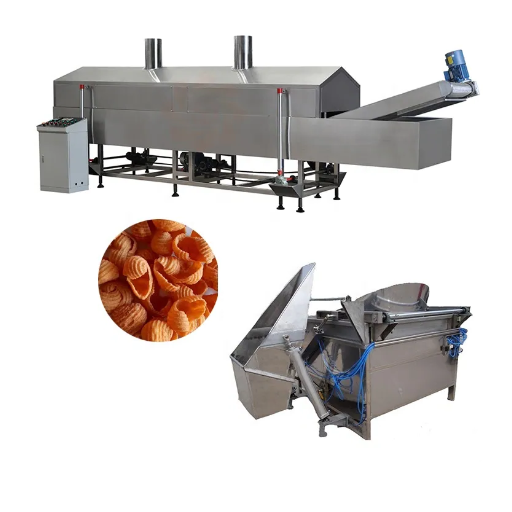
A batch fryer cooks food in discrete, sequential loads. Each batch is loaded, fried to a target moisture and color, then discharged before the next begins.
This is the fryer behind kettle chips, roasted nuts, and small-batch specialty snacks. The oil temperature dips when product drops in, then recovers over several minutes. That variable profile, plus longer fry times of 7 to 9 minutes, is exactly what creates the hard-bite crunch premium chip brands sell.
Batch fryers run roughly 35 to 500 lb/h (15 to 225 kg/h) of finished product, with a typical batch size of 40 to 100 kg. They win on flexibility and lose on raw throughput.
What Is a Continuous Fryer?
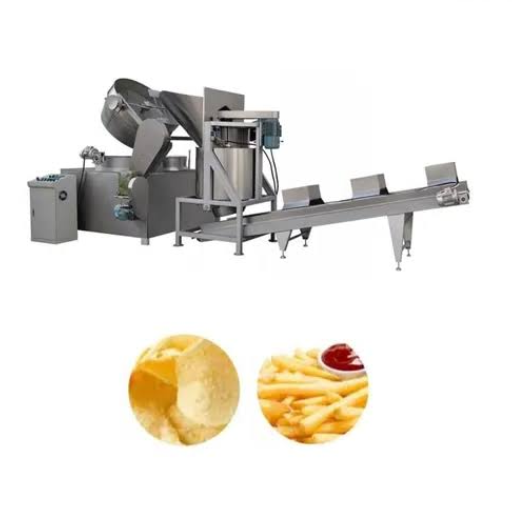
A continuous fryer moves product through hot oil on a conveyor at a controlled speed. The oil stays at a stable temperature because loading is constant, and it’s continuously filtered and recirculated.
This is the workhorse of large-scale snack production. Conventional chips fry in 2 to 3 minutes at around 185°C (365°F), producing consistent color, moisture, and texture across millions of bags.
Continuous fryers scale from about 200 to 6,500 lb/h (90 to 2,900 kg/h) for chips, and far higher for par-fried products. If your problem is volume and uniformity, this is the machine that solves it.
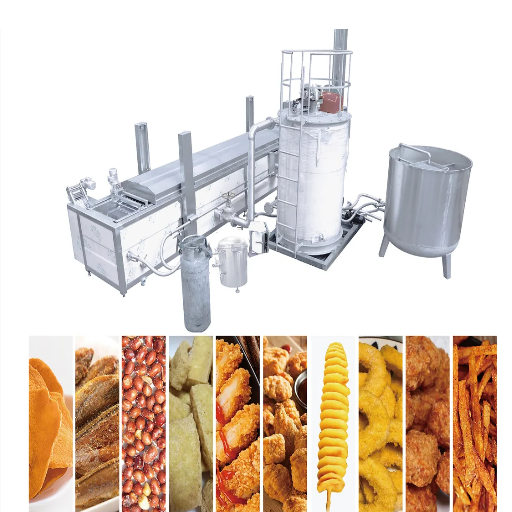
Explore how a continuous fryer machine fits into a complete fried snack production line built around your product.
Batch Fryer vs Continuous Fryer: Key Differences
The two machines are built around opposite priorities. This table is the fastest way to see where they diverge.
| Factor | Batch Fryer | Continuous Fryer |
|---|---|---|
| Throughput | 15–225 kg/h | 90–2,900 kg/h (chips) |
| Texture | Hard-bite, crunchy | Uniform, less hard |
| Oil content (chips) | ~30% | 34–38% (20–23% with de-oiling) |
| Oil turnover | Slow (27–29 hours) | Rapid, with inline filtration |
| Changeover time | ~15 minutes | 2–4 hours |
| Footprint & labor | Small, operator-attended | Large, one operator per line |
| Capital cost | Lower | Higher |
Let’s look at each difference in more detail.
Throughput & Capacity
Capacity is the first and most obvious gap. Batch fryers top out near 225 kg/h because their heat input is limited by fryer surface area. Continuous fryers separate the fryer from the heat exchanger, so heat load scales with the system, not the pan. Industry data from PotatoPro’s fryer-selection guide pegs batch fryers at 15 to 225 kg/h and continuous fryers at 90 to 2,900 kg/h for chips.
That is why a continuous line is effectively mandatory once a single product passes roughly 300 kg/h. Below about 500 kg per day, a batch fryer usually costs less to own and operate.
Product Texture & Quality
This is the difference most buyers overlook, and it’s the one that determines whether a product sells.
Batch-fried chips are harder and crunchier, a texture split documented in frying science literature. The oil temperature drops when the product enters, then climbs back up, in what engineers call an inverted bell curve. That longer, variable fry cooks the starch differently and produces the hard-bite texture.
Continuous-fried chips are more uniform but less hard. They fry fast at a steady temperature. If a brand wants kettle-style crunch from a continuous line, it needs a special continuous-kettle-fry setup that mimics the batch temperature profile.
When Marcus scaled his kettle chip brand in Manchester past 800 kg a day, he leased a continuous line to keep up. The chips came out uniform, but soft, with none of the hard bite his customers paid a premium for. He moved back to batch frying for the kettle range and kept the continuous line for a single plain-chip SKU. The fryer sets the texture, not just the throughput.
Oil Use & Oil Content
Oil is the largest variable cost in fried snack production, and the two machines handle it very differently.
A batch fryer holds a large volume of oil that turns over slowly. One typical batch fryer replaces its full oil volume only every 27 to 29 hours, which leaves more time for degradation. A continuous fryer holds less oil and turns it over fast, with inline filtration pulling out crumbs during the run.
There is a product-side difference too. Traditional continuous chips carry 34 to 38% oil by weight, while batch kettle chips hold about 30%, according to potato-chip frying patents. Modern continuous systems with automatic de-oiling can push final oil content down to 20 to 23%, which matters for clean-label positioning.
Ana, a plant manager at a tortilla chip facility, watched her oil spend climb every quarter. Her batch fryers held 400 kg of oil that degraded between runs. After moving to a continuous line with inline filtration and rapid oil turnover, she cut oil usage by nearly a fifth in the first year. The oil math alone changed her payback case.
Footprint, Labor & Capital Cost
Batch fryers are compact and cheap to install, but they’re operator-attended. Someone loads, monitors, and unloads every batch, which makes output depend on the operator.
Continuous fryers cost more up front and take more floor space, but one operator can monitor an entire line. The trade is capital cost against labor cost and consistency.
Ready to model the numbers for your own product? Request a quote and our engineers will build a throughput, oil, and energy case around your recipe and target volume.
When a Batch Fryer Is the Better Choice
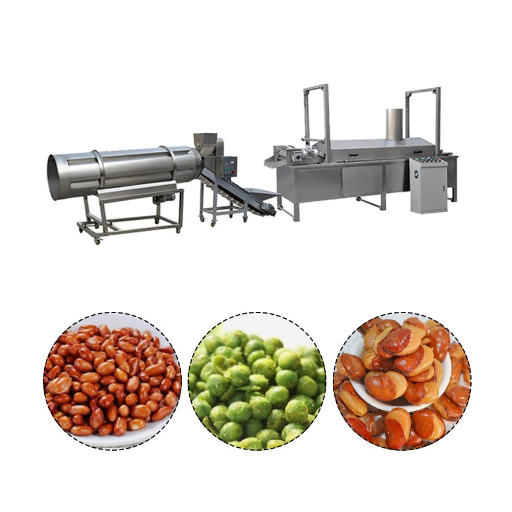
Choose a batch fryer when your product, not your volume, is the constraint. Batch frying wins when:
- You make kettle chips or other hard-bite products that need a variable temperature profile.
- You run nuts, fruit and vegetable chips, or battered proteins in smaller runs.
- You change products often, and a 15-minute changeover keeps the line moving.
- You are in R&D or a new market and need to test recipes without idling a large line.
- Your volume sits below roughly 500 kg per day.
The trade is real. Batch frying is labor-intensive and operator-dependent. Two operators can produce noticeably different batches on the same machine if the process is not tightly controlled.
When a Continuous Fryer Is the Better Choice
Choose a continuous fryer when volume and consistency drive your business. Continuous frying wins when:
- You make uniform potato chips, extruded or pelleted snacks, or another single high-volume SKU.
- You run long, uninterrupted production of the same product.
- Labor costs are high and you want one operator overseeing a full line.
- You need every bag to match on color, moisture, and texture.
- Your volume exceeds roughly 300 kg per hour.
The hidden cost is changeover. Switching a continuous line between products can take 2 to 4 hours, so the economics only work with long runs of one product. Plan your production calendar around that reality, not the optimistic 30 minutes a brochure might suggest.
Running Batch and Continuous Fryers Side by Side
The batch fryer vs continuous fryer debate is often framed as either-or. For many growing snack producers, the smart answer is both.
Run a continuous line for your uniform, high-volume SKU, and a batch fryer for kettle, seasoned, and limited-run products. The two machines share the surrounding line: de-oiling, snack flavoring machine, and packaging.
This is where a single turnkey provider earns its place. When the fryers, de-oiling, flavoring, and packaging all come from one engineering team, the line fits together instead of being stitched from three vendors.
Loyal’s engineers recently configured a line for a snack producer in Southeast Asia who runs a continuous fryer for plain potato chips during the day and a batch fryer for kettle and seasoned SKUs on the evening shift. One provider, one control philosophy, one service contact. The producer scaled both product families without doubling their supplier list.
How to Choose: A 5-Step Decision Framework
Work through these five steps in order, and the choice usually makes itself.
- Define the product and target texture. Hard-bite kettle chips pull toward batch. Uniform chips and pelleted snacks pull toward continuous.
- Estimate realistic daily volume. Below about 500 kg a day, batch is often the cheaper choice. Above about 300 kg an hour, continuous wins.
- Count your SKUs and changeovers. Frequent changeovers favor batch. One long-running SKU favors continuous.
- Model oil, energy, and labor. Factor in oil turnover, filtration, energy per kilogram, and how many operators each line needs.
- Confirm footprint and operator skill. A continuous line needs more floor space and a trained operator. A batch line needs a disciplined, repeatable process.
If your answers point in two directions at once, revisit the both-fryers scenario above. For pelleted snacks that combine extrusion and frying, our food extrusion solutions are a natural starting point for the front end of the line.
FAQ
What is the difference between a batch fryer and a continuous fryer?
A batch fryer cooks food in discrete loads with a variable temperature profile, while a continuous fryer moves product through stable-temperature oil on a conveyor. Batch suits hard-bite products and small runs; continuous suits high-volume, uniform output.
Are continuous fryers better than batch fryers?
Not universally. Continuous fryers are better for high volume and consistency. Batch fryers are better for hard-bite texture and frequent changeovers. The right choice depends on your product and daily volume.
Which fryer is cheaper to run?
Batch fryers cost less to buy but use more labor and hold larger oil volumes that degrade faster. Continuous fryers cost more up front but save on labor, energy, and oil. The operating cost depends on your volume and product mix.
Which is better for potato chips?
Batch frying produces the hard-bite kettle chip. Continuous frying produces the uniform, softer traditional chip. A chip brand that wants both can run a continuous line for volume and a batch fryer for its kettle range.
Can you fry multiple products on one continuous fryer?
Yes, but every product switch costs a 2 to 4 hour changeover. Continuous fryers make sense when one product runs for long, uninterrupted stretches. Frequent product changes are where batch fryers win.
Conclusion
The batch fryer vs continuous fryer decision is a product decision, not an inventory decision. Batch frying gives you hard-bite texture, fast changeovers, and a lower entry price, at the cost of throughput and labor. Continuous frying gives you volume, uniformity, and better oil economics, at the cost of capital and changeover flexibility.
Keep three takeaways. First, below roughly 500 kg a day, batch usually wins; above 300 kg an hour, continuous usually wins. Second, texture and oil content are the outcomes that decide whether a product sells. Third, the best answer for many plants is both machines running side by side.
The fryer you choose sets the ceiling on your product quality and your cost per kilogram. Choose it on purpose. If you want an engineering view on which approach fits your recipe and volume, request a quote and our team will model the full line for you.