Nutrition Flour Production at MTA in Burkina Faso with LOYAL
Nutrition flour production at MTA connects locally available agricultural materials with a food manufacturing business in Burkina Faso. LOYAL supplied the enterprise with a cereal powder processing line and front-end grain preparation equipment.
The project is based in Ouagadougou’s Kossodo industrial zone and is led by Ingue ITEKA. It offers a useful reference for food businesses considering their own investment in grain processing. The story also raises practical questions about recipes, equipment scope and the collaboration needed to turn a factory plan into a production process.
Key takeaways
- MTA develops nutritional flour products for the local market.
- LOYAL’s partnership covers nutritional powder processing equipment, with front-end grain preparation described in our existing project account.
- Product requirements should guide the complete processing route.
- Published factory descriptions provide context, while a new proposal needs its own capacity basis.
- Clear technical documents help the buyer and supplier coordinate the project.
A closer account of the MTA partnership and its purpose
The project has a name, a place and a founder
Our equipment partnership with MTA belongs to a specific food manufacturing enterprise in Kossodo, Ouagadougou. Ingue ITEKA’s business develops nutritional flour products around agricultural ingredients available locally. That combination of place, people and product is central to understanding the significance of this nutrition flour production project for LOYAL.
VOA’s October 2024 report adds another part of the founder’s story. Its introduction describes a former Burundian refugee who had settled in Burkina Faso and established a factory to produce enriched flour for children facing nutritional hardship. This gives the enterprise a social purpose alongside its manufacturing activity. VOA reporting.
For our company, participating in nutrition flour production means contributing the machinery through which cereal ingredients can be processed into a formulated food base. The customer brings the product ambition and develops the local enterprise. Our equipment contribution is connected to that customer’s work and the production route it requires.
LOYAL appears on the equipment in the reporting material
The supplied RTB screenshot shows a continuous drying equipment panel bearing SHANDONG LOYAL INDUSTRIAL CO., LTD. The manufacturer name is visible below the controls, while the RTB logo appears in the broadcast image. This is an identifiable piece of equipment within the documented factory setting.
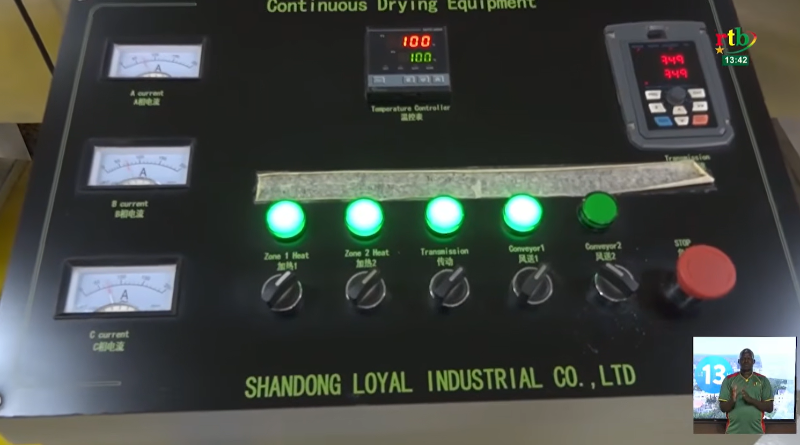
RTB screenshot supplied with the project material. The panel identifies continuous drying equipment and displays LOYAL’s company name.
This detail deserves a place in the case because it gives readers a tangible connection to the partnership. Nutrition flour production involves a physical system of machines, controls and material transfers. The supplied image lets us show one part of that system with its manufacturer identification intact.
Local grain moves into a finished-food business
MTA’s described product range uses maize, millet, soy and sesame across its formulas. Those ingredients give the factory a connection with local agriculture and a basis for developing cereal foods. Processing adds the manufacturing steps that move ingredients toward a prepared product.
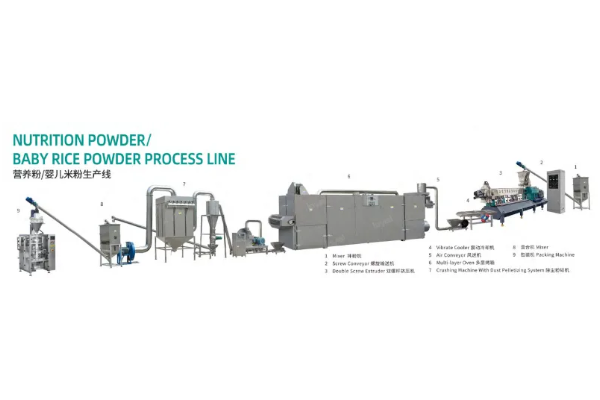
In nutrition flour production, each step has a specific purpose. Mixing brings ingredients together, extrusion processes the cereal blend, drying prepares the material for downstream treatment and milling creates the powder form. Later blending and packing then follow the requirements of the selected recipe and product.
Reference equipment illustration from the supplied documents. It explains the processing route and is separate from an installation drawing for the MTA site.
Our existing project account describes nutritional powder machinery together with front-end grain preparation. That scope highlights an important feature of nutrition flour production. The preparation of the raw material and the processing of the cereal base need to be considered together when defining the system.
Two products give the project a wider context
The public enterprise profile presents NOUON and AKEZA as distinct flour ranges. Their different positioning shows that the factory’s activity extends across more than one cereal product brief. A manufacturer needs to connect ingredients, processing and final presentation for each intended product.
That is one reason a nutrition flour production partnership benefits from clear communication. The product team explains what it needs to manufacture, and the equipment team translates the processing duties into a machinery arrangement. Each stage must have a place in the route and a clear relationship with the next one.
The people around the line remain part of the story
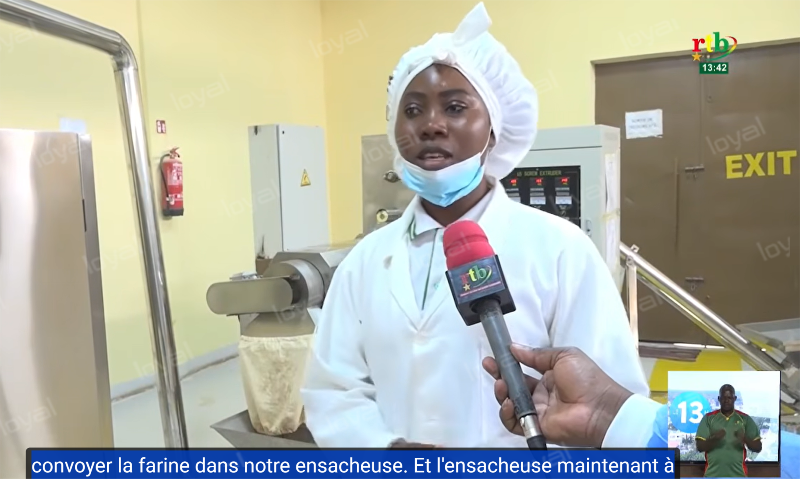
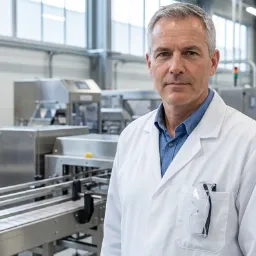
RTB factory interview screenshot supplied with the customer project documents. It places the operating team alongside the equipment application.
The founder and factory team turn a machinery installation into a food business. Their work includes handling ingredients, monitoring the process and organizing finished production. Nutrition flour production therefore connects equipment functions with responsibilities carried out by people on the factory floor.
For LOYAL, this makes MTA a meaningful customer reference. The project links our equipment with an entrepreneur’s production activity in Burkina Faso, and the reporting material allows that link to be seen. It also gives future clients a more concrete basis for discussing the support and machinery they need.
The partnership can be understood through that sequence of relationships. Local agricultural materials feed a manufacturing process, the process supports a product range, and the product range serves the customer’s market. Our role in nutrition flour production is to contribute the equipment and technical discussion that connect those manufacturing stages.
Nutrition flour production rooted in a local enterprise
A founder and a factory
Ingue ITEKA’s enterprise brings a specific product ambition into a manufacturing setting. The factory inauguration received local coverage on 24 September 2024. The reporting describes support through PReCA and identifies local agricultural materials as part of the project. MTA inauguration coverage.
The useful detail for another entrepreneur is the connection between the product and its production route. A nutritional flour business needs to organize ingredients, processing, product assessment and distribution. Equipment selection sits within those linked decisions.
Our partnership with MTA is a food machinery application within that broader business. The equipment supports the processing route selected for the product. Buyers interested in a comparable project can begin with our extrusion solutions and discuss their own requirements with the technical team.
See the enterprise in RTB’s report
RTB’s official video introduces MTA and its founder. It gives readers a direct source for the factory story and adds visual context to the project. The equipment case can then be explored alongside the local enterprise’s own setting.
If you are planning nutrition flour production, discuss your product with LOYAL. Share the grain ingredients, intended food and target output. This gives the initial equipment review a concrete basis and helps identify what needs to be tested.
Connecting nutrition flour production stages
Grain preparation and the equipment boundary
Nutrition flour production starts with a definition of the material entering the process. Whole grain preparation and flour handling involve different upstream duties. The equipment schedule should identify where the supplier’s scope begins and the condition expected at the first processing step.
Our existing MTA project account describes front-end grain preparation alongside nutritional powder equipment. For a new buyer, the scope should be developed around the actual ingredients and workshop plan. A process diagram helps make that boundary clear to everyone involved.
The initial recipe also needs a written version. Identify the cereal base, other ingredients and intended addition sequence. Keep that information with the machinery proposal so product and equipment decisions can be reviewed together.
Extrusion within the process route
In an extrusion-based route, the cereal mixture passes through the extruder under controlled processing conditions. The resulting cooked material is prepared for downstream drying and milling. The exact configuration depends on the formulation and finished product requirements.
For nutrition flour production, the extruder should be discussed together with its feeding and downstream equipment. Ask how the proposed machines share a common output basis and where material condition is checked. A coordinated route is easier to assess than a collection of separate capacity figures.
The LOYAL company introduction provides background for buyers reviewing our machinery offering. A technical proposal should then connect that offering with the specific product, building and utilities involved in the buyer’s project.
Drying, milling and final mixing
The drying stage prepares processed material for the next step. Milling then produces the required powder form, with the final handling arrangement selected around the intended food. The buyer should provide a method for judging the sample and a description of the desired preparation behavior.
Final mixing brings the cereal base together with ingredients added later in the route. This sequence should be reviewed by the formulation team. The nutrition flour production layout should show where each addition occurs and which equipment is included.
Packaging follows the finished powder requirements. Specify the intended pack and filling conditions when discussing automation. If the packaging equipment is supplied separately, define the handover point between processing and filling so both suppliers use the same assumptions.
Let the product range guide the technical discussion
Separate products need separate briefs
MTA’s public profile describes the NOUON and AKEZA flour ranges. They are positioned for different age groups and use local agricultural ingredients. These details make the enterprise a useful example of a factory serving more than one product requirement. MTA enterprise and product profile.
For nutrition flour production, the equipment brief should describe the intended recipe families. State which products will be made at startup and which may be considered later. That allows the supplier to discuss the relevant operating range and any additional equipment needs.
The product team should also define the preparation instructions used during trials. A common method for water addition, mixing and observation helps compare samples fairly. It creates a clearer feedback loop between formulation and machinery decisions.
The MTA product and machinery requirements
Our work with MTA began with repeated technical discussions about the customer’s objectives, local ingredients and operating conditions. We developed a complete nutrition flour production solution that included front-end grain preparation as well as the powder processing line.
The product range gave those discussions a concrete focus. NOUON and AKEZA serve different product requirements, while the machinery route connects cereal preparation, extrusion, drying, milling and final mixing. Our role was to translate those processing duties into an integrated equipment arrangement for MTA.
Keep the capacity basis visible
Public sources describe the MTA factory using different production figures. For a new equipment project, define capacity against the intended formula and operating schedule. The proposal should state whether it refers to feed material, processed cereal base or finished powder.
Nutrition flour production planning should also account for cleaning, product changes and planned working time. Ask the supplier to explain how the selected machines support the specified output basis. Keep this explanation with the equipment schedule when comparing offers.
Buyers can request a simple table showing material flow at the main stages. This helps the production manager understand the proposed balance between extrusion, drying and milling. It also highlights the information still needed before the machinery selection is finalized.
Organize collaboration around clear project documents
Build a shared technical record
A nutrition flour production project involves the buyer, the machinery team and local site contractors. Each group needs a reliable version of the product requirements and factory plan. Use an approved layout, equipment list and utility schedule as the shared technical record.
During discussions, record which decisions are confirmed and which remain open. Examples include the material preparation boundary, dryer heat source, powder assessment method and packing connection. This makes later revisions easier to evaluate.
Our MTA partnership illustrates why communication matters in an overseas machinery project. For another buyer, the practical task is to translate requirements into documents that both teams can use. Clear records make quotations and technical responses easier to compare.
Prepare for the workshop
The receiving plan can be prepared while nutrition flour production equipment is being manufactured. Review the proposed delivery sequence and confirm how each assembly will be identified. The buyer should know where the packing list and equipment drawings will be available when the shipment arrives.
After receiving the machinery, keep delivery observations with the project documents and share any questions through the agreed technical contact. This gives the installation team a common record to work from. The same folder can hold the final equipment schedule, approved changes and handover information for the production manager.
Before delivery, check the building access and the space around the proposed equipment positions. Review where raw materials, packaging and finished goods will be kept. The nutrition flour production route should be reflected in the workshop arrangement.
Ask the machinery supplier which services and local works must be ready for installation. Assign responsibility for each task and keep the installation team informed of changes. A coordinated preparation plan gives the project a clearer starting point at the site.
Define training and technical support
For nutrition flour production, training requirements should be agreed with the future operating team. Include startup, normal operation, shutdown, cleaning and routine maintenance in the discussion. State the language and documents needed by the people who will run the process.
The cooperation continued through customer inspection at our factory, equipment shipment and engineering support in Ouagadougou. These were successive stages of MTA’s actual procurement and delivery process.
At the destination, our engineers assisted with the installation sequence and commissioning of the nutrition flour production system. Practical training covered operation and maintenance for the local team. This connected the supplied equipment with the people responsible for ingredient handling, process monitoring and finished production at MTA.
Questions about planning a nutritional flour factory
What does the MTA case tell a prospective buyer?
It provides a named application for LOYAL machinery in a local food manufacturing enterprise. Buyers can use the project as a starting point for discussing their own process and equipment needs. Each new nutrition flour production proposal should still be tied to the buyer’s actual ingredients and product specification.
Should product development happen before equipment selection?
An initial product brief is useful before detailed selection. It can then be refined through technical discussions and representative trials. Keeping the product team involved helps connect the machinery requirements with the food the business intends to sell.
What information helps define the processing route?
Provide the ingredients, preparation condition, desired powder characteristics and intended consumer preparation. Add the output target, workshop dimensions and available utilities. These inputs help the supplier explain the proposed process and machinery boundary.
Can the line include upstream grain preparation?
Discuss that requirement explicitly. Nutrition flour production may begin with purchased flour or with grain requiring preparation. The quotation should show the agreed starting point and identify the machines included before mixing and extrusion.
How should we compare supplier offers?
Use the same recipe, output basis and equipment boundary for each comparison. Include utility requirements, trial expectations and service responsibilities. This makes differences between offers easier to understand and gives the project team a record of its decisions.
What background can help our product team?
GAIN’s complementary foods manual provides manufacturing background, including extrusion-based cereal flour processing. It can support discussion between product and engineering teams when they define the route. Read the GAIN manufacturing manual.
Discuss your nutrition flour production project
The MTA partnership brings together a local food business and LOYAL’s equipment application. For a new buyer, it offers a practical reference for considering the relationship between product, process and factory. A clear brief helps those parts develop together.
Start with the food you want to manufacture and the ingredients you can source. Add the proposed output, working schedule, building information and packaging requirements. Our team can then review the equipment questions that matter to the project.
Bring your nutrition flour production requirements to LOYAL. We can discuss the processing route, equipment scope and information needed for a technical proposal. A well-defined nutrition flour production plan gives both teams a clearer basis for the next decision.