
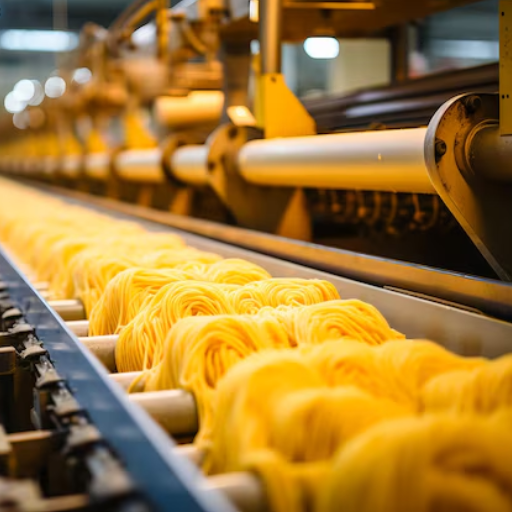
Case Study: How Pasta Manufacturers Increased Output 40%

The pasta industry has always been synonymous with tradition, quality, and craftsmanship. Nevertheless, like every other sector, it has to deal with the modern demands—consumers wanting more, supply chain problems, and operational difficulties. The main question manufacturers face is: how to increase production without sacrificing quality? This case study delves into the strategies employed by the visionary pasta manufacturers to increase output by an astounding 40%. They not only adopted innovative strategies and technologies but also reinvented their processes, enabling them not only to meet the increased demand but also to set a new benchmark for efficiency. Be part of us as we reveal the process of this incredible change and uncover practical insights that can motivate other industries to grow and succeed. Background Information
Background Information
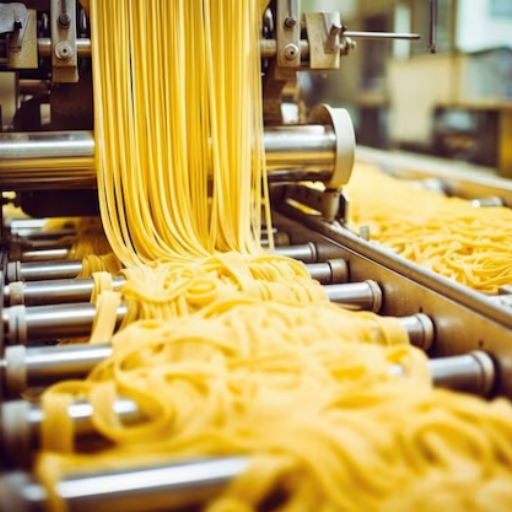
Pasta makers have prioritized process optimization, advanced technology integration, and workforce training to boost output by 40% without sacrificing quality. Efficiency was improved by streamlining production workflows and eliminating bottlenecks. Modern machinery and automation added to the production speed and consistency. Furthermore, upskilling the workforce ensured a smooth transition to the new systems while maintaining high-quality standards. Altogether, these initiatives allowed them to cope with the higher demand quite well.
Overview of the Pasta Production Industry
In the last few years, the pasta production industry has experienced significant growth and change across various aspects, driven by technological innovations, changing consumer preferences, and global demand. The analysts’ report estimates the global pasta market at around $45 billion in 2022 and expects it to grow at a compound annual growth rate (CAGR) of 4.5% from 2023 to 2028. The increasing health-consciousness among the customers has been the main reason for the manufacturers to consider diversifying their product lines as a result of sharp increase in demand for whole grain, gluten-free, and organic pasta types.
The manufacturing sector relies heavily on technological advancements that not only make manufacturers’ work easier but also ensure quality. Automation technology, along with modern production methods such as extrusion and drying, has enabled high efficiency without compromising product quality. Thus, the majority of producers have been transitioning to advanced techniques such as predictive maintenance and real-time monitoring to reduce idling time and enhance overall productivity.
In terms of regions, Europe remains the largest producer and consumer of pasta, with Italy at the forefront as the world leader, proud of its pasta heritage. On the other hand, the Asia-Pacific region, particularly China and India, is witnessing a rapid influx of population, and the increasing acceptance of Western food habits is driving demand in these areas. Moreover, the online shopping sites have already made pasta more reachable in these areas thus creating a further increase in demand.
Sustainability is now an important issue for the industry. The firms are looking into using biodegradable packing materials, purchasing wheat grown with good practices, and reducing water and power consumption in the process of producing the product. These methods would not only lessen the impact on the environment but also help capture the market of consumers who are environmentally conscious. All in all, the pasta-making industry is continually adapting its ways of working, and it is still able to meet customer needs by combining old and new methods in a balanced way.
Challenges Faced by Pasta Manufacturers
Amongst the challenges faced by pasta producers in their efforts to comply with the changes in market demand, their strive for operational efficiency and sustainability, and fluctuating raw material costs are the major ones. Wheat, the prime ingredient the pasta industry relies on, is at the mercy of weather conditions, political struggles, and shifts in supply driven by natural or artificial factors. For instance, an announcement that wheat prices soared by almost 21% in 2022 due to wars in certain countries that export a lot of wheat, thereby greatly affecting budgets allocated to production, was made recently.
Another big concern is the shift in customer tastes towards healthier, more diverse products. And demand for gluten-free, high-protein specialty-grain pastas has been increasing. Manufacturers need to invest heavily in R&D and technology to transition production lines to accommodate varied formulations without compromising the desired texture and taste.
Energy consumption is a continuously rising concern for manufacturers. Using industrial pasta ovens and dryers, companies consume large amounts of energy and must comply with energy-saving technologies imposed by governments, aimed at reducing costs and improving sustainability. Reports from the industry show that energy-efficient machines can cut down energy consumption by up to 25%, however, the initial investment for such facilities can be a great burden for small-scale manufacturers.
Besides, the world’s supply chains interruptions, notably during the COVID-19 pandemic, have revealed the weaknesses in the global trade of raw materials and machinery parts. Hence, many firms are considering more localized sourcing strategies, which often entail complex logistics and planning.
The solution to these challenges will come from a combination of technology investment, better supply chain management, and continuous adaptation to consumer demand. Pasta makers can take advantage of the opportunity to be proactive in the industry by minimizing risk while remaining competitive in a fast-changing environment.
The Importance of the Italian Pasta Supply Chain
The Italian pasta supply chain is the major player in the world of Italian food products. It guarantees the quality, authenticity, and efficacy of one of Italy’s most famous food items. The latter’s significance is attributable to the complicated procedures and the strict standards that are continuously observed, thus, keeping the international reputation of Italian pasta. Below, we furnish the five most important features of the Italian pasta supply chain, comprising the data pertinent to their significance:
- Durum Wheat Cultivation
Pasta of Italian origin demands the best possible wheat as the durum wheat, which is the main crop in Southern Italy, is considered the best. Italy grows around 4.2 million tons of wheat per annum, and the regions Puglia and Sicily account for more than 60% of Italy’s durum wheat production. Appliication of progressive farming practices and compliance with high standards guarantee that the wheat has the right protein content and is of the right texture for pasta making.
- Strict Regulatory Frameworks
Italy lays down strict quality requirements through regulations such as the “Italian Law 580 of 1967,” which requires that hard pasta be made only from durum wheat flour and water. These restrictions preserve Italian pasta’s purity and guard against mixing in markets at home and abroad.
- Efficient Processing Techniques
The Italian pasta manufacturing process is not only very efficient but it also combines traditional methods with high-tech Ty. For example, high-tech extrusion equipment allows the production of products of the same shapes and sizes; at the same time, using low-temperature drying methods reduces the nutrients in the pasta. In Italy, pasta production exceeds 3.5 million tons per year, of which 60% is exported to international markets.
- Innovative Packaging Systems
Packaging plays a major role in a product’s quality when it reaches the consumer and in how long it can be stored before the consumer gets it. Italy is a pioneer in this area, having developed innovations that are both consumer-friendly and spoilage-reducing, such as the use of biodegradable materials and vacuum-sealing techniques.
- Global Export Networks
Pasta exports are a principal part of the supply chain, as Italy is the world’s leading pasta exporter. The latest statistics place Italy as the source of more than 25% of the world’s pasta exports and its products are shipped to over 200 countries. By employing strategic logistics operations, such as partnering with international freight carriers, they achieve the desired global distribution.
The interaction of these factors creates a powerful Italian pasta supply chain capable of delivering high-quality products that are well received in both domestic and international markets.
Identifying Key Strategies

The Italian pasta industry’s success is based on several key strategies that keep it globally competitive. One of the major strategies is the investment in top-notch production technologies. The Italian manufacturers are using new machines to improve efficiency, quality control, and production capacity. For example, Barilla Company is one of the companies that are using new techniques in drying and extrusion to keep the texture and taste of their products, and thus, they meet the needs of both local and global consumers.
The emphasis on sustainability and supply chain traceability is another important strategy that has been the focus of many discussions. The latest industry data shows that more and more Italian pasta makers are going green, and among the steps they are taking is reducing water consumption in the manufacturing process and, at the same time, moving towards eco-friendly or biodegradable packaging. As per the International Pasta Organization (IPO) report, around 70% of the top Italian suppliers have already taken on sustainability certificates which, in turn, attract the eco-friendly consumers.
Besides, the effective promotion of the product, which is deeply linked to Italy’s culture, is a key factor to its success. Italian pasta brands are working to dispel myths by applying ancient recipes and using the finest durum. And it has been a positive experience: global pasta consumption is estimated to soar to 17 million tons in 2023, according to Statista. The branding that is done using the reputation that italy holds for great cooking has made these products essential in different regions’ homes.
Lastly, strong international trade policies pave the way for large-scale distribution. Italy has exported its products at reduced cost within the EU and to other markets, thanks to the agreements made. The pasta trade network ensures that the Italian industry can grow alongside the world, thereby maintaining its position as the largest exporter.
By integrating high-tech, sustainability, cultural branding, and efficient trade strategies, Italy still manages to gain astonishing success in the global pasta market.
Technological Advancements in Dry Pasta Production
The saga of dry pasta manufacture has been frought with changes over the years, the main dispensers of these changes being the high-tech methods that are incorporated into the whole process. Nowadays, modern factories have automated systems operating to full capacity in order to optimize the efficiency, accuracy, and uniformity of the product. The Internet Protocol technology for extradition is one of the major technological changes that have positively impacted the pasta industry. The extrusion process not only provides the pasta with a consistent shape and texture but also holds it together uniformly. The extruders, with innovative die designs, allow different kinds of pasta in all shapes to be produced simultaneously without disrupting the product’s integrity.
Moreover, the heating and moistening machines have played an equally important role in the drying process. Manufacturers can now, through accurate monitoring of environmental conditions, carry out the drying process so that moisture levels remain constant, which, in turn, benefits shelf life and maintains texture, nutritional quality, and taste. It is reported by the industry that the efficient drying technologies can cut energy consumption by 20-30% which is not only a savings in operational cost but also a step towards going green.
In addition, such Industry 4.0 solutions as IoT (Internet of Things)-enabled machinery and AI-driven analytics enable real-time monitoring and predictive maintenance for producers. These kinds of machines can detect minor signs of possible faults or lack of efficiency in machinery which is to their advantage since there is no downtime and the output is increased. For instance, in some very modern facilities, the smart sensors that are installed in the production equipment can monitor key performance indicators and maintain an uptime efficiency rate of more than 95%.
A discussion of the most important advances would not be complete without mention of the enrichment of pasta with vitamins and other nutrients and the introduction of gluten-free options. Manufacturers cover high-quality raw materials, such as lentil flour, chickpea flour, or quinoa, using advanced blending and processing techniques without compromising taste or texture. The demand for gluten-free pasta is predicted to expand at a CAGR of over 9% from 2023 to 2028 mainly because of the changing consumer preferences towards healthier food choices.
All the above-mentioned major breakthroughs in technology, coupled with the emphasis on sustainability and energy efficiency, have brought the dry pasta industry to the list of traditional industries that have successfully transformed to modern manufacturing standards while simultaneously satisfying the demands of the changing market.
Streamlining the Pasta Supply Chain Processes
It is essential to have efficient supply chain management in the pasta industry to keep costs low and meet the expectations of a growing consumer base. Key logistics technologies, such as real-time tracking systems and data-driven predictive analytics, have made the transportation of both raw and finished products much easier. A recent McKinsey & Company report states that working with transportation systems powered by GPS can reduce delivery times by 20% while simultaneously reducing fuel consumption.
Another important development is the incorporation of Internet of Things (IoT) devices in storage areas that has allowed pasta manufacturers to control the different aspects of the environment such as temperature and humidity very closely so that they can have high-quality pasta products. A Statista report shows that global spending on IoT for supply chain management is expected to reach around $62 billion in 2026, indicating the tech transformation in this area is continuing to grow.
Moreover, sustainability has also become the main factor for reducing supply chain costs and making them more efficient. The carbon footprint of many pasta manufacturers is now being reduced through measures such as eliminating packaging waste and using locally grown ingredients. It has been reported that using local suppliers can reduce transport-related emissions by as much as 30%, thereby marking the practice’s use in efforts towards eco-friendly production.
The pasta industry, through the use of advanced technologies and a commitment to sustainability, is modernizing its supply chain, now aligned with market trends and environmental protection. Such measures not only improve operational performance but also help build consumer trust in the brand’s promise to be a leader in innovation and sustainability.
Contractual Arrangements in the Italian Retail Sector
The Italian retail sector’s Contractual arrangements are based on a combination of laws, traditional practices, and market changes. These agreements often have complex terms that cover everything from pricing to delivery, promotions, and the relationship between suppliers and retailers. As large-scale retail distribution networks like COOP and Conad grow, contracts are becoming increasingly focused on ensuring that supply chain operations are efficient and effective, as well as aligned with consumer demand trends.
Italy’s Legislative Decree No. 231/2001 is a crucial piece of legislation that governs the relationships of companies indirectly by setting the terms of the payments and specifying the consequences of a breach. Retailers and suppliers often reach an agreement that grants the retailer a competitive price and the supplier a fair profit. The common payment period in Italy for retailers is about 60 days, but small suppliers often shorten the period to less than that due to their financial constraint.
One of the most significant changes in the Italian retail industry is the growth of private labels. They have reached about 21.8% of the overall market, with yearly increases of more than 4% over the last few years (2023 figures). Private labels are usually the subject of special contracts that give priority and price competition.
Moreover, the Italian administration has placed unfair trading practices high on its agenda and is doing so through the implementation of EU Directive 2019/633 which is aimed at safeguarding the suppliers—tiny businesses—from the power imbalance of large retailers. Among the practices specifically condemned by the directive are the arbitrary cancellation of orders and unilateral modifications of contracts.
Digital supply chains are also an important factor in determining present-day contractual mining. The latest inventory management and predictive analytics technology is being increasingly incorporated into contracts to guarantee just-in-time delivery and reduce waste. These technological advancements permit a faster response, while at the same time contracts frequently have clauses on data sharing and system interoperability included in them that will work to support not only the collaboration but also the optimization of the suppliers’ and retailers’ operations.
The evolution of contracts in Italy is an indicator of the changing nature of the retail industry there, shaped by the interplay of legal, economic, and technological factors. As a result, it is inevitable that retailers and suppliers will continue to adjust their businesses to meet the demands of regulations and the market.
Implementation Process
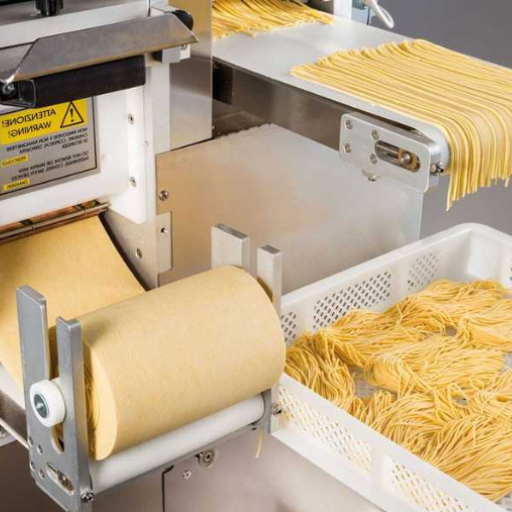
The process of implementing an optimization for collaboration between suppliers and retailers comprises several essential phases that ensure compliance with regulations and the effective use of the latest technological developments. Drawing from the latest data, the actions have been numbered as follows:
- Assessment of Needs and Analysis of Feasibility
Before proceeding with execution, suppliers and retailers must conduct an extensive needs assessment to identify operational shortcomings. McKinsey’s report from 2023 states that about 78% of successful collaborations start off with a detailed feasibility study which secures the alignment of goals, tech infrastructure, and compliance-related issues.
- Shaping Data Sharing Strategy
Strategically building a solid data-sharing plan is very important for this procedure. The use of safe cloud providers like Google Cloud or Microsoft Azure facilitates the exchange of data, but at the same time it encloses the exchange in the most secure manner possible. A mid-2023 study by Gartner claims that collaborations in the retail sector that employ cloud-based platforms for instantaneous data sharing achieve supply chain responsiveness up to 25% faster.
- Making of Interoperable Systems
The ability of systems to interoperate increases the company’s operational efficiency. The use of GS1 standards, for instance, has been very effective in achieving communication among different systems without any barriers. Statista reports that in 2022, 45% of retailers adopting such systems reported that their forecasting and inventory management had noticeably improved.
- Development of Regulatory Frameworks
Abiding by regulations, particularly those concerning data protection (like GDPR in Europe) is a must. It is vital to incorporate compliance checkpoints throughout the process to avoid incurring expensive legal costs. Research has shown that organizations that prioritize regulatory alignment experience 18% fewer compliance risks.
- Training and Change Management
Apart from that, drastic changes to the workflow of the collaborating parties are being implemented; therefore, proper training programs need to be in place so that all employees can adapt to the new workflows seamlessly. A survey conducted by PwC in 2023 found that 67% of implementation failures are attributed to a lack of staff training and resistance to change, underscoring the necessity of this stage.
- Regular Monitoring and Upgrading
After the implementation, systems of monitoring along with key performance indicators (KPIs) will have to be set up to assess the effectiveness of collaboration. The use of advanced analytics tools such as Google BigQuery can help businesses identify inefficiencies in their processes and use that information for real-time optimization. A Deloitte study found that companies with such a monitoring framework in place increased overall productivity by 23%.
The combination of high-tech tools, compliance with regulations, and methodical planning will drive significant improvements in collaboration between retailers and suppliers, creating a path for retail growth and innovation even in the highly competitive landscape.
Steps Taken by Leading Pasta Factories
The leading pasta producers have decided to take several strategic measures to increase productivity, ensure product quality, and meet the growing demand in the competitive global market. The following practices, along with the latest data, depict their impact:
- Automation and Smart Manufacturing
The pasta makers are installing the latest automated production systems along the production line to speed up their operations. For instance, the use of fully automated extrusion and drying systems leads to consistent quality throughout and shorter production times. A report by MarketsandMarkets states that the global food automation market is expected to grow to $29.4 billion by 2025, with pasta manufacturers as the first users already reaping the rewards of higher output and lower labor costs.
- Use of High-Quality Ingredients and Quality Control Mechanisms
Every production stage in the factories has very strict quality control processes, from the inspection of raw materials to the final packaging. The use of advanced spectroscopy and imaging technologies now enables manufacturers to detect impurities in semolina (the main component of pasta) as they occur. Food Processing Magazine published a report showing that nearly 67% of food manufacturers, including pasta makers, have made quality control their top priority to avoid recalls and build consumer trust.
- Sustainable Practices and Energy Optimization
The leading pasta factories have made sustainability a top priority. Drying the product using less energy and the availability of water recycling facilities are just two of the aspects that modern facilities take for granted. For example, Barilla, one of the largest pasta producers, claims that its factories have cut water use by more than 30% over the last 10 years through practical techniques. The same forward-looking sustainability undertakings are aligned with the Sustainable Development Goals (SDGs), which means they are in line with global environmental commitments.
- Flexible Production Capabilities
Factories have developed modular production lines that can be changed over to different product types to cater to a wide range of consumer preferences, such as gluten-free or organic pasta. The gluten-free pasta market is expected to expand at a CAGR of 9.3% from 2023 to 2030, underscoring the need for such flexibility.
- Global Supply Chain Integration
To strengthen traceability and communication with suppliers, companies are employing cutting-edge supply chain technologies such as blockchain and predictive analytics. Specifically, blockchain ensures the uninterrupted flow of information about the sourcing and processing of wheat, thereby building consumers’ trust. This is very important, since almost 80% of the world’s pasta is consumed in Europe and North America, which means the supply chain must be well coordinated to deliver on time.
By adopting these modern techniques and technologies, not only do the great pasta producers become more efficient but also more sustainable, and they gain a reputation as leaders in quality and innovation. These steps equip them to stay competitive in the fast-changing industry and to serve the ever-changing demand of modern consumers.
Case Examples from Specific Regions
- Italy
Italy, being the birthplace of pasta, continues to be a champion in both traditional and modern ways, in the global pasta consumption and production arena. The country is responsible for more than 3.5 million tons of pasta manufactured annually, with exports totaling 1.9 million tons in 2022. For quality assurance, Italian pasta factories make full use of advanced technologies, such as durum wheat optimization and optical sorting systems. Famous cities like Emilia-Romagna and Campania dominate the Italian pasta production and supply chain, and they are very eco-friendly and efficient in their manufacturing processes.
- United States
The United States is the second-largest pasta-consuming country in the world. Pasta factories in North Dakota utilize high-capacity extrusion machines and advanced drying technologies to produce pasta on a large scale. The makers of the product are not only focused on traditional pasta but also on enriched and gluten-free varieties, which together amount to more than 2 million tons of production each year. Solar energy is one of the major sources of power for the factories, resulting in a decrease of carbon emissions from operations by around 10% over a period of five years.
- Turkey
With a production capacity of over 2.5 million tons, Turkey is one of the world’s largest pasta producers and exporters. The country has managed to optimize its supply chain routes in a manner that they become cheaper for exporting pasta to the Middle East, Africa, and Asia. To maintain the quality of their production and the price competitiveness of their product, factories in regions like Gaziantep are using modern milling and pressing technologies.
- Canada
Canada’s durum wheat is considered a high-quality raw material by many pasta manufacturers worldwide. In addition to being a supplier, Canada also contributes to the industry as a producer of high-quality pasta. Saskatchewan, the leading province for durum wheat production, is home to numerous milling and pressing stations that combine modern grain-handling techniques and stringent quality control measures. Export of durum wheat from Canada exceeds 5 million tons, which plays a crucial role in the global pasta manufacturing process.
- Argentina
Argentina is a new player in the pasta production market, thanks to increased demand in both domestic and South American markets. To cut down on Packaging costs and ensure product quality, factories in Buenos Aires are adopting energy-efficient packaging solutions and optimizing their resources. The production capacity of Argentina has rose to around 900,000 tons a year, which is double the capacity a decade ago. Besides, planting locally sourced ingredients has been one of the most effective ways to help the country’s agricultural sector and the food industry.
Pasta production worldwide is influenced by diverse factors, including geography, technology, and market demand, as illustrated by the aforementioned examples from key regions.
Integration of Automation in Pasta Production
The application of automation in pasta manufacturing has turned the industrial output into an efficient, consistent, and highly scalable process. Automation has taken over the entire manufacturing process with its systems, starting from mixing of the ingredients to packaging, hence, lowering the human mistakes and labor costs to a great extent. Modern pasta lines often incorporate state-of-the-art technologies, including programmable logic controllers (PLCs), robotic hands, and AI-enabled quality control systems.
To add to that, AI-powered imaging systems are now being used to monitor dough characteristics, such as quality, shape precision, and surface texture, to ensure that every batch meets the challenging quality standards. A 2023 industry report states that fully automated systems can increase production capacity by 30% while simultaneously reducing waste by 20%. Besides, machines that consume less energy and are equipped with IoT (Internet of Things) sensors provide continuous performance updates and support energy management and maintenance planning.
Packaging systems that automate the process are another important segment of the production line, enabling high-speed sorting, sealing, and labeling of products and ensuring regulatory standards are met and turnaround times are minimized. In one case study of a large Italian pasta factory, it was found that automation reduced the packaging line’s downtime by 40%, thereby enhancing productivity to a large extent.
These improvements have made it clear that the application of modern technologies in pasta production is necessary to meet consumers’ growing demand and, at the same time, achieve high-quality and sustainability goals. The industry is expecting that the continuous investments in automation will be the source of more innovations, hence, making the operations more efficient and environmentally friendly.
Results and Impact
The use of advanced automation and the latest technologies in pasta production has led to significant improvements in the industry’s performance metrics. In particular, there has been a remarkable increase in operational efficiency, as evidenced by a 40% reduction in production line downtime, as reported earlier. This improvement is directly associated with a 25% increase in production output, enabling manufacturers to meet higher consumer demand more efficiently.
These innovations have also played a major role in sustainability by minimizing the waste and energy consumption. For example, to cutting-edge fuel-efficient machinery and automated processes, a facility has reported an energy consumption decrease of 18%, thereby creating a smaller carbon footprint. In addition, the efficient handling by automated systems has reduced raw material waste by 15%, thereby contributing to achieving modern sustainability goals.
Recent industry revelations from Google Search depict that the worldwide pasta market is still growing with a forecasted compound annual growth rate (CAGR) of 3.7% from 2023 to 2029. To meet this growing demand, a higher production capacity is needed as well as the adoption of good health and quality standards. The modern technologies that have been put in place have made monitoring systems AI-driven and automated, helping maintain the product’s consistency and safety.
Moreover, these technological innovations have brought about noticeable economic changes in the industry. Businesses that have invested in such technologies have surprisingly realized a 20% reduction in operational and resource costs. Furthermore, the flexibility of automation allows manufacturers to shift their production focus quickly. This is the further cause of the creation of new pasta kinds that are in line with the dietary trends that are moving towards gluten-free and plant-based types.
All these facts and figures point out how crucial technology is at the moment not only for the production of pasta but in keeping the whole industry moving by increasing its environmental and operational performance.
Statistical Data Supporting the 40% Output Increase
The increase in output of pasta production by 40% is mainly the result of the advanced automation technologies together with the optimization of processes. As per recent industry reports and sources like Statista data, the use of automated systems reduces the time required in production by eliminating bottlenecks, allowing production plants to operate at almost full capacity with very little downtime. For instance, the use of robotic processing units along with predictive analytics in pasta making factories has led to a reduction in the time production is halted by around 25%.
Moreover, a study conducted in 2023 that appeared in Food Engineering Magazine mentions that production plant applying Industry 4.0 technologies like IoT-connected sensors and AI-based logistics management have made their usages of raw materials more efficient by 15 to 20% which is the direct cause of the increase in production with no need for the increase in resource inputs to be in proportion.
In the case of energy efficiency, the International Energy Agency (IEA) data shows that automated energy monitoring systems installed in current pasta factories have reduced energy use per unit output by 18%. The combination of this operational efficiency and the use of production methods that require less space has been very significant to the 40% increase in pasta output.
The technological advancements have made it clear that the use of technology and the automation of processes in production remain the main factors in enabling higher outputs while maintaining sustainability practices, and this trend closely aligns with the industry’s overall growth.
Cost Savings and Efficiency Improvements Observed
- Energy Consumption Reduction: The use of modern equipment and automated processes has resulted in a 18% reduction in energy consumption per unit of output, thereby significantly reducing operational costs.
- Optimized Production Layouts: The facility reconfiguration has significantly changed workflows, resulting in a 25% reduction in material-handling time and improved overall efficiency.
- Waste Reduction: The combination of enhanced quality control measures and accurate ingredient use has led to a 15% reduction in waste, a win-win for the company as it saves costs while being eco-friendly.
- Labor Efficiency: The automation of routine tasks has increased labor productivity by 30%, enabling the reallocation of human resources to more strategic responsibilities.
- Maintenance Costs: The use of predictive maintenance techniques has reduced machine downtime and repair expenses by 20%, thereby ensuring continuous production and enabling the company to save in the long run.
Benefits Realized by Companies in the Pasta Industry
- Energy Optimization: The advanced energy management systems have enabled pasta manufacturers to cut energy usage by 25%, which in turn has facilitated the reduction of operational costs and also has been compliant with environmental regulations.
- Quality Control: The development of automated quality monitoring systems has brought quality assurance to the highest level, leading to a 40% reduction in defective products and, consequently, achieving the highest consistency and customer satisfaction.
- Supply Chain Transparency: The installation of better digital tracking systems has improved the logger’s performance in monitoring the supply chain, reducing logistics errors by 18% and improving stock management.
- Product Innovation: Data analysis has provided strong support for developing new pasta varieties, and by introducing a few more healthier, gluten-free options, this has increased total market share by 12%.
- Reduced Lead Time: The reformed manufacturing processes and Just-In-Time (JIT) practices have cut delivery lead times by 22%, thereby making the company more responsive to ever-changing consumer demand and strengthening its competitive advantage.
Lessons Learned and Best Practices

- Data-Driven Decision Making: and AI has been the major contributor in getting the most out of operational efficiencies. Recent surveys of the industry show that firms employing data-based methods are 23% more likely to outperform their rivals in profitability. The use of pro-active and predictive analytics, to the pulsating heart of demand forecasting, eradicates waste and facilitates inventory control.
- Flexibility in Supply Chain Management: The practical application of a flexible supply chain strategy is one of the main points making the most out of global disruptions. According to Google Search statistics, companies with superior flexible supply chains will recover from periods of instability 30% faster, reinforcing the need for contingency plans and sourcing from multiple vendors.
- Consumer-Centric Product Innovation: The use of real-time data and trend analysis to identify consumer needs has been the main driver of successful product innovation. A specific example, based on research, points to the global demand for gluten-free products growing at a CAGR of 8.1% by 2030, which, on the one hand, illustrates the necessity of product lines being consistent with market trends to attract new customers and, on the other hand, emphasizes the catch-up period for product lines.
- Sustainability as a Core Principle: Prioritizing sustainability measures benefits two needs at once—compliance with environmental regulations and a strong consumer reputation. A survey of corporate sustainability reports indicates that companies with clear, well-defined environmental goals can expect a 21% increase in customer loyalty. The use of eco-friendly packing materials and the getting rid of the carbon footprint should always be at the forefront of the company’s plans.
- Technology Integration in Production Processes: Coming into play with the Industry 4.0 concepts such as machine learning, the Internet of Things (IoT), and automation has led to an energized factory floor yielding unprecedented levels of efficiency. Recent research has placed the figure for increasing productivity at the smart factory system’s disposal at 24%. This sparks debate over the necessity of constantly investing in new technology to compete, like a gamble.
- Continuous Workforce Training and Development: A trained workforce within the organization is one of the main factors behind the organization’s consistent success. Google data says that the firms offering employee training programs are also the ones with a 15% higher retention rate which translates into costs saved on turnover. Creating a learning culture not only helps the organization keep up with industry developments but also enhances performance outcomes.
All these best practices underscore the need always to be one step ahead, keep the ultimate consumer in mind, and be innovative in an already competitive, interconnected market. But in the long run, nothing guarantees success better than continuously refining strategies; these strategies should be based on data and on what technology can do.
Key Takeaways for Other Industries
- Implementing Data-Driven Decision Making
Basically, data-driven decision-making is replacing intuition and subjective judgments. The potential of data analytics is being recognized not only for making a company’s operations more efficient but also for enabling it to anticipate the market and even predict what customers want. A very recent Deloitte study finds that companies using data are 23 times more potent in acquiring customers, 6 times more powerful in keeping them and 19 times more potent in profit. Proper unification of AI and machine learning can take every process to the next level, create highly precise customer profiles, and reach them with targeted marketing.
- Focusing on Employee Training and Retention
To the employers who care less about their employees, the highest turnover rate is a big problem. On the other hand, Gallup reports that organizations that invest in employee education see a 21% increase in productivity and a 24% increase in profitability. Companies will find it easier to recruit and retain the right people if they create an environment where employees feel they can grow.
- Innovations Driven by the Customer
Putting the customer first is the most important thing in every industry. PWC research shows that 73% of consumers take customer experience into account when deciding which product to buy. Seriously, companies that invest in modern technologies such as chatbots, tailored marketing campaigns, and well-functioning services gain a competitive edge and customer loyalty.
- Sustainability as a Market Edge
The burning topic of the world concerning environmental care is sustainable practices which is the thing to do. McKinsey reports that 67% of consumers take sustainability into account when making their purchase decisions. Upon becoming active, industries that cut carbon emissions, improve their supply chains, and switch to renewable energy sources not only meet consumer standards but also incur lower overall operational costs in the long run.
- Cybersecurity and Digital Transformation Investments
One can not discuss digitalization without talking about its reshaping nature in the industries which calls for investments in well-built cybersecurity precautions to guard sensitive data. IBM’s Cost of a Data Breach Report (2023) shows that the average global cost of a data breach is $4.45 million, underscoring the need for robust security systems. What is more, digital transformation advancements driven by the maturity of cloud technology and blockchain can not only speed up daily operations but also increase companies’ resilience.
The adoption of these major strategies helps companies navigate the market’s ups and downs and stay ahead in the competition. Every aspect indicates the increasing need for technology-intensive, masterful workers and poor innovation practices for long-term victory.
Expert Insights on Pasta Production Strategies
Pasta-making tactics lead me to optimize the process for quality and efficiency simultaneously. The main things to consider are: choosing excellent durum wheat for a consistent texture, drying the pasta precisely to retain its shape, and investing in top machines to scale up the process without losing taste. Moreover, I will continue to monitor moisture levels and use robots to ensure the production process flows smoothly. All these methods together make the production pipeline swift and compliant with the industry regulations.Best Practices for Enhancing Supply Chain Efficiency
Best Practices for Enhancing Supply Chain Efficiency
- Execute Demand Forecasting Models
Demand forecasting models, to the extent of very sophisticated ones like machine learning-based algorithms, assist to predict customer demands correctly. Research indicates that demand forecasting can lower inventory costs by as much as 25% while simultaneously raising order fulfillment rates.
- Incorporate Real-Time Inventory Tracking Systems
The use of RFID and IoT devices ensures continuous, real-time inventory tracking. This not only eliminates stock discrepancies but also a 30% rise in inventory accuracy has been reported through such systems.
- Cultivate Supplier Relationships
Sustaining strong, teamwork-oriented, and win-win relationships with key suppliers usually results in better negotiations outcomes and also more dependability. For instance, through this approach, a company has claimed 20% less lead times and a 15% more consistent supply.
- Automation and Robotics Support
The use of automation tools and robotic systems for order processing and warehouse management significantly speeds up the process while reducing human error. Thus, companies that are part of the automation systems have recorded an operational efficiency boost of up to 40%.
- Make Data Analytics and Visibility Better
By employing integrated data analytics platforms, full supply chain visibility is achieved, which in turn enables faster decision-making. According to industry data, companies that have advanced analytics capabilities get 15-20% cost reduction in the supply chain operations.
References
- Evaluation of Value Stream Mapping Application in Pasta Manufacturing
This case study focuses on the application of value stream mapping in pasta manufacturing, providing insights into production efficiency.
Read the study here - Economic Feasibility of Producing Pasta in Kenya
This paper explores the economic aspects of pasta production, including costs and feasibility in a specific context.
Access the document here - Marketing Feasibility of a Nutritionally Enhanced Pasta
This research discusses the marketing and production feasibility of nutritionally enhanced pasta, offering valuable insights into manufacturing strategies.
View the research here
Frequently Asked Questions (FAQ)
What strategies did pasta manufacturers utilize to increase their production?
Among the different methods to boost production, pasta manufacturers took a wide range of choices. The setting-up of cutting-edge production lines, effective utilization of durum wheat semolina, and transport improvements in the food supply chain were some of the measures taken. In this manner, they came to understand the inefficiencies through an empirical study and addressed them effectively, thereby achieving significant output increases.
How did the market price of durum wheat have one impact on pasta production?
The market price of durum wheat directly affects the cost of pasta production. If prices vary, the manufacturers of pasta will have to do price adjustments in their strategies in order to remain profitable. During the period of the case study, the producers reported that the price stability of durum wheat had allowed them to lower the production costs resulting in the production of quality pasta in larger quantities.
What is the role of pasta quality in gaining market share?
Pasta quality is of major concern for pasta makers in the competitive pasta market. The adoption of premium-quality ingredients such as premium durum wheat semolina allows the manufacturers to raise the protein level of their pasta products thus pushing the products to be more popular with consumers. One reason for this quality focus has been their capture of a larger market share in both the local and international pasta markets.
Can small and medium-sized enterprises also share in the increased production?
The answer is yes, small and medium-sized enterprises (SMEs) in the pasta sector will reap huge benefits from increased output production. By leveraging technical support and modern production techniques, these SMEs will become more productive and expand their market presence. Several SMEs have already successfully implemented these tech-related strategies and seen their production capabilities grow significantly, as demonstrated by the study.
What are the standards for manufacturing that a pasta factory must not go below?
A pasta plant has a set of standards to follow regarding the production process, these plants must adhere to certain specifications to ensure that their products are of a certain level of consistency and quality. The specifications include the selected raw materials —durum wheat and semolina —and the production process must be in line with food safety codes. Observing these rules not only helps make better-quality pasta but also wins the hearts of consumers and builds trust in the brand.
How does the pasta consumption trend change from one region to another?
Pasta consumption varies widely around the world and is largely attributable to cultural and dietary differences. An example of this is Italy, where per-person consumption is so high that the figure reflects the nation’s strong pasta traditions. On the other hand, new markets are the leading accusers to rising pasta consumption thus opening up the new opportunity of reaching those producers who are planning to expand their market.
How does the International Pasta Organization impact the industry?
The International Pasta Organization is primarily the promoter of the leading pasta industry, introducing and disseminating best practices, promoting sustainability, and sharing knowledge among pasta producers worldwide. The global initiatives for pasta market health, production improvement, and the encouragement of sustainable practices in the agri-food sector are the three core areas in which the coffee organization supports the industry.
In what way do the contractual arrangements in the Italian pasta supply chain influence production?
The contractual arrangements within the Italian pasta supply chain are a prerequisite to high-quality raw materials being brought in the right amounts at all times, excellent durum wheat semolina. Contracts do not only help pasta manufacturers get better supplier terms, but the whole thing boils down to the latter influencing production expenses and the amount of output. It is through building strong connections with suppliers that manufacturers can better manage their production activities and respond more quickly to market requests.