
How to Choose the Right Food Production Line: Buyer’s Guide 2025

Selecting the optimal food production line is a significant move for manufacturers looking to optimize their processes, increase their output, and remain very much in the competition in the changing industry. With the rapid changes in technology and the market, the right equipment could be a tough decision to make without the right support. That is the moment when this buyer’s guide will be useful to you. This extensive article is a reflection of the trends and the innovations of 2025; therefore, it will take you through the major points to consider including, production capacity, automation features, sustainability requirements, and budgetary considerations. No matter if you are going to upgrade your current system or going for new one, this guide will provide you with the information you need to make a decision that will not only be correct but also be the one pushing your business to the next level.
Introduction to Food Production Lines
Food production lines are systems that make large-scale food production more efficient, faster, and less expensive. They consist of a series of steps in which the raw materials undergo methods such as transformation, processing, packaging, and preparation for distribution. These systems are crucial for meeting the needs of today’s food industry, offering efficiency, uniformity, and safety as key advantages. By taking over the manual work that is regularly done and maintaining high standards, the production lines for food products save companies money and time while maintaining product quality.
The Importance of Choosing the Right Food Production Line
It is vital to select the right food production line for the company’s operational success and product quality assurance. The best production line will support the processes of the suppliers and customers while offering the benefits of efficiency, product quality, and safety compliance. Besides, the production line might reduce production costs, the create less waste, and process faster, all of which lead to complementary higher profitability and consumer satisfaction. Before you can pick the food production line you need, it is important to consider these five main points:
Product Type and Specifications
There are different production lines for different product types, such as baked goods, drinks, or ready-to-eat meals. It is important to fully understand the requirements of your product, such as its size, texture, and packaging to be able to choose the right machines.
Production Volume and Scalability
Look at the current and expected production needs to ensure the line can produce the required quantity. Firms that are likely to grow in the future should opt for scalable options that do not require a complete overhaul of the system they use.
Automation and Technology Integration
Your operational goals should dictate the degree of automation for your production line. Advanced technologies, such as IoT-enabled machines and robotic arms, can streamline workflows, reduce labor costs, and increase precision.
Hygiene and Compliance Standards
Food safety remains a top priority in production. Not only must the equipment meet the highest hygiene and quality standards, but also those set by the FDA, HACCP, or other regulatory agencies relevant to your market.
Energy Efficiency and Sustainability
The pipeline of the future will be one that is environmentally friendly and energy-efficient. Going green with the choice of machines and processes will not only reduce your utility costs but will also win the hearts of eco-conscious consumers as they will see you practicing what you preach.
Business that take these things into account will be able to set up a production line that not only meets their immediate needs but also their future expansion and success.
Overview of Food Processing Equipment in 2025
By the time we reach 2025, the food processing sector will have undergone a remarkable transformation, driven by cutting-edge technologies that will mark an era of efficiency, precision, and sustainability. One of the main trends driving this innovation is the integration of artificial intelligence (AI) and machine learning (ML) into the various tools and machines that support human efforts in production, maintenance, quality control, and automated processes. Simply put, AI-assisted devices can, at an instant and with very high accuracy, uncover product differences that would otherwise go unnoticed, thereby allowing manufacturers to waste very little and get their products to market at their best quality.
The other major transformation that is coming is the use of robotic automation. Automated systems that include collaborative robots, or “cobots,” have enabled the food industry to operate with greater safety, precision, and speed, especially in food handling and packaging. A new market analysis has revealed that the global food robotics market is poised for a boom, with a compound annual growth rate (CAGR) of nearly 11.1% from 2021 to 2028, indicating the food sector’s preference for automated technologies.
The green aspect of the food industry will remain a key driver; hence, more manufacturers will install energy-saving equipment and adopt eco-friendly designs. It will not be unusual to find machines that are powered by renewable energy source or with the use of their own recycling systems. Moreover, in the year 2025, the manufacturers will have the tipping point in innovated smart food processing solutions, like IoT-enabled machines that not only do real-time data monitoring but also analytics of the data provided so that company will be able to determine effectively where the energy is to be used, in production, or, to cut on energy use without affecting the process.
In conclusion, the con sumer’s need for personalized food items is the driving force behind the development of modular equipment designs, which will enable manufacturers to be very flexible in changing equipment configurations to meet specific production requirements, thereby reducing time and resource waste. With increasing focus on consumer satisfaction and efficient production, these innovations highlight the crucial role of food processing equipment in shaping the industry’s future.
Key Trends in Food Manufacturing
Integration of Automation and Robotics
The combination of automation and robotics is now the top transformer in the food manufacturing sector, driving new levels of productivity, uniformity, and safety. In line with industry market reports, the worldwide food robotics market is expected to reach $4 billion by 2026, with a 11.5% compound annual growth rate (CAGR). Robots are increasingly used to perform tasks involving packaging, sorting, and quality checks, thereby minimizing the risk of human error and accelerating the overall production process.
Brighter Future and Less Waste
Due to growing concern for the environment, sustainability has become the top issue in food production. Companies are switching to more energy-efficient methods and using greener packaging materials. For example, it is said that 40 percent of manufacturers use recycled materials in packaging to reduce their carbon footprint.
Customized and Healthy Products
The inclination of consumers towards health, and specifically towards customized food products, is shaping trends in the food manufacturing industry. An inquiry done by the research agency indicated that 75% of the customers would like to eat that is customized to their needs, such as gluten-free, low-sugar, or plant-based options. Hence, this trend has opened new avenues for innovation in sourcing and processing ingredients.
Innovative Food Safety Solutions
Food safety assurance is very important, and manufacturers are applying sophisticated technologies such as the use of blockchain for product tracing and sensor-based systems for contamination detection. The use of these instruments not only helps reduce recall-related costs but also builds consumer confidence. The year 2030 is expected to see a 7.6% CAGR in food safety technology, underscoring its critical role in the industry.
Digital Transformation and IoT Technologies
The merger of digital technologies and the Internet of Things (IoT) is paving the way for the smart manufacturing processes. Real-time monitoring systems and predictive analytics are used to make operations more efficient, minimize downtime, and enhance product quality. Reports say that 60% of the manufacturers are investing in IoT-enabled equipment and thus, actively trying to remain competitive in the market.
Key Factors to Consider When Choosing a Food Production Line
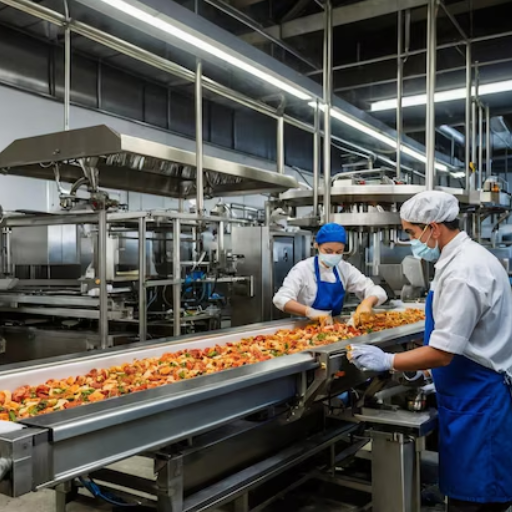
To select the best food production line, one must conduct a thorough assessment of the key factors that directly affect the process’s quality, efficiency, and cost-effectiveness. Accordingly, the following five important factors can be used as a guide in your decision-making:
Production Capacity and Scalability
First of all, it is very important to know clearly what your production needs are now and what they will be in the near future. The best production line for you is the one that not only meets your current output demands but also scales up as your business grows. Research indicates that 75% of manufacturers consider scalability the leading factor in equipment investments.
Automation and Technology Integration
Opt for systems that connect automation and improve technologies, such as AI and IoT. The features mentioned above can significantly increase productivity, lower the number of workers required, and heighten precision. A study found that the use of automated production lines can raise efficiency by as much as 40%.
Compliance with Food Safety Standards
It is essential to ensure that the equipment used is up to international food safety standards. Some internationally recognized regulations include HACCP, FDA, and ISO. Compliance with regulations guarantees not only safe products but also a low risk of costly recalls or litigations.
Energy Efficiency and Sustainability
The use of energy-efficient production lines can be a great way to cut down on operating expenses and at the same time support the company’s environmental protection aims. Energy consumption of modern eco-friendly machinery can be reduced by as much as 30%, making it a win-win for both the company and the environment.
Cost of Ownership and Maintenance
It’s important to consider not just the initial price of the machinery but also the long-term operational costs, including maintenance, spare parts, and energy consumption. Investing in robust, low-maintenance systems can lead to up to 20% savings over the equipment’s lifetime.
Production Capacity and Efficiency
It is essential to put the production capacity and efficiency first when evaluating the production technology, so that your operations would mainly be optimized. The use of modern machinery together with the incorporation of all these high technologies, like automation, IoT (Internet of Things), and AI-driven analytics, can greatly increase the product output. As per the latest statistics, automated systems (machines) can boost production throughput up to 25% while on the other hand cutting down waste by 15%.
Moreover, equipment that is of high efficiency can cut down the downtime due to the predictive maintenance features, which are based on real time data, and the data is used to predict the breakdowns and when the servicing can be done. For example, a factory that has implemented predictive maintenance has experienced an increase in equipment availability of up to 20%, allowing a consistent workflow and faster delivery times.
The production capacity and efficiency ratio not only gives a solution to the increasing demand but also keeps the cost at a minimum. Research found that the shift to energy-efficient production lines could yield energy cost savings of up to 10% annually, which aligns with both economic and sustainability goals.
Budget Constraints and Cost Analysis
While examining production and operational costs to manage budget constraints, it is very important to pinpoint the areas where efficiency can be improved without compromising quality. Here are five explicitly stated factors connected to cost analysis and budget management:
Labor Costs
- The use of automation for repetitive tasks could reduce labor costs by as much as 15%.
- Cross-training employees saves about 7% on labor costs.
Raw Material Sourcing
- Using high-quality yet cost-efficient raw materials could reduce material costs by 12%.
- Usually, negotiating bulk-purchase contracts with suppliers will give you a 10-20% discount.
Energy Consumption
- The installation of energy-efficient machinery can reduce energy costs by about 25%.
- The use of renewable energy sources can lead to long-term savings and tax benefits.
Maintenance Expenses
- Predictive maintenance programs are known to reduce maintenance costs by 30% as they avert equipment failures.
- Setting up routine inspection schedules helps to eliminate the need for emergency repairs and subsequently reduce downtime expenses.
Inventory Management
- Introducing just-in-time (JIT) inventory systems can lead to an up to 20% cut in holding costs.
- The use of inventory management software enables one to maintain optimal stock levels and reduce waste.
All the aforementioned steps provide clear pathways to overcome budgetary constraints while maintaining operational efficiency and achieving the business’s objectives.
Technology Integration and Automation
The amalgamation of technology and automation is enveloping businesses across all sectors, delivering the pain-killing benefits of efficiency, cost-cutting, and productivity enhancement. The latest data reveal that companies using automation technology have reduced their operational costs by 20-30% on average. The use of automated processes like RPA allows companies to eliminate manual tasks such as data entry, order processing, and invoice creation, resulting in faster, error-free outputs.
Moreover, the penetration of AI and ML technologies in the fields has made the ground of predictive analytics to be very high. A predictive maintenance model, for example, uses IoT networking of sensors to continuously monitor the equipment and that is how the unexpected breakdown is cut down to half. While working on cloud software, data shared among team members is more accessible, leading to improved workflows and quicker decision-making.
A McKinsey report reveals that two-thirds of firms have experimented with at least one type of automation technology. However, the successful implementation of new technology requires strong change management, employee reskilling, and data security. Companies that time and again invest in technology that grows with them and foster a culture of new ideas among employees will come out as winners in a digitally oriented economic environment.
Types of Food Production Lines
Food production lines are the heart of the food manufacturing industry. These lines differ in complexity and size depending on the company’s processes and the product range. Following this are the aforementioned food production lines by type, market trends, and others.
1. Baking and Confectionery Production Lines
Baking and confectionery production lines are designed to automate the production of main bakery goods such as bread, cakes, cookies, and sweets. The latest analysis indicates that the global market for bakery processing equipment was worth USD 12.5 billion in 2022, and the forecasted growth rate is 6.7% per annum over the next 8 years. The production constituents are the mixers, proofers, ovens complemented by the cooling conveyors for a complete process to follow.
2. Beverage Production Lines
Lines for beverages comprise the entire drinking production process ranging from water, soft drinks, juices to alcoholic beverages. Automation of filling, capping, and labeling processes has been widely adopted, leading to reduced waste and greater efficiency. The global market for beverage production equipment is expected to be valued at USD 25 billion by 2028, with the rising demand for ecologically-friendly packing and healthier beverage options being the main factors driving the growing market.
3. Dairy Processing Lines
Lines dedicated to dairy production include milk, cheese, yogurt, and other dairy products. Besides that, these production lines have go-to pieces of equipment in their processing stages such as pasteurization, homogenization, and packaging. The level of automation in this industry has increased, leading to better shelf-life and better quality of products. Reports have indicated the worldwide market for dairy processing equipment will have 5.2% CAGR during the period 2023-2029, which is attributed to the global increase in the consumption of dairy products.
4. Meat and Poultry Processing Lines
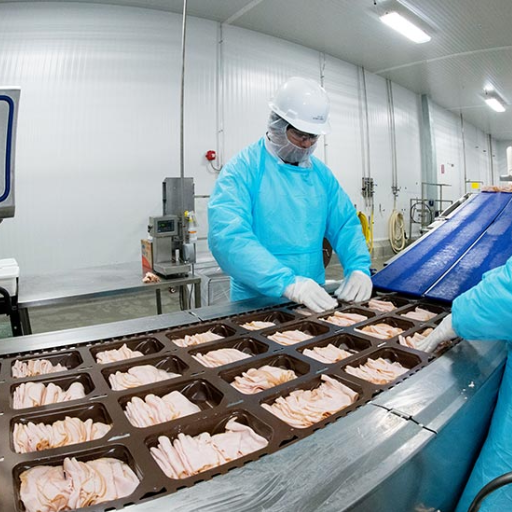
These connecting lines serve the entire process of meat cutting, deboning, grinding, and packaging. The automatic systems have better hygiene and high efficiency at the same time while fulfilling all the requirements of the very strict food safety regulations. The market in 2022 recorded a value of USD 12 billion for meat processing equipment, and strong growth is expected due to increased demand for processed meat.
5. Frozen Food Production Lines
Frozen food production lines encompass the processes and packaging of ready-to-eat meals, vegetables, and seafood performed by freezing them. One of the main causes for changing technology in the industry such as IQF (Individually Quick-Frozen) has been the introduction of rapid freezing technologies. Consumer trends towards fast and easy cooking have been instrumental in driving the frozen food market which is estimated to reach over USD 320 billion by 2025.
6. Snack Food Processing Lines
Snack food processing lines produce chips, crackers, and nuts. Typical processes for these systems involve frying, seasoning, and packing. In this light, the snack food market has witnessed significant growth, and it is expected that the market size will reach USD 782 billion by 2028, mainly due to consumer trends towards portable, ready-to-eat snacks.
Benefits of Food Production Lines
Modern food production lines boost efficiency and ensure product quality and compliance with tough food safety regulations. Manufacturers can increase production through automation while responding to market changes quickly and effectively.
Data sources show that the food industry increasingly depends on high tech and innovation to tackle their problems. Besides, making an unceasing investment in R&D and equipment can bring the future of food production lines to be full of opportunity.
Overview of Different Food Processing Types
Food processing can be classified into several categories based on the techniques used and the reasons. These processes guarantee that the food is safe for eating, wholesale life is longer, and quality standards are met. Below are the major types of food processing:
1. Mechanical Processing
Mechanical processing affects food by changing them physically, for example, through cutting, grinding, or shredding. The global market for food-cutting equipment was about $1.5 billion in 2022, a clear indicator of the need for precision-driven automation in the industrial sector.
2. Thermal Processing
Thermal processing includes pasteurization, sterilization, and drying, among others, which are used to preserve food and to kill the microbes that are harmful. Pasteurization, for example, is quite popular in dairy products and juices, with global revenue projections exceeding $17 billion annually due to increasing demand.
3. Chemical Processing
Chemical processing is based on the use of additives, preservatives, and other chemical treatments that positively affect flavor, texture, and shelf-life. This industry is growing as innovations in natural preservatives are being recognized in the market. The clean-label trend has driven an upsurge in sales of natural preservatives such as vinegar and citric acid.
4. Fermentation
Fermentation is a process in which living microbes are used to produce flavor, texture, or to prevent food products from spoiling. This classic practice has returned to modernity with the spread of healthy-sounding probiotics such as yogurt, kombucha, and kimchi. The international market for fermented foods is expected to touch $575 billion by 2030 at the latest according to a recent estimate.
5. Freeze-Drying and Cryogenic Processing
These sophisticated techniques focus on retaining vitamins and minerals while increasing shelf life by removing water. Cryogenic processing is one of the few techniques that are considered to be important in space food and gourmet snacks. The global freeze-drying market is projected to grow at a 7.4% CAGR, reaching $8.5 billion by 2030.
6. High-Pressure Processing (HPP)
High-pressure processing is a state-of-the-art, non-thermal method for deactivating pathogens and preserving food quality. The rising popularity of minimally processed and additive-free foods among consumers is one of the major factors behind the growth of HPP technology’s market. The HPP equipment market is expected to exceed $1.1 billion globally by 2027.
These techniques highlight the variety and tech innovations in contemporary food processing. The commitment to researching and developing new technologies continues relentlessly, thereby changing existing practices and making them better suited to new consumer lifestyles and sustainability goals.
Comparison of Food Packaging Solutions
Modern food packaging solutions take into account factors such as product life expectancy, sustainability, safety, and consumer accessibility. Here are five major packaging methods, along with their descriptions and supporting data:
These packaging solutions are a testament to the ongoing innovative efforts made by the industry in being able to constantly satisfy consumer’s ever-changing wants while at the same time tackling global issues that are related to safety and sustainability.
Food Trucks: A Unique Production Line Option
Food trucks have been recognized as a flexible and novel production line option that has completely changed the food sector. These mobile kitchens are not only offering a cost-effective way for entrepreneurs to start their food business but also help them to avoid the high fixed expenses that come with traditional restaurants. Market analysis predicts that the food truck sector will generate $1.64 billion in revenues in the U. S. by 2028, with a compound annual growth rate (CAGR) of 6.8%. This expansion is due to the growing number of customers seeking quick meals that are both hassle-free and diverse.
Food trucks are equipped with professional-grade equipment, allowing them to cook high-quality dishes on the spot and offer a range of foods from gourmet burgers to international street food. Their ability to move around gives sellers the chance to adapt to market changes, participate in large events, or focus on areas that have been overlooked, ensuring they always offer maximum visibility and customer interaction. Furthermore, food trucks are also in alignment with the sustainability movements as there are many operators who are doing eco-friendly practices like using compostable packaging, sourcing ingredients locally, and minimizing food waste.
Technology incorporation has taken food truck operations to a whole new level of optimization. Mobile point-of-sale (POS) systems, online ordering, and social media marketing have not only improved the customer experience but also made logistics more efficient. Food trucks incorporate innovation, flexibility, and a customer-focused approach, making them a dynamic and scalable model for the contemporary food service industry.
Expert Tips for Selecting Food Processing Equipment
It is a very important decision to choose the proper food processing equipment as it will affect the efficiency, quality of the product, and even the overall cost of the operation. Below are some expert recommendations to help you pick the right one, along with the latest trends:
Analyze Your Production Requirements
Take into account the food category and the quantity your business will be processing. The equipment’s capacity must be in accordance with your current output, plus a little for forecasted growth. For example, a recent study states that increasing production by 20% would require spending on modular equipment to allow the company to expand without a major work stoppage.
Quality and Durability Are A Must
Choose equipment made from premium-quality materials, such as stainless steel, for durability and resistance to oxidation. Industry data indicates that stainless steel equipment lasts 30-50% longer than other materials, resulting in lower long-term costs.
Check Automation Features
Automation is the key to streamlining operations and cutting down on labor costs. Programmable controls on automated machinery can help with accuracy and consistency in food processing. Studies show that automation reduces processing time by 25% and human errors by 40% on average.
Take Regulatory Compliance into Account
Ensure the selected equipment complies with hygiene and safety requirements, including regulations set by the FDA or USDA. Compliance not only saves the company from penalties but also gives a plus to consumer trust. For example, 80% of buyers believe that products certified for compliance are safer.
Energy Efficiency and Sustainability
Efficient equipment not only consumes less energy, thus reducing electricity costs, but also aligns with the company’s environmental targets. Cutting-edge energy-efficient equipment can reduce energy consumption a little over 30%, according to a latest industry report. Also, equipment that generates the least waste is a big step towards a greener business.
Consider Maintenance Requirements
The same rule exists for the maintenance of the equipment that is easy to clean and maintain and will enhance its uptime and reduce its costs for repairs. Equipment with CIP (Clean-In-Place) systems has become increasingly popular because it can save time while ensuring hygiene, reducing maintenance time by 40% compared to traditional cleaning.
Finances and ROI
Although the price is a critical issue, consider the long-range return on investment. The higher initial cost of reliable, fast equipment is probably offset by long-term savings in the opposite case. A research report from the food sector states that well-maintained, high-quality equipment recovers its cost in 3-5 years through increased productivity.
Request Vendor and Technical Support
Establish relationships with trustworthy vendors that offer strong warranties and after-sales support. Trustworthy technical assistance reduces downtime and keeps the operation running smoothly. Make sure the vendors provide training for the operators to get the most out of the equipment.
By considering these factors, businesses can buy new food processing equipment that is suitable for them, meets industry requirements, and is a step forward toward future growth.
Evaluating Supplier Reliability
Supplier reliability is one of the most critical things to evaluate when it comes to food processing as a supplier is not just a partner who delivers the machinery but a partner who walks with you throughout the growth of your business. Therefore, some factors are absolutely important and we’ll also look at some recently gained insights from the industry.
Track Record and Reputation
The first thing to do is to check the supplier’s track record and see what their reputation is in the industry. A recent market analysis from Deloitte found that 78% of companies got better operational efficiency when they went with suppliers who have a good record to deliver top-quality equipment on time. Look at ratings and reviews online, get references from customers, and check how reliable they are at keeping their word.
Financial Stability
A financially stable supplier is less likely to face the tough times that cause operational or delivery disruptions. The PwC report on sustainability of suppliers for the year 2023 shows that 65% of companies encountered delays because their supplier was in financial distress. Reviewing the annual reports or conducting a financial risk analysis can reveal a lot about the supplier’s financial stability.
After-Sales Support
Make it a point to confirm that the supplier has a good after-sales support system in place. This should include services like technical assistance and maintenance. According to Food Engineering Magazine, 72% of manufacturers cited responsive after-sales service as a major factor in their decision to choose or reject a supplier. Support should be proactive, with fast response times, readily available spare parts, and operator training.
Compliance with standards
Check that the supplier is complying with local and international standards. This could be through ISO certifications or HACCP, which ensure they produce high-quality equipment. Data shows that about 85% of the best suppliers have accreditations like ISO 9001 for quality management systems which are an indicator of their reliability.
Innovation and Technology
If a supplier that engages in research and employs new technologies to improve their processes is your partner then your business will be in the right way in terms of being ahead of the competition. According to Technavio’s 2024 market forecast, suppliers that offer innovative solutions achieve about 30% higher customer retention rates. Find out whether the supplier is developing in the areas of automation, IoT integration, and energy-efficient machinery.
Through considering these elements and adding up the industry knowledge with meticulous research, firms can recognize the dependable suppliers that not just support their operational efficiency but guarantee their success in the long run as well.
Understanding Compliance and Regulations
It is of paramount importance for all enterprises to comply with industry standards and government regulations to run their operations smoothly and minimize the risk of legal and financial problems. Five main compliance and regulatory factors are listed below:
Environmental Regulations
Operating sustainably is only possible when one follows the Environmental Laws. For example, companies must comply with emissions standards, waste-disposal regulations, and energy-use rules that minimize their environmental footprint.
Product Safety Standards
Quality and safety of products are paramount considerations. Companies that are ISO 9001 certified and hold other relevant certifications apply for and get the recognition of being in the leading edge of the market. This includes not only maintaining industry standards and consumer trust but also a decreased impact of litigations.
Data Privacy and Cybersecurity
The digital aspect of the companies’ operations is getting more and more significant, which means that they have to obey the rules of data protection, for example, GDPR or CCPA, which usually covers the areas of customer data protection and prevention of unauthorized access to confidential information.
Labor and Employment Laws
Complying with fair treatment of workers, occupational safety, and wage policies means that you are in line with the regulations like OSHA or FLSA, thus practicing the ethical management of the workforce is made easier.
Trade and Export Controls
Countries participating in international trade must observe trade sanctions, which among other things include licensing for import/export, tariff conditions, etc., thus avoiding penalties and smoothing the way for international dealings.
The organizations can thus, by understanding these rules and taking preemptive steps to ensure their adherence, reduce risks, comply with laws and regulations, and grow sustainably.
Return on Investment Considerations
Return on Investment (ROI) the main indicator has the dual purpose of measuring the financial wins and the costs linked to a certain business initiative or project. Acknowledge ROI and organizations can make the right choice, resource allocation is optimized and sustainable growth is achieved. Here are some elaborated points derived from the latest findings:
Economic Impact of Strategic Investments
The latest analyses reveal that the companies investing in digital transformation can expect to realize an average ROI of at least 20% in two years’ time owing to the increment in efficiency and the development of customer experience. Among the various technological innovations, artificial intelligence and cloud computing are the ones that have the most significant influence, as they deliver the scalable capabilities and gradually diminishing operational costs.
Marketing and Advertising ROI
Recent Google Search analytics show that businesses using targeted digital marketing tactics, such as pay-per-click (PPC) and social media campaigns, often achieve returns of 200%-400%. Moreover, through data analysis and focusing on effective channels, companies can acquire customers at lower cost while increasing profits.
Employee Training and Development
Studies show that for each dollar invested in staff training courses, organizations achieve an average return of $4.70 due to increased output and reduced employee turnover. Continuous training ensures a dedicated and flexible staff, an essential factor for the organization’s long-term growth.
Sustainability and ESG Initiatives
By considering Environmental, Social and Governance (ESG) factors in their operations, companies witness better returns because of the change in consumer preferences towards sustainable products and services. A worldwide study conducted in 2023 found that companies adopting ESG principles enjoy higher market valuations and annual profits of up to 5% compared to their non-ESG counterparts, making these practices profitable investments.
Supply Chain Optimization
The reward of the investment in real-time tracking tools and automation in supply chains is being talked about with a range of 15% to 30% ROI, according to the industry trends. The efficiency stems from reduced delays, reduced waste, and improved supplier relationships, thereby benefiting the company financially and operationally.
Knowing the potential ROI for different projects and using trustworthy data and contemporary tactics enables companies not only to evaluate but also to realize the value of their investments. Being able to make decisions supported by such understanding aligns with both short-term targets and long-term sustainability.
Future Innovations in Food Production
Food production is exploiting new ways and it is going to happen anyhow, technology being alongside it and sustainability being the main concern. New methods of food production like vertical farms, cultured meat, and precision farming are changing the entire course of agriculture; the way food is grown, delivered, and consumed is going to be different in nature and practice.
The vertical farming technique enables the cultivation of crops in a controlled indoor environment, and stacked layers are used to make the most of available space. A research report by MarketsandMarkets reveals that the vertical farming business is likely to be worth $15.7 billion in 2025 with a growth rate of 25.0% as a compound annual growth rate (CAGR). This procedure leads to a considerable reduction in water consumption—up to 95% less than in traditional agriculture—and allows for the complete ban of chemical pesticides.
In the same way, cultured meat, or lab-grown meat, is becoming increasingly popular. This technology presents concern regarding slaughtering by coming up with a guilt-free product through the less harmful carbon footprint of rearing animals. The cultured meat market is expected to reach $2.78 billion by 2030, according to Allied Market Research, which tracks such fields. Singapore, for instance, has already opened up a market for chicken products through approval of lab-grown meat that allows the setting of a global standard for subsequent penetration.
Besides that, precision agriculture uses modern data and technology to make farming more efficient. Drones, IoT sensors, and AI-based software are among the tools that enable farmers to monitor crop health with very high accuracy, optimize irrigation, and make precise predictions about future crop yields. Some project the global precision agriculture industry’s worth will increase to $8.7 billion by 2025, largely driven by demand for food outpacing the supply of land available for cultivation.
All these innovations come just right as the world population is foreseen to reach almost 10 billion by 2050 which means a remarkable upsurge in the need for food. Plants and animals can coexist with less environmental harm if technology and sustainable practices are used together.
Emerging Technologies in Food Processing
The recent changes in technology related to the processing of food are completely changing the production, preservation, and consumption of food to the point that they can drive sustainability, efficiency, and food safety which are global issues to be solved. Some of the most significant emerging technologies that are making the food industry not to remain the same include the following:
High-Pressure Processing (HPP)
HPP is a method that applies high pressure and that way it omits killing bacteria, viruses, and other pathogens in food products whilst keeping their nutritional value and flavor at the same time. Recent reports show that global HPP market is going to gain $1.9 billion by 2026, which will be mainly caused by the growing consumers’ demand for the least processed as well as easily identifiable foods. HPP is a technique that is very much advantageous for juices, seafood, and ready-to-eat meals.
Internet of Things (IoT) in Food Processing
With the help of IoT, it is possible to monitor and trace the products in food manufacturing plants. Furthermore, these systems will result in more efficient resource use, improved food safety, and reduced waste. According to a forecast, the IoT market in food and beverages will increase from $13.5 billion in 2022 to $25.3 billion in 2027 thanks to some of the applications like supply chain management and equipment automation.
Food Waste Reduction Technologies
Technologies for repurposing food waste are becoming more popular. The innovations that turn waste into byproducts used as valuable ingredients or organic waste for bioenergy are not going to make the largest sustainability impacts, but can also be a little help in making the world greener and less polluted. A recent report estimated that reducing food waste would decrease global GHG emissions by 8-10%, thereby contributing to climate change mitigation.
3D Food Printing
3D printing is a method that is changing the way foods are customized as it allows to produce not only differently shaped and nutritionally specific but also visually attractive food items. Applications are becoming increasingly important in sectors such as healthcare, where personalized nutrition is crucial. The market for 3D food printing is likely to grow at a CAGR of 48.1% to reach $15 billion by 2030.
Cellular Agriculture
Cellular agriculture, which includes lab-grown meat and cultured dairy products, is considered an eco-friendly alternative to animal farming. Moreover, the cultivated meat start-ups report enormous achievements and some products are already being sold in certain markets. Analysts reckon the cellular agriculture sector could be worth more than $25 billion by 2035, driven by an increasing number of customers who care about ethics, the environment, and health.
AI and Machine Learning Applications
Artificial Intelligence (AI) and Machine Learning (ML) are the main tools in the whole process of administrative preciseness and in the forecasting of demand as well as in the quality control of food production. The predictive analytics and the automatic sorting systems that are powered by AI are a source of elimination of downtime and improvement of the resource allocation. A recent survey indicates that AI applications in the food and drink industry are forecast to grow at a CAGR of 45% through 2028.
These breakthrough technologies not only manifest the creative power of food processing modernity but they also open up attractive pathways to a food system that is globalized, sustainable, efficient, and resilient. They will be the key factors in the global population challenge accompanied by the ongoing financial support and cooperation among the stakeholders involved.
Predictions for 2025 and Beyond
I foresee that the integration of AI and automation will reach a point in the food and beverage sector every year from 2025 onwards where it will be able to reduce waste and increase productivity in a very significant way. To keep up with effective marketing strategies, companies will rely on sustainability and use the latest technologies to minimize resource consumption and environmental pollution. Furthermore, personalized nutrition will take a major leap forward through data analytics and machine learning, thereby offering individualized dietary products and a new consumer experience. Such breakthroughs will facilitate the meeting of the global population’s needs challenging and will do so in a sustainable manner.
How to Stay Ahead in Food Manufacturing
In food manufacturing, staying ahead of the game requires a proactive approach to innovation, tech support, and eco-friendly practices. Changing consumer habits, the upswing in demand for convenient foods, and the adoption of sustainable production methods are the primary forces driving the global food manufacturing market upto a Compound Annual Growth Rate (CAGR) of 3.8% over the period 2023 to 2028, according to recent statistics.
1. Invest in Automation and Smart Technologies
The combination of AI and IoT in food manufacturing will greatly improve efficiency. For instance, an automated production line with AI-driven sensors can manage operations, reduce idle time, and produce a more uniform product. Additionally, these innovations will aid in continuous oversight of food quality and safety standards.
2. Prioritize Sustainability
Consumers are continually seeking more environmentally friendly products, with 62% indicating they would be willing to pay a premium for them. In that case, food manufacturers should adopt green practices such as using renewable energy sources, carefully managing water consumption, reducing food waste, and implementing circular packaging concepts. As an example, the company Nestlé has vowed to reach net-zero carbon emissions by 2050, thus, making it a role model for the sector.
3. Leverage Data and Personalization
With the help of data analytics and machine learning, manufacturers can identify consumer trends and create customized products. The example of customizing nutrition products according to one’s personal dietary requirements is going strong and the personalized nutrition market is expected to grow to $16.6 billion by 2027. Gaining such insights allows the companies to reach small but profitable markets easily.
4. Focus on Food Safety and Traceability
Consumers’ transparency demands are escalating regarding the sources of the food they consume and the production processes. The adoption of blockchain technology in food traceability is changing the scenario, allowing the manufacturers to have a transparent supply chain. It has been reported that the application of food traceability solutions can reduce recalls by as much as 30%, thereby not only cutting costs but also enhancing customer trust.
5. Stay Ahead of Regulatory Changes
Food safety and labeling regulations are constantly changing to meet both global and local needs. Compliance means paying close attention to emerging standards, e.g., related to allergens or nutritional content labeling, which requires a lot of effort. By implementing agile processes, companies can make quick adaptations to such changes and still keep their operations up to speed.
The above-mentioned areas are the focus through which the manufacturers can retain a competitive edge in the rapidly changing food industry. They will be able to position themselves for long-term success by actively responding to consumer demands, investing in technology, and being committed to sustainability.
References
- Oklahoma State University Extension: This resource provides insights into selecting and purchasing food processing equipment, including key considerations for buyers. Link to resource
- Iowa State University Extension and Outreach: Offers a toolkit for buyers, focusing on transparency and readiness for wholesale purchasing, which can be relevant for food production line decisions. Link to resource
- Texas A&M University 4-H Study Guide: Includes consumer decision-making strategies and considerations for equipment selection, which may provide additional context for your article. Link to resource
Frequently Asked Questions (FAQ)
What are the key factors to consider when Choosing the right food production line in 2025?
Key factors when selecting a food production line in 2025 include the nature of the food being processed, compliance with food safety standards, machine durability, production efficiency, and energy consumption. Consider the particular requirements of your operation concerning the types of food products you will be making and the production volume that you anticipate so that the performance is optimal.
How can I guarantee food safety and quality in food processing?
To ensure food safety and quality in food processing, establish rigorous quality control systems, comply with safety regulations, and use equipment that enables real-time monitoring. Besides, routine processing equipment maintenance alongside staff’s training on food safety can significantly reduce human errors and thus keep regulatory compliance at a high level.
What is the importance of machinery selection in deciding food processing line?
Machinery is a crucial factor in the capacity and effectiveness of a food processing line. The right machinery can create a more efficient operation, less downtime, and a more fruitfull production process. It is imperative that you invest in machinery that uses less energy and, at the same time, fulfills the production requirements and sizes in your plant in order to get the most out of your investment.
What are the future trends in food production and processing?
The production and processing of food are future trends that intersect with the increased use of IoT technology for real-time monitoring, the search for greener ways to reduce the carbon footprint, and food packaging innovations. All these trends are designed to improve productivity, product quality, and the food market’s changing customer requirements.
How can I pick the proper food processing machinery for my line?
When selecting food processing machinery, prioritize factors such as the uniqueness of your production process, the type of food, cleanliness and safety, and compliance with food safety standards. Reliability and performance of the machinery should also be assessed to ensure attainment of the highest food safety and quality standards.
What are the pros of eco-friendly practices in the food sector?
The benefits of eco-friendly practices in the food sector are plenty, including among others low energy consumption and waste, small operational costs, and high brand image. The practice of going green with the choice of machines and processes will not only reduce your utility costs but will also win the hearts of eco-conscious consumers as they will see you practicing what you preach.
How does equipment selection impact productivity?
The choice of equipment has a big impact on how much product is produced because it controls the speed, quality, and consistency of the output. If the right machinery is selected according to your production needs, the output will be increased, the down-time reduced, and the processes made easier, all of which will result in better use of resources and higher productivity in the operation of food processing.
What are the critical factors in choosing packaging equipment for food products?
Among others, critical factors when selecting food packaging equipment includes the food product type, compliance with packaging safety standards, packaging speed efficiency, and the equipment’s capacity to hold different package types. Furthermore, consider the equipment’s influence on the product’s shelf life and quality in order to meet consumer’s expectations.
How can I eliminate waste in my food production processes?
Use waste-reducing practices such as upgrading production processes, acquiring energy-efficient machines, and installing real-time monitoring systems to find and modify inefficient operations. Moreover, it may involve training workers in the best methods of waste reduction and applying lean manufacturing principles, thus, leading to less waste and overall better efficiency.