
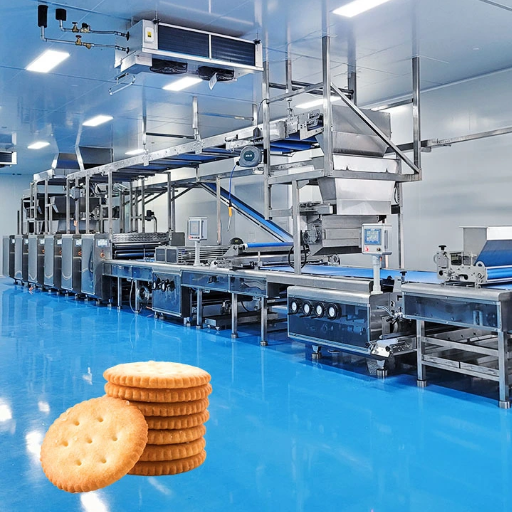
Automatic Biscuit Production Line: Efficiency & Output Guide

The current food manufacturing industry depends on efficient production processes, which rely on automatic biscuit production lines to demonstrate technological progress. The fully automated systems produce biscuits with three main benefits, which include constant quality maintenance, high production capacity, and reduced material waste. The guide provides an extensive exploration of automatic biscuit production lines, which show their ability to improve operational efficiency, simplify work processes, and satisfy growing market requirements. This article will help manufacturers to enhance their facilities while operations managers boost their productivity because it provides essential information about production line optimization.
Introduction to Biscuit Production Line
The biscuit production line operates as an automated system that produces high-quality biscuits through efficient operations at high production rates. The lines operate with multiple steps, which include dough preparation and forming, baking, cooling, and packaging to create a continuous production process. The systems achieve operational efficiency through automated procedures, which decrease manual work and protect against mistakes while maintaining consistent product standards. The current production lines provide manufacturers with adjustable operational modes that enable them to produce specific products while their business needs and market demands evolve.
Overview of Biscuit Making
Biscuit production constitutes a meticulous process that requires multiple steps to create products of consistent high quality through scientific and technological methods. The process normally starts with the selection and measurement of raw materials, which include flour, sugar, fats, and leavening agents. The ingredients undergo dough mixing through advanced mixers, which create a uniform dough with correct hydration. The dough is then shaped into desired forms using sheeting and cutting machines or rotary molding, depending on the biscuit type.
The formed dough pieces undergo movement to the baking ovens, which require operators to maintain specific temperature and conveyor speed settings for achieving proper texture and color results. The systematic cooling process for biscuits prevents condensation and helps maintain their original structure. The products undergo sorting after cooling ends, which leads to their movement toward packaging lines that use automated systems to wrap and label products while maintaining their freshness and long-lasting shelf life.
Biscuit production today focuses on achieving efficient operations while maintaining hygienic standards and offering customers the ability to create their preferred products. The combination of advanced machinery and process monitoring technologies enables manufacturers to enhance production processes while decreasing material waste and meeting various customer preferences. The streamlined workflow process enables businesses to expand their operations while maintaining their commitment to quality control procedures.
Importance of Automation in Biscuit Production
The implementation of automated systems throughout biscuit manufacturing processes establishes essential pathways that drive operational effectiveness while maintaining product quality throughout production and enabling business growth. Manufacturers achieve their production goals because advanced machines handle all aspects of biscuit manufacturing, from mixing to packaging operations. The system uses automated processes to control all production activities, which leads to accurate measurement processes and standardized baking environments that produce results identical to actual products. The use of automated systems leads to decreased expenses for workforce management while providing organizations with the ability to monitor operations and make necessary modifications, which results in efficient resource handling and decreased production waste. The technologies establish hygienic procedures that satisfy strict food safety requirements because they maintain high cleanliness standards throughout the entire manufacturing process. The automated systems enable manufacturing companies to produce multiple product varieties while maintaining product quality standards at an affordable price within their sustainable operational framework.
Types of Biscuit Production Lines
The production lines used for biscuit manufacturing can be divided into different groups, which depend on their operational functions, production capacity, and automation degree. The three primary types include soft biscuit production lines, hard biscuit production lines, and combination lines.
Soft Biscuit Production Lines
These systems operate with soft dough biscuits through their dedicated processes, which include mixing, forming, and baking. The dough is typically moldable, allowing for diverse shapes and textures. Advanced soft biscuit lines also incorporate enrobing or decoration equipment for added variety.
Hard Biscuit Production Lines
The process of hard biscuit production begins with rolling and laminating, which creates multiple layers that produce a crispy texture. The manufacturing process includes special machines that handle sheeting and cutting functions to achieve exact product dimensions and thickness measurements. The baking process on these lines is calibrated meticulously to achieve consistent results.
Combination Lines
Manufacturers who want to produce multiple products from one system can use combination production lines, which enable them to make both hard and soft biscuits. The integrated systems of the facility enable manufacturers to handle ingredients through different processes, which include ingredient handling and biscuit production, to achieve maximum operational efficiency with various biscuit types.
The production line types available in the market enable manufacturers to create custom solutions that match their specific production needs while meeting different market demands.
Components of an Automatic Biscuit Making Machine
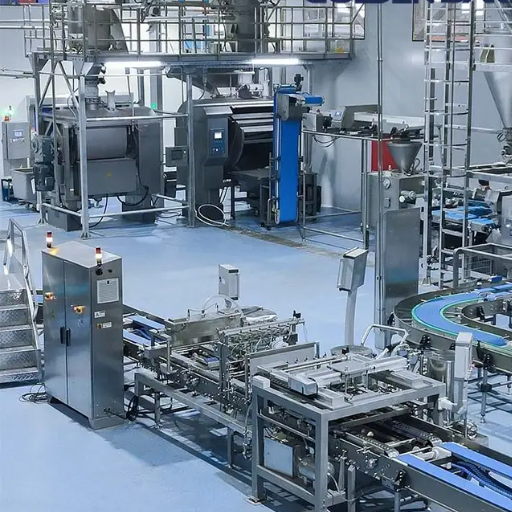
- Dough Mixer – The machine mixes flour, water, and sugars and fats to make dough that has the same texture throughout.
- Sheeting and Gauging Unit – The unit transforms dough into uniform flat sheets, which will be used for upcoming shaping and cutting processes.
- Cutting and Shaping Station – The station uses molds and rotary cutters to shape dough into specific biscuit shapes and sizes.
- Baking Oven – The oven bakes the molded dough at controlled temperatures to achieve the correct texture and consistency.
- Cooling Conveyor – The system quickly cools baked biscuits until they reach room temperature, which makes them ready for packaging.
- Packaging System – The system protects finished biscuits by sealing them inside airtight packages that keep their freshness and quality intact.
The production process becomes more efficient because all components function together to create a streamlined workflow, which increases operational efficiency.
Key Machinery in Biscuit Production
The key equipment for biscuit production operates at its most effective level when it uses its automated capabilities to handle all production steps while ensuring that products meet required standards for quality and uniformity and sanitary conditions. Below is a detailed breakdown of essential machinery:
Mixing Machines
These equipment units mix together the basic materials, which include flour and sugar, fats, and additional components, to produce uniform dough. The system uses sensors that control both temperature and mixing speed and time to achieve uniform dough results. The equipment includes both horizontal and spiral mixer types.
Dough Sheeters and Laminators
They take the combined dough material and produce flat sheets which have identical thickness throughout the entire surface area. The use of laminators enables biscuit manufacturers to create multiple layers, which then produce enhanced texture and improved structural strength through the process of dough layer compression.
Rotary Moulders and Cutters
The machines mold dough through rotary moulders and cutters, which create the desired product shapes through established design specifications and size requirements. The rotary moulders provide greater accuracy for creating complex designs, while the rotary cutters enable producers to obtain clean product cuts, which create minimal waste material.
Baking Ovens
The modern baking process uses advanced ovens, which include tunnel ovens that distribute heat through multiple controlled zones. The temperature monitoring systems maintain exact temperature levels, which enable the creation of specific texture, crunch, and color requirements. The available oven options for baking include gas-fired ovens, electric ovens, and hybrid ovens.
Cooling Conveyors
After baking, the cooling conveyors use their systems to decrease biscuit temperatures until they reach safe levels, which prevents further cooking while the biscuits get ready for packaging to maintain their original taste and structural form.
Packaging Machines
The integrated packaging machines use their complete system to package biscuits because they seal products in airtight packaging. The systems include various features which provide metal detection capabilities, automated sorting functions, and labeling systems to guarantee top-quality control before products reach distribution.
The implementation of advanced technologies through IoT, AI, and machine automation in production equipment enables manufacturers to decrease their production downtime while achieving better efficiency through waste reduction and operational improvements. The biscuit production process needs this efficient method because it helps meet rising product demand while maintaining excellent quality control during large-scale operations.
Role of the Forming Machine in Biscuit Manufacturing
The forming machine plays a critical role in the biscuit manufacturing process by shaping the dough into consistent, precise, and uniform pieces that meet production requirements. The machine uses rotary molding and roller sheeting technologies to create specific product designs, which determine the required thickness and surface textures that affect the final product appearance and quality. Forming machines operate through three main parts, which include adjustable rollers, molds, and conveyors that work together to achieve precise operations. Advanced forming machines enable manufacturers to create various biscuit types because they can process multiple dough types, which range from delicate butter cookies to sturdy crackers. The forming machine improves productivity by maintaining consistent product quality while producing less dough waste, which meets essential quality control requirements for high-volume production.
Understanding Biscuit Equipment and Production Solutions
The baking and conveying systems function as essential elements of the biscuit production process, which guarantees both consistent product quality and operational efficiency. The industrial baking ovens, which include tunnel and hybrid ovens, enable precise temperature management that results in uniform baking across different biscuit varieties. The ovens provide manufacturing facilities with various production capabilities, which enable them to manage baking duration, thermal energy distribution, and air circulation throughout the process.
The transferring process of biscuits between different production stages becomes more efficient through the use of conveying systems. The design of contemporary conveyor belts includes food-grade components and sophisticated monitoring technologies, which maintain sanitary conditions while minimizing operational interruptions during upkeep activities. The systems enhance production efficiency while enabling automatic cooling, stacking, and packaging operations. The integration of advanced technologies in baking and conveying systems enables businesses to achieve maximum production output while maintaining compliance with food safety regulations and product quality standards.
Benefits of Automated Biscuit Production
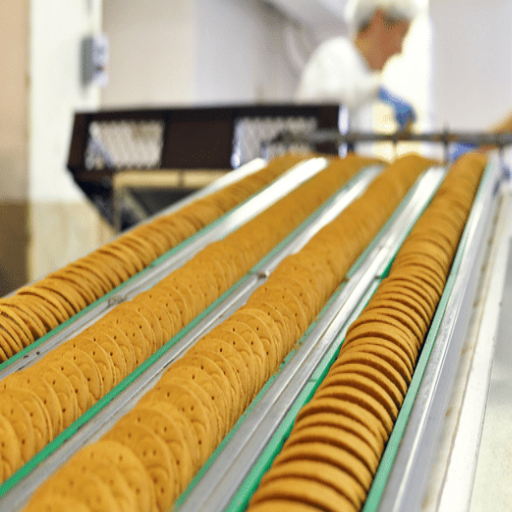
- ✓ Enhanced Efficiency: Production operations become more efficient because automated systems decrease the need for human work, which results in faster production processes that deliver consistent output.
- ✓ Superior Quality: The implementation of precision engineering enables biscuit production to achieve uniformity in size, shape, and quality, which meets all required quality standards.
- ✓ Cost Reduction: The implementation of automation technology results in decreased labor expenses while the system optimally measures ingredients and manages processes to reduce material waste.
- ✓ Hygienic Standards: Automated systems maintain hygienic design principles that decrease contamination risks while meeting all necessary regulatory requirements.
- ✓ Scalability: Manufacturers can use automation to expand their production capabilities because it enables them to handle increased customer demand without compromising their product quality.
Efficiency and Output in Biscuit Making
Biscuit production needs to achieve operational efficiency because it directly affects its ability to produce quality products that satisfy market needs. Modern biscuit manufacturing processes use automated machines together with advanced technological systems to achieve efficient operation throughout their entire production process, which starts from dough creation and ends with product packaging. The main elements that affect operational efficiency include maintaining uniform ingredient distribution, together with exact procedures for material cutting and shaping, and the complete baking process. The automated systems that companies use to produce their products maintain consistent dimensions and texture characteristics, which leads to they operate their processes with minimal waste and optimal production volume. The combination of real-time monitoring systems with data analysis capabilities enables organizations to identify operational deviations that result in decreased downtime and improved productivity. The implementation of these innovations enables manufacturers to produce better output while maintaining product quality and developing their business operations to satisfy customer needs.
Cost-Effectiveness of Automatic Biscuit Making Machines
Automatic biscuit-making machines show their cost-effectiveness through multiple essential factors. The machines achieve substantial labor savings because they automate work that requires staff to perform repeated activities, which results in reduced operational costs and decreased staff mistakes. The system enables manufacturers to achieve maximum production output because it allows them to produce large quantities of products within shorter production periods. The advanced features, which enable precise ingredient dosing and energy-efficient operations, reduce operational expenses by decreasing material waste and energy usage. The initial costs for machinery acquisition require a major financial commitment, yet long-term operational savings through process improvements and overhead reductions make these machines an affordable solution for businesses that need to increase their production capacity while maintaining product quality standards.
Quality Control in Industrial Biscuit Production
Quality control stands as an essential requirement for industrial biscuit manufacturing because it guarantees products satisfy both legal requirements and customer demands. The procedure demands strict monitoring and testing, which occur at various points throughout the entire production process, starting from raw material assessment until the final product reaches its packing stage. Companies use advanced technologies like automated vision systems to achieve precise measurement of biscuit size and shape, and surface texture problems. The baking process uses strict control methods to manage moisture content, baking duration, and temperature because these elements need to match predetermined standards for product consistency and defect elimination. The study employs sensory evaluation together with microbiological assessments to verify that flavor characteristics and cleanliness standards remain intact. The organization achieves waste reduction through its strong quality assurance program, which additionally boosts customer trust and brand loyalty, which play essential roles in maintaining a competitive advantage.
Choosing the Right Biscuit Production Line

When choosing the right biscuit production line, consider key factors such as production capacity, product diversity, and automation level. The equipment needs to meet your required production output while maintaining your quality control standards. A flexible system needs to be used whenever your business requires the production of different biscuit varieties. Automation improves operational efficiency and process consistency, but needs to be matched with your financial resources and employee skills. Companies should choose established manufacturers whose reliable products and effective after-sales support will reduce equipment downtime while ensuring performance throughout their entire operational life.
Factors to Consider When Selecting Machinery
1. Production Scale and Requirements
The process needs a study to measure its capacity through three factors, which include batch size, operational speed, and system complexity. The system needs to operate at present needs while providing capabilities to expand operations for future requirements. The equipment selection process needs to choose machines that permit multiple product types to be manufactured.
2. Technical Specifications and Performance
The system needs evaluation of three key performance indicators, which include energy efficiency, system reliability, and operational accuracy. The use of digital controls together with programmable features provides companies with better production results while sustaining their product quality standards. The system needs to work with existing operational processes for better execution of its functions.
3. Cost and Long-Term Value
The evaluation process requires assessment of total ownership costs, which include all expenses from buying the product to its energy use and downtime costs. Companies should purchase machines that have proven durability and strong warranty protection because these machines bring long-term benefits to their operations.
4. Safety Standards and Compliance
The equipment needs to comply with all relevant safety standards and rules established by the industry. Emergency stop buttons, together with automatic safety systems, help to protect workers from danger while ensuring the machine functions properly.
5. Manufacturer Reputation and Support
Manufacturers should be selected based on their history of delivering trustworthy products, together with their complete customer support services. The system requires all three components, which include technical support and training resources, and replacement parts to improve its operational performance and lifespan.
6. Ease of Maintenance and Operation
Companies should select machines that operate simply and need minimal operator instruction to operate. The system provides simple access to components, which enables cleaning activities, repair work, and maintenance tasks, which help the business maintain high productivity levels while reducing its operational expenses.
Evaluating Biscuit Production Line Price
The evaluation of biscuit production line costs requires assessment of multiple key elements that determine total investment expenses. The elements that affect investment costs include production capacity, automation level, material quality, and customization needs. Businesses pay higher fees for automated production lines, which provide better production performance and lower operational expenses throughout their operational period. The initial expenses of smaller semi-automatic systems become more affordable, yet these systems demand additional workforce resources for their operation.
Leading manufacturers tend to offer pricing in alignment with the quality and durability of the machinery provided. Prices for entry-level semi-automated units start at 10000, while fully automated systems for large-scale production cost 200000 and above. The total expenses of a project will increase because installation work, operator training, and maintenance plans need to be included in the budget estimation. The process of comparing quotes from different suppliers helps to find which suppliers provide the best value between their prices and product performance. The evaluation process should include customer reviews along with detailed specifications and safety and quality standard compliance checks to achieve production results that maintain consistency and reliability throughout the investment period.
Comparing Fully Automatic vs. Semi-Automatic Machines
The decision between fully automatic machines and semi-automatic machines requires assessment of three main factors, which include machine performance, system costs, and user efficiency. The fully automatic machines execute their tasks without requiring human control, which results in greater operational consistency, system capacity, and work efficiency. The system operates best in production settings that demand both high-precision work and maximum production output. The system requires customers to pay more initially and needs more costs to maintain, while operators must receive specific training to use the system.
The operation of semi-automatic machines needs operators to work with the equipment, which enables them to use the machine for various operational needs. The machines provide an affordable solution that requires less upkeep, making them suitable for businesses that need to serve customers with lower production needs. The systems provide less operational speed and precision than fully automated systems, but their affordable price and flexible design make them suitable for use in specialized production environments.
The assessment process needs to evaluate essential production requirements, financial limits, and future objectives. The manufacturing process achieves maximum efficiency through fully automatic machines, while semi-automatic machines provide businesses with economical yet flexible solutions for their specialized operations.
Future Trends in Biscuit Manufacturing

The biscuit manufacturing industry is moving toward automation and sustainable practices as its main operational focus. The implementation of advanced robotics and artificial intelligence systems will enhance production efficiency because it enables manufacturers to achieve uniform product quality while minimizing human operational work. The current trend shows an increase in eco-friendly practices, which target reductions in energy consumption, water usage, and packaging waste. The rising need for healthier biscuit products drives companies to create new ingredient formulations that include reduced sugar content and gluten-free and plant-based products. The industry trends show how companies adjust their operations to handle new technological advances while meeting changing customer demands.
Innovations in Biscuit-Making Technology
Recent advancements in biscuit-making technology have revolutionized production processes, improving efficiency and product consistency. High-speed automated machinery, such as rotary molders and wire-cut machines, enables precise shaping and increased production output while minimizing errors. Modern ovens equipped with zoned temperature control systems ensure uniform baking, optimizing both quality and energy usage.
Digitalization is another critical innovation, with the integration of smart sensors and artificial intelligence (AI) to monitor key parameters like dough consistency, moisture content, and baking time. These technologies allow real-time adjustments, reducing waste and enhancing product uniformity. Additionally, 3D printing is emerging as a tool for creating intricate designs and prototypes, meeting consumer demand for visually appealing and customized products.
Furthermore, advancements in ingredient processing technologies, such as enzyme applications and alternative flours, are supporting the development of biscuits that cater to diverse dietary needs. From gluten-free options to reduced-sugar formulations, these innovations highlight the industry’s focus on meeting health-conscious trends without compromising taste or texture. Combining automation, digital tools, and ingredient innovations, biscuit-making technology continues to push the boundaries of efficiency and creativity.
Impact of Automation on Biscuit Production Efficiency
The implementation of automation technology has established better production processes for biscuit manufacturing because it enables faster operations, requires fewer workers, and decreases manufacturing mistakes. The automated systems achieve continuous production of high-quality products by controlling all stages of production, which include accurate dough mixing, uniform shaping, and efficient baking process management. I can proudly announce that automated manufacturing systems that implement robotic technology and AI-based quality inspection methods achieve faster output rates and lower operational expenses while producing products of equal quality.
Sustainability in Biscuit Production Processes
Biscuit production sustainability efforts seek to achieve two goals, which are decreased environmental harm and maintained production efficiency and product excellence. The current facilities use energy-efficient equipment to achieve lower energy needs throughout their baking and cooling operations. The implementation of renewable energy systems, which include solar and wind power sources, leads to reduced greenhouse gas emissions. The organization promotes water conservation through its implementation of advanced water recycling systems which achieve substantial reductions in wastewater output.
The organization works to decrease waste through two methods, which include optimizing ingredient usage to decrease excess material and using either biodegradable packaging or recyclable packaging solutions. Manufacturers show their commitment to ethical and sustainable agriculture through their procurement of raw materials from suppliers who meet sustainability certification standards. The industry leaders demonstrate their commitment to innovation through their investment in circular economy initiatives, which involve transforming production waste into animal feed and bioenergy resources. The measures demonstrate that sustainability has become a fundamental aspect of contemporary biscuit production processes.
Conclusion
Automatic biscuit production lines represent the future of efficient, high-quality food manufacturing. By integrating advanced machinery, automation technologies, and sustainable practices, manufacturers can meet growing market demands while maintaining exceptional product standards and operational efficiency.
Reference Sources
Oreo Biscuit Manufacturing Process Explained
Energy Efficiency Improvement and Cost Saving Opportunities for Baking
SweetCup Zone – Automated Production Line
Frequently Asked Questions (FAQs)
What operations does a biscuit-forming machine perform within a cookie production facility?
A biscuit-forming machine shapes biscuit dough into various types of biscuits, whether hard biscuit, soft biscuit, or sandwich biscuit formats. The cookie machine system uses the biscuit forming unit, which can function as a rotary moulder, depositor, or cutter to create specific biscuit shapes with defined thickness and surface characteristics. Biscuit-forming machines are part of the production equipment provided by a biscuit production line manufacturer to ensure biscuit-forming accuracy and repeatability.
What production capacity can I expect from a hard biscuit production line or a soft biscuit production line?
The biscuit capacity figures depend on the system setup because small-scale lines produce limited hourly output that caters to small-scale production at artisanal factories and starter factories, while large-scale production lines achieve hourly outputs of thousands of kilograms. A machine manufacturer will specify capacity biscuit rates for hard biscuit production line and soft biscuit production line variants, and can advise on production machines needed to manage production and meet the required throughput.
Do soft and hard biscuit production require separate equipment or one biscuit production machine?
Many multi-functional automatic systems and cookie manufacturing machines can be configured for soft and hard biscuit production, though optimal results often require equipment tuned for soft dough biscuit production or hard biscuit production specifics. The ability to produce both biscuits and cookies depends on baking temperatures and methods used to shape biscuits, and the special equipment designed for making sandwich biscuits and cream-based biscuits.
What equipment does a biscuit production line need from its manufacturing company?
A complete biscuit production line from a biscuit production line manufacturer typically includes dough mixers, biscuit forming machines, ovens, cooling conveyors, cream depositing units for biscuit sandwich production, biscuit cutting or scoring units, packaging and packing machine stations, and control systems. The equipment manufacturers provide complete solutions, which include processing equipment for biscuits and cookies and complete packaging systems to deliver premium biscuit and cookie products.
What operations are performed on a cookie production line for making biscuit sandwiches and cream biscuits?
Biscuit sandwiches and cream biscuits are produced by combining two formed and baked biscuit sheets with a cream depositing unit or biscuit sandwich station. The production line includes biscuit-forming machines, baking ovens, and cooling, followed by cream depositing and laminating equipment. The sandwich biscuit assembly process on cookie production lines for biscuit sandwich production combines biscuit and cookie production with accurate timing operations.
What equipment features should I examine in biscuit production equipment to achieve top biscuit quality?
The main features of biscuit quality include precise biscuit dough measurement, stable biscuit shape reproduction, consistent oven performance, dependable cooling systems that stop deformation, and equipment design that allows simple sanitation. Choose biscuit production machines with process control, sensors, and automation to monitor biscuit processing and quality of biscuit characteristics such as texture (crispy biscuits or soft biscuits), weight, and dimensions.
How do small-scale biscuit and large-scale biscuit production differ from large industrial cookie manufacturing machines?
Small-scale biscuit and scale biscuit production lines are compact, cost-effective solutions suited for pilot runs, specialty producers, or limited-volume manufacturing, offering simpler cookie-making machine designs and lower output. The industrial cookie production system uses its heavy-duty production machines together with its fully automated processes and high-capacity equipment to produce cookies and biscuits nonstop throughout the day.
How do I choose the right biscuit production line manufacturer, and what services should I expect?
Select a biscuit production line manufacturer experienced in biscuit and cookie production, offering customization for various types, such as soda biscuit, hard biscuit production line, or soft biscuit production line. The services include plant layout design and machine selection, which includes both biscuit makers and cookie machines, installation work, system testing and training services, spare parts delivery, and customer assistance after the sale. A good manufacturer will demonstrate machine can produce the intended range of products, show references for cookie manufacturing machines, and help manage production ramp-up for high-quality biscuit production.