
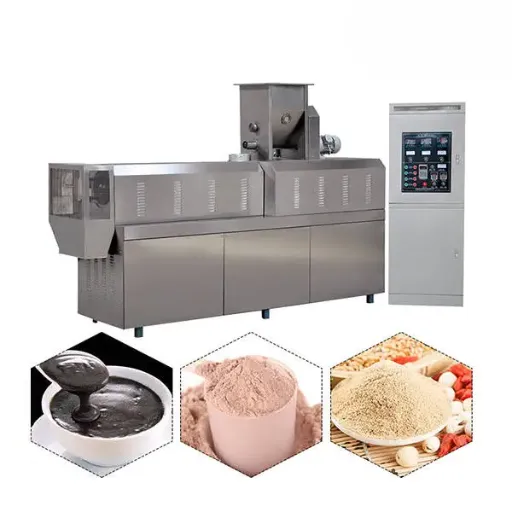
Nutritional Powder Production: Baby Rice Powder & Health Supplements

The world needs easy-to-use food products which deliver health benefits while maintaining high standards of taste and quality, which has resulted in major development work for producing nutritional powders. The product range includes baby rice powder and health supplements which serve as fundamental commodities for people who range from infants to adults. This blog post shows the interesting world of nutritional powders by showing their production methods, main advantages, and increasing presence in contemporary dietary practices. The article demonstrates new methods for product development which create better nutritional solutions for babies and health products that people use to improve their daily well-being.
Introduction to Nutritional Powder Production
Defining Nutritional Powders
Nutritional powders are designed products which deliver essential nutrients through their powdered form which contains vitamins and minerals and proteins and other bioactive substances. The products are developed to meet multiple dietary requirements which range from promoting general health to helping people achieve their muscle development and immune system improvement and digestive health goals. The two production methods of the powders involve using plant and dairy and algae sources and developing specific nutrient combinations through synthesis.
The nutritional powders market reached a value of approximately $12.4 billion in 2022 according to current data and it will expand at a compound annual growth rate of 8.5 percent between 2023 and 2030. The expansion is driven by two factors which consist of increasing demand for health-oriented consumer products and rising consumer awareness about health prevention strategies. The three main product types which include protein powders and meal replacements and greens powders serve distinct health needs of consumers.
Importance in the Food Production Sector
Nutritional powders serve an essential function in food production because they offer easy-to-use products which maintain their quality for extended periods while satisfying various dietary requirements. The global nutritional powder market will reach a value of USD 54.9 billion by 2028 according to recent market research which shows the market will grow at a compound annual growth rate of 6.7% from 2023 to 2028. The growth of the market is driven by two factors which include rising health awareness among consumers and increasing demand for functional foods and emerging food processing technologies.
The food production sector relies on nutritional powders to create products that are not only convenient for consumers but also aligned with modern dietary trends. People now prefer sustainable diets that focus on plant-based foods which explains the rising popularity of plant-based protein powders. Advanced manufacturing techniques enable producers to preserve their nutrients through microencapsulation which creates products that provide health benefits.
Core Components of Nutritional Powder Processing
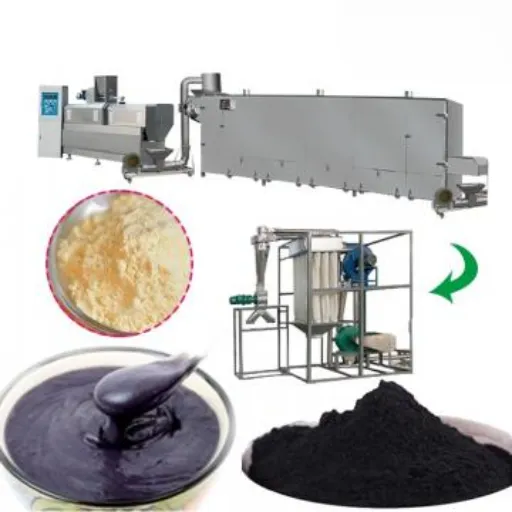
Essential Machinery Overview
Raw Material Mixer
The production line starts with the raw material mixer. The mixer combines different types of materials to achieve equal nutrient distribution throughout the entire batch. The modern mixers can process 1000 kilograms of raw materials every hour while their automated systems deliver accurate measurements of all components.
Hammer Mill or Pulverizer
The machine transforms raw materials into tiny particles which constitute a vital element for reaching the required powder consistency. The newest hammer mills utilize cutting-edge technology which enables their fine sieves to create particles that reach 50 microns in size which fulfill the requirements for premium nutritional powder manufacturing.
Dryer (Spray Dryer)
Spray dryers function as the primary equipment that transforms liquids and slurries into solid powder materials. The advanced systems achieve evaporation rates that reach 200 kilograms per hour which allows for quick processing without damaging the nutrients.
Blending Machine
The blending machine creates equal distribution of powdered materials which results in a product that maintains consistent quality after the drying process. The high-capacity blenders offer a maximum capacity of 500 kilograms per batch which allows users to select their preferred mixing duration and operational speed.
Automated systems package nutritional powders through their ability to process multiple packaging options including pouches and cans and sachets. The current packaging machines operate at a speed of 120 units per minute while they maintain airtight seals which protect product freshness and increase shelf life.
Quality Control Systems
The production line uses advanced technology that combines metal detectors with sieves and particle size analyzers to verify whether the final product meets established safety and quality requirements. The current systems provide users with real-time monitoring tools that enable them to identify system anomalies as they happen.
Mixing and Blending Techniques
The process of mixing and blending forms an essential part of nutritional powder production because it guarantees that all components distribute evenly to produce products with stable quality. The advanced techniques utilize high-performance mixers which include ribbon blenders and paddle mixers and fluidized bed mixers to handle different types of powder materials. The ribbon blenders work best with free-flowing powders while the paddle mixers provide a gentle mixing method that suits delicate materials better.
The modern blending equipment uses control systems that provide accurate precision which allows manufacturers to adjust their operational parameters for mixing speed and duration and weight capacity. The implementation of programmable logic controllers has resulted in a 25% efficiency increase for mixers according to recent research. This improvement leads to faster output and lower energy requirements. The industry now uses vacuum mixing technology more frequently because it ensures complete air removal which results in thicker and more consistent mixtures.
The effective control of particle size distribution through blending operations becomes essential because nutritional powder solubility and effectiveness change with different particle sizes. The industry now uses automated systems which have in-line particle size measurement sensors to guarantee product quality at every stage of production.
Key Considerations in Powder Production Lines
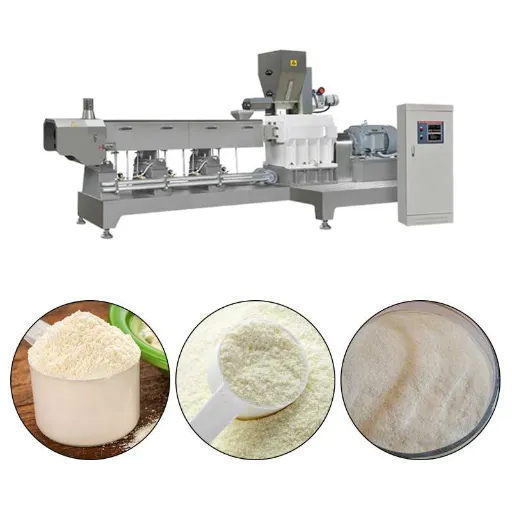
Hygiene Standards: GMP and HACCP Compliance
Good Manufacturing Practices (GMP) mandate businesses to control their manufacturing processes through their rules about equipment upkeep and employee education and facility sanitation. The current research shows that GMP implementation reduces contamination risks by 65% while assuring nutritional powders maintain their required regulatory standards. The essential elements of GMP compliance include regular audits and substantial documentation which enable manufacturers to maintain compliance with industry standards.
HACCP provides an organized method to find and assess and manage all potential dangers throughout the entire production operation. HACCP implementation allows manufacturers to take control over all biological and chemical and physical safety threats. According to industry reports, over 80% of food and nutritional powder companies emphasize HACCP as part of their operational protocols, citing improved process monitoring and product safety.
Automation Levels in Nutritional Powder Making
Nutritional powder production now operates at a completely different level because automated systems produce higher efficiency results while sustaining product quality requirements. The industry uses two operational modes which include semi-automated systems and completely automated production systems, which manufacturers select based on their specific requirements. Advanced process control systems now enable real-time monitoring and automatic adjustment of mixing and drying and packaging operations, which achieve accuracy rates of 0.1% for measuring ingredient proportions.
Robotic systems in modern nutritional powder factories execute precise operations which involve dispensing ingredients and packaging products that permit companies to reduce their workforce expenses by 30%. Research shows that fully automated production systems enable businesses to achieve 25% higher efficiency when compared to traditional work methods while reducing contamination threats. Automated cleaning-in-place (CIP) systems maintain hygiene standards throughout operations, which leads to a 20-40% reduction in maintenance downtime.
The recent technological progress brings forth fresh findings which demonstrate how big data analytics and IoT (Internet of Things) technology impact powder manufacturing processes. IoT-enabled devices create operational insights by tracking essential data such as temperature and humidity and particulate levels throughout the production process. Case studies reveal that factories using IoT monitoring systems experienced a 15% decrease in energy use and a 12% boost in production capacity during their first operational year.
Operational Efficiency in Nutritional Powder Processing
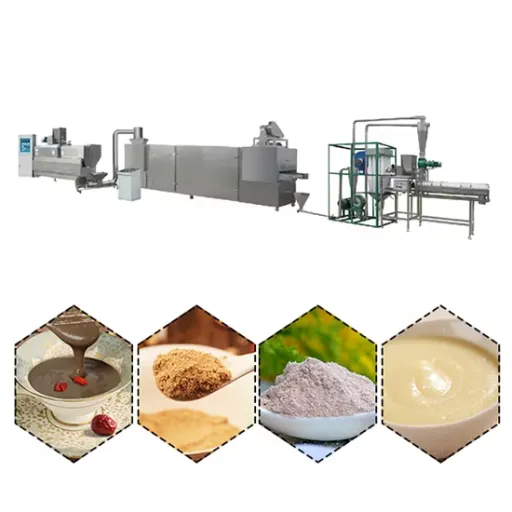
Maximizing Throughput in Production Lines
The production process for nutritional powder reaches its highest operational output through the adoption of production line technologies which generate substantial manufacturing output. The primary approach to achieving this goal involves using automated systems that include high-speed filling machines and robotic palletizers to decrease both operational downtime and the need for workers. The latest industry research shows that businesses which adopted automated systems achieved production increases of up to 25 percent while some companies reached production rates beyond 200 bags per minute.
The process of line balancing functions as a fundamental term which helps organizations to identify operational bottlenecks and solve them through resource redistribution and equipment setting modifications. Advanced conveyor systems equipped with IoT sensors enable businesses to monitor material movements through their production process which optimizes operations and eliminates production delays. A research study conducted by McKinsey & Company demonstrated that factories using predictive maintenance systems achieved a 30-40 percent reduction in unplanned downtimes which resulted in increased production capacity.
Nutritional Powder Manufacturing Return on Investment Strategies
The Automation and Technology Investment
The operation of automated machines together with AI systems results in reduced labor costs while creating consistent production results. The combination of industrial robots for packaging operations with packaging automation through industrial robots creates an operational cost decrease of 20 percent while increasing throughput between 15 percent and 30 percent. Production facilities utilize IoT sensors to enable real-time equipment performance monitoring which helps businesses decrease equipment failure downtime.
Streamlining Supply Chain Management Processes
The implementation of a streamlined supply chain system enables businesses to achieve cost reductions while ensuring their raw material deliveries occur on schedule. Manufacturers who utilize predictive analytics for inventory management can achieve active stock control which results in a 10-15 percent decrease of storage expenses. Local supplier partnerships enable businesses to achieve cost savings while implementing environmentally sustainable practices.
Sustainable Energy Efficiency Programs
Organizations achieve their environmental targets through the adoption of solar panels and energy-efficient HVAC systems which also provide ongoing financial advantages throughout their operational lifespan. Factories that operate their facilities with renewable energy sources experience utility expenditures that decrease by 25 percent which has a direct effect on their financial return on investment.
Production Capacity Expansion Through Market Demand
Manufacturers can utilize modular production lines to fulfill their manufacturing needs which will change according to market demands. Flexible production systems enable companies to boost their output capacity by 40 percent during plant-based protein powder demand surges which decreases their product delivery time and increases their financial success.
Future Trends in Nutritional Powder Manufacturing
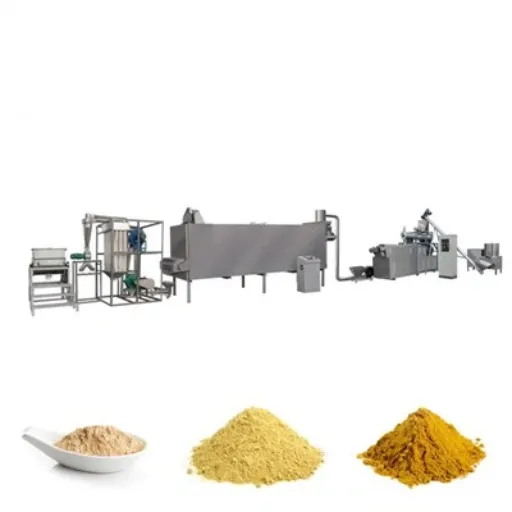
Emerging Technologies in Powder Processing
New powder processing technologies which boost operational efficiency and enhance product performance and environmental sustainability are transforming the food production and pharmaceutical development and cosmetic manufacturing and their respective sectors. The development of spray drying and freeze drying and fluidized bed processing techniques has progressed to a level where they can now better preserve essential nutrients and active bioactive substances. The worldwide spray drying market will experience growth from 2023 to 2030 with a compound annual growth rate (CAGR) of approximately 7.5% because consumers increasingly prefer convenient powdered products that maintain their quality during storage.
Nanotechnology application in powder processing represents a groundbreaking development. This technology produces ultra-fine powders which manufacturers can control to create specific particle sizes that solve multiple fields through enhanced product performance and increased solubility and bioavailability. Pharmaceutical companies use nanotechnology to develop powders that can deliver medications at specific times while increasing the effectiveness of treatments.
Powder processing facilities now operate through automated systems which combine artificial intelligence technology with existing production methods. The new technologies use real-time monitoring to manage production processes by tracking three important factors which includes temperature and moisture and particle size thus achieving a major reduction in operational waste and power usage. The development of 3D printing technology for powder materials enables manufacturers to produce personalized nutritional supplements and tailored pharmaceutical products.
Sustainability in Nutritional Powder Production
Nutritional powder production now prioritizes sustainable practices because consumers demand environmentally friendly products while companies seek to address environmental problems. The current field innovations focus on manufacturing operations that decrease carbon emissions through waste reduction and the use of renewable power sources. The USDA estimates that the global food industry produces between 21 and 37 percent of greenhouse gas emissions which demonstrates the need for sustainable powder production methods that help combat climate change.
Energy-saving drying methods which include spray drying and vacuum belt drying represent the primary technological development because they operate with lower energy needs than traditional drying methods. The current market demand for plastic waste reduction has pushed companies to adopt bio-based and recyclable packaging solutions for their products.
The major companies in an industry now practice circular economy operations by transforming their production waste into new usable materials. Whey protein manufacturers develop innovative methods to transform agricultural waste into valuable nutritional products. The global whey protein market which reached a valuation of $9.19 billion in 2022 will experience substantial growth because sustainable business practices drive market expansion according to recent market research.
Reference Sources
- IMARC Group’s Report on Nutritional Powder Manufacturing Plant
This report offers comprehensive insights into the business plan, setup, cost, and requirements for establishing a nutritional powder manufacturing plant.
Read more here - Nutritious Instant Powder Production by Extrusion
This research highlights innovative approaches to producing nutritious instant powders using whole oat flour and broken rice flour, providing insights into production techniques and feasibility.
Read more here - Powdered Foods: Structure, Processing, and Challenges
A comprehensive review on the powdered food manufacturing process, its advantages, and challenges, offering valuable context for nutritional powder production.
Read more here
Frequently Asked Questions (FAQs)
What is a powder process line for nutritional powder production line?
The powder process line serves as an integrated system which produces nutritional powder through its complete range of equipment that performs the functions of cleaning and grinding and mixing and extrusion (or dry blending) and drying and sieving and packaging. The production system operates with standard equipment which includes nutritional powder making machines and food extruders and powder machines and sterilization units. The production line uses food-grade stainless steel and high-efficiency designs and cleaning system features which guarantee food safety and product stability.
How does a baby food production line handle baby rice and baby rice powder?
The baby food production lines which process baby rice and baby rice powder employ specialized rice powder processing steps which include cleaning and milling or extrusion to create baby rice powder and high temperature and pressure sterilization or aseptic drying and packaging. The line includes a nutrition powder machine and rice flour grinders and processing machinery which helps enhance digestibility while meeting infant formula quality food standards. The system provides changeover options which enable users to switch between baby cereal and rice powder and other grain products.
Can a nutritional powder making machine produce different product categories like cereal processing and grain products?
The answer to that question is yes. The modern nutritional powder making machines together with their processing machines possess multifunctional capabilities because they can use extrusion or mixing to process multiple types of flour including corn flour and wheat flour and buckwheat and rice flour and sesame paste bases and other grain flours which produce cereal processing items and snack food and grain products. The OEM configurations and modular production line use flexible design systems which enable fast product changes while producing multiple product types and meeting all product specifications and maintaining high operational efficiency.
What are the main rice powder processing methods used in a food production line?
Rice powder processing commonly uses wet milling and dry milling and extrusion. The extrusion process uses a food extruder or the extrude process to enhance digestibility while producing instant powder products. The post-processing phase involves drying and sieving and sterilization. The production system incorporates powder handling systems together with cleaning systems and food-grade stainless steel equipment to achieve food safety and quality food certifications.
How do powder machine nutritional systems ensure food safety and product stability for baby cereal?
The powder machine nutritional systems practically establish food safety through their usage of food-grade stainless steel materials and their employment of closed conveying systems and HEPA filters and their application of high temperature and pressure sterilization methods which comply with all necessary validation standards and their documented cleaning protocols. The process controls and traceable production equipment together with validated sterilization steps create product stability which fulfills all requirements for infant formula and baby cereal products. Quality control procedures include testing for microbial presence and controlling moisture levels and inspecting the integrity of packaging.