

Protein Bar Extrusion Tech: Achieving the Perfect Texture

One factor in creating texture in the expanding field of protein bars is a peculiar blend of chemistry and craft. It is the extrusion process that ensures the quality of a bar from structure to fulfilment. The chapter could therefore be described as the gory details of protein bar extrusion technology aimed at explaining the meticulous control of several factors, such as pressure, heat, and ingredients, in order to produce a product of better mouthfeel and consistency. For any persons interested in food science, product development, or working within the industry, looking for a detailed discussion on its application to protein bars manufacture in terms of standards, even practical measures will be covered in this paper. Even quite interesting – several techniques related to this application will go through an explosives process where the types of results reached add not only usability but also elegance to the products: for instructional purposes or even customer appreciation.
Introduction to Protein Bar Production
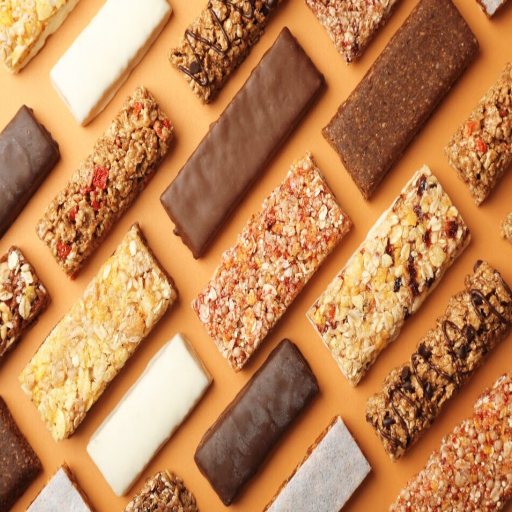
Precision and creative strategies are used to make highly nutritious protein bars – this helps apply high-grade technology in manufacturing. In practice, this calls for utilizing and choosing only the best and appropriate protein sources, such as whey and soy proteins, combined with and amalgamated with extra components as sweeteners or stabilizers and flavors, which are meant to facilitate the end product to have a particular aroma and texture. Critical stages are as follows: mixing, extruding, molding, and packing shall follow in the right sequence. All the stages shall be done precisely and in an orderly manner so as not to create any distortions in how the product should be in terms of taste, nutrition, and longevity. Technology and quality systems are the aspects that determine the extent to which the highest production levels are achieved.
The Importance of Extrusion Technology
The present-day manufacturing, without a doubt, is heavily driven by extrusion technology thanks to its enhanced performance, precise control, and high adaptability to the use of such methods in industries including food processing, plastic, pharmaceutics, and many others. Using this method, a material is pushed out through specialized dyes to manufacture products with desired geometries and characteristics. As mentioned, these most appealing assets are the mildness of the processed products, ease of scale-up, and the predictable capability to process multiple additives/ raw materials in a single unit operation. For instance, in the case of protein food, there is a way to apply extrusion in order to achieve restructuring of the food matrix involving heat, pressure, and shear forces, providing several products like protein bar extruder line, snacks, and augmentation of elements and other similar products.
The development of technology in the field of extrusion systems has contributed to a few more improvements in energy savings, waste elimination, and optimization of process control. With precision engineering and computers, intricate shapes and designs are now possible, depending on the needs, hence fulfilling the client’s wishes. Also, extrusion technology is vital for the safety and stability of products by providing controlled processing conditions that help safeguard the nutritional contents and quality of a product from batch to batch. This flexibility and dependability in operation, this extrusion functions as a base technology in today’s manufacturing world of today.
💡
Energy Savings
Advanced systems reduce power consumption while maintaining output quality.
♻️
Waste Elimination
Precise controls minimize material loss throughout the entire process.
🎯
Process Control
Real-time optimization ensures batch-to-batch consistency and product safety.
📐
Shape Versatility
Precision engineering enables intricate designs to fulfill client specifications.
Target Audience: Food Manufacturing Executives
Every year, extrusion technology sees certain developments as well. In order to ensure efficiency, flexibility, and effective production, there is a need to embrace developments in extrusion technologies. In this industry, there is a vague idea of the state of extrusion in such a sense that it could be perceived as being highly mechanized with little human interference; however, the dilution, agitation, and temperature control have been exaggerated. These developments help to optimize the use of materials and reduce the energy consumption of production processes. These changes bring positive effects on the environment, which is in many cases at the forefront of the action taken in the food industry, since it is in most cases looked into.
Furthermore, it is opined that the use of devices with two screws in extrusion activities has become more prominent. These machines allow manufacturers to use any chemical and flavoring agent combinations. They are also employed where there is more than one component, including a filling and a shell, or in the case of a protein bar extruder line, to develop a certain snack that is healthy.
Further, by enhanced condition and processing development in die design, which enhances texture and shape uniformity, it receives a positive response from consumers. Numerous interventions, such as better hygiene systems and component structures, minimize the time taken while switching products due to production demands. Such strategies as discussed in the present day are making it evident why extrusion serves as the core technology for many food manufacturers.
Scaling Production for Protein Bars
Rising protein bar production is characterized by a number of critical determinants, such as the level of ingredient consistency, ease of manufacturing, and standard goods that help to do this. In order to counter this, specific strategies are developed, such as the incorporation of semi-automated mixing and dispensing machines to enhance unification while cutting down variation. Equipment that cuts and/or shapes accurately is used to control the portion sizes to the extent that the produced product fulfills the market and legal requirements of the acceptable size of bars.
The content of these ingredients is also very essential. There is a need to have enough protein bars retained within the mixture; hence, moisture content as well as binders should be available to afford greater processing efficiency as well as extended storage. Using designs of machines that are efficient in capacity and utilization, as well as designing flexible equipment, allows the producer to meet the changes in consumer habits quickly while maintaining the speed and standards produced.
Last on the list is investing in good food safety procedures like quality assurance systems and real-time checks during production. Such systems help prevent cross-contamination and provide the needed safety standards in production. When employed, these processes allow manufacturers to quickly expand and, at the same time, maintain the integrity of their product and the trust of the consumers.
Technical Overview of the Protein Bar Extruder
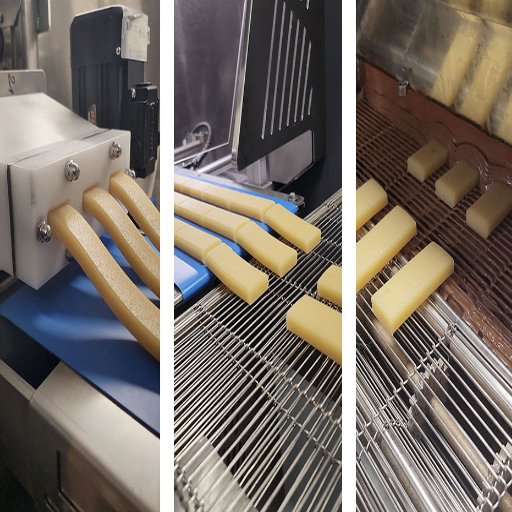
A protein bar extruder is a piece of machinery designed to make protein bars by making sure they keep their shape, size, and composition. This is done by formulating ingredients and forcing them through a die for the product to come out in a specific size and shape. The major parts include:
- 🔩 Hopper and Feeder System
Provides a secure and even consistent flow of the protein bar paste into the producer, reducing the variance in the materials.
- 🔄 Extrusion Screw
Moves the ingredients towards the exit, applying controlled force and improving circulation, as well as retaining the shape of the product.
- 🔷 Shaping Die
A die forms the mixture ingested, translating the sizes and shapes of protein bars to the constrained specs of the customer.
- ✂️ Cutting Mechanism
Cuts the already extruded material at set intervals, so as to offer accurate portions.
The design of this extruder increases the efficiency of the production process, improves the output of the process product, and reduces the percentage of waste. In addition, it helps in many ratios by allowing various textures to be produced and blended with other ingredients as per the needs of the customers.
Mixing Ingredients for Optimal Texture
Mixing and blending of dry and liquid components is particularly important when a stable texture of a product needs to be achieved. Annotation of the assemblage is requisite insofar as it provides for even continuity of the end-product and assembly of the ingredients. Blending is not only mixing, but one needs to think of such aspects as the size of particles blended, how fast they get wet, and temperature. The use of high shear mixers, ribbon blenders, or continuous mixing systems helps in the even incorporation of ingredients; for instance formation of lumps and the relief of uneven textures is quite a variant. Remote restriction, such as speed, blending time, and temperature, helps to avoid overmixing and heat-sensitive substances. When adjusting said factors for specific culinary purposes, it becomes possible to make products that have the required texture. Effective mixing also helps to increase productivity and reduce unnecessary losses in the process, thereby achieving better results in production.
The Extrusion Process Explained
It’s a well-established, very precise, and continuous process called an extrusion that plays a significant role in sectors such as food, plastic, and many other industries. Extrusion is a straightforward practice that involves using dies for the force working of materials to get products with consistent cross-sections. The process is normally broken down into three key parts, each with its purpose: feeding, melting, and shaping. The raw materials are filled in a hopper, working together with the progressive screw, which rotates inside the heated cylinder, causing the material to melt or soften. When the desired temperature and consistency of the material in question are achieved, it is forced using the die to obtain specific shapes.
Adjusting the speed of the screw, temperature of the barrel, the pressure applied, and the design of the die are the basic factors of extrusion, which should control the quality of the end product. In food processing, for instance, they determine parameters such as texture, moistness, and collapsing, whereas in plastic extrusion, they shape the properties such as rigidity, flexibility, and the overall dimensions. These factors are often controlled in real time using modern automation and sensor technology to keep errors at bay and achieve uniformity.
Extrusion is a highly efficient process due to the number of its possible applications. Typical applications of the extrusion process include, but are not limited to: high-precision fabrication of shapes in pasta and snack foods, to shaped and sized films and plastics, to synthetic polymer materials preparations, and up to pipes.
Three Key Phases of Extrusion
- 1
FeedingRaw materials are filled in a hopper and transported via the progressive screw into the heated cylinder.
- 2
Melting / SofteningThe rotating screw inside the heated cylinder causes the material to melt or soften to the desired temperature and consistency.
- 3
ShapingThe conditioned material is forced through the die under pressure to obtain specific, consistent shapes and cross-sections.
Cutting and Cooling Techniques
Of crucial importance in the flow of extrusion are the cutting and the cooling phases, as they determine the quality of the end product and how efficient the process is. Cutting is essentially the selective division of the extruded products or materials into pieces of specific length or shape with the help of different tools for precise cutting, for instance, rotary cutters, guillotine knives, or water-jet cutters. The decision of which cutting method to employ is influenced by a number of factors that include source material, desired product shape, and speed of production.
With each of these options, there is a period of necessary cooling directly after extrusion to aid this process and prevent the items from losing their design. Common methods of cooling are air screen and water bath cooling, and spraying, all of which are used to treat different materials and processes. For example, heat management in water-based processes is relatively quicker, while in other cases, when moist conditions are to be avoided, air cooling processes are used. Present-day extrusion machines use better cooling methods with analytics and closed-loop controls incorporated for optimum temperatures, increased speeds, and better precision. All these practices assist in the provision of products that meet the set quality standards in many industrial fields.
Key Considerations for Protein Bar Production
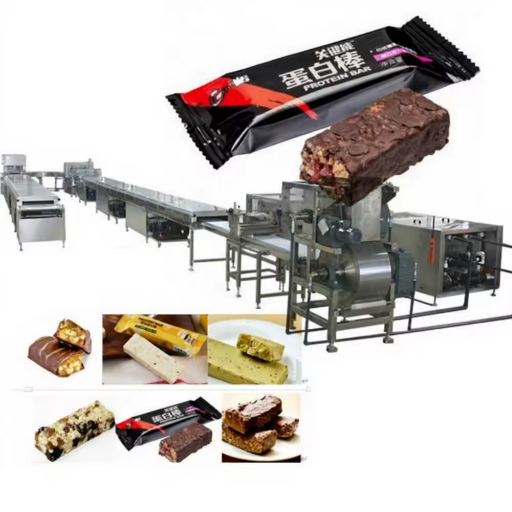
- 🥩 Ingredient Selection
Opt for good-quality protein components like whey, soy, or plant-based proteins, which are targeted in nutrition and market standards. Components should be functionally applicable by means of taste, texture, and even storage stability as well.
- ⚖️ Formulation Consistency
It is necessary to be consistent in mixing the components; quality and nutritional labelling may not be precise. This relates to accurate proportions of macro components, binders, and sweeteners.
- 💧 Moisture and Texture Control
The key step to be taken while manufacturing a protein bar is the control of moisture content to ensure a proper texture as well as storage stability. This is because excess moisture will encourage microbial activity, whereas lower moisture levels will result in too dry and hard bars.
- ⚙️ Processing Efficiency
This includes adjusting the mix ratio, cooling times, and temperatures in order to prepare the appropriate size and shape of the bars and also maintain their structural integrity. The use of effective machinery, as well as modes that help to reduce production time and waste, is also encouraged. Although for a convection oven and a protein bar extruder line, for instance, the time interval for different steps of operations might differ.
- 🗓️ Shelf Life Enhancement
Suitable preservatives and packaging solutions should be incorporated into the bars to protect them from drying out due to exposure to air, light, and moisture. This storage method prolongs the product’s shelf life.
- 📋 Regulatory Requirements
Protein bars are required to comply with the food safety as well as labeling requirements set by regulatory authorities in order to protect consumers and provide market access to the product. In order to ensure that standards are met, it is critical to stringently conduct quality assurance checks.
Output Capacity and Production Line Efficiency
The output capacity and production efficiency are the main determinants in the production of protein bars. Working on them means the use of technology, led labor, and optimized processes, but at an optimum level. To achieve high efficiency in production, most lines use machines that mix, shape, and sometimes pack products, thus eliminating or minimizing manual labor, as well as differences. Moreover, the use of lean methods is often prescribed for waste minimization, reduction of idle time, or improvement of production rates.
In order to prevent unexpected breakdowns, it is crucial to apply predictive maintenance, which is also relevant to productivity optimization by tracking performance and identifying any weak spots, as well as enhancing operator skills. Modern surveillance facilities with IoT-connected machine sensors are able to give correct information on the situation and when such information needs to be checked and balanced. Harnessing the full power of cutting-edge technologies, manufacturers are also able to significantly increase production output even for a given protein bar extruder line while keeping the quality steady.
Viscosity Handling in Bar Making Machines
Ensuring a uniform spread across all bars and avoiding problems with particles settling can be a function achieved by advanced bar machines, provided that viscosity is properly controlled. Controlling viscosity, in this case, implies containing the fluid parameters most required for effective mixing, shaping, and cooling processes. More specifically, this is achievable by using sophisticated inline viscometers that help all the items focus on blending in one basket which means control and monitor viscosity levels in the delivery of ingredients applied. Moreover, factor control over temperature is equally critical, as viscosity is a function of temperature. Using systems for automatic regulation within acceptable limits is useful in compensation for upsetting and keeping the material at the required viscosity level. Such systems do not allow excessive waste; on the contrary, they allow developing the process and even the product, so they can be ignored only at the expense of effectiveness in production.
💡 Viscosity Control Best Practices
- Use inline viscometers for real-time monitoring during ingredient delivery
- Implement temperature-linked automatic regulation systems
- Maintain acceptable viscosity limits to prevent material waste
- Apply closed-loop controls to compensate for process fluctuations
Adhering to Hygiene Standards in Food Manufacturing
Proper hygiene and cleanliness are necessary in food processing industries in order to avoid any form of contamination and to keep the product at its best. In order to ensure health and safety while manufacturing, one should include some basic hygiene standards, such as mandatory hand washing and wearing of personal protective equipment (PPE), such as hair restraints, gloves, and masks. Other than that, Cleaning and sanitation of the production areas and equipment after a certain period using only the recommended cleaning materials by the FDA is a must.
One issue that must be controlled is the prevention of cross-contamination, by isolating zones for preparation of the raw food and the processed food, and by using color-coded instruments. Other points which should be emphasized are environmental conditions, i.e., air and water; systems which are capable of filtering and sterilizing the air and water help rectify this situation. Furthermore, transport, the implementation of internationally managed systems such as the HACCP standard, ensures the strengthening of measures to prevent the occurrence of cases, especially as concerns the health of members of the public and the regulations with regard to food safety.
✅ Hygiene Compliance Checklist
- ✔ Mandatory hand washing protocols enforced at all entry points
- ✔ Full PPE worn — hair restraints, gloves, masks at all times
- ✔ FDA-approved cleaning materials used on schedule
- ✔ Isolated preparation zones for raw vs. processed food
- ✔ Color-coded instruments to prevent cross-contamination
- ✔ Air and water filtration and sterilization systems in place
- ✔ HACCP compliance implemented and actively monitored
Automation Levels in Protein Bar Machines
Nowadays, protein bar extruder line machines come with diverse levels of automation. This is because there are semi-automated and fully automated protein bar machines. Semi-automated protein bar machines still need manual operation, like ingredient feeding and setup, whereas fully automated machines deal with the production from mixing through forming, cutting, and packaging. Fully automated mode incorporation of high-tech sensors and programmable logic controllers (PLCs) is a common practice due to the assurance they enforce of accurate measurement, adherence to product dimensions, and maintenance of quality.
It is possible to alter efficiency, achieve scalability, or reduce costs by introducing different levels of automation. For example, fully automated systems are suited for mass production, due to a reduction in labor cost, minimum human intervention, error-free production, and high productivity. Some upgraded models can also have tools for remote control with diagnostic abilities that will enable quick resolution of faults without compromising operation time. It is therefore essential to determine the level of automation to be used based on the amount of production, the customization to be achieved, and the costs available.
ROI & Efficiency of Modern Extruder Lines
Contemporary extruder solutions deliver a great deal of investment recovery and production potential because of the accuracy and economy of such systems. More automation means less expense in terms of people performing work and improved utilization with maximum output in the least possible time. What’s more, the new generation of devices enhances the economization of materials; raw materials are used at a higher ratio. Such systems consume less energy, thereby cutting down on costs. To those industries where maintaining high levels of productivity and quality is paramount, today’s extruders are a worthwhile investment as they pay for themselves quite fast as long as the required production levels are maintained.
💰
Reduced Labor Costs
🌿
Energy Savings
📈
Higher Material Utilization
⚡
Maximum Output Speed
Improving Production Speed
Advancement in the system of production while maintaining or overcoming the present speed of production involves the adoption of elaborate technologies, work process optimization, and utilization of data to make adjustments. Important strategies include the introduction of automation technology’s components, especially biodynamic robotics, and applications such as an intelligent scheduling system, which work towards curtailing monotony and process waste. Further, the use of advanced analytical tools that can process production data helps reveal gear up and operating improvement possibilities. Ensuring that the tools are well-maintained has a high level of utilization, which reduces speed losses and assists them in optimizing their operations in terms of productivity. More importantly, the application of stringent quality control systems, specifically the use of zero stock systems, enhances the operation flow considerably with lesser waiting times. These methods, when used together, will increase the speed of production without degrading the goodness or raising the cost of operations.
- 1
Biodynamic Robotics & Intelligent Scheduling — Curtail monotony and process waste through automation components - 2
Advanced Analytical Tools — Process production data to reveal improvement possibilities in operations - 3
Proactive Tool Maintenance — High utilization reduces speed losses and optimizes operational productivity - 4
Zero Stock Quality Control Systems — Enhance operation flow considerably with lesser waiting times
Reducing Waste in Protein Bar Manufacturing
Managing resources, improving efficiencies, and keeping quality in the production of mainstream goods and services, such as protein bars, will need a multi-pronged approach. Off-the-shelf measures are useful in reducing waste at the various stages of production. They involve limiting the shortfall in raw material use through strict adherence to portion control standards within the production process and using formulas that do not vary from batch to batch. Making investments in machinery that has such features cuts losses in materials, and the lowest loss levels are guaranteed with the proper maintenance of the machinery.
Raw materials usage is optimized more if processes are redefined to transform defective products into other products, like granola and protein clusters. For effective raw material rotation and spoilage reduction, first-in-first-out (FIFO) inventory management systems are recommended. Moreover, the use of environmentally safe packing materials that are made to curtail the use of unnecessary components also helps in sustainability and saves on disposal charges.
Such data-driven solutions available from process control systems enable manufacturers to come up with strategic actions at the points of inefficiency, which cause loss. All these measures together not only help with waste problems but also make the process of protein bar production more sustainable as well as profitable.
Analyzing Cost-Effectiveness
When building up a protein bar extruder line, it is important to achieve a perfect balance between cost and alternative methods of doing the same thing. One should focus attention on the source of the ingredients, and engaging low-cost and at the same time high-quality ingredients can help cut down the costs of manufacturing without affecting the quality of the final product. Sustainable packaging, which includes smart designs like the use of biodegradable or lightweight materials, may reduce transportation costs and still be in line with the industry’s sustainable development. Using energy-saving manufacturing equipment is another option that leads to operational cost savings as the equipment consumes less energy. Moreover, the use of advanced predictive maintenance through analytics minimizes downtimes, thus increasing productivity. Cost impact factors should help bring such practices into balance in order to make manufacturing operations for the existing conditions particularly lucrative and productive; moreover, such conditions of saturation in the market.
Selecting the Right Extrusion Equipment

Choosing appropriate extrusion machinery consists of highly evaluated target performance parameters. The following considerations are key to making the right selection:
- 1
Material Type & Processing DemandsFirstly, determine the types of material used and the specific demands of their processing, for example, temperature resistance or required viscosity.
- 2
Production Volume RequirementsAssess the production volume requirements needed so that the equipment is able to handle the projected demand without a decline in production quality.
- 3
Energy EfficiencyConsider the energy efficiency of the equipment because it lowers the cost of production and makes the process more sustainable.
- 4
Control System CompatibilityFocus on the compatibility of the machine with sophisticated control units for precision and better process control.
- 5
Maintenance Schedules & ReliabilityExamine the maintenance schedules of the equipment against the backdrop of reliability assurance, ensuring prolonged productive operation without unplanned breakdowns.
Maintaining a Competitive Edge in the Health Food Market
If you don’t want to miss out on trends and opportunities, you have to note that the health-conscious consumer market is always evolving. So, to manufacture high-quality products, make sure that the trends of consumers’ health are attended to. The inclusion of foods rich in nutrients as well as those that are functional to human physiology, such as those for gastrointestinal health, immunosupport, or energy stimulation, is the way to go. Organic claims baffle nobody anymore: use clear labels. Organic non-GMO sustainably sourced certified foods; these terms offer some comfort if done right and properly explained.
Use modern tools like AI and data analytics, aimed at monitoring consumer behaviors and anticipating changes in the markets, so that your portfolio does not become obsolete. Proper digital advertising to present the brand, which should include stimulating content and usage of bloggers, as well as effective social media management, to decrease the masses’ activities towards the produced goods. Also, supply chains should be designed in a way that cost reduction is achieved, while maintaining the quality of the product, thereby achieving sustained sales and profit in the long term. Hence, in a competitive health food market, growth can only be ensured by evaluating competitive dynamics in health foods with less R&D, and paying attention to the consumers’ beliefs.
🥗
Functional Nutrition
Gastrointestinal health, immunosupport, energy stimulation — lead with function.
🏷️
Transparent Labeling
Organic, non-GMO, sustainably sourced — clear labels build consumer trust.
🤖
AI & Data Analytics
Monitor consumer behaviors and anticipate market changes proactively.
📱
Digital Marketing
Stimulating content, influencer engagement, and social media management.
Final Thoughts on Protein Bar Production Lines
In summary, the efficiency and profitability of a protein bar extruder line, in my opinion, have everything to do with precision and flexibility. Achieving consistent excellence in production becomes feasible when the operations are built around sophisticated machines, strict quality assurance, and continuous product development based on consumers’ evolution and trends. Lastly, consumer loyalty and profitable growth are also encouraged through performing marketing and supply development appropriately within the business.
Future Trends in Extrusion Technology
The rise of extrusion technology will be heavily reliant on areas such as automation, sustainability, and materials evolution. Automation backed by artificial intelligence and learning methods renders it possible to carry out extrusion operations correctly by changing the process parameters, controls, and constraints, and results in effective saving of time with respect to nonproductive operations, and assures the consistency of the end product. Due to sustainability, the use of biodegradable as well as recyclable materials is on the rise with an aim of protecting the environment while observing the laws and regulations. Also, development of new engineering structures, such as improved dies and efficient cooling systems are reducing output waste and improving energy efficiency levels. Furthermore, the adoption of technologies specifically related to the Industry 4.0 concept, such as equipment equipped with Internet of Things (IoT) machinery, is increasingly propelling the way to process improvement and speculating about the machines that are used in the extrusion technology, penetrating other sectors for enhanced industrial capability.
🍫 Building the Future of Protein Bar Manufacturing
From the chemistry of extrusion to the precision of automation, successful protein bar production requires mastery of technology, compliance, and consumer insight. By integrating advanced extruder lines, rigorous quality assurance, and data-driven efficiency strategies, manufacturers are well-positioned to thrive in today’s competitive health food market — and tomorrow’s.
Reference Sources
Use of Microcalorimetry to Evaluate Hardening Reactions in Protein Bars During Accelerated Storage
This paper examines factors affecting the quality and storage of protein bars, offering valuable insights for production.
This study investigates extrusion conditions and plant protein recipes, offering valuable insights into the textural outcomes of extruded products.
This research includes insights into extrusion processes and monitoring systems, applicable to protein bar production lines.
Frequently Asked Questions (FAQs)
Can you describe ‘a protein bar extruder machine’ and explain how it works as a part of the production of energy bars?
A Constant Bar Extrusion Unit to make protein-based bars is one where a certain form of dough (the material used to make the bar) is mixed, heated (where necessary), extruded through a nozzle, and cut into pieces, which are then cooled. In an energy bar production line, it is put in a position before the bar forming machine or extruder, cutter, and cooling systems, the bar cutters, and eventually the protein bar packers. These modern fully automatic systems, however, offer size and weight controls in the form of servos and also nutrient, granola, or cereal extruder machines as part of the construction.
How does a protein bar extruder line facilitate the making of fruit and date bars?
The production lines of the extruders in the bar industry, which manufacture fruit or date bars, mostly involve various kinds of open-end nozzles, date bar co-extrusion or stuffing machines, and enrober machines used for the incorporation of the core. The pressure and configuration for the extruder are used for bars that reconstruct a sticky protein bar extruder line, such as date or fruit block. However, on top of these mechanisms, such as upstream feeders for the extrusion with an optional advertising heating of the extruder, downstream tunnels owing to bar cutting machinery, protein sticks, which ensure weights, and overcoming before the introduction of the loading machine.
Can granola bars or chocolate bars with protein filling be made on a small protein bar extruder line or an automatic protein bar extruding machine of a small size?
Certainly, a compact variety of protein bar extruder lines or the smaller automatic ones can be turned into granola, chocolate protein, and other types of nutrition bars. Machines used for granola bar production would normally employ less aggressive shear blending machines with binding section incorporation, while chocolate protein bars make use of enrobing machines or chocolate deposition equipment. In China and many other countries, for example, manufacturers and suppliers offer fully expandable systems, where a chocolate enrober unit, heat-conveyed tunnel, or bar packaging machine may be put on top of the basic protein bar line.
How to properly use a cutting machine or bar cutting machine in the process of forming and packaging protein bars?
A very important process in fully automated protein bar-producing lines is cutting bar portions at the end of the inline processing. A cut accurately eliminates loss from the fruits and other content in the omelet, as with bars, the end product uses a feeding and packing machine or line engagement for punishment and labeling of the bars.
What are the additional machineries used for a protein bar extruder line that is either an energy bar making or a production line?
The structure of a simple user friendly energy bar line will depend on its nature: for example, feed hoppers or protein bars of different shapes, including protein bars cut out individual pieces, protein bar extruder lines, vacuum packing machines, custom print offset tray less rigid packaging, working stations appliances are just some. Systems that include, but are not limited at, sealers or mounted over the sealer, scoring ie. marking juice on the surface of the containers alone, vital content of silicon baskets or at least heavy duty large cup bars, and/ or some additional option of foam and rubber injection molding honeycomb patterning are usually organized into linear and rotational modules. At a more preventative level, progressive development expectations and requirements comprise non-rigid approaches such as EN 12109 standards offered by those manufacturing cement or Swiss cheese outs or pucks.
When it comes to making date fruit bars, fruit bar extruder products, or nutrition bar varieties, what are the general recipe and process guidelines?
The primary issue with date fruit bar extrusion processes is stickiness and high viscosity – the blend needs to be homogeneous, a proper binder has to be selected, and temperature has to be controlled. Fruit bars and nutrition bars recipes do not aim at over-dry ingredients due to the importance of sugar and binder that prevent the product from failing through the extruder. Technology concern factor includes, particular conditioning-nose configuration, operation of encruster with an incorporating filling, time span of laying up in the cooling tunnel for the purpose of giving the form and adjustment of the cutting machine to the protein bar so that it does not deform, and does not stick to the knife.
Which manufacturing firms can assure a particular cost of the machine, spare parts, as well as effective after-sales service support for a protein bar extruder line?
The cost of a machine is dependent on a number of factors, including the production capacity, the extent of automation i.e., manual or fully automatic, the material (such as steel grades), and other components such as the cooling tunnel or the protein bar packaging machine. Top-quality firms that offer equipment from China or other countries also have kits of spare parts, certified control panels (CE), and service agreements. For quotes analysis, check the terms of the warranty, the provision of spare parts, the commissioning and training services, and if the supplier is capable of providing extruder and cutter combinations, encrusting machine units, or even small protein bar machines.