
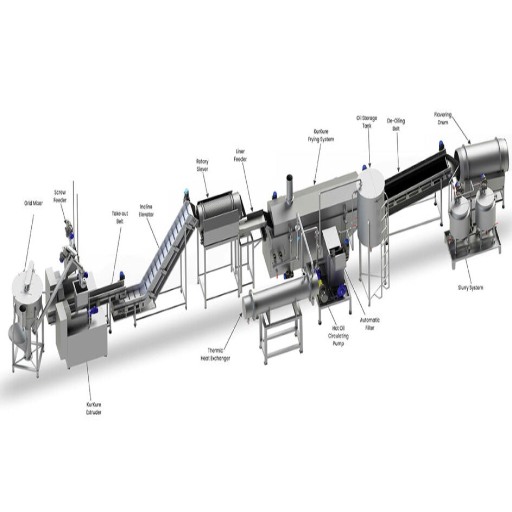
Kurkure Production Line: Crispy Snack Manufacturing Equipment
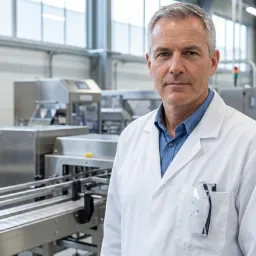
To create crispy and tasty Kurkure snacks, producers need to use exact methods and develop new ideas while using advanced systems. The Kurkure production line functions as an advanced system that has been designed to automate all steps of production from ingredient combination to the creation of an ideal crispy texture. This blog post investigates the technical details and specialized equipment used in Kurkure production because the systems produce consistent results while operating at high efficiency to deliver products of exceptional quality. The complete guide provides business owners and food production specialists with essential information about the equipment and methods that enable successful snack production. In our upcoming segment, we will examine the complete process and every part that contributes to making snacks that customers enjoy.
Introduction to Kurkure Production Line
Kurkure production lines operate as specialized systems that produce the crunchy snack Kurkure through efficient and consistent manufacturing methods. The lines function by executing their main operations through multiple stages, which include raw material preparation, extrusion, and frying or baking, seasoning, and packaging. The process starts with cornmeal as the main ingredient, which undergoes processing through an extruder to create the distinctive texture. The product design process starts with shaping, followed by cooking to perfect taste and applying flavoring before the final packaging stage. The production line components work together to achieve maximum output quality while protecting hygiene standards and operational efficiency.
What is a Kurkure Production Line?
The Kurkure production line exists as a specialized system that operates exclusively to create Kurkure, which is a famous extruded snack. The process contains essential elements which start with raw material mixing and continue through extrusion and frying or baking and seasoning, and end with packaging. The extrusion machine serves as the central component of the system, which transforms cornmeal dough into the unique Kurkure texture through high-pressure processing. The shaped product undergoes cooking through either frying, which creates a crispy finish, or baking, which provides a healthier option, and then receives seasoning to create the desired flavor. The automated systems package snacks because they guarantee product freshness and enable extended shelf life. The production lines operate with precise control to deliver consistent results, which maintain operational efficiency while complying with strict food safety regulations.
Overview of Snack Production
Snack production uses planned methods that create snacks that taste good and feel good, remain fresh for a long time, and satisfy food safety requirements. The primary stages include ingredient preparation, where raw materials such as potatoes, grains, and legumes enter a process that requires cleaning, peeling, and cutting into specified shapes. The process continues to mixing or extrusion, which produces a consistent dough or base material through the combination of water, starches, and seasonings. The use of advanced extrusion techniques enables operators to achieve exact control over both moisture content and particle dimensions, which ensures product uniformity.
The cooking process uses the frying method, which maintains specific temperatures for snacks such as chips, and the baking method, which produces a healthier snack alternative through crackers. The seasoning phase uses tumbling or spraying equipment to create an even distribution of specific flavorings across the completed products. The packaging process ends the entire operation because nitrogen flushing, which protects product freshness and prevents spoilage, serves as the standard method used. Modern production facilities use industrial automation together with tracking systems, and they conduct strict quality testing to produce food-safe products that meet regulatory requirements and maintain high quality standards.
Importance of Efficient Machinery in Snack Manufacturing
The snack manufacturing industry requires efficient machinery to maintain product quality and control expenses while being able to increase production capacity. Manufacturers achieve operational efficiency through advanced equipment, which decreases production downtime and eliminates waste while maximizing resource usage to meet high demand and maintain product quality. The use of automation, which includes precision tumbling and automated frying systems as well as robotic packaging lines, improves both operational accuracy and production capacity. Modern machinery now comes with systems that monitor equipment status in real time and use predictive maintenance technology to maintain equipment operational efficiency while extending its useful life. This system enables organizations to meet safety standards and regulatory obligations while implementing environmentally friendly operations through energy conservation and material optimization.
Kurkure Making Machine: Key Components
🔧 Extruder
The system uses its main component, the extruder, to create Kurkure’s signature twisted shape from dough. Through the extrusion process, the system combines pressure and heat to cook the product and shape it.
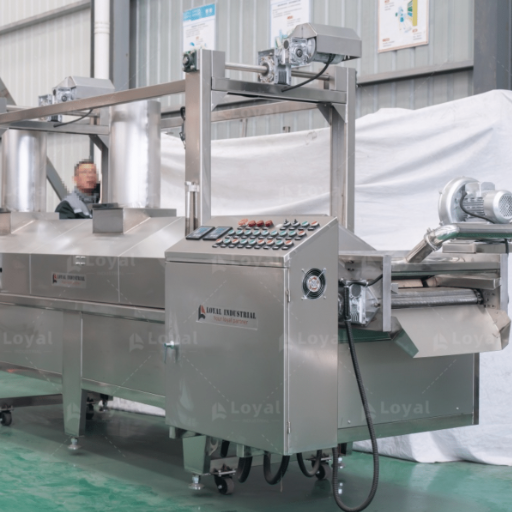
🔥 Frying System
This system ensures that every piece of processed product retains the appropriate texture and crunch, thus eliminating the requirement for varying frying oil temperatures, as the system maintains constant temperature control.
🌶️ Seasoning Applicator
The seasoning applicator applies spices and flavorings to fried Kurkure in a uniform manner, which improves taste while maintaining even distribution throughout the product.
❄️ Cooling Conveyor
After frying, the cooling conveyor cools down the cooling factor, leaving it to its natural texture until the packaging process starts.
📦 Packaging Unit
The robot-controlled packing equipment generally seals the individual packages in a gas-flushed packs thus keeping product freshness for a longer time before it is disposed of.
Extruder Machine and Its Role
The extruder machine operates as an essential piece of equipment for Kurkure production because it defines how the snack will appear and feel to consumers. The machine operates by forcing a cornmeal and water mixture through its system, which contains rotating screws that transport the material through its cylindrical barrel. The process needs high temperature and pressure conditions,s which make the cornmeal starch transform into a gelatinous substance that extends in size. The extruder’s die head defines the final shape of the product,ct which maintains uniformity throughout the manufacturing process. The extruder system enables operators to control multiple operational parameters, which include moisture content, temperature, and feed rate to produce Kurkure with identical texture and structural characteristics. The machine’s precise operational functions guarantee product development and enable the creation of different shapes and textures, which makes the extruder machine essential for snack production.
Mixer Machine in Kurkure Production
In the production process of Kurkure, the mixer becomes a paramount machine, considering that it manages the proportionate distribution of all the ingredients the dough may contain, such as cornmeal, water, and other components. This part is also important to some extent, as the mixing determines the nature of the finished product. The mechanism works by the flipping tendencies within the paddles or the mixing arms. This makes the manufacturing of homogeneous dough possible. Such mixer equipment discounts the need for remixing as long as such machines are programmed to control mixing time and intensity, which facilitates inter-batch uniformity and minimizes waste of the concerned products. The automatic mixer systems are good at increasing productivity for an operator as they are preventive measures against human error, which is a very beneficial asset when it comes to the production of Kurkure, which is of sheer necessity.
Continuous Fryer for Perfect Crispiness
The performance of the blow fryer is quite significant considering that it prepares Kurkure in a way that prevents the product from being cooked at only weak heat, while being characterized by the crunchy nature that it is. It masses the product, extends its ability for the product to tolerate heat suitable for thinning, and takes back control of the product as it is fried through the hot oil that has undergone moderation in the frying temperatures. The process of this practice is also very fruitful in controlling the three basic elements of the process, namely the movement of the liquid, the cooking time, and the temperatures of the system. Despite the equipment being simple and user-friendly, there are a myriad of features associated with the contemporary continuous fryer,s such as contamination management, filtering the oil, enhancing its life, and subsequently the chips making quality, but reducing the cost of running the factory. In the process, such a system is able to control the regulation of some activitiest hus some functionalities need not be performed physically and are just set and forgotten.
Fully Automatic Kurkure Production Line
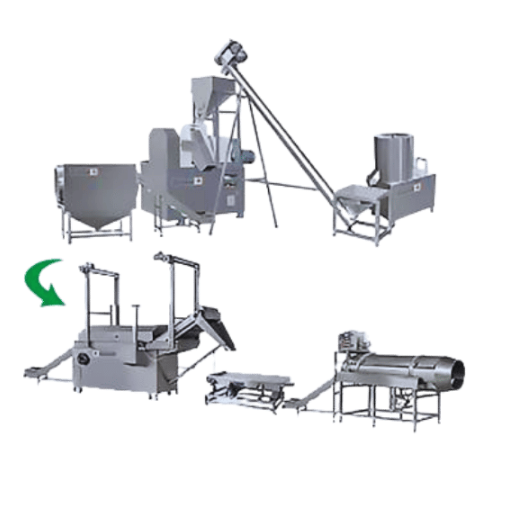
The Kurkure production line functions as an automated system; it only manufactures when needed, aiming at optimum usage efficiency and standard product grade efficiency, while achieving a stable quality of the product. Its functionalities can be summarised by the following:
- Automated Extrusion System: Kurkure is made to perfection, delineating the shape, mouthfeel, and flavor profile.
- Continuous Frying Mechanism: They utilize sophisticated temperature-regulating systems as well as filtration units so as to equally fry the pieces to produce the best possible results while minimizing the oil expenditure.
- Integrated Seasoning Machines: Use their precise flavoring system to coat Kurkure with seasoning while reducing waste.
- Advanced Packaging: Uses cooling conveyors together with automated packing units to keep products fresh while extending their shelf life.
The system provides large-scale operations with three essential benefits because it delivers high productivity while keeping costs down and meeting food safety standards.
Advantages of Automatic Kurkure Making
✓ Consistent Quality
The automatic machines produce consistent product quality because they maintain constant size and shape, and flavor attributes, which manual methods produce differently. The brand maintains customer satisfaction through its.
✓ High Efficiency
The systems achieve high production efficiency because they produce large volumes of Kurkure within short timeframes while decreasing both labor expenses and energy needs. The processes of the system use resources in their most effective way.
✓ Food Safety
The design of automatic Kurkure-making machines uses food-grade materials together with advanced hygiene standards. This system protects against food contamination risks while meeting all food safety requirements.
✓ Cost-Effective
This innovative platform integrates tasks carried out for deep frying, flavoring, and package preparation in a way that reduces energy and operation cost burdens.
✓ Flexibility
Efficient adjustable systems flexibly adapt to changes in technology, including product modifications and production increases or decreases, as dictated by the dictates of the market at any given time. This company is capable of producing varying quantities of products in order to meet customer demands, ranging from small processed to batch production or large scale simultaneous production.
✓ Enhanced Safety
The production process achieves better control through automation, which decreases the need for manual work, enhances safety, and helps decrease production errors.
Features of a Fully Automatic Kurkure Making Machine
The innovative Kurkure machine is programmed to create crispy and puffy maize and corn-based snacks. It figures into helping these firms with efficient snack manufacturing and consistently satisfactory achievements. Moreover, it supports quick and large-scale production of the valued snacks.
Case Studies of Successful Implementations
Case Study 1: XYZ Snacks Pvt. Ltd.
The company uses a machine that manufactures Kurkure at automatic very fast speed other than using human resources to produce the foodstuff as the demand has gone high for the product. As a process of process automation, 35% faster manufacturing times were taken to produce the product without skimping on quality. The safety system of the machine was observed eliminating all operational hazards, the company’s production and capabilities have made it possible for businesses to boost their manufacturing businesses. As per XYZ financial report, the six months following execution reported a 20% rise in revenues exceeded.
Case Study 2: Global Crunch Industries
When their product’s quality began to become inconsistent once more during assembly, Global Crunch Industries decided to implement the Kurkure-making machine, knitted gloves, and series of manual sensors. The typical Kurkure-making machine is a simple conveyor line machine. However, some of these modern machines do not require a particular amount of physical labour. A few of these machines currently operate in Tundi lapandu in the plastic bottle manufacturing area.
Case Study 3: TasteMakers Co.
At TasteMakers Co., an automated Kurkure production process was put in place, which was developed to reduce production costs and improve effectiveness. The automated system features power saving by about 25% with the use of a low-power, efficient design. The company also uses an automated cleaning system in the factory, which will prevent professional cleaners and support staff from wasting maintenance time. These changes have boosted productivity for the company and have contributed to the achievement of their policy of ecological balance while enhancing the reputation of their brand against other snack industries.
Extrusion Process in Kurkure Manufacturing
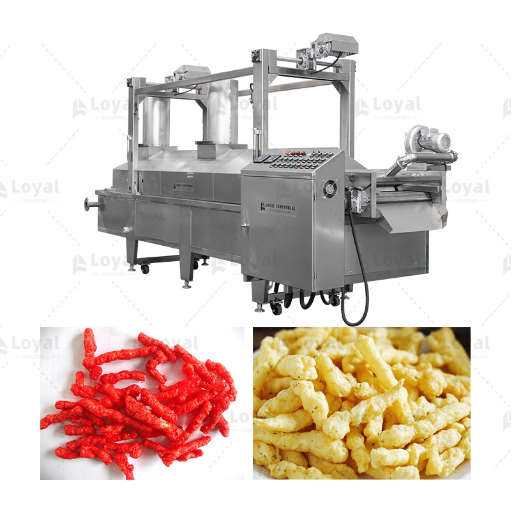
When making Kurkures, the extrusion phase begins by mixing raw materials, which are prepared using cornmeal that has been moistened and reached a certain consistency. The compound mixture is forced into a high-pressure dispenser and heated (melic frites) and then finally cooked. The extended and rotated parts in the extruder do most of the work; they push and temp the clump in the dispenser. The batter escapes through the extruder and enters the mould, where it undergoes rapid volume expansion and adopts a typical Kurkure form. At the end of the extruder, the sudden lowering of pressure results in a distortion of the dough to acquire the Kurkure’s usual form. This form of the product is afterwards portioned and cleaned masa, which typically runs to either frying or baking, which again is determined by the specification of the end product. The process of extrusion forms the ultimate consistency and linear strength of the Kurkure bite.
Understanding the Extrusion Process
The process of extrusion performs as a complex mechanism aiming at heating, pressing, and cutting raw material, creating a uniform product. And what is more, heat, pressure, and abrasion remain the three major functional ways that help to shape a polymer material into a desired form of extruded end product. The above principles are controlled by process conditions (temperature of drying, water content of the material, the speed of the working screw, and the shape of the die). In addition, temperature control is critical because it can lead to either starch gelatinization or protein denaturation, and this is accompanied by securing proper moisture levels for the flavor-building block structure. Shear force and mixing efficiency due to the screw speed dictate the degree of expansion of the finished product as well as how it retains its levels of homogeneity. Expansion and the shape of the product are more directed by the die size, which is central as the die itself is an indispensable part in the machine. All these aspects should be taken care of because they are essential to achieving the required measure of product quality and production capacities within the consoling approach whenever possible.
Raw Materials Used for Extruding Kurkure Snacks
In the initial stages of the Kurkure snack production process, preferences are video deadlines are advantage accordingly basis to lead to satisfactory grades for the acceptable quality requirements, with an emphasis on the ingredients used during the production of the product. The leading ingredient in the conception is corn meal (flour), which is not just a bulking agent, but also the key starch binder that, upon baking, will be the product’s texture, the most expensive asset. The addition of rice and gram meal provides the product with better texture and increases the nutritional value. With regards to the process stages, edible oils are used for lubrication as part of making the product and in inclusion of taste and flavors of the foodstuff. A summary of the steps used in the process includes the use of prepared lakbi or loakeh, seasoning ingredients, seasoning powder or herbs and spices as ingredients, spices in the form of masala, and oranges.
Flavoring Techniques for Enhanced Taste
The process of flavoring snacks requires several advanced methods that produce uniform taste results through their use. The main method uses tumbling to apply seasoning blends because snacks receive their coating during drum rotation when workers dust or spray seasoning powder onto them. Oil-based flavor adhesion uses a technique that applies a fine mist of flavored oils to snack surfaces in order to enhance taste and improve seasoning adherence. Precision seasoning systems use automated equipment to deliver consistent and accurate amounts of flavoring agents, which helps reduce both waste and product variations. The use of encapsulation technologies protects flavor compounds because they maintain their strength until people eat them, while providing scheduled release systems. Flavor layering uses multiple rounds of seasonings to create complex taste experiences. The scientific principles and precise engineering of these advanced flavoring methods enable snacks to deliver loud and steady flavors that match consumer expectations.
The Future of Kurkure Production Lines
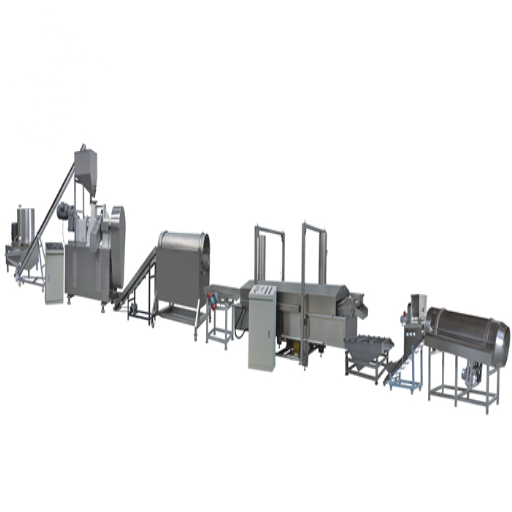
The production lines of Kurkure are evolving to have more adaptation tendencies of increasing efficiency through automation, upgrading the quality of engineered products, and becoming eco-friendly. Such production systems will help meet the need for quality engineering that keeps a defined product texture and flavor standards at the same time, reducing the wastage of production. In the near future, developments in extrusion technology will make it possible to develop different products as the system will now enhance the production of tailor-made products. They are targeted at the production facilities to ensure sustainability, where energy-efficient technologies and systems that reduce water usage and the use of resources will be implemented. To accomplish this social responsibility, the company will only use easily degradable packages and insist on the responsible extraction of primary materials. The coming Kurkure processing units will add to the performance and quality of the product by gearing up to high technology and green production processes.
Innovations in Snack Manufacturing Technology
The confectionery industry, as an example, can boast of having moved forward in the direction of automated systems and prevailing environmentally friendly production. The recourse to automated solutions with the employment of robots and other devices on the basis of AI is efficient in the way that workforce errors are reduced as much as possible. The use of precision extrusion technology ensuresthe achievement of snacks of equal weight and beneficial properties, with the natural flavor being retained, and in a process that consumes the least amount of input values. Businesses must embrace two different sustainable practices; the first is the actual production process, and this involves the use of energy-efficient technologies together with 3D printing from plants in response to the need that is attracting more consumers due to SDGs health and green issues. In the current setup, the manufacture of snacks revolves around sustainable snack production because the design of the packages is made in a way that these are biodegradable and compostable products. These technologies, along with these existing measures, will enable companies to realize both objectives of making better snacks and ensuring sustainability in addition to adjusting to forward market forces.
Market Trends for Kurkure and Puff Snacks
The demand for Kurkure and Puffed snacks is on the rise due to the increased consumer orientation for healthy products produced with natural methods. The prevailing use of whole grains and pulses as healthy ingredients by businesses is expected. Several firms in this region can do their marketing promotion by bringing in new flavors in the market. The demand for innovative, ecologically friendly packaging is on the increase as more customers are conscious of the environment. Manufacturers who embrace these perceptions and target customers this way can satisfy the customers and save the environment at a go.
Sustainability in Kurkure Production
Production of Kurkure has recently given companies the mandate to cover their whole operations in environmentally friendly operations, concepts that begin from the procurement of raw materials all the way to the manufacturing of the final product and the supply chain activities of the final product. The manufacturing processes focus on raw materials that are produced in an environmentally friendly manner. These include organic corn and local food supplies that help decrease the environmental effects of agricultural operations. Energy-saving technologies, greenhouse gas reduction technologies, and waste heat recuperation are nowadays widely applied in state-of-the-art production plants to reduce greenhouse gas emissions and enhance resource utilization.
One key reason why e-commerce contributes to the increase of the global plastic usage I that it heavily relies on the use of plastic components, which cannot be reused. Companies are also examining lightweight packaging options, which can help them reduce weight and enhance their logistics. Kurkure manufacturers apply these green practices to meet the new wave of environmentally conscious products that households are shifting their focus to, as well as to their role in the environmental conservation bid worldwide.
Conclusion
The Kurkure production line represents the pinnacle of modern snack manufacturing technology, combining automation, precision engineering, and sustainability to deliver consistent, high-quality products at scale. From the critical extrusion process to advanced seasoning systems and automated packaging, every component plays a vital role in creating the crispy, flavorful snacks that consumers love. As the industry continues to evolve with innovations in technology and growing emphasis on environmental responsibility, Kurkure production lines are poised to meet future challenges while maintaining the efficiency and quality that define successful snack manufacturing operations.
Reference Sources
University of Arkansas – Market Entry Strategy Analysis
This document provides insights into manufacturing strategies, including food production equipment, relevant to the Indian market.
University of Tennessee – Food Processing Analysis
This paper discusses food processing environments and equipment, which can be relevant for understanding production line setups.
Frequently Asked Questions (FAQs)
How does a rotary head Kurkure making extruder differ from a standard food extruder?
A rotary head extruder produces irregular, crunchy Kurkure shapes and corn curls through its rotating die head, which contrasts with standard straight-die extruders that create puffs or pellets. Spicy Kurkure and various Kurkure snacks use the rotary head Kurkure processing machine because it creates twisted textures and crunchy appearances, which define these snacks. Snack machine manufacturers provide both food extruder machines and rotary head extruder attachments to enable their customers to produce snacks with various production rates.
What ingredients are used in the corn puff and Kurkure processing?
Corn puff snacks and Kurkure snacks use corn meal, corn grits, and wheat flour or rice flour as their main base ingredients. A flour mixer or flour mixer with water (or a corn grit mixer) combines dry ingredients, oil, and seasonings to form a consistent dough for the food extruder. The product contains additional ingredients, which consist of starches and spicy Kurkure flavorings, salt, and emulsifiers that regulate Kurkure expansion and texture and flavor. Grit mixer operations and extruder feed consistency enable snack production to reach peak levels while maintaining product quality.
Can a snack production line include a frying line or pellet frying line for crunchy kurkure?
The majority of kurkure processing lines use a frying line or pellet frying line, which operates after extrusion to create crunchy kurkure and corn curls. The extruder sends its pieces to the fryer, where oil and time are managed to achieve the desired texture. Hot-air drying and baking serve as alternatives that produce food items with reduced oil content. A complete snack line typically integrates conveyors, fryers, seasoning drums, and packaging equipment provided by the production line manufacturer or distributor of Kurkure equipment.
How do I choose a manufacturer of Kurkure or snack food extruder equipment?
Select a machine manufacturer or snack machine manufacturer based on their track record for food processing technology, together with their customer feedback regarding Kurkure processing line projects, their post-purchase customer support, and their ability to deliver complete production systems, which include a grit mixer and extruder, rotary head extruder and frying line, conveyors, and packaging. If you want to expand your product line, then ask about the Kurkure products, which they can create together with their production capabilities, high-speed production systems, and their automatic corn puff system and automatic Cheetos machine system.
What production rates and capacity should I expect from a snack line for the production of Kurkure snacks?
The size of the extruder, the design of its die, the speed of the rotary head, and the capacity of the frying or drying system determine the production rate. Small turnkey Kurkure plants can start at a few dozen kilograms per hour, while high production lines reach several tons per hour for maximum production. The manufacturer needs to discuss production goals with the manufacturer to establish a connection between food extruder machines and pellet frying line systems, and conveyor systems, which will ensure high output production capacity from the manufacturing process.
What quality and safety considerations are important for Kurkure processing and food production?
The production process requires stainless steel contact parts that maintain food processing cleanliness, together with rotary head extruder components that enable simple cleaning and temperature controls, and effective fry line oil filtration systems. The Kurkure processing line needs to comply with local food safety standards while offering traceability systems and allergen control measures, and food processing and packaging methods. Regular maintenance of the food extruder, grit mixer, and conveyors helps preserve the texture and taste of Kurkure and prevents contamination.
How can I start a Kurkure plant or a fully automatic corn puff business with limited experience?
The establishment of a Kurkure plant starts with conducting market research, which helps determine the most suitable snack production line size between a snack line and a fully automatic corn puff line, and the need to work with an experienced production line manufacturer or distributor of Kurkure equipment. A pilot kurkure extruder and grit mixer need to be established first, before the staff receive kurkure processing training and the company expands through the installation of rotary head kurkure manufacturing equipment, pellet frying system, and seasoning and packaging systems. Machine manufacturers offer their customers complete solutions, which include installation and assistance with recipe development for spicy kurkure or crunchy kurkure variations and technical support, which helps maintain consistent kurkure texture and taste.