
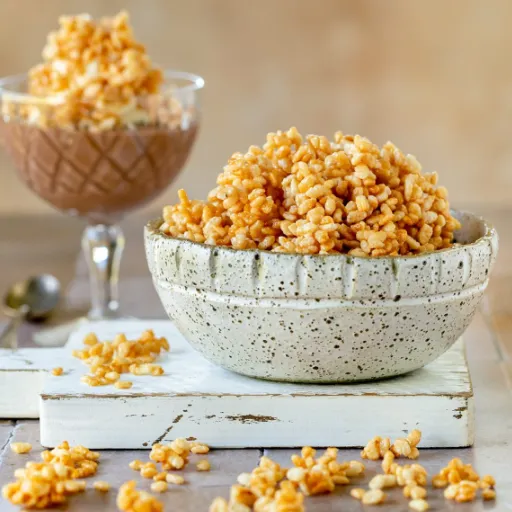
How to Make Puffed Rice: Home and Commercial Methods

Here’s how to make puffed rice at home: cook suitable rice, dry the grains in a controlled process, then test a few grains in hot oil before frying small batches. Expect a crisp grain with variable expansion; large commercial cereal puffs can require a different process or start as rice flour.
If you’ve followed a short recipe and ended up with hard, browned rice, you’re asking the right question: what actually makes the grain expand? Turning up the heat isn’t a cure for unsuitable preparation. You need to match the rice, its treatment and the result you want.
This guide explains how to make puffed rice through a careful cook-dry-fry sequence, what to check when it fails, and where factory methods differ. Home cooks can focus on the method and texture checks. Snack developers can then compare whole-kernel puffing with flour extrusion before discussing equipment.
Key Takeaways
- A crunchy fried grain and a large cereal puff aren’t necessarily the same product.
- Rice variety, cooking and moisture condition affect expansion; no single schedule fits every rice.
- Handle cooked rice promptly, use dry frying tools and stop if the oil smokes.
- For commercial production, specify the grain or flour, target shape and finished texture before selecting equipment.
How to Make Puffed Rice: Choose the Rice and Result First
Whole Grains versus Rice-Flour Shapes
Whole-kernel puffed rice retains the identity of the grain. A ring, ball or shaped snack may instead begin as rice flour mixed with water and other ingredients. Both can be described as rice puffs, but their preparation and equipment differ.
Developing a shaped rice-flour snack? Compare our puff snack production line with your product requirements before choosing a route.
FAO’s reference on expanded rice products describes multiple routes, including heated grain, oil-puffed cooked or parboiled rice, and pressure-release processes. When choosing how to make puffed rice, match the recipe to its route. Nor does a factory’s operating condition become a suitable home setting.
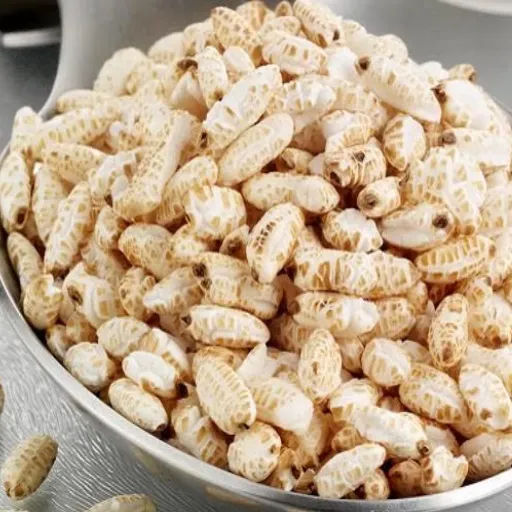
Why Preparation and Remaining Moisture Matter
Cooking changes the starch inside rice. During puffing, water turns to steam and helps expand that structure before it sets. Heat, pressure and the rice’s condition affect the result.
Learning how to make puffed rice means managing water, rather than trying to remove every trace. Each process needs its own balance.
For frying, the exterior must be dry, with no wet patches or surface droplets. That safety requirement doesn’t mean that all internal moisture has disappeared. Touch alone cannot measure the remaining water inside a grain.
White rice, parboiled rice and brown rice shouldn’t be treated as interchangeable inputs. FAO describes differences associated with variety and preparation, including the degree of prior cooking. Choose a recipe that names its rice, and record what you use. A wild-rice demonstration also doesn’t establish a method for ordinary cultivated white rice.
Illustrative scenario: A cook wants a crisp garnish for a bowl of soup. Modest expansion may meet that goal. Someone learning how to make puffed rice for breakfast needs a different benchmark. Compare a finished grain with a purchased puff before scaling the recipe.
Before preparing a full tray, decide which texture you want. Keep a few grains from your starting rice for comparison, and test a small batch first. That’s more useful than judging success by color alone.
How to Make Puffed Rice at Home: A Careful Frying Method
This example shows how to make puffed rice through cooking, drying and frying. It does not promise success with every rice variety. Girl and the Kitchen’s authored recipe documents this sequence. Use its preparation details as a recipe example while applying the handling and stop rules below.
Before starting, check your setup:
- Rice and water: use the rice specified by your chosen recipe.
- Drying: prepare a clean tray and an oven for controlled drying.
- Frying: use a stable, heavy deep pot suitable for frying and a frying thermometer.
- Removal: choose a fine metal sieve or skimmer that retains the grains and fits the pot safely.
- Oil: check its rated frying temperature against the recipe and equipment limits.
Keep the sieve handle clear of the oil. Have the draining tray in place before heating begins.
Step 1: Cook and handle the rice safely
To learn how to make puffed rice with this method, start with the rice package instructions. Cook until tender without turning the grains into paste. Drain excess water. Spread the rice thinly on a clean tray and move promptly into the planned drying process; don’t leave cooked rice on the counter overnight.
If you pause before drying, follow the Food Standards Agency’s cooked-rice guidance. It advises cooling rice quickly, ideally within one hour, refrigerating it and consuming it within 24 hours. Those instructions concern cooked rice being held for later use, not a shelf-life claim for a finished dry snack.
Step 2: Dry in a controlled process
When testing how to make puffed rice, dry the batch evenly. Separate clumps and spread a thin layer so dry grains do not hide wet pockets. The linked recipe uses an oven at about 250°F/120°C for 2 to 2½ hours. That is the author’s schedule, not a universal drying endpoint: oven behavior, rice and tray loading differ.
The grains should become hard and dry on the outside. Examine the batch for soft clumps before any oil test. If drying is uneven, correct the preparation rather than adding damp rice to hot oil. Don’t assume a dry-looking surface proves a batch has been safely processed or is shelf-stable.
Step 3: Prepare the oil and tools
Use a stable pot with ample space above the oil for displacement and bubbling. Keep the thermometer, sieve and other utensils dry. Set the draining tray beside the stove, away from the burner, so you won’t need to carry dripping oil across the kitchen.
The linked recipe uses 400–425°F, a high-temperature frying range. This isn’t a safe target for every oil, pan or appliance. Follow the oil and equipment limits; don’t attempt the recipe if your setup cannot safely support it. Use a thermometer rather than guessing from smoke or dropping water into the oil.
Stay beside the pot. If the oil smokes, stop heating. Keep a fitting lid nearby.
For a small pan fire, United States Fire Administration guidance advises sliding a lid over the pan and turning off the burner. Don’t move the pan or add water; leave the lid on until the pan is cool. If you can’t act safely, leave and call emergency services.
Step 4: Test, fry and remove
Lower just a few prepared grains into the oil using the dry metal sieve. Watch for expansion and retrieve them promptly. Let them cool before checking texture. A grain that is merely brown and hard has failed the test, even if it floated.
A small test helps you judge how to make puffed rice with your chosen grain. If its texture meets your goal, fry small amounts you can remove together. Avoid the temptation to load the pot with a large scoop. Keep checking the oil temperature between batches and watch the product rather than relying on a fixed number of seconds.
If rice scorches, spits heavily or stays dense, stop. Don’t compensate by raising the temperature beyond the recipe, oil or equipment limits. Review the rice and preparation before trying again.
Step 5: Cool and season
Drain the grains on a suitable clean tray, then let a sample cool fully before deciding whether it is crisp. Season gently while the surface still helps dry seasoning adhere. Salt and spices, or cinnamon and sugar, are simple flavor options.
Keep wet toppings separate until serving if you want to preserve crunch. For an initial trial, make only what you plan to use promptly; this method doesn’t establish a storage life.
Why Rice Does Not Puff: Oven, Microwave and Texture Questions
When learning how to make puffed rice, record the rice type, cooking method, drying schedule and frying temperature. Without that record, changing several things at once makes a failed batch difficult to interpret.
How to Make Puffed Rice When a Batch Stays Hard
The following are preparation checks, not diagnoses proved by appearance alone.
| What you observe after cooling | What to check next | What to avoid |
|---|---|---|
| Brown, hard grains with little expansion | Rice suitability, prior cooking and the measured oil temperature | Continuing until the grains burn |
| Dense or greasy grains | Preparation and temperature recovery between small batches | Treating more oil as a cure |
| Mixed expansion within one batch | Clumps, uneven tray depth and inconsistent starting grain | Loading a larger batch before resolving the variation |
| Crisp at first, softer after coating | Cooling, added liquid and exposure to humid air | Assuming extra frying establishes storage stability |
When testing how to make puffed rice, change one preparation variable at a time. Compare cooled, plain samples before seasoning hides texture differences. Discard scorched grains rather than trying to cover a burnt taste.
How to Make Puffed Rice Without Frying: Can Appliances Help?
An oven can dry cooked rice for a later frying step. That doesn’t establish that a brief blast in a very hot domestic oven will produce large puffs. Industrial hot-air methods use their own grain preparation and heating conditions; a home oven isn’t automatically equivalent.
The same distinction applies to microwave puffing. A process developed for a defined grain, moisture condition and microwave system doesn’t validate a paper-bag recipe for arbitrary dry rice. Don’t transfer popcorn instructions to rice or improvise with packaging not intended for that use.
If you need a predictable oil-free cereal for a meal, buying a suitable ready-made puff is a practical option. A failed home batch is no reason to keep escalating heat.
Why demonstrations and store-bought puffs can differ
The video “How to make puffed rice” is presented as a culinary garnish demonstration. Treat it as a visual companion, not proof that every rice variety will behave alike. Follow the written handling controls above rather than copying an unspecified setup.
A supermarket puff may use another variety, a conditioned whole-grain process or flour extrusion. Compare the ingredient list and product shape before treating it as a home-recipe target.
How Commercial Puffed Rice Differs from Rice-Flour Extrusion
For a manufacturer deciding how to make puffed rice, the first question is whether the finished product must remain a whole kernel. That choice narrows the process options more usefully than an advertised output figure.
Whole-kernel pressure puffing
In pressure puffing, prepared grain is heated under controlled conditions and expands as pressure is released. FAO describes both gun puffing and a continuous explosion-puffing process. Whole-grain production is therefore not limited to batch processing.
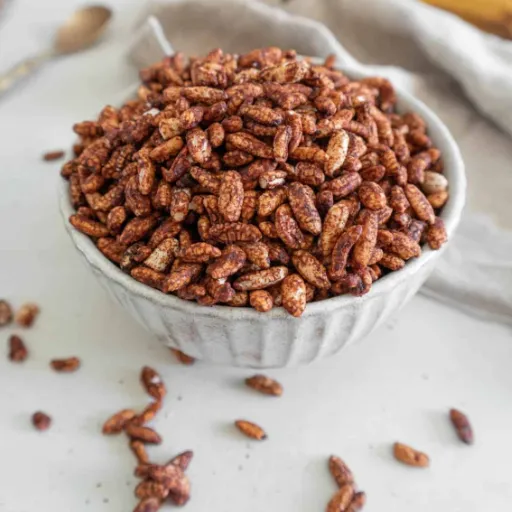
Commercial pressure systems require purpose-designed equipment and trained operation. This description isn’t a home pressure-cooker method. Don’t alter domestic pressure equipment to imitate a puffing vessel.
How to Make Puffed Rice Shapes with Rice Flour
Rice-flour extrusion starts with a formulated flour mixture. The equipment feeds and mixes it, then applies heat and mechanical work as it moves through the barrel. In a direct-expanded process, the cooked material expands at the die exit; cutting, drying, cooling and seasoning complete the selected product route.
Our food extrusion solutions include a puff snack production line for flour-based products. That route is relevant when deciding how to make puffed rice snacks from flour. Specify the recipe and target sample before asking whether a configuration suits your product.
Not all extrusion products expand at the die. Pellets can be formed for a later expansion stage, while rice-shaped fortified kernels have another product objective. Deciding how to make puffed rice therefore starts with product identity. A rice-shaped piece is not automatically an expanded whole grain.
Gat and Ananthanarayan’s rice-flour extrusion study examined feed moisture, die temperature and screw speed as process variables. Its experimental conditions shouldn’t be copied as a universal production recipe or a guaranteed Loyal machine setting.
Compare the routes by product requirements
| Decision | Whole-kernel route | Rice-flour route |
|---|---|---|
| Starting material | Identified rice grain with defined preparation | Flour formulation with controlled water addition |
| Product identity | An expanded grain | A formed snack or another specified extruded product |
| Shape requirement | Based on the grain and process | Based on die, cutting and expansion behavior |
| Trial priority | Kernel integrity and finished texture | Formulation, shape, expansion and drying behavior |
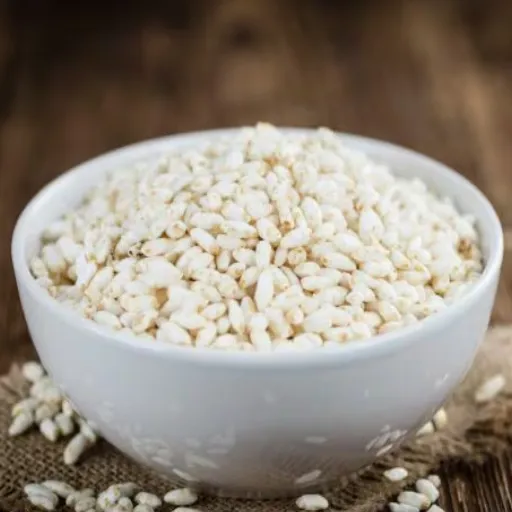
Illustrative scenario: A developer wants ring-shaped rice snacks. The inquiry should describe a flour-based formed product and request evaluation of its recipe. A brand seeking recognizable whole kernels keeps grain-puffing methods in scope instead. Neither choice establishes throughput, energy savings or a finished-product yield without a relevant trial.
Seasoning, Crispness and Packaging
How to Make Puffed Rice with Seasoning or Coatings
Puffed rice can carry savory spices or sweet coatings. Add seasoning in small amounts and fold gently so you can inspect both flavor coverage and breakage. Check the plain grains first. A heavy coating may disguise a poor puffing result.
Liquid flavorings introduce another texture variable. A glaze, syrup or chocolate coating needs its own setting or drying approach. For home serving, add wet accompaniments at the last moment rather than expecting coated grains to behave like an uncoated dry cereal.
Commercial products that require a separate frying stage need that stage specified independently. Our fried snack production equipment is a relevant discussion point for a frying requirement; it shouldn’t be confused with the direct-expansion puff-snack line.
Separate moisture protection from safety validation
Cool the finished product before closing its package, and protect it from moisture uptake. FAO identifies moisture-protective packaging as important for rice cereal quality. A plan for how to make puffed rice for sale must also assess the package, seal and storage conditions for that recipe.
Crunch isn’t a food-safety test. FDA’s January 2025 draft guidance on sanitation for low-moisture ready-to-eat foods addresses sanitation concerns in this product category. It is draft guidance, not a new binding production deadline or proof that a dry snack is pathogen-free.
For a commercial product, assess water activity, sanitation controls and packaging performance separately from the preferred bite. Establish shelf life with the finished recipe and pack. Neither a crisp sample nor a generic moisture number supports a universal storage promise.
Moving from a Home Method to a Production Trial
A production inquiry about how to make puffed rice should start with a product specification. A photograph alone may show shape, but it doesn’t explain the ingredients, bite or process route.
How to Make Puffed Rice Commercially: Define the Product
Send the following information so the process discussion has a clear target:
- Feedstock: rice variety and preparation, or flour recipe and intended ingredient additions.
- Reference product: a sample or photographs, required shape and a description of the desired texture.
- Production goal: acceptable finished output, operating schedule and how rejects or breakage should be counted.
- Site constraints: available power, heating utilities, space and upstream or downstream equipment.
- Product obligations: allergens, cleaning needs, destination market and the tests your team requires.
Ask how output will be measured for your recipe. Compare quotations using the same definitions:
| Quotation term | What to clarify before accepting it |
|---|---|
| Raw feed rate | Which ingredients and added water are included? |
| Output at the forming stage | Is this measured before drying, sorting or coating? |
| Acceptable finished output | Which off-size pieces and broken grains are excluded? |
| Packaged output | Does the scope include cooling and the actual packing operation? |
These are questions to agree in writing, not promised capacities. A headline machine figure alone doesn’t answer them.
How to Make Puffed Rice at Scale: Agree on the Scope
Confirm where the quoted line starts and ends. Mixing, extrusion or grain puffing, drying, cooling, seasoning and packing are separate functions that need an agreed scope. Ask about cleaning access and changeovers as well as the main forming machine.
In its May 7, 2026 Interpack announcement, Bühler emphasized hygienic design and process monitoring for its Nutrex 7 extrusion platform. That is another manufacturer’s announcement; it reinforces useful buyer questions without establishing performance for a Loyal line.
For the illustrative ring-snack project, agree on three checks before evaluating equipment:
- Shape: compare the cooled product with the approved reference sample.
- Handling: inspect broken pieces after the agreed conveying or packing step.
- Packed texture: assess the finished recipe in its intended package under agreed storage conditions.
To agree on how to make puffed rice at the required quality, ask how the trial would check each point. Record the recipe and test conditions with the sample. A short demonstration doesn’t establish long-term production or shelf life.
Send your target sample, recipe and required output to discuss process options. The next step is to establish fit and scope, with testing and commercial terms agreed separately.
Puffed Rice Questions and Your Next Step
Can uncooked rice pop like popcorn?
Rice can be expanded through different grain treatments, but raw milled rice isn’t interchangeable with popcorn. FAO’s descriptions of rough rice, parboiled grain and cooked rice show why the preparation matters. For this guide on how to make puffed rice at home, follow the cook-dry sequence. Do not assume any uncooked grain will pop.
Can brown rice or a microwave work?
Brown rice can be processed into expanded products, but that doesn’t establish a simple substitution in a white-rice recipe. Microwave methods also need defined conditioning and equipment. To establish how to make puffed rice with either option, you need more than a longer heating time.
Are factory rice puffs always whole grains?
No. A puff can be an expanded kernel or a flour-based product formed through a die. Check the ingredients and process description when choosing a reference sample. An inquiry about how to make puffed rice should state which product identity you need.
What determines line price and storage life?
Choosing how to make puffed rice affects the equipment scope. Line price depends on that scope, the agreed process, utilities and product requirements. Storage life depends on the finished formulation, processing, handling and packaging. Ask for a configuration-specific quotation and product-specific validation rather than relying on a generic number.
Learning how to make puffed rice starts with choosing the result. At home, prepare carefully and test a few grains before making more. For commercial production, define the kernel or flour-based product, then discuss the process requirements with Loyal using a sample and a clear specification.