
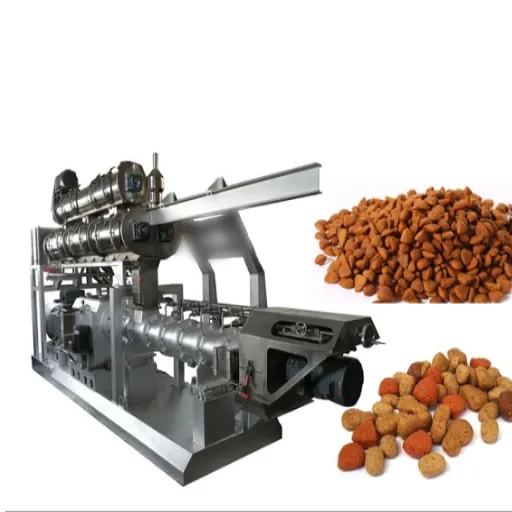
Pet Food Extruder: A Complete Guide to Choosing the Right Machine for Your Production Line

A pet food extruder is a high-temperature, high-pressure cooking system that transforms raw ingredients into shelf-stable kibble through a continuous extrusion process. Choosing the right extruder — whether single-screw or twin-screw, dry type or wet type — determines your product quality, production capacity, and long-term operating costs.
The global pet food extrusion market is projected to reach $146.70 billion by 2035, according to Precedence Research. Yet many manufacturers still lose thousands of dollars annually to inconsistent kibble quality, equipment downtime, and extruders mismatched to their recipes. These problems almost always trace back to one decision made before production ever began.
If you are researching pet food extruders, you already know that extrusion dominates dry pet food manufacturing. You also know that the wrong machine can limit your formula options, drive up energy bills, and leave you stranded without spare parts. This guide cuts through the noise. By the end, you will understand exactly which extruder configuration matches your operation, what specifications actually matter, and how to calculate the true cost of your investment.
Here is what we will cover: how extruders work, the differences between single-screw and twin-screw technology, dry versus wet type configurations, the specifications that separate reliable machines from risky purchases, common extrusion defects and how to prevent them, and a practical framework for calculating total cost of ownership.
Key Takeaways
- Twin-screw extruders handle 20-40% fresh meat and complex formulas; single-screw units suit basic kibble and tighter budgets.
- Dry-type extruders need no steam boiler and work well for startups; wet-type extruders with preconditioning deliver higher quality and throughput for growing operations.
- Match capacity to your business stage: 150-500 kg/h for R&D and pilot production, 500-2,000 kg/h for scaling manufacturers, and 2,000+ kg/h for industrial plants.
- Prioritize 304/316 food-grade stainless steel, wear-resistant alloy screws, PLC touchscreen controls, and CE certification.
- Total cost of ownership includes energy consumption, spare parts lifecycle, maintenance labor, and downtime — not just the purchase price.
What Is a Pet Food Extruder and How Does It Work?
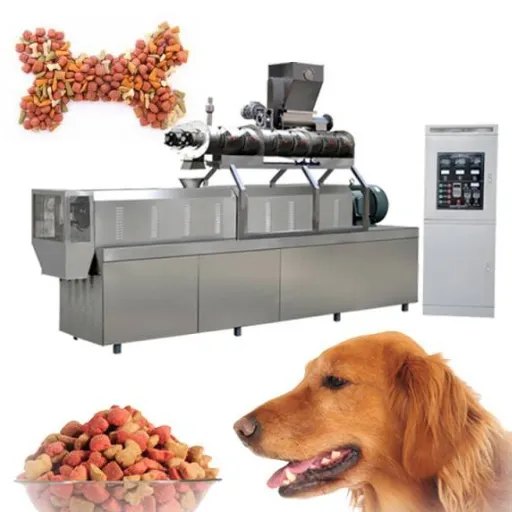
A pet food extruder operates as a pasta machine which continuously cooks and performs three additional functions that include product sterilization and product shaping and product partial drying. Worldwide extrusion methods produce 95% of all dry pet food products which exist today. The system operates through three distinct power sources which include mechanical shear generated by rotating screws and thermal energy produced by heated barrels and pressure that develops within a closed barrel space.
The machine receives raw materials which consist of grains and protein meals and fats and vitamins and minerals in an either dry state or semi-moist state. The extruder’s screw pushes this mixture through a heated barrel while compressing it. The system operates at temperatures between 100-180°C and pressure levels between 150-200 bar.
The cooked dough travels through a shaped die which creates an instant pressure drop that transforms internal moisture into steam. Puffing causes the expansion which produces the light porous crunchy texture found in kibble.
The normal extrusion process operates through seven different operational steps. The first step requires workers to grind and combine the raw materials. The second step introduces steam and water through a preconditioner which activates starches to begin their gelatinization process. The third step uses the extruder barrel to cook and compress the mash.
The die plate creates the product’s shape. The rotary knife cuts the extruded rope into standard lengths. The dryer process decreases moisture content until it reaches a level below 10%. The cooling system brings the kibble to room temperature before post-extrusion coating with fats, flavors, and heat-sensitive nutrients.
The final product gets determined by each operational step. Starch gelatinization makes carbohydrates digestible. Protein denaturation improves amino acid availability.
The high temperatures which reach extreme levels deactivate Salmonella and other pathogens. The die plate determines kibble shape, size, and surface area. The dryer temperature and airflow control the product’s texture and shelf stability. Drying creates coatings which maintain both the product’s taste and its complete nutritional value.
Want to see how these stages integrate into a full workflow? Our guide to how to make dry dog food breaks down the complete manufacturing process from recipe to packaging.
Single-Screw vs. Twin-Screw: Which Technology Fits Your Operation?
This is the most important technical decision you will make. The screw configuration determines your formula flexibility, product consistency, and long-term upgrade path.
Single-Screw Extruders
A single-screw extruder uses one rotating screw inside a stationary barrel. The system offers advantages because it performs better and costs less and requires less effort to operate. The system works well for basic kibble recipes which contain moderate amounts of protein and fat.
The single-screw machines have established performance limitations. The systems fail to process materials which contain more than 10% fat content. The production process requires pre-minced fresh meat because the end product suffers from water content that exceeds 20% moisture.
The system produces mixing results which reach moderate levels and this results in uneven cooking and irregular product expansion. A single-screw extruder will meet your needs if you have basic recipes and limited funds. The system will become insufficient for your needs when you start developing grain-free high-protein and fresh-meat products.
Twin-Screw Extruders
Twin-screw extruders use two intermeshing screws that rotate inside a figure-eight barrel. The design achieves better mixing results while enabling precise temperature management and providing greater flexibility in formula development. In 2025, twin-screw systems controlled approximately 68.5% of the pet food extrusion industry market, and their market share continues to expand.
The intermeshing screws create self-cleaning action. This mechanism helps to decrease residue accumulation between production cycles while it protects against cross-contamination hazards. Twin-screw extruders enable fresh meat inclusion at 20-40% levels because of their ability to process fresh meat without needing pre-mincing and without capacity losses. The system achieves reliable performance when processing high-fat recipes and complex carbohydrate blends and alternative proteins.
Marcus managed a mid-size Polish factory operation with a single-screw extruder system which he used to produce standard chicken-and-rice kibble for three years. The company maintained stable revenue, but all attempts to introduce a grain-free salmon formula ended in failure. The single screw could not distribute the high oil content evenly. The batch rejection rate reached 18%.
Marcus developed four premium product lines within eight months after he transitioned to a co-rotating twin-screw extruder system with a double-shaft preconditioner. The rejection rate decreased to 3%. The machine generated enough revenue within fourteen months to cover its purchase costs through new product sales.
| Feature | Single-Screw | Twin-Screw |
|---|---|---|
| Best For | Basic kibble, budget-conscious operations | Complex recipes, premium products, scaling |
| Fat Tolerance | Generally under 10% | Handles high-fat recipes easily |
| Fresh Meat Inclusion | Limited; requires pre-mincing above 20% | 20-40% direct inclusion |
| Mixing Quality | Moderate | Superior; 95%+ uniformity |
| Self-Cleaning | No | Yes; intermeshing design |
| Maintenance Complexity | Simpler | More complex but modular |
| Capital Cost | Lower | Higher |
For a deeper look at twin-screw technology in action, read our detailed guide on how to manufacture dog food from twin-screw extruder machines.
Dry Type vs. Wet Type: Matching Configuration to Your Stage
Beyond screw design, you must choose between dry-type and wet-type extrusion configurations. This decision affects your installation requirements, operating costs, and product quality.
Dry Type Extruders
The dry type of extruders functions through two mechanisms which include mechanical friction and barrel heating. The system operates without needing a steam boiler and external water injection system. The system installation process becomes simpler because of its reduced installation needs while its operation costs less and its energy consumption decreases for small-scale operations.
The dry-type extruders provide essential operational flexibility to R&D facilities and startups and manufacturers who need to test new markets. The equipment becomes easier for you to move between locations. The system requires less maintenance work because it has fewer fluid systems to maintain. The process results in a minor decrease of expansion quality and cooking uniformity when compared to wet extrusion results.
Wet Type Extruders
Wet type extruders include a preconditioner that injects steam and water into the ingredient mix before it enters the extruder barrel. The pre-cooking process heats the material to 96-98°C which starts starch gelatinization and protein softening before the material undergoes mechanical shear .
The process results in increased production capacity and greater particle expansion and enhanced nutrient retention and better digestibility. The pathogen destruction capabilities of wet extrusion demonstrate better effectiveness which plays a critical role in achieving food safety standards. Wet type systems serve as the industry standard which applies to medium and large operations as well as manufacturers who make high-quality kibble products.
| Feature | Dry Type | Wet Type |
|---|---|---|
| Steam Boiler Required | No | Yes |
| Initial Investment | Lower | Higher |
| Installation Complexity | Simple | Moderate |
| Product Expansion | Moderate | Superior |
| Nutrient Retention | Good | Better |
| Throughput Efficiency | Moderate | High |
| Best For | Startups, R&D, small batches | Scale, premium quality, compliance |
Explore how wet-type twin-screw extruders integrate into a complete pet food production line with preconditioning, drying, and coating systems.
Key Specifications Every Buyer Should Evaluate
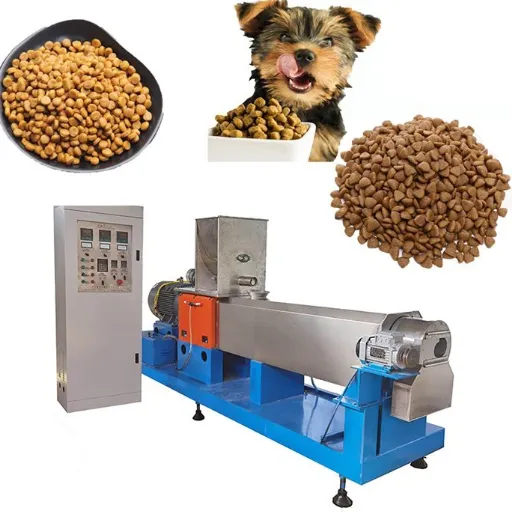
Manufacturers publish specifications that look similar on paper. The differences that matter become clear only when you understand how each parameter affects your daily operation.
Production Capacity
The laboratory units have a capacity that reaches 150 kg/h while industrial lines can handle up to 12000 kg/h. Your current production capacity should match your business needs instead of using your maximum theoretical capability. A machine running at 90% capacity experiences more wear than one operating at 70% capacity. An oversized extruder system wastes power and produces subpar results because it operates at less than its full capacity.
Your organization capacity should match its current operational framework. Startups and R&D facilities typically need 150-500 kg/h. Growing manufacturers scaling into regional distribution need 500-2,000 kg/h.
Producers who operate industrial facilities to serve national or export markets require equipment that can handle more than 2000 kg/h. Reputable suppliers should guarantee actual output reaches at least 95% of rated capacity under test conditions.
Screw and Barrel Design
The length-to-diameter ratio or L/D ratio determines how long ingredients cook inside the barrel. Higher ratios such as 40:1 allow operators to maintain products in equipment for extended periods which results in complete starch gelatinization. For pet food, L/D ratios between 15:1 and 25:1 are common, though high-performance lines may exceed this.
Barrel construction matters enormously. Look for modular barrel sections with independent heating and cooling zones. This lets you create a precise temperature profile from feed section to die.
Water-cooled barrels protect against production equipment damage by maintaining safe temperature levels throughout extended operational periods. The use of wear-resistant alloy steel for screws and barrels becomes essential when processing abrasive materials such as bone meal and high-fiber formulas.
Motor and Drive System
Variable Frequency Drive (VFD) control lets operators set screws to specific speeds which range from 150 RPM to 375 RPM according to the selected machine. Different recipes need different shear levels which makes this precision essential. A VFD also decreases energy usage during the initial startup process and the changes between different recipes.
Top-tier extruders consume roughly 55 kWh or less per ton of output. Ask for energy efficiency data before you buy. The cost difference between an efficient extruder and an inefficient one becomes equal to the original purchase price after five years.
Die Plate and Cutter Versatility
The die plate shapes your product. Quick-release die systems reduce changeover time from hours to minutes. The versatile extruder needs to handle all die geometries which include round and triangular and bone-shaped and fish-shaped dies without complete disassembly. The rotary cutter must synchronize precisely with extrusion speed to maintain uniform piece length.
Control and Automation
Modern extruders use PLC-based controls with touchscreen interfaces. These systems store recipes and monitor temperature and pressure in real time and trigger alerts when parameters drift. Advanced systems offer data logging and remote monitoring which serve as essential tools for growing businesses.
Material Construction and Compliance
All food-contact surfaces must use 304 or 316 food-grade stainless steel. Verify CE marking, ISO 9001 certification, and compliance with HACCP principles. Smooth welds, tool-free disassembly, and clean-in-place capability reduce sanitation downtime and contamination risk.
See how these specifications translate into real-world performance on our dry kibble production line product page, where we detail capacities, configurations, and customization options.
Common Extrusion Problems and How to Prevent Them
Even well-specified extruders produce defects when parameters drift. Knowing the warning signs saves product, time, and ingredient costs.
Surging and Flow Instability
Surging appears as inconsistent kibble size and density. It usually stems from uneven feeding, worn screw elements, or incorrect moisture content. Check your feeder calibration first.
Then inspect screw wear, particularly in the compression section. Preconditioning temperature and moisture should remain within 2% of target.
Die Swell and Misshapen Products
When extrudate expands unevenly at the die exit, you get bloated or asymmetric kibble. This indicates excessive die temperature, wrong die land length, or incorrect screw speed. Reduce barrel temperature in the final zone, or switch to a die with shorter land length.
Excessive Browning
Browning results from the Maillard reaction, where amino acids and sugars bind under prolonged heat exposure. While some browning is normal, excessive color change signals overheating or excessive residence time. Lower barrel temperatures in cooking zones, or increase screw speed to reduce residence time.
Poor Expansion and Dense Kibble
Low expansion creates hard, dense kibble that pets reject. Causes include low moisture, insufficient preconditioning, worn die plates, or low barrel temperature. For wet extruders, verify steam injection pressure and preconditioner retention time. For dry extruders, check mechanical shear levels and barrel heating efficiency.
Want specifications tailored to your recipe and capacity targets? Contact our engineering team for a customized extruder assessment based on your ingredients, output goals, and facility constraints.
Calculating the True Cost of Your Extruder Investment
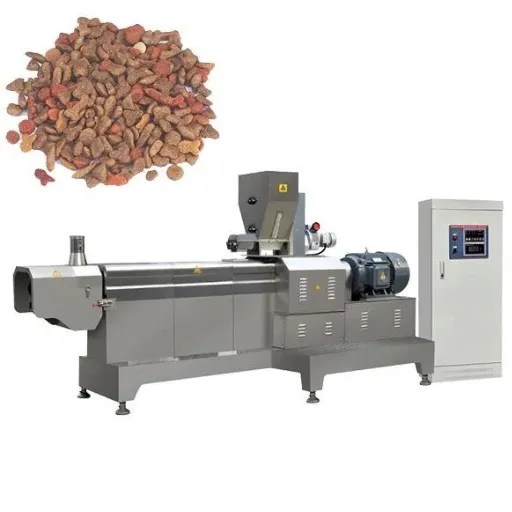
The sticker price is only the beginning. Smart buyers evaluate total cost of ownership over a five-year horizon.
Energy Consumption
The operating expenses of a business include electricity costs which typically account for 15-25% of total expenses. At 0.12perkWh, an extruder that operates at 70kWh per ton will incur higher costs during five years than an extruder that uses 50kWh per ton. For a production line with an annual output of 1,000 tons, the electricity cost difference exceeds 0.12 per kilowatt hour because an extruder needs 70kilowatt hours per ton of output instead of 50kilowatt hours. The annual cost difference for a production line with an output of 1,000 tons exceeds 12,000.
Spare Parts and Wear Components
Screws, barrels, and dies exhibit predictable patterns of wear. The presence of abrasive materials leads to an increased rate of wear. Companies should obtain from suppliers their anticipated wear rates along with their costs for replacing worn-out equipment. A screw set which costs 3,000 to purchase at 8,000 hours of operation becomes more affordable than a set which costs 2,000 at 4,000 hours of operation even though its initial cost is higher.
Maintenance Labor and Downtime
The use of modular designs results in a decrease of required maintenance time. The process of cleaning requires two to four hours less time because workers can disassemble equipment without using tools. The production loss throughout one year results in additional operational days. The costs associated with production downtime during peak demand periods exceed what the labor rates indicate.
After-Sales Support Value
A supplier who provides technical support within hours together with spare parts delivery within days and remote diagnostic capabilities will help to resolve minor issues before they disrupt the production process. When evaluating suppliers, ask for customer references and verify response time commitments in writing.
The team at a Brazilian aquafeed producer learned this lesson when they tried to use the same extruder for both floating fish feed and dry dog kibble. The original supplier had not provided any training on how to customize dies.
The time required for changeovers was six hours. The changeover time decreased to forty-five minutes after the company implemented a new supplier who provides both on-site training and quick-change die systems together with video technical support. The company operates three product lines on a single production line while maintaining low production interruptions.
Ready to evaluate extruder options for your facility? Request a detailed quote and production line layout from our engineering team, including energy projections and spare parts lifecycle estimates.
Conclusion
The process of selecting a pet food extruder involves more than just the traditional capital equipment selection process. The decision creates a strategic impact which determines both your product assortment and your operational expenditures and your ability to compete in a market which will reach $146.70 billion by 2035.
The following decisions represent the highest importance to your operation. Your screw technology selection should match the recipes you create because twin-screw systems work best with advanced formulas while single-screw systems handle basic kibble production and budget limitations. Your business development stage should determine your equipment choice because dry type systems work best for new businesses while providing operational flexibility and wet type systems support business growth through enhanced product quality.
Your production capacity needs to match your current operations but include additional capacity to support 20-30% production increases. You should inspect the equipment base to confirm its construction and certification status and control systems before proceeding to compare unit prices. The total cost of ownership should always be calculated because the least expensive machine purchase option does not result in the lowest operating expenses.
The assessment of extruders through this framework enables a shift from specification assessment to evaluation of production assets which develop together with your company. The correct equipment transforms raw materials into kibblethrough their production process. The system enables production of consistent products which maintain multiple formulations while achieving dependable operational performance.
Contact Shandong Loyal Industrial today for a customized extruder recommendation and complete pet food production line consultation. Our engineering team will assess your recipes, capacity targets, and facility requirements to recommend the optimal configuration for your operation.
Frequently Asked Questions
What is the difference between a single-screw and twin-screw pet food extruder?
A single-screw extruder uses one rotating screw and works best for basic kibble with moderate fat and protein levels. A twin-screw extruder uses two intermeshing screws, delivering superior mixing, better temperature control, and the ability to handle complex recipes with up to 40% fresh meat inclusion.
How much does a pet food extruder cost?
Entry-level single-screw extruders start around 15,000.Mid−rangetwin−screwsystemsrangefrom15,000.Mid−rangetwin−screwsystemsrangefrom25,000 to 60,000.Fullindustrialwet−typelineswithpreconditioning,drying,andcoatingcanexceed60,000.Fullindustrialwet−typelineswithpreconditioning,drying,andcoatingcanexceed100,000. Total cost of ownership over five years often exceeds the purchase price through energy, maintenance, and spare parts.
What capacity extruder do I need for a startup pet food business?
Most startups and R&D facilities begin with dry-type twin-screw extruders rated at 150-500 kg/h. This capacity supports recipe development, market testing, and early commercial production without the infrastructure requirements of wet-type systems.
Can one extruder produce both dog food and fish feed?
Yes. Twin-screw extruders with quick-change die systems can produce dog kibble, cat food, floating fish feed, and sinking aquatic feed by swapping die plates and adjusting screw speed, moisture, and barrel temperature profiles.
What certifications should a pet food extruder have?
Look for CE marking, ISO 9001 quality management certification, and construction from 304 or 316 food-grade stainless steel. HACCP-compliant design and clean-in-place capability are also important for food safety audits.