
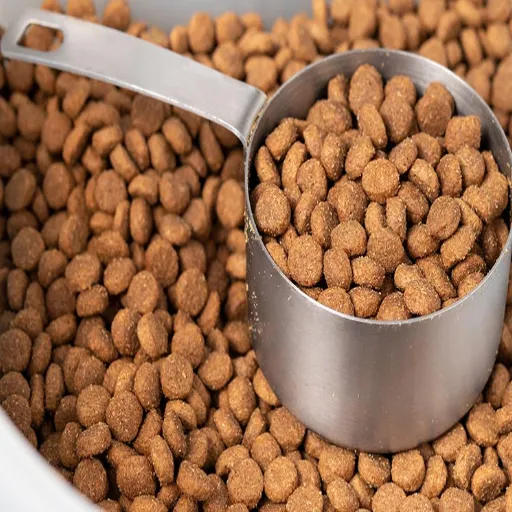
How to Start a Pet Food Business: A Complete Guide from Equipment to Launch

The business process starts with niche selection and regulatory compliance and recipe development for balanced nutrition and selection of production equipment that matches your scale and budget needs. That’s the short answer. The complete situation offers a more captivating explanation.
The global pet food market reached $141 billion in 2026. Entrepreneurs everywhere want a piece of that growth. The entrepreneurs who succeed in business value creation come from those who establish their production processes from the start.
The guidance contains correct information, but it omits vital choices which determine your ability to achieve initial revenue goals or deplete your essential startup funds.
This guide takes a different approach. You will receive the actual equipment expenses which apply to three different production levels between 15,000 kitchen setups and 300,000 industrial lines. You will discover which regulations apply to your specific product type, whether you sell in the US or Europe or Asia. The complete process shows how long it takes to recover your investment in equipment.
The article provides a practical framework that demonstrates how to establish your pet food business. The time to start your project exists in the present moment.
Not sure which production scale fits your budget? Our team at Shandong Loyal has helped hundreds of pet food producers launch and scale worldwide since 2012. Explore our pet food production line solutions →
Key Takeaways
- The global pet food market reached $141 billion in 2026, with direct-to-consumer segments growing at 20.2% annually
- A small commercial extrusion line costs 50,000−50,000−100,000 and can achieve 13-month payback at 1,000 kg/day output
- FDA, AAFCO, and FEDIAF compliance are non-negotiable; budget 3,000−3,000−8,000 for licensing and certifications
- Twin-screw extruders handle complex recipes better than single-screw models, but cost 30-50% more upfront
- Most successful startups begin with treats or toppers, then scale into full kibble production once demand is proven
Step 1: Define Your Pet Food Niche and Business Model
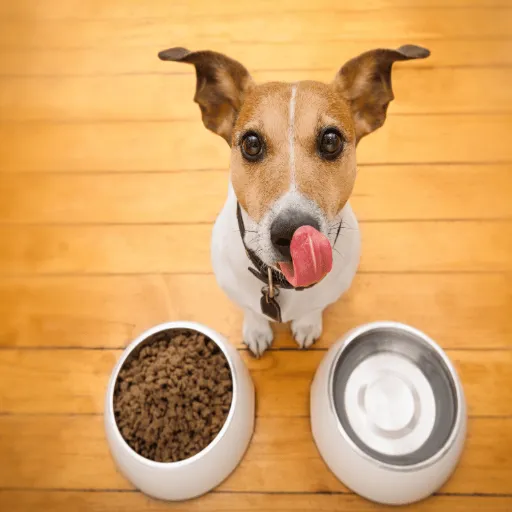
Pet food companies operate their businesses through diverse operational methods. The regulatory requirements and equipment requirements and initial funding needs of your business will be determined by your specific industry segment which also applies before you select a business name. The production of dry kibble needs extrusion machines and drying equipment and flavoring devices. The manufacturing of wet food requires retort sterilizers and various packaging systems. Companies that produce treats can begin their operations with basic baking equipment or dehydrating machines.
Dosing equipment and mixing technology need to be controlled with exact measurement devices for supplements and functional food products. Private label operations skip recipe development entirely but need both reliable supplier contacts and brand development skills.
Elena started her pet food business in Warsaw during 2024 with her belief that she could create a successful business through dry kibble production. The veterinarian interviews revealed that there was no existing solution to develop functional dental treats for senior dogs. The equipment used for her treat line generates $40,000 in monthly revenue while requiring one third of the total cost needed to establish a complete kibble production system.
Market research serves as an essential requirement for pet food startups. You must determine who your customers are together with their reasons for selecting your product and their willingness to pay for it.
Survey pet owners in your target region. Analyze competitor pricing. Create product concepts and test them through focus groups before making any production equipment purchases.
Your equipment budget receives direct influence from your pricing method. A premium functional product sold at 45perbagcanjustifya45perbagcanjustifya100,000 production line. A budget kibble priced at $18 per bag needs higher volume to cover the same capital expenditure. You should first purchase your machines after matching your business needs to your targeted customer segment.
Step 2: Navigate Regulatory Requirements and Compliance
The pet food industry faces more obstacles from regulatory compliance than it does from ineffective marketing strategies. Pet food regulations in every market establish rules that determine acceptable pet food ingredients and mandatory labeling requirements and authorized production locations.
The FDA Center for Veterinary Medicine oversees pet food regulation in the United States through the Federal Food Drug and Cosmetic Act. Your products must be safe to eat produced in clean conditions and truthfully labeled. All states demand businesses to obtain a commercial feed license in addition to federal regulations. Before you start selling your first bag some states require you to complete facility inspections.
Most U. S. states use AAFCO nutritional standards as their primary nutritional standards. Your product needs to fulfill AAFCO nutrient profiles for the specific life stage if it makes the claim of being “complete and balanced.” The requirement functions as a mandatory obligation for all business operations. The requirement functions as a mandatory obligation for all business operations.
FEDIAF guidelines establish nutritional standards that European producers must follow across all EU member states. Asian markets have their own requirements. The Chinese GB standards establish regulations that govern both ingredient sourcing and heavy metal containment levels. Exporting products introduces intricate compliance requirements.
Facility certifications create an extra certification requirement. HACCP certification proves your organization maintains control over food safety risks. SQF and ISO 22000 certifications enable your business to access retail distribution networks that only distribute certified products.
David developed his grain-free dog food recipe through six months of testing at his California location. The state inspector discovered an issue with his guaranteed analysis label two weeks before his scheduled launch. The protein percentage on his packaging didn’t match his third-party lab results. His launch experienced a four-month delay because of that mistake which resulted in $12000 expenses for reformulation and retesting.
His current suggestion is to send your labels to a regulatory consultant before you start printing. The $500 you spend on pre-review saves tens of thousands in delayed launches and recalled inventory.
For official regulatory guidance, visit the FDA Center for Veterinary Medicine and AAFCO websites.
Step 3: Develop Your Recipes with Nutritional Expertise
The process of evaluating pet food requires precise scientific knowledge because both cats and dogs need specific dietary plans, which when executed incorrectly, will lead to harm for pets and create legal risks for your company.
You need to work with a veterinary nutritionist who holds board certification in order to create your recipes. This project needs a professional formulator who will verify that your recipes fulfill AAFCO and FEDIAF requirements which apply to specific animal species and their developmental stages. The team will determine precise quantities of protein, fat, fiber, moisture, vitamins, and minerals.
The required analysis panel needs to display minimum crude protein amounts and minimum crude fat contents and maximum crude fiber limits and maximum moisture levels. The actual measurements exist as laboratory test results which show exact values instead of guesswork. Budget 200−200−500 per sample for proximate analysis at a certified food testing lab.
Shelf-life testing establishes the duration during which your product preserves both its nutritional content and its physical characteristics. The accelerated shelf-life test uses high-temperature conditions to simulate extended product storage which occurs within a period of weeks. Real-time testing at ambient conditions provides the most accurate data but takes 12-18 months.
You should record all changes to formulations together with all testing outcomes and all supplier analysis certificates. During inspections, regulators will request this documentation. Retailers will demand it before placing purchase orders. Your future self will thank you for keeping organized records from day one.
Step 4: Choose Your Production Approach
Pet food startups must choose between two options which are either producing their products through their own facilities or using external manufacturers to create their products.
Co-manufacturing allows businesses to begin operations quickly while requiring less financial investment for startup costs. You provide the recipe and branding while your partner takes care of all aspects including production and packaging and sometimes logistical operations. This business model successfully operates for subscription-based fresh food companies together with their specialized supplement product lines. The co-manufacturing process includes various expenses that businesses should monitor which include minimum order requirements and product quality deficiencies and extra charges that accumulate quickly.
In-house manufacturing requires businesses to spend more money at the beginning of their manufacturing operations. You need equipment, facility space, trained operators, and quality control systems. The tradeoff is control.
You control everything which includes your production timetable and your quality guidelines and your expenses. Inner production methods which last five years will cost between 40 and 60 percent less for each produced item than co-manufacturing methods which produce the same output.
Different production levels require completely different equipment requirements. A home-based treat operation might start with 5,000−5,000−15,000 in kitchen and dehydrating equipment. A small commercial kibble line running 100-300 kg/h requires 50,000−50,000−100,000 in extrusion, drying, and packaging systems. Full industrial production at 1,000+ kg/h starts at 180,000 and can reach 180,000 and can reach 300,000 or more for automated PLC-controlled lines.
Here’s a practical framework for choosing your path:
| Factor | Co-Manufacturing | In-House Manufacturing |
|---|---|---|
| Upfront Capital | 10,000−10,000−50,000 | 50,000−50,000−300,000+ |
| Time to Launch | 2-4 months | 4-8 months |
| Quality Control | Limited | Full control |
| Recipe Changes | Require negotiation | Immediate adjustments |
| Best For | Testing concepts, fresh food, supplements | Proven demand, kibble, proprietary recipes |
Explore our food processing equipment to see configurations for every production scale.
Ready to see what in-house production looks like for your specific recipe? Request a customized equipment quote →
Step 5: Select the Right Manufacturing Equipment
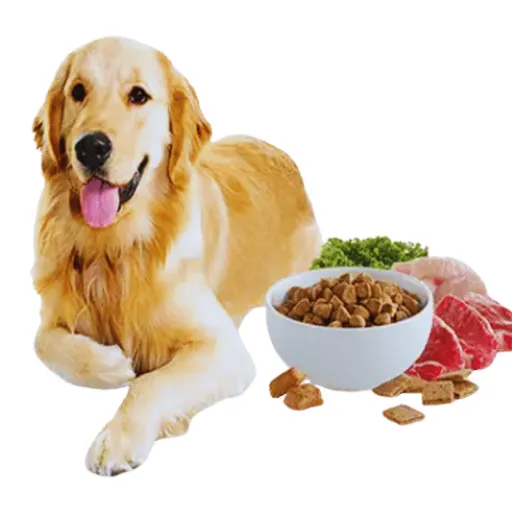
The main part of your pet food business operates through your production line. Your business will suffer when you select the wrong option because you will lose time handling equipment problems. The correct option will transform your machinery into a valuable asset that gives you market advantage.
Dry pet food production requires six fundamental equipment parts. The first step involves using a grinder and mixer to produce raw materials with uniform particle size and complete mixing. The extruder functions as the second step which produces kibble through its controlled cooking and shaping process.
The drying oven functions as the third stage which takes away moisture until the product achieves its shelf-stable moisture content. The flavoring drum functions as the fourth step which applies fats and oils and flavor enhancers to coat the kibble. The cooling conveyor system operates to reduce product temperature before the product enters the packaging process.
The packaging machine operates to weigh the product and fill the bags and then seal the bags while adding labels. Your system will experience production delays when any component fails to meet your desired processing rate because this creates operational inefficient points which consume both manpower and power resources.
The extruder is your most important purchase. Twin-screw extruders use two screws that work together to mix, cook, and move material through the barrel. The system enables better processing of complicated recipes which include high protein content and various grain types and additional nutritional components compared to single-screw systems.
The machines provide operators with better control over both temperature and shear. The tradeoff is price. Twin-screw extruders cost 30-50% more than single-screw units of equivalent capacity.
Single-screw extruders enable basic recipes to use standard formulations because they operate efficiently while maintaining lower equipment expenses. Twin-screw technology provides financial benefits to businesses that produce premium products because it maintains product quality while allowing for recipe changes.
Anya opened her pet food business in São Paulo after she spent $15,000 on a kitchen which she used to make baked treats. Demand for her products grew beyond her ability to produce them through manual methods after eighteen months.
She spent $85,000 to acquire a half-automatic twin-screw extrusion system which can manufacture 300 kilograms per hour. The company achieved equipment return on investment within 14 months. She now operates two shifts while selling products to nearby markets.
For extrusion technology that adapts to your recipe requirements, explore our food extrusion solutions. Our twin-screw and single-screw systems handle capacities from 100 kg/h to 5,000 kg/h with modular designs that grow alongside your business.
See how twin-screw extrusion transforms raw ingredients into finished pet kibble.
Step 6: Calculate Startup Costs and Secure Funding
Pet food startup costs span a wide range. Your business model and production approach determine where you land on that spectrum.
Home-based treat businesses can launch for 15,000−15,000−50,000. That covers kitchen equipment, initial ingredients, packaging, website development, and basic insurance. Small commercial kibble operations need 120,000−120,000−225,000 for equipment, facility leasehold improvements, licensing, and first-year operating capital. Full-scale manufacturing facilities with automated lines, laboratory capabilities, and cold storage run 500,000−500,000−1,000,000.
| Business Scale | Capacity | Total Investment | Equipment Share |
|---|---|---|---|
| Home-based treats | Manual | 15,000−15,000−50,000 | 30-40% |
| Small commercial | 100-300 kg/h | 120,000−120,000−225,000 | 45-55% |
| Industrial | 1,000+ kg/h | 500,000−500,000−1,000,000 | 50-60% |
Your complete startup costs do not exceed 60 percent of your equipment expenses. The price range for a basic extrusion line extends from 25,000 to 40,000. Facility modifications add 10,000−10,000−20,000.
The cost for ancillary equipment, which includes conveyors and dust collection and material handling systems, ranges between 15,000 and 25,000. The initial raw material inventory requires 5,000−5,000−10,000. The total expense for licensing and permits and legal compliance reaches 3,000−3,000−8,000.
The numbers change based on automation level. The business maintains low capital expenses through manual operation while facing higher labor expenses for each product. The implementation of semi-automatic systems that use PLC controls results in a 15-25% increase in equipment expenses while decreasing the need for operators. The implementation of fully automatic lines that use touchscreen recipe management and auto-cleaning cycles results in an initial expense increase of 30-50% yet produces the least expensive labor charges for each product.
Return on investment follows a predictable pattern for well-planned operations. A manufacturer demonstrated that an investment of $100000 achieved payback within 13 months while producing 1000 kilograms per day and generating 30 cents profit per kilogram. The annual production of 300,000 kilograms results in a gross profit of $90,000. Most small commercial operations achieve break-even after 18 to 27 months because they need to pay for labor and utilities and overhead expenses.
The geographic location and business structure determine which funding sources are available. Traditional bank loans work for entrepreneurs with strong credit and collateral. The United States SBA loans provide manufacturing businesses with advantageous financing conditions. Equipment financing allows you to lease your production line from the lender while maintaining your operational working capital.
Angel investors and venture capital focus on high-growth direct-to-consumer brands with subscription models. Crowdfunding validates product demand while raising capital from future customers.
Step 7: Build Your Brand and Go-to-Market Strategy
The success of high-quality pet food depends on development of three essential business elements which include distribution techniques and pricing methods and systems which help retain customers.
The most profitable business model for e-commerce businesses operates through direct-to-consumer sales because it enables multiple customer touchpoints and maximizes their profit margins. The DTC pet food segment grows at 20.2% annually which makes it the industrys fastest-growing distribution channel. The subscription model generates dependable cash flow while helping businesses track stock levels. Direct-to-consumer sales require businesses to develop three essential capabilities: marketing expertise and fulfillment systems and customer support operations.
The retail distribution network which includes pet specialty stores and veterinary clinics and grocery chains enables businesses to connect with more customers. These channels require businesses to allocate funds towards trade marketing and provide promotional discounts while maintaining their supply chain operations. A stockout at a major retailer creates more damage than a single stockout because it destroys relationship which took months to establish.
Your brand positioning must answer one core question clearly: why should a pet owner choose your product over established competitors? “Premium ingredients” has lost its ability to differentiate products from one another because all brands now use this term. The specific positioning of a product leads to success through three different product descriptions. “formulated for dogs with poultry allergies,” “designed for weight management in senior cats,” or “the only fresh food cooked at temperatures under 180°F.”
The design of packaging influences purchase decisions at the shelf and unboxing experience at home. Consumers develop trust through clear nutritional claims combined with transparent ingredient sourcing and feeding guidelines. Premium brands use QR codes to connect customers with specific batch test results and ingredient origin maps which helps them stand out from commodity brands.
Customer acquisition costs in pet food range from 25−25−75 per new subscriber in the DTC channel. The financial performance of a business depends on its ability to retain customers. Brands with 6-month subscriber retention above 60% typically achieve unit economics that attract further investment. Brands that have less than 40% retention spend money to acquire customers while failing to create long-term profitable business relationships.
Step 8: Plan for Scaling and Growth
Your launch-day production line shouldn’t be your five-year production line. Smart entrepreneurs plan upgrades before they become urgent.
The first products of most startups include treats and toppers and single-protein kibble lines. The production process of these products requires basic equipment and minimum funding requirements. The process of expanding into full-scale production requires you to establish demand first and optimize your current operational procedures.
Specific upgrade triggers exist whereas developers create general upgrade triggers. Your business should consider extending its product line when production exceeds 80 percent during three consecutive months of operation. The business reaches a point where it needs to choose between equipment payments and overtime expenses because downtime from excessive usage becomes more expensive than equipment payments.
The process of developing new product lines requires both formulation knowledge and additional equipment development. The flavoring drum upgrade enables you to create various palatant coatings using one extrusion base. The secondary packaging line works with different bag sizes and retail-ready packaging formats. You can increase your production capacity through modular production line designs which allow system expansion without complete system replacement.
Export expansion introduces regulatory complexity but unlocks massive markets. The European market shows a continuous increase in demand for premium pet food products. Pet nutrition based on Western standards experiences rapid growth in both China and Southeast Asia as shown by Asian markets. The requirements for each market include label translations and ingredient compliance checks and facility audits which need to be performed at local facilities.
Frequently Asked Questions About Starting a Pet Food Business
How Much Does It Cost to Start a Pet Food Business?
Costs range from 15,000−15,000−50,000 for home-based treat operations to 120,000−120,000−225,000 for small commercial kibble lines. Full manufacturing facilities with automated production run 500,000−500,000−1,000,000. Equipment represents 40-60% of total startup investment.
Do I Need a License to Sell Pet Food?
Yes. In the United States, you need FDA compliance, state feed licenses, and potentially facility inspections. Most states require registration before you sell commercial pet food. European markets require FEDIAF compliance. Always verify requirements for your specific region before launching.
Can I Start a Pet Food Business From Home?
Yes, for treats and baked goods in many jurisdictions. However, dry kibble manufacturing requires commercial extrusion equipment that won’t fit in a residential kitchen. Check your local cottage food laws and zoning regulations before starting production at home.
What Is the Most Profitable Pet Food Niche?
Direct-to-consumer fresh and functional foods command the highest margins, with the DTC segment growing at 20.2% annually. Subscription models improve retention and predictability. Condition-specific formulations (allergy-friendly, weight management, senior support) justify premium pricing that commodity kibble cannot match.
Conclusion
Establishing a pet food business requires more than just love for animals as its main requirement. The business needs production planning and regulatory compliance together with equipment selection which will determine your company’s path for upcoming years.
You have already viewed the complete eight-step process which leads from initial idea development to actual market-ready production. Your niche should be established through actual market needs which you must demonstrate instead of using market assumptions. You must obtain all required licenses together with certifications before beginning your first product sale. The recipe development process requires professional nutritional experts to supervise all aspects.
Base your decision between co-manufacturing and in-house production on actual market demand instead of hopeful predictions. Your equipment selection should match both your existing recipes and your upcoming new product development work. Your financial assessment should determine actual expenses while you must obtain funding which will sustain your business operations for one and a half years. Your brand development needs to establish specific market positioning which will show pet owners why they should switch to your brand.
Business execution requires you to establish scalability benchmarks before capacity restrictions become overwhelming which leads to urgent decision making.
Pet food business initiation procedures follow established steps which anyone can understand. The process consists of multiple distinct decisions which together create a complete business framework. The entrepreneurs who succeed aren’t the ones with the biggest budgets. The successful businesses choose their equipment based on complete understanding and they follow all regulations while they grow their operations.
Shandong Loyal has operated in the pet food production business since 2012 by supplying production lines to clients throughout six global regions. Our twin-screw extruders together with our drying systems and complete production lines operate between 100 kg/h and complete industrial capacity. All systems include CE certification which uses FDA-approved materials and provides support for specific recipe configurations.
Contact our team today for a free production line consultation →