

Pet Food Extrusion vs Baking: Choosing the Right Production Process

The pet food extrusion process is the dominant manufacturing method for dry kibble, used in approximately 95% of global production, while baking offers a lower-temperature alternative that preserves more nutrients and supports premium product positioning. The right choice depends on your target market, production volume, and nutritional goals. Most manufacturers assume extrusion is their only option. That assumption could limit your product strategy and leave margin on the table.
Maria launched her dog food brand in 2024 with a clear mission: deliver high-quality nutrition at an accessible price point. She visited three equipment suppliers. Each one recommended extrusion without asking about her target customer, her volume projections, or her recipe goals.
She invested $380,000 in the system which was effective. But she did not bother to check if by any chance the baking process could have enhanced her products in terms of texture and aroma thereby giving her brand any form of outstanding quality on shelves. This is a likely scenario for many. The tendency to recommend equipment based on what a supplier has on offer rather than the client’s needs is still a dilemma in practice.
This article offers a distillation of how each technique functions, the aspects where each is superior, and the different technologies that assist in reaching the goals of the company. You shall be able to know the axes on which to engage, and for how long, with respect to the oven opposite the extruder. Furthermore, you will be presented with some insights related to the pilot-scale and production-scale expansion.
Key Takeaways
- Extrusion dominates 95% of dry pet food manufacturing due to high throughput and lower per-unit cost.
- Baking preserves 15-20% more heat-sensitive nutrients and supports premium positioning at a higher price point.
- Extrusion lines require higher capital investment but deliver continuous output exceeding 2 tons per hour.
- Baking suits limited-ingredient, sensitive-stomach, and super-premium formulations where natural flavor retention matters.
- Many manufacturers now run hybrid lines or dual processes to serve multiple market segments from one facility.
How the Pet Food Extrusion Process Works
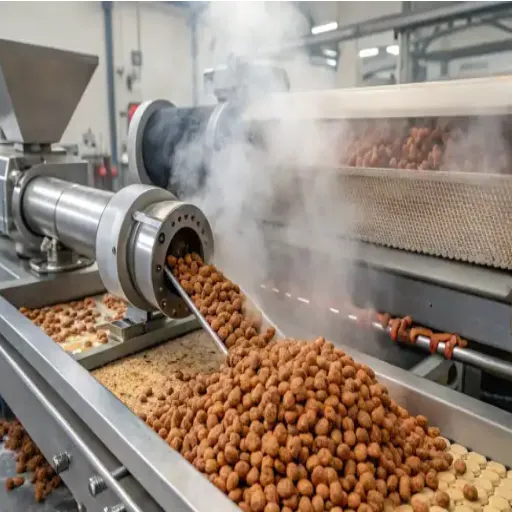
The pet food extrusion process compresses, heats, and shapes raw ingredients into uniform kibble through a continuous high-pressure cooking system. Understanding how the pet food extrusion process works helps you evaluate whether it fits your product goals. It combines mixing, sterilization, starch gelatinization, and forming into a single streamlined operation. The result is a porous, shelf-stable kibble with consistent size and texture. Speed and uniformity define this method.
The Extrusion Process Step by Step
Initially, the raw materials go through a needful preparation process. Grains, protein meals, fats, vitamins, and minerals are finely ground to a standard particle size. That is crucial because if the grinding is done irregularly, it results in irregular moisture uptake during the preparation of the dough as well as non-uniform cooking during extrusion.
Then, a batch or a continuous type mixer is used to incorporate the dry ingredients. First wet ingredients along with the oils and water are added and blended well into this mixture.
There, the mixture is fed to the preconditioner where steam and water are used to bring the moisture content to 16 -25% and heat the materials up to 80 – 95 degree Celsius. The reason for this is to allow hydration of starches, denaturation of proteins to commence, and rendering the dough to a workable state for extrusion cooking.
The pre-conditioned meal is introduced into an extruder barrel which has one or more screws which rotates to move the material through the barrel.
In the extrusion process, the cylindrical frame becomes conical in shape or the pitch of the flights decreases. This results in extremely high pressures – typically in the range of 250-400 psi and elevated temperatures of 120-160 deg C – where some of the starch gets gelatinized, some of the proteins get denatured and the microbial load gets pasteurized.
At the end of the barrel, the cooked dough is shaped in accordance with the shallow profile openings on the plate of die head. This hopper is subject to atmospheric conditions once out of the confined space, the moisture present inside is rapidly converted to gaseous form (steam). The light and porous texture is formed out of the bounding dough that has been inflated by the microwave moisture and air expansion. Upon discharging the extruded portion of ribbon, a rotating knife is used to cut the pieces to the desired length.
At this stage the kibble is further introduced to a dryer. The moisture content is brought down from a high-end 20-30% to a reasonable 8-12% making the food shelf stable and keeps away any mold growth.
A rotating drum coater is used to apply fats, oils, and palatants on dried and cooled material. This is a very important step because during high-heat extrusion some flavorings provided in the pellets are cooked away. In addition, it helps to preserve the sensitive nutrients that couldn’t make it through the cooking process.
Key Equipment in an Extrusion Line
An extrusion line cannot function properly with only isolated machinery as there are several integrated parts that work in an order. The material is provided by the feeder and it is fed into the preconditioner in a stable flow. The preconditioner wets and heats the mixture of flour with steam and water.
Actual cooking is achieved in the extrusion cooker body by the barrel and screw assembly through heating, compression, and shear forces. The kibble shape and dimensions are obtained and extrudate is cut into pellets, thanks to a die plate and cutter device.
Further down the line, a dryer is installed to reduce the moisture content by hot air circulation. Fats and flavors are sprayed by a coater and enrober. The product is then cooled with a cooler before it can be packed. A single HMI or a more advanced PLC control system ensures all the mentioned processes monitor temperature, pressure, rotation speed, and water content of pet food extrusion vs baking systems.
Attention should be given to the conventional and tandem extrusion systems. The initial outlay and the maintenance costs are lower in the case of a single screw extruder. Because mixing, extruding rate, control of shear and temperature profiles. Pet food extrusion vs baking, which pet food in particular involves and what ingredient is used.
Want to see how modern extrusion technology handles complex formulations? Explore our advanced food extrusion solutions designed for high-output pet food production.
How Pet Food Baking Works
Baking produces dry pet food through a lower-temperature, longer-duration thermal process. Rather than forcing dough through a die under extreme pressure, baking forms dough into sheets or pellets and cooks them in an oven. This method preserves more natural flavors and heat-sensitive nutrients. Throughput and expansion uniformity typically suffer. The trade-off is deliberate.
The Baking Process for Dry Pet Food
Shaping the dough starts by typically making cookies or more primitive extrusion products. This is done by grinding, mixing and hydrating the raw materials. That is, more water than an extrusion recipe would call for at the start is used. Also, baking formulation can include softening materials and/or chemicals that enable cells expansion.
The thick batter passes through an apply device – what is called a former – prepares various shapes like the ones: sheets, pellets or ready pre-cut and the products completely differ in shapes or the mosaic work of the baker. There are some molds in baking lines that can mold in any shapes and there is a line that makes it extruded in a total one sheet that will be cut only after cooking. The sheets, however come out in special formed pieces and are directly fed into a band oven. Inside this oven temperatures are normally between 90°C-120°C. Cooking times are generally implemented at a figure higher than that of extrusion which ranges from 15 minutes to 30 minutes.
Upon completion of the baking process, the kibble is passed through a cooling system. In some cooking systems there is another step of the process called breaking or sizing where a large baked sheet is broken beyond a certain thickness. The moisture content is final as it is with an extrudate product to 8-12 percent in order to preserve it for longer.
Key Equipment in a Baking Line
A typical baking line will always place the continuous oven as the central element. This is comprises the highest capital equipment outlay and also the footprint requirements. Preceding the oven is a high shear mixer that homogenizes the ingredients in making a dough. In turn, a former or rotary molder helps in shaping the product. In some cases, this includes a proofing stage for the dough before it is taken into the oven.
On the floor, post-ovens equipment is present i.e. cooling racks, breakers or rollers, sizes as well as coating drums. Baking line equipment, in general, takes up more space in comparison to extrusion line equipment with the same capacity. Energy use is also different. In extrusion, heat energy is concentrated around the barrel and the conditioning chamber while in baking energy consumption is within the oven residence time which is longer.
In Oregon, David was responsible for managing the development of high-quality pet food products as a senior manager of product development. Eighteen months was allocated to the re-development of the hero product line of the company David worked for since pet customers stated that their dogs liked their baked smells of the other brands better than the products of the company.
Their palatability scores increased by 23% when they moved the super premium SKUs from baking to extrusion, in a blind feeding test. They made the change to the system by buying an oven which cost $200,000. The retailer’s prices at the shelf increased by 18% and at the same time, they managed to secure shelves of two major national retailers. Baking allowed them to create a romantic narrative about delicate cooking which fitted the higher cost.
Pet Food Extrusion vs Baking: Nutritional and Quality Impact
The cooking equipment you employ determines the extent of nutrient retention, digestion, and valarisation of feed by the animal. Learning about the ingredient profile of baking as opposed to extrusion gives you the chance to match the development strategies with the provided brand description and target audience aspiration.
Starches by baking and extrusion have main differences in the alteration of the gel structure. More starch gelatinizes when food is extruded, it can range from 80 to 95%. Starch granules can be forced to change their shape by the application of moisture and heat combined with high pressure, for example.
In a baked mix, depending upon the recipe and oven conditions, gelatinization may be in the region of 60-80%. Optimal digestibility is characteristic for products with a high degree of gelatinization. This is the reason why extruded pet food as opposed to baked food does not have problems with the delivery of feeding efficiency.
Protein structure is affected in both processes due to protein denaturation but extrusion is associated with the most complete denaturation because of higher temperature maxima. This is useful in trying to increase the digestibility of protein in some sources, although any excess shear may potentially be detrimental to some of the amino acids, e.g., lysine. Unlike in baking, with its less aggressive heating, more proteic structures remain intact, which is believed by some product developers to be advantageous in terms of the consumers with more “sensitive” intestines.
In terms of a clear cut advantage for baking, it is nutrient retention. Studies show that nutritional losses are 15-20 % lower in low temperature baking, that is, for vitamins sensitive to heat such as vitamin A, E, and some vitamins B. The damaging effect of extrusion temperature is the reason coatings of most extrudates contain added vitamins. One argument that may appeal to brands that focus on less or no processed foods or very ‘natural’ foods is that baking is easily justifiable.
Taste perception is closely linked to chemistry of flavors. Intense heat-extrusion causes Reactions of Maillard to occur which gives the product roasting, or umami notes but it can also lead to the aromas escaping. More aromas from the meat meals and the fats are found after baking. Several high end brands have this aspect marketed as part of their products, “baked in ovens,” or “gently flow over natural aromas”. Product palatability for extruded products has improved dramatically due to the advances in coating technologies but in the case of baked kibble, the superiority in terms of retention of natural aromas is even more pronounced.
In terms of shelf life, extrusion would be considered perform better when the two products are packaged that same way. In the extrusion process, the levels of pastuerization is relatively high enough to ensure getting rid of salmonella and various other pathogens. Baking products demands more robustness in terms of product temperature changes and extension shelf life packages might prove useful to extend retail life especially for bakers products.
Production Efficiency and Cost Comparison
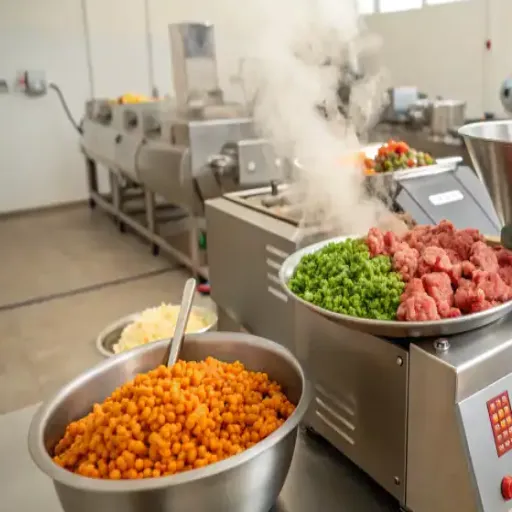
Leaving aside nutrition and quality, some operating conditions also help in choosing pet food extrusion vs baking. Throughput, energy consumption, capital costs, and ability to change course are some of these factors which contribute to the overall cost of ownership.
However, when it comes to throughput, it is obviously extrusion on whom the focus is. Twin screw extrusion systems used in the marketplace can continuously produce between two to five tons of kibble in an hour. Baking lines of the same area usually process between half a ton and one and a half tones an hour due to limitation of speed imposed by the oven residence time. Those companies which mass produce large quantity products for low margins turn to extrusion.
The energy required varies. In the case of extrusion, it takes place via the preconditioner, the barrel, and indirectly through the steam and drive powders. In baking, it is more evenly spread throughout the long oven section that lasts for 15-30 min, with gas burners or electric heating units used. Finished product production employs more energy in extrusion than in baking in terms of weight, as baking is less energy intensive with commercial applications.
Now, factory setup costs label extrusion as a more expensive solution. Installation of a fully automatic extrusion line comprising the preconditioner, twin-screw extruder, dryer, and a coater would in such a case is approximately in the range of 300,000–900,000 euro, depending on the level of performance and engineering involved. On the other hand, a mixing line equipped with a mixer, a forming machine, and a tunnel oven may cost about 150,000–400,000 as that is the design capacity that power of baking apparatus of that level offers but again given the low throughput cost of extrusion still translates into a lower cost per ton.
It is possible to alter functions according to technology bases. Extrusion has a lot of possibilities concerning the formulation of different ingredients that have high fiber, high protein, and alternative protein contents. The high temperatures and pressures of extrusion make it possible to turn into dough materials that would be on the verge of falling apart inside the oven. As such, pet food extrusion works well in cases where conventional formulations using grains and meals are unable to hold adding moisture and passing through the oven.
Different types of maintenance may bear a different name, but their cost may not differ significantly. Mineral and fibre content accounts for abrasive wear of the extruder barrels and screws. Over time, they are worn out and require replacement or at the very least refurbishment. Multiple components, such as oven burners, conveyor belts, or heat exchangers, require maintenance in baking lines. Each of the systems has to be maintained in a regular schedule otherwise unplanned stoppages are inevitable.
Here is a quick comparison of the two methods across key operational factors:
| Factor | Extrusion | Baking |
|---|---|---|
| Throughput | 2-5 tons/hour | 0.5-1.5 tons/hour |
| Capital cost | 300,000−300,000−800,000 | 150,000−150,000−400,000 |
| Energy per kg | Lower | Higher |
| Ingredient flexibility | High | Moderate |
| Floor space | Compact | Larger |
| Primary advantage | Speed and efficiency | Nutrient retention |
Which Method Is Right for Your Product Line?
The best manufacturing process aligns with your brand positioning, target customer, and growth strategy. Neither method is universally superior. Both deliver excellent products when implemented correctly.
Choose Extrusion If
- You target high-volume dry kibble production.
- Cost efficiency ranks as your top priority.
- Your formulations include diverse ingredients such as alternative proteins, high fiber, or variable starch sources.
- Maximum shelf stability matters for distribution into markets with long supply chains or warm climates.
- You plan to scale output beyond 1 ton per hour within three years.
- Your brand story emphasizes scientific formulation, complete nutrition, or veterinary endorsement rather than minimal processing.
Choose Baking If
- You position in the premium or super-premium segment.
- Your marketing emphasizes “low and slow” cooking, natural processes, or artisanal quality.
- Your formulations are limited-ingredient, sensitive-stomach, or hypoallergenic.
- Gentle processing supports your brand promise.
- You serve regional markets where distribution timelines stay short.
- Your target customers read ingredient panels and respond to claims about nutrient preservation.
Hybrid Approaches
There are some facilities which carry out both of these processes. For example, a contract manufacturer from Southeast Asia, which is one of the companies we turn to for co-production in year 2024 three extrusion lines for their traditional customers, and one oven line for their upscale clientele. In other words, and by their own words, they are able to service rustic, as much as gourmet deliveries, all at once. Here, the baking line is 40% of the extrusion line, but the return per cased figure grows by 35%.
Other manufacturers extrude a base product and apply a post-bake coating thereafter for different textural effects. Some high-end brands, on the other hand, use extrusion to ensure that all the pieces have the same shape, but then oven bake products with a gentle heat to promote surface odors. Such mixed methods increase the level of detail but may be advantageous when conventional approaches of product satisfaction are insufficient.
Not sure which process fits your business model? Contact our team for a customized consultation. We’ll review your recipe goals, volume targets, and budget to recommend the right equipment configuration.
Equipment Considerations for Scaling Production
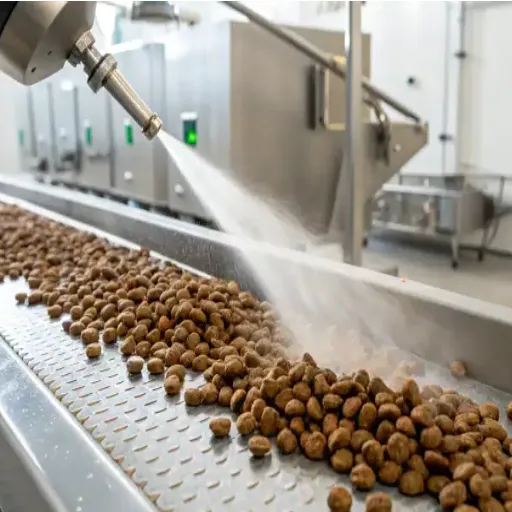
Pilot to commercial level production is more than buying a new larger machine. At that stage, design and choice of processing equipment affect how comprehensive, adaptable, or powerful the pet food manufacturing line will be while still keeping everything consistent.
The main difference between a pilot and commercial scale machine is how each is controlled rather than how much each one produces. For instance, such is the case with pilot extruders that allow a much quicker adjustment of the screw-speed and temperatures, both necessary during formulation. For commercial equipment, stability and automation is more important. When scaling up, consider including a phase for recipe adaptation onto the production machinery. A pilot of 50 kilograms that works for you may need some moisture or screw-profile changes at 2 tons/week scale.
Despite many manufacturers of pet food relying on expansive production lines, optimal economic threshold per unit dictates that they will also require heavily sole-purpose lines, preventing shrinkage and associated feistiness of the costs. But in as much as the preconditioner and extruder chosen may have the capacities to handle only the initial volumes, it is better to select the cooler and drier which can handle at least 50 percent of that extra capacity. This will allow future upgrading of the extruder without necessarily changing the replacing the cooler and drier equipment. This investment phase eases the counterpart funding requirement because it mitigates the full investment risk for the client.
Recipe-specific adjustments require accessible changeover procedures. Die plates determine kibble shape and size. A complete pet food production line should allow die swaps within 30-60 minutes. Quick changeover matters if you plan to produce multiple SKUs, such as breed-specific sizes or life-stage formulations, on shared equipment.
The line gets finished off by coating, packaging and quality control systems. In ensuring consistency in and across batches, spray coating drums which have automatic fat and flavor metering do not fail. Before the packaging stage, in line metal detectors and checkweighers would have already restrained breach. This integration changes what would otherwise be several machines into one complete system.
Conclusion
The process of effective pet kibble production using pet food extrusion vs baking under strictly controlled working conditions employing suitable types of machinery provides very good dry pellets. Whereas extrusion gives the capability of throughput, cost and different formulations, all which are critical in high volume production, baking gives the ability to preserve nutrition, gives natural taste and premium approach, which is what customers are demanding more and more.
Do not make the equipment supplier base decisions, make the customer the base. Set the area of operation, the price of the product and the nutritional claims with all these agreed. Now select the process which yields the desired results in the most consistent manner.
However most successful companies end up going for both functions after the initial separation. They perform extrusion for capacity reasons and baking in order to differentiate the product by adding value.
By the end of 2034, the market size of pet food processing is forecasted to grow from 6.06billion in 2025 to over 10 billion. To achieve significant growth, brands need to adhere to cointegrated strategies that involve product technology and production technology. If a brand opts for an option that fits their requirements, they will be able to engage in commodity competition and will be able to compete on price.
Ready to build a production line that matches your product vision? Request a quote today and our engineering team will design a customized solution for your specific recipe, capacity, and budget requirements.