
Loyal Food Machinery
Industrial Modified Starch Production Line Solutions
Convert native starch into high-value modified starch through physical, chemical, or enzymatic treatment. Turnkey processing technology for food, paper, textile, oil drilling, and construction applications.
100 – 3,000
kg/h Capacity
Physical & Chemical
Modification Methods
SUS304/316
Hygienic Standard
Market Analysis & Strategy
Engineering the Next Generation of
Engineering the Next Generation of
Modified Starch Manufacturing
A modified starch production line changes the structure or properties of native starch to improve viscosity, stability, solubility, or adhesion. The global modified starch market is valued at roughly USD 15–16 billion and grows at 3–5% annually.
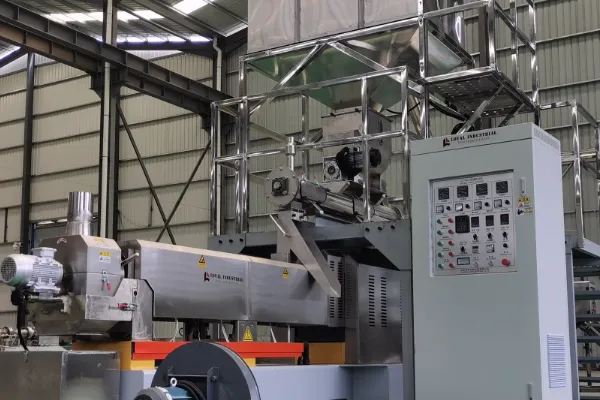
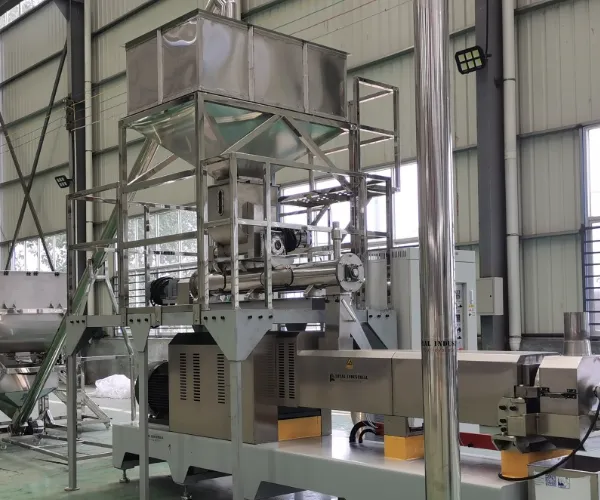
Our lines integrate mixing, extrusion or reaction, drying, grinding, and packaging into one continuous workflow. With food-safe stainless steel construction and PLC automation, we deliver tailored solutions for food, paper, textile, oil drilling, and construction processors.
-
Flexible Modification Methods: Physical, chemical, and enzymatic treatment options to produce pregelatinized, cationic, oxidized, and cross-linked starches.
-
Integrated Production Workflow: Single continuous workflow reduces manual handling, lowers contamination risk, and improves batch-to-batch consistency.
-
Sanitary Architecture: Open-frame SUS304/316 design eliminates blind spots, meeting HACCP, FDA 21 CFR, and EU 1935/2004 requirements.
2025 Trend
Focus on clean-label processing and multi-industry application versatility.
$15-16B
Global Market Size
Modified starch market growing at 3-5% annually worldwide.
3-5%
Annual Growth
Driven by food, paper, and oil drilling demand.
PLC
Smart Control
Full line synchronization with recipe memory for consistent quality.
304/316
Stainless Steel
Food-contact surfaces meet FDA and EU food-contact regulations.
From Native Starch to Finished Product
Explore the engineering behind our fully automated modified starch lines. Every step utilizes precision control to ensure consistent modification and optimal yield.
Flour Mixing
Blends native starch (corn, cassava, potato, or wheat) with water and additives to uniform moisture content. High-speed shearing ensures all particles are evenly hydrated before extrusion.
Acc: ±0.5%Screw Conveying
Feeds mixed material continuously into the extruder at a controlled rate. Ensures steady material flow and prevents bridging or segregation of the starch mixture.
Variable Frequency DriveTwin-Screw Extrusion
Co-rotating screws apply heat, pressure, and shear to modify starch structure. Self-wiping action provides better mixing and more consistent heat transfer than single-screw designs.
Core TechnologyAir Conveying
Transports extruded material pneumatically to the drying stage. Closed system prevents contamination and moisture absorption during transfer between process stages.
Closed SystemMulti-Layer Drying
Reduces moisture to 10–14% using controlled hot air circulation. Multi-layer design maximizes heat transfer efficiency while preserving modified starch functionality.
Moisture Target: 10-14%Cooling & Grinding
Product is cooled to ambient temperature before entering the grinder/pulverizer. Produces fine powder to required mesh size (80–200 mesh) for downstream applications.
80-200 Mesh OutputPackaging
Automatic weighing, filling, and sealing systems package finished modified starch. Seamlessly integrates with bagging equipment for a turnkey finish.
Auto Weighing & SealingTechnical Specifications
Choose the model that matches your capacity target and facility footprint. All specifications are customizable for voltage, frequency, heating source, and local utilities.
Extrusion-Based Modified Starch Production Line
| Model | Capacity (kg/h) |
Installed Power (kW) |
Dimensions (L×W×H meters) |
Heating Options |
|---|---|---|---|---|
| DSE-65 / TSE-65 | 100 – 150 | 50 – 90 kW | 15–25 × 1.3–2.0 | Electric / Gas / Steam |
| DSE-70 / TSE-70 | 200 – 300 | 65 – 120 kW | 20–30 × 1.5–2.5 | Electric / Gas / Steam |
| DSE-85 / TSE-85 | 400 – 600 | 100 – 190 kW | 30–40 × 1.5–3.0 | Electric / Gas / Steam |
| DSE-100 / TSE-95 | 800 – 1,000 | 150 – 250 kW | 35–50 × 2.0–3.5 | Electric / Gas / Steam |
| DSE-120+ | 1,500 – 3,000 | 200 – 295 kW | 45–60 × 2.5–5.5 | Electric / Gas / Steam |
Why Loyal?
Precision Engineering Advantages
We integrate Industry 4.0 standards into starch processing. Our proprietary technology focuses on reducing operational costs and maximizing product consistency.
Smart Extrusion Control
Advanced PID temperature control combined with co-rotating twin-screw design. Self-wiping action provides better mixing and more consistent heat transfer than single-screw systems.
Temp Accuracy
±1°C
Screw Design
Co-Rotating
Hygienic Structure
Designed for food safety and visualized factory standards. All food contact parts use SUS304/316 stainless steel with an open-frame design for easy high-pressure cleaning.
Material
SUS304/316
Compliance
HACCP/FDA/EU
Intelligent Automation
Full line synchronization via PLC with touchscreen HMI. Store multiple product recipes for one-touch changeovers between pregelatinized, cationic, and oxidized starch production.
System
Siemens/Omron
Remote Support
Available
Quality Control & Compliance
A reliable modified starch production line must deliver consistent product quality. We help buyers specify testing protocols for WSI, WAI, degree of substitution, viscosity, moisture, and particle size before installation.
Book a System Demo →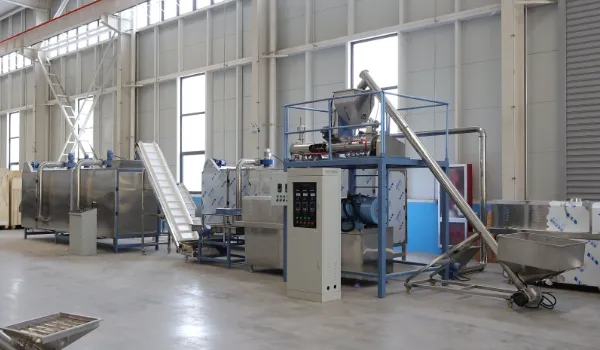
Your Partner Beyond the Machine
We don’t just sell equipment; we deliver a profitable production capability. From your first inquiry to lifetime maintenance, Loyal is with you.
 EU Safety Compliant
 Quality Management
 Field Verified
 Food Grade Material
1. Consult & Recipe
Analyze your raw material, target product, and capacity. We provide customized equipment recommendations and starter recipes.
2. Layout Design
Our engineers create customized 2D/3D factory layouts (CAD) to fit your building dimensions and utility locations.
3. Manufacturing
Precision CNC machining of components. Rigorous testing with raw materials before shipment to ensure zero-defect delivery.
4. Install & Support
On-site installation and operator training. 24/7 remote technical support and fast spare parts dispatch via DHL/FedEx.
Global Delivery Capability
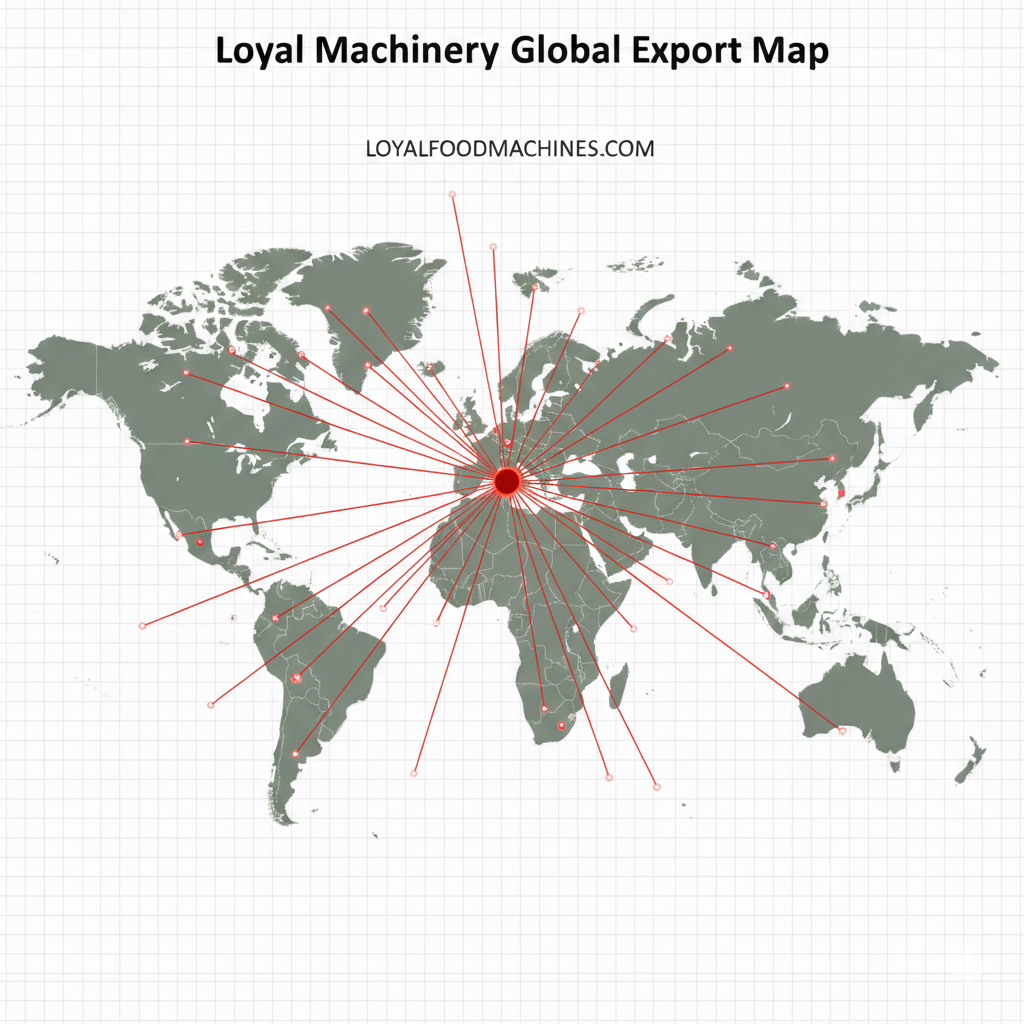
Shandong Loyal has delivered extrusion and starch processing equipment worldwide for over a decade. Our team of 650+ professionals designs, manufactures, and supports complete production lines from consultation to commissioning.
50+
Countries
20yr
Experience
650+
Professionals
Frequently Asked Questions
Answers to common queries about modified starch production lines, equipment, costs, and applications.
What is a modified starch production line?
A modified starch production line is an integrated manufacturing system that converts native starch into modified starch through physical, chemical, or enzymatic treatment. It typically includes mixing, extrusion or reaction, drying, grinding, and packaging equipment.
What equipment is needed for modified starch production?
A standard extrusion-based line uses: mixer, screw conveyor, twin-screw extruder, air conveyor, multi-layer dryer, cooling conveyor, grinder or pulverizer, and packaging machine. Chemical modification lines also require reaction tanks, dosing systems, pH control, and washing equipment.
How much does a modified starch production line cost?
Small pilot lines start around $30,000. Mid-size industrial lines range from $100,000 to $350,000. Large production lines cost $350,000 to $800,000, while turnkey plants can exceed $1,500,000 depending on capacity, automation, and configuration.
What raw materials can be used?
Corn, cassava, potato, wheat, and waxy maize starch are the most common. Each source produces different viscosity, gel strength, and solubility characteristics. High-amylopectin cassava starch is often preferred for oil drilling, while oxidized corn starch is widely used in paper coating.
What is the difference between modified starch and pregelatinized starch?
Pregelatinized starch is a type of physically modified starch that dissolves in cold water. Modified starch is a broader category that also includes chemically and enzymatically treated starches with enhanced stability, adhesion, or viscosity properties.
Which certifications should a modified starch production line have?
Look for CE, ISO9001, and food-grade compliance options such as HACCP, FDA 21 CFR, and EU 1935/2004. The right certification set depends on whether you produce food-grade or industrial-grade starch.
Have a specific technical question?
Our engineers are ready to discuss your factory layout.
Ask an Engineer →
Turnkey Solution Provider
Ready to Scale Your Modified Starch Production?
Tell us about your raw material, target application, and required capacity. Our engineers will reply within 24 hours with a tailored modified starch production line proposal.