
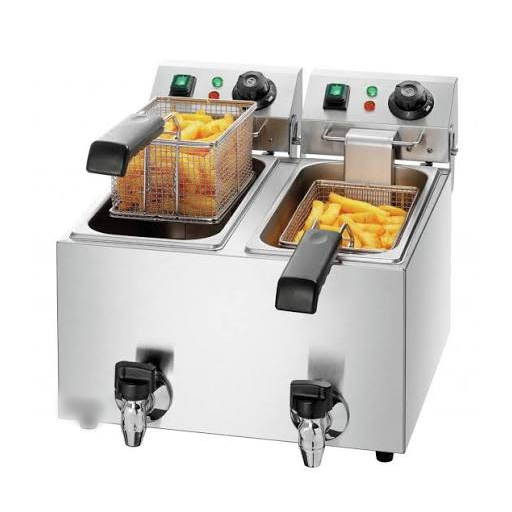
Snack Fryer Machine: Application Guide for Every Snack Product

There is no single snack fryer machine that fits every product. The right one depends on what you are frying. Batch (kettle) fryers suit kettle chips, nuts, and small-run snacks; continuous (conveyor) fryers suit high-volume pellets, chips, and samosas; and vacuum fryers suit fruit and vegetable chips. Choose the wrong type or temperature and you will burn banana chips, soak samosas in oil, or throttle a high-volume line with a kettle.
Arianto Wibowo learned this the hard way in 2024. His plant in Surabaya made banana chips for export. Every week, a few batches came out brown and bitter, and his oil costs climbed as high-sugar fruit broke down the oil faster. He was running the same fryer for everything because that is what the vendor sold him.
After switching his banana chips to a vacuum fryer at 80 to 120°C and keeping his pellet snacks on a continuous fryer, his rejects dropped sharply. He also cut oil content in the banana chips by roughly a third. His story is common. Snack producers lose money not because they bought a bad machine, but because they bought the wrong machine for their product.
In this guide, you will learn how to match a snack fryer machine to seven product categories. You will get real temperature bands, dwell times, and throughput expectations. By the end, you will know whether your product needs a batch, continuous, or vacuum fryer, and you will have a clear application chart to work from.
Key Takeaways
- A snack fryer machine comes in three families: batch (kettle), continuous (conveyor), and vacuum, and the product, not the brochure, decides which one you need.
- Conventional frying runs around 160 to 180°C, while vacuum frying runs at 80 to 120°C and cuts oil content from 35 to 45% down to 15 to 25%.
- Potato chips and French fries fry at about 175 to 190°C for 30 seconds to a few minutes; samosas fry at 155 to 180°C for 1 to 5 minutes.
- High-sugar and high-starch products like banana and taro chips brown fast, so they are the strongest candidates for vacuum frying.
- Pelleted and extruded puff snacks fry at 155 to 180°C for 30 seconds to 10 minutes on a continuous fryer with in-line de-oiling and flavoring.
What Is a Snack Fryer Machine?
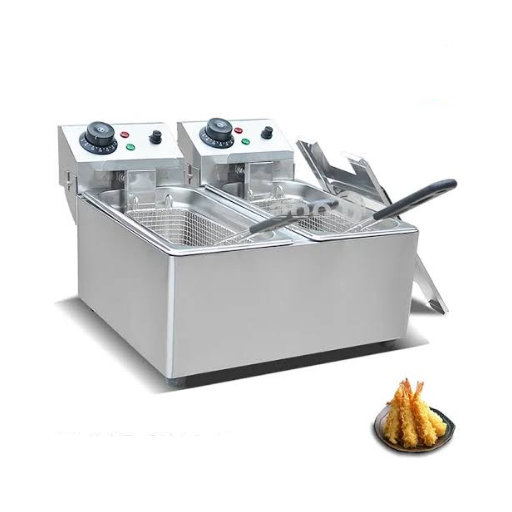
A snack fryer machine is an industrial fryer that cooks snack products in hot oil. This includes nuts, fruit and vegetable chips, battered proteins, samosas, and pelleted or puffed snacks. The machine comes in three main forms: batch (kettle), continuous (conveyor), and vacuum fryers.
The correct type, temperature, and dwell time depend entirely on the product. That is the point most spec sheets miss. A machine that lists a dozen products still does not tell you which settings fit your product.
The Three Fryer Families
Understanding the three fryer types is the fastest way to make a good decision. Each solves a different problem.
- Batch (kettle) fryers cook food in discrete loads. They give you variable frying time, hard-bite texture, and easy changeovers between flavors. They suit small runs, kettle chips, nuts, and specialty snacks.
- Continuous (conveyor) fryers move product through hot oil on a belt. They give you high throughput, uniform cooking, and tight temperature control. They suit potato chips, pellets, and samosas at volume.
- Vacuum fryers fry under reduced pressure, which lowers the boiling point of water. They run at 80 to 120°C instead of 160 to 180°C. They preserve color and nutrients and cut oil absorption. They suit fruit and vegetable chips.
Most snack producers eventually run more than one type. A plant might run a continuous fryer for volume pellets and a vacuum fryer for premium fruit chips side by side. For a deeper look at the batch side, see our batch fryer machine guide.
The Snack Fryer Application Chart
The chart below is the reference most buyers wish they had before contacting a supplier. Use it to match your product to the right fryer type and starting parameters.
| Product | Recommended Fryer Type | Temperature | Dwell Time | Notes |
|---|---|---|---|---|
| Nuts (peanuts, cashews, almonds) | Batch or vacuum | 160–180°C (or 80–120°C vacuum) | Varies by nut size | Small batches, frequent flavor changes |
| Banana / plantain chips | Vacuum (preferred) or batch | 80–120°C vacuum | Varies by slice | High sugar browns fast; vacuum holds color |
| Taro / root-vegetable chips | Vacuum or continuous | 80–120°C vacuum | Varies by thickness | High starch; vacuum for premium low-oil |
| Battered proteins | Continuous | 160–180°C | Longer dwell | Needs oil filtration |
| Samosas / namkeen | Batch or continuous | 155–180°C | 1–5 min | Flexible Indian snack segment |
| Pelleted / puffed snacks | Continuous | 155–180°C | 30 sec–10 min | Short dwell, then de-oil and flavor |
| Potato chips / French fries | Continuous or batch | 175–190°C | 30 sec–5 min | Highest volume category |
These are starting bands, not absolutes. Slice thickness, moisture, oil type, and target texture all shift the numbers. A thicker taro chip needs more time than a thin one. A high-moisture samosa needs a different dwell than a dry one. Industrial fryer suppliers such as Tindo Tech document adjustable 0 to 300°C ranges with PID control as the standard for continuous snack frying.
If you are still deciding between technologies at the highest level, our batch fryer vs continuous fryer comparison walks through throughput, texture, and oil use in detail.
Nuts and Legume Snacks
Nuts are one of the most forgiving categories, but they still reward the right setup. Peanuts, cashews, almonds, and roasted chickpeas usually fry at 160 to 180°C in a batch kettle. Because nut runs are often small and flavor changes are frequent, a batch fryer’s quick changeover is a real advantage.
Consider a plant that roasts five flavored cashew SKUs in a week. A batch fryer lets the team clear one flavor and start the next in minutes. A continuous fryer would leave product stranded in the machine between changeovers.
That said, nuts can also be oil-roasted or fried under vacuum. Vacuum frying at 80 to 120°C gives a lighter color and lower oil pickup, which matters for premium and clean-label positioning. The heating system you choose, whether gas, electric induction, or thermal oil, also shapes your energy cost and temperature uniformity. For more on that decision, see our guidance on fryer heating systems.
Plantain and Banana Chips
Banana and plantain chips are where the product really dictates the machine. These fruits are high in sugar. At conventional frying temperatures, that sugar browns quickly and can turn bitter. This is the exact problem Arianto faced in Surabaya.
The standard fix is vacuum frying. Because water boils at a lower temperature under vacuum, you can fry at 80 to 120°C instead of 160 to 180°C. The lower heat preserves the golden color, keeps nutrients intact, and cuts oil absorption. Conventional atmospheric frying typically leaves 35 to 45% oil in the final product. Vacuum frying brings that down to roughly 15 to 25%, a range documented across vacuum fryer specifications from equipment manufacturers.
That difference is not small. For a brand positioning banana chips as a healthier snack, a 30 to 50% oil reduction is a selling point you can print on the bag. If you are new to this technology, our vacuum frying machine explainer covers the process, the oil-reduction science, and how to choose a unit.
Taro and Root-Vegetable Chips
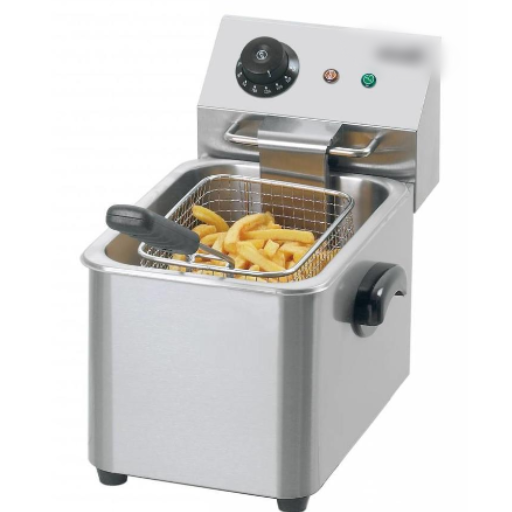
Taro, sweet potato, purple potato, and similar roots behave much like banana chips, but for a different reason. They are high in starch. Starch absorbs oil and can develop off-textures if the temperature is wrong.
Vacuum frying is the premium choice here. It keeps the natural color vivid and the oil content low, which is why root-vegetable chips dominate the “healthy snack” aisle. A continuous fryer is a viable alternative when you need volume and are willing to accept more oil pickup and a slightly darker product.
Slicing and blanching matter as much as the fryer. Uniform slices cook evenly. A quick blanch before frying removes excess surface starch and reduces sticking. If you are producing root-vegetable chips, treat the fryer as one step in a line that starts with washing and slicing and ends with de-oiling and flavoring.
Battered Proteins and Coated Snacks
Battered nuggets, coated poultry or fish snacks, and similar products are a different challenge. The batter needs to set quickly, so temperature is important. But the bigger issue is oil management.
Battering sheds crumbs and flour into the oil. Those particles burn, darken the oil, and shorten its life. A continuous fryer with in-line filtration handles this far better than a batch kettle, because it pulls sediment out continuously while the line runs.
For this category, plan on 160 to 180°C with a longer dwell time than a thin chip would need. The product is dense, so the center must reach temperature before the outside overcooks. Filtration is not an afterthought here; it is the difference between oil that lasts a week and oil that lasts a shift. For more on extending oil life, see our guidance on frying oil filtration.
Samosas, Namkeen, and Indian Snacks
The Indian snack segment, samosas, namkeen, and bhujia, is growing fast and still underserved by real buying guides. These products fry well at 155 to 180°C, with samosas typically needing 1 to 5 minutes depending on size.
Here is a common mistake. A namkeen maker with a few hundred kilograms per day buys a high-capacity continuous fryer because they plan to grow. But small, frequent-changeover production suits a batch kettle far better. The continuous machine leaves product in the belt between runs and is harder to clean between flavor changes.
Priya Mehta ran into this at her namkeen shop in Ahmedabad. She bought a continuous fryer for a projected volume she had not reached yet. Cleaning between spice blends took longer than the frying. She switched back to a batch kettle for the specialty SKUs and kept the continuous line only for her single highest-volume item. Her changeover time fell by more than half.
The lesson: match the fryer to today’s real volume and changeover needs, not to an aspirational number. A continuous fryer machine earns its cost at high, stable volume; a batch kettle earns its cost in flexibility.
Pelleted and Extruded Puff Snacks
Pelleted and extruded puff snacks are the volume workhorses of the snack aisle. Kurkure-style curls, 3D pellets, and similar products fry at 155 to 180°C for a short dwell, usually 30 seconds to several minutes. The exact time depends on pellet size and how much expansion you want.
These products almost always run on a continuous fryer. The reasons are simple. Volume is high, the product is uniform, and short dwell times demand precise conveyor-speed control. After frying, the product moves straight into de-oiling and then a flavoring drum.
That “extrude, fry, flavor” sequence is the full journey. Pelleted snacks start as extruded half-products, then fry, then get seasoned. Our food extrusion solutions cover the first step, and our snack flavoring machine covers the last. Treating the whole line as one system, rather than buying a fryer in isolation, is how you avoid a bottleneck between stages.
Potato Chips: A Quick Note
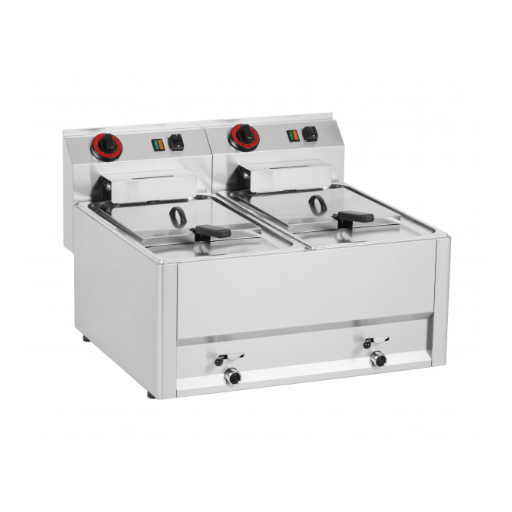
Potato chips deserve their own treatment, so we will not duplicate it here. In short, standard chips fry at about 175 to 190°C for 30 seconds to a few minutes on a continuous fryer, while kettle-style chips fry longer at a variable temperature for that hard-bite crunch. Equipment makers such as Heat and Control go into detail on specialized chip fryer designs. If chips are your product, start with our dedicated potato chip fryer machine guide.
Frequently Asked Questions
What is a snack fryer machine?
A snack fryer machine is an industrial fryer that cooks snack products such as nuts, chips, battered proteins, samosas, and pelleted snacks in hot oil. It comes in batch, continuous, and vacuum forms.
What temperature do you fry potato chips?
Potato chips and French fries typically fry at 175 to 190°C. The dwell time ranges from about 30 seconds for thin French fries to a few minutes for thicker kettle-style chips.
How long do you fry samosas?
Samosas fry at 155 to 180°C for about 1 to 5 minutes, depending on size. Larger samosas need a longer dwell and a slightly lower temperature so the center cooks without burning the outside.
Can you fry banana chips in a regular fryer?
You can, but banana chips are high in sugar and brown fast at conventional temperatures. A vacuum fryer at 80 to 120°C preserves the golden color, keeps nutrients, and cuts oil content to about 15 to 25%.
Which fryer is best for nuts?
A batch kettle fryer is best for most nuts, especially when you run multiple flavors and small batches. Vacuum frying is a good premium alternative when you want lower oil pickup and a lighter color.
Conclusion
The right snack fryer machine is a product decision, not an inventory decision. Batch fryers win on texture and changeover flexibility. Continuous fryers win on volume and uniformity. Vacuum fryers win on color, nutrition, and low oil content for fruit and vegetable chips.
Match the machine to what you make. Nuts and specialty snacks lean batch. Banana, taro, and root chips lean vacuum. Pellets, chips, battered proteins, and high-volume samosas lean continuous. And remember that most growing plants eventually run more than one type side by side.
The payoff is real. Arianto cut his rejects and oil cost by switching banana chips to vacuum frying. Priya cut her changeover time by matching her fryer to her actual volume. The right call starts with knowing your product, your temperature, and your dwell time.
If you are ready to match a fryer to your specific product, request a quote and our engineers will help you spec the right machine for your line.