
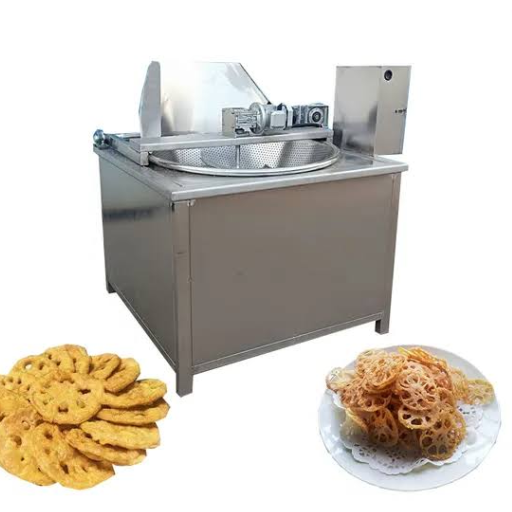
Batch Fryer Machine: Complete Guide for Food Processing
A batch fryer machine is a kettle-style industrial fryer that cooks food in discrete loads rather than a continuous flow, which is exactly why a kettle chip has a hard bite and a standard potato chip doesn’t.
Here’s the number that explains it: a kettle-style chip can spend around nine minutes in the fryer, while a continuous line turns out a chip in a fraction of that time. That single difference in fry time is why batch frying produces crunchier, denser snacks, and why it remains the go-to choice for premium products despite its lower throughput.
If you’re evaluating fryers, you’ve probably hit the frustrating part. Every vendor pushes the machine they happen to sell, not the one your product actually needs. You agree you want consistent quality and a sensible equipment investment; you just need a straight answer on which frying approach delivers both. This guide walks through how a batch fryer machine works, when it beats continuous and vacuum frying, how to choose a heating system, and what you should actually budget.
Key Takeaways
- Batch frying cooks in discrete loads, delivering the hard-bite texture and flavor-changeover flexibility that continuous fryers can’t match.
- Batch vs continuous is a texture-and-volume tradeoff; many snack plants run both machines side by side.
- Vacuum frying cuts final oil content to roughly 1–5% versus 30–40% for atmospheric frying, at a higher capital cost.
- The heating system (gas direct-fire, electric induction, or thermal oil) is the biggest driver of oil life, temperature uniformity, and operating cost.
- Expect to budget roughly 3,500to3,500to29,000 depending on capacity, heating method, and automation.
Prefer to skip the theory? Browse our fried snack production lines to see how batch and continuous frying fit a complete line.
What Is a Batch Fryer Machine?
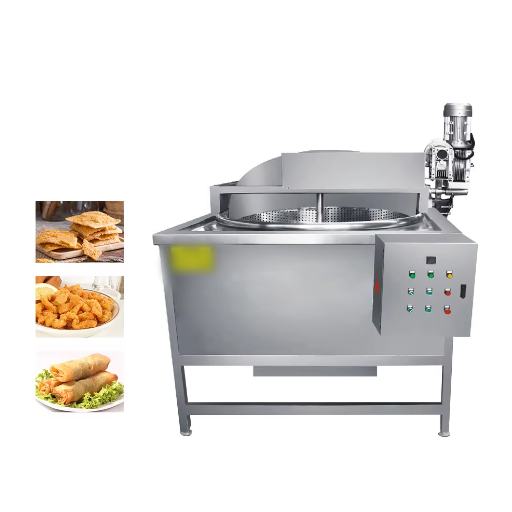
A batch fryer is a fryer that processes one defined quantity of product at a time. You load a basket or kettle, fry to a target moisture and color, then discharge the entire batch before the next one begins. This stands in contrast to a continuous fryer, where product feeds in and exits on a steady, uninterrupted conveyor.
The key components of a typical batch fryer machine include:
- Kettle or pot: The oil-holding vessel, usually fabricated from food-safe stainless steel (SUS 304 or 316).
- Basket or product carrier: Holds the food during frying and lifts out for discharge.
- Agitation system: Paddles or a rocking motion that keeps product moving so pieces don’t clump or scorch.
- Heating source: Direct-fire gas burners, electric elements, or an external heat exchanger circulating thermal oil or steam.
- Oil tank and filtration: Storage for heated oil, plus a filter loop that removes fines and extends oil life.
Why does the batch-versus-continuous distinction matter so much? Because it changes the texture you can achieve. Batch frying lets you vary fry time, temperature, and agitation for every load. That flexibility is what makes kettle chips dense and crunchy instead of light and uniform.
Consider Priya, who runs production at a Texas snack company making kettle chips and seasoned potato sticks. For years she ran everything through one continuous fryer. The sticks came out perfect, but the kettle chips tasted like every other brand’s. After she added a small batch fryer machine for the kettle line, the chips developed the dense, hard bite her retail buyers kept asking for, and she could switch flavors between batches without stopping the whole line. The fryer paid for itself in a single season of premium-priced kettle chip sales.
How Does a Batch Fryer Machine Work?
The working cycle of a batch fryer machine is simple to describe but tricky to control well. It follows a load-fry-discharge rhythm.
First, the operator or an automated feeder loads a measured amount of product into the basket and lowers it into hot oil. Second, the product fries while the agitation system keeps it moving. Third, the basket lifts out, drains briefly, and discharges the finished batch. Then the cycle repeats.
The engineering challenge happens in that middle step. When cold, wet product hits the oil, the oil temperature drops sharply before the heating system recovers it. On a chart, this looks like an inverted bell curve, a fast dip followed by a climb back to setpoint. Managing that recovery is what separates a good batch fryer from a mediocre one, because it determines both fry time and final oil pickup.
Agitation matters for the same reason. Without it, potato slices stick together, nuts scorch on the bottom, and battered pieces fry unevenly. A well-tuned agitation system keeps every piece exposed to oil for roughly the same time, which is how you get consistent color and moisture across a batch.
For a deeper look at how this plays out for the classic kettle chip, see our guide on kettle style potato chip fryers.
Batch Fryer vs Continuous Fryer
This is the decision most buyers actually need to make, and it comes down to a texture-versus-volume tradeoff.
| Factor | Batch Fryer | Continuous Fryer |
|---|---|---|
| Throughput | Lower; one load at a time | High; uninterrupted conveyor |
| Texture | Dense, hard-bite, variable | Light, uniform, consistent |
| Fry time control | Per-batch, flexible | Fixed by belt speed and depth |
| Oil use | Higher pickup per batch | Generally lower, more uniform |
| Changeover | Fast; switch products per batch | Slow; line reconfiguration |
| Footprint | Compact per unit of output | Larger for full line |
| Capital cost | Lower entry price | Higher, especially at volume |
Batch frying wins when you make kettle chips, small runs, or products that need frequent flavor changes. Continuous frying wins when you make a single high-volume product, like standard potato chips, where uniformity and throughput matter most. If you run one product around the clock at high volume, a continuous fryer’s steady output and stable oil temperature beat a batch line on both cost per unit and uniformity; batch frying earns its premium only when texture, flexibility, or small-run economics justify it.
The reality in many plants is that both approaches belong on the floor. At a snack plant in Gujarat, the operations team runs a continuous fryer machine for high-volume plain chips and a batch fryer machine for kettle-style and seasoned SKUs. When a grocery chain asked for a limited-edition kettle flavor with a two-week turnaround, the batch line handled it without disrupting the core product, and a snack flavoring machine applied the new seasoning right after frying. That flexibility is why they’ve kept both machines for years.
For a full decision framework, read our batch fryer vs continuous fryer comparison.
Want a side-by-side recommendation for your product? Tell us your output target and product type, and we’ll map the right frying approach for your line.
Batch vs Vacuum Frying
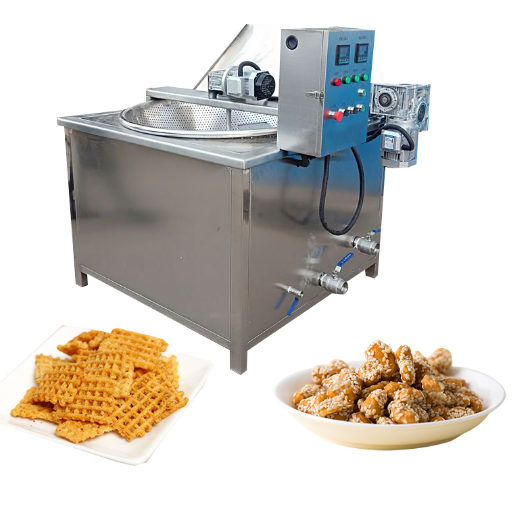
Atmospheric batch frying, which most batch fryers use, cooks at normal pressure and temperatures around 160–190°C. Vacuum frying lowers the pressure so oil can fry at temperatures below about 120°C. According to hsylfoodline’s engineering guide on vacuum versus atmospheric frying, that lower temperature changes the chemistry of the finished product.
The most striking difference is oil content. Vacuum-fried snacks typically finish at 1–5% oil, while atmospheric-fried snacks land around 30–40%. Lower temperature also means less acrylamide formation, better retention of natural color and nutrients, and a crisp texture without the burnt notes.
The tradeoff is cost and speed. A vacuum frying machine is more expensive, runs slower, and produces a lighter, more delicate crisp. Vacuum fryers are ideal for premium fruit and vegetable chips where a clean label and vivid color justify the premium. Atmospheric batch frying remains the economical choice for potato chips, nuts, and most savory snacks.
The right question isn’t “which is better” but “which matches your product and price point.” We break the choice down fully in our vacuum frying machine vs atmospheric batch fryer guide.
Types of Batch Fryers by Heating System
The heating system is the single biggest driver of oil life, temperature uniformity, and operating cost on any industrial batch fryer, yet it’s the detail most vendors bury in a PDF spec sheet. Here’s how the main options compare.
- Gas direct-fire: A burner heats the kettle directly through a fire tube or jacketed wall. Fast response, high capacity, and lower energy cost per unit, but it demands careful design to avoid scorching oil and degrading it early.
- Electric induction or elements: Clean, precise, and easy to control, with no combustion byproducts. Best for smaller units and facilities where gas isn’t available, though electricity can cost more per unit of heat.
- Thermal oil: A remote heat exchanger heats a circulating oil, which transfers heat to the fryer. Very uniform temperatures and gentle on frying oil, making it a strong choice for nuts and heat-sensitive products.
- Steam: Common in large central kitchens, using existing boiler capacity. Gentler than direct fire but limited in top temperature.
- Diesel: Used where neither gas nor reliable electricity is available, with similar characteristics to gas direct-fire.
Operating cost follows the system. Gas direct-fire is usually the cheapest per unit of heat, which is why it dominates high-volume kettle-chip lines. Electric induction costs more per unit but delivers the tightest temperature control, making it worth the premium for heat-sensitive products. Thermal oil sits in the middle on energy cost while transferring the gentlest, most uniform heat, which is why nut processors favor it. Weigh each against your local energy prices before committing, because the gap compounds over the machine’s life.
For most snack applications, the choice comes down to gas direct-fire versus thermal oil. We compare them in detail, including oil-life and energy-cost implications, in our batch fryer heating system guide.
Applications by Product
A batch fryer machine earns its keep across a wider product range than many buyers expect, and the batch frying machine you choose depends heavily on what you’re making. Here are the most common applications and the fryer approach that suits each:
- Kettle potato chips: Dense, hard-bite texture from longer fry times and unwashed starch. Batch frying is the defining method here.
- Nuts: Almonds, cashews, and peanuts fry well in thermal-oil batch fryers that avoid scorching the oil.
- Fruit and vegetable chips: Apple, banana, taro, and okra chips benefit from either atmospheric batch frying or low-temperature vacuum frying for cleaner color and lower oil.
- Battered proteins: Chicken strips, nuggets, and battered fish fry in batch kettles where changeover between products is frequent.
- Samosas, onion rings, and spring rolls: Irregular shapes and variable fry times suit batch loading.
- Pelleted and extruded snacks: Half-products produced on an extrusion line expand on frying and can be batch-fried for small runs or fed to a continuous line at scale.
Temperature matters as much as the machine. Kettle chips fry at a lower oil temperature over a longer window to build their crunch, while battered proteins need a hotter, faster fry that sets the coating before the interior overcooks. Nuts sit in between, rewarding steady, moderate heat that won’t scorch the oil. For that reason, most batch fryers store recipes so an operator can recall the exact temperature, time, and agitation profile for each product instead of re-tuning from memory on every changeover.
Each of these has its own ideal temperature, batch size, and agitation profile. For product-by-product guidance, see our industrial snack fryer machine applications. Potato chip producers specifically should also read our potato chip fryer machine guide.
Choosing the Right Batch Fryer Machine
When you’re ready to specify a batch fryer machine, work through these factors in order.
First, define your capacity in kilograms or pounds per hour, then back into batch size and oil volume. A fryer’s useful output depends on both the oil volume and how quickly the heating system recovers temperature after each cold load. For reference, a dedicated kettle-chip batch fryer from Heat and Control handles roughly 150–350 lbs per hour, while tna’s batch-pro 12 reaches up to 275 kg per hour, so there’s a wide band to choose from.
Here’s that sizing in practice. Suppose you need 400 kg of finished kettle chips per eight-hour shift. At roughly nine minutes of fry time plus two minutes for loading and discharge, each cycle runs about eleven minutes, or five cycles per hour. That means each batch must deliver about 10 kg of finished product, so you’d spec a fryer whose kettle and oil volume hold that batch at your target temperature. A thermal engineer can then confirm the heating system recovers that temperature drop between loads without dragging out fry time, which is the number-one cause of soggy, oil-logged chips.
Second, match the heating system to your energy costs and product. Nuts and heat-sensitive items favor thermal oil; high-volume kettle chips favor direct-fire gas.
Third, check the materials. Look for food-safe stainless steel throughout the food-contact zone. SUS 304 is a sound minimum, while SUS 316 holds up better against salt and corrosive brines. Smooth, crevice-free welds clean more easily and reduce the risk of bacterial harborage.
Fourth, decide your automation level. Manual loading suits small kitchens, while semi-automatic basket lift and PLC temperature control suit mid-volume lines. Full automation, including product loading and oil-level control, is worth it at higher output.
Finally, consider the oil-management system built into the machine. Filtration and temperature control extend oil life and directly affect your operating cost. Our how to choose a batch fryer guide walks through the full selection process step by step.
Batch Fryer Price & Total Cost of Ownership
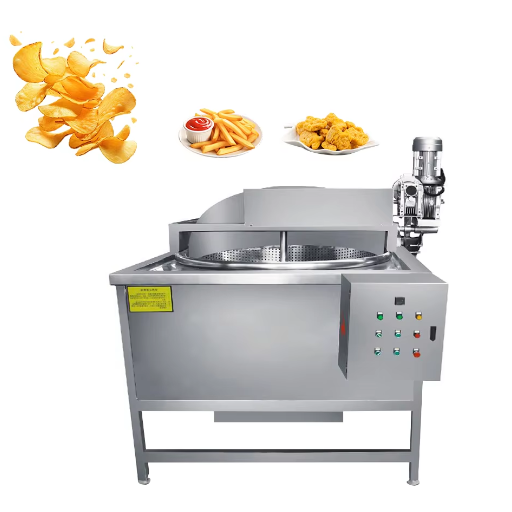
Batch fryer machine prices vary widely with capacity, heating method, and automation. Observed listings on Made-in-China and similar directories span roughly 3,500forcompactelectricunitsto3,500forcompactelectricunitsto29,000 or more for large direct-fire and thermal-oil systems. That’s the purchase price, though, and it’s not the whole story.
Total cost of ownership matters more over the machine’s life. The three recurring costs that dwarf the sticker price are oil, energy, and labor.
Frying oil is usually the largest variable cost. Anything that shortens oil life, such as poor filtration, temperature overshoot, or scorching, quietly inflates your cost per kilogram. Energy cost follows the heating system you chose. Labor tracks your automation level; manual batch loading is cheaper to buy but more expensive to run at volume.
A quick oil check shows why TCO, not sticker price, should drive the decision. A mid-size kettle-chip line might use 200 liters of frying oil a week. If weak filtration forces you to change that oil twice as often, the extra oil alone can run several thousand dollars a year, easily exceeding the price gap between a basic fryer and one with a proper filtration loop. That’s why the cheapest machine is rarely the cheapest to operate.
Used equipment can look attractive, but factor in unknown wear, missing filtration, and the absence of a warranty. For most buyers, a new machine with a documented maintenance history delivers the better long-term value.
For a full breakdown of price bands, new-versus-used tradeoffs, and a request-quote checklist, see our batch fryer machine price and cost guide.
Frying Oil Management & Filtration
Oil is where a batch fryer machine makes or loses money. Every fry cycle degrades the oil a little, and heat, water, and food particles break it down and raise free fatty acids. As Food Engineering’s cooking and frying update notes, managing that degradation is a direct cost-control lever.
Marco manages a nut-roasting facility in northern Italy. His biggest variable cost wasn’t labor or energy; it was frying oil, which he was replacing every few days. By adding inline filtration and tracking free fatty acids, he stretched each batch of oil nearly twice as far. The savings covered the filtration equipment within six months, and his almonds kept a cleaner, more consistent flavor.
Effective oil management comes down to a few practices: filter continuously to remove fines, skim the surface to remove floating particles, monitor free fatty acids to catch degradation early, and keep temperatures steady to avoid scorching. These habits extend oil life and keep your product tasting right.
We cover the full playbook in our fryer oil filtration and oil-life guide. For the related question of reducing oil in the product itself, see our guide on how to reduce oil absorption in fried snacks.
Maintenance & Cleaning
A batch fryer machine is a straightforward piece of equipment, but it rewards consistent upkeep. Here’s a practical rhythm.
Daily, drain or filter the oil, remove fines, and wipe down the kettle and basket. Weekly, inspect heating elements or burners, check seals and agitation components, and verify temperature probes read accurately. Monthly, boil out the kettle to remove carbonized buildup, inspect welds for cracks, and test the filtration loop.
Two tasks deserve special attention. First, boil-out cleaning with a food-grade cleaner removes the carbon that accumulates on heating surfaces and degrades oil quality. Second, temperature-probe calibration; an inaccurate probe causes the temperature swings that scorch oil and ruin consistency.
Keep a small spares kit on hand too. Temperature probes, basket-lift seals, and filtration cartridges are the parts most likely to fail mid-run, and a thirty-dollar seal shouldn’t stall a full production day. Most equipment suppliers publish a recommended spares list; buying it upfront costs little and keeps a minor breakdown from becoming a long downtime event.
A written checklist keeps these tasks from slipping through the cracks. Our batch fryer maintenance and cleaning checklist gives you a downloadable schedule you can hand to any operator.
FAQ
What is a batch fryer machine?
A batch fryer machine cooks product one load at a time in a kettle of hot oil, instead of moving it through on a continuous conveyor. Because each batch gets its own fry time and temperature, it produces textures like the hard bite of a kettle chip that continuous lines can’t replicate.
How does a batch fryer work?
Product is loaded into a basket, lowered into hot oil, fried while agitated, then lifted out and discharged before the next batch begins. The key challenge is recovering oil temperature after each cold load.
How much does a batch fryer cost?
Batch fryer machine prices range from roughly 3,500forcompactelectricunitsto3,500forcompactelectricunitsto29,000 or more for large direct-fire and thermal-oil systems, before recurring oil, energy, and labor costs.
What is the difference between a batch fryer and a continuous fryer?
A batch fryer cooks one load at a time with flexible fry times, favoring hard-bite textures and changeover flexibility. A continuous fryer feeds product on a conveyor for high throughput and uniform results.
Which foods are best suited to batch frying?
Kettle chips, nuts, fruit and vegetable chips, battered proteins, and irregular snacks like samosas and onion rings all fry well in batches, especially when runs are small or flavors change often.
How long does frying oil last in a batch fryer machine?
With continuous filtration, steady temperatures, and regular free-fatty-acid monitoring, frying oil can last anywhere from several days to a couple of weeks of active production. Without those habits, the same oil may degrade within a day or two, so oil management is usually the fastest cost win on any batch line.
Conclusion
A batch fryer machine isn’t simply a smaller continuous fryer. It’s a different tool for a different job: hard-bite textures, small runs, and frequent changeovers that a continuous line handles poorly.
The decision comes down to three questions. What texture does your product need? What volume do you actually run? And which heating system keeps your oil and energy costs in check? Answer those, and the batch-versus-continuous-versus-vacuum choice largely answers itself.
Start with the product, not the machine. If a fryer can’t hold the texture your customers expect, no amount of throughput or automation will save the SKU.
Many of the smartest plants we work with run batch and continuous frying side by side, matching each product to the method that serves it best. That’s the real advantage of a partner who builds both, along with the de-oiling, flavoring, and packaging equipment that completes the line.
Ready to spec your line? Request a quote or schedule a pilot trial and we’ll help you match the right frying approach to your product and budget.