
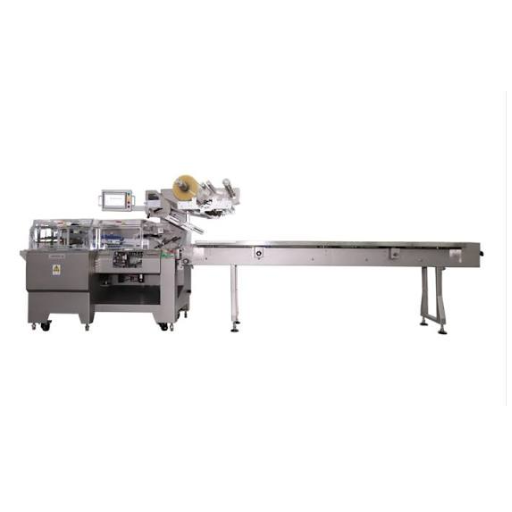
Automatic Noodle Packing Machine: The Complete Buyer’s Guide

An automatic noodle packing machine forms, fills, and seals noodle packages without manual handling, using vertical or horizontal form-fill-seal technology plus a weighing system. It replaces hand filling and hand sealing, cutting labor, reducing giveaway, and keeping every bag consistent.
Ravi runs a mid-sized instant noodle plant outside Ahmedabad. For three years, his crew weighed and sealed bags by hand at the end of the line.
Then a supermarket chain doubled his weekly order. The manual station could not keep pace. Fill weights drifted by several grams per bag. Seals failed on the shelf, and the buyer flagged two batches.
Ravi installed an automatic noodle packing machine with a multihead weigher. Output climbed 45%. Giveaway dropped to under a gram per bag. The retail buyer noticed the cleaner, tighter packaging and renewed the contract for a full year.
His story is common. Noodle producers treat packaging as the last, forgettable step. In practice, the packing station is where margin is won or lost. It is the final quality gate between a good noodle and a sellable product.
This guide explains what an automatic noodle packing machine is, how it works, the main types, real price bands, and a selection framework that puts margin ahead of raw speed. Whether you pack instant noodles, dry pasta, cup noodles, or fresh vermicelli, the same principles apply.
Key Takeaways
- An automatic noodle packing machine uses form-fill-seal technology plus a weigher to fill and seal bags without manual labor, and it is the final quality gate of a noodle production line.
- Match the machine to your noodle format first: VFFS for block and broken noodles, HFFS flow wrap for noodle cakes, premade pouch for premium, and cup sealing for instant bowls.
- Real prices span roughly 4,000forasemi−automaticbaggerto4,000forasemi−automaticbaggerto40,000 for a multihead VFFS line and $220,000 or more for a full bundling and case packing system.
- Rated speed is the least useful spec on the sheet. Weighing accuracy, changeover time, and supplier support decide long term margin.
- Shandong Loyal designs integrated lines that connect packing with upstream extrusion, drying, frying, and microwave processing, so one supplier owns the whole flow.
What Is an Automatic Noodle Packing Machine?
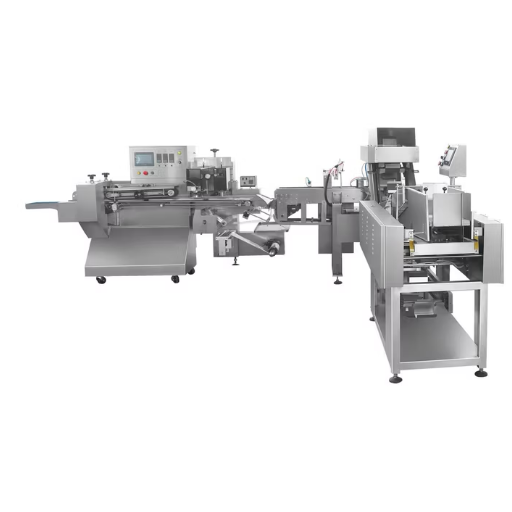
An automatic noodle packing machine is a packaging system that forms a package from film, fills it with a measured amount of noodles, and seals it, all without operator handling. It combines a feeding and weighing stage, a film forming and sealing stage, and a discharge conveyor.
Packaging for noodles falls into three layers. Primary packaging is the bag, pillow pack, or cup that directly touches the product. Secondary packaging groups those units into multipacks and cartons. Tertiary packaging prepares cases and pallets for shipping.
The machine matters more than most producers assume. It controls portion accuracy, seal integrity, and product presentation. A noodle that is perfectly extruded and dried still fails the customer if the bag leaks, weighs short, or tears in transit.
Modern noodle packing equipment also handles traceability. Date coders print batch numbers and best-before dates. Checkweighers and metal detectors reject out of spec packs. Sensors feed data back to the plant control system, turning packaging into a quality checkpoint rather than a wrapping step.
The category is growing fast. The food and beverage packaging machine market reached roughly USD 24.2 billion in 2025 and is projected to climb at a 5.6% CAGR through 2035, according to Global Market Insights. Automatic machines already account for the majority of that value, a signal that manual packing is fading from industrial noodle plants.
Not sure how packing fits your existing line? Our instant noodle production line shows how upstream processing and the packing stage connect end to end.
How Noodle Packing Machines Work
Most automatic noodle packing machines fall into two families: vertical form-fill-seal and horizontal flow wrap. Both form a package, fill it, and seal it in one continuous motion. The difference is how the product enters the package.
Vertical Form-Fill-Seal (VFFS)
A VFFS machine pulls flat film from a roll and passes it over a forming collar that shapes it into a tube. A vertical seal closes the overlap. The weigher drops a measured portion of noodles down through the fill tube, the bottom seal closes, and horizontal jaws seal the top while cutting the finished bag free.
VFFS is the standard choice for loose, broken, short-cut, and stick noodles. It handles a wide range of bag sizes and films. The machine runs either intermittently, stopping the film for each seal, or continuously, with the sealing jaws tracking the moving film for higher speed.
Horizontal Flow Wrap (HFFS)
Flow wrapping lays the film horizontally and forms a tube around the product, then cross-seals and cuts between units. This suits flat, cube shaped items like instant noodle cakes and brick packs.
Modern instant noodle lines favor flow wrapping. According to line integrator IMA Group, high speed lines use servo driven row distribution and in-phase seasoning sachet feeders, then flow-wrap each cake at up to 300 packs per minute per wrapping leg. The finished bricks move on to wraparound case packing.
Multihead Weighing and Portion Control
A multihead weigher, also called a combination weigher, uses a ring of weigh hoppers to calculate the combination that comes closest to the target weight. This is what makes an automatic noodle packing machine accurate.
The weigher is where profit lives. Every gram of giveaway is noodle you made and gave away free. On a line running millions of packs a year, a one gram error is real money.
Watch the machine work. See how film forming, weighing, and sealing come together on a live noodle line.
Types of Noodle Packing Machines
Choosing the right automatic noodle packing machine starts with the format you actually make. Each type handles a different product state.
VFFS Pillow Bag Machines
Vertical machines produce the classic pillow bag. They suit block noodles, broken noodles, short-cut noodles, and loose dried strands. They pair naturally with a multihead weigher for speed and accuracy.
HFFS Flow Wrap Machines
Horizontal machines wrap flat items like instant noodle cakes. They are the standard for brick style instant noodles, where the cake is placed on the film, seasoned in phase, and sealed tight against moisture and breakage.
Premade Pouch and Doypack Machines
These machines fill and seal pre-formed pouches. Stand-up and resealable pouches carry a premium look and command higher shelf prices. They suit branded dry noodles, premium pasta, and specialty products where presentation drives the purchase.
Cup and Bowl Filling and Sealing Lines
A cup noodle line feeds empty cups, places the noodle cake, adds a seasoning sachet and dried vegetables, heat-seals a foil lid, and often flushes the headspace with nitrogen. This is a dedicated line, not a bag machine, and it serves the fastest growing instant noodle segment.
Bundling and Stick Noodle Packing
Spaghetti and stick noodles need special handling to keep strands aligned. Bundling machines gather a fixed weight of strands, bind them, and wrap them. Multi binding machines can shape the bundle into the familiar M or U form for retail display.
| Machine Type | Best For | Typical Speed | Notes |
|---|---|---|---|
| VFFS pillow bag | Block, broken, short-cut noodles | 30 to 80 bags/min | Pairs with multihead weigher |
| HFFS flow wrap | Instant noodle cakes | Up to 300 packs/min | Standard for brick packs |
| Premade pouch | Premium dry pasta, noodles | 20 to 60 pouches/min | Resealable, premium look |
| Cup sealing line | Cup and bowl noodles | 40 to 120 cups/min | Dedicated, multi-stage line |
| Bundling machine | Spaghetti, stick noodles | 30 to 60 bundles/min | Keeps strands aligned |
Your product state, not your preference, should pick the machine. A flow wrapper cannot handle loose short-cut noodles, and a VFFS bagger struggles with a rigid brick. Map the format first, then the machine.
Want to see how packing plugs into the full line? Explore our complete food production line solutions and how each stage connects.
Cup and Bowl Noodle Filling and Sealing
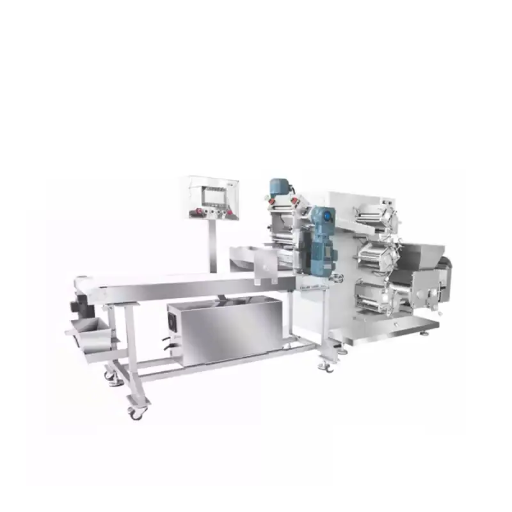
Cup noodles deserve their own treatment because the line is fundamentally different from bag packing.
A cup noodle filling and sealing machine moves cups through several stations. A cup dispenser drops empties into pockets. A feeder places the noodle cake. A dosing system adds seasoning, oil, and dried vegetables. A heat sealer applies the foil or film lid, and a nitrogen flush replaces the headspace air to slow oxidation before sealing.
Nitrogen flushing is the detail that separates premium cup noodles from the rest. It extends shelf life by removing oxygen, which preserves oil and seasoning freshness. If you are entering the cup noodle market, insist on a line with reliable gas flushing and lid seal inspection.
Cup lines also run faster than most newcomers expect, often 40 to 120 cups per minute. That speed demands precise synchronization between the cake feeder, sachet doser, and sealer. One station out of phase produces empty cups or missing sachets, which buyers reject immediately.
Noodle Packing Machine Costs and Pricing
Price is where most buyers start and where most mistakes begin. The cheapest quote rarely wins on total cost.
Price Bands by Automation Level
Real 2026 listing prices from Chinese manufacturers give a reliable spread. A semi-automatic bagger with a basic volumetric filler starts around 4,000to4,000to8,000. A standalone multihead weigher with a vertical pouch machine runs 9,800to9,800to15,000. A complete VFFS line with a 10 to 14 head weigher, elevator, and conveyors lands between 20,000and20,000and40,000. A full M-shape spaghetti multi-binding line reaches 30,000to30,000to40,000, and a turnkey system with bundling, cartoning, and case packing exceeds $220,000.
These are observed listing prices, not quotes. Your cost depends on bag size, fill weight, speed, head count, and whether you buy a standalone machine or an integrated line.
Total Cost of Ownership
The purchase price is one line item. Film consumption, giveaway, labor, downtime, spare parts, and changeover losses all compound over the machine’s life.
Consider giveaway. A weigher that holds accuracy to plus or minus 1 gram versus one that drifts by 3 grams saves 2 grams per pack. On 2,000 packs an hour across three shifts, that is roughly 14,000 kilograms of noodle per year you stop giving away. The savings often pay for the better machine within 12 to 18 months.
Changeover matters too. A line that swaps bag sizes in 10 minutes versus 40 minutes returns nearly 30 minutes of production per changeover. Multiply that by daily SKU changes and the faster machine wins even at a lower rated speed.
Semi-Automatic vs Fully Automatic Noodle Packing
Not every plant needs a fully automatic noodle packing machine on day one.
A semi-automatic machine automates sealing but relies on an operator to fill and place each bag or bundle. It costs less, needs less training, and suits low volume, high mix, or startup operations. The tradeoff is labor and consistency. Human filling drifts, and output is capped by the operator.
A fully automatic machine automates feeding, weighing, forming, sealing, and discharge. It costs more up front but removes the labor bottleneck and holds tighter weight control. Most plants cross this line when weekly volume passes the point where two or three packing operators can no longer keep up.
The upgrade trigger is usually labor, not machine envy. When overtime costs and giveaway losses exceed the financing cost of an automatic system, the payback is already there. Start small, but design the layout so the automatic machine can drop in later without reworking the whole line.
Key Selection Criteria for a Noodle Packing Machine
Speed and price are easy to compare. They are also the easiest to get wrong. Use this framework instead.
Speed vs Rated Throughput
Rated speed is a laboratory number. Real lines run slower because of film changes, product flow interruptions, and seal checks. Industry sources such as Poemy Machinery put the honest figure at 55 to 65 percent of nameplate. A 230 pack per minute wrapper is not a 230 pack per minute line.
Plan capacity around realistic throughput, not the brochure headline. If you need 120 packs per minute sustained, do not buy a machine rated at exactly 120.
Weighing Accuracy and Giveaway
This is the first number to ask about after speed. A 10 head weigher with plus or minus 1 gram accuracy protects margin far better than a 6 head weigher drifting by 3 grams. Ask for a weigh accuracy test on your actual product, not a demo powder.
Changeover Time and Multi-SKU Flexibility
If you pack several bag sizes or film types, changeover time is a hidden tax. Look for tool-free adjustments, recipe memory, and quick release film paths. A machine that changes over in minutes keeps small batch production profitable.
Hygienic Design
Noodle powder and dust accumulate quickly. Food contact parts should be SUS 304 stainless steel, with SUS 316 in wet or salty environments. Look for smooth, crevice-free surfaces, washdown rated enclosures, and easy access for cleaning. HACCP and CE or FDA compliance should be documented, not promised.
Footprint, Utilities, and Facility Fit
Measure the machine against the room you have, including film roll access and service clearance. Confirm voltage and air requirements before the machine ships. A common failure is ordering a 380V machine for a 220V plant.
Pasta, Spaghetti, and Specialty Noodle Packing
Pasta and spaghetti bring their own packing challenges. Strands break, tangle, and need to stay aligned.
A pasta packing machine weighs and groups strands, then binds them into bundles or drops them into a bag. Multihead weighers work well for short-cut pasta like penne and macaroni. Stick spaghetti needs a bundling or multi-binding line that gathers a fixed weight and shapes it for retail.
This connects directly to upstream processing. A pasta macaroni production line that feeds straight into the packing station removes the manual transfer step where strands break. When the same supplier builds both stages, the handoff is designed, not improvised.
Tomas runs a dry pasta facility in Monterrey. For years his spaghetti came off the dryer onto trays, where workers gathered and bagged it by hand. Breakage ran high, and bundle weights swung by several grams.
He added a multi-binding line matched to his existing pasta production line. Breakage fell because the strands moved straight from drying to binding without the manual tray transfer. Bundle weight settled into a tight range, and his retail buyers stopped complaining about short bundles.
Wet, Fresh, and Vermicelli Noodle Packaging
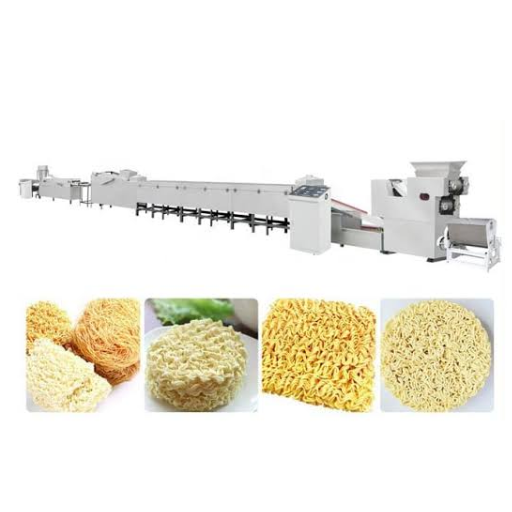
Fresh noodles are a different animal from dry noodles. Moisture is both the selling point and the risk.
Fresh udon, rice noodles, and vermicelli carry 30 percent or more moisture. The package must hold that moisture in while keeping oxygen out, or the product dries, molds, or develops freezer burn. Barrier films with a low oxygen transmission rate are non-negotiable.
Clumping is the second enemy. Fresh strands stick together under pressure and moisture. Gentle handling, controlled drop heights, and sometimes a light dusting of starch keep strands separate during packing.
If you pack frozen fresh noodles, the film must survive cold temperatures without cracking or losing its seal. Test seals at freezer temperature, not room temperature. A seal that holds at 20 degrees can fail at minus 18.
Choosing a Noodle Packing Machine Manufacturer
The machine is only half the purchase. The supplier behind it determines whether that machine stays productive for a decade or becomes a stranded asset.
Customization Capability
Noodle formats vary widely. A good manufacturer configures the machine to your bag size, film, fill weight, and product state rather than forcing you into a standard model. Ask how they handled a product like yours before.
Certifications and Compliance
Request proof of CE marking, ISO 9001, and any region specific requirements such as FDA registration. Certifications are claims you can verify, not adjectives in a brochure.
FAT, SAT, Installation, and Training
Factory acceptance testing proves the machine runs at spec before it ships. Site acceptance testing proves it runs in your plant. Ask for both, plus training for your operators. The best machine underperforms if no one knows how to run it.
Spare Parts and Service Response
Every machine eventually needs parts. Ask about spare parts inventory, typical lead times, and how fast a service engineer can reach you. A supplier with a four month parts lead time is a hidden downtime risk.
Building the Complete Noodle Production and Packaging Line
Here is where most noodle producers leave money on the table. They buy extrusion from one vendor, drying from another, and packing from a third. When output stalls, each supplier blames the other, and the plant manager becomes the integration engineer.
The alternative is a single supplier who builds the whole flow. Extrusion shapes the noodle, drying or frying sets the texture and moisture, and the packing machine seals it. When one vendor owns that sequence, the handoffs are designed into the line rather than improvised at the dock.
Shandong Loyal builds this complete picture. Our instant noodle production line covers the upstream processing, and the packing stage integrates directly. The same thinking applies to our fried snack production line and industrial microwave drying systems, which feed a packing station tuned to the product coming off them.
Priya’s experience shows the cost of the fragmented approach. She runs a fresh noodle plant in Jakarta. Her extruder, dryer, and packer came from three suppliers. Every changeover, the line stopped while her team re-synced the stages. Downtime ate the savings she thought she had made by shopping each machine separately.
She moved to an integrated line from one supplier. Changeovers now run as one coordinated sequence. Her output per shift rose 18 percent, and the finger pointing between vendors simply stopped.
Frequently Asked Questions
How much does a noodle packing machine cost?
A semi-automatic noodle packing machine starts around 4,000to4,000to8,000. A standalone multihead weigher with a VFFS bagger runs 9,800to9,800to15,000. A complete VFFS line with a 10 to 14 head weigher lands between 20,000and20,000and40,000, and a full bundling and case packing system exceeds $220,000.
What is a VFFS packing machine?
VFFS stands for vertical form-fill-seal. The machine forms a tube from flat film, fills it vertically with product, and seals it into a bag. It is the standard choice for loose and broken noodles paired with a multihead weigher.
What is the difference between semi-automatic and automatic noodle packing?
A semi-automatic machine automates sealing but needs an operator to fill and place each bag. A fully automatic machine automates feeding, weighing, forming, sealing, and discharge, removing the labor bottleneck and holding tighter weight control.
Can one machine pack multiple noodle formats?
Partially. A VFFS machine handles multiple bag sizes and loose noodle types with a changeover. But it cannot pack cup noodles or flow-wrap a rigid brick. Match the machine to the format, and expect to need different machines for block noodles, cups, and stick spaghetti.
How do I maintain a noodle packing machine?
Daily cleaning of film paths and sealing jaws, weekly checks on weigher calibration, and scheduled replacement of seal elements and belts keep a machine running. Choose a supplier with a clear maintenance schedule and fast spare parts response.
Conclusion
An automatic noodle packing machine is not the last afterthought on your line. It is the final quality gate where margin, consistency, and brand reputation are decided.
Match the machine to your format first: VFFS for loose noodles, flow wrap for cakes, pouch for premium, cup sealing for bowls, and bundling for stick pasta. Ignore rated speed and plan around 55 to 65 percent real throughput. Focus on weighing accuracy, changeover time, and hygienic design, because those decide long term profit.
Most importantly, treat packing as part of one continuous system rather than a separate purchase. When extrusion, drying or frying, and packing come from a single supplier, the handoffs are engineered instead of improvised.
If you are planning a noodle packing line or upgrading an existing one, Shandong Loyal can help you map the right configuration for your product and volume. Contact our team to discuss your requirements and request a tailored quote.