
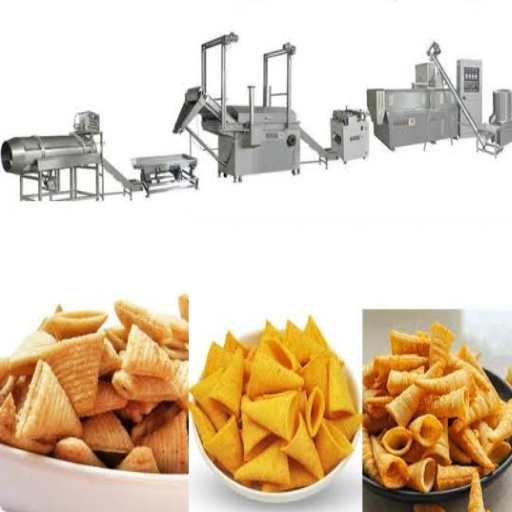
Bugles Snack Production Line: Complete Equipment, Process & Buyer’s Guide

A bugles snack production line is an automated system that mixes flour or starch, extrudes and shapes the dough, and then fries or bakes it. After cooking, the line seasons, cools, and packages the finished snack. The right system can produce 100 kg to 500+ kg per hour while keeping oil use, labor, and floor space under control.
That sounds straightforward until you start comparing quotes for a bugles snack making machine. One supplier lists a twin-screw bugles extruder machine, another offers a long drying tunnel, and a third promises “flour to bag in 20 minutes.” Each uses different model numbers, capacity ranges, and price points. The result? Many buyers feel confident about the product they want to make but uncertain about the equipment they need to buy.
We understand that tension. In this guide, you’ll learn exactly how Bugles are manufactured, what each machine in the line does, how to size a system for your output goals, and what questions separate a reliable supplier from a risky one. Whether you are launching a new snack brand or expanding an existing plant, this article gives you a practical framework for evaluating any bugles snack production line.
Key Takeaways
- A complete bugles snack production line includes mixing, extrusion, shaping, frying or baking, de-oiling, seasoning, cooling, and packaging.
- Twin-screw extrusion with a rotary shaping cutter is the standard method for forming the hollow cone shape.
- Mid-capacity lines typically range from 100 kg/h to 500 kg/h, with reference pricing from about 16,500to16,500to38,500 for common configurations.
- Direct-fry lines eliminate the long drying tunnels used in pellet systems, saving floor space and reducing capital cost.
- Oil filtration, PID temperature control, and food-grade SUS304 construction are critical for consistent quality and low operating cost.
What Is a Bugles Snack Production Line?
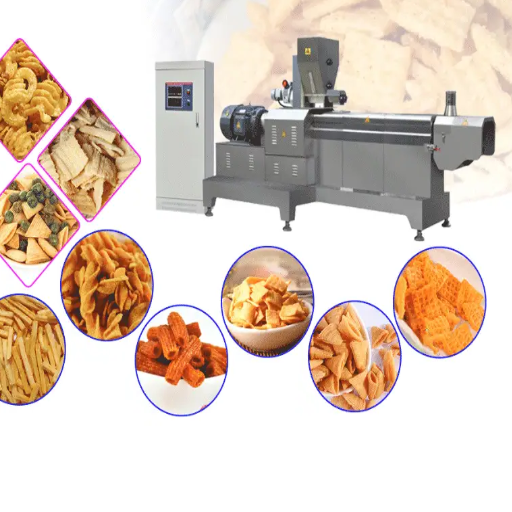
A bugles snack production line is a continuous manufacturing system designed to turn wheat flour, corn starch, rice flour, or potato starch into the crispy, cone-shaped snacks known as Bugles or similar 3D fried snacks. The line is sometimes called a fried bugles machine, bugles chips production line, bugles snack making machine, or sala bugles production line when it also produces related shapes such as Sala sticks, rice crust, or pizza rolls.
There are two main design philosophies:
- Direct-fry extrusion lines cook the dough in a twin-screw extruder, shape it immediately, and fry it. This approach skips a separate drying stage and fits in a compact 22–30 meter layout.
- Pellet-dry lines extrude semi-finished pellets, dry them in a long tunnel, and fry them later. This method is common for large snack plants but requires more floor space and capital.
For most small-to-medium producers, the direct-fry route is faster to install and easier to operate. It also lets one line produce multiple products, Bugles, Sala sticks, pizza rolls, rice crust, and twists, by swapping dies and shaping rollers. That flexibility matters because snack trends change quickly, and a line that can pivot protects your investment.
Bugles are part of a broader family of fried snacks, so a complete fried snack production line can be configured to produce chips, sala sticks, and many other shapes alongside Bugles. If your project needs high-volume pellet drying instead of direct frying, a dedicated 3D pellet snack production line may be the better fit.
How Bugles Are Made: The Manufacturing Process Step by Step
Understanding the bugles manufacturing process helps you evaluate any bugles snack production line with confidence. Here is the standard flow used in a modern line.
1. Raw Material Preparation
The base recipe usually includes wheat flour, corn flour, corn starch, rice starch, or potato starch, plus water, salt, oil, and seasonings. The flour is sifted to remove lumps and ensure uniform particle size. Consistent raw material quality is the first checkpoint for consistent product quality.
2. Mixing and Conditioning
A flour mixer blends the dry ingredients with water and additives until the dough reaches a target moisture content, typically 28–35% for starch-based recipes or lower for wheat-flour formulations. Some systems include a pre-conditioner that heats the dough to 100–120 °C under 2–3 atmospheres of pressure. This begins starch gelatinization, which gives the final snack its structure and crunch.
3. Extrusion and Sheeting
The mixed dough travels through a screw conveyor into a twin-screw extruder, the core of any bugles extruder machine configuration. Inside the extruder, heat and mechanical shear cook the dough under pressure. Barrel temperatures typically range from 150–200 °C. The dough exits through a slot die as a continuous, thin sheet roughly 0.8–1 mm thick. Twin-screw extrusion replaces traditional steam boiling, so no separate boiler is required. Loyal’s twin-screw extrusion solutions cover snack, cereal, and pet food applications with configurable barrel zones and screw geometries.
4. Cooling and Shaping the Cone
The extruded sheet cools over 8–12 meters so it becomes firm enough to cut cleanly. A composite shaping machine with rotary cutters and embossing rollers then forms the hollow cone. The same machine can produce other 3D shapes by changing rollers. This is the step that creates the signature Bugles form.
5. Frying or Baking
The shaped pieces enter a continuous fryer with oil temperatures around 170–180 °C. Frying causes the snack to expand 2–3 times and drives final moisture down to 2–3%. For producers targeting healthier snack markets, a baking oven can replace the fryer. Baking changes texture and shelf life, so recipe adjustments are usually needed.
6. De-oiling
A vibration or air-knife de-oiling unit removes excess surface oil. This step improves crunch, reduces greasiness, and extends shelf life. It also lowers the oil consumption per kilogram of product, which directly affects operating cost.
7. Seasoning and Flavoring
A rotary seasoning drum coats the snacks with cheese, ranch, barbecue, or localized flavors. An optional oil sprayer helps powders adhere evenly. Flavor application is a critical quality point because uneven coating leads to customer complaints and waste.
8. Cooling and Packaging
A cooling conveyor brings the snacks to room temperature before they enter an automatic packaging machine. Packaging formats include pillow bags, stand-up pouches, and bulk bags depending on the target market.
Key Equipment in a Bugles Production Line
Each stage of the process needs a dedicated machine. Below is the typical equipment list, with the role each unit plays in a complete bugles snack production line.
| Equipment | Primary Function | Key Specs to Compare |
|---|---|---|
| Flour mixer | Blends flour, water, and additives | Batch size, mixing time, motor power |
| Screw conveyor | Transfers dough to extruder | Sanitary design, variable speed |
| Twin-screw extruder | Cooks and extrudes dough sheet | Barrel zones, screw material, drive power |
| Shaping/cutting machine | Forms Bugles, Sala, or other shapes | Roller/die interchangeability, cut quality |
| Continuous fryer | Fries shaped pieces at controlled temperature | Oil capacity, heating method, filtration |
| De-oiling machine | Removes excess surface oil | Vibration or air-knife type, efficiency |
| Flavoring drum | Applies seasonings evenly | Drum angle, spray system, capacity |
| Cooling conveyor | Cools product before packaging | Length, belt width, airflow |
| Packaging machine | Weighs, fills, seals bags | Speed, bag formats, accuracy |
| PLC control system | Automates temperature, speed, and timing | Touchscreen, recipe memory, remote support |
When Thanakorn, a snack factory owner near Bangkok, upgraded from batch frying to an automated bugles snack production line with a dedicated bugles extruder machine, he was surprised by how much the control system mattered. “We thought the extruder was the only critical machine,” he said. “But the PID temperature control and oil filtration are what keep every batch identical.” His team reduced rejects by nearly 30% in the first three months after commissioning.
Want to see how these components fit into a complete system? Explore our Fried Salad & Bugles Production Line for detailed specifications and layout options.
Bugles Snack Production Line Specifications & Capacity Guide
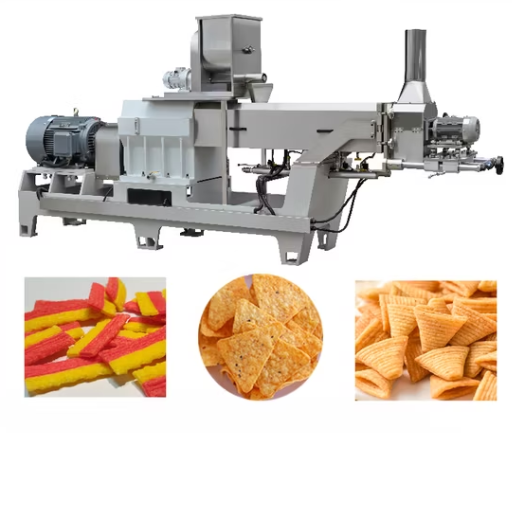
Most suppliers offer three main bugles snack production line model sizes based on extruder diameter and motor power. The table below compares typical Loyal models. Similar lines from other manufacturers may use DSE, AVN, or GY naming, but the capacity ranges are comparable.
| Model | Capacity | Electric Power | Dimensions (L × W × H) | Typical Reference Price |
|---|---|---|---|---|
| LY-65 | 120–150 kg/h | 95 kW | 22 × 1.2 × 2.2 m | 16,500–16,500–18,900 |
| LY-70 | 200–260 kg/h | 145 kW | 25 × 1.5 × 2.2 m | 22,500–22,500–26,500 |
| LY-85 | 400–500 kg/h | 210 kW | 30 × 1.5 × 2.5 m | 32,500–32,500–38,500 |
Prices vary with voltage, heating method, level of automation, and optional equipment such as packaging machines. Gas or diesel fryer heating can reduce energy costs by 30–50% compared with electric heating, which is why many buyers choose it despite a higher upfront cost.
Power figures assume electric heating. Real running power is typically 60–75% of installed power because the line does not run every motor at peak simultaneously. Food-contact parts should be SUS304 stainless steel, and screws are usually alloy steel with hardness around 60–62 HRC for durability.
Voltage is normally 380V/50Hz/3-phase, but suppliers can customize for 220V, 415V, 440V, or 60 Hz markets. Certifications such as CE and ISO9001 are common for export-oriented machinery.
Cost Factors & ROI Considerations
The purchase price of a bugles snack production line is only part of the total investment. Smart buyers model operating costs over three to five years.
Equipment Cost
Entry-level lines start around 8,000–8,000–10,000 for small-capacity units sold through trading platforms. Mid-range, factory-direct lines with full support typically fall between 16,500and16,500and38,500. High-capacity or heavily customized lines can exceed $50,000.
Operating Costs
- Energy: Modern snack lines can reduce utility costs by about 18% compared with older equipment. Energy still represents 30–45% of operating costs in many puffed snack plants.
- Oil: A continuous fryer with filtration and precise temperature control extends oil life and reduces waste. Poor temperature control burns oil faster and changes product flavor.
- Labor: Automated lines typically need 1–2 operators per shift, versus 4–6 for batch frying.
- Maintenance: Alloy steel screws, NSK/SKF bearings, and quality gearboxes reduce downtime. Budget for spare dies, cutters, and wear parts.
- Space: Direct-fry lines need roughly 22–30 meters of floor space. Pellet lines with drying tunnels may need 50 meters or more.
Payback Factors
A line running 16 hours per day at 200 kg/h produces 3,200 kg daily. At a modest margin, the equipment can pay back within 12–24 months depending on local selling prices and raw material costs. Underutilization is the biggest risk: buying a 500 kg/h line for a market that sells 100 kg/day stretches payback and increases holding costs.
Common Challenges & How to Avoid Them
Even a well-specified bugles snack production line needs correct operation. Here are the problems we see most often and how to prevent them.
Inconsistent Cone Shape
Cause: Uneven dough moisture, worn shaping rollers, or unstable extruder pressure.
Fix: Calibrate moisture content, inspect dies weekly, and maintain steady feed rate into the extruder.
High Oil Absorption
Cause: Oil temperature too low, product moisture too high, or inadequate de-oiling.
Fix: Set fryer oil to 170–180 °C, dry or cool extruded pieces properly, and check de-oiler vibration settings.
Breakage and Waste
Cause: Over-expansion, rough handling on conveyors, or brittle product from over-frying.
Fix: Adjust expansion ratio, reduce drop heights between machines, and fine-tune frying time.
Flavor Adhesion Issues
Cause: Seasoning applied while product is too hot or too cool, or oil spray uneven.
Fix: Cool to 35–45 °C before seasoning, and verify drum rotation and oil nozzle pattern.
Oil Degradation
Cause: Repeated heating without filtration, water contamination, or fryer overheating.
Fix: Use continuous oil filtration, remove food particles promptly, and monitor free fatty acid levels.
Maria, a production manager in Mexico, learned this last lesson the hard way. Her first line had no automatic filtration, so oil quality drifted by mid-shift and product color varied. After upgrading to a fryer with continuous oil filtration and automatic oil top-up, her rejection rate for off-color product dropped from 8% to under 2%.
Choosing the Right Bugles Production Line Supplier
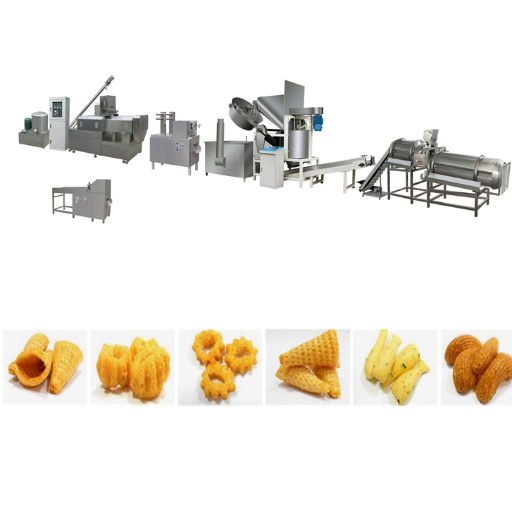
Equipment specs matter, but supplier capability determines whether your bugles production line or bugles snack making machine actually works in your factory. Evaluate these six areas before signing a contract.
- Technical support and training. Will engineers install and commission the line on-site? Do they train your operators and maintenance staff?
- Customization capability. Can the supplier adjust recipes, voltage, capacity, and layout for your product and building?
- After-sales service. How quickly can you get spare parts and remote troubleshooting support?
- Material and build quality. Food-contact parts should be SUS304 stainless steel; screws should be hardened alloy steel.
- Certifications. CE, ISO9001, and compliance with target-market regulations reduce import and inspection risk.
- References and case studies. Ask for installations in similar climates, markets, and production scales.
A supplier that answers clearly and provides factory videos, layout drawings, and sample products is usually a safer bet than one that only sends a price list.
Frequently Asked Questions
What raw materials can a Bugles snack production line use?
Most lines handle wheat flour, corn flour, corn starch, rice flour, rice starch, and potato starch. Recipe ratios and moisture content determine texture, expansion, and frying behavior.
Can one line make other snacks besides Bugles?
Yes. By changing dies, shaping rollers, and cutters, the same line can produce Sala sticks, pizza rolls, rice crust, twists, rings, triangles, and other 3D snacks. This versatility is one reason direct-fry extrusion lines are popular.
How much floor space does a Bugles snack production line need?
A direct-fry bugles snack production line typically needs 22–30 meters in length and 2–3 meters in width, depending on the bugles production line model and whether a packaging machine is inline. Pellet-based systems with drying tunnels require significantly more space.
Is a Bugles line better than a potato chip line?
It depends on your market and raw material supply. Bugles lines use stored flour, require no peeling or washing, and produce no starch wastewater. Potato chip lines start with fresh potatoes and need washing, peeling, and slicing equipment. Flour-based lines also offer more shape and flavor flexibility.
What is the typical lead time for a Bugles snack production line?
Standard configurations usually ship 20–35 days after order confirmation. Custom voltage, larger models, or added packaging equipment may extend lead time.
Conclusion
A bugles snack production line is more than a collection of machines. It is a coordinated system where raw material quality, extruder settings, shaping precision, fryer temperature, and seasoning control all affect the final product. Buyers who understand each stage can ask sharper questions, compare suppliers more fairly, and avoid costly mismatches between capacity and market demand.
The market for fried snack equipment is growing fast. The global industrial frying machine market alone is valued at roughly USD 8.95 billion in 2025, and snack foods account for the largest share of demand. Producers who invest in efficient, flexible lines now will be better positioned as competition intensifies.
Start by defining your target output, product mix, and budget. Then request detailed quotations that include not just the machine price, but also installation, training, spare parts, and operating cost estimates. The right supplier will welcome those questions.
Ready to move forward? Request a quote for a bugles snack production line or bugles production line tailored to your factory, and our engineers will help you select the right model, layout, and configuration.