
Continuous Microwave Sterilization Process: A 6-Stage Guide From Infeed to Packaged Product

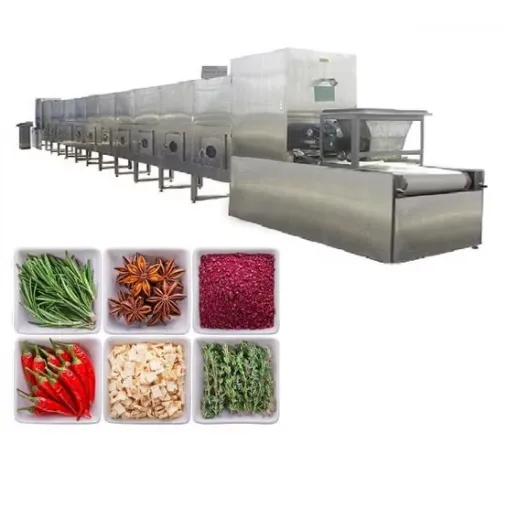
A continuous microwave sterilization process moves food products through six sequential stages, infeed, pre-heating, microwave cavity, holding, cooling, and discharge, on a conveyor belt inside a tunnel system. This method sterilizes products at throughputs of 10 to 2,000 kg per hour while cutting processing time by up to 72% compared to traditional batch retort systems.
Here is the problem most food processors face. Batch sterilization breaks the continuous flow of modern production. You extrude, dry, and season your product in a steady stream. Then you hit a wall. Your sterilizer operates in batches. Load, wait, unload. The line stops and starts. Labor costs spike. Product quality varies from batch to batch. This bottleneck costs processors thousands in lost throughput every single day.
There is a better way. Continuous microwave sterilization turns food safety into a seamless line operation. No stopping. No starting. Just a steady flow of sterilized product from raw material to packaged output.
In this guide, you will learn exactly how each stage of a continuous microwave sterilization line works. You will see the operational parameters that control quality and throughput. You will understand how to integrate sterilization into your existing production workflow. And you will know when continuous processing makes sense, and when batch still wins.
Key Takeaways
- A continuous microwave sterilization line has six distinct stages: infeed, pre-heating, microwave cavity, holding, cooling, and discharge
- Throughput ranges from 10 to 2,000 kg/h depending on product density, belt width, and power configuration
- Processing time drops by up to 72% versus retort sterilization while achieving equivalent microbial lethality (F₀ value)
- 915 MHz penetrates 10–12 cm for bulk products; 2450 MHz penetrates 2–3 cm for smaller items and powders
- Continuous systems integrate seamlessly with upstream extruders, dryers, and downstream packaging lines
What Is Continuous Microwave Sterilization?
The Core Concept: Volumetric Heating in Motion
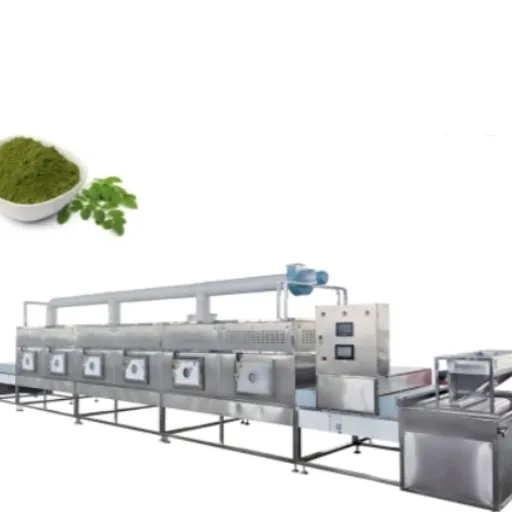
Continuous microwave sterilization uses electromagnetic waves at 915 MHz or 2450 MHz to generate heat inside food products as they travel on a conveyor belt through a tunnel. Unlike surface heating methods, microwaves penetrate the product and interact with polar molecules, primarily water. These molecules oscillate rapidly, creating molecular friction that heats the material from the inside out. This is called volumetric heating.
The thermal effect denatures proteins and destroys microorganisms. The electromagnetic field also disrupts cell membranes, creating a biological effect that complements heat-based kill. Together, these mechanisms deliver commercial sterilization in minutes rather than hours.
A continuous system never stops. Products enter at one end, pass through staged heating and cooling zones, and exit ready for packaging. Belt speed, microwave power, and cavity length are calibrated to deliver a precise temperature profile for each product.
How Continuous Differs From Batch Sterilization
Batch sterilization loads products into a chamber, processes them, then removes them. The cycle repeats. A typical retort batch takes 60 to 120 minutes from load to unload. That includes come-up time, holding, and cool-down. Your line stops while you wait.
Continuous sterilization eliminates that wait. Products flow uninterrupted. Effective processing time ranges from 2 to 15 minutes depending on the target microbial reduction. There is no come-up time for the chamber itself. The microwave energy heats the product directly, not the surrounding equipment. This difference is why continuous systems achieve the same lethality in a fraction of the time.
The distinction matters for operations running high-volume lines. Every minute a batch system sits idle is a minute of lost production.
Why Processors Are Moving to Continuous Systems
Three forces are driving adoption. First, throughput demands are rising. Global food production must increase output while maintaining safety standards. Continuous systems process 10 to 2,000 kg per hour depending on configuration. That range covers small spice processors up to major ready-to-eal meal manufacturers.
Second, labor costs are climbing. Batch systems require operators to load, monitor, and unload each cycle. Continuous systems run with minimal supervision once calibrated. PLC control panels automate temperature monitoring, power adjustment, and fault detection.
Third, product consistency is non-negotiable. Every package that exits a continuous line receives identical treatment. There is no batch-to-batch variation. This consistency simplifies validation, reduces rework, and satisfies customer audit requirements.
Want to see how continuous sterilization compares to traditional batch methods in real numbers? Explore our complete guide to industrial microwave sterilizers for side-by-side energy, speed, and quality data.
The 6 Stages of a Continuous Microwave Sterilization Line
Stage 1: Infeed and Product Spreading
The process begins at the infeed station. A vibratory feeder, belt conveyor, or screw feeder delivers product to the tunnel entrance. This is not a simple dump. Uniform layer thickness is critical for even heating. Too thick, and the center stays cold. Too thin, and you waste energy and reduce throughput.
Product spreading mechanisms flatten the incoming material into a consistent bed. Typical belt widths range from 400 to 1,200 millimeters. Layer thickness varies from 10 to 80 millimeters depending on product density and the microwave frequency in use. Spices and powders spread thin. Grains and extruded products can handle thicker layers.
At a pet food facility in Thailand, the operations team struggled with uneven sterilization in their early continuous line. The problem was not the microwave power. It was the infeed. Their vibratory feeder deposited kibble in piles that created cold spots underneath. After installing a leveling roller and adjusting the feed rate, temperature uniformity improved from ±8°C to ±2°C. Throughput jumped 35%.
Stage 2: Pre-Heating Zone (Optional)
Some lines include a pre-heating zone before the main microwave cavity. This zone uses warm air or infrared heaters to bring the product surface temperature to 30 to 50°C. Pre-heating serves two purposes. It reduces the microwave energy demand in the main cavity. And it minimizes thermal shock that can crack certain packaging types.
Pre-heating is especially useful for products entering at ambient temperature or below. Frozen seafood, for example, benefits from a gentle warm-up before microwave exposure. For dry spices already at room temperature, this zone may be unnecessary.
The decision to include pre-heating depends on product characteristics and energy cost structures. In regions with high electricity prices, pre-heating with lower-cost heat sources can improve overall efficiency.
Stage 3: Microwave Sterilization Cavity
This is the core processing zone. Multiple magnetrons, typically 2 to 12 units depending on tunnel length, generate microwave energy inside a stainless steel cavity. Power density ranges from 5 to 20 kW per meter of tunnel length.
The product temperature rises rapidly. Targets vary by application. Pasteurization may require 70 to 85°C. Commercial sterilization for shelf-stable products typically reaches 110 to 130°C. The key is not just peak temperature. It is the combination of temperature and time that delivers the required microbial lethality.
Microwave suppressors at the tunnel entry and exit prevent energy leakage. These are choke-type structures that block microwaves while allowing the conveyor belt and product to pass through. Modern systems include real-time infrared temperature sensors that monitor product surface temperature across the full belt width. PLC controllers adjust magnetron power in real time to maintain the target profile.
For powders and granular products, some systems include a stirring or tumbling mechanism inside the cavity. This ensures all particles receive uniform exposure and prevents shadowing effects where one layer blocks microwave energy from reaching the layer below.
Stage 4: Holding and Insulation Section
After leaving the microwave cavity, the product enters an insulated holding section. No additional energy is applied here. The product simply maintains its elevated temperature for the required time.
Holding time ranges from 30 seconds to 10 minutes. The duration depends on the target sterility assurance level. A SAL of 10^-6, the standard for commercial sterilization, requires sufficient cumulative heat exposure. The holding section provides that exposure without the energy cost of continuous microwave generation.
Insulated walls minimize heat loss. The section is typically constructed from food-grade stainless steel with thermal insulation on the exterior. Temperature sensors at multiple points verify that the product stays within the validated range throughout the hold period.
This stage is where many first-time buyers underestimate their line requirements. A shorter microwave cavity with a longer holding section can achieve the same lethality as a longer cavity alone, often at lower capital and operating cost.
Stage 5: Controlled Cooling
Rapid cooling prevents overcooking and preserves product quality. A forced-air or water-cooled section brings the product temperature down to safe handling levels before discharge.
For dry products like spices and grains, target exit temperature is typically 30 to 50°C. For packaged goods like ready-to-eat meals in pouches, cooling to 15 to 25°C prevents condensation inside the package that could support microbial growth.
Cooling rate matters for texture and nutrient retention. Prolonged elevated temperatures continue to degrade heat-sensitive compounds even after the sterilization target is met. Fast cooling locks in quality at the point of maximum safety.
Some systems use a two-stage cooling approach. Stage one uses ambient air to bring temperature below 60°C quickly. Stage two uses chilled air or water to reach the final target. This staged approach balances cooling speed with energy efficiency.
Stage 6: Discharge and Downstream Transfer
Sterilized product exits the tunnel onto a transfer conveyor. From here, it moves to packaging, storage, or further processing. The discharge point must be designed to prevent recontamination. Enclosed transfer chutes, positive air pressure, and UV treatment at the exit are common safeguards.
For bulk products, the transfer conveyor may feed directly into a filling line or bulk storage silo. For packaged products, the discharge connects to labeling, case packing, or palletizing equipment. The critical requirement is that no unsterilized material or environmental contaminants can contact the product after it leaves the tunnel.
Automation at this stage reduces labor and contamination risk. Automated sorting systems remove any visibly defective units. Metal detectors catch foreign objects. Checkweighers verify package fill accuracy before sealing.
Critical Process Parameters
Conveyor Speed and Residence Time
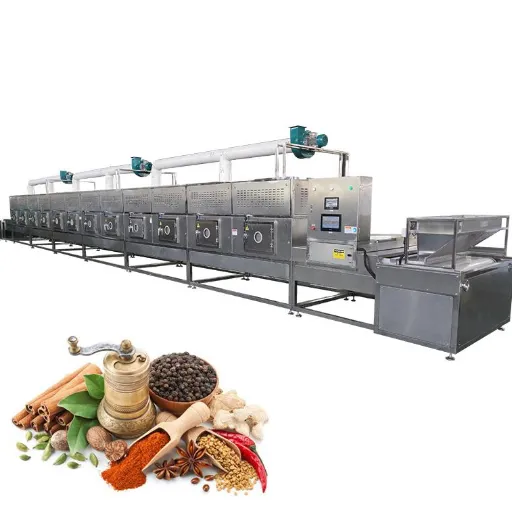
Belt speed is the primary control variable in a continuous system. Typical speeds range from 0.5 to 6 meters per minute. The relationship is simple math. A 6-meter tunnel running at 1 meter per minute gives a 6-minute total residence time. Double the speed to 2 meters per minute, and residence time drops to 3 minutes.
The challenge is calibrating speed against power density and product characteristics. A thin layer of chili powder at high power may need only 2 minutes. A thick bed of extruded pet food kibble at the same power may need 8 minutes. Each product requires its own validated speed and power profile.
Variable frequency drive (VFD) motors allow real-time speed adjustment. This flexibility lets operators switch between products without mechanical changes. Recipe profiles stored in the PLC controller automatically set speed, power, and temperature targets for each SKU.
Microwave Power Density and Frequency Selection
Frequency choice is a critical design decision. 2450 MHz is the standard consumer microwave frequency. It works well for smaller products, thinner layers, and lower throughput applications. Penetration depth is approximately 2 to 3 centimeters. For products thicker than this, the exterior may overheat before the center reaches target temperature.
915 MHz offers deeper penetration, roughly 10 to 12 centimeters. It also allows higher power per generator. Industrial 915 MHz magnetrons can deliver 75 to 100 kW each, compared to 1 to 1.5 kW for standard 2450 MHz units. This makes 915 MHz the preferred choice for high-throughput lines processing bulk products.
The trade-off is equipment cost. 915 MHz systems require larger waveguides, bigger magnetrons, and more robust power supplies. For processors running 500 kg per hour or more, the efficiency gains typically justify the higher capital investment within two to three years.
Temperature Profile and Monitoring
Target temperatures vary by application. Pasteurization of spices and seasonings typically targets 70 to 85°C. Commercial sterilization of packaged meals requires 110 to 130°C. The exact target depends on the product’s pH, water activity, and the specific pathogens of concern.
Continuous infrared sensors monitor surface temperature across the belt width. Fiber-optic probes can measure internal temperature at representative points. PLC controllers compare real-time readings against the validated profile and adjust power or speed to maintain compliance.
Cold spot mapping is essential for validation. During initial commissioning, temperature data loggers are placed at multiple positions across the belt and through the product layer. The coldest point in any run defines the minimum treatment the entire batch receives. Validation protocols document that even the cold spot achieves the required lethality.
Product Layer Thickness and Bulk Density
Layer thickness directly affects heating uniformity. Thicker layers require either lower belt speed or higher power to ensure the center reaches target temperature. But thicker layers also improve throughput for a given belt width.
Bulk density affects dielectric properties, how the material absorbs microwave energy. Spices at approximately 0.3 g per cubic centimeter heat differently than grains at 0.7 g per cubic centimeter. High-density materials absorb energy faster but may also create more uneven heating if layer thickness is not optimized.
Experienced equipment manufacturers account for these variables during system design. Belt width, cavity length, magnetron placement, and power density are all customized to the specific product mix the processor intends to run.
Integrating Continuous Sterilization Into Your Production Line
Post-Extrusion Sterilization for Pet Food and Snacks
Extruded kibble and puffed snacks exit the extruder at 80 to 100°C. They then pass through a dryer and cooler before packaging. The sterilization step fits naturally between cooling and packaging, or between drying and seasoning.
A typical integrated line looks like this: Extruder → Dryer → Cooler → Microwave Sterilizer → Seasoning Drum → Packaging. The sterilizer delivers the final pathogen reduction step. For pet food, this is critical. Salmonella and E. coli are the primary targets. Post-extrusion sterilization ensures that any pathogens surviving the extrusion process are eliminated before the product reaches the consumer.
At a mid-sized pet food facility in Vietnam, the production manager faced a recurring Salmonella issue. Their extrusion line achieved sufficient kill during cooking, but post-extrusion handling introduced recontamination. Adding a continuous microwave sterilizer between the cooler and the packaging line eliminated the problem entirely. Microbial testing dropped from 2 to 3% positive to zero. The sterilizer paid for itself in six months through reduced product holds and customer complaints.
The integration point matters. Placing sterilization after seasoning ensures that both the base product and the coating receive treatment. Placing it before seasoning preserves volatile flavor compounds that might degrade under additional heat exposure. The right choice depends on the specific product and coating type.
Pre-Packaging Sterilization for Spices and Powders
Bulk spices, flour, and seasoning blends are typically sterilized before packaging. The line flows from sifting or grinding directly into the microwave sterilizer, then through cooling and into filling equipment.
This sequence prevents post-sterilization recontamination. Once the product exits the cooling section, it enters a controlled environment or goes directly into sealed packaging. There is no opportunity for environmental pathogens to reintroduce contamination.
Pre-packaging sterilization is the standard approach for products sold in bulk to food manufacturers. A spice blender selling to snack producers, soup manufacturers, and sauce makers needs confidence that their output is pathogen-free. Continuous sterilization provides that assurance at throughput levels that match their grinding and blending capacity.
In-Package Sterilization for RTE Meals and Sauces
Some products are filled and sealed in microwave-compatible packaging before sterilization. Sealed packages travel through the tunnel for treatment inside the package. This approach eliminates secondary contamination risk entirely, the product never touches ambient air after sealing.
The setup is: Filling → Sealing → Microwave Sterilizer → Cooling → Labeling → Case Packing. Compatible packaging materials include polypropylene (PP), polyethylene terephthalate (PET), polycarbonate (PC), ABS, nylon, and certain glass types. Metal containers and polyethylene (PE) films are not suitable.
In-package sterilization is common for ready-to-eat meals, soups, sauces, and liquid products in bottles or pouches. The key design consideration is managing internal pressure buildup during heating. Steam generated inside the package creates pressure that can burst seals if not controlled. Some systems use overpressure chambers or water immersion to balance internal and external pressure.
Liquid and Paste Processing
Pumpable products require a different configuration. Sauces, juices, nutraceuticals, and herbal extracts pass through tubular microwave heaters rather than belt tunnels. The product flows continuously through a pipe that passes through a microwave cavity.
The setup is: Mixing Tank → Pump → Tubular Microwave Heater → Holding Tube → Cooling Exchanger → Filling. Flow rate controls residence time. A holding tube after the heater maintains temperature for the required duration. Then a plate or tubular heat exchanger cools the product before packaging.
This approach is used for products that cannot be spread on a belt. Viscous pastes, liquid seasonings, and functional beverages all benefit from continuous tubular processing. The same principles apply: volumetric heating, rapid temperature rise, precise time control, and fast cooling.
Wondering how a continuous sterilization line would fit your specific production setup? Contact our engineering team for a custom process design and integration assessment tailored to your product, throughput, and floor space.
Batch vs. Continuous Microwave Sterilization: When to Choose Each
Choose Continuous When
High volume is the obvious signal. If your production exceeds 200 kilograms per day, batch sterilization becomes a bottleneck. Continuous systems scale from 200 kg per day to over 20,000 kg per day with the right configuration.
Product consistency is another driver. Continuous lines deliver identical treatment to every unit. This consistency simplifies validation, satisfies audit requirements, and reduces variation in customer quality testing.
Integration with automated upstream and downstream equipment favors continuous processing. An extruder running at 500 kg per hour needs a sterilizer that can match that pace. A batch system forces you to accumulate product in a buffer, then process it in chunks. A continuous system flows seamlessly from one stage to the next.
Finally, labor cost reduction matters. Continuous systems require one operator to monitor the line. Batch systems need operators for loading, monitoring, unloading, and transfer. The labor savings alone can justify the capital investment for high-volume operations.
Choose Batch When
Low volume or highly variable production favors batch systems. If you run 10 different SKUs in a week, each with different batch sizes, a continuous line requires constant recalibration. A batch system offers more flexibility for small runs and frequent changeovers.
Research and development is another batch domain. When developing new products, you need to test different time-temperature combinations. Batch systems let you run experiments without disrupting a continuous production line. Many facilities run both: batch systems for R&D and new product trials, continuous lines for full production.
Budget constraints may also favor batch. Continuous tunnel systems require higher capital investment. For startups and small processors, a batch microwave sterilizer offers a lower entry point. As volume grows, the investment in a continuous line delivers rapid payback through labor savings and throughput gains.
Quality Control and Safety in Continuous Systems
Preventing Cold Spots and Uneven Heating
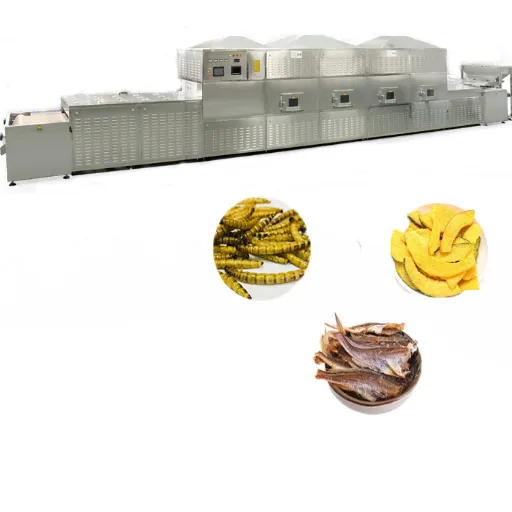
Cold spots are the enemy of effective sterilization. Any region that fails to reach the target temperature creates a survival zone for pathogens. Three design features address this risk.
Multi-source microwave feed distributes energy from multiple magnetrons positioned above and below the conveyor. This multi-directional approach reduces shadowing and ensures energy reaches the product from all angles. For powders and granular materials, belt agitation or internal stirring mechanisms remix the product during exposure, exposing new surfaces to the microwave field.
Real-time temperature monitoring with feedback control is the third layer of protection. Infrared sensors scan the product surface continuously. If any region falls below target, the PLC increases power or reduces belt speed to compensate. This closed-loop control maintains uniformity even as product characteristics vary slightly over a production run.
Microwave Leakage Protection
Operator safety is non-negotiable. Microwave suppressors at the tunnel openings block electromagnetic energy from escaping while allowing product to pass. These choke rings use geometric structures that reflect microwaves back into the cavity.
Safety interlocks shut down the system immediately if any access door opens during operation. Emergency stop buttons are positioned at both ends of the tunnel and at the control panel. Regular leakage testing with calibrated meters verifies compliance with OSHA and ICNIRP limits of less than 5 milliwatts per square centimeter at 5 centimeters from the surface.
All electrical components carry appropriate IP ratings for the operating environment. Motors and junction boxes in washdown areas require IP55 or higher protection. Cables run in rigid metal conduit to prevent damage and exposure.
Validation and Documentation
Every continuous sterilization line requires validation before commercial operation. Temperature data loggers record profiles across multiple production runs. Biological indicators, typically Geobacillus stearothermophilus spores, are placed at known cold spots to verify lethality.
Documentation requirements vary by market. FDA-regulated products in the United States require a validated process filed under the appropriate regulatory pathway. European markets require CE marking on the equipment and HACCP documentation for the process. Customer audits from major food manufacturers may require additional testing and documentation beyond regulatory minimums.
Modern PLC-based control systems simplify validation by automatically logging all process parameters. Temperature, power level, belt speed, and hold time are recorded for every production run. This data provides the audit trail that quality managers and regulatory inspectors require.
Conclusion
Continuous microwave sterilization transforms food safety from a batch-dependent bottleneck into a seamless, automated line operation. The six stages, infeed, pre-heating, microwave cavity, holding, cooling, and discharge, work together to deliver consistent pathogen reduction at throughput rates that batch systems simply cannot match.
The numbers tell the story. Up to 72% shorter processing cycles. Thirty to fifty percent lower energy consumption. Throughput ranging from 10 to 2,000 kg per hour. And product quality that preserves the color, flavor, and nutrients that prolonged retort heating degrades.
But the real advantage is integration. A continuous sterilizer does not sit apart from your production line. It connects to your extruder, your dryer, your seasoning drum, and your packaging equipment. The product flows. The line runs. Your operation keeps moving.
Not every processor needs continuous processing today. Batch systems still serve low-volume operations, R&D facilities, and processors with highly variable product mixes. The key is matching the right technology to your current needs while planning for where your volume will be in three to five years.
Ready to evaluate a continuous microwave sterilization line for your facility? Request a custom process assessment from Shandong Loyal Industrial Co., Ltd. Our engineering team will analyze your product characteristics, throughput requirements, and existing line layout to design a sterilization solution that integrates seamlessly into your operation.