
Continuous Production vs Batch Manufacturing: A Food Industry Guide
When Marcus Chen was pondering about enlarging his snack manufacturing industry in Shenzhen, he had an option to choose whether to spend $3.2 million and set the way for the company within the next ten years to invest on a processed line that runs 24/7, or to maintain batch processing with which he afforded the required flexibility given his perspective. He therefore chose batch processing. In 18 months, after high labor costs went as high as 40% above those of his competitors and ceaseless overtime to meet demand, Marcus was reconsidering it again: albeit at a high price.
Marcus’s experience elucidates why the comparison between continuous and batch production is potentially the most crucial exercise hence undertaken by a food manufacturer. A wrong decision will lock in inefficiencies for years, while a proper one would accentuate their competitive advantages with time.
This guide offers an in-depth look into the realm of continuous production versus batch production, covering the likes of:
How to conduct an evaluation of continuous against batch for your particular product and volume
Real cost comparisons with ROI timelines at different levels of production
Quality, safety, and risk effects by process.
Equipment needed and technical considerations
A decision framework to help in selecting procedures appropriate to the working of the factory.
What Are Continuous and Batch Production Methods?
To make an informed decision as to which falls in line with your operations, it is necessary to understand the crucial difference in continuous production vs batch manufacturing.
Batch Production Defined
Batch production is stating here that products are made in batches or groups. Every batch goes through all production processes before the next batch begins. The material comes in, goes through the entire production cycle, and goes out of the plant as a final product; the cycle begins again in the case of another batch.
Key Characteristics:
1. Production takes place in runs with clear starts and finishes.
2. Equipment stops for timeouts to clean, inspect, or set up between batches.
3. Recipe flexibility. It is easy to switch between products between batches.
4. Lot-style traceability through batch numbers and lot codes
5. Lower initial capital venture
6. Higher manual intervention
Batch applications are common in the following:
– Special sauces with changing seasonal recipes
– Products for those with allergies who require segregation
– Small-scale artisan products
– Product development and near-production R&D
– Dairy and perishable items with a short life span
Continuous Production Defined
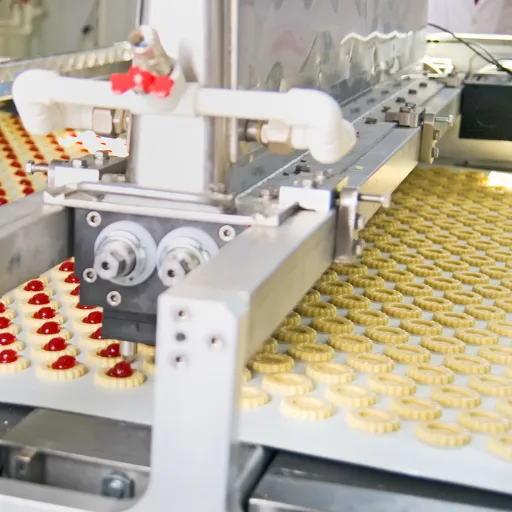
Continuous processing is one that flows uninterruptedly. Raw materials come in from one end and finished products from the other end one after the other. It maintains steady-state operation for long periods-sometimes, as long as 24/7 weeks or even months to fit in a planned maintenance schedule.
Key characteristics:
Material flows through the system, uninterrupted and unbounded.
Processing takes place in a very stable situation. Quality variation is minimized.
Manufacturing in great quantity is possible at any one time. Consistency has been achieved.
Systems operate in the full loop, maintaining the necessary conditions through automation.
It has a significant capital cost, but
The workforce is minimal per output unit.
Some common examples of continuous food processing include
pasta and noodle production
beverage manufacturing (soft drinks, juices)
snack extrusion and frying
vegetable oil processing
breakfast cereal manufacture
The Hybrid Reality
The food industry is witnessing mixed-mode operation more and more. They are doing it strategically. It is a composite debut:
Continuous continuous finishing: Continuous production (dough, paste) of basic ingredients, then batching for variations in flavors, sizes, or packaging
Continuous continuous packaging: Batch mixing of sensitive ingredients, then continuous packaging
Seasonal flexibility: Process of basic products a year long but seasonal-specialty projects can be processed in batches.
Continuous Production vs Batch: Side-by-Side Comparison

| Factor | Batch Production | Continuous Production | Advantage |
|---|---|---|---|
| Initial Investment | 500K–500K–2M | 2M–2M–20M | Batch |
| Labor Requirements | Higher (manual setup/monitoring) | Lower (automated operation) | Continuous |
| Production Volume | Low-moderate per run | High sustained output | Continuous |
| Recipe Flexibility | High—easy changeovers | Limited—optimized for single products | Batch |
| Quality Consistency | Variable between batches | Steady-state uniformity | Continuous |
| Traceability | Natural batch isolation | Time-segmented tracking | Batch |
| Energy Efficiency | Start/stop cycles waste energy | Optimized steady-state | Continuous |
| Changeover Time | 2-8 hours typical | Minimal (continuous runs) | Continuous |
| Product Waste | 5-15% | 1-5% | Continuous |
| Best For | Specialty/seasonal products | Commodity/high-volume items | Context-dependent |
The comparison of continuous production with batch production reveals a universal truth—that no method is ever conclusively superior. Ultimately, the choice has to lean on the nature of products, their volumes, and business strategy.
Food Industry Applications: Where Each Method Excels
When to Choose Batch Production
When it comes to Continuous Processing vs Batch Production, batch production is retained as a viable option largely for food production in select cases:
1. Specialty and Artisan Products
Batch processing is invaluable where recipes are ever changing and where products are executed under delicate manual control. This is where precision in sprinkling the necessary batch production. The craft chocolate, rough hot sauces, and specialty baked goods are apt examples.
2. Allergen-Sensitive Production
Isolation of products that may contain allergens is a prerequisite by regulation. Batch production permits effortless lines of demarcation between runs, relying on their natural segregation that continuous processing lines aspire without dedicated lines.
3. Seasonal or Variable Demand
Highly variable products like pumpkin spice, holiday specialties, or summer drinks benefit from flexibilities in batch operations. To run continuous lines during the season of a product will just mean downtime from maintenance and restart-up cost.
4. Product Development and R&D
Formulation tests require iteration very fast. Batch systems abandon the need for retooling entire production lines for quick recipe change requests.
5. Items with Short Shelf-life
Fresh dairy products, ready-to-eat meals, and other fast-shelf-life consumer products often have to be made in batches, while reducing the possibility of waste and aligning the manufacturing demand.
When to Choose Continuous Production
In the matter of tons versus batches, continuous remains the more effective production method for high-volume and standardized products, which include:
1. High-Volume Commodities
Products with stable year-round demand can be produced by continuous systems more efficiently. Pasta, drinks, cooking oils, and cereals are examples of products of which uninterrupted production is highly beneficial.
2. Long Running Recipes
Continuous systems eliminate changeover times and cover long production runs of any one product.
3. Labor Cost Reduction Targets
An automated continuous line requires just 50-75% of the manpower needed for comparable batch systems. This difference becomes significant when the labor cost of production is very high or when unskilled labor is in tight supply.
4. Energy Saving Goals
Continuous lines do not waste energy for every turn by heating, cooling, and restarting machines. Whereas batch processes need a as an extra energy ranging from 15-25% to process each unit.
5. Consistent Quality Expectations
Products that require consistency when it comes to snack texture, pasta density, or beverage carbonation can benefit from steady-state continuous processing, thus eliminating the inconsistencies between batches.
Case Study: Maria’s Pasta Facility Transformation
Maria Chen started the pasta company in 2019 and hence, batch production was deemed profitable. She had three SKUs, a daily demand of 200kg and the flexibility to experiment with recipes. The two batch lines, affordable for a startup, came to $800,000.
Fast forward to 2024, 20 SKUs and 3 tons in daily demand, Maria was in trouble: bath changeovers were taking away 6 hours of production each day, costs in labor doubled because of night shifts to meet demand, and variations in quality from batch to batch have been generating complaints from customers.
Maria invested $2.4 million to purchase a continuous pasta production line from Shandong Loyal Industrial, and the operations in the first 12 months went as follows:
The production capacity: 4.2 tons per day—40% more increase
Labor costs: were reduced by 50% with fewer operators for day shift even for fewer hours
Quality consistency: Usage dropped from 3.2% to 0.4%
Time required for changeovers: reduced from 4 hours to 12 minutes thanks to automated recipe management
ROI: Total return in 16 months but still just as hyperlocal as yesterday
Cost Analysis: Continuous vs Batch Production ROI
Understanding true costs is essential when evaluating continuous production vs batch manufacturing.
Capital Investment Comparison
Batch Manufacturing:
Less Initial Investment ($0.5K–$2MK depending on size)
Scalable Plant Operations
Simpler Support and Infrastructure
More Speedy Development of Equipment
Less Moderately risky Market Venturing
Continuous Manufacturing:
In the continuous manufacturing food business, economy is very different and is much more expensive compared to batch:
Much Higher Capital Investment ($2M–$20M-depending upon size)
High-Tech Automation and Control
Full Material Handling System
Long Validation Period
More Risk but Great Scale Opportunity
Operating Cost Differences
Labor Wage Bill:
The reduction in labor requirements from continuous systems is large. A standard batch line that makes pasta may require 8-12 shift openings alone. An analogous continuous line that allows for automation would require only 2 to 4 persons manning the line. With 35,000as an average annualer operation cost, this wave would result in 210,000–$280,000 in annual savings per line.
Consumption of Energy:
Saving is practically given for a system for faral batch, heating, cooling, starting, and stopping numerous times and instead are continuously operating. Therefore energy use is optimized for a continuous steady state. From this saving is estimated to be as high as 15-25% for a single output-suited processes; drying, frying, or extruding should provide further saving of substantial cost; durability and endurance.
Waste and Yield Factors:
Changeovers from batch system result in waste incurred on start-up and shut-down, first-offs and cleaning. The continuous system witnesses quality in the steady-state with minimal transformation waste. Batch systems are mainly stated as having 5-15% waste; the continuous system wastes 1-5%.
Plan of Maintenance:
Continuous systems need scheduled predictive maintenance to avoid expensive downtime. However, the batch cycle does not allow for predictive scheduled maintenance; only breakdown maintenance is an option, which leads to downtime. Yet, volume reduction of equipment like continuous running can assist in the long life of the component, apart from running very smoothly with minimal vibration or thermal cycling.
ROI Timeline by Production Scale
| Annual Volume | Batch ROI Timeline | Continuous ROI Timeline | Recommended Method |
|---|---|---|---|
| <500 tons | 12-18 months | Not viable | Batch |
| 500–2,000 tons | 18-24 months | 24-36 months | Hybrid/Batch |
| 2,000–10,000 tons | 24-36 months | 18-24 months | Continuous |
| >10,000 tons | 36+ months | 12-18 months | Continuous |
The hill of continuous production versus a valley of batch process typically materializes once the production reaches approximately 2,000 tons a year—where the efficiency gains in the continuous process become favorable to offset quickly today’s higher capital investment through lower adjusted per-unit operational costs.
Quality and Food Safety Considerations

Traceability and Recall Management
Advantages of batch production:
The delineation of production lots most naturally allows for precise identification. In the event of the absence of any quality standards, contamination agents would be placed directly inside a single isolated production lot. In recalling contaminated products in cases when contamination yet arises and if at all, the manufacturer may have to recall an almost small portion and exactly locate the same production lot, thereby decreasing the financial loss while protecting the brand.
Disadvantages of a continuous production system:
If a system stays uncleansed, contamination, once found, may easily be spread over a wider area than typically would be the case with a batch system. This demands a well-sorted system for time-segmented tracing and instant diversion. Unfortunately, while real-time observation provides an effective insight allowing to find the possibly affected product without delay, severe consequences could still follow if the system would cause false negatives.
Real-Time Quality Control
Lot quality management:
Quality assurance is at completion of the batch. Sequential Critical Control Points (CCPs) can verify between stages of processing. This staged approach would mitigate risk but it would delay release from production.
Continuous quality management:
Process Analytical Technology (PAT) permits real-time monitoring of critical parameters. Immediate detection of a deviation is through sensors, with automatic correction or diversion. In this regard, quality will have more of a continuous than discrete nature-per discrete-with immediate feedback loops.
Allergen and Contamination Control
Batch Processing:
The cleaning actuators between batches makes spontaneous segregation. Each batch remains treated as independently minded of anything. Batch processing is needed at plants dealing with various allergens or obligating to change products quite often.
Continuous Processing:
Dedicated lines can be used to promote allergen isolation on continuous production plant platforms elaborated through food industry scale. In such an environment, areas for shared lines require sophisticated Clean-in-Place (CIP) systems which consist of validation protocols. Efforts at engineering controls are preferred over an overreliance on natural barriers.
Regulatory Compliance (FSMA, HACCP)
Both methodologies cater to full compliance in terms of industry regulations, yet they follow different designs.
Batchwise Implementation:
Electronic Batch Records (EBR) document every production run
Lot-wise traceability is possible for compliance with FDA Food Safety Modernization Act requirements
Intervals opportune for HACCP verification
Simple audit trails with small-sized production units
Continuous Implementation:
Real-time data logging engenders the entire process history
Fractional sections of time lead to “virtual batches” which are traceable
Process Analytical Technology supports the Real-Time Release Testing (RTRT)
It is recommended to have first-class data management systems to support this method.
Technology and Equipment Requirements
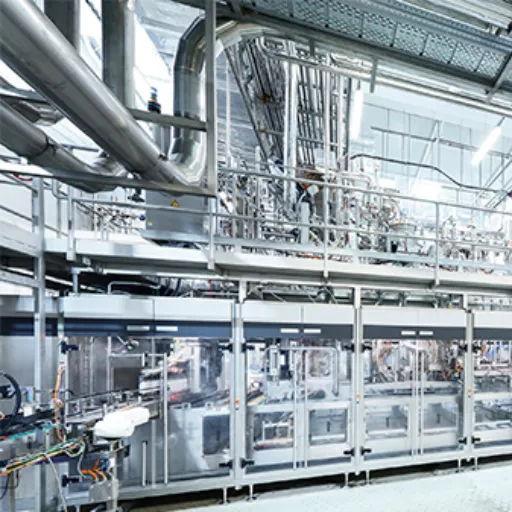
Batch Production Equipment Stack
Core Systems:
• Making batches and weighing with accurate control of ingredients combined
• Blend vessels for blending, along with recipes
• Batch processes equipment (for example, cookers, reactors, fermentors)
• Manual or semi-auto assembling lines.
• Batch tracking documentation system
Control architecture:
Recipe management software synchronizes batch execution; operator follow-ups, monitoring, and intervention of progress; and finally, paper-based records for batch records are used.
Continuous Production Equipment Stack
Functions of Core Systems:
Automated material handling and feeding systems.
Continuous processing equipment (extruders, ovens, cookers)
Steady-state thermal processing (drying, frying, cooling)
Automated packaging lines integrated with production rates
Real-time monitoring and control systems
Control Architecture:
SCADA (Supervisory Control and Data Acquisition) systems continuously control the parameters. PLCs (Programmable Logic Controllers) maintain the systems in the steady-state phase with automatic adjustments. MES (Manufacturing Execution Systems) are used to integrate production data with business data.
The Role of Automation in Both Methods
Automation in Batch Systems:
Modern batch processing food production systems have significantly installed various automation:
Automated metering and weight measuring
Process control which is recipe-specific to recipes
Between functions, an automated CIP
Electronically issued batch records with authorisations
Automation in Continuous Systems:
Automation is a force in keeping continuous processes up and running:
Operational conditions remain optimum at all times with real-time process control
Material-moving and routing systems automated
Vision systems that monitor product quality
Predictive maintenance monitoring
Equipment Considerations from Shandong Loyal Industrial:
System solutions developed for automation must fully integrate with turnkey production lines:
PLC Control Systems: Central control secures recipe management and batch flexibility-or on the spot, the systems can simply be switched to a more controlled steady-state operation
Modular Design: Equipment modules can be configured for batch or continuous workflow
Recipe Management: Store and switch between hundreds of product recipes in a moment’s notice.
SCADA Integration: Real-time monitoring regardless of production method
The Hybrid Approach: Best of Both Worlds
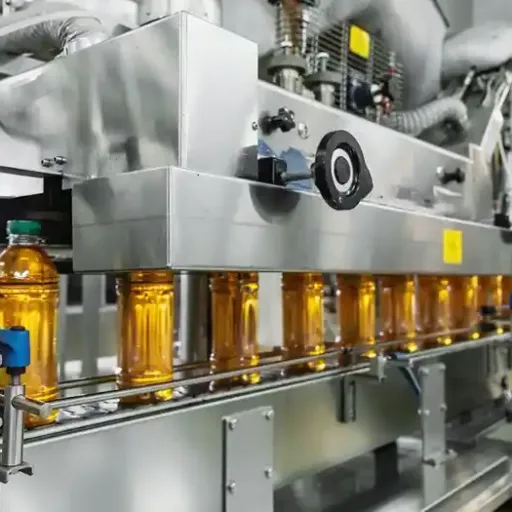
The binary choice between continuous production vs batch is increasingly obsolete. Modern facilities architect hybrid systems that leverage both methodologies strategically.
Common Hybrid Configurations
Configuration 1: Continuous Batch + Batch Finishing
In this hybrid set-up of continuous and batch production, the continuously produced base ingredients are considered any efficient supply- dough, paste, or primary constituents; and then batch for assorted flavors, seasonings, or packaging configurations. The system ensures “scale without losing flexibility.”
Configuration 2: Batch Production: Continuous Packaging Flow
In a different continuous vs batch production approach, sensitive mixing stages depend on batch operations in view of precision and traceability. The materials imported leave their standing grounds to be packed at high-paced laned lines.
Configuration 3: Product-Specific Line Assignment
Put the Continuous batch to run the high-volume goods year-round; store the batch equipment for handling the seasonal specialties, new products introduction, and customer-size runs.
Equipment Considerations for Hybrid Operations
Modular Line Design:
Dual-mode equipment provides maximum flexibility when evaluating batch vs continuous production scenarios. For example, a modular extrusion system can run continuously for high volume multiples or set up in batch mode to suit R&D and specialty runs.
Changeovers that are Quick:
Fast, automated changeovers keep downtime to a minimum while changing modes. Automation in CIP, recipe-based setting, and sophisticated material-handling system will guarantee efficient hybrid operation.
Unified Control Systems:
Unified architecture control system manages operations for both batch and continuous from a single center. Streamlining these variables into a single group aids in training, maintenance, and data management.
Decision Framework: Choosing Your Production Method

Assessment Questions
Answer these questions in order to recognize methods of continuous and batch production suitable for your business.
1. What is the current and expected annual quantity?
Less than 500 tons: Batch likely
500–2,000 tons: Evaluate hybrid or batch
2,000–10,000 tons: Continuous likely
Over 10,000 tons: Continuous desirable
2. How often are recipes changed?
Daily/weekly: Batch only
Monthly: Batch or hybrid
The quarterly chance or lesser: Continuous feasible
Never/very seldom: Continuous preferable. Aggressive commercialization compels one to align with demand signals.
3. What is the shelf life of your product?
Less than or equal to 7 days: Lots of batch (often) (demand-driven).
Between 7 and 30 days: Any method is OK
Over 30 days: Continuous advantages start
4. Are allergens there and do they need to be segregated?
Multiple allergen loads: Batch or dedicated continuous lines
A single allergen family: Continuous potential
No allergens: No limitation
5. What kind of capital budget do you have?
Up to $1M: Batch only
From $1M–3M: Batch or entry-level continuous
Over $3M: Full continuous or hybrid
Scoring Matrix
Rate each factor 1-5, then calculate weighted scores:
| Factor | Weight | Batch Score × Weight | Continuous Score × Weight |
|---|---|---|---|
| Volume Requirements | 25% | ||
| Recipe Flexibility | 20% | ||
| Capital Constraints | 20% | ||
| Labor Cost Priority | 15% | ||
| Quality Consistency | 10% | ||
| Energy Efficiency | 10% |
Interpretation:
- Batch score >60%: Choose batch
- Continuous score >60%: Choose continuous
- Within 10%: Consider hybrid approach
2026 Trends: The Future of Production Methods
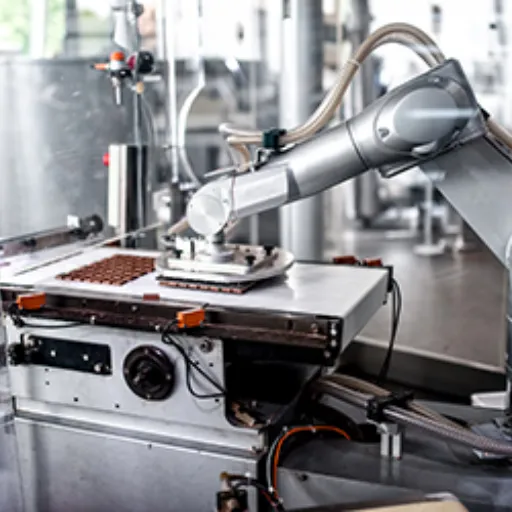
AI and Machine Learning Integration
Artificial Intelligence is changing more traditional manufacturing:
In the case of Batch Systems:
The AI uses the optimization of scheduling jobs to predict when equipment fails and to make changes in the recipe depending on variations of raw feed materials so that it will be chemical customers. Now we work toward “automation optimized by data analytics” from a stage of manual intervention.
For Continuous Systems:
Machine learning fine-tunes process parameters automatically to construct production lines running to self-optimize. Digital timelines simulate to make changes in production before/while they happen to reduce risk.
Modular Continuous Systems
Long investment timelines and massive capital needs dictated traditional continous vs batch production economics. However, with the emerging modular designs, transformations in these boundaries are evident:
Installation streamlining due to modular PLug-and-play units
Contigent on system size, continuous processes become suitable for small to mid-scale facilities
Interface rectification to allow simpler integration and accretion
Sustainability Pressures
Nowadays, environmental criteria push many methods that are focused on the production which refers to the following efficient operations:
Energy efficiency: Continuous steady-state operation reduces the carbon footprint considerably
Waste reduction: Monitor-Waste level: Real-time quality control is basic for keeping product rejection at a minimum
Water conservation: Advanced CIP systems optimize cleaning cycles
Sustainability will trim waste while improving efficiency in facilities where metrics are starting to be put into extensive workings, and they are more and more likely to prefer continuous methods if their production volume asks for such investment.
Conclusion: Making the Right Choice
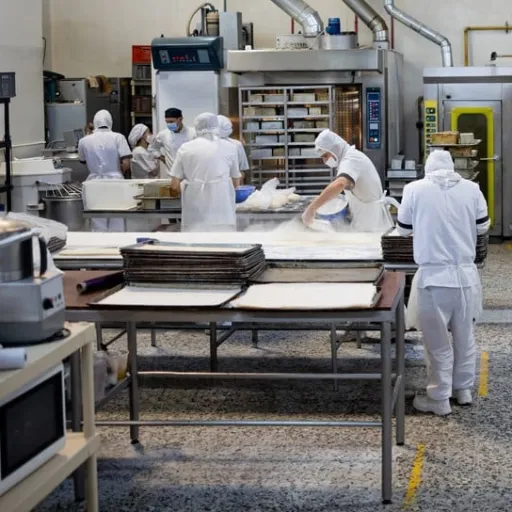
Each method has its own merits when we consider the continuous production versus batch debate with respect to what makes sense for product, volume and strategic priorities.
The research tells us that the batch system is stronger when the product itself is flexible and recipes are rotated often, when volumes are average, and when allergen segregation is crucial.
Conversely, continuous production comes out on top with high and steady production runs, where labor costs are highly competitive, as well as high quality and uniformity are the main selling points
Hybrid systems are rapidly displacing pure batch or continuous systems, fitting part of the feature criteria from either end
Around a 2,000 ton per year volume, the ratios in favor of continuous go up
Equipment should be kept rather flexible to accommodate future needs rather than immediate ones
Marcus Chan’s Comments:
After struggling with batch limitations for 18 months, Marcus retracted his continuous production vs batch decision and invested in $3.8 million for continuous extruding and packaging lines. After 18 months, per-unit cost decreased by 35%, quality complaints were quelled 80%, and the capacity had once again begun to be what it had been—he again chased the contracts he had rejected earlier. The cost of such turnover—insertion of such technology—was significant, but the cost of keeping the line going without it would have turned out higher.
The question of selecting continuous production vs batch is not one of selection of either type of method as the best one; Instead, it is a problem of determining which has the most potential to position your operation for accomplishment in 2026-onward.
Frequently Asked Questions (FAQs)
What sets continuous production apart from batch production?
Continuous production is a manufacturing technique where good runs go on for some time without interruption to produce a sizeable number of products. The item may be the same for every single run. On the contrary, batch production is related to specific production runs so that batch run is concerned with specific quantities of goods. The production is stopped between batches to allow companies to adjust and modify current set runs for the next batch. Continuous production would be helpful for goods that are in high-demand and produced on a large, uniform basis and batch production for those seeking bespoke goods with a smaller-scale production line.
What are the benefits of continuous production?
Continuous production is advantageous for a number of reasons, such as higher output, lower labor costs, and greater uniformity in product quality. These benefits hold true because there are no interruptions in production, which cuts down on time off while maximizing output. It is an efficient method of production for sectors such as chemicals, food processing, and energy where large-scale, uniform production is desired.
Which industries benefit from Continuous production vis-a-vis Batch production method?
Continuous operation pattern is applied in industries such as petroleum refining, chemical industry, food processing, etc., which demand massive bulk and standardized productions. Batch-pattern industries include the pharmaceutical, cosmetic, and custom manufacturing businesses, which would primarily need flexibility and a variety of products.
How Do Quality Control Processes Differ Between Continuous and Batch Production?
Quality control is one of the integral components of the continuous process, where real-time monitoring and automated systems help provide consistency with quality. In batch production, quality control shall be put at the end of every processing, although adjustments can still be made before the end of such a batch. Hence, batch production is more suited for products requiring regular testing and customization.