
Corn Nuts: The Science Behind the Crunch and How to Master Them at Home

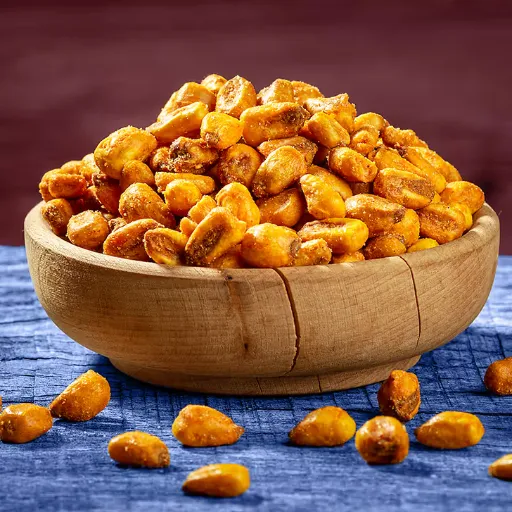
Corn nuts are far more than just “toasted corn”—they are a specific preparation of large-kernel Peruvian corn, rehydrated and deep-fried to achieve their signature explosive crunch. While often mistaken for a type of popcorn, these kernels don’t pop; they expand into a dense, savory snack. Whether you’re curious about the hybrid varieties used by major brands or looking to master the 24-hour soaking method at home, understanding the unique anatomy of the kernel is the first step.
Beyond the Bag: What Exactly Are Corn Nuts?
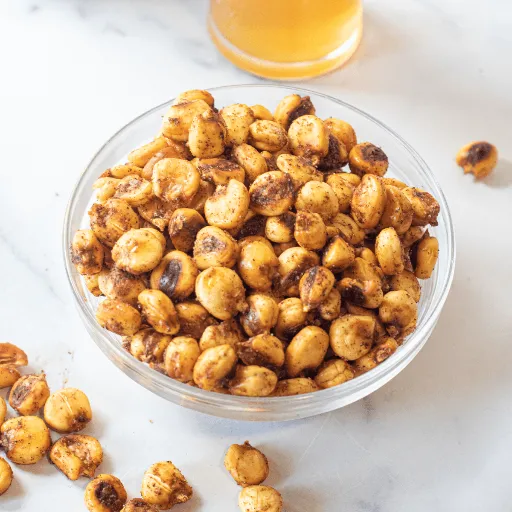
Despite the name, a corn nut is entirely unrelated to the tree nut family. It is a kernel of corn that has undergone a specific physical transformation. Unlike popcorn, which explodes into a light, airy foam, these kernels are processed to remain whole, becoming incredibly dense and brittle.
Industry observation highlights that the secret lies in the moisture content. While standard field corn may shatter or remain unpleasantly chewy when fried, the varieties used for this snack are bred for their massive size. A realistic scenario of authentic production involves sourcing “Cuzco Gigante” from Peru. These kernels are nearly double the size of a standard sweet corn kernel, often measuring over 15mm in width.
By soaking these giants until they reach a specific hydration level—frequently around 12% to 14%—the internal starch softens just enough. When they finally hit the hot oil, they “toast” from the inside out. This creates that polarizing, tooth-rattling crunch that defines the snack. It isn’t just dried corn; it is a carefully rehydrated and deep-fried starch matrix.
The Journey of the Giant Corn: From Cusco to the Snack Aisle
Before they were a vending machine staple, corn nuts existed as cancha salada, a traditional Andean snack with roots stretching back over a thousand years. The evolution from a sacred Incan crop to a globally distributed brand is a masterclass in agricultural adaptation. It wasn’t just about finding the right seasoning; it was about moving a high-altitude giant into the mass-production fields of North America.
The Role of the Peruvian Cusco Variety
The “Cuzco Gigante” (or Sacred Valley white corn) is the literal foundation of the snack. Native only to the Urubamba Valley in Peru, these kernels are massive, often reaching 15mm to 20mm in width—roughly three times the size of standard sweet corn.
In the early 1950s, Albert Holloway, the founder of the CornNuts brand, became obsessed with these “quarter-sized” kernels. Industry observation suggests he initially tried to simply import the Peruvian crop, but the logistics of the era made it nearly impossible to maintain a consistent supply. The Cusco variety is famously finicky, requiring a very specific microclimate found only at altitudes between 2,700 and 2,900 meters to reach its full, floury potential.
How Hybridization Created the Modern Commercial Snack
To make the snack commercially viable, Holloway’s team spent roughly 10 years working with corn breeders to cross-pollinate the Cusco giant with domestic California varieties. The goal was to retain the giant kernel size while allowing the plant to grow in much lower altitudes.
[Image showing the cross-breeding process of hybrid corn]
A practical example of the challenge was the “days to maturity” factor. The Peruvian original takes about 240 to 270 days to grow, far too long for most North American seasons. Cautious hybridization eventually resulted in a plant that matured faster and resisted local pests, though most connoisseurs agree the modern 15mm commercial “nut” is slightly smaller than the 25mm heirlooms found in Cusco markets. Today, these hybrid fields are what feed the massive industrial fryers that produce millions of bags annually.
Anatomy of the Perfect Crunch
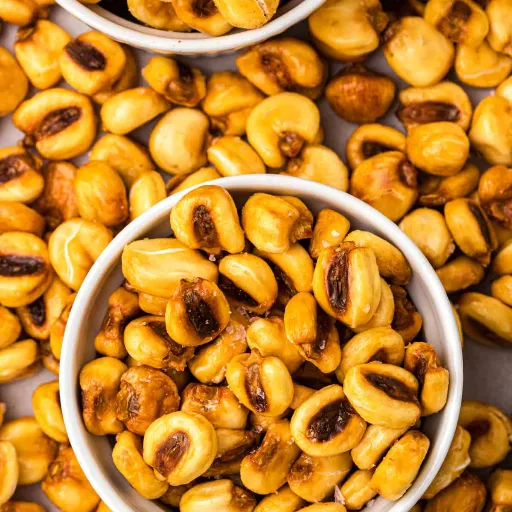
Achieving that specific, jaw-vibrating snap is a matter of precision engineering, not just luck with a deep fryer. While many enthusiasts try to replicate the snack using standard pantry staples, they often find the results either rock-hard or unpleasantly chewy. The “crunch” is actually a result of controlled internal steam pressure—a biological reaction that happens when a specifically hydrated kernel meets high-heat lipids.
Why Conventional Corn Won’t Work for Authentic Results
If you try to fry standard yellow dent corn or popcorn kernels, you’ll likely end up with broken teeth or a bowl of “old maids.” Industry observation confirms that standard field corn has an endosperm that is too dense; it lacks the floury, expansive starch required to create the airy pockets that characterize a true corn nut.
A practical example is the difference in starch types. Conventional corn tends to be “flinty,” meaning the starch is tightly packed. When heated, it resists expansion. Authentic corn nuts require a “floury” variety, such as the white giant kernels from the Andes. These have a softer internal structure that allows the kernel to swell to nearly 1.5 times its original size during the preparation process without shattering into popcorn.
The Rehydration Secret: Deep Soaking for Maximum Expansion
The most common mistake in home preparation is skipping the long soak. You cannot simply fry a dry kernel and expect it to be edible. A realistic scenario involves a 24 to 48-hour submersion in water, often with a pinch of salt or baking soda to further soften the outer hull.
This rehydration stage isn’t just about moisture; it’s about uniform saturation. Cautious cooks aim for a moisture content increase of approximately 30% to 35% before the corn ever touches the oil. If the center of the kernel remains dry, the finished snack will have a “glassy” core that is dangerously hard. Once fully plumped, the water inside the kernel acts as a leavening agent; as it hits the fryer, the water turns to steam, pushing the starch outward and creating the brittle, hollowed-out matrix that provides that signature explosive bite.
4 Essential Tips for Frying or Air-Frying Corn Nuts at Home
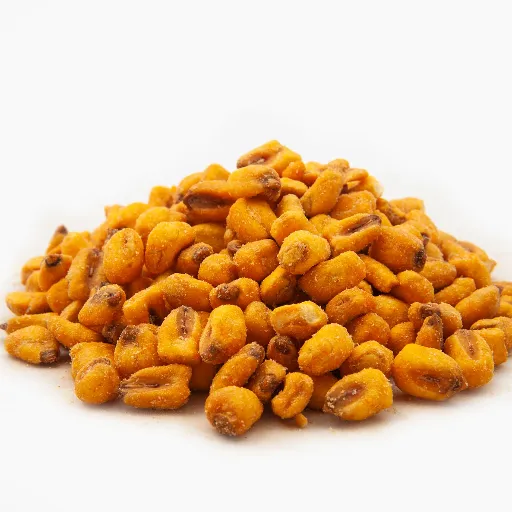
Making corn nuts at home is less about the heat and more about managing the physics of the kernel. If you rush the process, you end up with something closer to gravel than a snack. To get that brittle, shattering texture found in commercial brands, you need to navigate the transition from a water-logged seed to a crisp, oil-infused treat.
1. The Bone-Dry Rule After the 24-hour soak, the exterior must be completely dry before it meets the heat. A realistic scenario involves spreading the rehydrated corn on a baking sheet and letting it air-dry for at least 2 to 3 hours. If you toss damp kernels into 175°C oil, the surface hardens before the internal steam can escape, leading to a “leathery” center.
2. Temperature Precision Industry observation suggests that the window for the perfect crunch is narrow. For deep-frying, aim for exactly 177°C. If the oil is too cool, the corn absorbs the grease like a sponge; too hot, and the outside chars while the inside remains starchy.
3. The Air-Fryer Adjustment Air-frying tends to be safer but riskier for texture. Since air-fryers move a lot of volume, the corn can dry out too fast. A practical example of success is misting the corn with oil every 5 minutes during the cycle. This mimics the continuous heat transfer of a deep fryer without the total immersion.
4. The Carry-Over Crunch Don’t wait for them to feel “hard” in the pan. Corn nuts continue to firm up as they cool. Cautious cooks pull them when they are a deep golden tan. If they stay in the heat until they are “crunchy,” they will likely be overdone by the time they reach room temperature and the moisture levels stabilize.
Nutrition and Ingredients: Balancing Flavor with Health Conscious Snacking
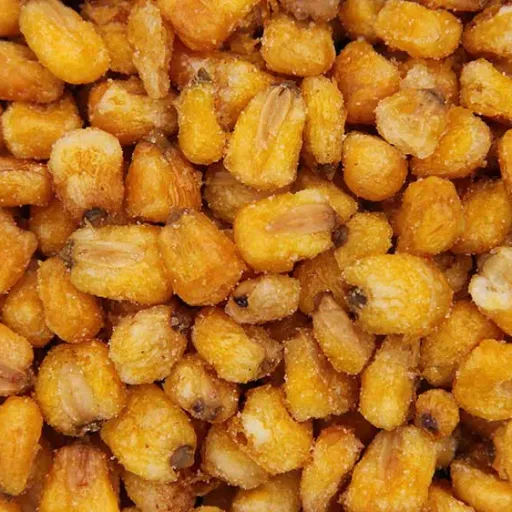
At its core, a corn nut is a whole grain. Because the process utilizes the entire kernel—bran, germ, and endosperm—it retains a surprising amount of fiber compared to highly processed puffed snacks. However, the nutritional profile shifts dramatically once that kernel leaves the field and enters the fryer. Industry observation suggests that while raw giant corn is low in fat, the finished snack often carries about 4.5g to 5g of fat per 30g serving. It is a dense energy source; the very same starch structure that provides the crunch also makes these kernels high in complex carbohydrates.
Deciphering the Sodium Content in Commercial Brands
Salt is the primary driver of the corn nut experience. In a realistic scenario, a consumer might eat a single 1.7-ounce bag and unknowingly consume over 14% of their daily recommended sodium intake. Commercial recipes frequently use fine-grain salt because it adheres better to the oily, craggy surface of the fried kernel.
Typical sodium levels hover around 165mg to 210mg per serving. While this provides that craveable savory punch, it’s worth checking labels for “Original” versus “Ranch” or “Chili” flavors, as spice blends often add secondary sources of sodium like MSG or onion salt.
Gluten-Free Status and Cross-Contamination Risks
Corn is naturally gluten-free, which makes these a go-to for many with Celiac disease or gluten sensitivities. A practical example of where this gets complicated is the seasoning phase. Some flavored varieties may use maltodextrin derived from barley or wheat-based thickening agents in their spice dust.
Cautious snackers should look for a certified gluten-free seal. Even if the ingredients are “clean,” many larger facilities process wheat-based snacks on the same lines, meaning microscopic cross-contamination is a persistent risk in non-certified environments.
Traditional Deep-Frying vs. Modern Oil-Free Alternatives
The classic Andean cancha was toasted in a clay pot with just a trace of fat, but modern industrial versions are almost always deep-fried. This process saturates the porous starch, creating that distinctive brittle texture.
If you’re looking to cut calories, air-frying or dry-roasting offers a compromise, though the results tend to be harder and less “shattery” than the traditional method. Cautious home cooks often find that using a high-smoke-point oil like avocado oil at 177°C provides the best balance of safety and authentic flavor. Moving away from deep-frying can reduce the fat content by nearly 60%, turning a heavy snack into something much closer to a standard serving of toasted grain.
A Global Perspective: How Different Cultures Enjoy Toasted Corn
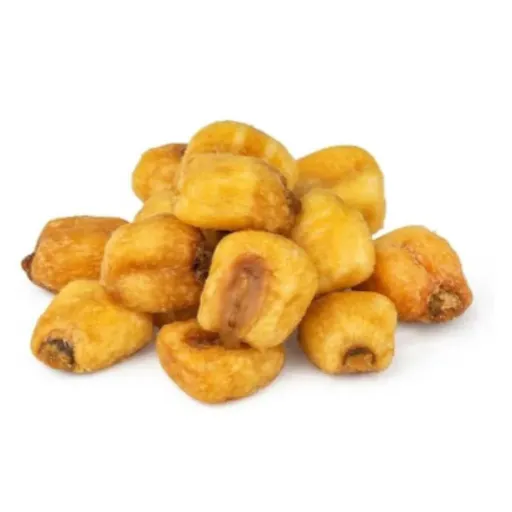
While Americans recognize the snack by its trademarked crunch, the tradition of toasting large kernels is a global phenomenon with deep regional roots. In the Andes, where the story began, you won’t find them in shiny foil bags. Instead, cancha salada serves as a ubiquitous table side companion, much like bread or chips. Industry observation indicates that in Peruvian cevicherías, this toasted corn is essential for providing a textural counterpoint to the soft, acidic fish.
A realistic scenario in a Lima market involves vendors toasting the kernels in large earthenware pots. They don’t use the heavy immersion frying common in Western production; instead, a light coating of fat and constant agitation over high heat creates a nuttier, slightly more tender bite.
Beyond South America, Spain offers a similar staple known as kikos. These are often fried until they reach a staggering level of crispness, frequently seasoned with nothing more than sea salt. A practical example of regional variation is found in the Philippines, where cornick reigns supreme. These kernels are significantly smaller than the 15mm Cusco giants but are often infused with aggressive garlic flavors or spicy vinegar. Though the size of the kernel changes by continent, the fundamental goal remains the same: transforming a humble starch into a durable, portable protein-and-fiber source.
FAQ Section
Q: Are corn nuts actually made of nuts?
Despite the confusing name, they contain zero tree nuts or peanuts. They are 100% corn. The “nut” moniker refers specifically to the snack’s crunchy, kernel-like texture and its savory, toasted flavor profile, which mimics the experience of eating roasted almonds or peanuts. Because they are made entirely from maize, they are a safe, high-fiber alternative for people with nut allergies, provided they aren’t processed on shared equipment.
Q: Why are corn nuts so hard compared to regular popcorn?
Popcorn comes from a variety of corn with a very thick hull that traps steam until it explodes into a soft foam. Corn nuts, however, are made from “floury” corn varieties with a different starch structure. Instead of exploding, these kernels are soaked and deep-fried. This process causes them to expand slightly while remaining dense, creating a brittle, glass-like crunch that is significantly harder than the airy texture of popped corn.
Q: Is it possible to make corn nuts from frozen or canned corn?
It is generally not recommended. Canned and frozen corn are harvested at a “milk stage” when the kernels are sweet, soft, and full of moisture. Authentic corn nuts require field-dried, starchy giant corn. If you attempt to fry sweet corn, the high sugar content causes it to burn quickly, while the lack of dense starch prevents the kernel from achieving that signature hollow snap. For the best results, stick to dried Peruvian white corn.
Q: Are corn nuts keto-friendly?
Not really. Since they are made from whole corn kernels, they are primarily composed of complex carbohydrates. A standard one-ounce serving contains roughly 20 to 22 grams of net carbs. For those on a strict ketogenic diet—which typically limits daily intake to under 50 grams—a single small bag can take up nearly half of the day’s allowance. If you are looking for a keto crunch, seeds or roasted nuts are better low-carb substitutes.
Q: What are the best seasonings for DIY corn nuts?
Because the kernels are fried, the residual oil helps fine powders stick effectively. Classic sea salt is the standard, but you can get creative with smoked paprika, garlic powder, or nutritional yeast for a cheesy, vegan-friendly flavor. For a more intense “Zesty Ranch” style, try mixing dry buttermilk powder with onion powder and dried dill. It is best to toss the kernels in your spices immediately after they exit the fryer while they are still hot.
Q: How do commercial manufacturers achieve that uniform golden color?
Consistency in large-scale production comes from precise temperature control and the use of specific frying oils, such as palm or soybean oil, which have high smoke points. Industry observation shows that manufacturers may also use a light coating of annatto or turmeric extract to enhance the yellow hue. This ensures that every bag looks identical, regardless of natural variations in the corn crop, though high-quality home-cooked versions usually achieve a natural golden-brown through the Maillard reaction.