
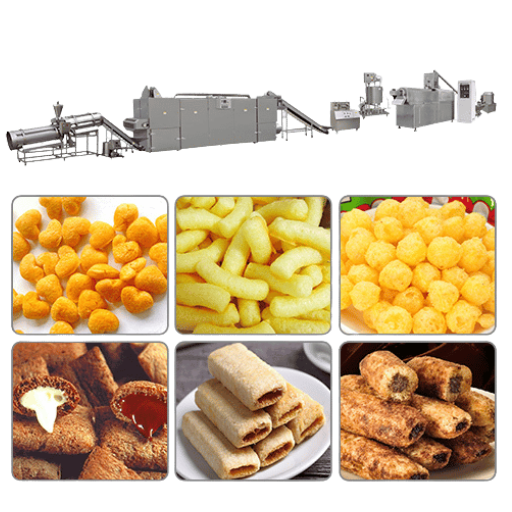
Corn Puff Snacks Production: Extrusion & Seasoning Process

Corn-puff snacks production involves food engineering and flavor development, and involves the competencies exercise of either of these closely related fields. Since it “prepares” the semolina-flavor to be readied to take up its ethereal form beforehand, article divulges the intermediate or further details of extrusion as one of the core processes of any cornmeal preparation – the processes that because of the expanded rate of sales in various extreme recession, the customers all over the world have found attractive during ancient times that transformed sugarcane into what is called “a snack”. The ability to produce a product of any given desirable attributes has to depend on some specific processes, which in this case include extrusion as an operation and subsequent application of meshed seasonings as an art that begs its own flavor configuration. The handbook comprises chapters that take you all the way from an idea of how you would like to taste a treat to its actual consumption.
Introduction to Corn Puff Snack Production
Production of corn puffs involves a complex of technological processes, which are the most commonly used for preparing products in a wide variety. The cycle is initiated with the raw material, high-grade corn grit; The very core of it and most. The two are thoroughly mixed, the latter with quantities of water and moisture proper enough to form a paste. The paste then gets forwarded by operators to the extruder. Extrusion is the passing of the dough through narrow passages, which expands it under heat and high pressure while still inside the die, shaping it to the desired form. The manufactory also carries out another operations where by the puffs become drier and less “meaty” as they are put into the seasoning and spices. The Landerbury’s manufactured range of products is ideal in terms of brow, eye, face, and lip makeup. In other words, the product is both durable and comfortable to put on!
Overview of Puff Snacks
The Nutritional Content of Puff Snacks
Puff snacks are the basic form of snacks that manufacturers typically produce from cereals, mainly flours and starches. The most common among them is cornmeal, rice flour, and wheat flour. These are used by manufacturers in extrusion. It is true that many puffed snacks have vitamins and minerals, but this is done mainly to specifically encourage certain consumer groups, especially children. This is all due to certain ingredients in the processes, as well as the technology of the taste modification in production. For example, explore the influence of the far more appealing factors, taste modifications for the final consumers, generally would.
Market Trends and Consumer Preferences
The surge in popularity of puff snacks has been inexorable, largely due to the fact that consumers want food that is easy to enjoy rather than miss out on new flavors or taste the same dish again. To attract consumers who are conscious of the need for well-being, plant-based proteins and legume snacks, belonging to a different part of their habitat, and gluten-free foods that serve the same purpose are often included within the international cuisines. Nowadays, the raw or non-cooked food way has also become trendy as a result of eating habits that are cutting out animal proteins in another healthy lifestyle. Puff snacks with such taglines are successful, given that they are natural and environmentally friendly products. It is evident that puff snacks are not a limited concept defined by savoury or sweet crisps – they have multiple changed views, people’s tastes, as light as they are, puff snacks.
Importance of Corn Puff Snacks in the Snack Industry
Corn puffs occupy a significant niche in the snack market as they are cheap and convenient, and due to their popularity with consumers. The product is also capable of being promoted to many clients due to its thin feature, such that they can offer any flavor of their preference. Effective production of the snacks is facilitated through extrusion technology, which allows for rapid manufacturing with minimal wastage. There is an untapped opportunity for corn puffed snacks to include such wholesome products, including whole grains, vegetables, and various fortified nutrients. This meets the present consumers’ increasing preference for health and functional foods. These products are also in high demand worldwide as they can be easily transported and have an increased shelf life that is significant for the highly competitive snack industry.
Key Ingredients in Puff Snack Production
Making of popcorn depends upon the correct quantities of specific raw materials, which in turn define seu fatigue, taste, and nutritional value. These ingredients are usually received from a certain type of cereal crops like corn, rice, or wheat because of their high constituents of starch, which require expansion during the production unit operations. Starch is an active component in the product as it enables the creation of a fluffy and airy product.
To intensify the nutritional profile and enhance the consistency of the product, there are various additives are used in the making of [name of the product]. The formula is composed of fats and oils for an improved taste as well as dimethyl dichloromethane for an enhanced taste and feel, and sugars, salt, and some flavors aimed at obtaining a specific taste. The emulsifiers, yeast, and certain stabilizers are essential substances for food appearance and quality that chemical engineers and the food industry cannot do without. Enrichment of products with biological components is a strategy employed by manufacturers today. Thus, they fortify their products with whole grain and legume flour, vitamins, and minerals as the consumers have changed their preferences. The components modernizing the process relate to the formation of the product into a snack because they help improve the functionality and taste attributes, as well as the nutritional content of the snack.
The Extrusion Process
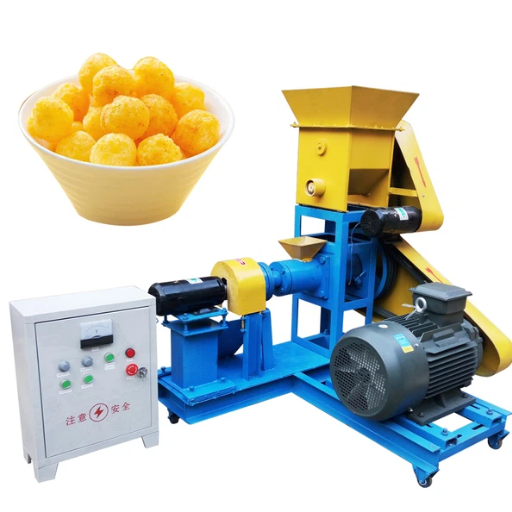
To make puffed food, the extrusion technology aids in the creation of finished products with different textures and shapes, because it has a certain level of precision. When making puff snacks in food processing industries, the raw materials usually comprising cereals or flour are mixed in the extruder in specified proportions. As the product inside the extruder is squeezed by mechanical action, high pressure and temperature are allowed and controlled. The intention is for the vategorical and voluminous material, being contained in the mandatory conditions, to prevent swelling. This soft dough filled with boiling water mix begins to set. The dough filled with hot water has the ability to be formed into a pastry. Once such a mass is prepared, it is permissible to place it in an oven where it will grow and fill caches or any other voids created by the placement of the unit in the oven. The product ‘X’ requires deep fat frying… for the inside to melt while preserving the integrity of the outer coating.
Understanding the Role of the Extruder
The extruder operates as an essential machine that processes and shapes various materials during the production process. The machine’s main function involves transforming raw materials into a unified product through mechanical shearing and high heat and pressure control. The materials undergo transformation, which enhances their physical characteristics and functional abilities to reach better texture, solubility, and digestibility. The extruder enables operators to manage important factors, which include moisture content, residence time and energy input, to produce desired product characteristics. The extruder creates material shapes through die processing, which produces accurate material outputs that maintain constant production quality standards in all industries that use the process, from food production to industrial manufacturing. The system has become an essential technology for contemporary manufacturing because of its ability to handle multiple material types and its wide range of operational applications.
Types of Extruders Used in Puff Snack Production
The process of preparing puff snacks necessitates two types of extruders: these are mono-screw and shaft screw extruders. The particular design and operation of each extruder are responsible for the overall functionality and application of every specification.
Single-Screw Extruders
Single-screw extruders typically utilize one rotating screw within a barrel. This has gained a lot of importance for the simplification of the procedure, as it eliminates the need for expensive parts and does not break down very often. Products that are to be pushed and pulled can be put into the single screw extruders, but are limited to those that are easier to process, such as puff snacks that are made out of simple patterns of uniform dimensions. The characteristics of the twin screws make them advantageous over the singles, because more ingredients are required to perform the process at a faster pace.
Twin-Screw Extruders
A twin screw extruder, which comprises two screws that interlock against each other, allows for flexibility in the System for advanced fine control over the processing of the materials. It is possible to process practically any compounds that may also contain high-humidity base materials and some very complicated cooking recipes. The advantages of the twin-screw configuration include high mixing efficiency with good heat transfer performance, full control of shear stress, and thus, the ample texture and ingredients are ideal for the fabrication of advanced puff snacks. This configuration allows the manufacturer to include materials for advanced snacks, which will help manufacturers conform to the requirements for the snack industry.
The choice of the right extruder, from considerations such as the degree of the preparations’ sophistication and the volume and features of the items to be produced, can make the work of producing high-quality puff snacks more efficient.
Stages of the Extrusion Process
The extrusion process involves several critical stages that work in sequence to produce high-quality puff snacks with precise textures and desired characteristics:
1. Ingredient Preparation and Pre-Conditioning
The process starts with the blending of raw materials, which include flours and starches, and protein sources, to produce a uniform mixture. The stage requires water, oils, and other functional ingredients to achieve proper moisture levels while improving feed material distribution. Pre-conditioning requires either heating or mixing to achieve partial starch gelatinization, which will enhance subsequent procedures.
2. Feeding and Conveying
The controlled feeding system delivers the prepared mixture into the extruder’s barrel. A rotating screw inside the barrel moves the material forward while applying mechanical shear forces to the contents. The screw design pressure and speed parameters are customized according to product formulation and end-product specifications to achieve stable flow and operational efficiency.
3. Heating and Melting
The barrel material is subject to controlled temperature and shearing effects in concert with the motion of the screws. The phase in question raises the temperatures to such a level that starches gelatinize, proteins denature, and evaporation of moisture occurs. The particular material then attains a condition that allows elongation through the plastic region, a capacity that is vital to the material, after it has been manufactured and processed into the desired shape.
4. Shaping and Expansion
The formed material flows to the outside of the die via the barrel outlet. The same amount of pressure is applied by the material when it is in the die and out, meaning that we don’t have the same water that we commenced with, as it is not there because it has already expanded out. This will be the methodology for texturing and expanding it to the forming of puff snacks, which involves the compression and expansion of moisture-containing materials. The decision on dies and process conditions has a significant impact on getting the required shape of the product or maintaining the expected quality standards.
5. Drying and Cooling
After extrusion, the snack product that comes off the machine has some amount of moisture; one would expect there is a need to dry the snack after it has been made. The drying process can take several forms, and therefore, a properly controlled environment can help to achieve a certain texture profile without altering the shape, which could be a drawback to the design. Inside devices, the product cools for a short time so that the original shape is maintained until they are ready for processing with coatings or even flavors.
6. Post-Processing
This stage includes the addition of seasonings and coatings, and other finishing ingredients that enhance the sensory attributes of the snacks. The stage uses automation with precise control technologies to achieve product uniformity, which enables the manufacturing process to create identical results throughout production.
The combination of these stages with exact control systems and high-tech solutions enables manufacturers to create identical puff snacks, which show product innovation while they improve their manufacturing efficiency.
Production Line Configuration
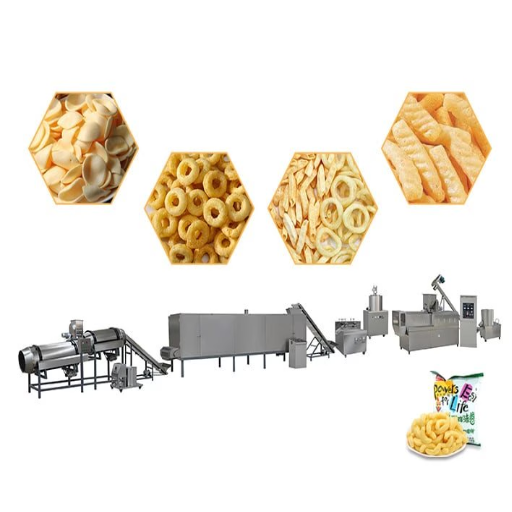
The optimal configuration for a puff snack production line depends on factors such as production capacity, product variety, and operational efficiency. A typical production line includes the following key components arranged sequentially:
- Raw Material Handling System – This system handles the accurate storage, measurement, and feeding of raw materials.
- Extrusion System – The system uses high-pressure and temperature-controlled mechanisms to create and cook the snack base.
- Drying Unit – The system decreases moisture levels to improve shelf life while maintaining product texture.
- Frying or Baking Equipment – This equipment provides snacks with the desired crispness and specific flavor characteristics.
- Seasoning Applicator – The system applies selected flavors or enhancements to snacks through an even coating process.
- Packaging Section – The section guarantees proper sealing and labeling of products for distribution while protecting product freshness.
It is important to bear in mind the integration of every element, making sure that adjustments are coordinated, as this will make it possible to continue with operations within a minimum time frame without any difficulties in the process. This is why it is not a secret that to ensure not less than a steady product quality, but an optimal productivity, it is crucial to monitor the condition of equipment more than once a year.
Components of a Puff Snack Production Line
The components of a puff snack production line combine precision engineering with efficient processing techniques to ensure high-quality output. The following overview presents the main elements that combine industrial machinery standards with professional equipment evaluation.
Raw Material Mixer
Typically, wetting only occurs in batches or subsequent mixing processes may occur, particularly for the flours plus water to get capped, and after the addition of corn and water. This is an important product characteristic from the consumer perspective, but more importantly, adds value to the shell.
Extruder
The Extruder uses mechanical pressure together with heat to transform the mixture into its required end shapes. The device enables users to create different snack sizes through its various shape options, which come with different dies. High-performance extruders provide businesses with moisture management capabilities that determine how crispy their final puffs will become.
Drying Oven
The Drying Oven decreases product moisture until it reaches perfect moisture content because this process helps to improve product shelf life while maintaining its quality. The drying systems of today use energy-saving methods, which include hot air circulation and infrared heating to achieve their moisture removal goals.
Fryer or Roaster
The Fryer or Roaster process cooks snacks through two methods because it needs to match product requirements, which require deep frying or dry roasting to create specific taste and texture characteristics. The advanced systems used in frying operations enable users to control temperatures accurately, which results in decreased frying oil absorption.
Seasoning Applicator
The Seasoning Applicator distributes flavors and spices through its vibratory and rotary drum system to create a uniform coating across products. The process guarantees that each product receives the same flavoring treatment, which results in improved customer contentment.
Packaging Machine
The packaging machine serves to ensure the correct portions of the product are achieved, thereby enhancing the sealing and labeling work, which is done while ensuring the freshness of the product is preserved, and also protects the same from contamination. Packaging systems have enhanced the corporate and product monitoring, which includes automated systems.
The production process requires all elements to work together for effective results because each element serves an essential function. Advanced puff snack lines employ monitoring systems and regular maintenance protocols to prevent breakdowns and reduce waste while maximizing output efficiency.
Flow of the Snack Production Process
Creating a constructively tangled knot of processes that aids in the preparation of a snack is divided into various stages, with some parameters that assure success in each and every operation, i.e., efficiency and consistency in the results achieved. In other words, the starting point of producing a snack is sourcing the raw materials, such as starches, flours, oils, and even spices, and studying them upon delivery. The automated piling systems and polymerization Φ1 and Φ2 systems are those that take care of adding these requisite stuffs up adhering to stipulated measures, thereby achieving both a uniform look and the related texture and other properties.
The process continues until all the wheat flour and flavorings have been mixed. In all cases of puff snack manufacturing, the manufacturer uses vacuum technology, which employs pressure and heat in a predetermined manner for finishing and at the same time producing the shape and quality of the batch as required. Creation of the snack implies that baking or deep frying will be undertaken after the shaped product has become ready for use. This indicates how critical this process is and that even the most minor temperature fluctuation could affect the outcome in terms of taste and the state of the product.
The snacks are sent to flavoring areas after cooking, which are controlled by automated dispensers ensuring even spread of spices and panning. Snacks are cooled and dried following the flavoring stage to maintain shape integrity priorto beginning the packaging process.
Packaging is the last step that needs to be performed before the snacks are ready for shipping. Usually, snacks are sealed in bags, which are then filled with nitrogen to prevent them from getting stale quickly. Modern packaging machines contain sensors for weight and integrated security measurements to protect and to check that the machines’ equipment satisfies the recommended criteria. The whole is managed with constant monitoring, while quality assurance, as well as various procedures of equipment repair, have been put in place with the objectives of decreasing the amount of wasted time.
Efficient Layout for Corn Puff Making Machines
The process of developing an efficient layout for corn puff production facilities requires the establishment of operational flows that create a seamless production process. The arrangement should follow a logical pattern that matches the production process from the initial mixing stage to the final packaging stage, which includes extrusion drying and seasoning. The use of linear and U-shaped machine layouts establishes better material movement patterns, which create smoother workflow operations. The design requires sufficient space because workers need to conduct maintenance and inspection activities while making system adjustments, and they need to continue operating their work tasks.
Implement loading with automation using any possible systems of automation, and lengthening the schemes of the machinery movements and the transport based on the principle that people are not needed in the unproductive and repetitive operation. Quality control stations could be properly placed after certain key steps to allow real-time information to assist in taking the processes close to perfection and prevent loosely condemned, unfit for sale products from going further into the process. But consideration should also be given to through of suitable ventilation for machines that emit fumes and dust while maintaining clear emergency evacuation paths within the organization.
The use of modular design creates multiple advantages during machine installation because it enables production capacity expansion through the addition of new units without the need for major system alterations. The establishment of centralized control panels enables operators to oversee all units through a single interface, which simplifies control operations. The combination of these elements allows manufacturers to construct safe production areas that deliver maximum efficiency and production scalability for corn puff manufacturing.
Seasoning and Flavoring Techniques
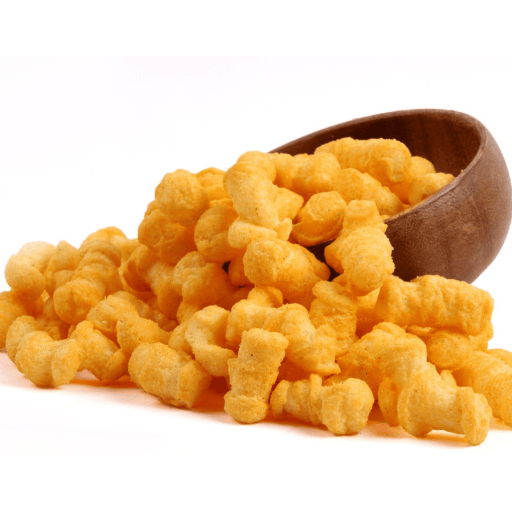
The process of seasoning and flavoring corn puffs successfully depends on achieving uniform coating through the use of high-quality ingredients. The application of dry seasoning powders, which include cheese, barbecue, and spicy blends, requires the use of tumble drums or spray applicators to achieve proper distribution. The use of atomized spray systems proves essential for liquid flavorings, which include oils and syrups, because these systems deliver exact and dependable surface coating results. The process of pre-coating corn puffs with a light mist of oil or moisture serves as a vital method to maintain correct adhesive properties, which enables better seasoning stickiness. The practice of equipment calibration, together with ingredient ratio supervision, creates product consistency while stopping excess usage and material loss.
Methods of Seasoning Puff Snacks
To achieve optimal seasoning application on puff snacks, a combination of mechanical and chemical techniques is utilized to ensure uniform flavor coverage.
Tumble Drum Method
Tumble drums are commonly used to rotate puff snacks within a drum while operators use spray nozzles to deliver seasoning. The method enables uniform distribution because rotation creates optimal conditions, which allow seasoning to contact the product entirely.
Electrostatic Coating Systems
The electrostatic coating systems for powder-based seasonings enable outstanding adhesion because they use an electrostatic charge, which causes particles to adhere to snack surfaces. The method reduces seasoning waste while creating unified flavor coverage.
Environmental Control
The right management of environmental conditions requires proper control over factors such as humidity. The process of applying seasoning becomes unpredictable when conditions become excessively dry because they lead to uneven seasoning spread. The monitoring process requires continuous monitoring and parameter adjustments together with equipment validation, which needs to happen at regular times, to maintain product excellence and follow industry standards during snack seasoning operations.
Popular Flavors in Corn Puff Snacks
Corn puff snacks come in a wide variety of flavors, which show how different regions prefer different tastes and how consumer tastes have changed over time. Among the most popular options are:
🧀 Cheese
Cheese-flavored corn puffs, a classic snack, provide consumers with a rich and mouth-watering flavor. As a consumer’s taste preference may vary, the brand offers types such as sharp cheddar cheese, white cheddar cheese, and spicy nacho cheese.
🍖 Barbecue
Whereas rich and full barbecue flavors are good to everyone, warmth, and sour flavors pain almost no one. The options offer flavor profiles that extend to the core with extra functions and values, accumulating the umami five basic tastes.
🌶️ Spicy Chili
It is without a doubt an incontrovertible fact that heat-focused flavors that include hot chili and pepper have gained a lot of attention, for they make for an excellent sale because there are consumers who look forward to tasting even the pungent heat through snacks.
🍯 Specialty Flavors
The amount of choice available in terms of different flavors allows users to taste the dream food that matches their individual tastes is another attraction.
Quality Control in Seasoning
There are many steps involved in quality control within the manufacturing process of seasonings to ensure that the products are safe and conform to the stipulated flavor expectancy. In the first phase of the process, raw materials – that is to say, spices, seasonings, and flavor bases are carefully examined and appraised to ascertain whether they are of good quality status. The analysis of dirty materials, however, which includes the percentage of actives present in a sample analysis and the detection of contaminants, necessitates special analytical techniques such as chromatography and spectrometry. Control is necessary to prevent spoilage, avoid deterioration due to variations in water activity, shape, and other factors, and to provide a consistent quality of the product in terms of its texture and dimensions.
There is a need to check certain factors in batch production. Basically, this is to ensure that products comply with regulated levels as well as to check if the flavor remains the same. Taste, odor, and general pleasantness of the food item are usually evaluated using expert methods of sensory evaluations. The use of Hazard Analysis and Critical ControlPoints (HACCP) systems should also improve hygiene, particularly in preventing contamination.
Regulating post-processing technical packaging and wall cover manufacturing generally involves management of the moisture levels inside the chamber and the use of a cover that would ensure that the flavours do not get lost and that the packaged product stays fresh as long as possible. Such provisions form good flavor retention strategies and, combined with specified concentration levels, eliminate possible dangers to the consumer.
Final Packaging and Distribution
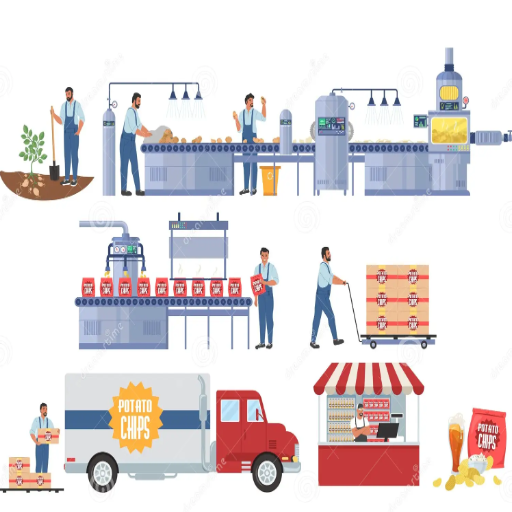
When packaging the product, one needs very resistant and food-safe materials, so that the seasoning does not get dirty and deteriorate in damp conditions. The packaging should also contain key product information, such as the product name and nature, the components, the due date, and how to keep food at home to satisfy both the DOP and consumers. Wares are to be warehoused in a climate-controlled warehouse and are dispatched using vehicles that are isolated and cleaned so that contamination is not allowed to occur. Due care is observed in the management of logistics, to enable the timely delivery of the products from the manufacturer to the market, with quality safeguarded every step of the way.
Packaging Solutions for Puffed Corn Snacks
When creating packages for puffed corn snacks that must be successfully retained in shape, several factors are taken into account: leverage, user comfort, strive for environmental conservation. The laminated pouches utilize material films that contain concentrates of ozone or aluminium variety aimed at doing the least damage to the produce by preventing any moisture and oxygen. The materials create high moisture and oxygen barriers, with other functions being their critical contribution towards enhanced quality of the packaged contents. And also resealable zippers, and consumer-convenient tear notches, that can help customers repeatedly open and close the package after one usage.
Leading brands today are pooling efforts and looking for alternative, eco-friendly materials like recycled paper packaging and bio-packaging for better performance. All packaging types, and particularly flexible packaging types such as stand-up pouches, provide environmental advantages because they can be made in a reduced size and require fewer resources to make them. High definition printing on package surfaces, in turn, allows brands to demonstrate detailed food information, nutritional values, and promotional art, attracting customers’ interest, as well as complying with regulations. By stressing the importance of composition in functional design and employing relevant materials in a novel way, it is possible to sell the already prepared expanded puffed corn competently while also moving sustainability objectives forward.
Distribution Strategies for Snack Products
I plan on introducing snack products into the market utilising the aforementioned multi-channel system. This system will include direct and third-party sales, as well as wholesaling. Moreover, it is possible to employ regional logistics based on constant monitoring of product and consumer statistics used for SC optimization. Our strategic partners’ responsibility is to see to it that the goods get to the customers within the term prescribed by all quality and specification standards, and the partnership between the advanced stock control solutions and our partners plays out in this respect. Cost containment in relation to wide market coverage is what I seek to achieve.
Marketing Corn Puff Snacks Effectively
In order to effectively promote and sell corn puffs as snacks, the best approach would be to research the consumers and what they like, and then adapt the findings into the marketing strategies. It is necessary that the research be carried out to establish the main demographics, such as children and young adults, as well as health-conscious consumers. Given that it is at predictable levels, you can also expand the demand to the market, including demonstrating the various tastes available – pricing strategy is vestedwith the challenge,s i.e.) In the most adverse consumption patterns, the need for offering health advantages in the form of gluten-free and low-fat products is also crucial.
Digital marketing channels help businesses expand their audience reach through social media campaigns and partnerships with influencers and their paid advertisement programs. The brand can achieve improved visibility and consumer trust through engaging content that includes recipe ideas, production videos, and customer testimonials. The product should be positioned in supermarkets, convenience stores, and e-commerce platforms through its strategic placement in high-traffic locations. The business can boost customer acquisition through promotional offers, loyalty programs, and product bundles, which enhance customer participation. The continuous analysis of customer behavior patterns and market trend developments enables your corn puff snack company to achieve ongoing business growth and brand recognition.
Conclusion
The production of corn puff snacks represents a sophisticated blend of food science, engineering excellence, and creative innovation. From the precise extrusion process to the artful application of seasonings, each stage plays a vital role in delivering the beloved snacks enjoyed by consumers worldwide. By understanding and optimizing these processes, manufacturers can continue to meet evolving consumer preferences while maintaining the highest standards of quality and efficiency.
Reference Sources
Development of Extruded Puffed Snack Utilizing Carrot
GAIN Report: Food Processing Sector – Snack Foods
Frequently Asked Questions (FAQs)
Snack food: What is a corn puff snack production line, and what products can it make?
A corn puff snacks production line functions as a food manufacturing system that transforms corn starch and multiple other materials through extrusion and puffing methods to create various snack products that include puffed corn snack cheese puffs, nuggets, flakes, production for breakfast cereal, and pet food shapes. The system allows users to build systems that can function at both small business operations and large-scale manufacturing facilities, while users can modify systems to create various flavors and shapes that produce high-quality corn puff snacks and other puffed food products.
Snacks making machine: How does a snacks making machine, like a twin screw extruder, work?
A snacks-making machine, such as a twin screw extruder, uses twin-screw extrusion technology to cook, knead, and shape a continuous dough made from corn, corn starch, rice, or potato. The extruder uses high temperatures and shear forces to gelatinize starch, which produces a puffing effect when the product enters the lower-pressure puff production chamber or fryer. The twin-screw extruder delivers high efficiency benefits through its superior mixing capabilities, which enable producers to create different snack products, including cheese puffs, nuggets, and flakes.
Food extruder: What are the advantages of using a twin screw extruder in a corn snack food production line?
The corn snack food production line uses a twin screw extruder, which delivers advanced technology functions that enhance thermal efficiency while enabling precise moisture and texture control through full automatic operation options that work with all types of raw materials, which include corn starch. The system enables operators to create high-quality products through efficient production processes, which require minimal upkeep while using screw design and process parameter modifications to create different flavors and shapes.
Processing line: What components make up a complete corn puff processing line?
A complete processing line typically includes a raw material handling system with a screw conveyor, a mixer, a food extruder (often twin-screw), a heating system and high-temperature barrel sections, a puffing machine or die head, a dryer to reduce final moisture, seasoning and flavoring systems, and packaging equipment. The optional units available for selection include batch fryers designed to create fried snacks, a cooler, and a crusher or flaker, which enable flakes production and breakfast cereal manufacturing.
Food production line: How customizable is a food production line for different snack food formats?
The design of food production lines allows manufacturers to customize their equipment by selecting specific die shapes and screw configurations and downstream equipment, which will create cheese puffs, corn flakes, and potato chips-like extruded snacks and nuggets, and pet food. The suppliers provide comprehensive solutions that range from small-scale units with compact structures to large industrial lines that operate automatically and fulfill specific requirements for product throughput, density, and flavor.
Puffed corn snack production line: What quality controls and technical support should snack producers expect?
Snack producers should expect suppliers to deliver installation and commissioning support, which includes both operational training and process documentation that establishes quality control standards for raw materials, temperature monitoring, and moisture measurement, dryer, and puffing operational guidance. Reputable food machinery suppliers offer after-sales service, spare parts, and troubleshooting to ensure efficient production and consistent quality products.
puffed food: Can a puff production line handle both extruded puffs and fried snacks?
The puff production line can produce two products through its system, which creates extruded puffs using a puffing machine, or it can supply extrudates to batch fryers, which create fried varieties. Some systems operate in full automatic mode, which allows users to switch between drying and frying stages while producing puffed food formats, cheese puffs, and new snack types through minimal system adjustments.
Starch: What raw materials and formulations are commonly used for the best corn puff snacks?
The common raw materials used in this product include corn grits, corn starch, rice flour, and seasonings. Corn starch serves as a material that enhances expansion and texture, while blends of wheat and potato create different mouthfeels. The optimal corn puff recipes achieve high expansion and desirable crunch through a precise balance between moisture content, protein content, and starch content, which enables product consistency; suppliers and technical support teams can produce tested formulations that work with specific extruder setups.